Exhibitions & activities
Falconry soars at Biltmore

Posted 6/24/26
Falconry soars at Biltmore as a pair of dedicated falconers showcase the powerful skills of the beautiful birds in their care. Learn more about this experience hosted on the grounds of George Vanderbilt’s estate in Asheville, NC.
Meet your falconry team
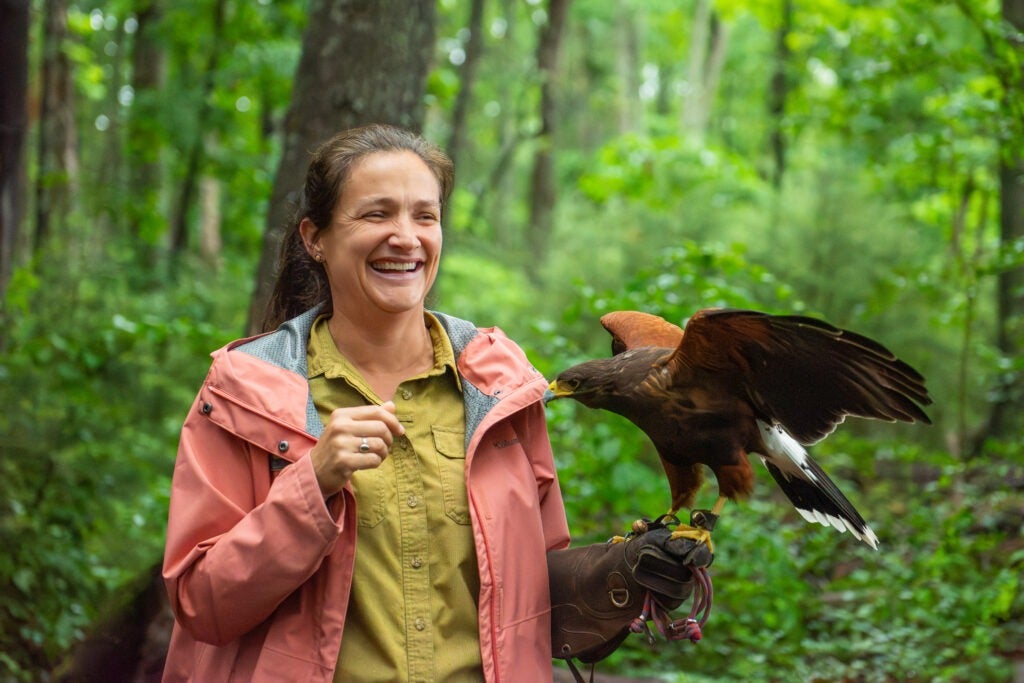
Participants meet Samantha Bristow and Jeff Curtis, members of Biltmore’s Outdoor Adventure Center team who lead our falconry experience, in the Lobby of The Inn on Biltmore Estate. From there, it’s a short walk to the wooded area beyond The Inn where each bird of prey is housed in its own separate enclosure.
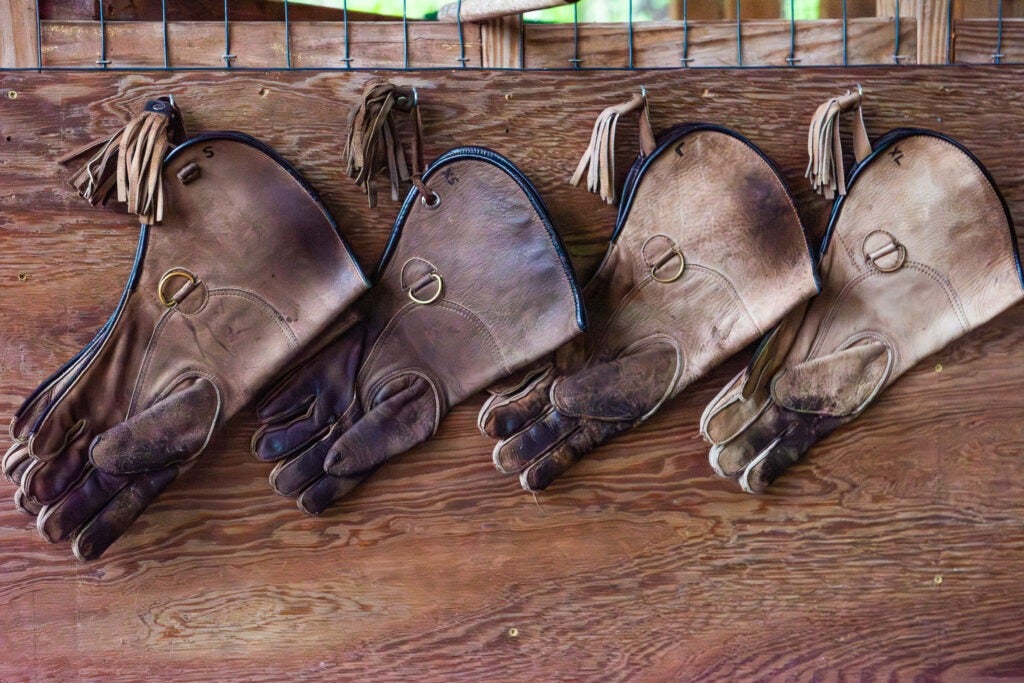
After a brief overview of the history of falconry and Biltmore’s program, participants have an opportunity, one at a time, to don a heavy leather gauntlet that protects the hand and forearm and allow a raptor to perch there while Jeff and Samantha provide rich details about these fascinating birds of prey.
Fun falconry fact: The activity is known as falconry whether you’re interacting with hawks, owls, eagles, or falcons.
Handling birds of prey
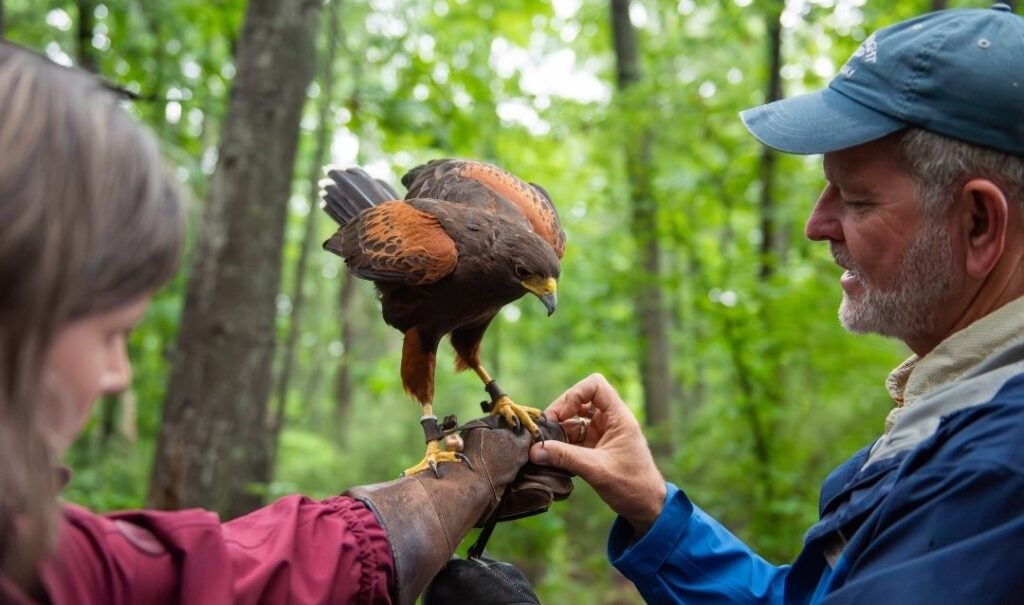
“We usually start with Sam and Hoppy, which are both Harris’ hawks. They are are the only social species of hawk in the world, and that makes them a good fit for the type of falconry program Biltmore offers,” said Jeff, who is also a Master Falconer and Falconry Guide with a local outfitting service. “Sam, in particular, has a good temperament that makes him a great ambassador for raptors, especially when we are working with school groups.”
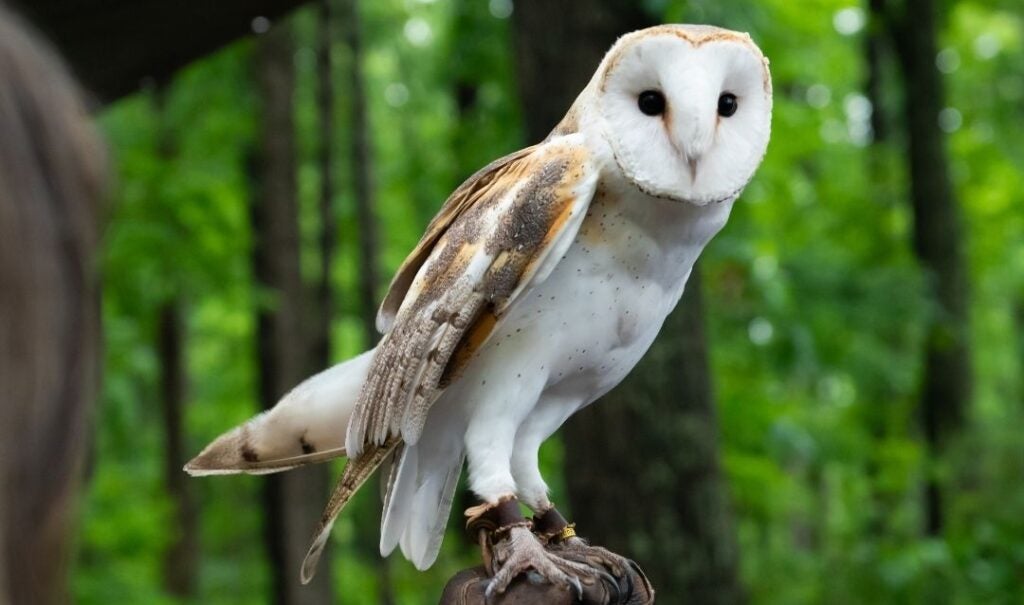
In addition to Sam and Hoppy, you’ll have an opportunity to handle trained raptors such as Ray, a red-tailed hawk, and Oskar, a barn owl. Hawks and owls hunt differently, with hawks using their keen eyesight to spot prey from above, while owls have very sensitive hearing that helps them target their prey.
“All of our birds are well-trained, and they trust us, but it’s not the same relationship you might have with an animal like a dog. These are tame birds, but not domesticated, and their strong instincts to hunt prey can supersede their training,” Jeff said.
Fun falconry fact: With 14 vertebrae in their necks as opposed to seven for humans, hawks can turn their heads 220 degrees in each direction, while owls can turn their heads an astonishing 270 degrees!
Prepare for a thrilling flight
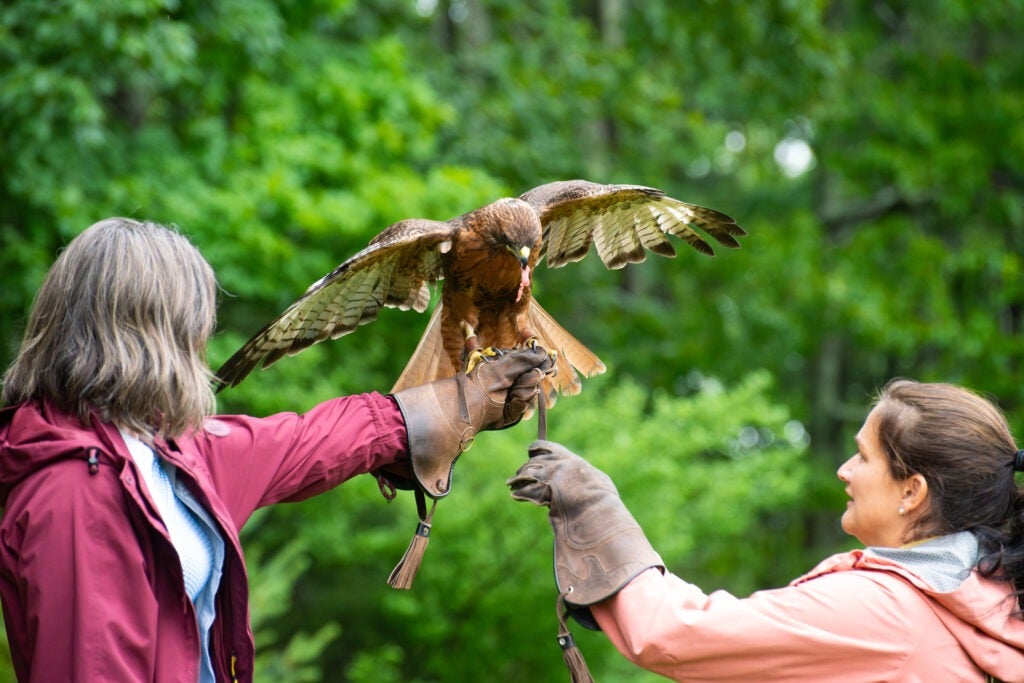
After you’ve had a chance to see the birds up close, you’ll prepare to have one of these majestic raptors fly through the open air to land on your gloved hand. While one falconer holds the bird, the other helps you get into position with a small cube of raw meat to reward the raptor.
“When you’re ready, you’ll bring your arm up to a horizontal position and that signals the bird that it’s time to fly,” explained Samantha. “Our hawks have a 3–4 foot wingspan, so you want to have your arm and hand fully extended to give them plenty of room to land.”
Fun falconry fact: A slightly hungry raptor is much more likely to fly to your glove for a reward than one who’s eaten recently.
Training vs. instinct
As Jeff noted, a bird can sometimes follow their instincts rather than their training, so it’s always possible that a hawk like Ray might decide to fly into the trees around you to investigate something rather than settling on your gauntlet.
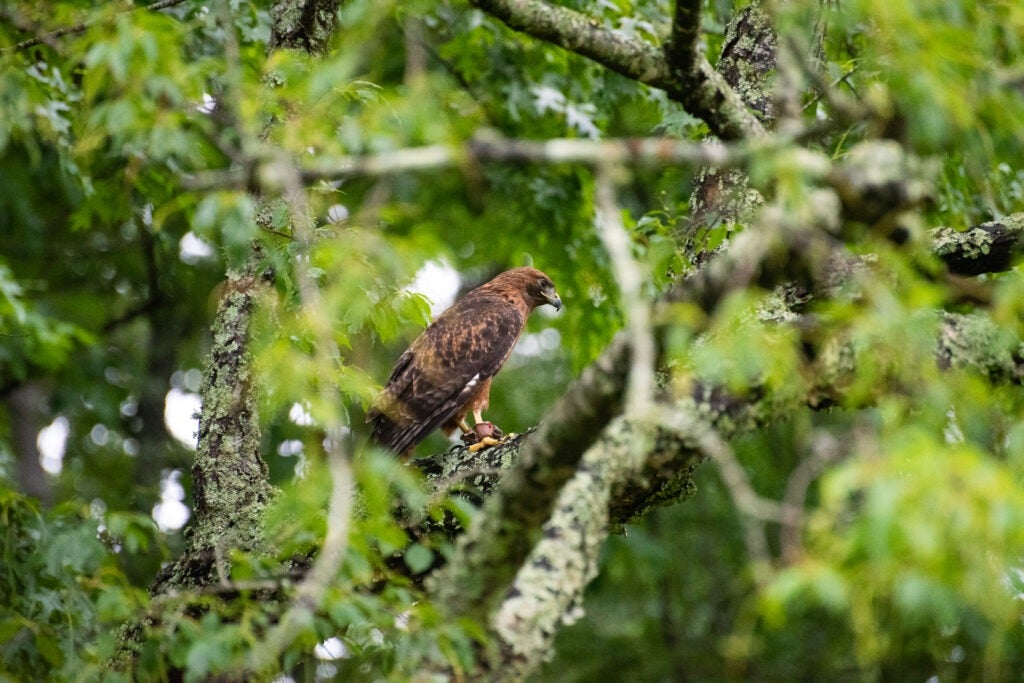
“If that happens, we’ll work to get them refocused, but we’re not always successful–especially if they’ve spotted potential prey or even a possible mate,” Jeff said. “That’s why our birds wear small bells as part of their harness, so we can hear them in the trees, and light-weight radio trackers in case they go farther afield.”
Fun falconry fact: The falconers once tracked a hawk for three days before they could catch up with it.
Can you find a falcon in Biltmore House?
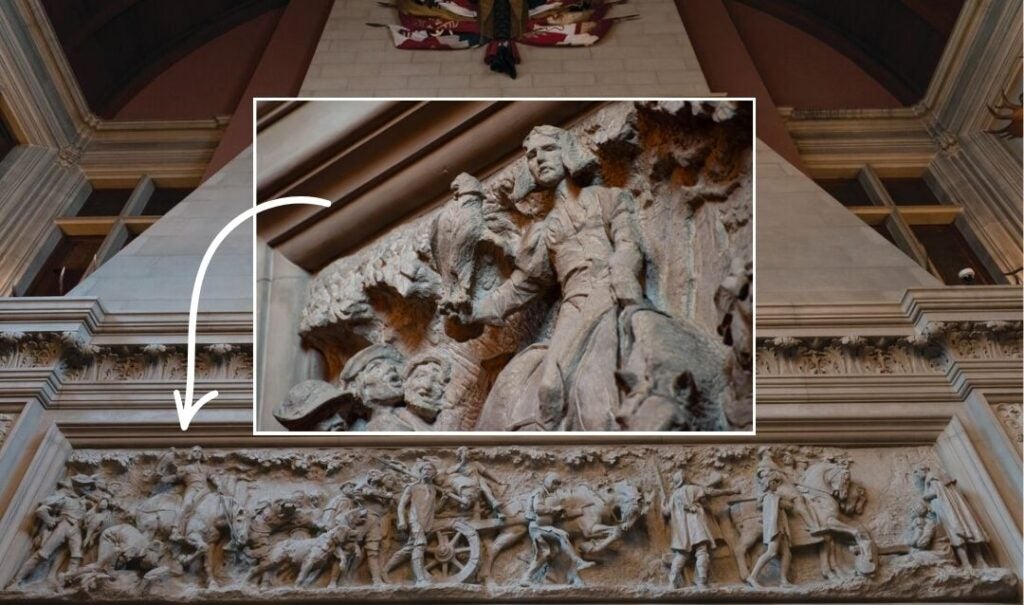
While visiting Biltmore House, keep an eye out for a falcon in the grand Banquet Hall. The carved stone frieze above the room’s triple fireplaces shows a scene entitled “Return From the Chase” from Richard Wagner’s opera Tannhäuser. The tallest figure on the left side is a falconer with his hooded hunting partner on his arm. (See inset photo for detail.)
Fun falconry fact: Birds of prey wear hoods to reduce visual stimulation and reduce anxiety, which is safer for both the bird and the falconer. Removing the hood can also act as a cue that it’s time to begin the hunt or flight.
Explore falconry at Biltmore
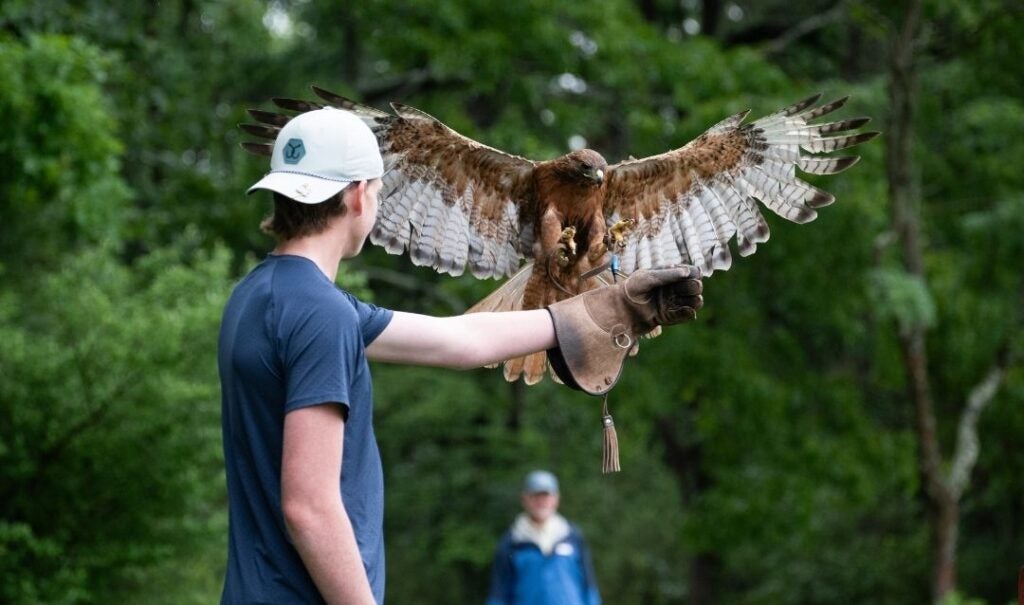
“Falconry began in the Middle East and Mongolia more than 6,000 years ago, and continues to be a recognized hunting practice around the world,” said Samantha. “Often called ‘the sport of kings’ and reserved for royalty, it is still a status symbol in some cultures. For us, it’s a wonderful way to introduce you to these spectacular birds and let you learn more about them up close.”
Don’t miss your one-of-a-kind opportunity to interact with these majestic raptors at Biltmore. Reserve your 90-minute falconry experience now by calling 828-225-1425.
NOTE: To purchase this activity, you must have an estate admission ticket, a Biltmore Annual Pass, or a stay at one of the estate’s overnight properties.


