The Never-Ending World of Turf Maintenance

Left to right: Curtis Horn (Grounds Maintenance Manager), Michael Faulhaber (Groundskeeper), Justin Holmes (Groundskeeper), Dwayne Schmidt (Turf Crew Leader), Joel Cornes (Groundskeeper), Bob Brett (Groundskeeper), Tim Norton (Groundskeeper), Dwayne Schmidt (Crew Leader)


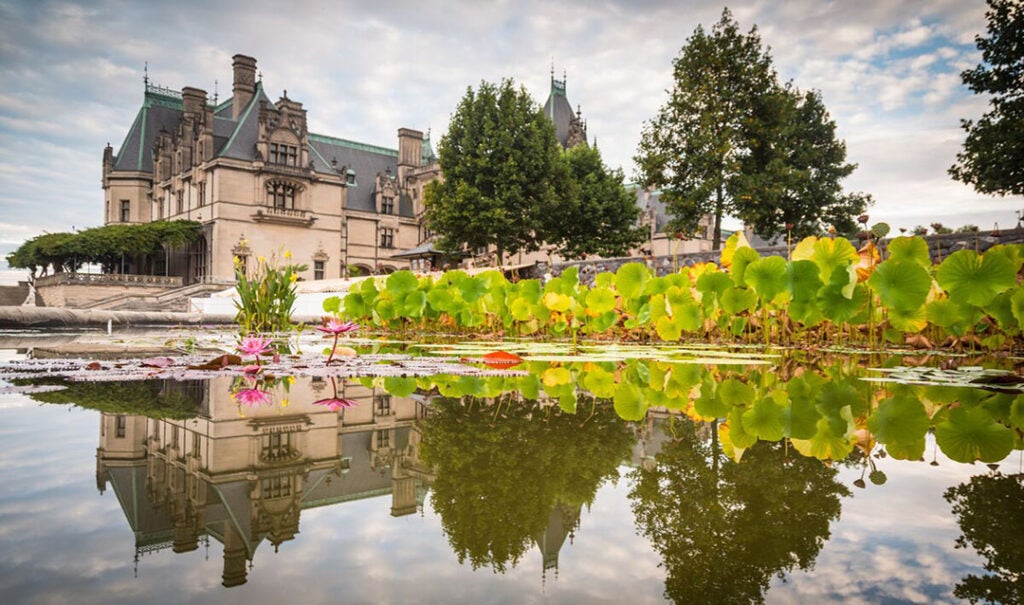
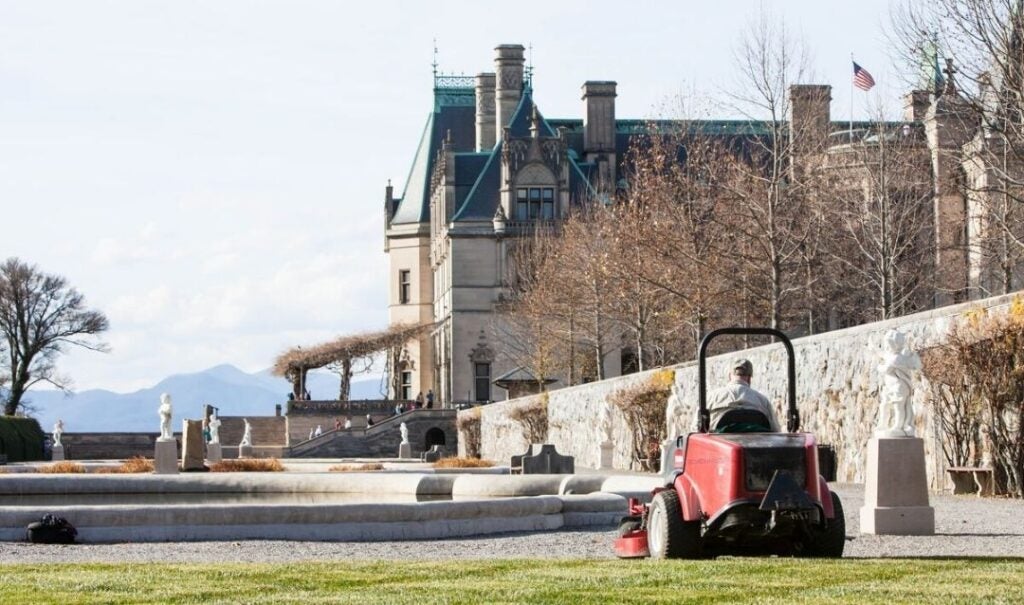
There’s a large part of Biltmore’s landscape that is often overlooked. You could say it gets walked all over. It’s the grass—and there’s a lot of it when you consider the lawns around Biltmore House, the gardens, along roadsides, and everywhere else.

Keeping all that grass mowed and trimmed is the responsibility of Dwayne Schmidt, Crew Leader, and his six-member Turf Management team.

“Our team mows 135–140 acres each week, and some areas are mowed twice a week,” Dwayne said. “We mow every month but January, using riding and push mowers, and we do hand edging in the Rose Garden.”

He compares his team to a NASCAR pit crew since they must work well together at a fast pace. Their day can start as early as 6:30 a.m. so they can mow and get out fast before guests arrive.

Turf management at Biltmore is a science similar to what world-class golf courses use. The team fertilizes, aerates in spring and fall, maintains irrigation systems, overseeds, blows leaves, trims, and removes snow quickly to keep everything immaculate.

Dwayne has worked three years with Biltmore, but his team has close to 100 years of experience. He is a certified turf grass professional and was recently appointed as one of 12 members to the Turf Grass Council of North Carolina. Several other crew members are in the process of earning the Turf Grass certification that includes classroom work and a challenging test. The team regularly participates in continuing education, and recently earned a Biltmore Environmental Excellence Award for rerouting their mowing operations to save gas and energy.

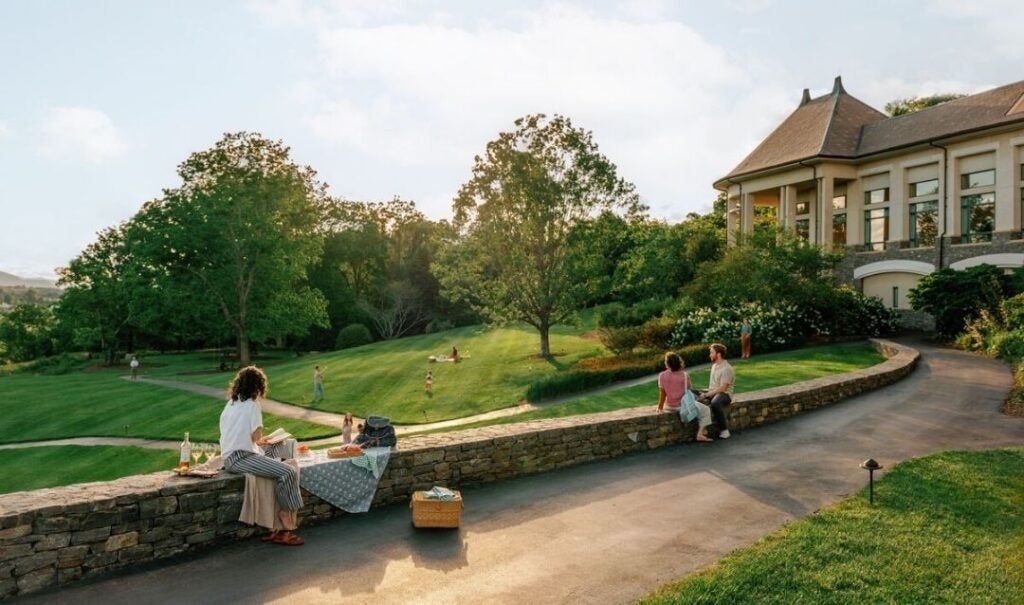
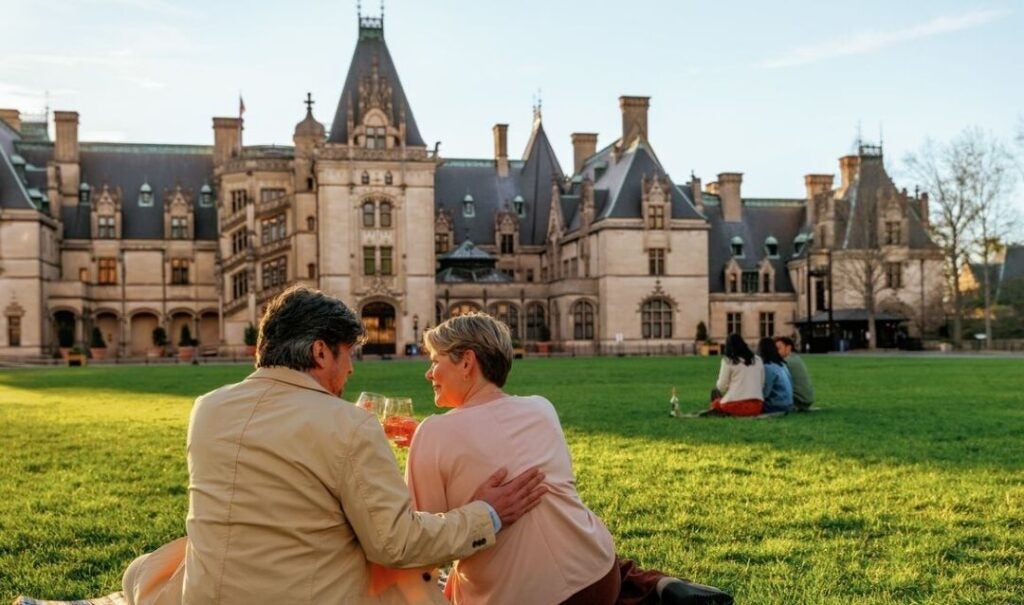
The Front Lawn is Dwayne’s favorite place; he knows that more than a million people see it each year and it is the frame for Biltmore House, carefully tended and mowed twice weekly. Except for four days prior to Easter—then they let the grass grow longer so it’s easier to hide eggs for the popular Easter Egg Hunts.

“Biltmore is an awesome place, and I am proud of the work we do here,” said Dwayne. “When you have people from all over the world admiring your work, how can you not be proud?”

International Rose Trial Winners Announced

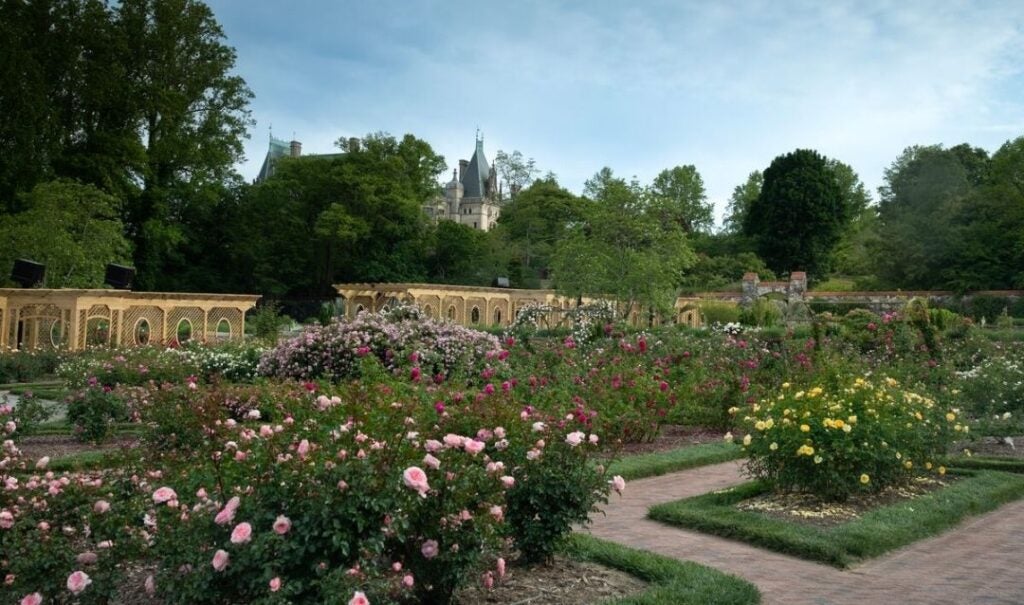
Our first International Rose Trials came to a close on Saturday and our jury selected winning roses in 12 categories.  Since 2011, Biltmore’s historic Rose Garden has been home to the Biltmore International Rose Trials. During this time, more than 75 varieties from growers and breeders worldwide have been planted and cared for by Biltmore’s horticulture team. Each trial lasts two years and a permanent jury judges the roses four times per year. During Saturday’s judging, the jury conducted the final round of judging for the first trial group of 25 roses.

This is the first international trials on the East Coast, and only one of two held in the U.S. Rose trials in Europe are a more common occurrence, with trials held in 20 different locations in 15 countries. ”The trials are a valuable way for the home gardener to learn what roses do well and what may be potential candidates for their own gardens,” said Paul Zimmerman, coordinator of the trials. “Trials of this type are usually open to all rose breeders around the world – from professional to beginner.”

Our own rosarian, Lucas Jack, had an integral part on the rose trials.  “Biltmore’s historic Rose Garden is the perfect setting for trials,” said Jack. “We’ve enjoyed introducing these new varieties to our guests as they stroll through the gardens. It has been an educational experience, and it complements the work we do to care for Biltmore’s collection of heirloom roses.”

New rose varieties will be planted for trials each May. They are evaluated for garden performance, fragrance, disease resistance and ability to be used in varying landscape situations. The next awards will be in 2014 for the trials planted in 2012 and will continue annually.  


The First Biltmore International Rose Trials Winners


George & Edith Vanderbilt Award for Most Outstanding Rose Of The Trials (Best in Show)
‘ATHYfalaa’ bred by Mike Athy of Mike Athy Roses, New Zealand

Award of Excellence For Best Established Rose
‘Belinda’s Dream’ bred by Dr. Robert E. Basye, United States (Wisconsin)

Award of excellence for International Jury Favorite
‘ATHYfalaa’ bred by Mike Athy of Mike Athy Roses, New Zealand

Frederick Law Olmsted Award for Best Groundcover
‘Roxy’ bred by Kordes Rosen, Germany

Edith Wharton Award for Best Floribunda
‘Milwaukee Calatrava’ bred by William Radler of Conard-Pyle/Star Roses, United States

The Honorable John Cecil Award for Open Group
‘Sunshine Daydream’ Grandiflora rose bred by Michèle Meilland Richardier, France

Gilded Age Award for Best Climber
‘ATHYfalaa’ bred by Mike Athy of Mike Athy Roses, New Zealand

Pauline Merrell Award for Best Hybrid Tea
‘Beverly’ bred by Kordes Rosen, Germany

Chauncey Beadle Award for Best Shrub
‘Darcey Bussell’ bred by David Austin of David Austin Roses, United Kingdom

Cornelia Vanderbilt Cecil Award for Most Fragrant Rose
‘Beverly’ bred by Kordes Rosen, Germany

William Cecil Award for Best Growth Habit
‘ATHYfalaa’ bred by Mike Athy of Mike Athy Roses, New Zealand

Lord Burleigh Award for Most Disease Resistant
‘ATHYfalaa’ bred by Mike Athy of Mike Athy Roses, New Zealand

The Lovely Azaleas

Strolling through our 15-acre Azalea Garden in May is a rite of spring, with thousands of bright blossoms lining the stone stairs and masses of vivid flowers cascading throughout the area. In fact, we expect peak azalea color this week.

We have Chauncey Beadle to thank for all of that gorgeous color. Chauncey, a Canadian horticulturalist hired in 1890 by Frederick Law Olmsted for his encyclopedic knowledge of plants, served as estate superintendent from 1909 until his death in 1950.

“Beadle loved all plants, but he had a special fondness for native deciduous azaleas,” said Bill Alexander, Landscape & Forest Historian. “He and two close friends became known as ‘the azalea hunters’ collecting virtually every form and color variation.”

Beadle and his colleagues kept detailed notes about their forays, writing down when and where they collected plants on travels throughout the Southeast. Native azaleas were Beadle’s passion, and he called them the finest American shrubs.

In 1940, he gave his entire collection of azaleas (which he fondly referred to as “his children”) to Biltmore, planting them in the valley below the Conservatory known as the Glen. Edith Vanderbilt changed the garden’s name to the Azalea Garden to honor Beadle and his lifelong work on his 50th anniversary with Biltmore.

Today, gardeners Bob Smart and Charles Harris, members of the estate’s Historic Gardens landscaping crew, are responsible for maintaining Beadle’s legacy and the never-ending upkeep of the Azalea Garden.

“Chauncey Beadle planted several thousand azaleas originally,” said Bob. “We try to keep as many old plants as possible, replacing them when needed with old types and species, but we also bring in new ones to keep the garden thriving.”

Last year, they replanted several hundred azaleas—mostly evergreens—lining the stone stairs at the Azalea Garden’s entrance and added nearly 400 more in the rest of the garden. Charles explains that the eye-catching evergreen varieties have heavier, more prolific blooms and some even re-bloom. They also planted many native deciduous azaleas that display delicate orange, yellow and pink flowers in late spring.

Not all their time is spent planting; they devote hours researching and collecting additional azaleas to keep the garden beautiful. They find plants at trade shows, through the North Carolina Nursery Notes bi-monthly magazine, nurseries, and growers who visit here.

“Sometimes growers we know will visit the garden and suggest a particular addition,” said Charles. “They recognize that it’s an honor to have plants here.”

Learn more about our gardens and grounds.