Hummingbirds and Butterflies Abound at Biltmore

Summertime is when some of our tiniest, most delicate guests come for an estate visit. Drawn to the large colorful patches of zinnias and bee balm, hummingbirds and butterflies flutter and dart around garden beds brimming with flowers planted there months earlier just for them.

The gardens in Antler Hill Village are particularly abuzz with these pretty creatures. Dusty Hafer, a crew member on Biltmore’s horticulture team, plans the planting beds for the village area, and he deliberately includes plants that attract hummingbirds and butterflies.

Hummingbird in Biltmore Gardens

We asked Dusty for some tips on what plants the home gardener can plant to attract their own tiny visitors, and what’s working well in the village’s gardens.

“Variety is key to attracting butterflies and hummingbirds,” Dusty says. “Each has different preferences, so more garden variety yields more wildlife variety. Not only that, plant variety throughout the growing season is key. Layering your garden with overlapping bloom times will result in having the most options available throughout the year.”

According to Dusty, here’s what’s attracting butterflies and hummingbirds to Antler Hill Village right now.

  • Bee balm (monarda didyma) – Its red tubular flowers are a hummingbird favorite, but butterflies love it as well. After the first flush of flowers fade, cut the plant back about halfway and to get additional flowering later in the summer.
  • Butterfly Bush – This species has a long bloom time, from spring through frost in the fall. It’s also a great choice if your gardening space is small. Hummingbirds like it just as butterflies do. Dusty warns that some species of the plant can become invasive, so select a sterile cultivar.
  • Salvia gauranitica ‘black and blue’ – Another Hummingbird favorite that has a fairly long bloom time.
  • Verbena bonariensis – This one doubles as a nectar plant and host plant to a few species. It self-seeds, but will take over if you don’t pull its seedlings from places where you don’t want it. Goldfinches are also drawn to the seeds.
  • Ironweed ‘Iron Butterfly’ (vernonia lettermannii ‘Iron Butterfly’) – Butterflies love this newer, very attractive, cultivar of native ironweed.
  • Scabiosa ‘Butterfly Blue’ – Another butterfly favorite with a very long bloom time. Trim spent blooms to encourage better re-blooming and a tidy look.
  • Zinnias – A wide variety of zinnias is on the market in different sizes, colors, and flower types and most are very attractive to both butterflies and hummingbirds. Put them out after danger of frost has passed and they will bloom practically non-stop until the first frost in the fall.
Butterfly in Biltmore Gardens

Dusty suggested additional strategies to attract butterflies and hummingbirds.

  • Host plants – Include host plants for butterflies to lay their eggs and for their caterpillars to use as a food source. “Each species of butterfly has certain plants it will use as a host plant,” Dusty says. Monarch butterflies, for example, only use milkweeds, and they prefer certain milkweeds over others. Other good host plants for other types of butterflies are pansies, violets, fennel, hollyhock, switchgrasses, tall verbena, maypop, tulip poplar, black cherry, oaks, ash, and willows.
  • Water sources – Though hummingbirds are too small to use the depth of water in a typical bird bath, they love moving, splashing water, so consider a bird bath with a falling water feature. Mist stations also attract hummingbirds.  A small pond with a waterfall is another good option. Butterflies land on wet patches of soil where they get water and minerals. Dusty says you can place a very shallow dish in the garden and fill it with sand and pebbles to create a puddling station. Water it often enough to keep it thoroughly moist and butterflies will love it.

A Legacy of Innovation: Hydroponics in our Production Garden

Lisa Peek, one of Biltmore’s Field to Table gardeners, recently received a new title: Hydroponics Specialist.

So when it comes to growing plants without soil in our Production Garden, she is truly a pro.

Hydroponics at Biltmore

“I’d have to say my favorite thing about working in the Production Garden is learning new techniques to better meet the needs of our estate restaurants,” says Lisa.

And the hydroponic process is doing just that.

Why Hydroponics?
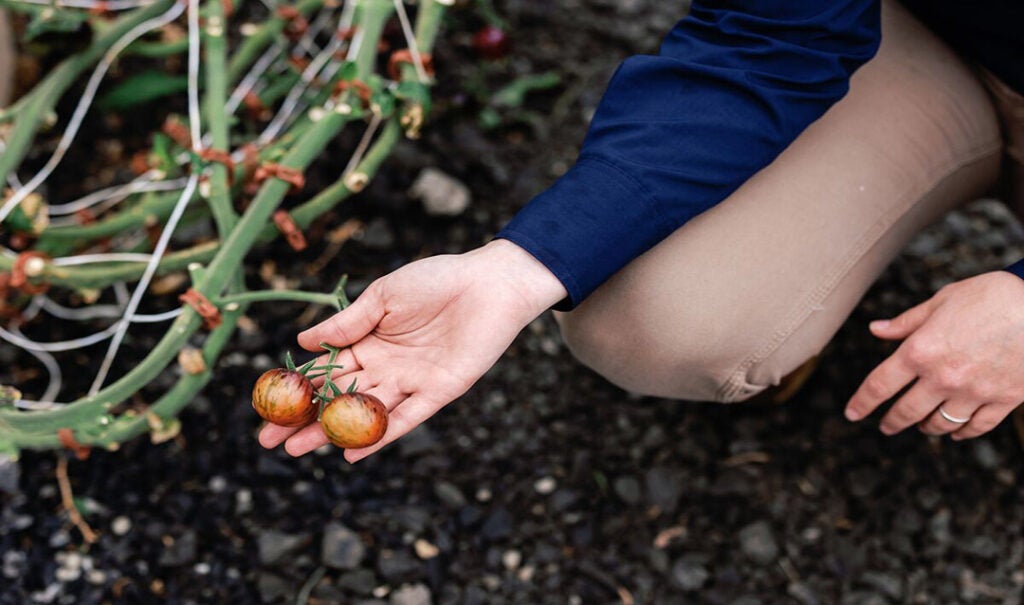
Hydroponics at Biltmore

“Because we have such high demand from our chefs for estate-grown produce—greens, in particular—we had to figure out a way to produce higher yields that are still top-notch quality,” Lisa explains.

Simply put, the hydroponic system allows our gardeners to provide a plant with exactly what it needs, when it needs it, and in the amount that it needs.

To consistently meet all of those requirements while growing a plant in soil is far more difficult.

Throw in the volume necessary to meet the demands of six full-service estate restaurants and the challenge becomes clear.

The benefits of hydroponics for our situation are undeniable. In addition to higher and more consistent yields, the system results in better taste and texture because the plants are not as vulnerable to variables like sunlight, wind, and temperature.

The hydroponic greenhouse protection also results in less waste as outer parts of the plants are not damaged by these elements.

Plus, all of our leafy greens are grown in deep water cultures, resulting in such high H2O content that their shelf-life quadruples!

More Greens, More Greenhouses

Hydroponics at Biltmore

To meet the increasing demand for estate-grown produce, we have also found the need to increase our Production Garden space.

The addition of two greenhouses will provide Lisa and her team with basically triple the square footage.

The new greenhouses are being built exclusively for our deep water cultures. One will house solely lettuce, while the other will house spinach, mustards, kale, collards, and other leafy greens.

Our existing space will be home to starter plants for the other two greenhouses as well as various types of hydroponic systems.

For edible flowers like snapdragons and herbs such as sage and thyme, we are implementing a Dutch bucket system, which essentially functions as a regulated reservoir. This technique allows us to use a variety of growing mediums while also producing less waste.

The Production Garden on the west side of the estate is the backbone of our hydroponics and Field to Table Program. And thanks to dedicated employees like Lisa, we are able to honor George Vanderbilt’s original vision of a self-sustaining estate as well as his unswerving passion for innovation.
Plants Unique to Biltmore’s Gardens

With more than 2.5 miles of paths in our manicured gardens, it’s easy to stumble upon unfamiliar species of plants at Biltmore.

Starting in late May, summer annuals fill the Walled Garden, Estate Entry, and Winery beds. Other estate blooms include roses, perennials, and lush perennial borders in the Walled Garden, Winery, and Antler Hill Village. From June through August, you can find native rhododendron and perennials.

But what about those plants you’re less familiar with? We asked Travis Murray, Walled Garden Crew Leader, about plants unique to our gardens. Here are some of the most unique plants found at Biltmore:

Shiny black coleus

The Shiny black coleus was discovered by John Alexander in the Walled Garden in 2007. At the time, John was the leading gardener over the ornamental turf in the historic gardens and was working for Travis in the Walled Garden. They had planted a border in the pattern beds. The display was a yellow Lantana standard, underplanted with Salvia farinacea ‘Victoria blue,’ bordered with Dark star coleus.

John and the rest of the crew were removing dead flower heads from the salvia in the corners when he pointed out that one of the coleuses looked like it had wet leaves. The coleus was not a whole plant, but a sport, which is a part of a plant that shows variations from the rest of the plant. Sports may show differences in foliage shape or color, flowers, or branch structure.

John and Travis took cuttings of the sport and turned them over to Gardener Mark Waldroop, who propagated those cuttings and cared for them. He grew the plant and watched it closely to monitor any changes, as many do not remain viable and will revert to the mother plant. To ensure viability once the plant was rooted and healthy enough for cuttings, Mark began propagating the sport. After several successful propagations, the sport held its characteristics and a new coleus was born. We named it Little John, after the man who discovered it.

Cercidiphyllum japonicum

The Cercidiphyllum japonicum is one of many unique plants that can be found at Biltmore. Commonly called Katsura tree, it is native to Japan and China. It is a deciduous understory tree with a dense, rounded habit, and bark that resembles an American white oak. It typically matures to 40–60 feet, but can reach 100 feet or more in the wild. The Katsura presents a picture-worthy structure and shape, bearing attractive foliage that resembles those of a small redbud.

Reddish-purple leaves emerge in spring. As the tree releases its sugars to push out new leaves, there is a faint, sweet smell in the air, similar to cotton candy. The leaves mature to medium green with a slight bluish tinge in summer and turn to shades of gold, orange, and red in fall. “In autumn, the fallen leaves have a faint smell of cinnamon, sugar, and apples,” says Travis. The Katsura can be found in the Shrub Garden, with a larger specimen found near the circle in the Azalea Garden.

Eucomis sparkling burgundy

Eucomis sparkling burgundy, or the pineapple lily, can be found in the Walled Garden, particularly in the Victorian border. This unique cultivar has dark burgundy leaves and boasts flowers that form on 20- to 30-inch stalks, bearing tight, smoky, pinkish-purple florets reminiscent of pineapples.

These tender bulbs hail from South Africa. However, we have successfully been able to keep them over winter.

Dracunculus vulgaris

The Dracunculus vulgaris, also known as the voodoo lily or dragon plant, can be found in the Walled Garden and is seeded in the scented border. The plant is native to the Balkans, extending as far as Greece, Crete, and the Aegean Islands.

The species can be identified by a large purple spathe and spadix, which has a somewhat unpleasant smell to attract flies as pollinators. The large palmate leaves have occasional cream flecks along the veins. If ingested, part of the plant is poisonous. The plant opens in May and lasts just a few weeks.

The historic gardens are full of interesting plants and trees, many of which are state champions, such as the Heritage birch, or the Double winged silverbell. There are also the Weeping and Non-weeping blue atlas cedars, and the Metasequoia glyptostroboides (dawn redwood), which is a fast-growing, endangered deciduous conifer. This is the only living species of the genus Metasequoia, one of three species in the subfamily Sequoioideae.

Pools of Delight: Preserving Biltmore’s Italian Garden

Pools of water in a garden are a delight for all the senses, and the pools in the Italian Garden next to Biltmore House are no exception.

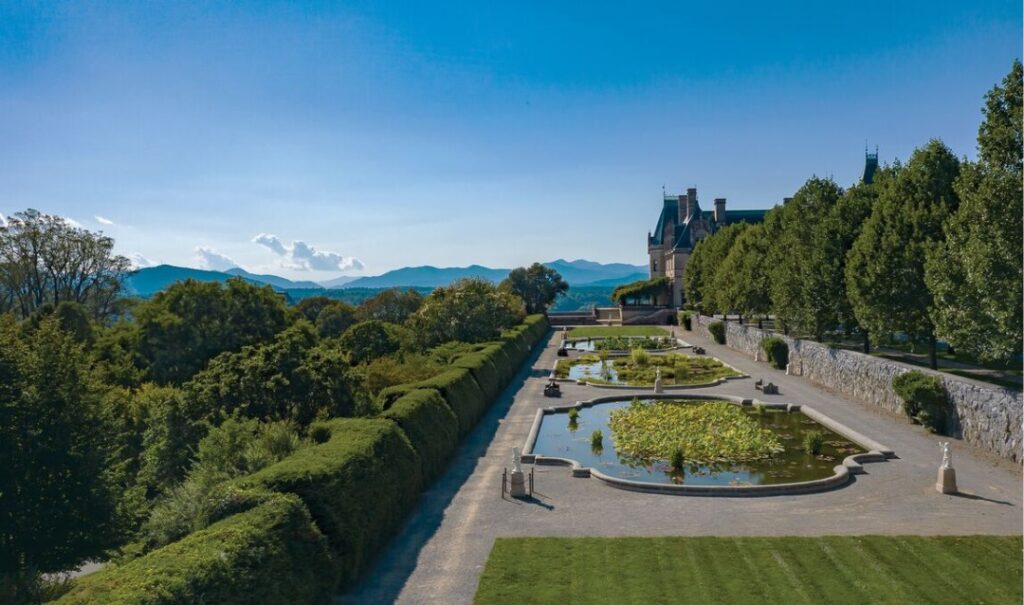
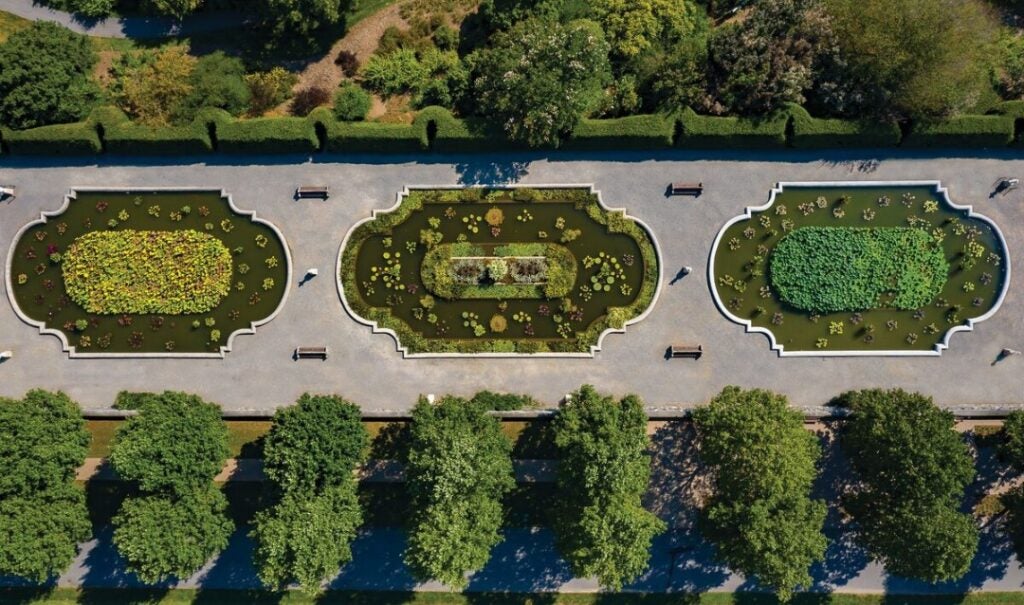
Aerial view of the three pools in the Italian Garden at Biltmore.
Aerial view of the three pools in the Italian Garden.

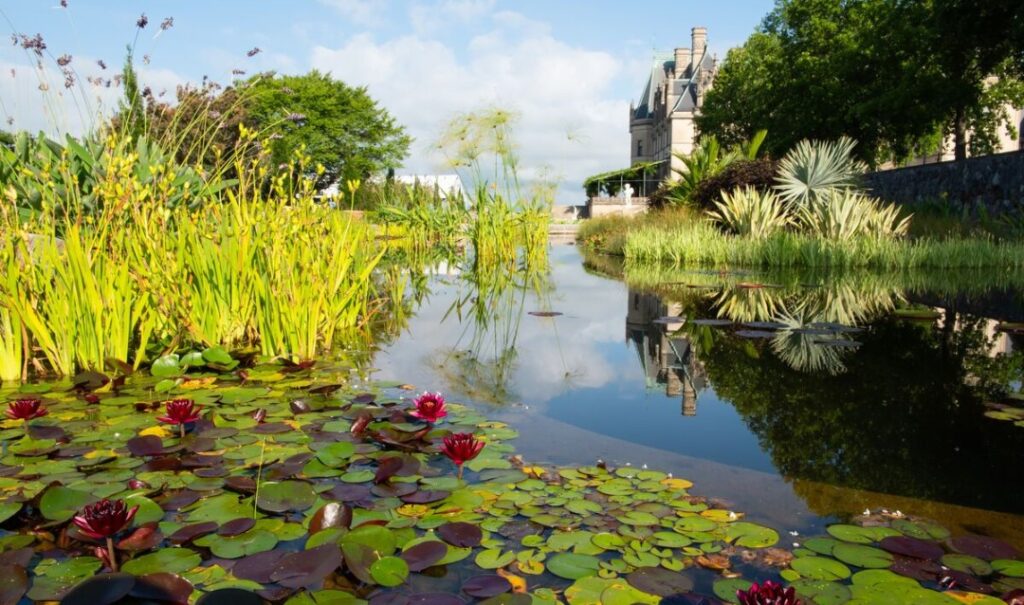
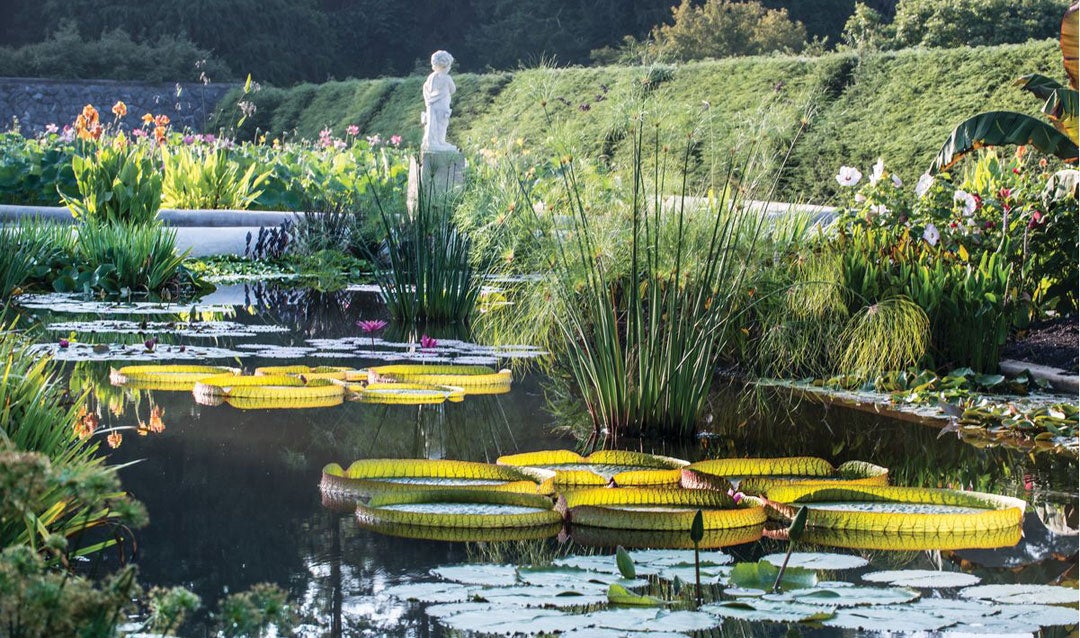
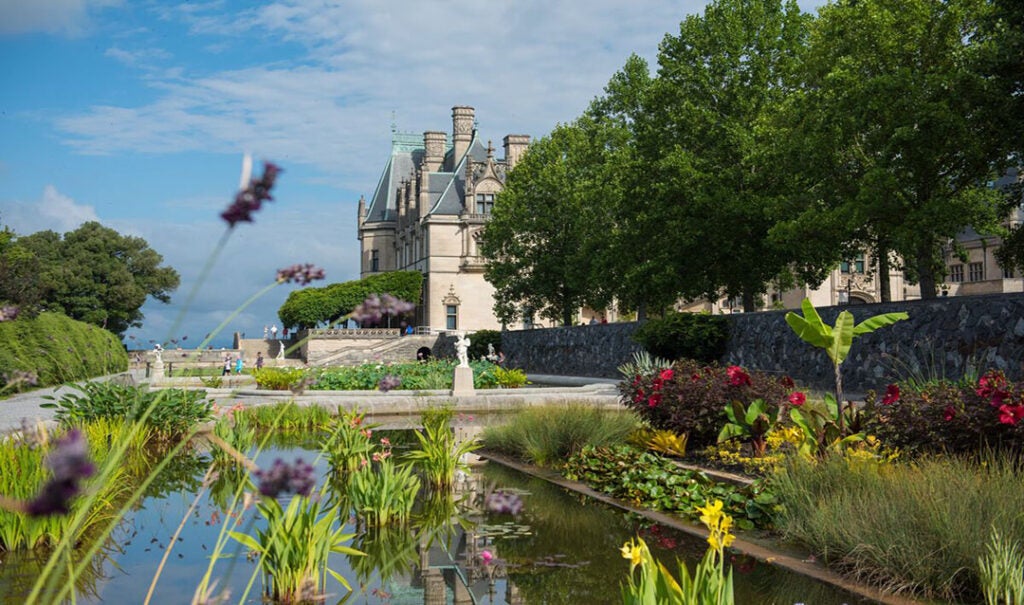
The Italian Garden was created to offer a tranquil spot for enjoying the magnificent reflections of America’s Largest Home®. The design, which includes three large pools filled with aquatic plants, remains remarkably true to the intention of Frederick Law Olmsted, Biltmore’s landscape architect.

Caring for the Italian Garden pools

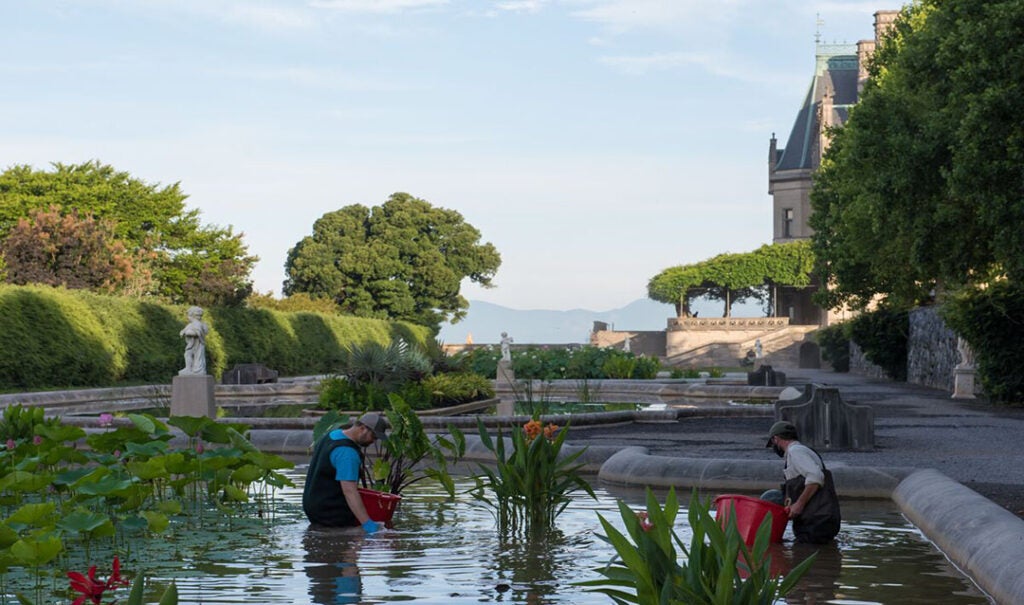
For several years, Chuck Cissell’s primary responsibility as a member of Biltmore’s landscaping team has been the Italian Garden with a focus on the aquatic plants in the pools. It’s a job he enjoys year-round, especially when he can be in the pools caring for the breathtaking blooms that reach their peak in the summer months.

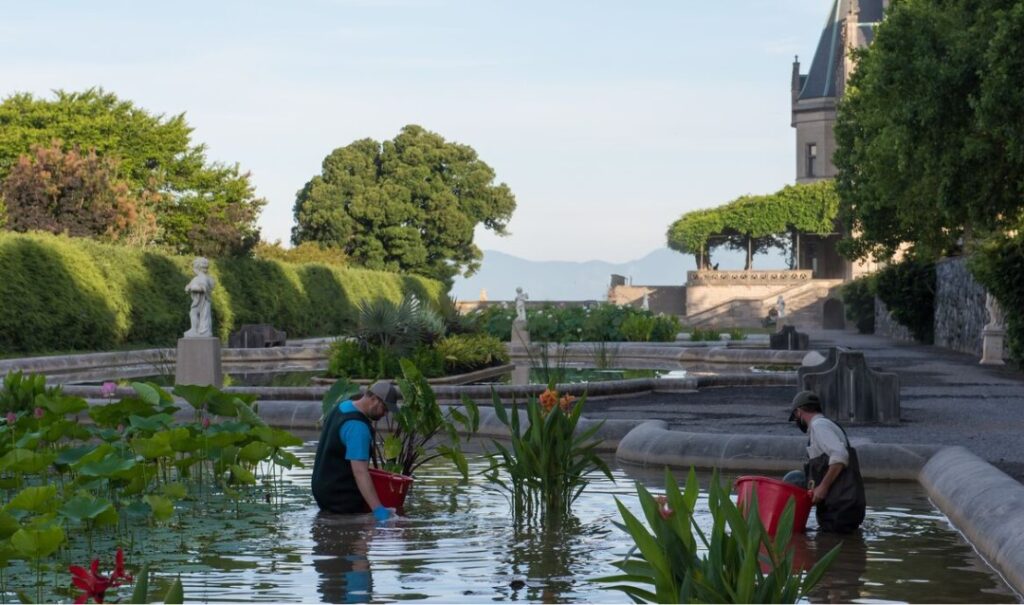
Biltmore landscapers wear waders to work in the Italian Garden pools.
Biltmore landscaping team members at work in the Italian Garden pools.

Beginning in the fall, Chuck creates a plan for the Italian Garden pools. He places plant orders in April and May, and completes plant installations in June. Most of the aquatic plants come from Tricker’s Water Gardens—a company that was one of the first commercial water lily growers in the United States. Amazingly, it’s the same supplier that Olmsted used.

“I order many of the same plants that Olmsted used from Tricker’s, but today there are new colors and hardier blooms because they’ve experimented with growing and hybridizing water lilies to improve the shape, colors, and hardiness,” said Chuck.

“We always order new tropical water lilies and Victoria water platters with their huge lily pads. In one pool we have about 50 different lilies, including night-blooming varieties.”

Historic plants in the pools

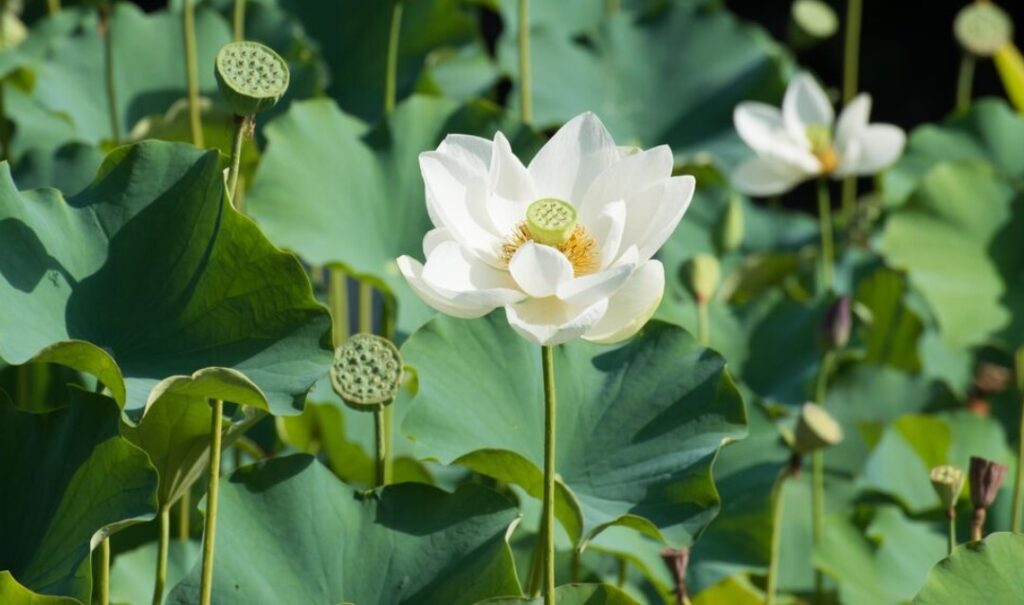
White lotus in bloom at Biltmore.
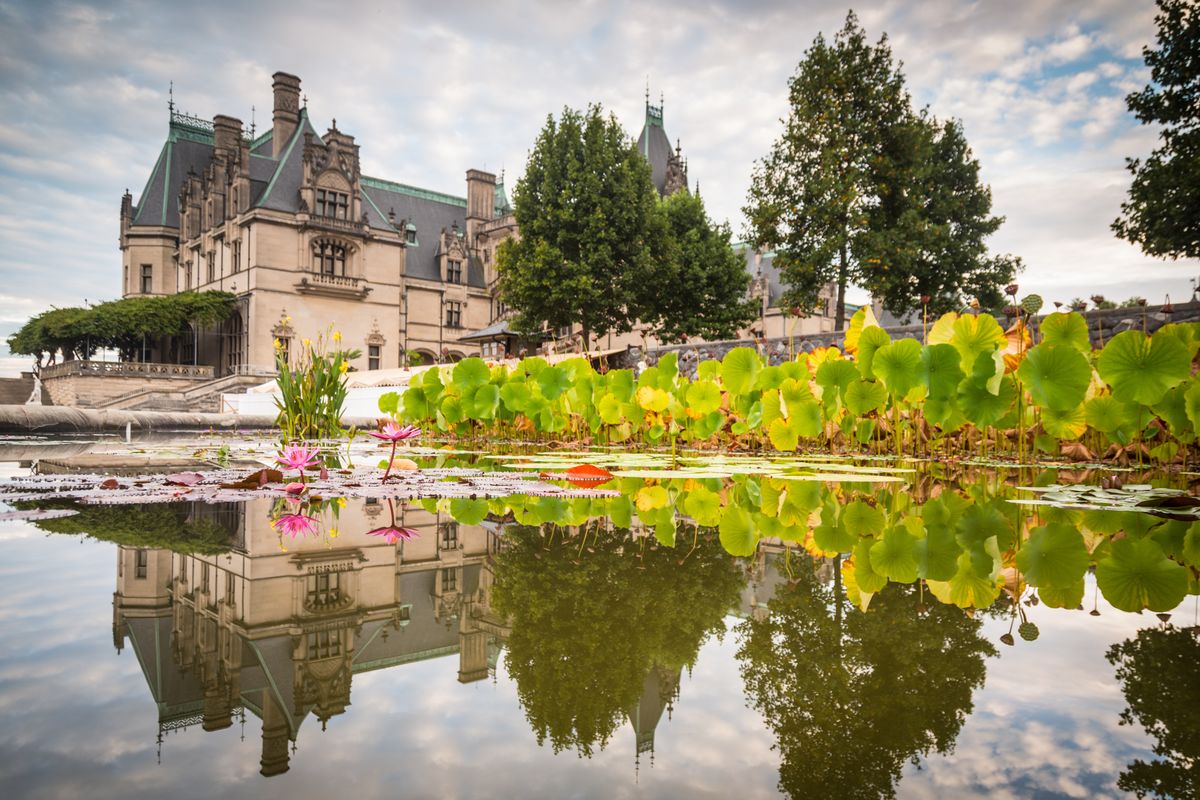
White lotus (Nymphaea alba) blooming in the Italian Garden.

In June, you’ll see more than 100 hardy and tropical water lilies begin blooming. The lotus bed display starts in early July.

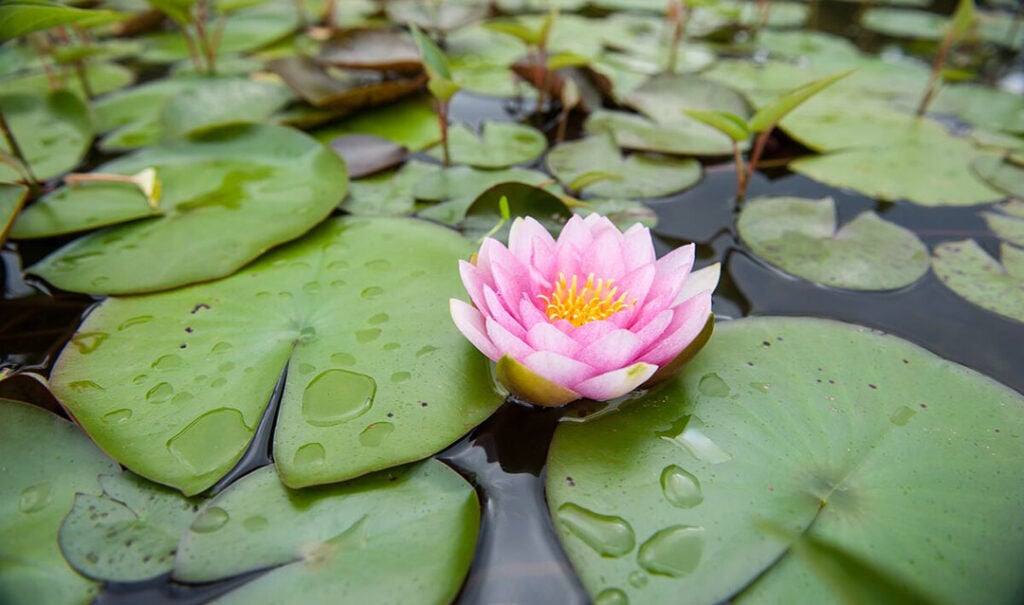
The lotus flower, which is either blue or white (Nymphaea coerulea or alba), closes up at night and reopens in the morning to reveal a central yellow circle radiating yellow petals. To the ancient Egyptians, this phenomenon reflected the rising of the sun at the dawn of creation, and the flower was honored as an image of daily rebirth and rejuvenation. Depictions of the water lily usually incorporate this symbolism, but the plant was also valued for its medicinal properties as a pain reliever.

Glorious blooms all summer

Biltmore's Italian Garden in peak summer bloom.
Summer beauty at peak bloom in the Italian Garden.

The gigantic platter-shaped Victoria lilies are the largest in late August. For the center pool display, Chuck uses plants including sweet potato vine, hibiscus, sun-tolerant bromeliads, and dwarf cannas.

“I feed and fertilize the water lilies once a week; they are heavy feeders. And we groom three times a week from June to October. Grooming—that means removing the pollinated blooms—helps increase the number of blooms a lily produces,” said Chuck.

Keeping the koi content

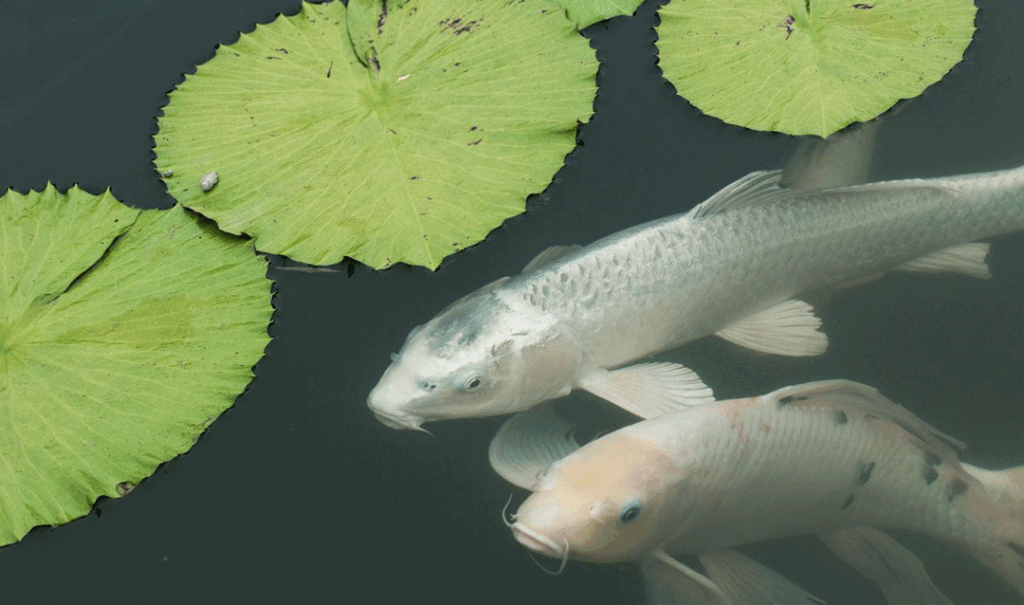
Colorful koi in the Italian Garden pools.

The filtration system in the pools is original 1895 technology, using constant water flowing into and out of the pools. The gravity-fed reservoir, which is also used to provide water to Biltmore House, provides water for the pools.

Natural filtration is beneficial to the colorful koi that populate the Italian Garden pools. We know from archival records that Olmsted wanted to have fish in the pools, and while we don’t know exactly when the koi were introduced, at least one is about 50 years old.

Preserving Olmsted’s Italian Garden designs

View of the Italian Garden at Biltmore Estate in Asheville, NC.
The Italian Garden features long-range views of Biltmore House and the mountains behind it.

Because of the sheer volume of receipts, plans, and letters in Biltmore’s garden archives, Biltmore’s gardeners have only gone through a fraction of all the information available.

For Chuck, that’s one of the most important elements of his job. “I really like the historic aspect of gardening here,” he said. “I have the joy of knowing I’m recreating the same thing that the Vanderbilts saw in 1895, and continuing that tradition.”

Featured blog image: Reflection of Biltmore House in the Italian Garden pools

Controlled Approach: Preserving the Road to Biltmore

For Western North Carolina native Jason Mull, his daily work at Biltmore can sometimes seem very invasive—but that’s only because he heads up a crew of six gardeners who are primarily focused on the Approach Road, and their work includes control of invasive plant species.

“Jason is one of our unsung heroes working behind the scenes. He has great technical know-how and a wealth of knowledge for plants,” said Parker Andes, Director of Horticulture. “He also has a special skill in controlling and eradicating undesirable plants while preserving native species,
including some endangered ones.”

One of the main tasks Jason’s crew tackles is dealing with non-native plant species, such as invasive grasses, shrubs, and vines. Most troublesome are Chinese silver grass, porcelain berry, and elaeagnus. These plants crowd out native species, threatening the integrity of Olmsted’s Approach Road design.

“We use all kinds of equipment from tractors to dump trucks to get rid of these plants,” said Jason. “And then we grind up the material we remove to make mulch that we use across the estate.”

When they are not fighting back invasive plant species, Jason and his crew have a long list of seasonal tasks, including tree pruning and planting, mulching, and using chain saws to clear brush and dead wood. It’s a never-ending list, but they enjoy keeping the historic landscape true to Olmsted’s plans, often referring to original notes and drawings made by Olmsted that are part of Biltmore’s collection.

In addition to his commitment to Biltmore, Jason has a deep connection to these mountains. He grew up loving the outdoors, a trait instilled in him by generations of family who also hail from this area. His job as Approach Road crew leader at Biltmore keeps him outdoors most of the time, and he’s happy about that.

“I’ve been with Biltmore for two decades working on various gardens here,” said Jason. “We work every day to assure that our guests see Biltmore in the best possible light, the way landscape designer Frederick Law Olmsted wanted it to be viewed.”

— Featured image: Jason Mull and his team at work on the Approach Road

Olmsted’s Deliberate Approach

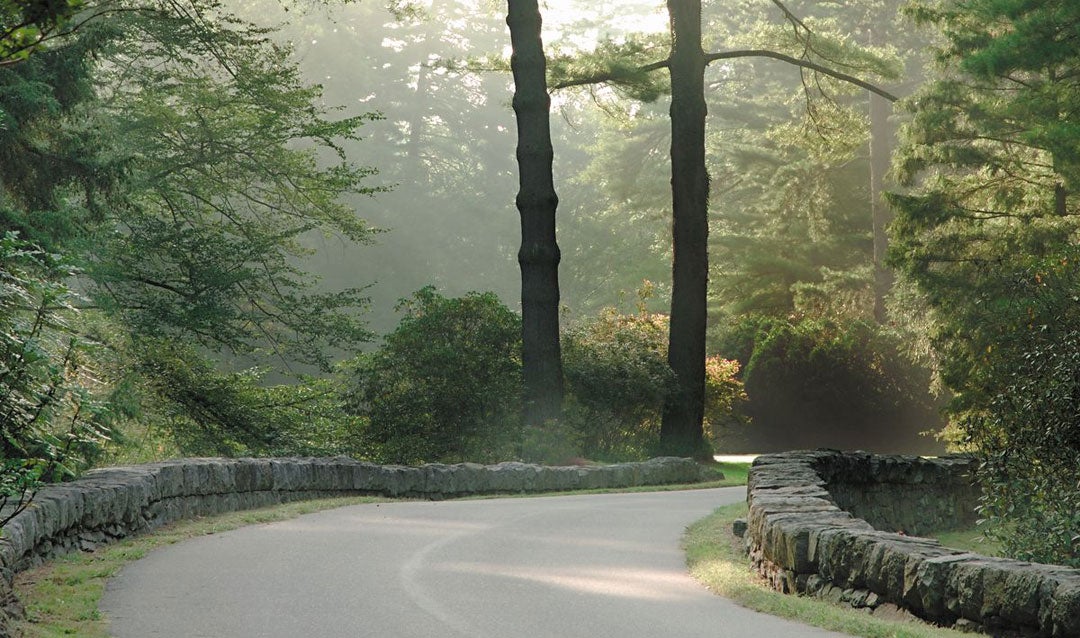
The three-mile Approach Road that meanders from Biltmore Village up to Biltmore House is not there by accident—it’s the result of a very intentional and complex design by Frederick Law Olmsted, Biltmore’s landscape designer.

Everything by design

In Olmsted’s own words, “…the most striking and pleasing impression of the Estate will be obtained if an approach can be made that shall have throughout a natural and comparatively wild and secluded character; its borders rich with varied forms of vegetation, with incidents growing of the vicinity of springs and streams and the remote depths of a natural forest.”

The road is a perfect blending of forest and landscape with no hard edges to separate the two. The lack of long-range views is intentional.

“The Approach Road is the first important garden and landscape feature you see on the estate,” said Parker Andes, Director of Horticulture. “It gives you a true feel for Olmsted’s skill.”

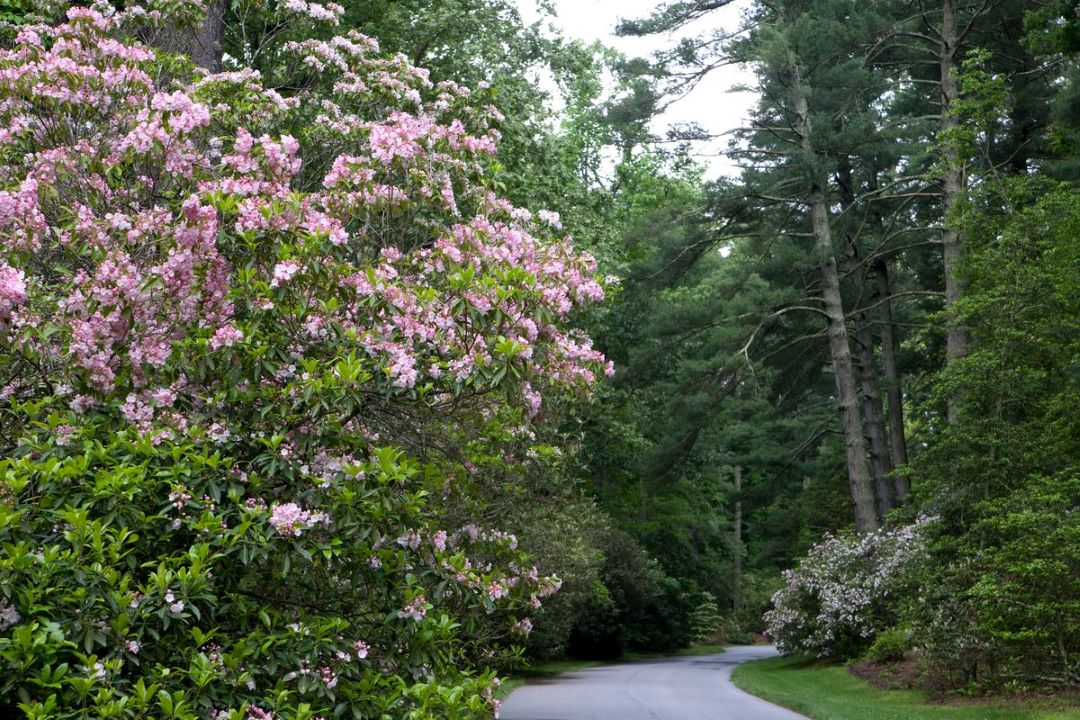
approach road during spring
Mountain laurel blooms along approach road

“Along the brook and on the edge of the drive, Olmsted planted low-growing plants. For variety of color in the winter, he used hardy olives, evergreens with an olive tint, junipers, red cedars, and yews,” explained Parker. “All of these created the complexity of light and shadow that define a picturesque style.”

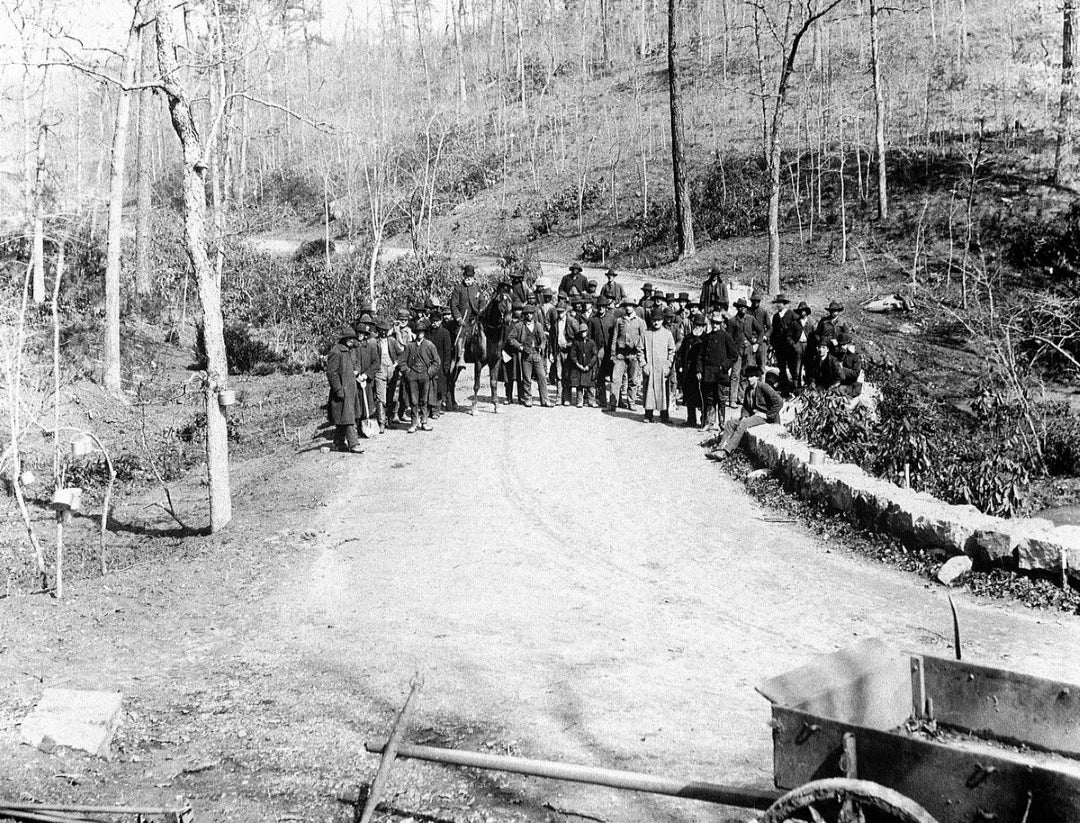
Archival photo of digging crew of Approach Road
George Vanderbilt (front row, far right, in a light-colored hat) and Frederick Law Olmsted (to Vanderbilt’s right) with the crew that dug the Approach Road

Changes through time

Over time, all of Biltmore’s landscapes have matured and changed in appearance. The challenge for today’s landscaping team lies in determining Olmsted’s original intent for the approach road, and they use archival resources such as early plans, letters of correspondence written during the construction of the estate, and information about Olmsted’s design philosophies to help them stay true to the original vision.

Sometimes, variations from the approach road plan are necessary. For example, Olmsted planted some exotic plants that were not invasive at that time, including Oriental bittersweet, mahonia, and barberry. We’ve replaced those with others plants that offer similar characteristics and looks. We also now know that certain plants will not thrive where originally planted, so we select others that are able to do well in those original locations. “It’s a continual learning process, and each year I discover something new,” said Parker.

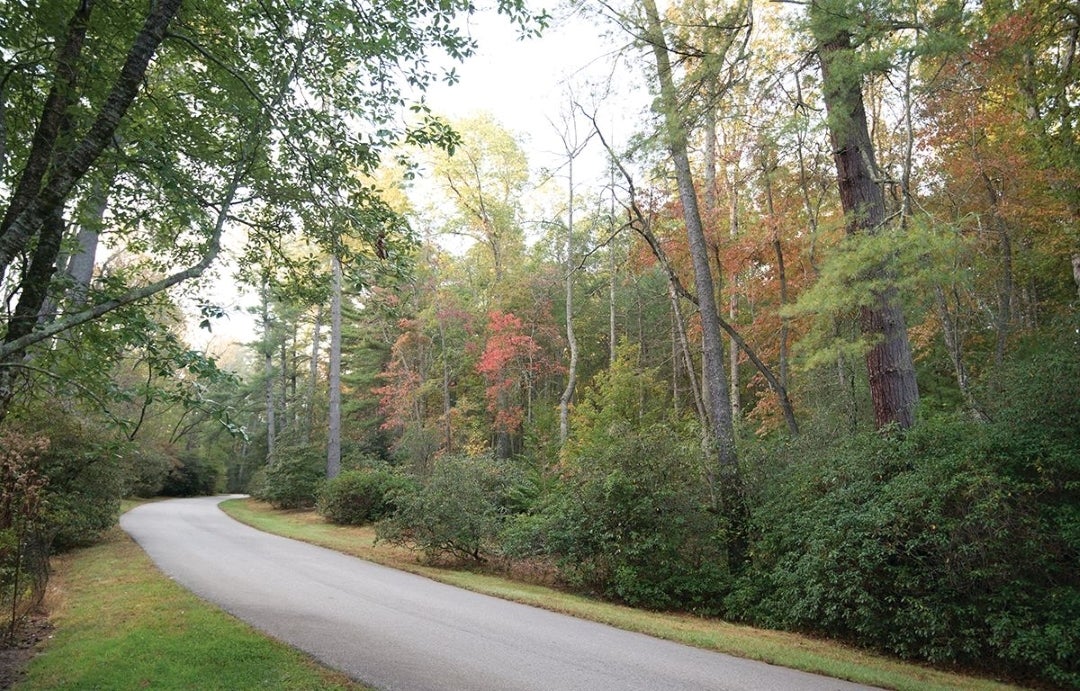
Fall on the Approach Road at Biltmore
Leaf peeping on the Approach Road during fall is a favorite past time for visitors.

Musical November Evenings in the Winter Garden

Candlelight Christmas Evenings is now underway, meaning Biltmore House is filled with firelight and candlelight as well as live music on select evenings. We’re delighted to host the following musical performers in the Winter Garden during the month of November.

Friday, November 4
Arioso of Athens, GA
Flint Hill Handbell Choir of Shelby, NC

Saturday, November 5
The Grove A Cappella Choir of Maysville, GA
Dogwood Duo of Blountville, NC

Sunday, November 6
Starlight Carolers of Asheville, NC
Classic Touch of Weaverville, NC

Monday, November 7
Songspinners of Waynesville, NC
Bruce Lang Duo of Barnardsville, NC

Tuesday, November 8
Hendersonville Chorale of Hendersonville, TN
Bliss of Vero Beach, FL

Wednesday, November 9
Starlight Carolers of Asheville, NC
SilverLight Flute Duo of Asheville, NC

Thursday, November 10
Hendersonville Chorale of Hendersonville, TN
Bliss of Vero Beach, FL

Friday, November 11
Nashville Notes Chamber Singers of Nashville, TN
14 Strings of Charlotte, NC

Saturday, November 12
Highest Praise of Johnson City, TN
Ladies of Lee of Cleveland, TN
Cambia Flute Ensemble of Kingsport, TN

Sunday, November 13
Ridgeview High School of Winter Park, FL
Bittersweet Two of Blountville, TN

Monday, November 14
Bob Jones Academy Elementary of Greenville, SC
Flute Frolics of Boone, NC

Wednesday, November 16
Bel Canto Singers of Charlotte, NC
Windswept Melodies of Asheville, NC

Thursday, November 17
Milligan College Women’s Chorale of Milligan, TN
Duo Dolce of Boone, NC

Friday, November 18
Patriot Pride Honors Chorus of Wake Forest, NC
Shane Parish & Emmalee Hunnicut of Asheville, NC

Saturday, November 19
North Greenville University Singers of Tigerville, SC
Carolina Style Chorus of Hickory, NC
Cambia Flute Ensemble of Kinsport, TN

Sunday, November 20
First Presbyterian Chamber Singers of Spartanburg, SC
Cedarwind Duo of Mars Hill, NC

Monday, November 21
Bob Jones High School Choir of Greenville, SC
Bob Jones Academy String Quartet of Greenville, SC

Tuesday, November 22
Forsyth Country Day School of Lewisville, NC
Belmont Duo of Asheville, NC

Wednesday, November 23
Greensboro Youth Chorus of Greensboro, NC
Braidstream Two of Asheville, NC

Friday, November 25
Cecelia’s Day of Anderson, SC
Sons of Lafayette Male Voice Choir of Lafayette, GA
Bittersweet of Blountville, TN

Saturday, November 26
Classical Conversations of Mallard Creek of Charlotte, NC
Cecelia’s Day of Anderson, SC
Bittersweet of Blountville, TN

Sunday, November 27
Cantemus Women’s Choir of Kingsport, TN
Blue Ridge Harp Duo of Polkville, NC

Monday, November 28
Providence High School of Jacksonville, FL
Bittersweet of Blountville, TN

Tuesday, November 29
Asheville High School of Asheville, NC
Duo Dolce of Boone, NC

Wednesday, November 30
Song O’ Sky of Asheville, NC
Trillium of Asheville, NC

Fall Garden Maintenance at Biltmore

As fall beauty begins to blanket the estate, our dedicated garden crew is busy preparing the grounds for cooler temperatures. Of course, the blowing and raking of leaves is a seemingly never-ending task among the crew this time of year, but here’s a peek into a few of their other duties.

Gardener cleaning out Italian Garden pools

After their summertime glory, Marc Montrell (pictured) is working to gather fading lilies from the Italian Garden ponds over the next few weeks. Along with all of our raked leaves across the estate, they will be composted. Many of our guests ask what happens to the koi during this time, but they actually remain in the ponds and hibernate over winter!

Gardener John Smith pruning roses

There are still many gorgeous blooms in the Rose Garden, but there is a lot of pruning and “deadheading” to be done over the next couple of weeks. A preliminary trim to mid-height is done in late November, with the final cutting in late winter when the roses are dormant. Gardener John Smith (pictured) notes that this method may not apply in other gardens, at Biltmore’s Rose Garden acts as it’s own ecosystem, protected by the stone walls which retain heat and offer protection from the wind.

Clare Whittington watering evergreen trees in front of Biltmore House

The Garden crew recently planted winter evergreens such as Blue Spruce, Hemlock and Magnolia trees in the large pots along Biltmore’s front door. Gardner Clare Whittington (pictured) notes that watering these potted trees must be done frequently, and are constantly monitored during freezing temperatures in the winter.

No matter what time of year guests visit, this wonderful team works hard to ensure the gardens and grounds are beautiful. Visit the Gardens & Grounds section of our website for more information about what’s featured throughout the year.

“Polar Express Sunbelt” sweeps the 2016 Biltmore International Rose Trials

A jury of rose experts from around the world has selected the winning roses in the 2016 Biltmore International Rose Trials, held recently in Biltmore’s historic Rose Garden.

Polar Express Sunbelt (photo above), bred by Kordes (KORblixmu), took the top award: the George and Edith Vanderbilt Award for Most Outstanding Rose of the Trials.

Since 2011, Biltmore’s historic Rose Garden has been home to the trials in which more than 150 varieties from growers and breeders worldwide have been planted and cared for by Biltmore’s expert horticulturalists.

In addition to winning Best in Show, Polar Express Sunbelt won the Edith Wharton Award for Best Floribunda, and the William Cecil Award for Best Growth Habit.

Additional winners this year were:

Honeymoon Arborose, bred by Kordes (KORhemtra), winner of the Gilded Age Award for Best Climber and the Lord Burleigh Award for Most Disease Resistant


Double 10, bred by Ping Lim (LIM10), winner of the Pauline Merrell Award for Best Hybrid Tea

The Lark Ascending, bred by David Austin Roses (Ausursula), winner of the Chauncey Beadle Award for Best Shrub

Each trial lasts two years and a permanent jury judges the roses four times per year. This year’s final round of competition started with 31 entries planted in 2014 from Canada, the U.S., France, Ireland, Great Britain and Germany.

Trials of this type are open to rose breeders around the world – from professional to beginner. Competing roses are evaluated for overall health and rigor; fragrance; disease resistance; and ability to repeat bloom. 

Congratulations to all of the winners!

Biltmore's Rose Garden receives Award of Garden Excellence

During the trials event, Biltmore’s rosarian Emily Wilson and past American Rose Society president Jolene Adams unveiled an award in honor of Biltmore’s historic Rose Garden: the World Federation of Rose Societies Award of Garden Excellence. Biltmore’s rose garden is one of only 10 gardens in the United States and 62 worldwide to receive it. Susan Fox, one of the Rose Trials jurors, tells us that gardeners and garden lovers travel just to see the gardens that receive this award. We are honored to have received it! 

Fall Arrives in Biltmore’s Gardens

When Frederick Law Olmsted designed Biltmore’s gardens, he planned their beauty to last through all four seasons. It’s little wonder the blooms of the estate’s gardens continue well into fall.
            In the formal gardens, the show continues with carefully planted flowers designed to blossom through cooler temperatures. In the Walled Garden, an array of fall mums provide color from late September though the end of October. This year’s color show will include orange, lilac, golden yellow, and royal purple buds in the pattern beds and blazing bronze blooms under the arbors.
            Rose lovers can enjoy a sneak peek of the judging of the annual International Rose Trials on September 24. Since 2011, the estate’s historic Rose Garden has served as the home for the trials. More than 90 varieties from growers and breeders worldwide have been planted and cared for by Biltmore’s horticulturalists. Each trial lasts two years, with a permanent jury judging the roses four times each year.
            The glory of fall blooms continues through the estate’s informal gardens. The Azalea Garden, filled with 15 acres of native azaleas, enjoys a second bloom in the fall. The area’s other gardens are also alive with late blooming annuals, perennials, and vibrant leaves on the estate’s native and exotic trees.
            Those looking to learn from Biltmore’s gardening experts can enjoy free demonstrations at A Gardener’s Place shop, located below the Conservatory. Available every Tuesday at 1 p.m. from September 6 through October 19, the complimentary session provides a quick lesson on Success with Succulents. All attendees receive a 20% coupon towards the purchase of a succulent in the shop.
            For those looking for fall color beyond the gardens, a scenic drive through the estate provides a wonderful opportunity to slow down and savor views of forests flush with color and panoramic vistas. The road by the Reception & Ticketing Sales Center is populated by vibrant orange and red sugar maple trees, while an afternoon drive by the Bass Pond offers views of bright fall foliage backlit by the afternoon sun. A trip to Antler Hill Village & Winery provides the chance to drive by the Lagoon and enjoy views of the house’s western facade framed by vibrant leaves. The promise of fall color begins in early September and continues until late October, making any time a perfect time to experience autumn on the estate.