Art & objects
Gargoyles and grotesques: Biltmore’s watchful guardians

Posted 10/10/26
Updated 10/12/26
Gargoyles and grotesques are some of the most fascinating features of Biltmore House. What are they and where can you find them?
What are gargoyles?
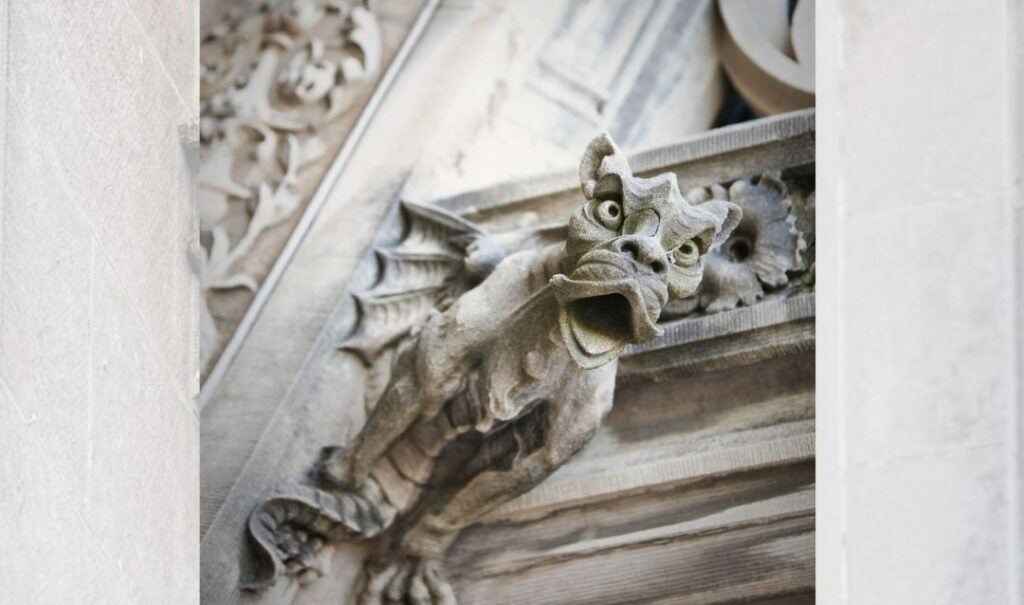
“This type of carving is a projecting spout to direct water from a gutter away from the wall underneath, often carved with representations of animal or human figures,” said Lori Garst, Curator. “The term gargoyle originates from gargouille, the Old French word for throat, indicating its function as a waterspout or drain.”
According to Lori, there are 10 gargoyle figures on the front facade of Biltmore House: Three on the Staircase Tower, three on the Entrance Tower, and four on the Library Tower, all of which served as the drains for balconies on the house.
What are grotesques?
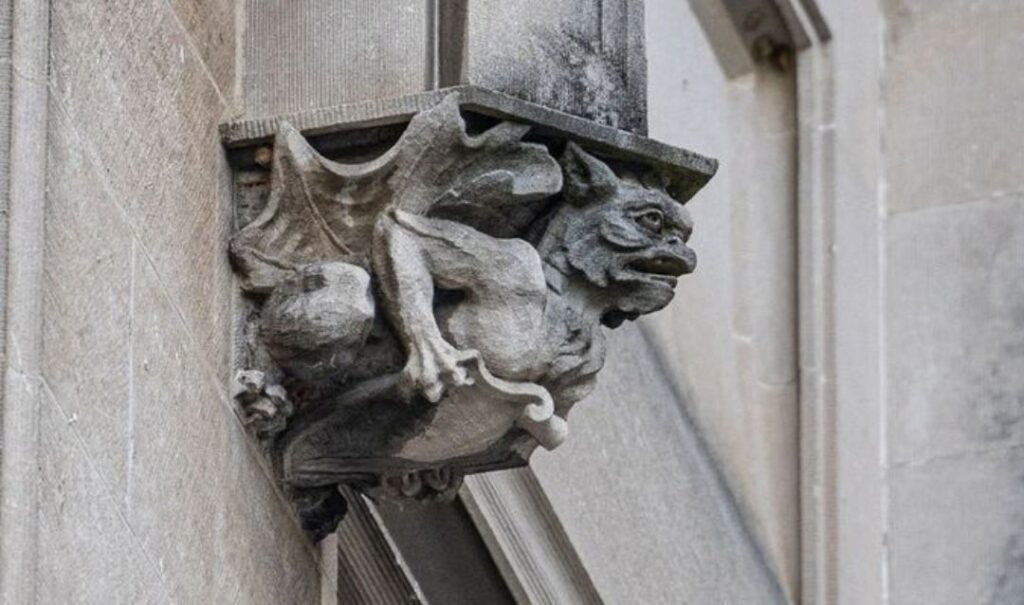
This style of ornamentation originated in Italy in the 15th century and was based on motifs copied from subterranean Roman grottos, from which the name comes. Grotesques feature distorted human, animal, and plant forms blended into strange hybrids and exaggerated versions not found in nature. They can be painted, molded in stucco, or carved from stone like the ones at Biltmore.
Skilled stonecutters and carvers
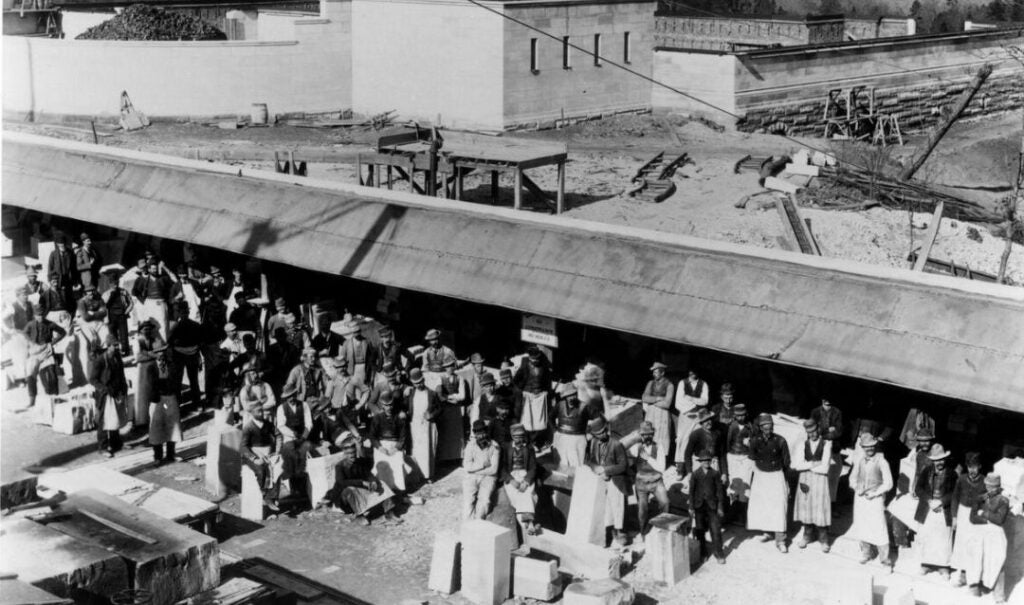
In selecting workers who would help build Biltmore House, George Vanderbilt and architect Richard Morris Hunt chose the finest European stone cutters and their apprentices to execute Hunt’s designs. These old-word craftsmen were considered to be the most highly skilled of all those who worked on the construction of the house.
From archival records, we know that the stonecutters’ work had to meet Hunt’s exacting standards. According to D. C. Weeks, who oversaw the quarry operation and and hired many of the stonecutters, the stone and moldings were to be “tooled say six blows to the inch, with a three-inch tool, with points 1/5 inch apart” and “7 blows to the inch…”
Gargoyles and grotesques on Biltmore House
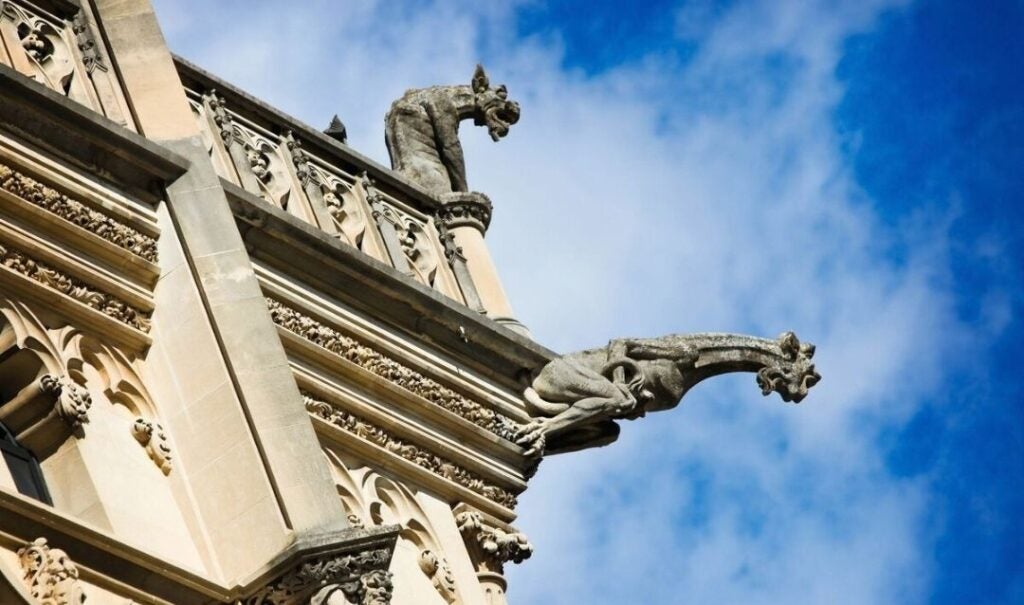
In addition to their expertise in cutting and shaping the limestone from which Biltmore House is constructed, the stonecutters were also responsible for the gargoyles, grotesques, and other ornamental carvings found all over the interior and exterior of the home. Such decorative work was a hallmark of Hunt’s design for this and other projects.
The craftsmen first roughed out the gargoyles and grotesques from blocks of limestone in the stone sheds on the Esplanade. Drawings in our archives note the requirement that all sculptural elements should be mocked up and approved by Hunt prior to final carving.
“We know from archival photographs that the fine detail carving was done in situ on the house after Hunt approved the final version of the design,” Lori said.
Categories of carvings
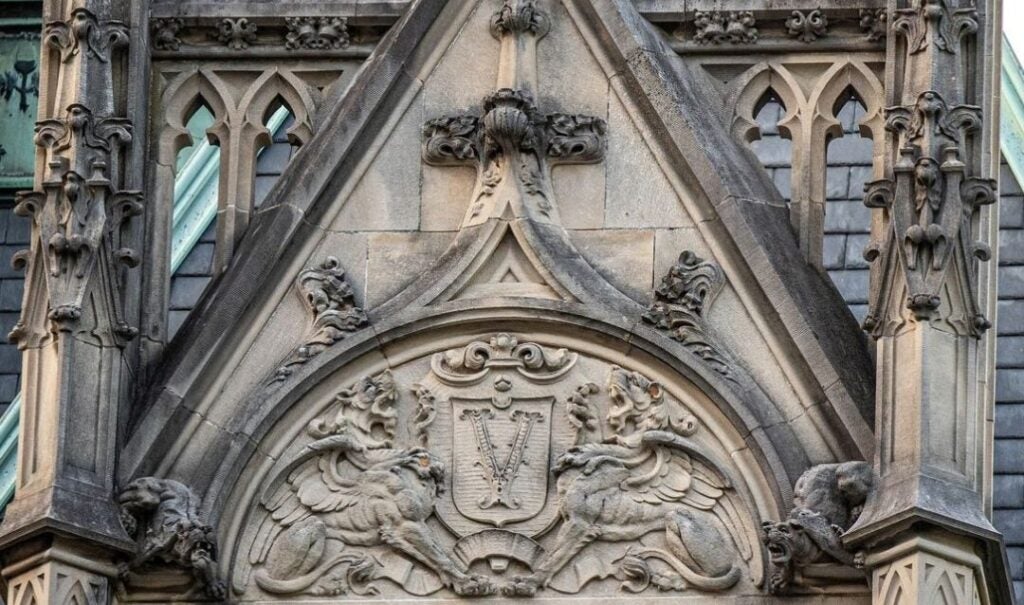
The carvings and sculptures on the outside of Biltmore House fall into several distinct categories: coats of arms and heraldic symbols like the references to the Vanderbilt family, realistic animals and human figures, and carved ornamental motifs such as grotesques and arabesques.
See gargoyles, grotesques, and ornamental carvings up close

With a guided Rooftop Tour of Biltmore House, you’ll be able to see many examples of carved ornamentation, including gargoyle-style figures and grotesques, up close.
Take one of our watchful guardians home
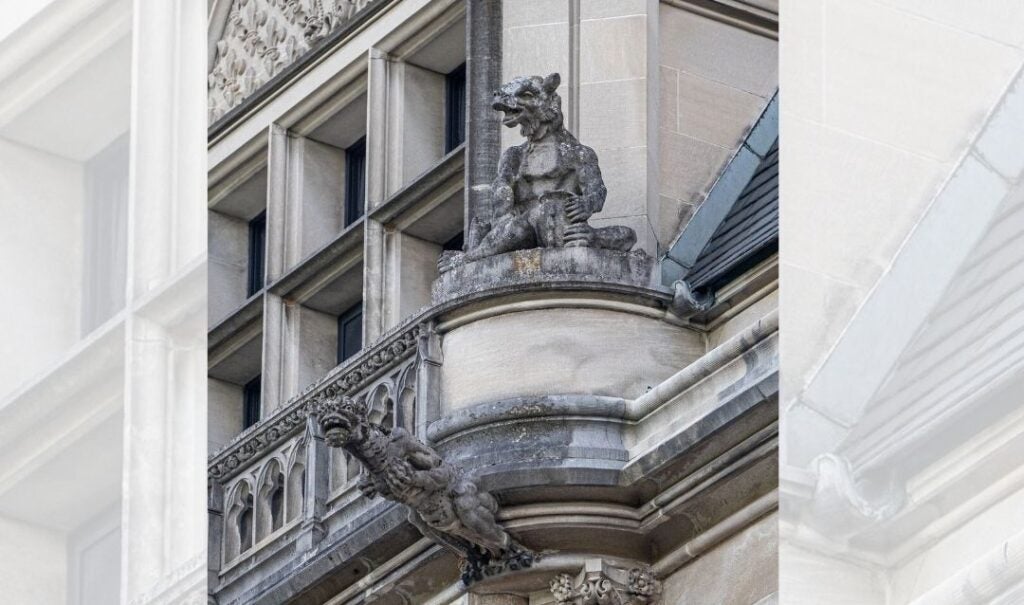
Remember your Biltmore visit with a special memento of the trip! Find our collection of watchful guardians in estate shops and online.
Fun fact: Early photos of Richard Morris Hunt’s model of Biltmore House do not show gargoyles and grotesques including the honey bear found outside the Balcony Room. Our Museum Services team suspects it was added to the model several years later


