Fashion blooms at Biltmore this spring!

Fashion blooms at Biltmore this spring! Join us now through May 21 for Fashion en fleur featuring floral arrangements in Biltmore House and several “surprise guests” whose grand Gilded Age costumes are created entirely from beautiful botanical elements.

Finding fashion cues
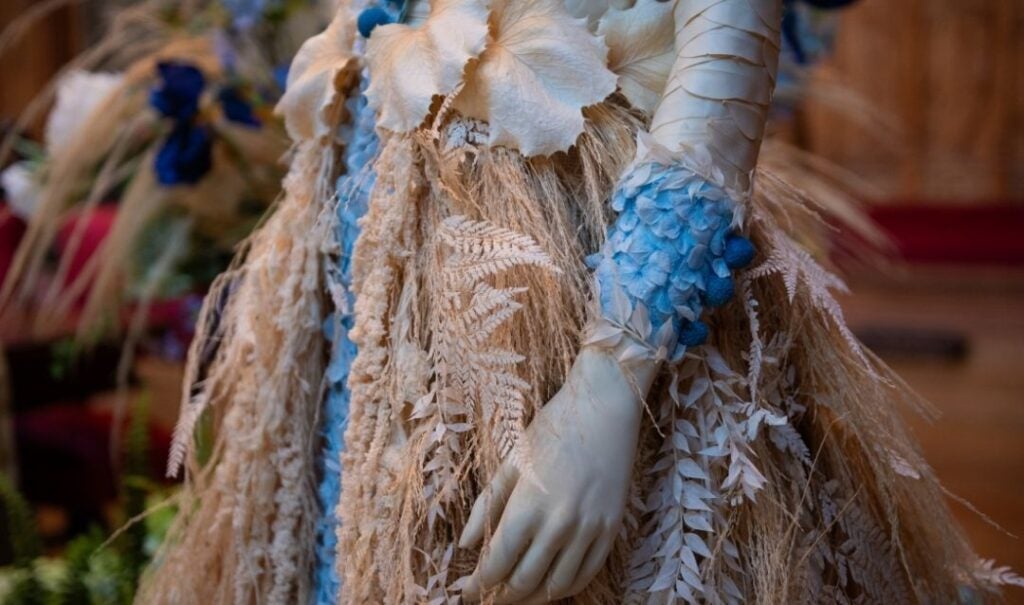
Detail of botanical mannequin in Biltmore House Banquet Hall
Each floral figure features exquisite botanical details, like these hydrangea “cuffs” on the dress in the Banquet Hall.

In preparation for spring and the creation of Fashion en fleur, the Floral team met with Lori Garst, Curator, to learn more about fashion during the Vanderbilt era at Biltmore.

“We worked with Lori to learn about different silhouettes that were popular and how they changed over time, as well as styles that would have been worn at Biltmore for different activities at different times of day,” said Lizzie Whitcher, Floral Manager.

Fanciful fashion
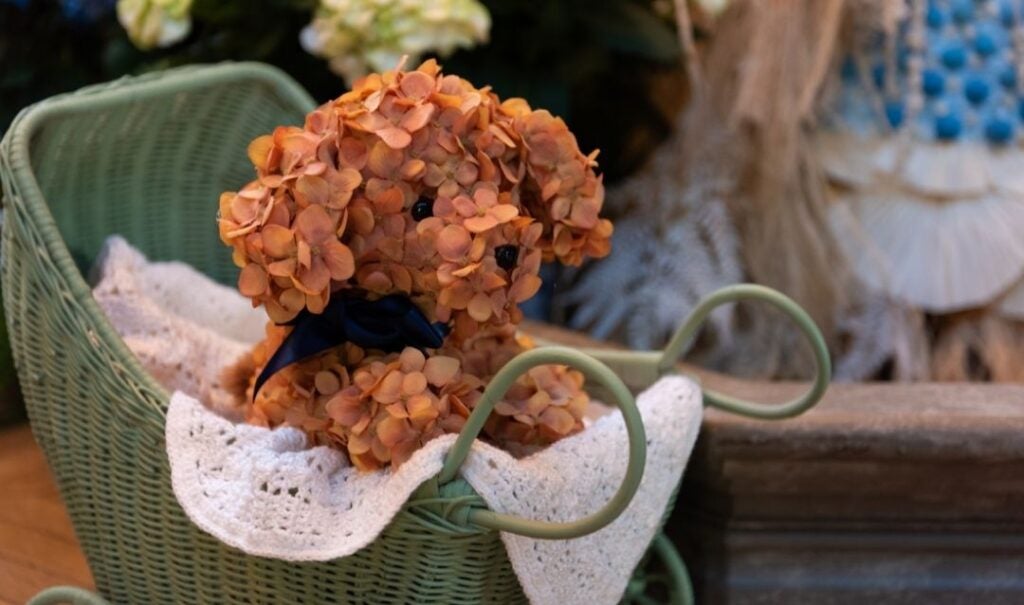
Botanical puppy made out of hydrangeas and other materials.
An adorable puppy made of dried hydrangeas accompanies the floral figure in the Banquet Hall.

Though the shapes and styles of the costumes are authentic, the Floral team took a fanciful approach to interpret them, hoping to surprise and delight guests with these art pieces. Botanical material was used to create every detail, from hair and hats to trims, shoes, and even a puppy! 


Billiard Room

For the Billiard Room, Don and Laura designed a gentleman who is dressed for the outdoors, wearing a homburg hat and carrying a fishing pole. The materials used include dried willow reeds, magnolia leaves, moss, birch bark, red eucalyptus leaves and feathers. He is surrounded with fresh potted ferns. 
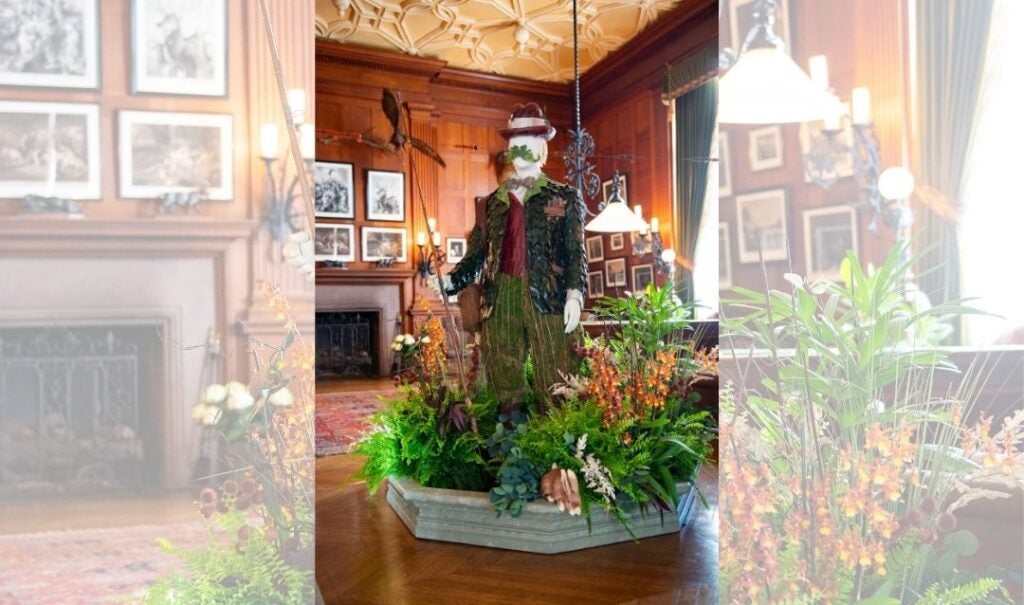
This floral figure represents a gentleman dressed for the outdoors.
Dressed for the sporting life, you’ll find this floral fellow in the Billiard Room, complete with a botanical bunny at his feet!

Fun fact: Look for little botanical insects, butterflies, and a bunny around this fashionable fellow.


Banquet Hall

Inspired by a dress from the Gilded Age drama series, Joslyn and Marcie created the lovely lady in the Banquet Hall. Her dress is designed with blue craspedia, blue and gold hydrangea, bleached palms, Italian ruscus, hanging amaranthus, star fern, queen flower, willow eucalyptus, and star flower. 
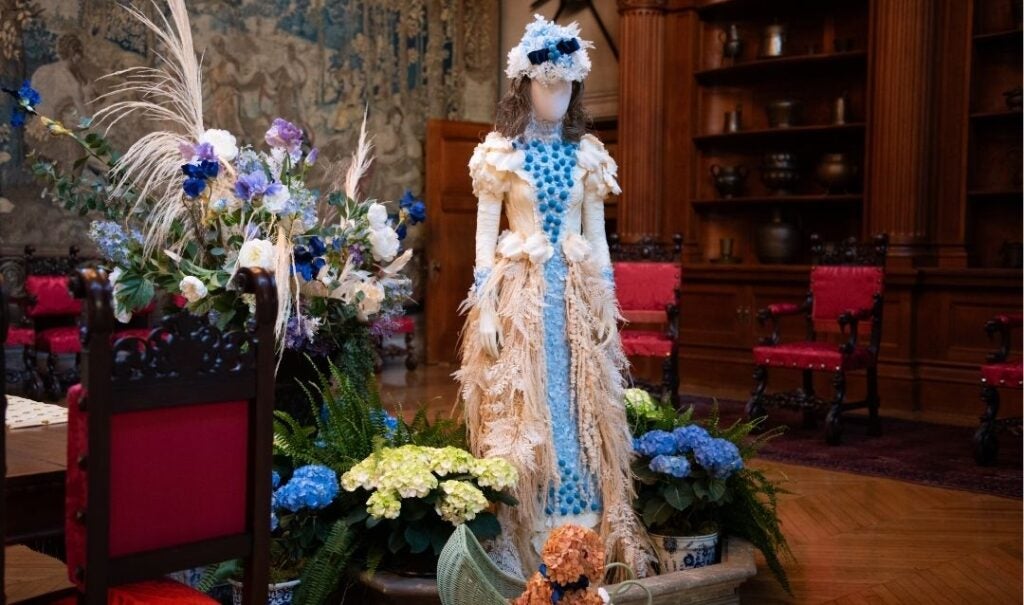
A floral mannequin in the Banquet Hall has a puppy made of hydrangeas in the doll carriage at her feet.
A costume from The Gilded Age dramatic series inspired this stunning ensemble for Fashion in fleur.

Fun fact: This floral figure stands in a garden with a plant-based puppy the team playfully named Gigi. 


Morning Salon

Designed by Callista and Sophie, the floral figure in the Morning Salon wears a costume based on an actual House of Worth dress that features a sun pattern radiating up the skirt. They used blue and green hydrangea, populus eucalyptus, spiral eucalyptus, button flower, preserved roses, Indian paintbrush, orange strawflower, hanging amaranthus, bleached gypsophila, red yarrow, red starflower, red plumosum, and bleached bullet flower to create the striking design.    
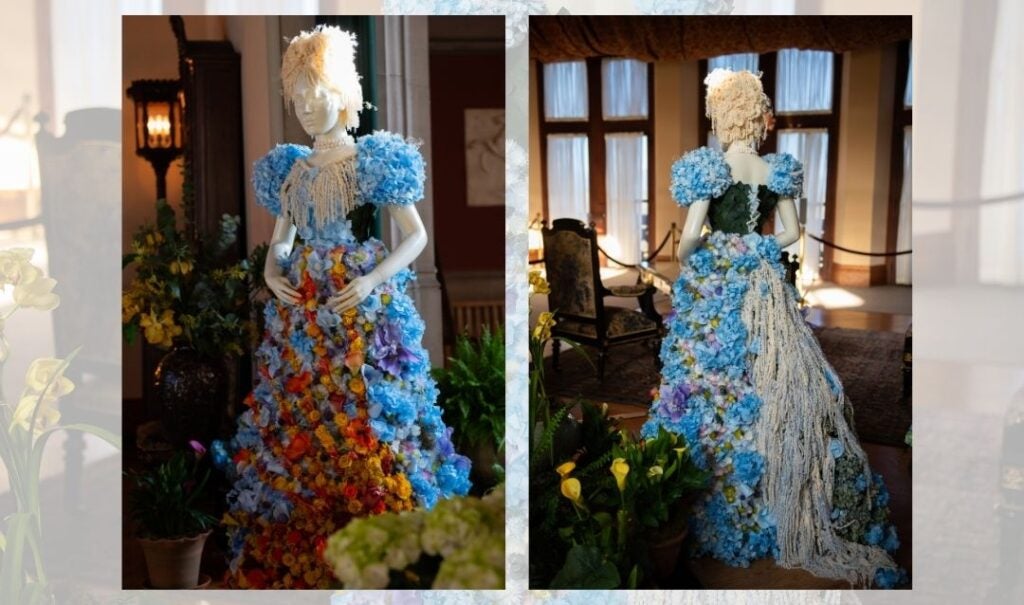
A floral figure in a botanical gown based on a real House of Worth fashion design.
This floral figure in the Morning Salon wears a botanical gown based on an actual House of Worth design featuring the rays of the sun across the front of the skirt and beautiful details in back.

Fun fact: The floral designers drew colors from the Monet paintings in the Morning Salon.


In the Tapestry Gallery, Whitney designed a stunning costume that captures the beauty and sense of movement in Edith Vanderbilt’s dramatic dress and wrap in her 1910 Boldini portrait that hangs nearby. Materials include black rose petals, ferns, white oak leaves, bleached hydrangea, blackbeard wheat, star fern, anahaw leaves, dried sun palms, reindeer moss, strawflower, and staavia. 
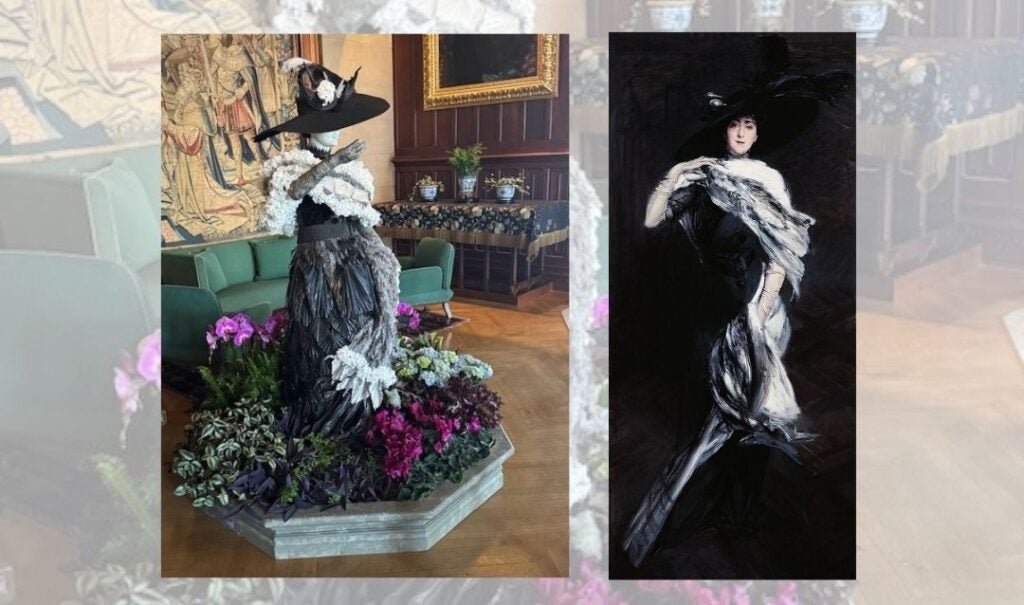
Floral figure representing the Boldini portrait of Edith Vanderbilt and the actual portrait.
A floral figure (left) in the Tapestry Gallery captures the dramatic look of Edith Vanderbilt’s 1910 portrait (right) by Giovanni Boldini.

Fun fact: Artist Giovanni Boldini was the known as the “Master of Swish” for the way he painted flowing draperies.


Second Floor Living Hall

Fiona and Nikki designed the Second Floor Living Hall dress based on a classic “Gibson Girl” silhouette. This fashionable lady is designed with preserved roses, bunny tails, hydrangea, pampas grass, green sable grass, elephant reed, reindeer moss, pink gypsophila, and parchment fern. Although the materials are all preserved or dried, the lower part of her train will be changed out each week with fresh flowers. Doesn’t she look ready to sweep down the Grand Staircase and go for a garden stroll with her parasol?
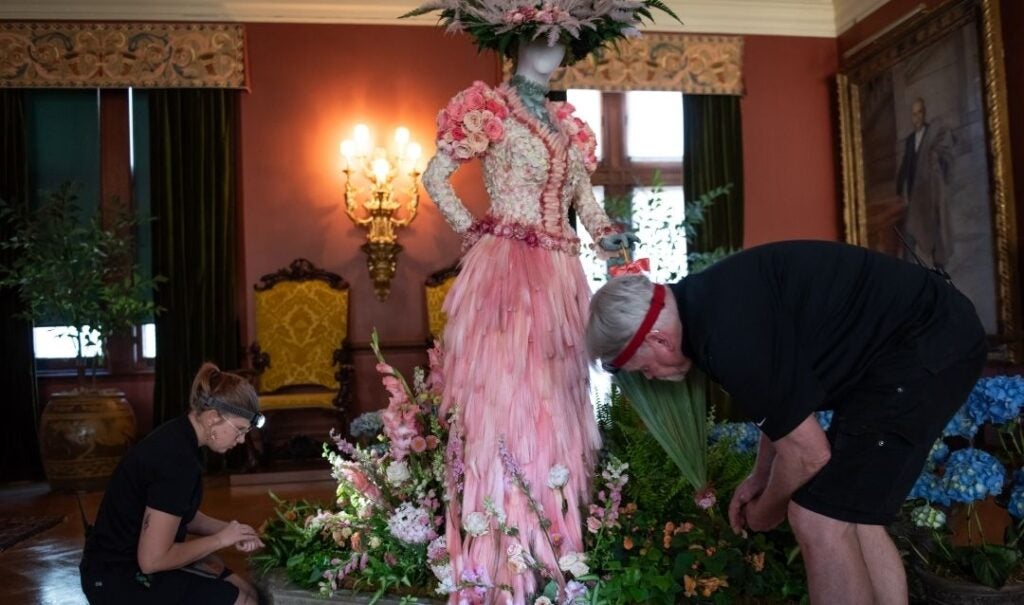
Staff members work on a Gibson Girl floral mannequin in Biltmore House
Floral team members put finishing touches on the “garden” that surrounds the Gibson Girl floral figure in the Second Floor Living Hall.

Fun fact: The Gibson Girl fashion style symbolized an ideal “new woman” who signaled a change from the more restrictive Victorian era.

Plan your spring visit now
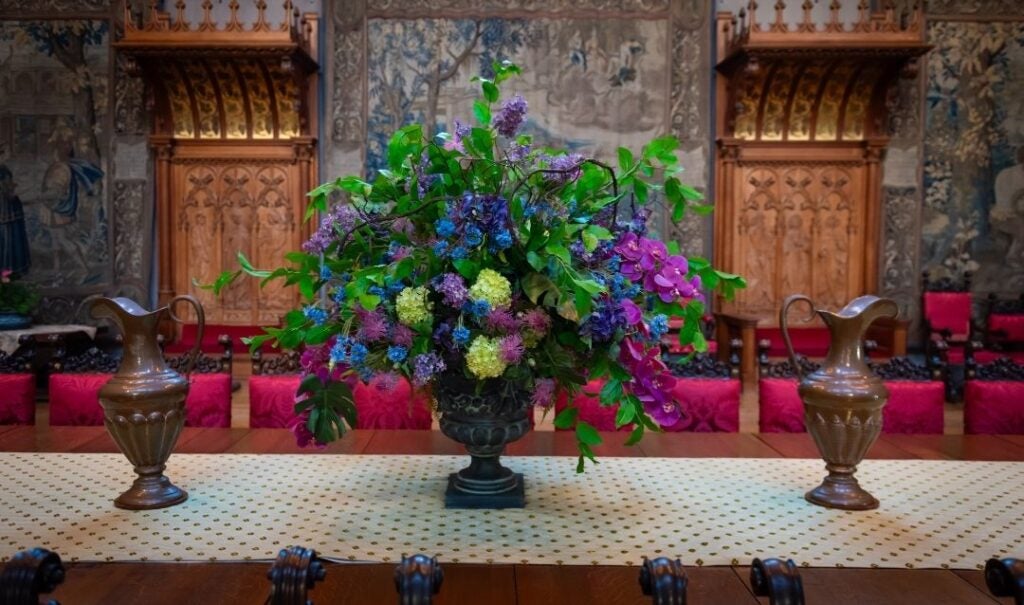
Spring floral arrangement in the Banquet Hall of Biltmore House.
In addition to our fashionable floral figures, you’ll also enjoy stunning spring arrangements as part of Fashion en fleur.

Spring is the perfect season to visit Biltmore to find our gardens in bloom, enjoy Fashion en fleur, experience the wonders of Luminere on select evenings, and so much more!
Reflections of The Gilded Age at Biltmore

The release of Sir Julian Fellowes’ series The Gilded Age on HBO and the 2022 “Gilded Glamour” theme for the Met Gala have brought renewed attention to a fascinating period in American History.

We invite you to learn about it with a brief overview of the era and its connections to our very own Gilded Age estate: Biltmore.

What was the Gilded Age?

The Gilded Age is an era in American history from the 1870s to the turn of the century. It was marked by rapid economic expansion, particularly in industries such as railroads and manufacturing. Families such as Carnegie, Rockefeller, and Vanderbilt rose to new social prominence during this time, marking their ascendance with some of the grandest homes and most glittering parties the country had ever seen.

Expand
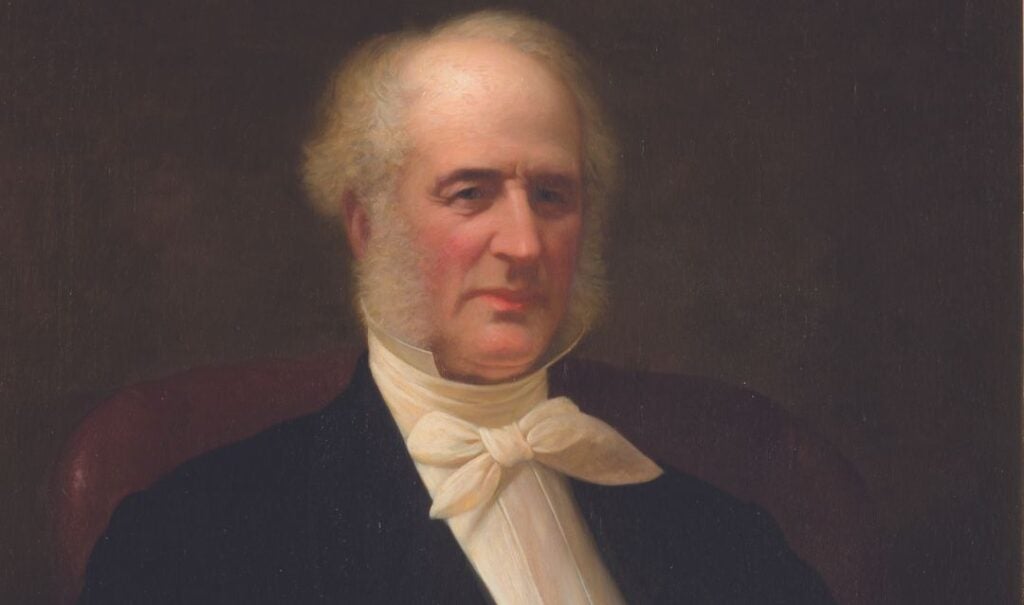
Portrait of Cornelius “Commodore” Vanderbilt by Jared B. Flagg, c. 1879 (cropped)
Expand
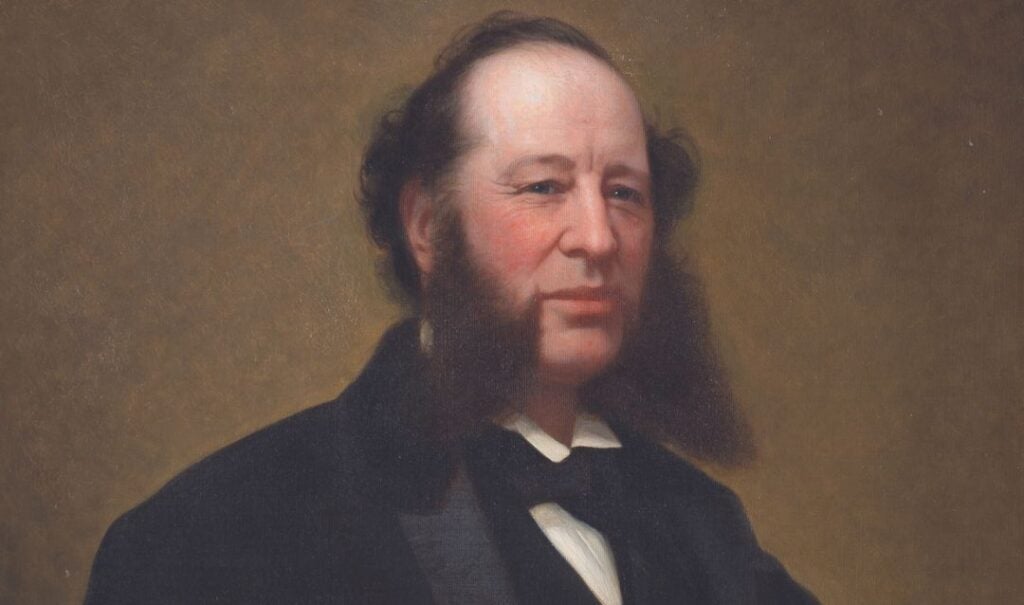
Portrait of William Henry Vanderbilt by Jared B. Flagg, c. 1877 (cropped)
Expand
Photograph of George Vanderbilt, a scholar, collector, and patron of the arts who came of age during America’s Gilded Age
Expand
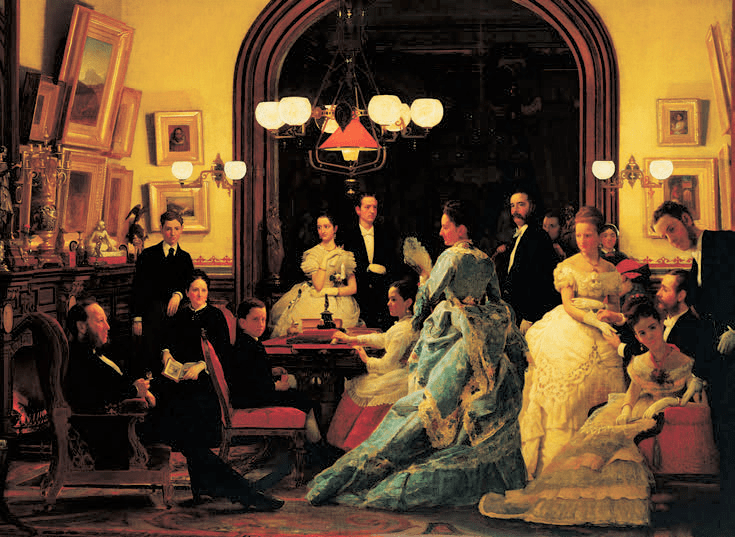
Vanderbilt family portrait by Seymour Guy titled Going to the Opera, c. 1873

Vanderbilt Lineage: From New York to North Carolina

The first Vanderbilt family member to gain prominence was Cornelius “Commodore” Vanderbilt—an entrepreneur from modest beginnings in Staten Island, New York. Cornelius spent his life building an empire based on shipping and railroad concerns. He and his wife Sophia Johnson had a sizable family with 13 children. 

Their eldest son was William Henry Vanderbilt, who married Maria Louisa Kissam and inherited the business after the Commodore’s death in 1877. William doubled the family fortune before he passed away nine years later.

The youngest child of William and Maria was George Washington Vanderbilt, who wed Edith Stuyvesant Dresser in 1898, three years after the completion of Biltmore in Asheville, North Carolina.

HBO’s The Gilded Age showcases the highs and lows of a wide cast of characters ranging from old New York and Newport families to the newly wealthy members of their society–and everyone in between. You’ll no doubt notice many differences and similarities between the British world of Downton Abbey, its American counterpart in The Gilded Age, and our own story here at Biltmore Estate.

Expand
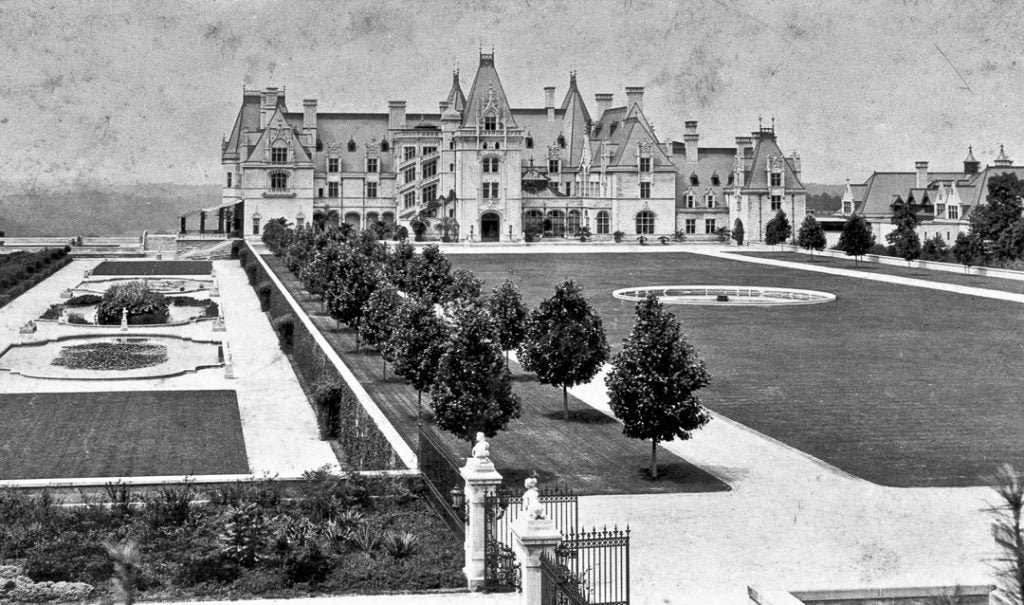
Envisioned as a private oasis for family and friends, George Vanderbilt’s magnificent Biltmore House would become known as America’s Largest Home®. In addition to the house, this circa 1910 photo shows a view (L-R) of the Italian Garden, Esplanade, Front Lawn, and Stable Complex designed and landscaped by Richard Morris Hunt and Frederick Law Olmsted.
Expand
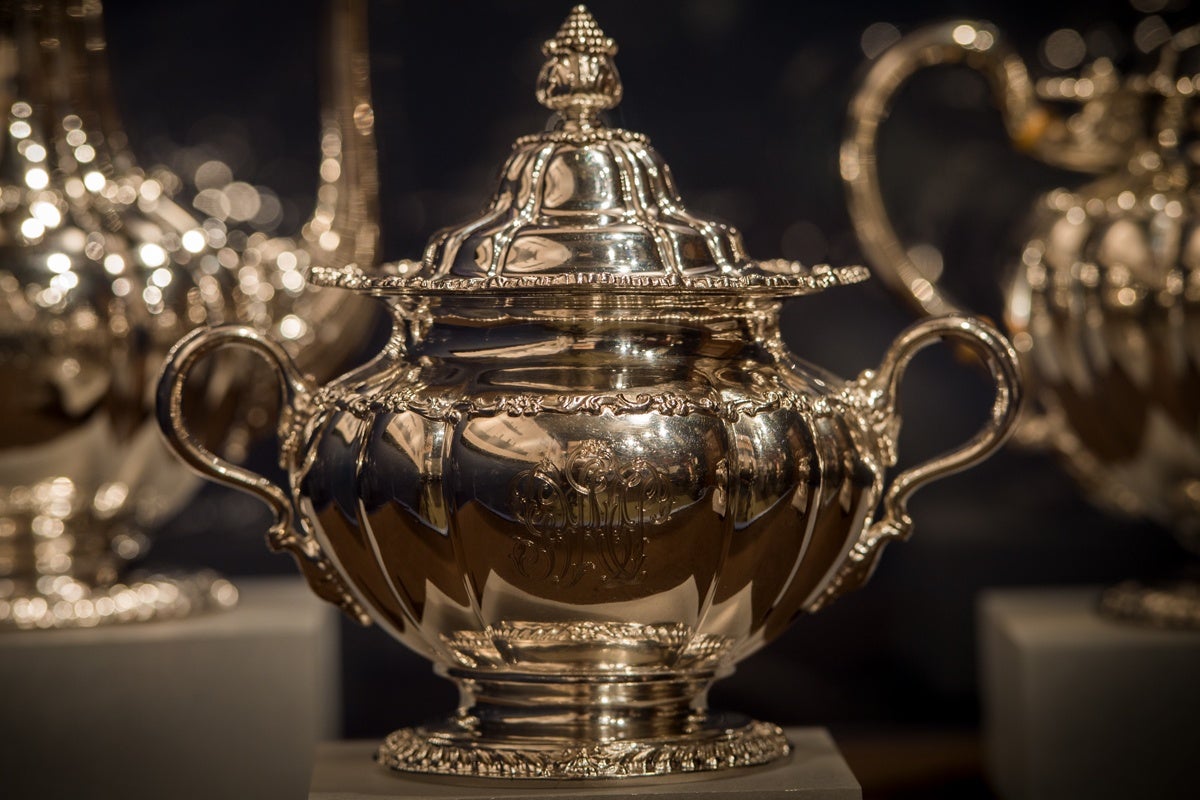
This silver Tiffany & Company tea set was a gift to George Vanderbilt from his mother and it is engraved with his and her initials. She gave him with the set—a gracious symbol of hospitality—to serve guests aboard Swannanoa, his private train car.
Expand
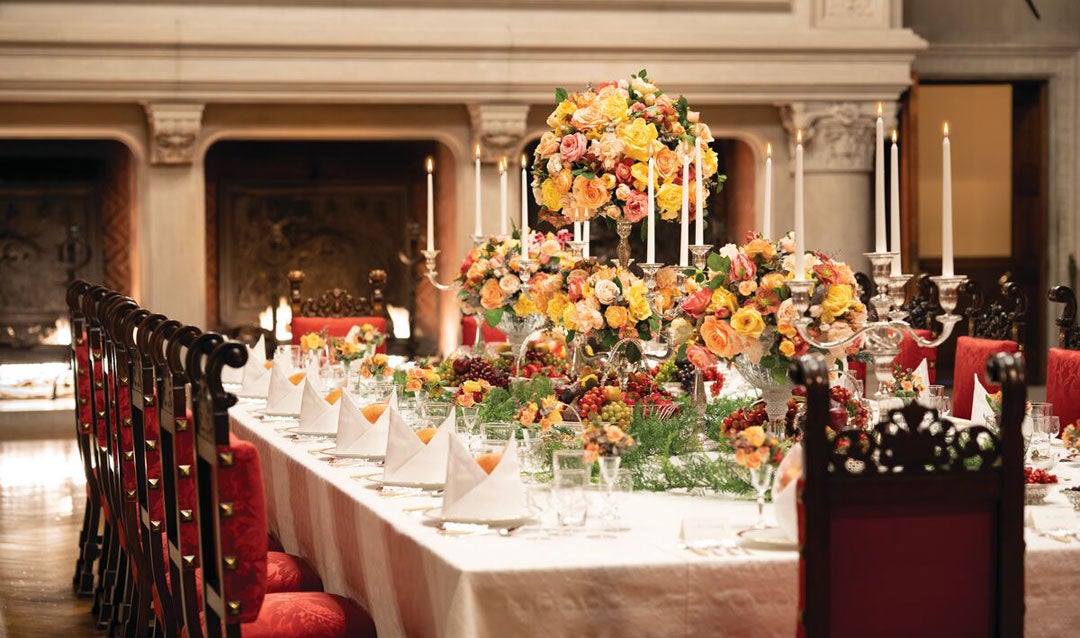
The grand Banquet Hall table set as ut would have been for a grand Gilded Age gathering at Biltmore House during the Vanderbilt era
Expand
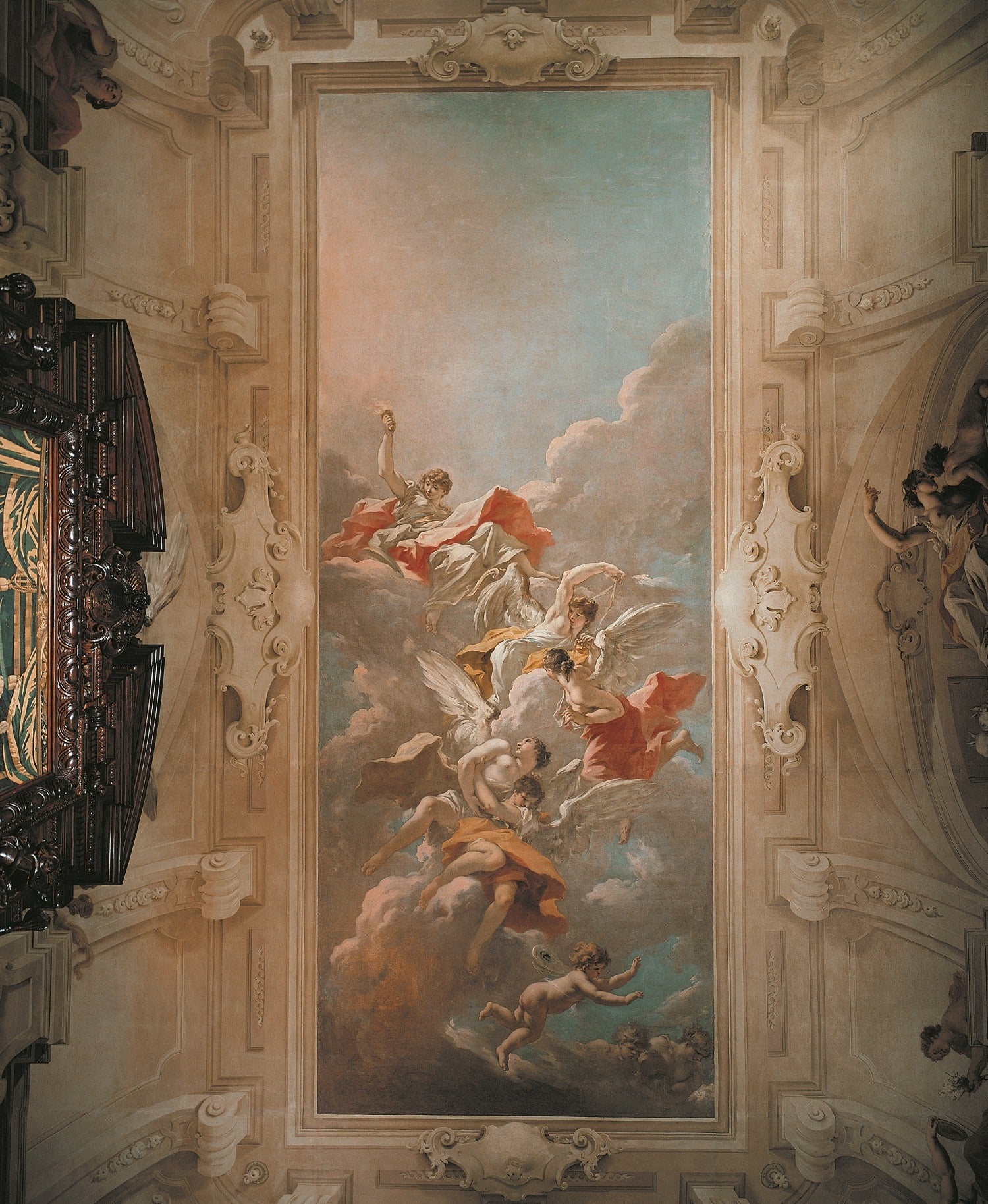
The soaring Pellegrini Ceiling in the Library at Biltmore House. Depicted is “The Chariot of Aurora.”

Bringing Gilded Age Grandeur to Asheville

During this era in American history, wealthy families, such as the Vanderbilts, had built multiple palatial homes in and around New York City. However, when George Vanderbilt was ready to build his grand home, he chose to create a country retreat for his friends and family in Asheville, North Carolina.

Vanderbilt enlisted two distinguished designers of the era to help him bring his vision to life: Richard Morris Hunt and Frederick Law Olmsted. Together they created a distinctly European-style estate, but with an expansive feel and modern technologies that were hallmarks of the American Gilded Age.

Expand
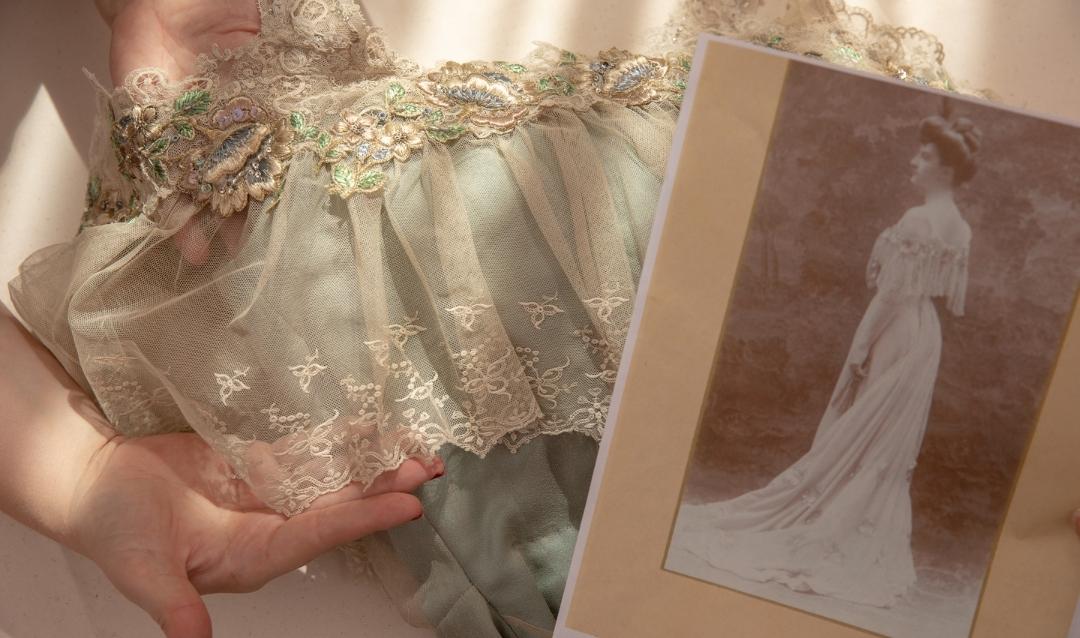
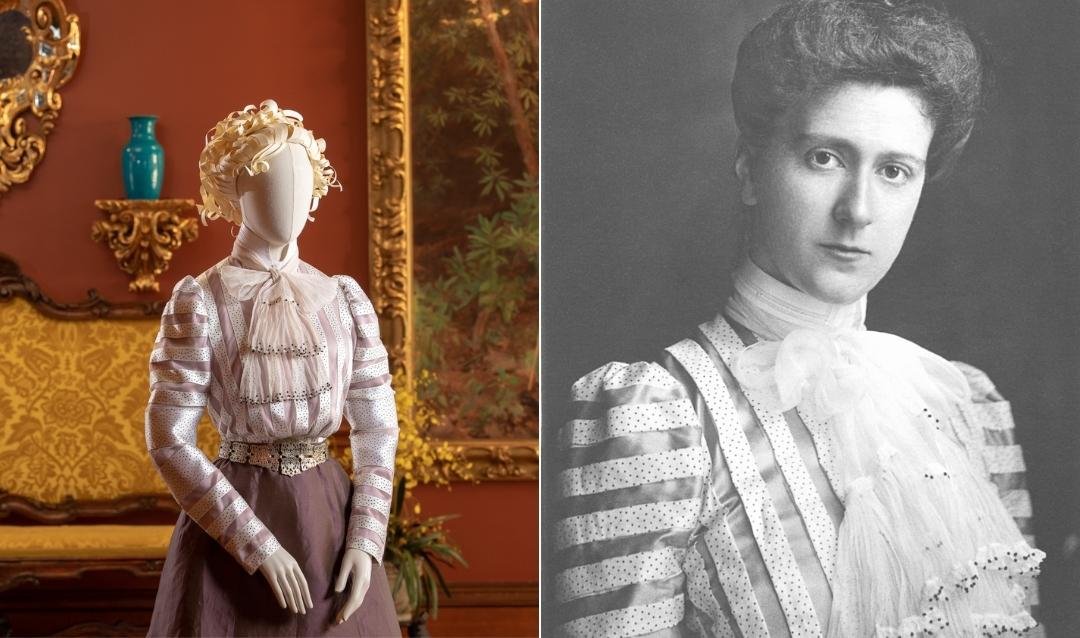
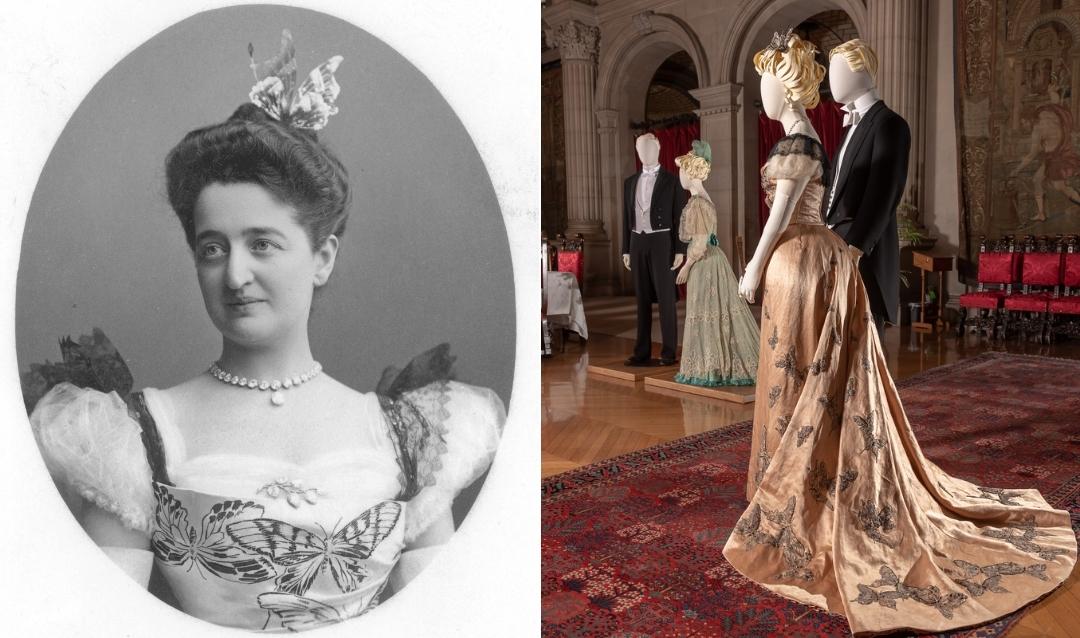
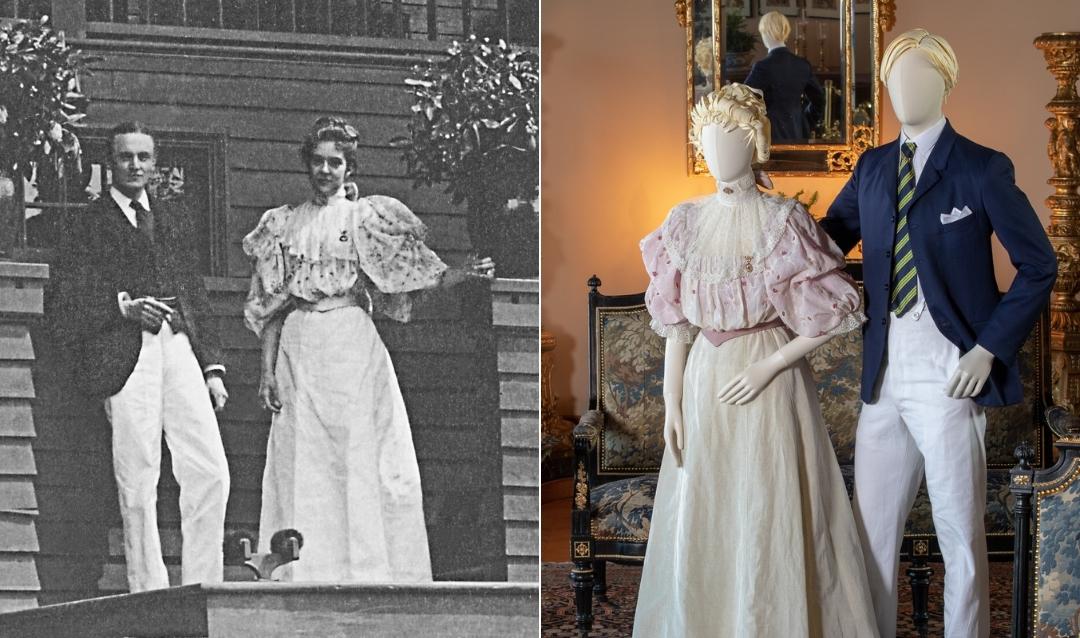
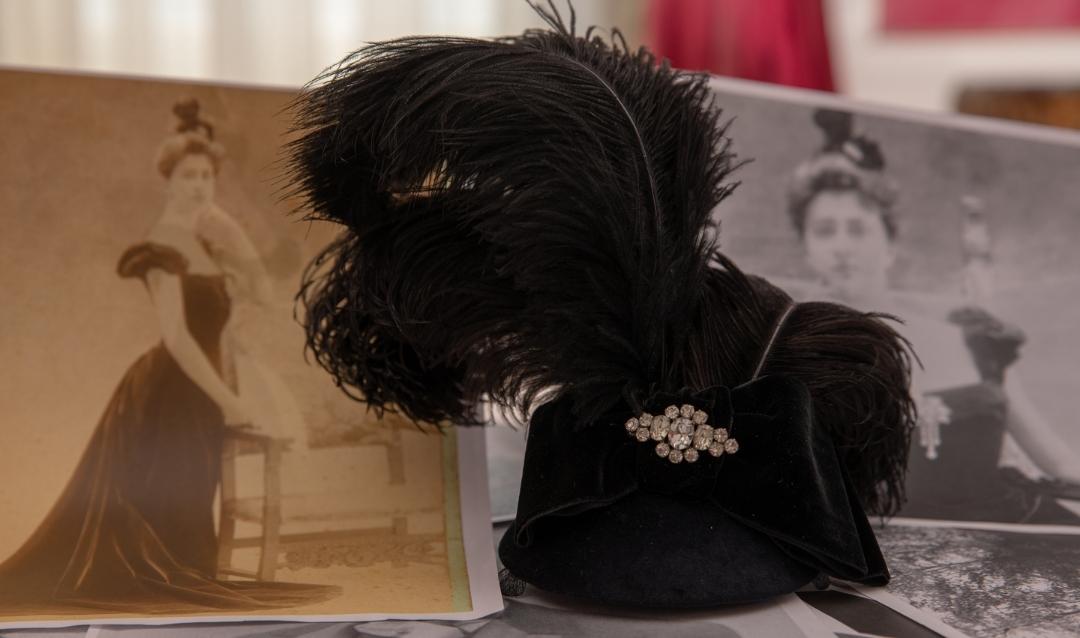
Gilded Age fashions of Edith Vanderbilt, recreated by CosProp, London, for Biltmore’s 2019 exhibition, A Vanderbilt House Party – The Gilded Age.
Expand
Gilded Age fashions of Edith Vanderbilt, recreated by CosProp, London, for Biltmore’s 2019 exhibition, A Vanderbilt House Party – The Gilded Age.
Expand
Recreation of a House of Worth gown worn by George Vanderbilt’s sister, Florence Vanderbilt Twombly, for Biltmore’s 2019 exhibition, A Vanderbilt House Party – The Gilded Age.
Expand
Gilded Age fashions of Jay and Adele Burden, recreated by CosProp, London, for Biltmore’s 2019 exhibition, A Vanderbilt House Party – The Gilded Age.
Expand
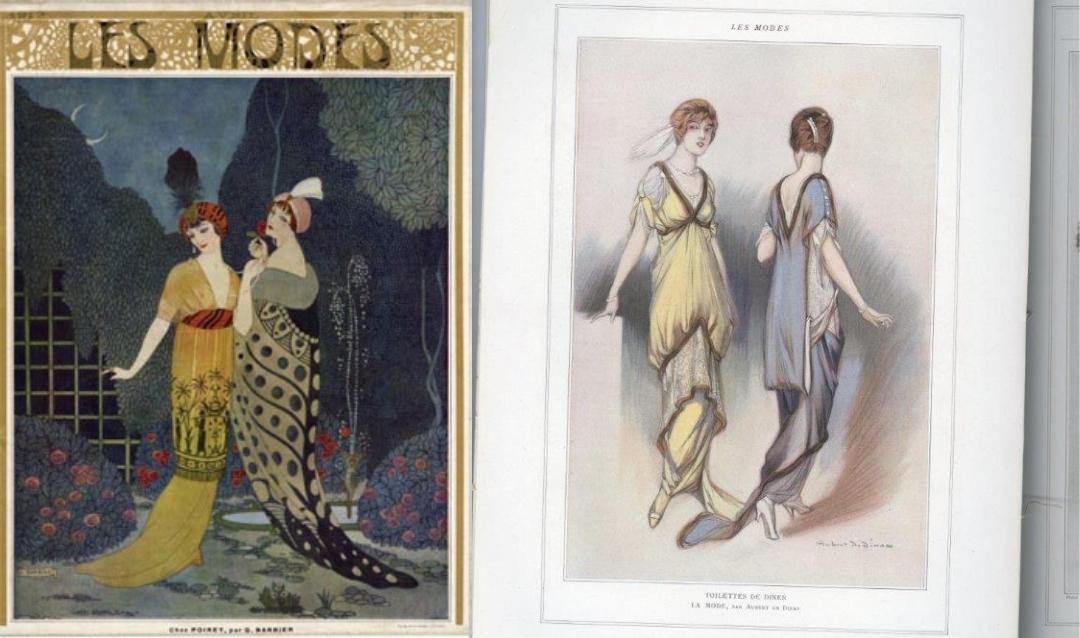
Glamorous fashions on the cover of the April 1912 and inside of the February 1913 issue of Les Modes magazines in Biltmore’s collection.
Expand
Gilded Age fashions of Edith Vanderbilt, recreated by CosProp, London, for Biltmore’s 2019 exhibition, A Vanderbilt House Party – The Gilded Age.
Expand
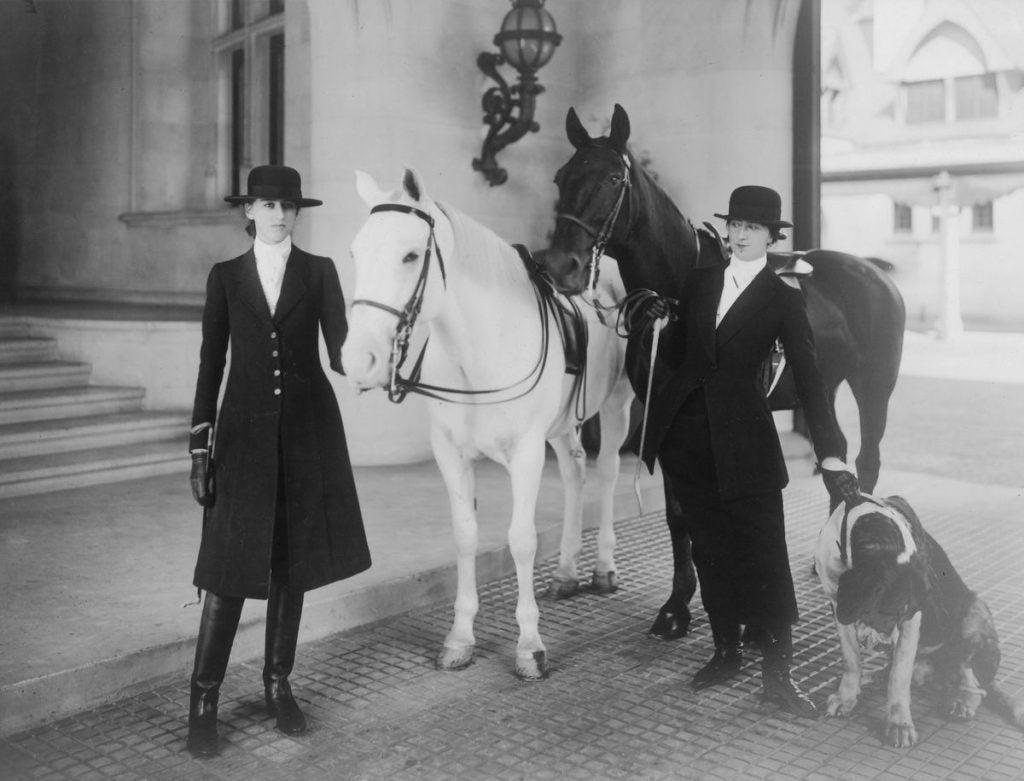
Cornelia and Edith Vanderbilt in Biltmore’s stables, c. 1917

Gilded Age Fashions

Fashionable ladies of the Gilded Age, such as Edith Stuyvesant Vanderbilt, followed magazines like Les Modes for the latest stylings from couture design houses in Paris and London. Thanks to our archives at Biltmore, we know that the Vanderbilts favored designers like Jeanne Paquin, Jacques Doucet, and the House of Worth.

From strolling in the gardens at Biltmore to attending “fancy dress” balls, every ensemble worn by the ladies and gentlemen of the era would have been perfectly tailored and adorned with elegant accessories.