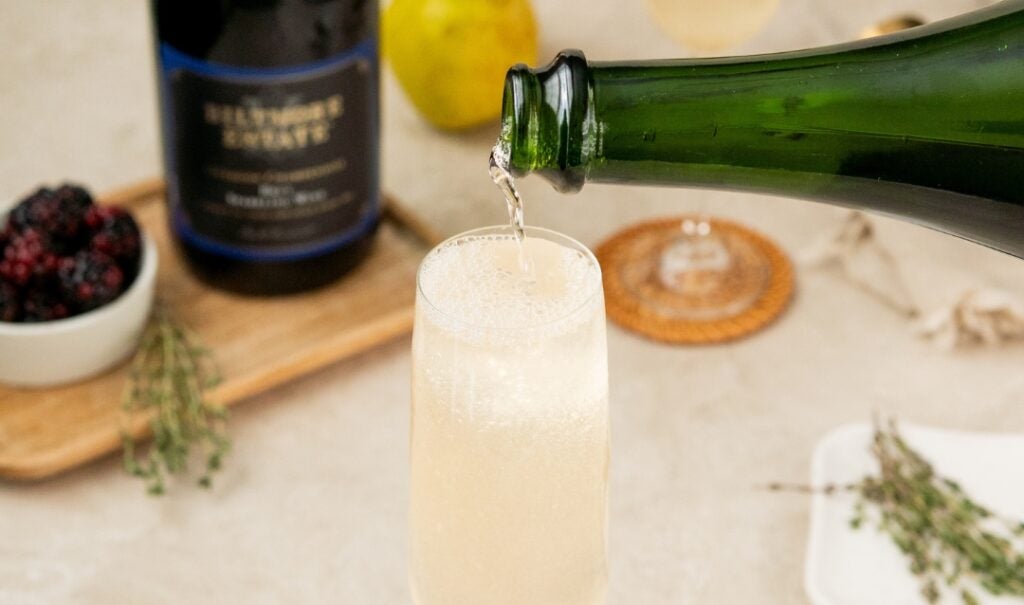
Sparkling cocktail recipes are a hit any time of year, and Biltmore winemaker Sharon Fenchak shares some of her favorites to liven up any gathering or serve as an aperitif before your meal!
Method: Pour the vodka into a chilled champagne flute. Top with the pear nectar and then the sparkling wine. Garnish with fresh berries and a sprig of thyme. Serves 1.
Sparkling Blackberry Punch
Ingredients: • 1 ounce light rum • ¾ ounce blackberry brandy • 2 ounces cranberry juice • 1 ounce simple syrup • 1 ounce blackberry purée • 3 ounces Pas de Deux® Sec
Method: Combine rum, brandy, cranberry juice, simple syrup and blackberry purée over ice in a mixing glass. Shake well and strain mixture over ice in a tall glass. Fill with Pas de Deux® Sec. Garnish with fresh blackberries and a mint sprig. Serves 1.
Blackberry Bellini
Ingredients: • 1 ounce blackberry brandy • 1 ounce blackberry purée • ½ ounce simple syrup • 4 ounces Pas de Deux® Sec
Method: Add blackberry purée, brandy and simple syrup to a champagne flute. Fill with Pas de Deux® Sec. Garnish with two floating blackberries. Serves 1.
Pomegranate Pas de Deux Punch
Ingredients: • 1¼ ounces orange vodka • ¾ ounce triple sec • 1 ounce pomegranate juice • ½ ounce fresh-squeezed orange juice • 2 ounces Pas de Deux® Sec
Method: Combine vodka, triple sec, pomegranate juice, and orange juice in a mixing glass over ice. Shake well and strain over ice in a tall glass. Top with Pas de Deux® Sec. Garnish with an orange wheel. Serves 1.
Ruby Slipper Sparkling Cocktail
Ingredients: • 1¼ ounces raspberry vodka • 1 ounce red grapefruit juice • ¾ ounce grenadine • 2 ounces Pas de Deux® Sec
Method: Combine vodka, grapefruit juice, and grenadine in a mixing glass over ice. Shake well and strain over ice in a tall glass. Top with Pas de Deux® Sec. Serves 1.
Method: Combine all ingredients into a punch bowl just before ready to serve. Gently stir just until the ingredients are integrated so as not to lose the bubbles. Garnish with cranberries or a touch of cinnamon. Serves 6–8.
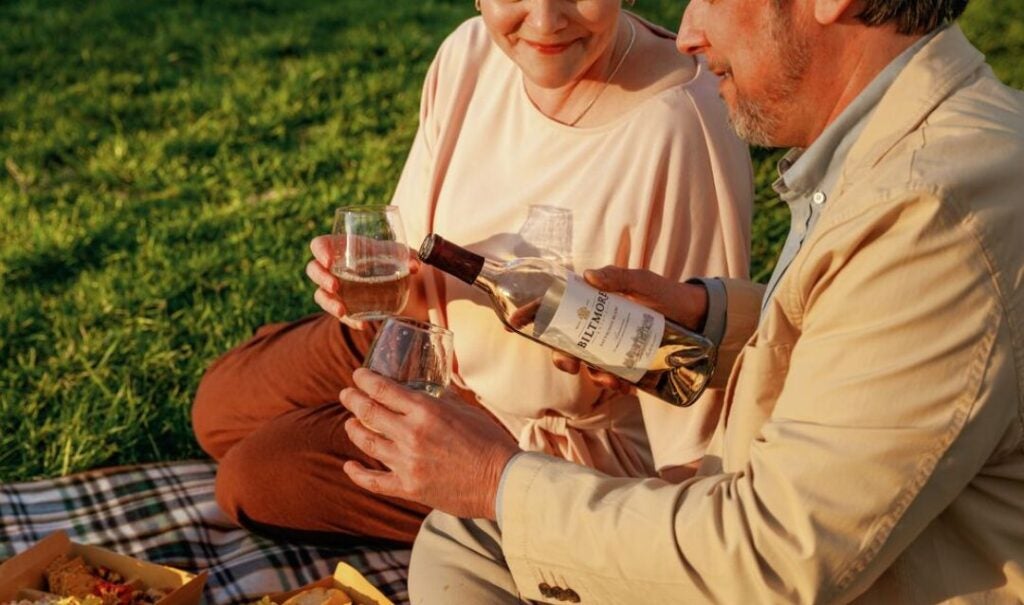
A picnic while visiting Biltmore is a great way to enjoy the pastoral views of the historic estate’s sprawling gardens and grounds, similar to the Vanderbilts and their guests over a century ago.
Make the most of your next picnic with these expert tips plus estate chef recipes for a Vanderbilt-inspired picnic complete with Biltmore wine pairings.
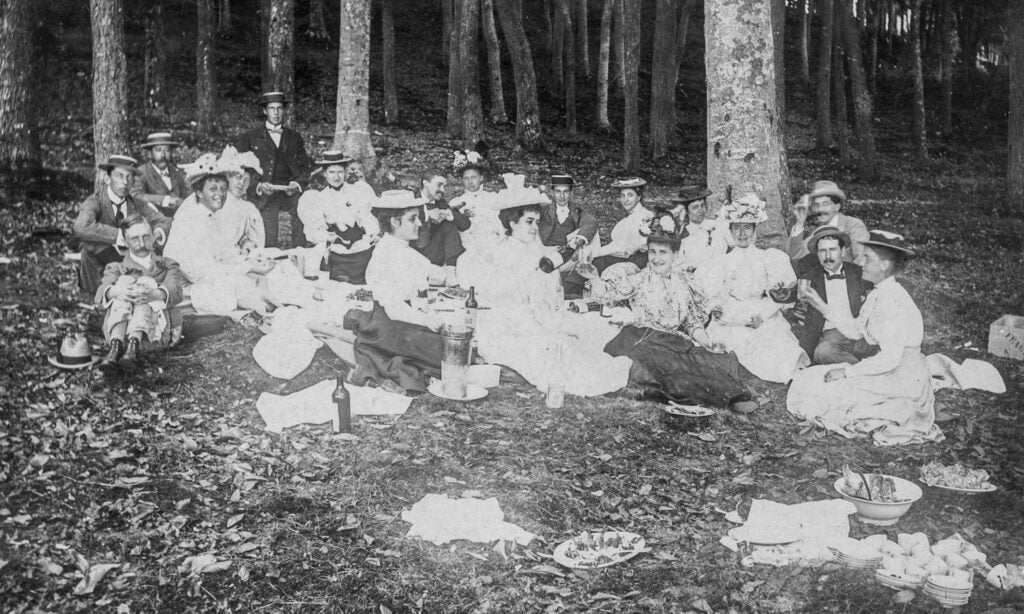
Pauline Dresser, Edith Vanderbilt’s sister, attending a summer picnic in Langrolay-sur-Rance, France, 1895.
Picnicking with the Vanderbilts
During the Victorian era, picnics were often elaborate, and creating a suitably “rustic” ambiance might require more effort than a formal banquet. Hampers full of special delicacies were carried to remote outdoor locations along with a bewildering array of china and glassware, chairs, cushions, ground covers, tents, sunshades, games, and amusements—plus all the children, pets, and any guests who happened to be visiting.
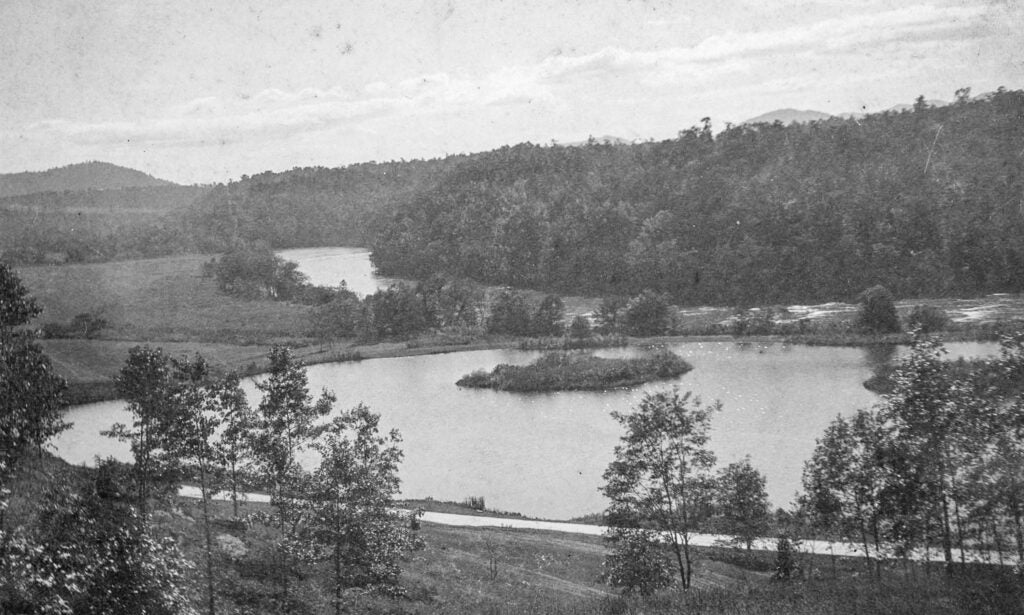
Picnic Island in the Lagoon on Biltmore Estate, circa 1900.
On Biltmore Estate, the Vanderbilt family enjoyed picnics at a special location known as “Picnic Island,” which you can see situated in the Lagoon. At Edith Vanderbilt’s request, a swinging bridge (no longer there) was added for easy access to Picnic Island and estate rangers ensured there was no poison ivy growing there—a task modern picnickers know all too well!
We also know that Mrs. Vanderbilt planned a picnic in May of 1915 on nearby Busbee Mountain, and we have multiple picnic baskets, metal serveware, and food canisters included in our archival collection.
Be sure to pack Biltmore Wines for your next picnic!
Try these modern-day Biltmore picnic tips:
Thank goodness today’s picnics are much simpler! By keeping everything quick and easy, you can enjoy the entire experience from start to finish—even without chairs and fine china. Here are a few tips from our estate experts:
Location, location, location: Choose from multiple designated picnic areas on the estate that offer a scenic view to take in nature’s beauty for your next picnic at Biltmore!
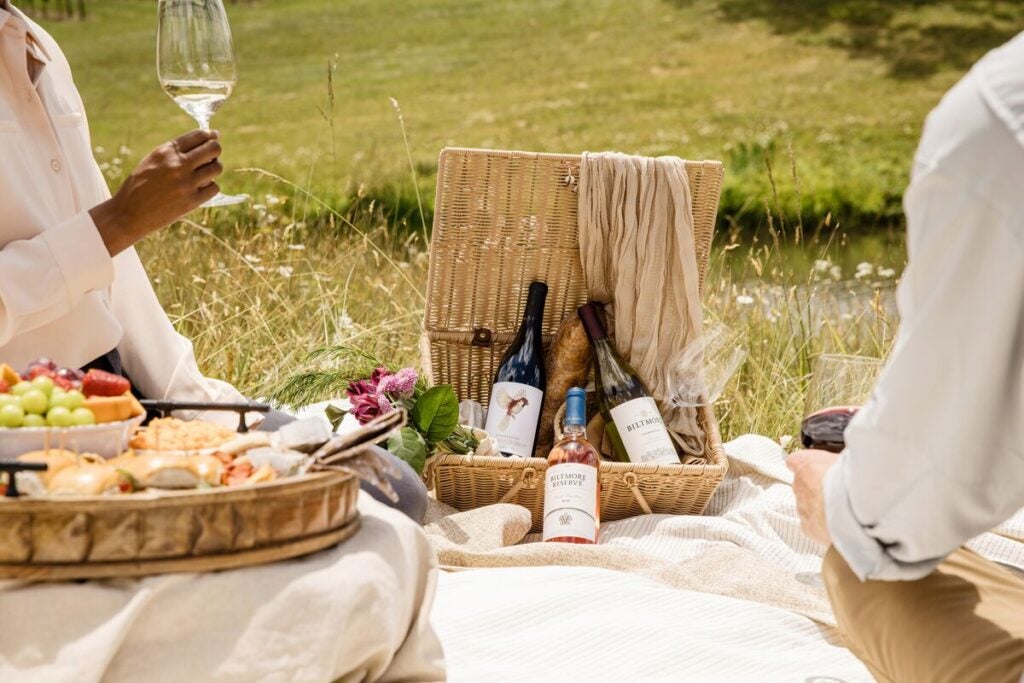
Pack the perfect pairings: Slice a loaf of fresh bread and your favorite cheese into wedges (eliminates the need for utensils), then pair it with finger-friendly foods such as olives, nuts, and fresh veggies or fruit for a little extra texture. We recommend a refreshing white wine to pair with goat cheeses, or The Hunt Sonoma County Red Blend with rich, aged cheese. A chilled sparkling wine like our Pas de Deux® Sec or Biltmore Estate® Brut makes any occasion special—and won’t leave a stain if spilled on cloth.
Set the scene: A few small touches, such as fresh flowers or a favorite quilt or fleece blanket as a picnic cloth, can go a long way toward elevating your picnic experience.
Keep it convenient: Make a variety of sandwiches and mouthwatering gourmet dips the night before. That way, you can be ready to picnic the next day with no prep. Sandwiches also mean you don’t have to bring many separate items—everything’s already combined into a tasty package. Grab-and-go snacks or light bites from an estate restaurant or shop are also a great option for a memorable picnic at Biltmore without the fuss.
(Please note: Guests with estate admission, an overnight stay, or an Annual Pass are permitted to picnic on Biltmore Estate. If picnicking on the estate, outside food is only permitted in designated areas. Outside alcohol and tailgating—including the use of tents, grills, multiple camping chairs/tables, and large coolers—are not permitted anywhere on estate grounds.)
Experience chef-prepared sunset picnics during Luminere, available on select evenings March 26 through Oct 18, 2026.
Plan a romantic sunset picnic during Luminere
For the ultimate date night, we recommend planning a sunset picnic on Biltmore’s front lawn as you await “showtime” during Luminere evenings. It’s the perfect blend of relaxation, quality time, and discovery as the sun sets and Biltmore’s gardens come alive with color lights and dreamy music. Whether you pre-order a picnic crafted by our estate chefs or enjoy snackable grab-and-go options from estate restaurants, you’ll set the scene for a cozy meal with your sweetheart.
Pre-order a chef-prepared picnic (look for “reserve online” below each picnic option) for your sweetheart or savor grab-and-go options from restaurants in the Stable Courtyard or Walled Garden areas. NOTE: During Luminere evenings, NO outside food or beverage is allowed in the house and gardens area. No outside alcohol is ever allowed at Biltmore.
A picnic is a picturesque way to enjoy the great outdoors throughout the seasons on Biltmore Estate. 📸 by @camrynglackin
Try these Biltmore-inspired picnic recipes:
Whether you are taking in the views at Biltmore or relaxing at your local park, here are a few recipes and wine pairings our estate experts recommend for enjoying your next picnic Vanderbilt-style.
Prepare the mustard by mashing the berries and mix with mustard and set aside.
Toast the focaccia, spread the mustard on the top portion of the bread after it is toasted, place the turkey on the bottom, then the sliced brie and add the bacon and arugula and lastly place the top of the focaccia and serve.
1 red bell pepper, seeds and stem removed, cut in 6 pieces
1 bunch asparagus, remove bottom two inches and discard
1 red onion, sliced 1/4 inch thick
1 vine-ripe tomato, sliced 1/4 inch thick
2 garlic cloves, minced
6 oz olive oil
1/2 bunch flat leaf parsley, chopped
2 sprigs rosemary, chopped
6 sprigs fresh thyme, chopped
Salt and pepper to taste
Method:
Place oil, garlic, and herbs in a large mixing bowl and stir together. Add all remaining vegetables to bowl except portabellas. Toss vegetables with oil mixture.
On a separate plate, rub the portabella with some of the oil mixture on both sides of it.
Let vegetables marinate for 10–15 minutes at room temperature. Drain any excess oil off of the vegetables and grill each piece for 1–2 minutes on each side. If the grill flares up, remove more oil from the vegetables. Place vegetables on a platter. Can be served hot or chilled.
In a large pot of boiling, salted water, cook pasta until just tender to the bite. Drain and shock in ice water. Drain again thoroughly and place in large mixing bowl. Add smoked mozzarella, parmesan, spinach, red peppers, red onion, and parsley.
In a separate bowl, assemble dressing by adding mayonnaise, sour cream, garlic, red wine vinegar, honey, lemon juice, Tabasco, black pepper, and salt. Whisk together.
Add dressing to pasta mix and toss together gently, using a rubber spatula. Refrigerate until needed.
Although George Vanderbilt moved into Biltmore House in October 1895, the house did not officially open to guests until Christmas Eve of that year. Great efforts were made to ensure all (or most!) would be ready by this special day. Mr. Vanderbilt was still a bachelor during the first Biltmore Christmas and his mother, Maria Louisa, presided as hostess.
Correspondence between Vanderbilt and his staff indicates that planning was intensive and no detail was left unattended. Managers debated which nearby county had the best holly and the most desirable mistletoe, while staff scouted for the perfect candidate for the Banquet Hall Christmas tree.
Chauncey Beadle writes estate manager, Mr. Charles McNamee:
“I quite agree with you that we should have a very large tree for this occasion; in fact, I think a twenty foot tree in that large Banquet Hall would be rather dwarfed”.
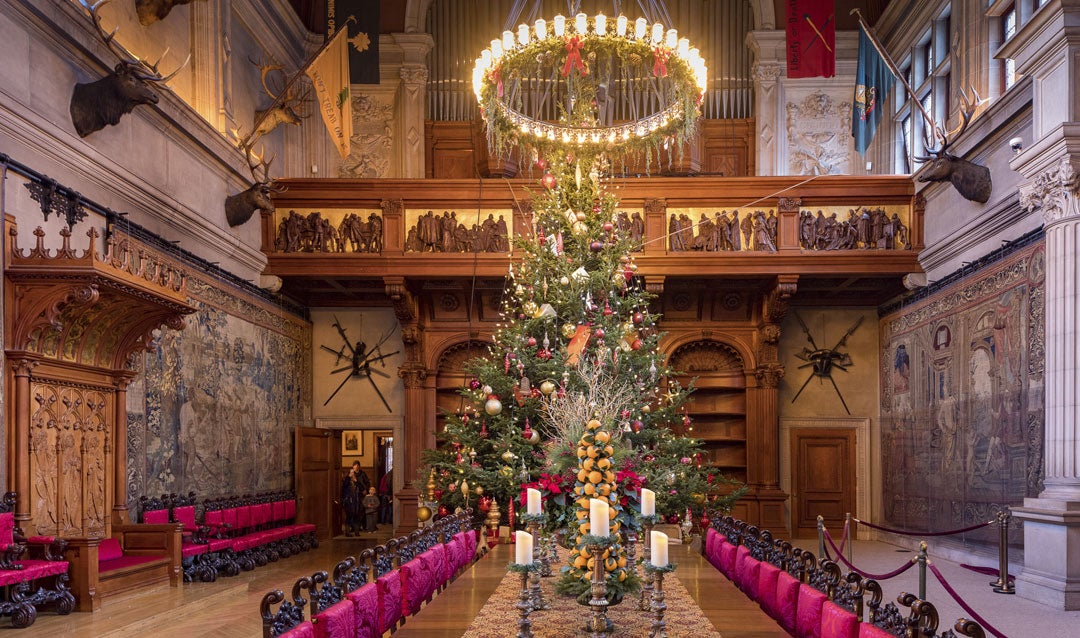
When George’s mother, several of his brothers and sisters and their spouses, and assorted nieces and nephews arrived, they were greeted in the Banquet Hall by a splendidly tall tree laden with gifts for estate workers. At the foot of the tree was a table piled high with family gifts. Because of this, the Banquet Hall has always been the focal point for Christmas celebrations in Biltmore House.
The Banquet Hall tree is a Christmas tradition at Biltmore
The family and guests gathered around the forty-foot Banquet Hall table for elaborate dinners served both evenings. Mr. Vanderbilt’s niece Gertrude kept a series of Dinner Books in which she recorded the seating arrangements of all of the parties and dinners she attended as a young woman, and she was one of the guests at the first Christmas dinner here in Biltmore House. Gertrude kept two Dinner Books in 1895, and the Christmas meal at Biltmore House was the 193rd formal dinner that she attended that year. In her diagram of the dinner, she listed 27 Vanderbilt family members. It was said to be the largest gathering of the family since the death of William Henry Vanderbilt, George’s father, in 1885.
In addition to the grand meals and festive décor, stockings hung on mantles, plum puddings and mince pies were served, and George’s mother read ‘Twas the Night Before Christmas’ to the children. All in all, it must have been a grand time—one article even stated that the family exchanged gilded and jeweled Christmas cards.
George and Edith Vanderbilt were known for their hospitality at Biltmore House in Asheville, North Carolina. Of course, their holiday celebrations were no different and highlighted the ultimate in food and wine for their guests.
Treat your guests to a Vanderbilt-inspired Thanksgiving menu featuring recipes and suggested wine pairings from our winemaker.
Bring Out The Flavors of Your Feast with Biltmore Wines!
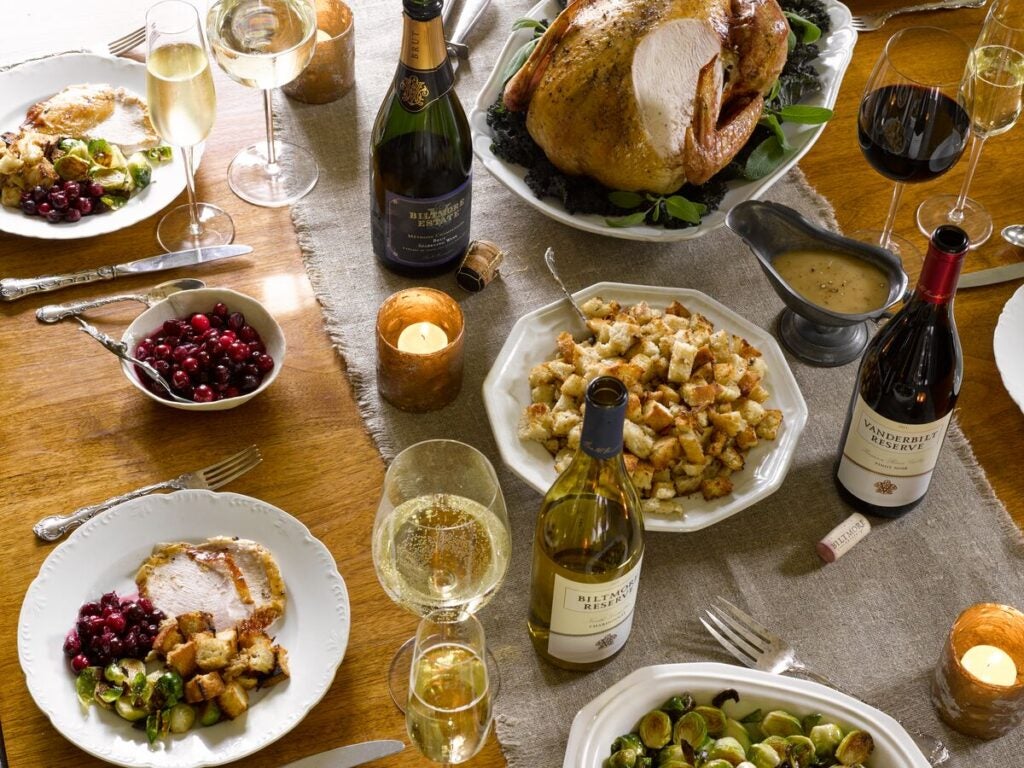
Set your Thanksgiving table with an assortment of Biltmore Wines
This special time deserves an equally special wine! Surprise and delight your guests by offering both a red and a white wine option to pair with your Vanderbilt-inspired Thanksgiving menu. Our winemaker recommends selecting our buttery, complex Chardonnay and our elegant and medium-bodied Pinot Noir to grace your holiday table.
For a delicious and festive option fit for a Vanderbilt, our Biltmore Estate Winemaker suggests choosing any of our Biltmore sparkling wines to complement your Thanksgiving meal from start to finish.
Vanderbilt-Inspired Recipes
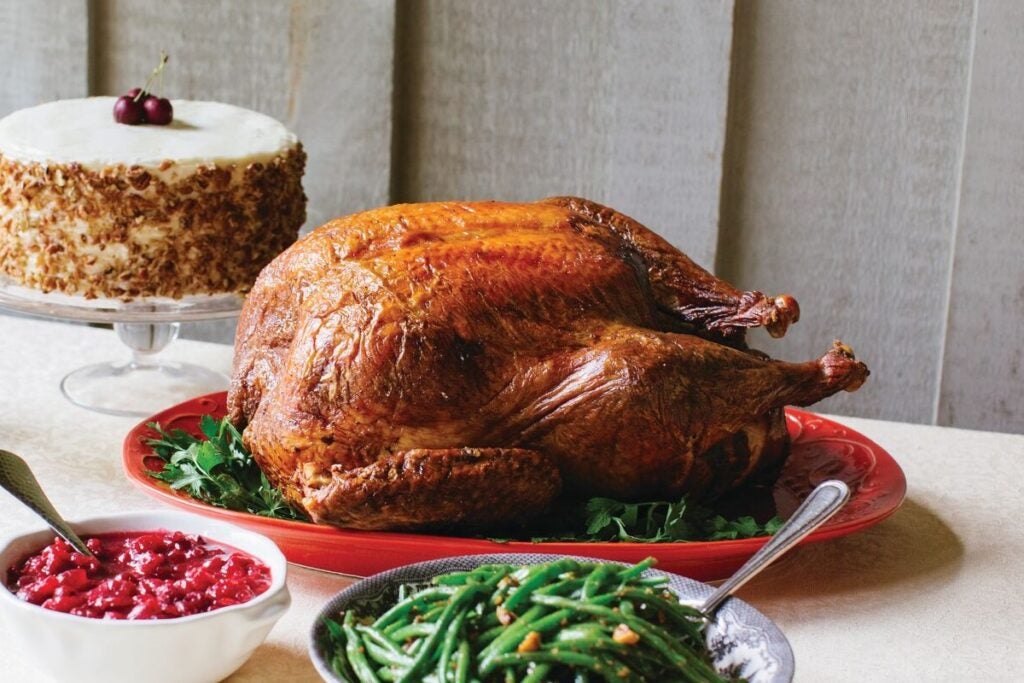
George Vanderbilt’s Favorite Turkey and Cornbread Dressing
Main Course: George Vanderbilt’s Favorite Turkey and Cornbread Dressing
Fun Fact: The creator of this recipe, Ellen Davis, came to Biltmore House from the community of Avery Creek in the spring of 1899 to work as a cook for the Vanderbilts. She fell in love with Thomas H. Johnson, a groomsman in the Stables, and they were married the following spring. This recipe was a favorite of George and Edith Vanderbilt’s, and it became a tradition for Ellen Johnson to prepare it for them each year.
Ingredients:
20–25 pound turkey
Cornbread, prepared
6 buttermilk biscuits, prepared
1 dozen eggs, hard-boiled
1 cup chopped onion
1 cup chopped celery
1/4 cup ground sage
Kosher salt and freshly ground pepper to taste
Method:
Rinse turkey and rub with salt inside and out. Using a large boiler or cooker, place turkey in enough water to almost cover it (one gallon or more). Heat to boiling point and cook on medium for about 2 1/2 hours or until breast is tender; use a ladle to baste broth over the breast meat to keep it moist.
For cornbread dressing: Bake a large pan of cornbread using your favorite cornbread recipe. Bake about six buttermilk biscuits using your favorite recipe, or purchase frozen biscuits and bake. Peel eggs and chop or grate them into large mixing bowl. Add onions, celery, sage, salt and pepper. Crumble cornbread and biscuits into bowl. When the turkey is done, pour turkey broth over the cornbread dressing until the desired consistency is reached. Mix well, using plenty of broth so that dressing will be moist and soft when done.
Place turkey in center of large baking pan. Spoon dressing into and around the turkey. Bake in 425ºF oven for about 45 minutes. If turkey browns too soon, cover with aluminum foil.
Side Dish: Roasted Sweet Potatoes with Dried Cranberries and Toasted Pumpkin Seeds
Ingredients:
2 large sweet potatoes diced
1 cup dried cranberries
1 cup toasted pumpkin seeds
1 tablespoon Shallots Minced
1 teaspoon garlic minced
½ tablespoon fresh sage
¼ cup chicken stock
1 tablespoon butter
Method:
Preheat oven to 350 degrees.
Peel and dice the sweet potato into ½ inch pieces. Season with olive oil and salt and pepper. Spread on a parchment-lined baking tray. Place in oven and bake until the sweet potatoes start to turn golden brown and tender.
In a large skillet sauté the shallots and garlic in a tablespoon of olive oil, add pumpkins seeds and cranberries and cook one minute.
Add sweet potato and chicken stock to skillet, bring to a boil then add butter, remove from heat, stir until butter is melted.
Season with salt and pepper.
Side Dish: Haricot Vert (Green Beans)
Ingredients:
1 pound haricot vert
Salt to taste
7 tablespoons butter
Pepper to taste
Method:
Cut off the ends of the beans. Bring a large saucepan of water to a boil and add enough salt to taste like ocean water.
Add the beans and cook for 4 minutes or until done to taste. Drain and plunge into ice water. Drain and place on paper towels to absorb the moisture.
Melt 4 tablespoons of butter in a sauté pan. Add the beans and sauté for 2 minutes. Season with salt and pepper and add the remaining 3 tablespoons of butter.
Cook until any liquid has evaporated and the beans are glazed; keep warm.
Cut the kernels from the cobs and discard the cobs.
Melt the butter in a heavy saucepan over medium heat. Add the leek, shallot and garlic and sauté for 2 minutes. Stir in the corn and cook until the corn is tender.
Add the wine, stirring up any of the mixture that has adhered to the bottom of the saucepan. Cook until the wine has evaporated.
Add the cream and simmer for 15 to 20 minutes or to the desired consistency, stirring occasionally.
Season with thyme, salt and pepper. Keep warm until ready to serve.
Dessert: Apple Tart
Ingredients for Pastry:
1/2 cup unsalted butter, softened
1/4 cup sugar
Pinch of salt
1/2 teaspoon vanilla extract
1 egg, lightly beaten
1 1/2 cups all-purpose flour
Ingredients for Streusel:
1 cup all-purpose flour
1/2 cup packed brown sugar
1/4 cup butter, melted
Ingredients for Tart:
4-5 Granny Smith apples, peeled, cored and thinly sliced
1/4 cup sugar
1 teaspoon ground cinnamon
1/2 teaspoon ground nutmeg
1/4 teaspoon ground cloves
Ingredients for Garnish:
Sliced, dried figs
Whipped cream or vanilla ice cream
Method:
For pastry: combine butter, sugar, salt and vanilla in a mixing bowl. Cream together with a paddle attachment until light and fluffy. Beat in the egg and scrape the sides of the bowl. Add the flour gradually, mixing until incorporated. Shape into a disk then wrap in plastic wrap and chill in the refrigerator for 2–8 hours.
For topping: mix flour and brown sugar in a small bowl. Add butter and work with fingers until smooth. Chill in the refrigerator for 2 hours.
For tart: preheat the oven to 350°F. Toss apples with sugar and spices in a bowl. Spray a tart pan with a removable bottom with nonstick cooking spray. Roll the pastry dough to 1/4 inch thick on a lightly floured surface and place in pan, pressing into bottom and trimming any excess dough. Spoon apple mixture into pastry and sprinkle with streusel topping. Bake for 25 to 35 minutes or until golden brown. Cool in pan on wire rack for 10 minutes. Remove to a serving plate and garnish with figs; serve warm with whipped cream or vanilla ice cream.