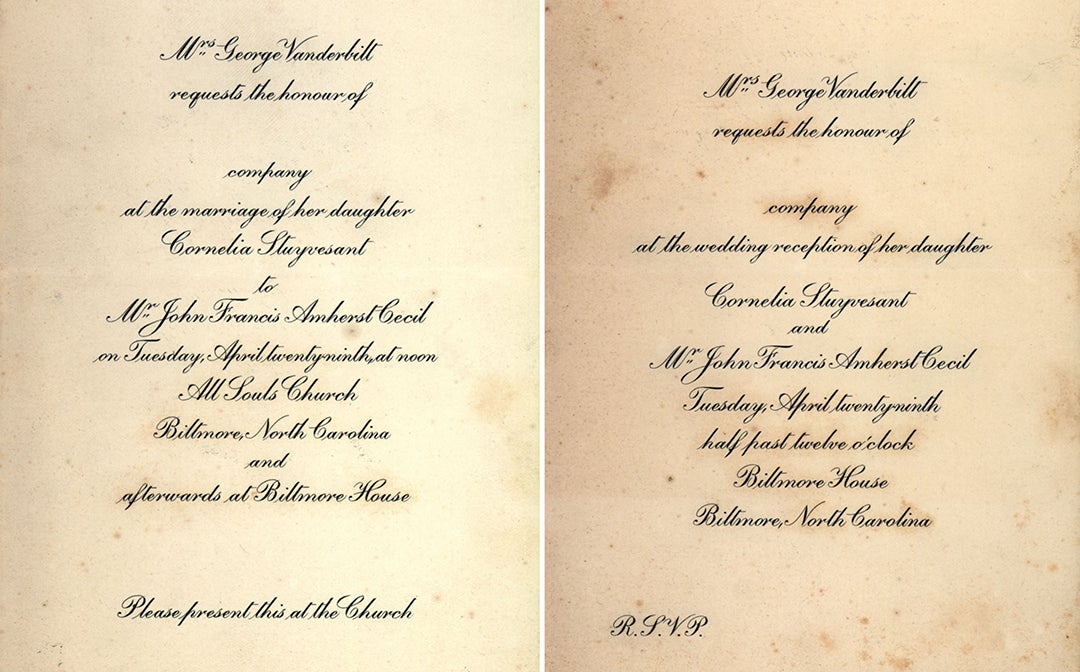
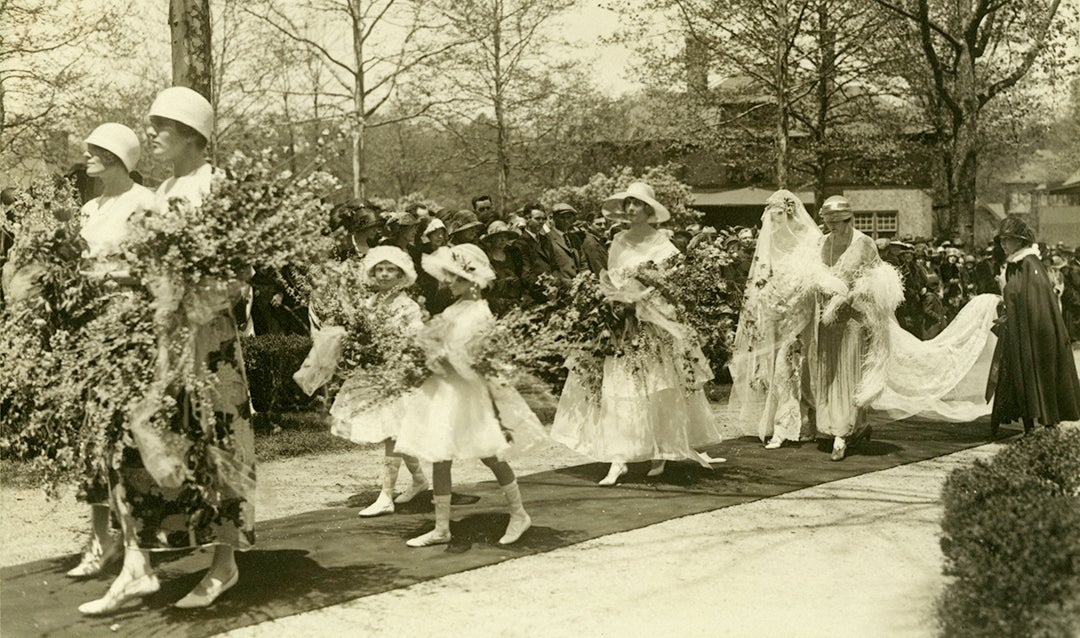
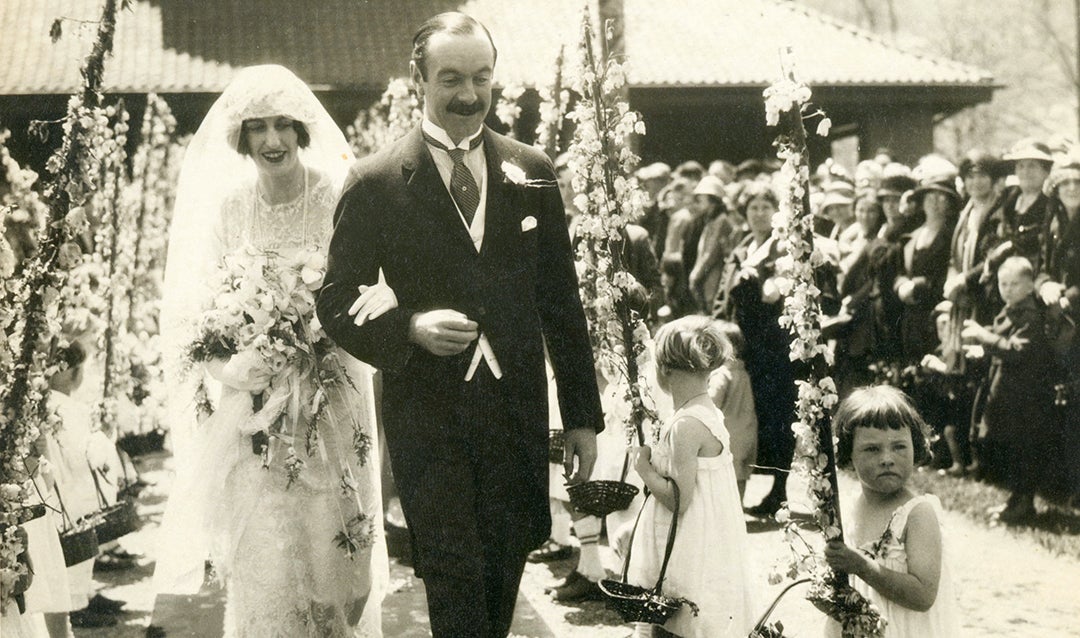
Our Museum Services team made a sweet discovery related to Cornelia Vanderbilt’s wedding to the Honorable John F.A. Cecil on April 29, 1924. It’s a fascinating detail that was recently uncovered in an attic—a first for Biltmore—and the sweet discovery all started with a simple phone call.
A sweet discovery
In 2014, Biltmore acquired a piece of cake for the Biltmore collection, which our curators confirm is the only edible artifact now housed in the archives. Cake? For the archives? Indeed. And even more of an enticing tidbit: we believe that it’s about to be 100 years old!
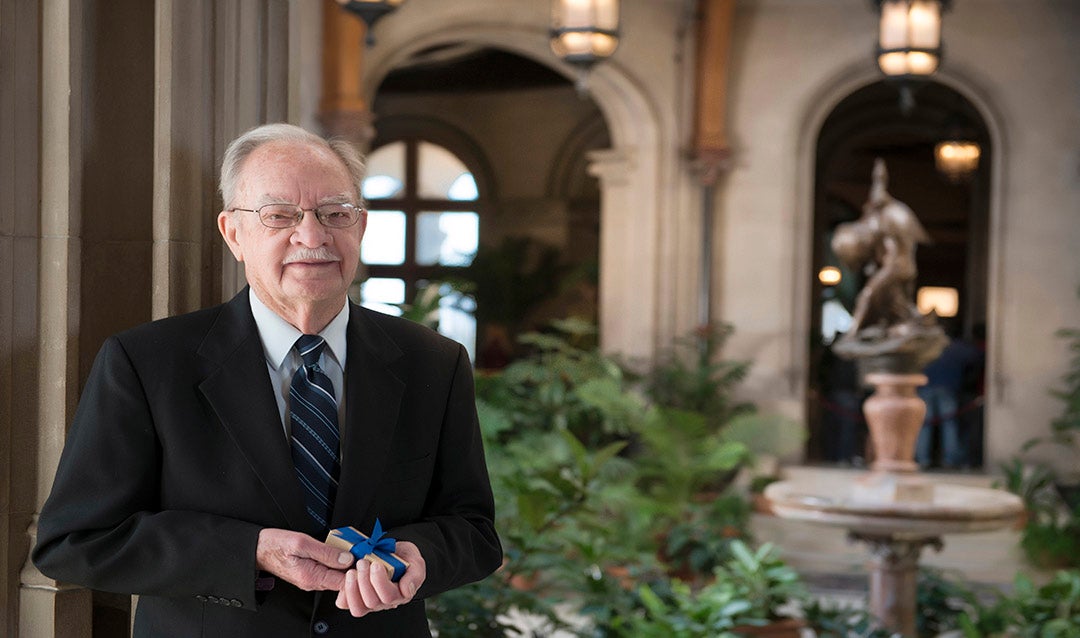
Candler resident Frederick Cothran, then 96, found the cake in a trunk he inherited from his aunt, Bonnie Revis. Miss Revis was a cook at Biltmore House between 1924 and 1935. He contacted Biltmore’s museum services department to report that he had what he thought was a piece of cheese from Biltmore House. Not wasting any time, Laura Cope, Collections Manager, paid a visit to Cothran.
“Food is personal. People bond over it, and it’s easy to relate to it on several levels,” she says, and that’s why she had to see the cheese for herself.
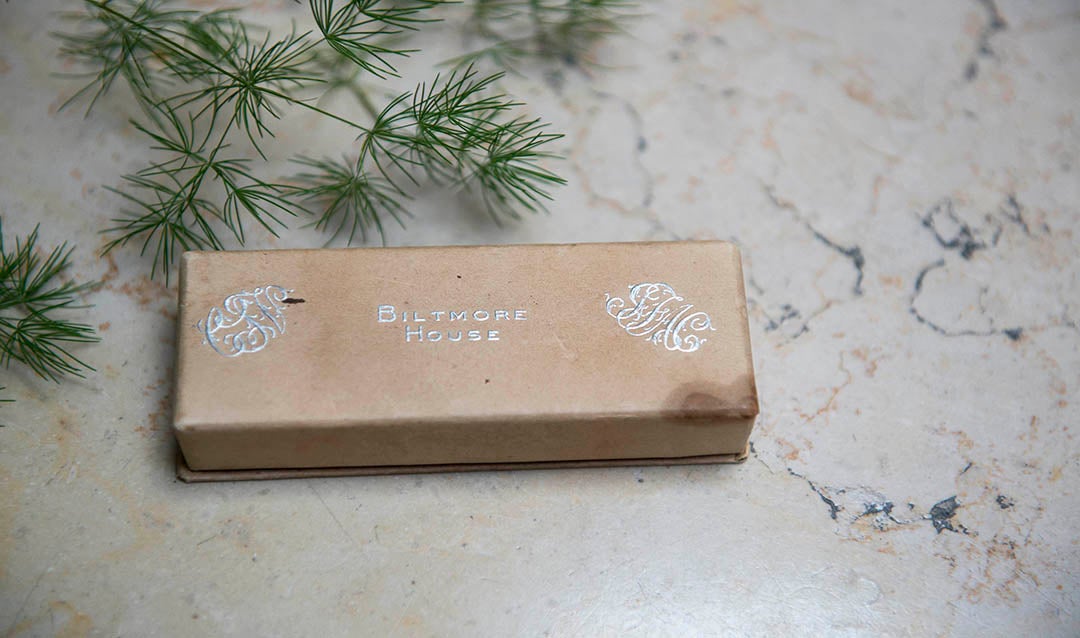
When she met Cothran he presented her with a neat and tiny box engraved “Biltmore House” on the top. Two sets of monograms are engraved on either side: “CSV” for Cornelia Stuyvesant Vanderbilt; and “JFAC” for John Francis Amherst Cecil.
After getting back to Biltmore House, Laura researched the customs of the day and realized that this was more than likely cake rather than cheese. Then, upon hearing a recording of Paul Towe from Biltmore’s Oral History collection, she and her colleagues confirmed that this was indeed cake – fruit cake – that the Cecils gave out as favors on their special day.
Mr. Towe recalled attending the wedding as a small boy. Towe’s father was employed at Biltmore in the 1920s and 1930s, and his sister, Sarah, was a flower girl in the wedding. Towe said that “everybody got a little white box with their name on it with a piece of fruit cake.”
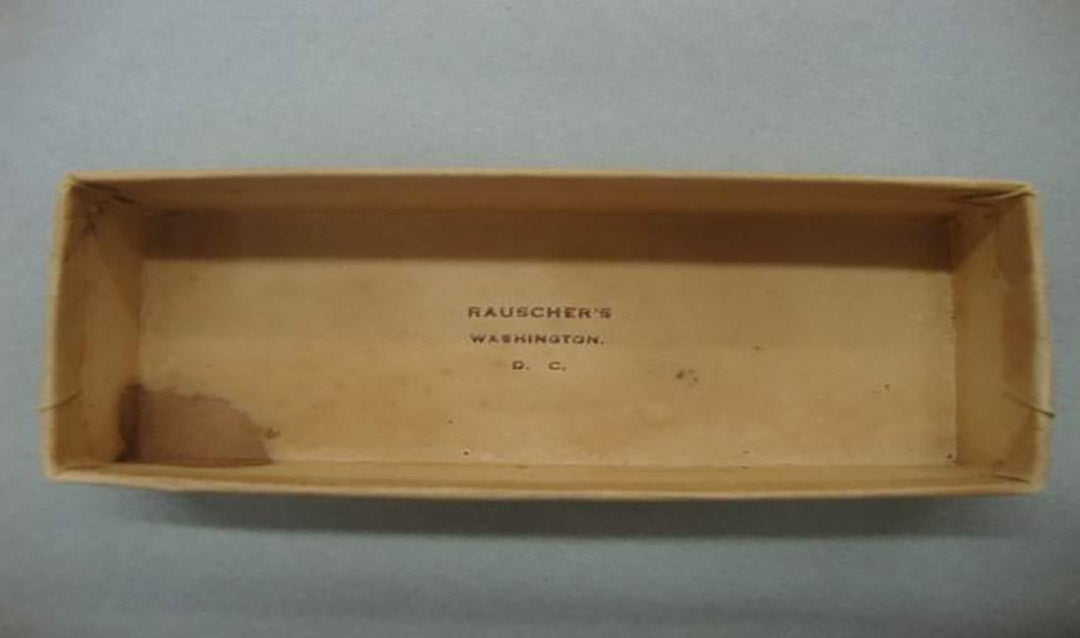
The box top’s underside has a stamp on it, “Rauscher’s – Washington, D.C.” In her research, Laura learned that Rauscher’s catered and supplied many fine confectionaries and baked goods to society families in Washington, including the wedding cake for President Wilson in 1915.
The tradition of wedding cake keepsakes can be traced back to Victorian times, typically sliced from the groom’s cake, which was often a fruit cake. Slices were wrapped and placed in tiny boxes to take home as a memento of the wedding. The belief was if an unmarried woman slept with a piece of the groom’s cake under her pillow, she would dream of her future husband.
Prince William and Katherine Middleton carried out the tradition by sending pieces of boxed cake to commemorate their wedding in 2011.
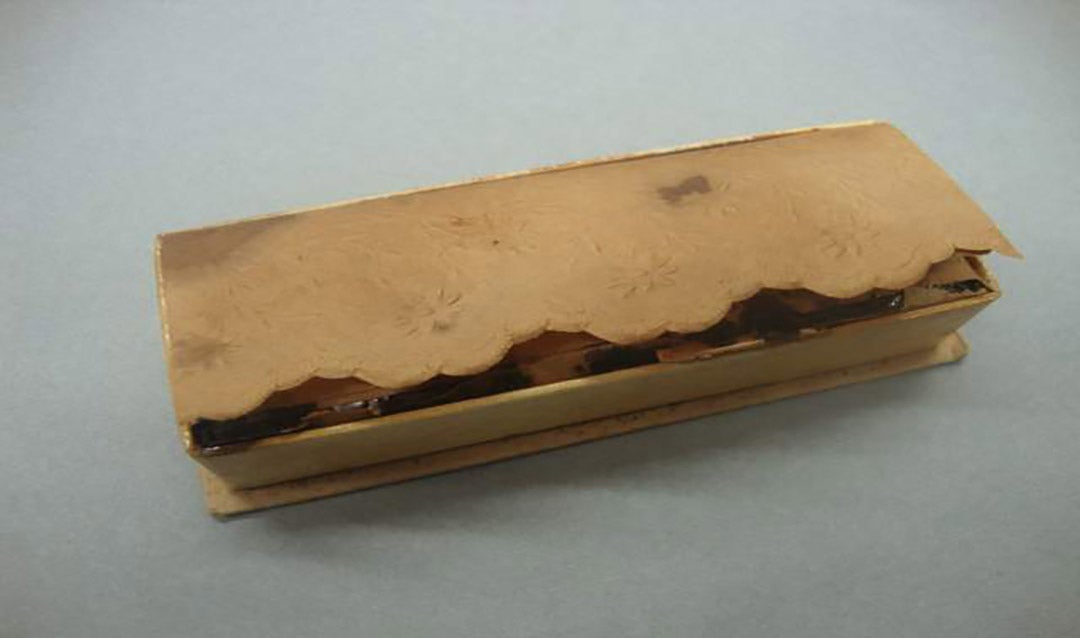
This 100-year-old piece of cake may be considered an odd addition to a collection that contains famous works of art, books, ancient tapestries and antiques. Historically speaking, that’s not the case.
“This is a clear line connection between our day and their day, so it’s worth the effort to have it in our collection,” Laura said.
Main photo: Guests at the wedding of Cornelia Vanderbilt and John Cecil enjoyed breakfast in the Biltmore House Winter Garden, April 29, 1924.
 For a more informal look, consider forcing flowering spring branches—here are some easy tips to help you “branch out” on your schedule rather than waiting for Mother Nature to do it for you!
 Tip: Containers are suitable for indoor and outdoor use and are perfect for table-top arrangements and container plantings.
 The transition is quite deliberate, and is based upon George Vanderbilt’s original vision for the Conservatory. In the late 1800s, vast glass structures like Biltmore’s Conservatory were the ultimate statement of luxurious living, exhibiting hundreds of blooming flowers, exotic plants, and delicate orchids in abundance.
 Archival records indicate George Vanderbilt furnished his Conservatory in a more typical manner—by ordering plants from nurseries around the country. A report in the 1894 issue of American Gardening titled “George W. Vanderbilt’s Palms” mentions he fitted out his new conservatory with some of the largest palms under cultivation in the country. The collection included 15 tree ferns imported from Australia years earlier and described the “long dark green leaves of the finest specimens reach twenty feet into the air.” Additional plants included sago palms and several “immense Palmetto palms from South Carolina.”
 The orchids are mesmerizing this time of year, brightening even the dreariest of days with amazing colors and forms. The Orchid Room is filled with blooms both recognizable and unusual, from the corsage and lady slipper varieties to more rare examples.
 • Memorelle Damask Scroll Classic Shape Pillow–A beautiful jacquard scroll makes this pillow a perfect fit for any luxury bed ensemble. A classic shape appeals to the largest number of people.


