Biltmore furniture conservator is a desk detective

Although her day-to-day responsibilities may include anything from cleaning 100-year-old china to inhibiting biologic growth on outdoor statuary, when Genevieve Bieniosek, Furniture Conservator, tells you she has a desk job, she means it literally.

Desk detective
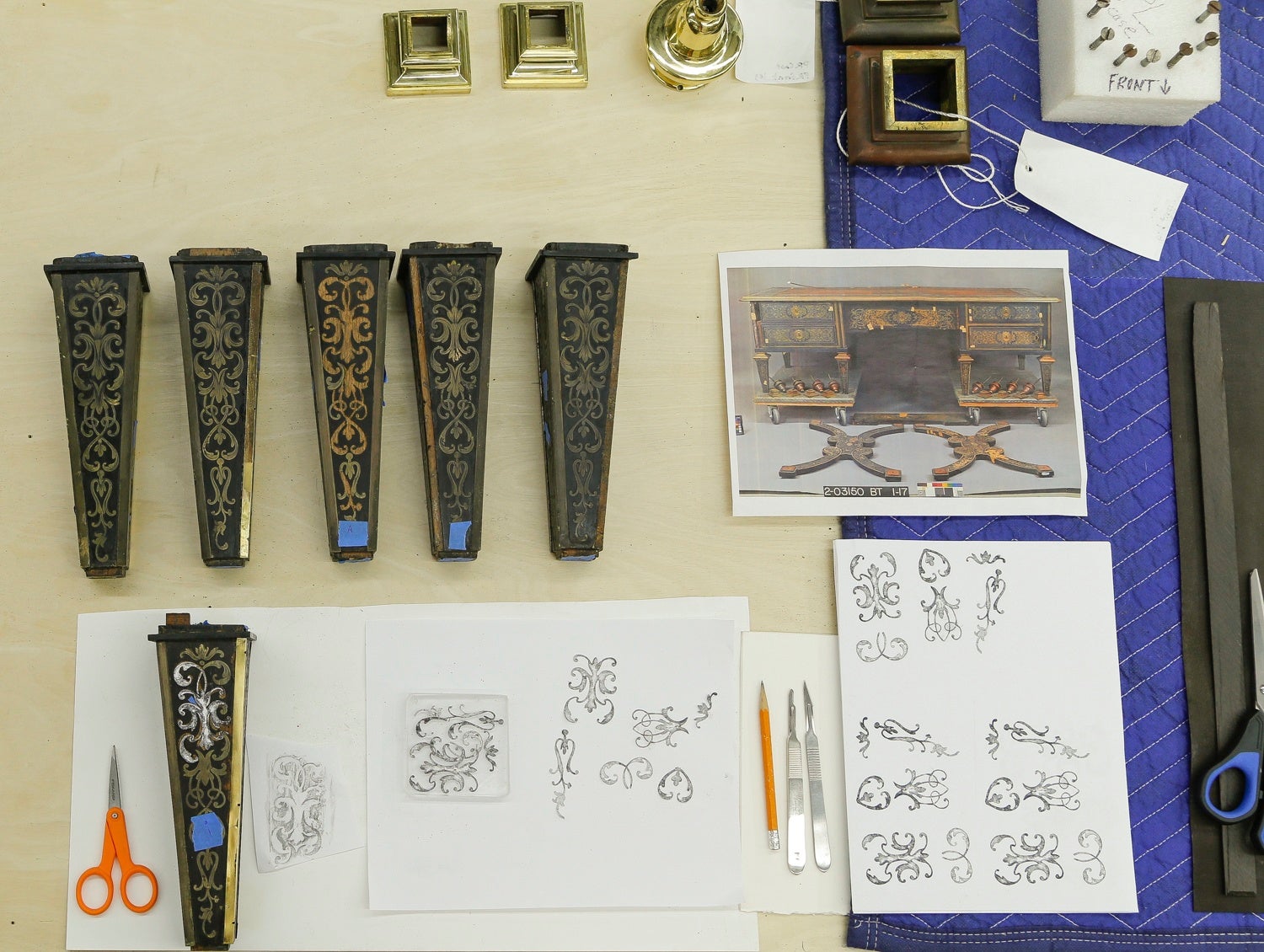
Pieces of a desk being restored by Biltmore's furniture conservator
Photo of the desk paired with some of its component parts, including six of the eight legs

Biltmore’s Museum Services team worked for several years to return the Oak Sitting Room to its original appearance during the Vanderbilt era of 1895–1914.

Like detectives, team members carefully sifted through photographs, letters, and other details for clues to the furnishings and objects that were found in the room originally.

Historic details

One prominent item now displayed in the Oak Sitting Room is a massive desk or bureau Mazarin, named for its association with Cardinal Mazarin, a chief minister to Louis XIV, the king of France in the seventeenth century.

This type of desk was developed in France in the mid-1600s and functioned as a writing table with drawers on either side of a kneehole.

Such furnishings were often decorated with intricate wood and brass marquetry in the style of Andre-Charles Boulle, a royal cabinetmaker to Louis XIV.

While the desk is original to the Biltmore collection, it only appears in archival photos dating from the 1930s when the house was first opened to the public.
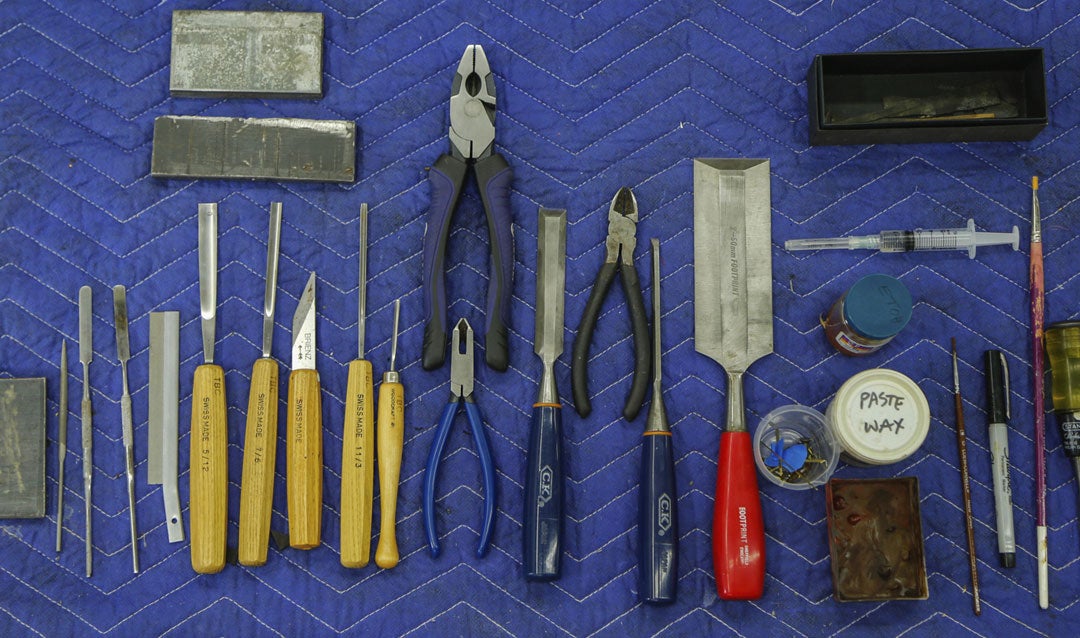
Conservator's tools
A selection of tools needed for the desk project.

A massive project takes shape

That’s where Genevieve’s expertise comes into play.

“The desk was probably already an antique when George Vanderbilt purchased it,” Genevieve said. “When we began this project, the desk had been stored as separate pieces for many years. There are multiple layers of old repairs, from both before and after Vanderbilt used it.”

In addition to locating all the pieces, like the legs that were discovered in a drawer in the conservation lab and a bag of tiny brass shapes that had come off the desk over the years, Genevieve must be able to understand how earlier repairs were made, including the mix of adhesives that might have been used to reattach sections of delicate brass marquetry that have lifted or come loose from the desk’s elegantly veneered ebony surface.
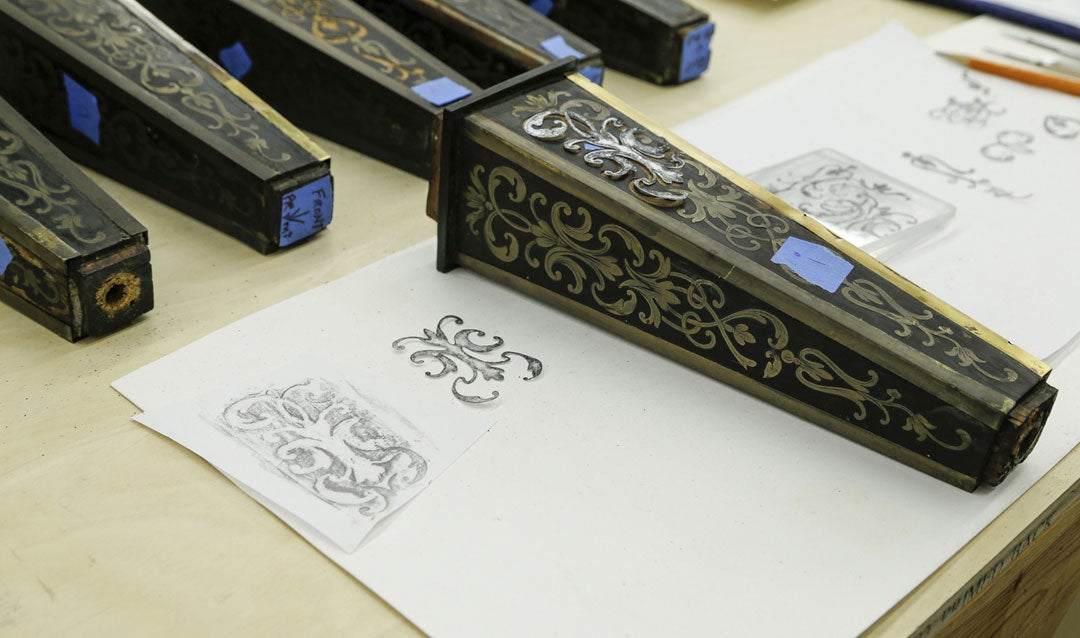
Rubbings taken from pieces of brass on the desk.
Rubbings are created from sections of brass and identified according to their original placement on the desk.

Slow and steady progress

“We originally allowed two years to complete the repairs,” said Genevieve, “and three or four people have been working on the desk on and off during that time. We are re-gluing sections of brass and wood that are loose, and in cases where the brass or veneer is missing, we make templates and cut replacement pieces to fit.”
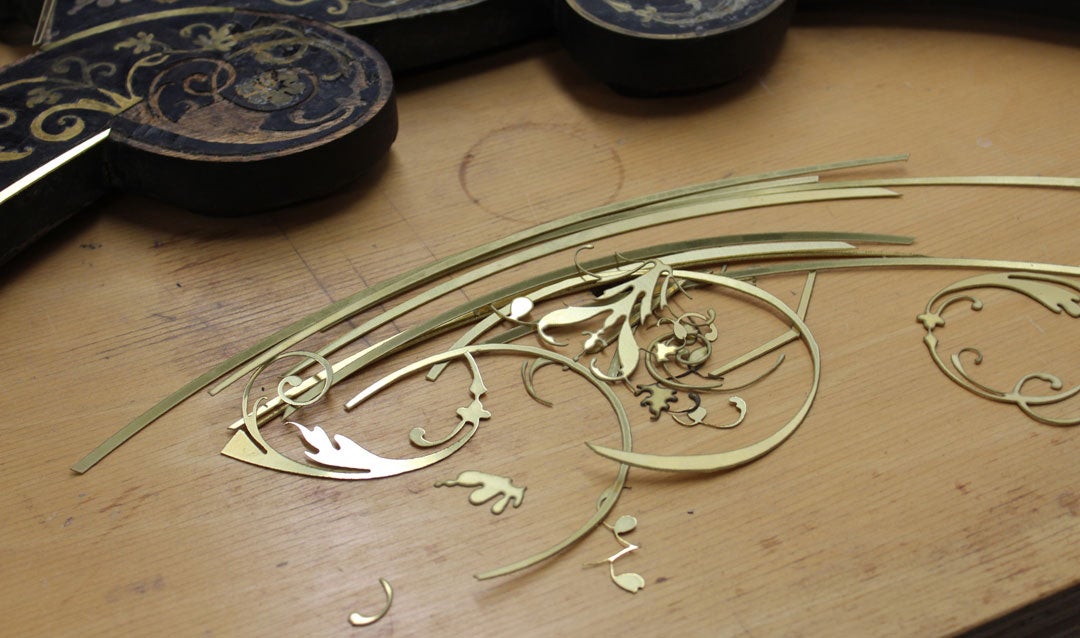
Pieces of brass marquetry for the desk.
New brass marquetry shapes cut to fit the original desk.

The original brass marquetry was also engraved in fine detail, adding depth to the design, but Genevieve says they decided to paint the lines rather than cutting them, to distinguish modern repairs from the original.
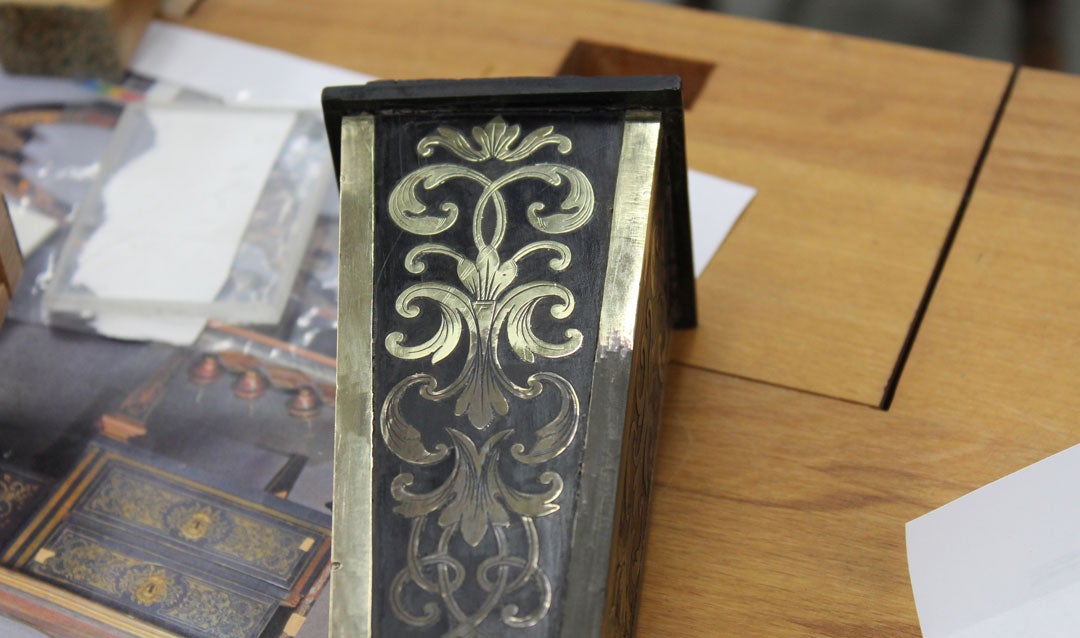
A decorative desk leg showing old and new brass marquetry
One leg of the leg shows the contrast of the newly repaired and polished design with original.

“It’s important that we document everything we’ve done so that future conservators don’t have to wonder or guess,” Genevieve said. “Not knowing how or why something was done makes the repairs that much more difficult and time-consuming.”

Featured image: Genevieve Bieniosek carefully polishes the decorative brass marquetry on one of the desk’s eight legs
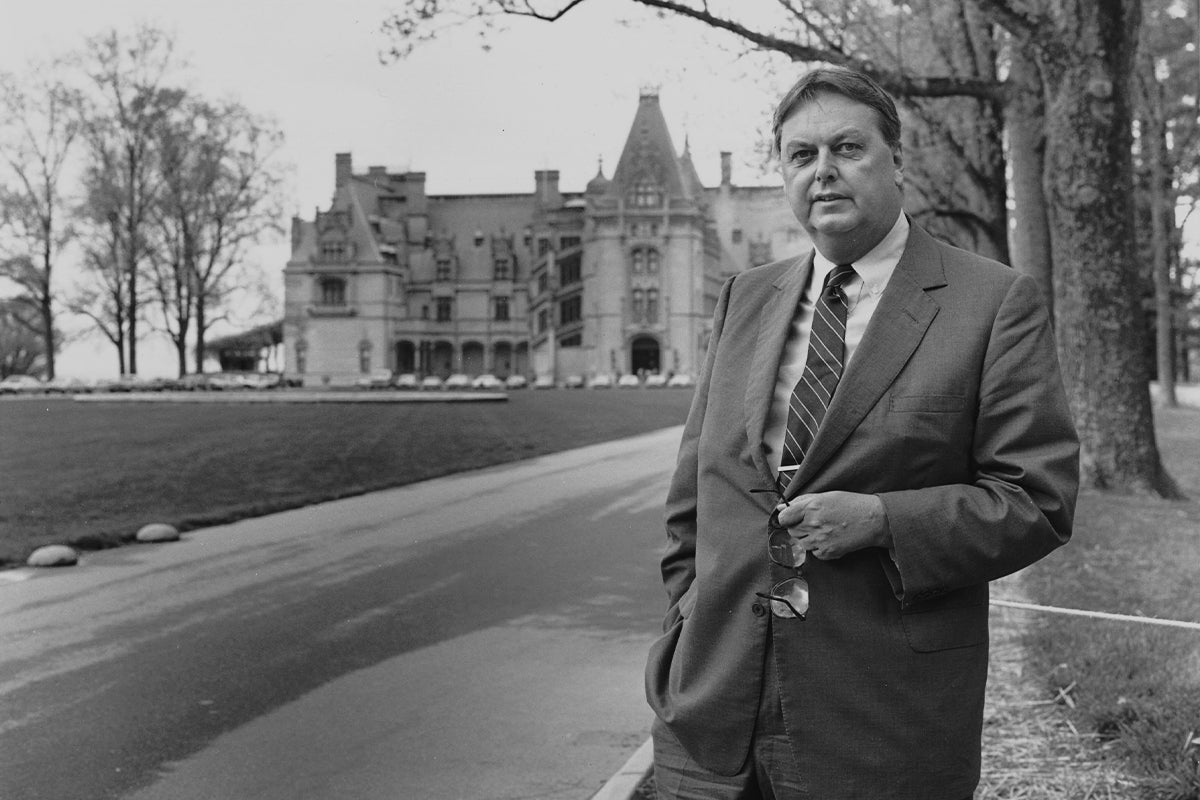
Remembering Mr. William A.V. Cecil

William Amherst Vanderbilt Cecil, owner of The Biltmore Company, died on Tuesday, October 31, 2017 at his home in Asheville. He was 89 years old.

William A.V. Cecil was the youngest son of Cornelia Vanderbilt Cecil and the Honorable John Francis Amherst Cecil, and the grandson of George W. Vanderbilt, who built Biltmore House in the 1890s as the largest privately owned home in America.

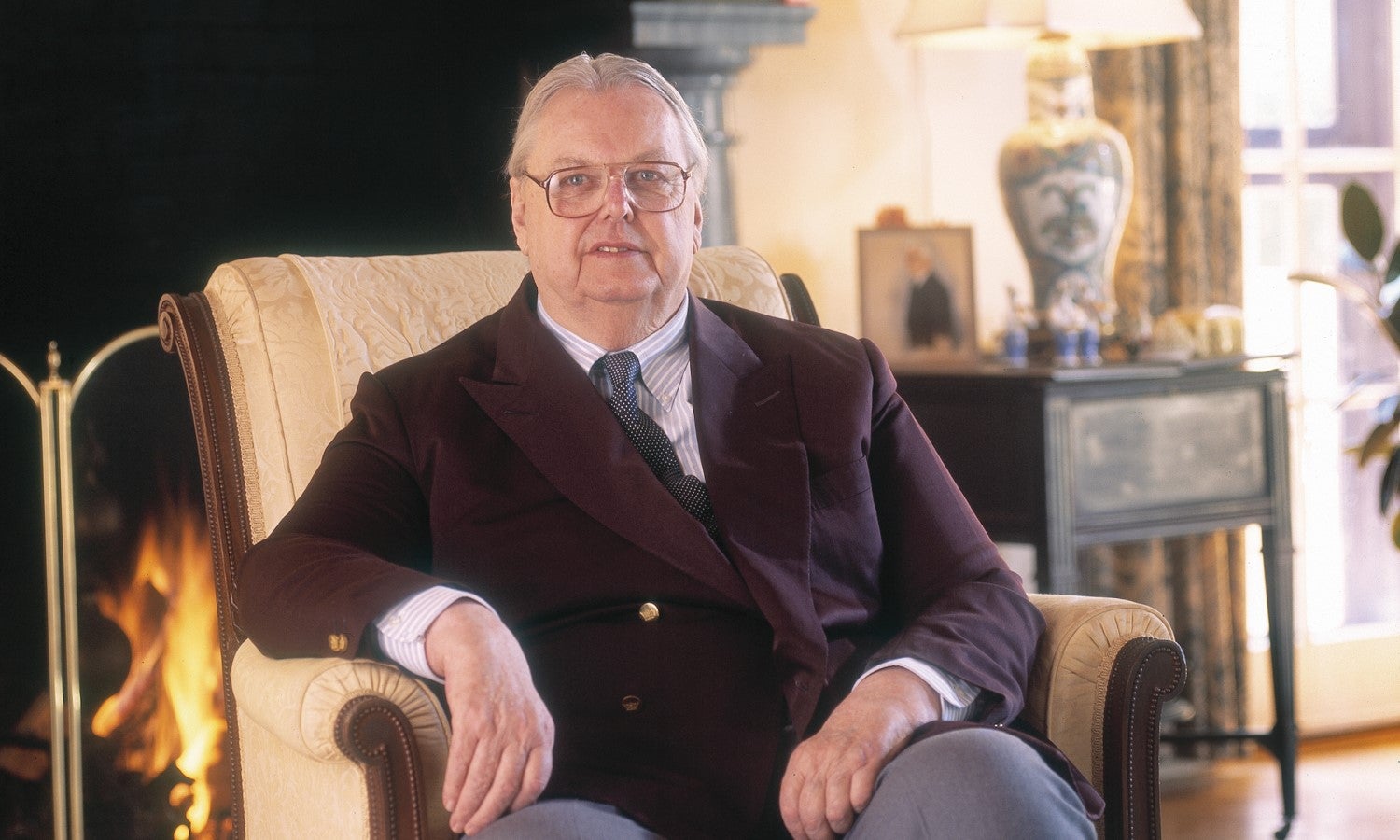
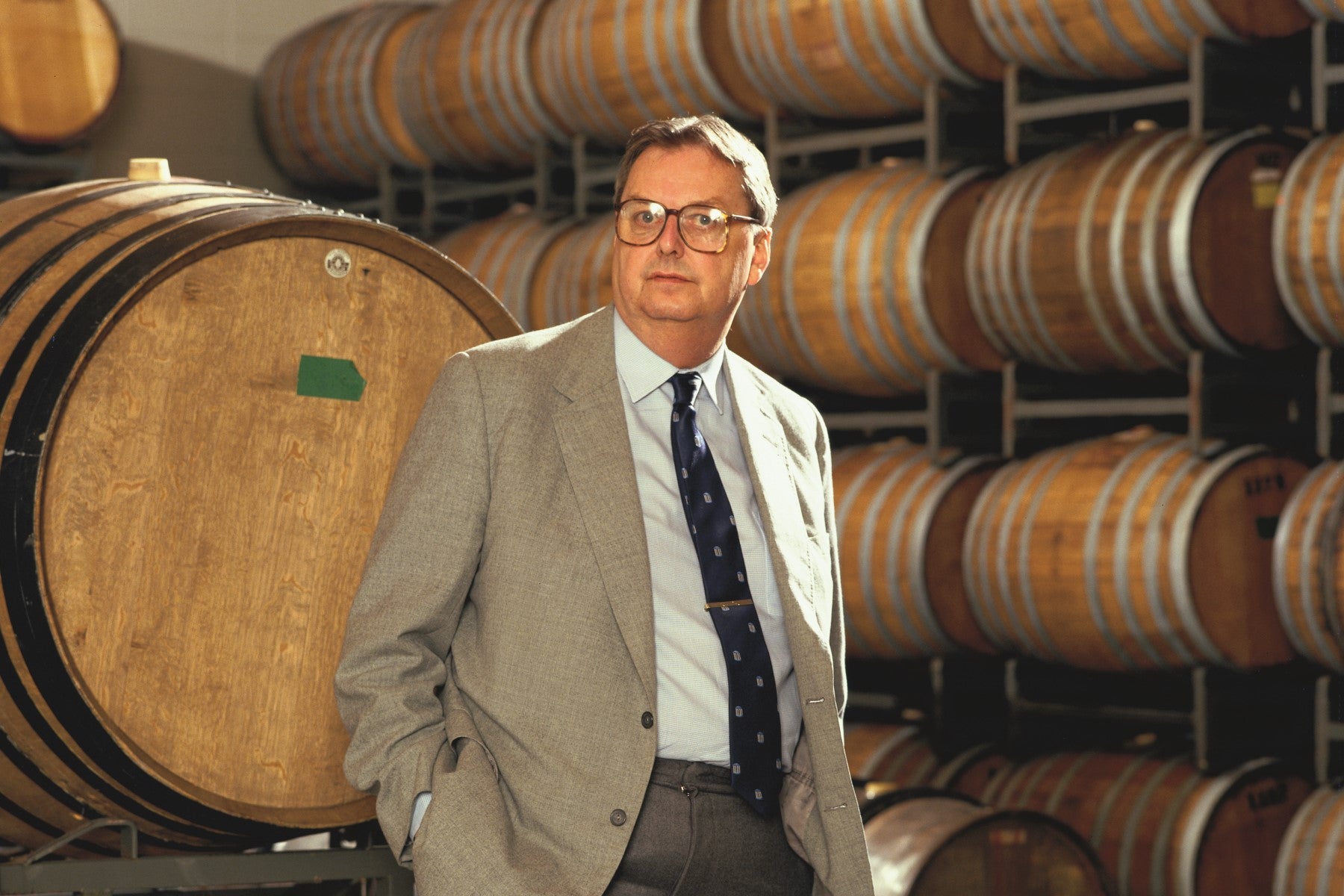
Mr. Cecil stands in front of Biltmore House in 1985.

Mr. Cecil was born August 17, 1928, at his family home in Asheville. Educated in England and Switzerland, he served in the British Navy near the end of World War II. After the war, he attended Harvard University and graduated in 1952. He pursued a career in finance, where he served as a representative of Chase Manhattan Bank in New York, and later as an officer with Chase’s international department based in Washington, D.C.

In 1957, he married Mary “Mimi” Ryan, a lawyer with the Wall Street firm of Cadwalader, Wickersham & Taft. In 1960, the Cecils moved to Asheville with the intention of preserving Biltmore by growing tourism to the region.

“We don’t preserve Biltmore to make a profit. We make a profit to preserve Biltmore,” William A.V. Cecil was known to say. His vision for the estate extended beyond its gates to encompass North Carolina and the country, and he worked the next 35 years to position Biltmore as a unique national treasure and Asheville as a “must-see” destination.

Although his parents opened Biltmore House to the public in 1930, it was not a source of income for the estate. After 30 years, revenues from visiting guests had produced a profit only one time. The book Lady on the Hill details the tremendous challenges Mr. Cecil faced in restoring Biltmore to its Vanderbilt-era glory.

“There was this negativism that it can’t be done,” William A.V. Cecil said. “If you ever want me to do something, just say ‘It can’t be done.’ Everyone told me it couldn’t be done, so I just stuck my feet in it and I said, ‘We’ll see about that.’ And that is what motivated me.”

After years of dedication and hard work—including everything from writing marketing copy to taking photographs for estate brochures—William Cecil announced that Biltmore had made a profit of $16.34 in 1969. In the following decades, his leadership propelled restorations to Biltmore House, renovations across the estate, and unparalleled growth for The Biltmore Company based on his unique business philosophy of a profitable private enterprise supporting preservation.

Mr. Cecil

He was a leader in envisioning successful winemaking in North Carolina, planting vineyards, hiring a French winemaker, and opening the Biltmore Winery in 1985 when the idea of a successful North Carolina winery was unimaginable. Today, Biltmore Winery distributes wines across the country and is the most-visited winery in the nation.

His involvement in Biltmore’s preservation led him to found and serve as the board chairman of the Historic House Association of America, which later merged with the National Trust for Historic Preservation. In 1963, his dedication to Biltmore’s preservation was rewarded when the estate was recognized as a National Historic Landmark. Mr. Cecil also received the National Trust Preservation Award in 1995 for “his unique vision and achievement in the restoration and economically viable administration of the Biltmore Estate.”

William Cecil considered tourism, preservation, and heritage as natural partners, and was active in a number of travel and tourism organizations.  He served as the 1972 president of the Southern Highlands Attractions Association, president of the Asheville Area Chamber of Commerce, and president of the North Carolina Travel Council. In 1974, he was awarded the Charles J. Parker Travel Award. He was also included in “The North Carolina Century, Tar Heels Who Made a Difference, 1900–2000.”

In addition, he served on the board of directors for the Public Service Natural Gas Company, Carolina Motor Club, and the board of the North Carolina Citizens for Business and Industry.

William Cecil retired from the company’s day-to-day operations in 1995 after nurturing his family business into a leading economic contributor to Asheville. The company now encompasses travel and tourism, hospitality, agriculture, wine, and licensed products, and is one of the area’s largest employers.

Portrait of Mr. Cecil

In an afterword to Lady on the Hill, Mr. Cecil wrote:

“I hope Biltmore Estate will continue to give its guests one of America’s most gratifying cultural and aesthetic experiences for years to come. I also hope that the commitment to preserving the great natural beauty that graces Biltmore is held sacred. The estate has given my family great personal and professional satisfaction over the years, and it has been my pleasure and my honor to share her. Long may the Lady on the Hill stand as a symbol of vision, inspiration, and imagination.”

William Cecil is survived by his son, William A.V. “Bill” Cecil, Jr., and daughter-in-law Virginia “Ginger” Cecil; his daughter, Diana “Dini” Cecil Pickering, son-in-law George “Chuck” Pickering; five grandchildren; and nine great-grandchildren.

Labor of love: 40 years of Christmas at Biltmore™

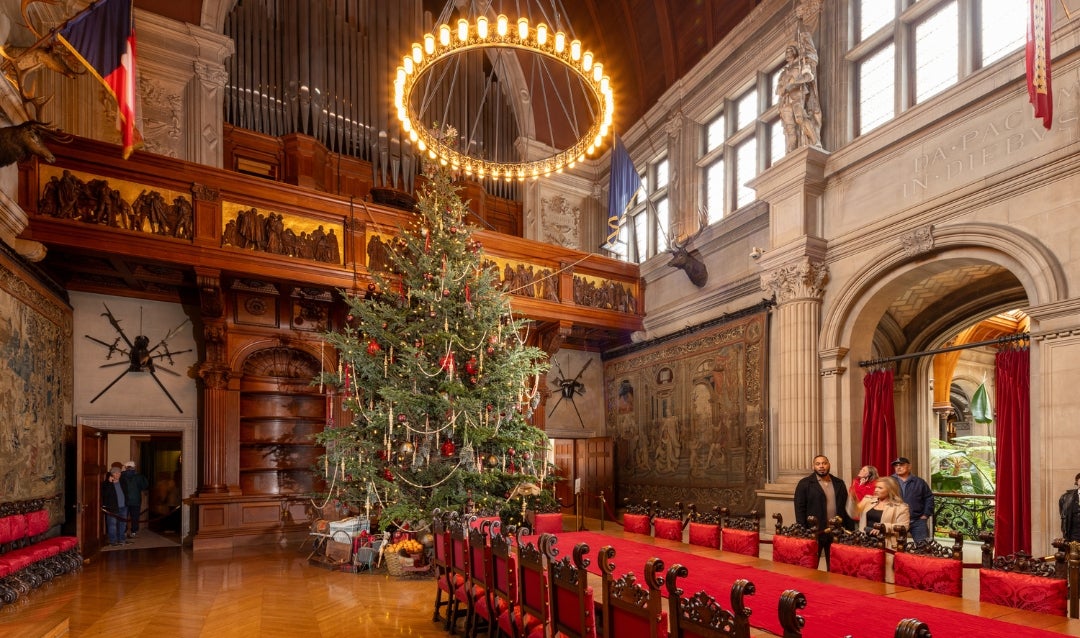
Christmas at Biltmore™ has become a beloved annual tradition for both staff and guests of Biltmore. It is a holiday experience like no other, with more than 50 hand-decorated and styled Christmas trees gracing America’s Largest Home®—including the traditional 35-foot Fraser fir in the Banquet Hall—plus hundreds of wreaths, thousands of lights, and miles of garland that extend across the estate.

Christmas at Biltmore

2019 Christmas at Biltmore Photo
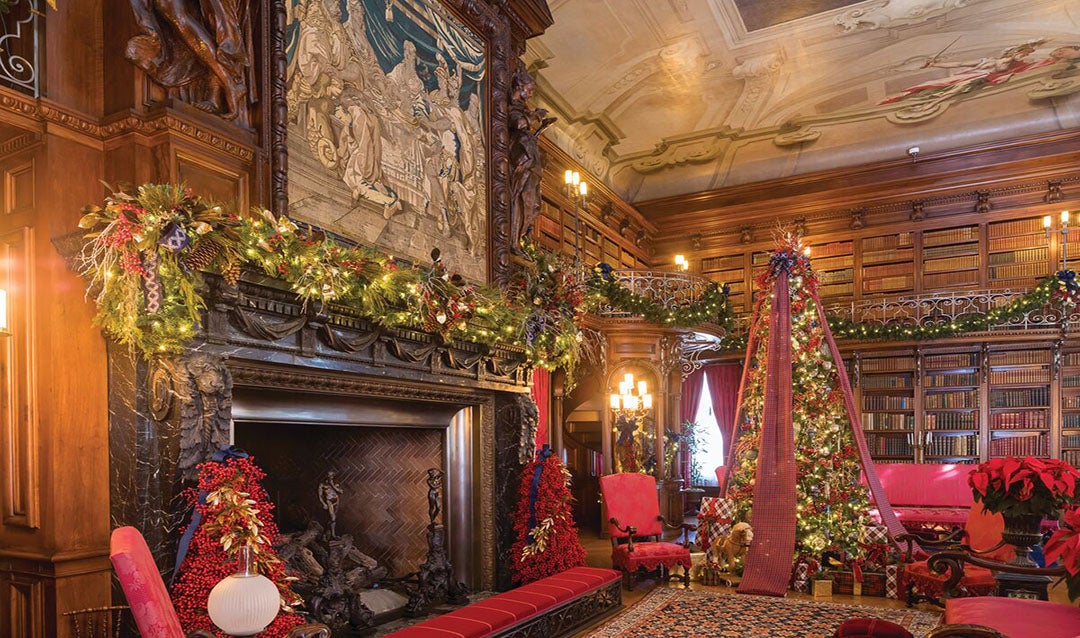
George Vanderbilt’s elegant Library is always a guest favorite during Christmas at Biltmore and Candlelight Christmas Evenings.

The celebration wasn’t always this elaborate—just ask Cathy Barnhardt, former Floral Displays Manager. When she came to work for the estate more than 40 years ago, Christmas at Biltmore™ had happened exactly one time before. As part of her job she was asked to “do Christmas,” which amounted to decorating five trees inside Biltmore House.

“I went to work at Biltmore straight out of college, and I didn’t know much about Christmas decorating or Gilded Age décor,” Cathy recalled. “For my first Christmas here, my mom and I sat at a card table and made paper ornaments to hang on the trees!”

Making a change

Man hangs acorn ornaments on a Christmas tree
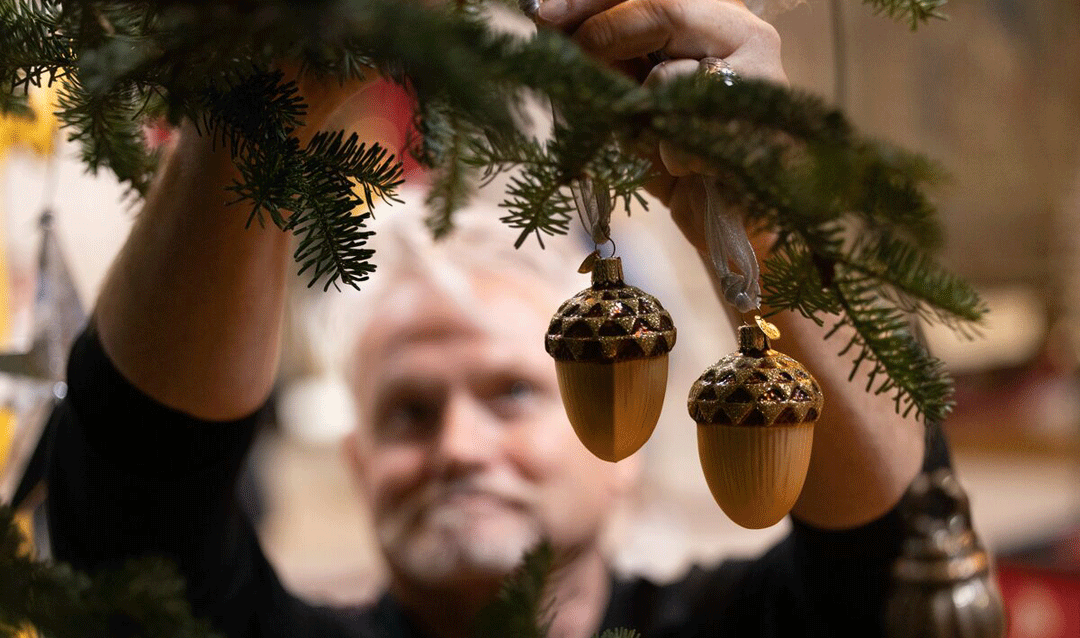
Floral designer Don Holloway adds acorn ornaments inspired by the Vanderbilt family crest to a Christmas tree in Biltmore House.

After planning 40 and implementing 39 holiday seasons at Biltmore, Cathy retired in 2017. Developing and shaping the Floral Displays program at Biltmore was her life’s work, and she left an indelible stamp across the estate, embodying Biltmore’s gracious hospitality with four decades of creative and elegant designs.

The 2017 holiday theme was “A Vanderbilt Christmas,” a fitting finish to Cathy’s career because she always started her planning with Vanderbilt stories.

“As a child growing up in New York, George Vanderbilt loved Christmas, and his journals reflect how his holidays were centered around traditions and family,” said Cathy. “And the fact he chose to open Biltmore to family at Christmas 1895, even though the house wasn’t completely finished, tells us how much he loved this season.”

Candlelight Christmas Evenings at Biltmore

Biltmore House aglow for Candlelight Christmas Evenings.

As night fell over Biltmore, Cathy always loved to see Biltmore House begin to glow with candlelight and firelight, changing the mood and the experience. A Candlelight Christmas Evenings™ visit allows you to step back in time and experience the estate more like Vanderbilt’s guests did that first Christmas Eve 1895. On the Front Lawn, a lit 55-foot Norway spruce surrounded by 20 illuminated evergreens—70,000 lights in all—set the tone. Soft luminaries line the walkway to the house.

“We started doing Candlelight in response to guests’ requests. At that time, we were only open Thursday, Friday, and Saturday nights,” Cathy explained. “We would work during the day and be at Candlelight at night. I was one of the candle lighters and got to listen to the musicians. Our guests loved it from the beginning.”

Through the years, the small gap between daytime and Candlelight Christmas Evenings remained one of Cathy’s favorite times. “The first evening I always took a 30-minute break and simply walked through Biltmore House. It was quiet, and I could see all the planning come together and really look at decorations through our guests’ eyes,” she said. “I loved that!”

Leaving a legacy

“When I started there were only 50 employees, and now there are more than 2,000,” Cathy said.

The Floral team of full-time designers and reserve staff members has continued Biltmore’s incredible decorating heritage, and she has full confidence in them.

Two women place ornaments in a basket
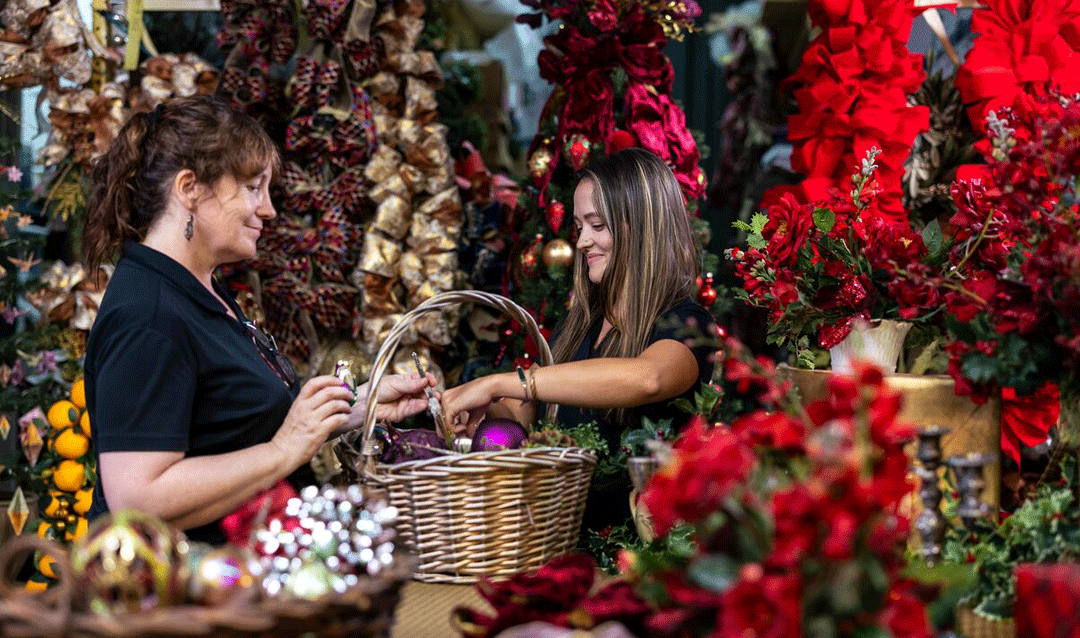
(L-R) Floral team members Fiona Harlan and Sophie Robertson select ornaments for the Christmas decor in different rooms of Biltmore House.

“All these folks are awesome, creative people and great designers. Many of them have been here for 15–20 years! I was blessed to work with them, and I will miss them,” said Cathy. “But what a wonderful opportunity this was for someone like me who loves art and history and flowers!”

Christmas at Biltmore™ visit tips

A 35-foot Christmas tree is the highlight of the of Biltmore House Banquet Hall.
Each year, a 35-foot tall Fraser Fir from Newland, NC, stands tall in the Banquet Hall of Biltmore House and ready to welcome guests back to Biltmore.

Christmas at Biltmore™ can be a lot to take in, especially for first-time visitors, so Cathy advises starting with the daytime experience, and returning for Candlelight Christmas Evenings™.

Lizzie Borchers: the New Face of Biltmore’s Floral Team

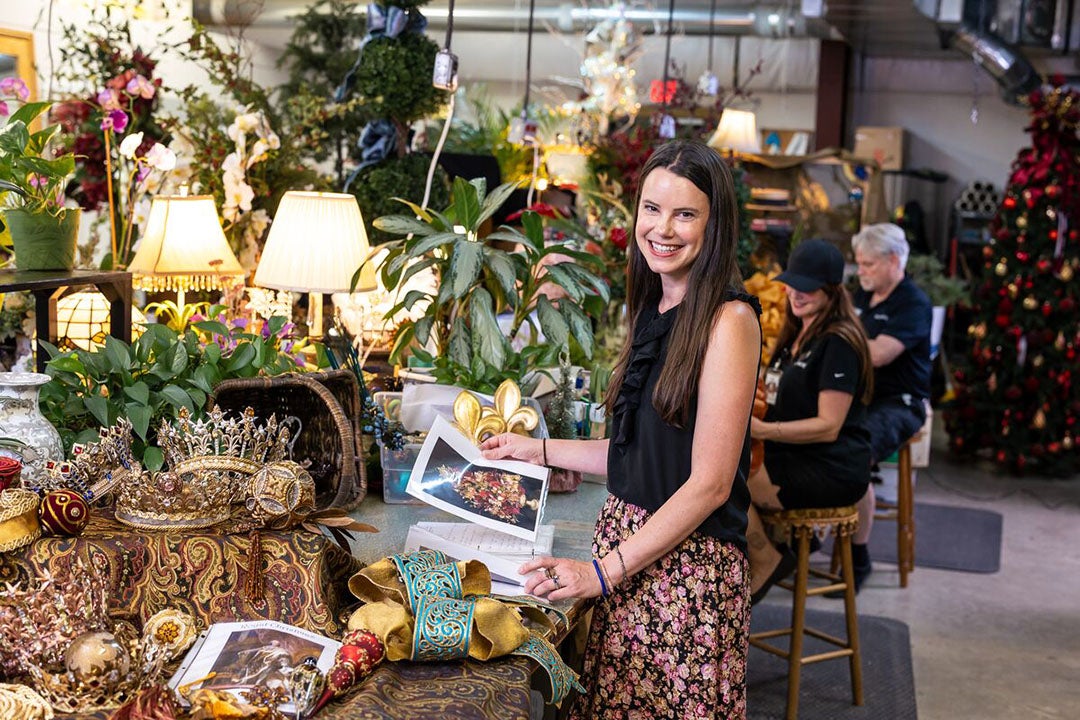
With the retirement of Cathy Barnhardt, Biltmore’s Floral Displays Manager for 40 years—since the first Christmas at Biltmore Daytime Celebration—many were left wondering: Who will fill these festive shoes? Enter Lizzie Borchers. A Texas native, Lizzie studied floriculture at Texas A&M University with a dream of working at Biltmore.

Photo of Biltmore's Lizzie Borchers
Lizzie Borchers of Biltmore Floral Team

“I actually began e-mailing the company as a freshman to show my interest,” she laughs.

After working at Dr. Delphinium Designs & Events, one of the largest florist shop in Texas (and that’s saying something!), Lizzie joined Biltmore in 2014 as the Lodging & Events Floral Manager.

And when Cathy announced her retirement earlier this year, Lizzie felt confident in fulfilling the role.

Lizzie Borchers was officially promoted July 1, and then she spent two months with Cathy, trying to soak up the knowledge gained from her four decades of experience.

“Cathy had never had to train anyone for her position before,” says Lizzie Borchers, “which resulted in a lot of really long conversations.”

One thing Lizzie couldn’t be trained on, however, is coordinating our brand new must-see holiday display of shimmering lights and décor at Antler Hill Village & Winery.

As dusk falls, the village is illuminated with almost 4,000 strands of twinkling lights. Pathways are lit with 100 lanterns hanging from poles of estate-harvested bamboo. More than 65 shrubs are decorated with nearly 200 sparkling stars, snowflakes, and spheres.

“With this much illumination, the village will be viewable from space,” Lizzie says.

Inside the Winery’s Tasting Room, more than 7,000 gold and glittery globe-shaped ornaments—reminiscent of champagne bubbles—hang from the ceiling.

“I think what I’m most impressed with in my new position so far is our floral team’s ownership of their individual design areas—especially considering the large size and scope of our work,” says Lizzie Borchers. “They really do go above and beyond to deliver an experience similar to what guests of the Vanderbilts may have enjoyed more than 100 years ago.”

Bernard Delille on Harvesting Four Decades of Memories

It is increasingly rare to spend four decades in the same business, but when it comes to winemaking, Bernard Delille is outstanding in his field—literally and figuratively!

Although Bernard plans to retire in July 2018, his legacy of handcrafting fine wines will continue under the direction of Biltmore winemaker Sharon Fenchak. Here are some exciting highlights from Bernard’s career.

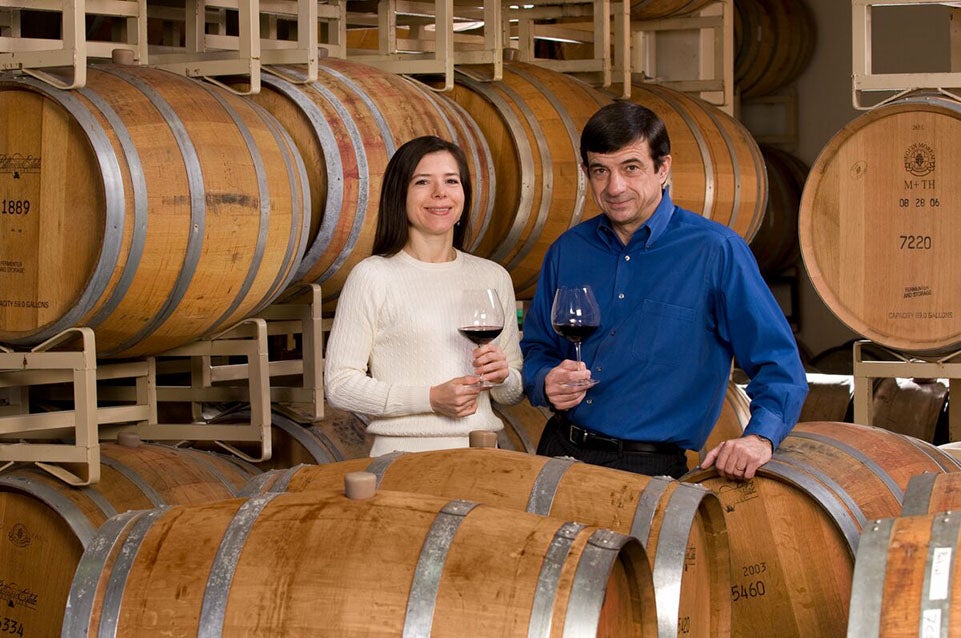
Sharon Fenchak (Winemaker) and Bernard Delille (Winemaster) in Barrel Room at Winery
Sharon Fenchak (Winemaker) and Bernard Delille (Winemaster) in Barrel Room at Winery.

A memorable milestone

The year 2017 represented a special milestone for Bernard as he celebrated his 40th harvest in the wine industry. A native of France, Bernard joined the Biltmore Wine Company as assistant winemaker in 1986, rising to the position of winemaker in 1991. His background included a master’s degree in Microbiology and Science of the Vines from the Faculty of Sciences in Lyon, France, and a French Winemaker Diploma from the Faculty of Dijon in Burgundy, France. Prior to Biltmore, Bernard was a winemaker in the Pyrenees Atlantiques region.

“When I first arrived at Biltmore, I thought the estate was breathtaking,” said Bernard, “and I was very excited in the sense that there was no real history of growing and making wine with vinifera grapes in North Carolina—no rigid and dated rules like in France—plus the opportunity to experiment and to play with grapes from different origins.”

Harvest of memories

For the past 32 years, Bernard has played an integral role in the production of Biltmore Wines—not just as winemaker, but also as an expert in growing and harvesting grapes here in Western North Carolina and with our distinguished west coast partner vineyards.

“Harvest for us winemakers is the most exciting time of the year, and also the most stressful,” Bernard said. “You try to deal with Mother Nature, which is not always very nice and can spoil the hard work of the vineyard crew for an entire year, but you learn to deal with it. Winemaking has for me been the best school of patience and humility.”

Today’s philosophy (and favorites)
Together with winemaker Sharon Fenchak, Bernard has been committed to handcrafting Biltmore Wines with the philosophy of keeping each one true to varietal character and consistent from vintage to vintage. Bernard is especially fond of sparkling wines and enjoyed crafting them according to the traditional méthode champenoise, making Biltmore’s Winery one of very few that produce both still and sparkling wines.

“Sparkling wines aren’t just for celebrations–they’re surprisingly food-friendly as well,” said Bernard.

Though his favorite varietal is Sauvignon Blanc, when asked to name his favorite Biltmore Wine, Bernard always tells us, “The one I’m drinking right now!”

Biltmore goes to great heights for preservation

Biltmore goes to great heights for preservation, because our mission is to preserve the estate for the enjoyment of future generations.

This means that every aspect of Biltmore must be cleaned, inspected, repaired, and restored on a regular basis. And that’s no easy feat! Biltmore spans an impressive 175,000 square feet, which is more than four acres of floor space. The 250-room French Renaissance-style chateau includes 35 bedrooms, 43 bathrooms, and 65 fireplaces. Every sweep of the broom and delicate touch of dusting breathes life into the past, ensuring that the tales woven into the very fabric of Biltmore endure the test of time.

Great heights for preservation

Cleaning the Grand Staircase and Chandelier at Biltmore
Cleaning the Grand Staircase and its 4-story chandelier takes preservation to new heights!

It also means that our guests sometimes get amazing glimpses of the work that goes on behind the scenes in Biltmore House.

Winter Garden woodwork

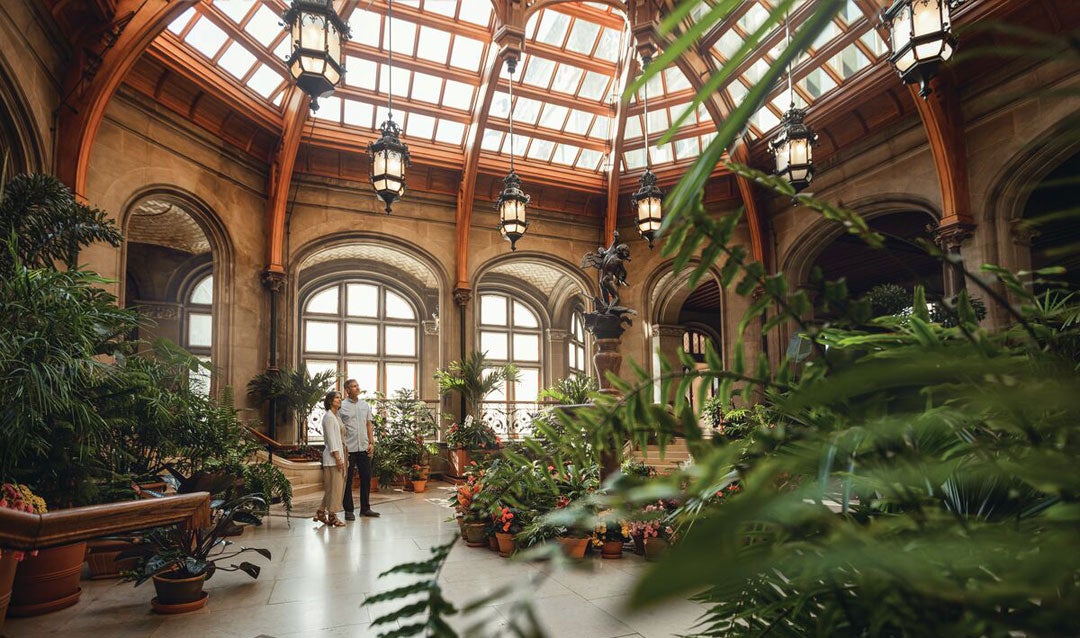
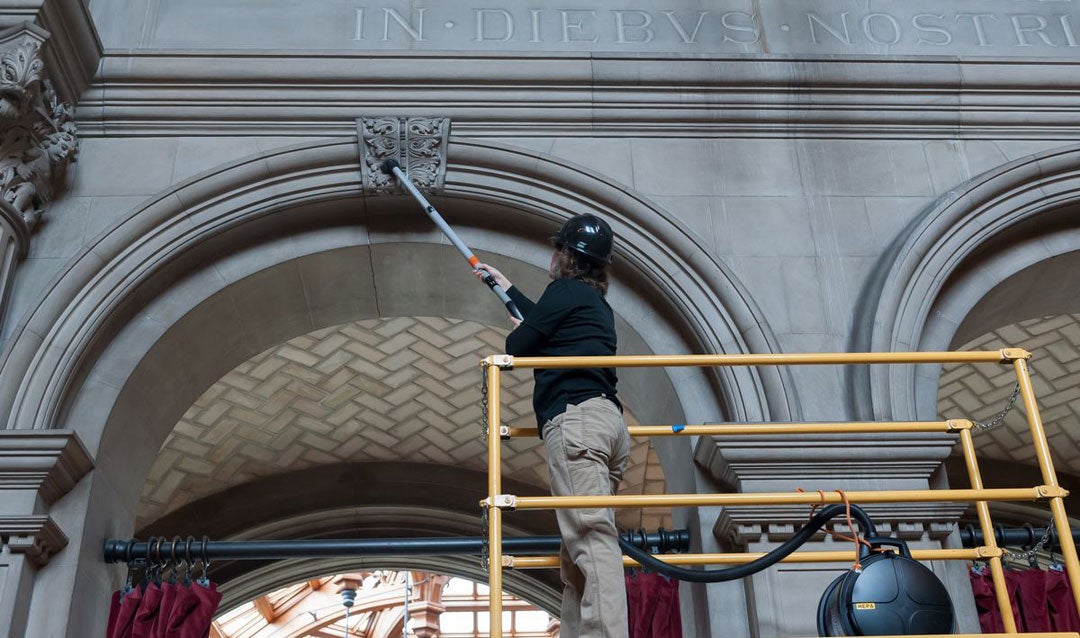
To clean the oak woodwork that surrounds and supports the glass ceiling in the Winter Garden, for example, our Housekeeping Supervisor and members of the Housekeeping team utilized a 40-foot scaffold.

Couple views Winter Garden in Biltmore House
The beautiful Winter Garden woodwork undergoes a deep cleaning every three years for preservation purposes.

Part of our ongoing preservation efforts, treating the wood that supports the glass takes place about every three years. Sun damage is evident closest to the top of the ceiling, which dates back to the late 1890s.

This area receives full sun for several hours on bright days. Making sure the wood stays moisturized is key to keeping it protected–sort of like applying sunscreen every three years.

The team vacuumed and wiped dirt away to ready the surfaces for an application of a special wood polish containing beeswax, carnauba wax, and orange oil. The entire project took about a month.

High standards of cleaning

Going to great heights for preservation includes cleaning the Banquet Hall
Staff members go to great heights to clean the Banquet Hall.

While some projects like the Winter Garden ceiling are done every few years, Biltmore House itself gets a thorough deep cleaning each winter after Christmas at Biltmore ends.

“Winter is usually our quietest season,” said Connie Dey, “so it’s the perfect time to clean things without getting in the way. And visitors often enjoy watching the process–my team gets lots of questions from guests about how to clean their own homes!”

Not all preservation projects unfold on a grand scale. Often, it’s the meticulous attention to small details that play the largest part in maintaining Biltmore House. Behind closed doors, our caretakers dedicate themselves daily to seemingly normal tasks like dusting the books on the bookshelves.

The walls of the Library house about half of George Vanderbilt’s personal collection of 20,000 volumes. About one-third of the volumes were antiquarian purchases, the oldest of which is an Italian work published in 1561. Without proper care, the knowledge of our past would be lost to time.

Our mission of preservation

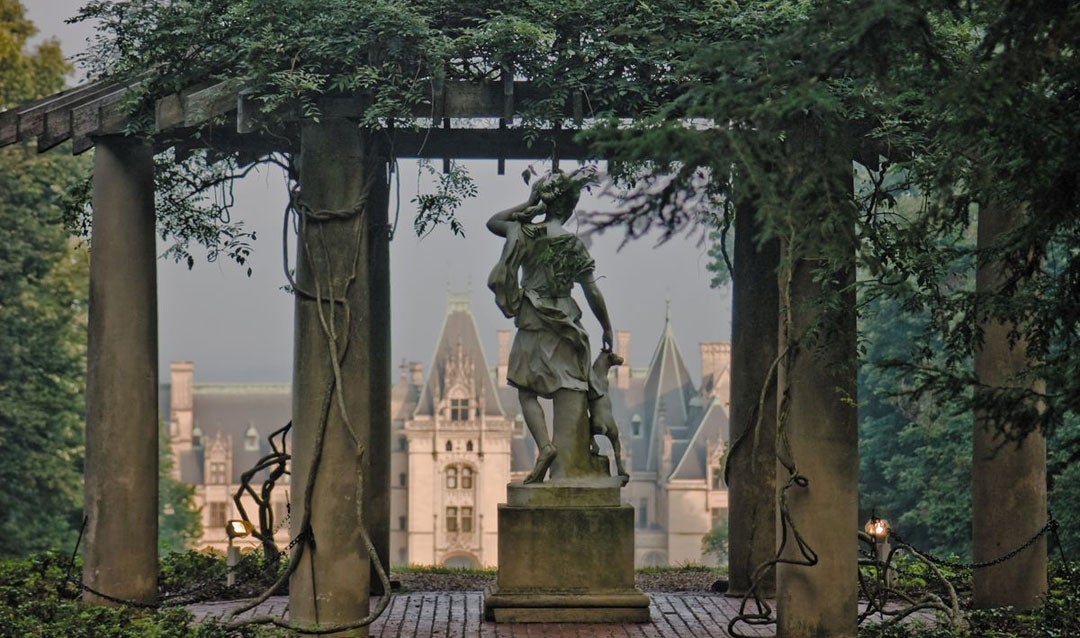
The statue of Diana overlooking Biltmore House is a hidden gem in the landscape.
Statue of Diana overlooking Biltmore House

Our mission to preserve Biltmore as a privately-owned, profitable, working estate emphasizes preservation first. Learn more about our efforts to preserve, restore, and conserve this National Historic Landmark with the help of our in-house conservation department.

Featured image: Members of the Housekeeping team look over the Grand Staircase chandelier

Viva Voce: Biltmore’s Oral History Program

Have you ever wondered how exactly our Museum Services department knows so much about life on the estate during the Vanderbilts’ era? Our Oral History Program helps to fill in the gaps of our archival records with the details of the everyday.

“Many of the documents in our archives are financial or administrative in nature, such as payroll slips and receipts,” explains Winnie Titchener-Coyle, Biltmore’s Associate Archivist. “But not much of what we have sheds light on the daily lives of people who lived and worked on the estate.”

The program allows us to ask specific questions about celebrations, meals, and leisure time. 

“I think one of the most important elements of the program is how it helps to personalize the story of Biltmore,” says Winnie. “It provides social and cultural context that we may not have otherwise.”

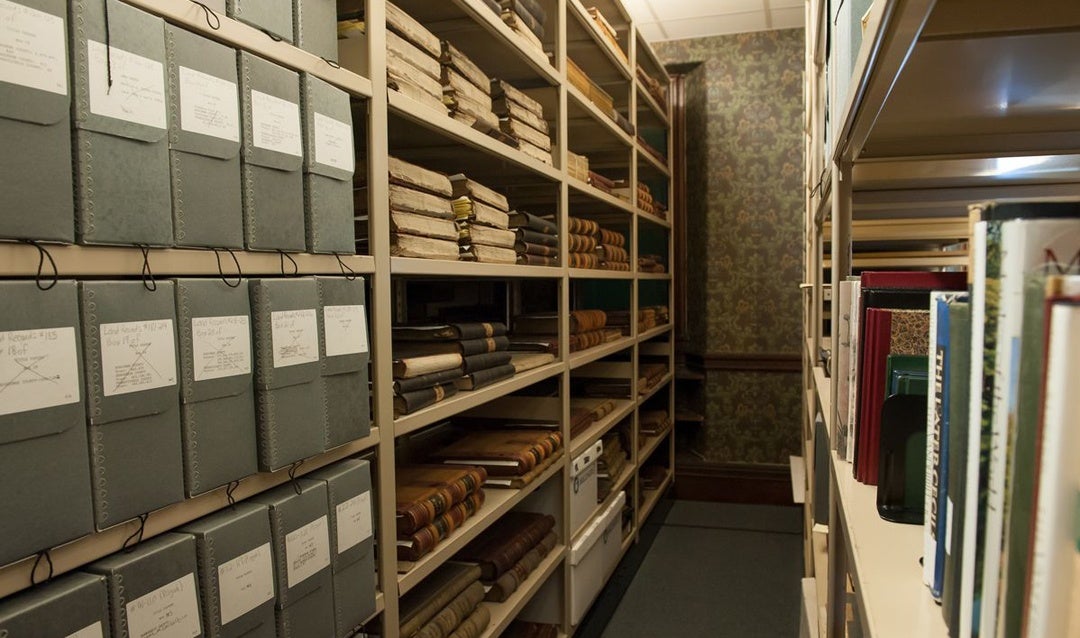
Archival Documents stored in Biltmore's Collection
Our Oral History Program helps to fill in the gaps of our archival records.

A Love of Storytelling

Winnie first became intereseted in the practice of oral history while pursuing her master’s degree in library and information science.

“I love the idea of providing opportunity to give voice to those who may not have had the means to tell their story before,” she says.

She was hired at Biltmore in 2012 to oversee our Oral History Program—a mission of our Museum Services department that was initiated in the 1980s.

The initial goal of the program was to tell the stories of servants who worked in Biltmore House. However, as time passes and the generations become further and further removed, stories from George Vanderbilt’s era become scarce.

As a result, the program’s focus has shifted to the mid-1900s, highlighting the stories of estate farmers and dairy workers as well as Vanderbilt descendants.

“The fusion of estate history with family lore is really special,” says Winnie. “I remember one interviewee who passed away shortly after we spoke, but I was able to share our recording with his wife, who can listen to the audio of his voice now. I felt honored to be a part of that.”

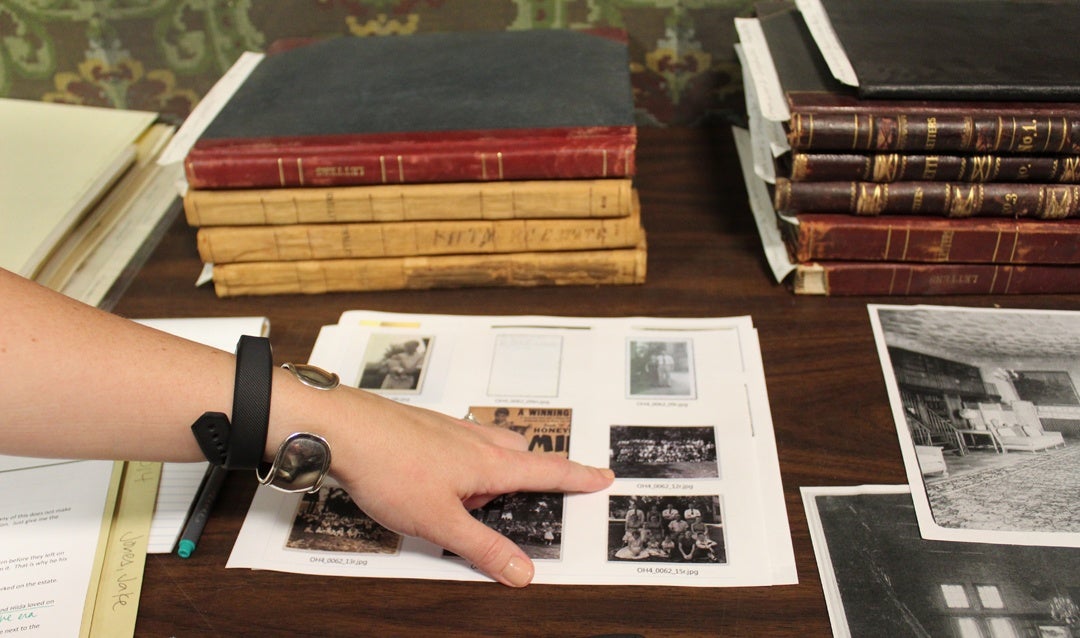
Curator's pointing at documents
Many of our archival images are acquired through our Oral History Program.

Documenting Oral Histories

Winnie has conducted about 10 interviews each year since she’s been in her role—those in combination with interviews conducted before she arrived brings the total to about 375.

She and other Museum Services team members begin the interview process by gathering facts about the interviewee, their family, and other people they may have known or worked with.

“I always put together a list of questions, but it’s also helpful to enter an interview without much prior knowledge,” Winnie explains. “If the interviewee knows that you’re familiar with what they’re talking about, they’re less likely to go into detail than if you ask them to explain everything from the beginning as if you don’t know.”

A typical interview session lasts a few hours, and sometimes longer interviews are broken up into a series of sessions on multiple dates.

Most of the research actually takes place after the interview—including collaborating with the interviewee again to ensure correct spellings and identifications for any photographs they shared, and then putting the interview in context with the rest of what we have in archives.

“One of the most rewarding parts of this work is how the memories and stories are able to corroborate each other,” she says, “and getting a sense for how Biltmore was and is such a close-knit community.”

Archival records
We invite you to share your Oral History and become part of the Biltmore story.

Share Your Oral History

While Biltmore is a private, for-profit company, we are vested in local history and family connections, which are also valued parts of the story of the estate.

Winnie, along with other members of our Museum Services team, would like to encourage those with family stories and connections to the estate to share them with us.

Your family’s story could become part of the Biltmore story—a special way to pay homage to preserving this gracious time and place.

If you or one of your loved ones would like to share your stories with our Oral History Program, contact our Museum Services team at museumservices@biltmore.com.

Feature image: Winnie Titchener-Coyle, Associate Archivist

Historic “Fall Fairs” on Biltmore Estate

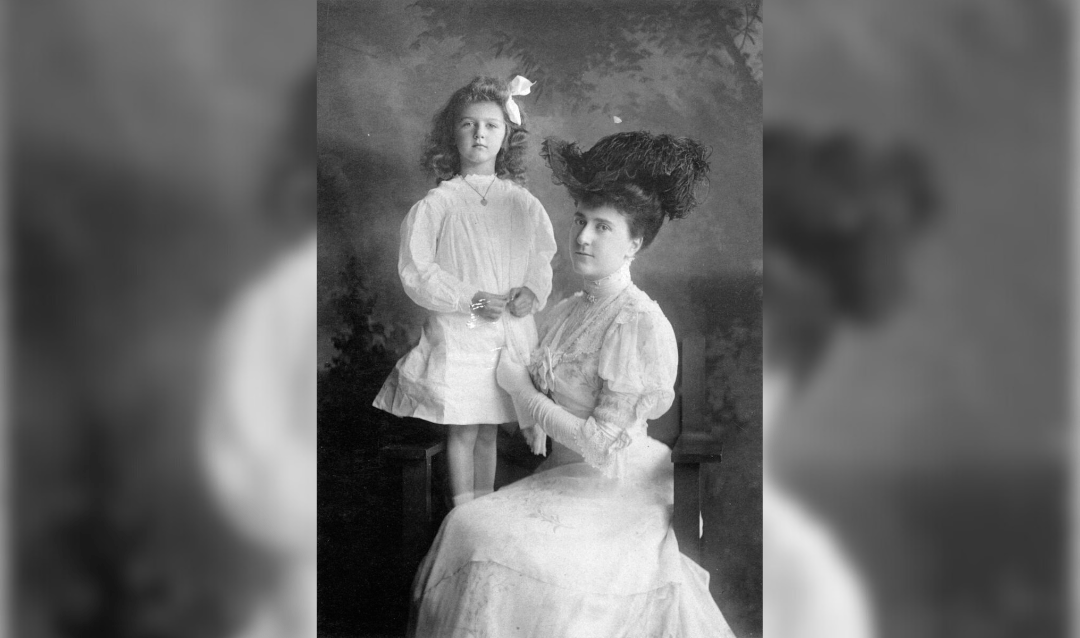
In 1905, Edith Vanderbilt took a visionary step to foster a strong sense of community through the joy of friendly competition and shared achievement by organizing Biltmore’s first Fall Fair, a cherished annual event that became a highlight of life on the estate.

Archival photographic portrait of Edith Vanderbilt and her daughter Cornelia.

Seeds of Success

Featuring categories such as vegetables, herbs, domestic products, and needlework, the fair evolved over the years to include a diverse array of entries like flowers, poultry, and even honey. Edith ensured that every employee had the opportunity to join in by distributing free flower seeds to Biltmore tenants. Even five-year-old Cornelia Vanderbilt planted her own little flower garden before departing for an extended stay in Paris with her parents.

Estate Superintendent Chauncey Beadle judged the results of everyone’s efforts and prizes were awarded.

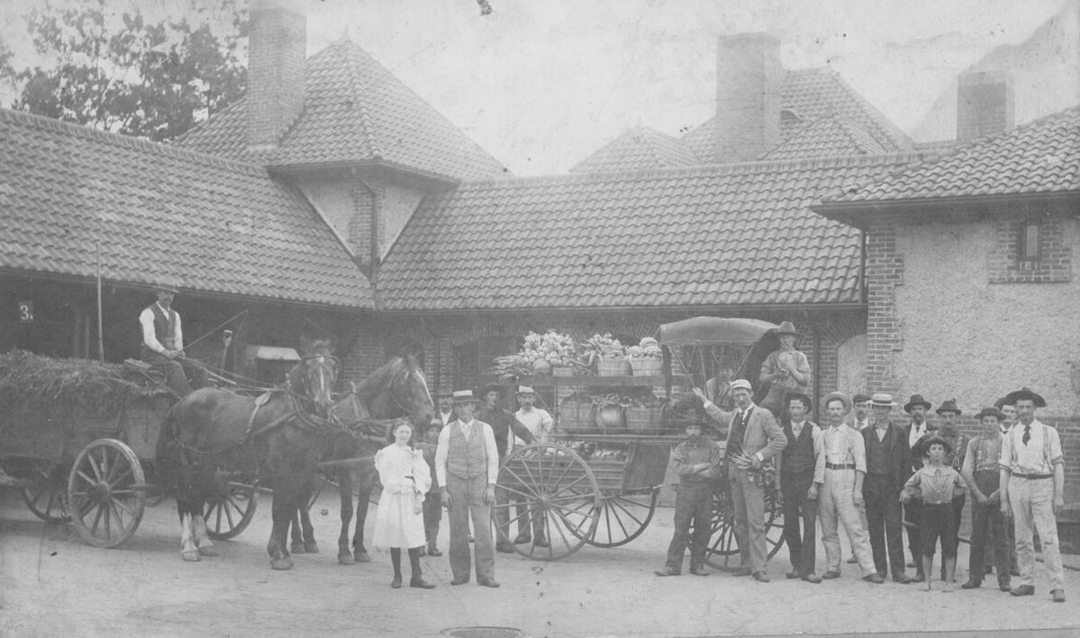
Archival photo of people and produce in front of the Market Gardener's Cottage at Biltmore
Archival image of agricultural workers and estate residents at the Market Garden, photographed in front of an elaborate display of estate-raised produce.

Biltmore’s First Fall Fair Yields Impressive Results

“I anticipate the event this year will surpass the initial results,” Chauncey Beadle informed Edith Vanderbilt in 1906.

Beadle once again judged the results in July, recognizing first through fourth place winners for both flower and vegetable gardens grown by families at cottages in the Farm Village, cottages of the Dairy Foremen, and the farms along the east side and west side of the French Broad River.

“Without doubt, the flower garden of Mrs. Matthias Smith excels in extent and brilliancy any of the flower gardens we visited,” Beadle noted of one winner’s efforts.

Biltmore’s 1906 Fall Fair

For the Biltmore Estate Exhibition that would occur that fall, Edith Vanderbilt instructed Beadle to give out gardening books as prizes for the winners in July. Beadle kept a list of the books he acquired as prizes for the gardens and to whom they were given, and he had ribbons and cards prepared for the Exhibition.

In early September, Beadle distributed a flyer advertising the exhibition to all estate employees.

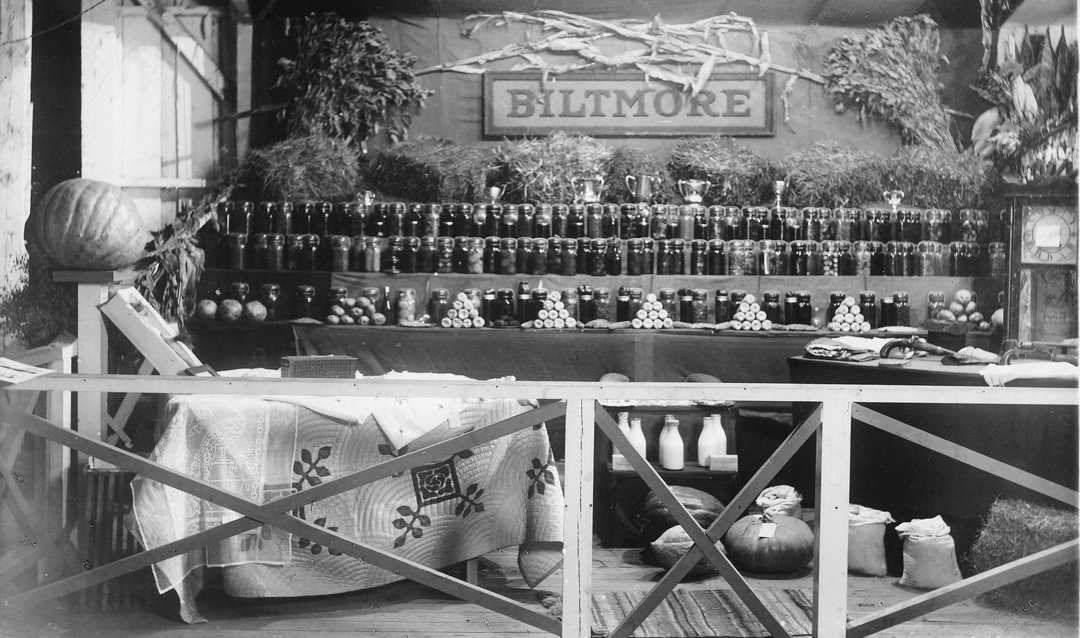
Archival photo of Biltmore's fall fair winners at the 1921 NC State fair
Archival photo of Biltmore Estate display at the 1921 NC State Fair.

Prizewinning Categories

An impressive list of first and second place winners to whom prizes were awarded in the various classes includes Class “A” (40 categories of vegetables and herbs) and Class “B” (13 categories of field crops). Class “D” covered domestic products such as pickles, preserved fruits, jelly, wine, cakes, loaves of bread, and biscuits.

Various types of needlework such as Hungarian embroidery, Russian drawnwork, shadow embroidery, sewing school models were in Class “F” and a basket class included straw baskets, oak baskets, and rush seats. Estate records indicate that Mrs. Halyburton was top prizewinner in 1906 with 12 first place ribbons and six second place ribbons.

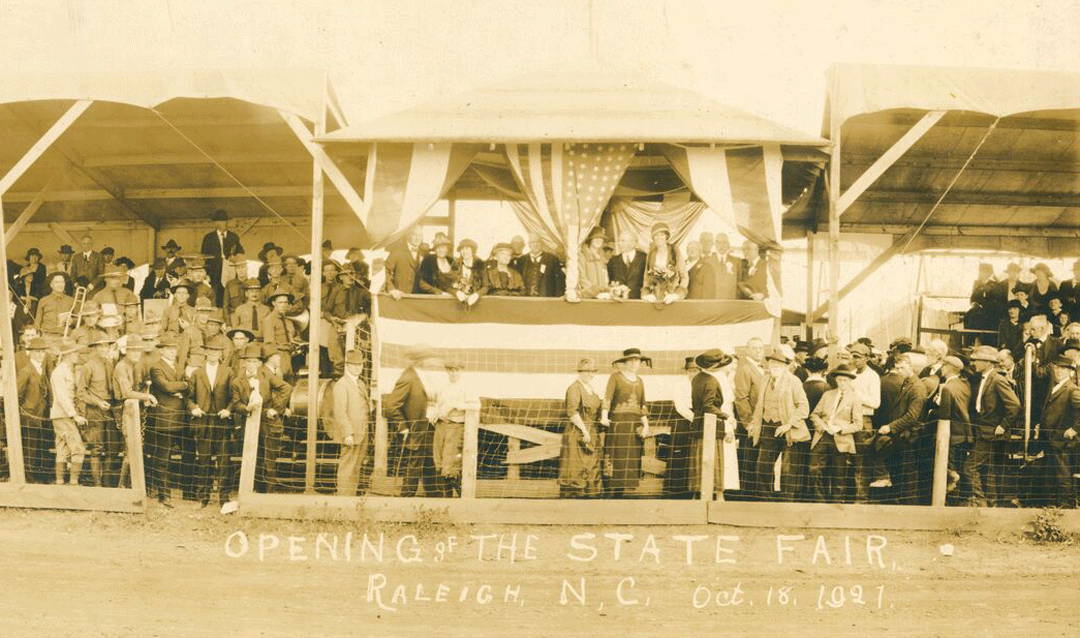
Archival photo of the opening of the 1921 NC State Fair
Edith and Cornelia Vanderbilt at the opening of the NC State Fair. They are standing in the right section at the center, with Governor Cameron Morrison between them. There is a uniformed band in the stands to the left and a group of people to the right, October 18, 1921.

Growing Interest in the Fall Fair

In 1907, James Charles Berry, the estate’s orchards manager and beekeeper, won a book titled The American Fruit Culturalist. Its inscription reads, “Mr. J. C. Berry by Mrs. Geo. Vanderbilt as a special prize for a well kept garden and house grounds at the bee farm. Special prize Sept, 1907.”

Interest in the event continued to grow year by year. Beadle wrote to Mrs. Vanderbilt in September 1908, “I can but repeat the strong interest that is manifest among the tenants and their families regarding the forthcoming exhibition.”

By 1911, Mrs. Vanderbilt extended invitations to the tenants in the farthest boundaries of Pisgah Forest in Henderson and Transylvania counties to participate in the “Annual Estate Fair” as it came to be known.

From oral histories, we know the fairs continued into the 1940s, and those who remembered attending them as children and adults have given glowing accounts of the fun and festivities and the camaraderie of the Biltmore farm families.

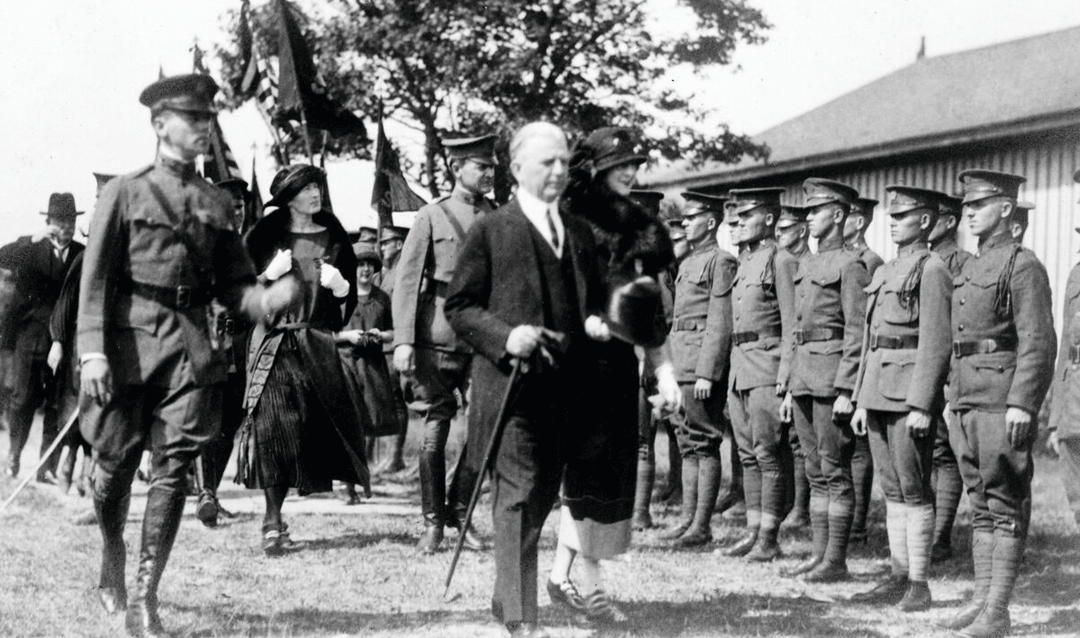
Archival image of Edith Vanderbilt and others at the 1921 NC State Fair
Archival photo of Governor Cameron Morrison (center) and Edith Vanderbilt (right) inspecting troops at the NC State Fair, October 1921

President of the NC State Fair

In 1921, Edith Vanderbilt was the first woman to be elected president of the North Carolina State Fair. She eradicated gambling to promote an educational, family-friendly atmosphere.

It was said of her that “Mrs. Vanderbilt’s record of accomplishment is of such an outstanding character that it points the way to definite service open to other women who are similarly actuated by a desire to aid in community betterment.”

Fall offers ample opportunity to explore our mountain estate and savor the bounty of the fall harvest season.

A legacy of fall fun continues

Although we no longer hold a fair, fall is still a wonderful time to visit Biltmore Estate in Asheville, NC.

Featured image: Edith Vanderbilt and Cornelia Vanderbilt at the North Carolina State Fair, October 1921

Biltmore Wines Have Big Personalities

From flavor to food-friendliness, we’ve always believed that Biltmore wines have big personalities.

To highlight North Carolina Wine Month in May, we’re pairing five of the estate’s historic VIPs with a distinctive Biltmore wine that best matches their own larger-than-life personalities!

~ George Washington Vanderbilt ~
Antler Hill Cabernet Sauvignon Napa Valley

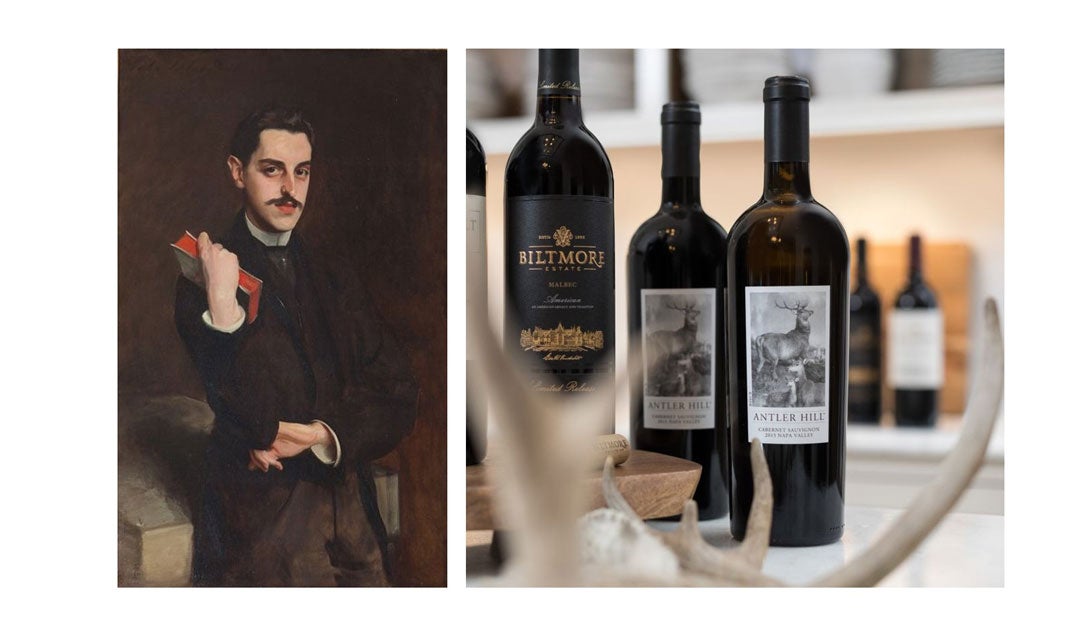
Portrait of George Vanderbilt and three bottles of wine
George Vanderbilt (left; portrait by John Singer Sargent) was a thoughtful collector of wines whose legacy continues to inspire our handcrafted Biltmore wines today.

Mr. Vanderbilt was known as a thoughtful collector of wine, often bringing back cases of his favorite discoveries from his world travels to share with friends and family at Biltmore.

Handcrafted from exceptional grapes grown by phenomenal vineyard partners in California’s Napa Valley, our full-bodied Antler Hill Cabernet Sauvignon is as refined and elegant as George Vanderbilt himself.


~ Edith Stuyvesant Vanderbilt ~
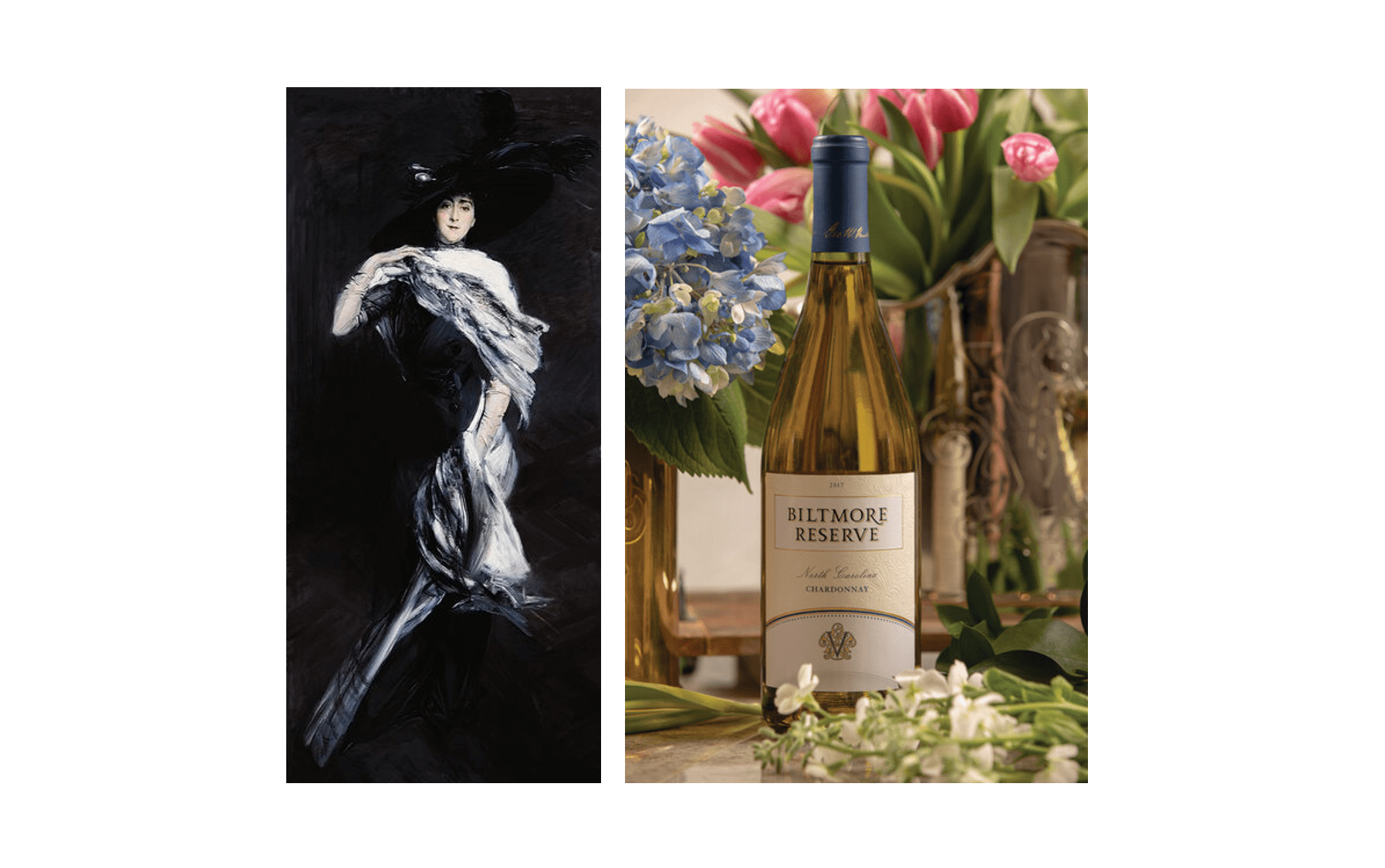
Biltmore Reserve Chardonnay North Carolina

Edith Vanderbilt paired with Biltmore Reserve Chardonnay
Our Biltmore Reserve Chardonnay is an elegant match for this glorious Boldini portrait of Edith Vanderbilt

Handcrafted from North Carolina’s finest locally grown Chardonnay grapes, this wine is full-bodied with good acidity highlighted by citrus and tropical fruit flavors.

Only vintage wines worthy of the Biltmore Reserve name earn this select honor, and the excellence of this Biltmore Reserve Chardonnay North Carolina reflects the gracious character of Edith Vanderbilt who, in turn, symbolizes the heart of Biltmore and all that the estate represents.


~ Cornelia Vanderbilt Cecil ~
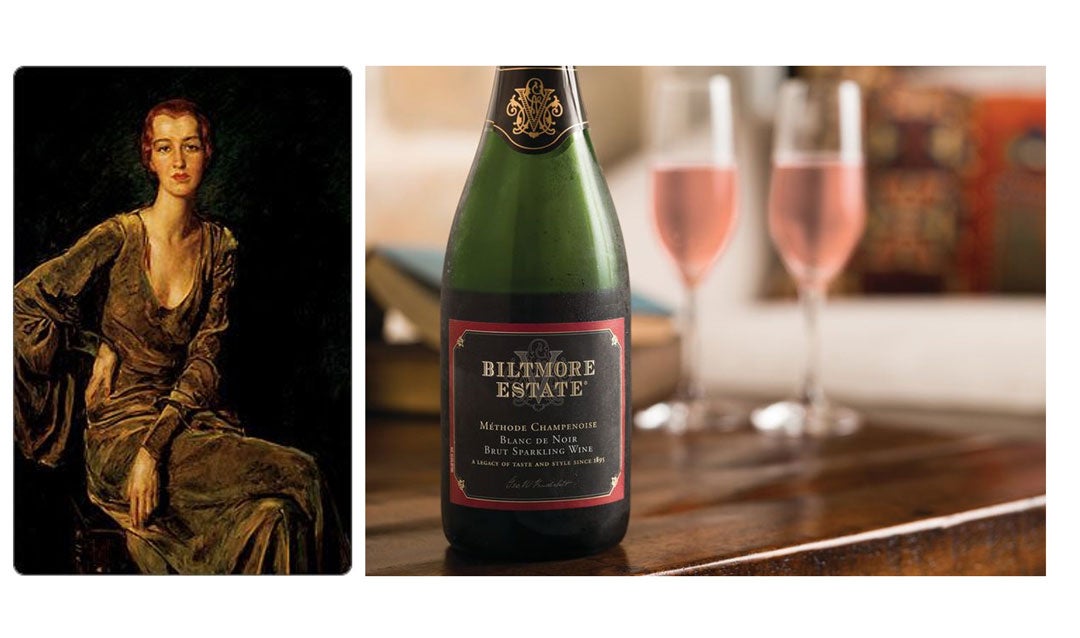
Biltmore Estate Blanc de Noir

Biltmore wines have big personalities, like Cornelia Vanderbilt Cecil
Cornelia Vanderbilt Cecil exemplifies the Roaring Twenties spirit of our Biltmore Estate Blanc de Noir

Born in 1900, Cornelia Vanderbilt would come of age in the Roaring Twenties, a time characterized by the effervescent enthusiasm of the American Jazz Age.

Our Biltmore Estate Blanc de Noir sparkling wine captures the joie de vivre of this exciting era in a crisp, sparkling wine with a delightful light pink hue and flavors of cherries and strawberries.


~ Richard Morris Hunt ~
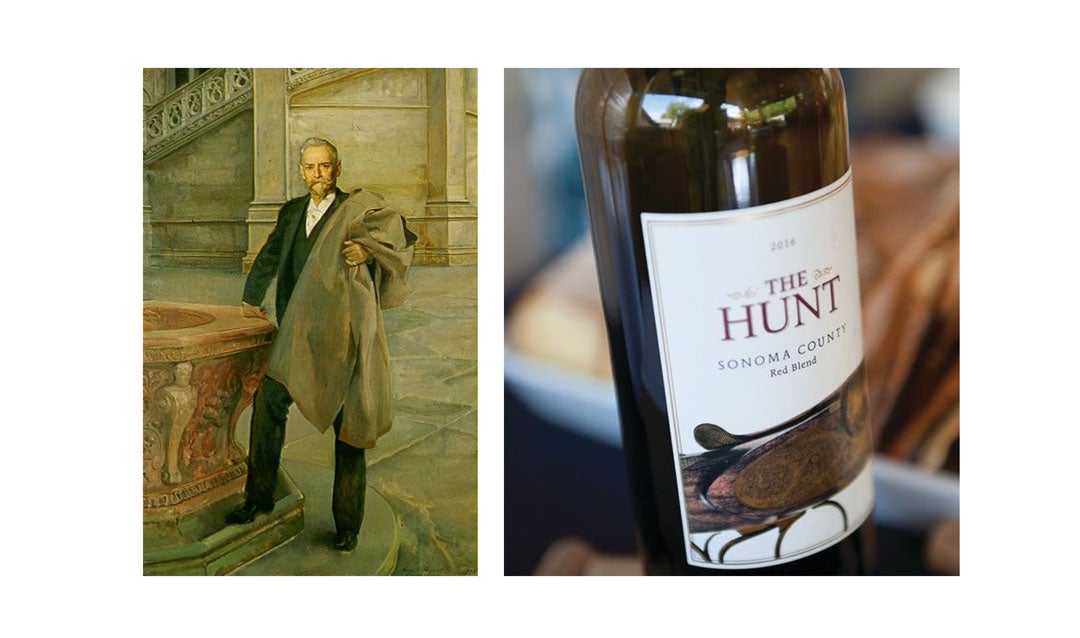
The Hunt Red Blend Sonoma County

Richard Morris Hunt and The Hunt wine
The Hunt Red Blend is named in honor of Biltmore architect Richard Morris Hunt

The name of our richly-layered and refined Bordeaux-style red blend already honors Richard Morris Hunt, the architect of America’s Largest Home®, so it’s no surprise that it also represents his dynamic personality!

Aging for 18 months in French and American oak barrels gives The Hunt great structure, just like Biltmore—the magnificent estate that Hunt designed for George Vanderbilt.


~ Frederick Law Olmsted ~
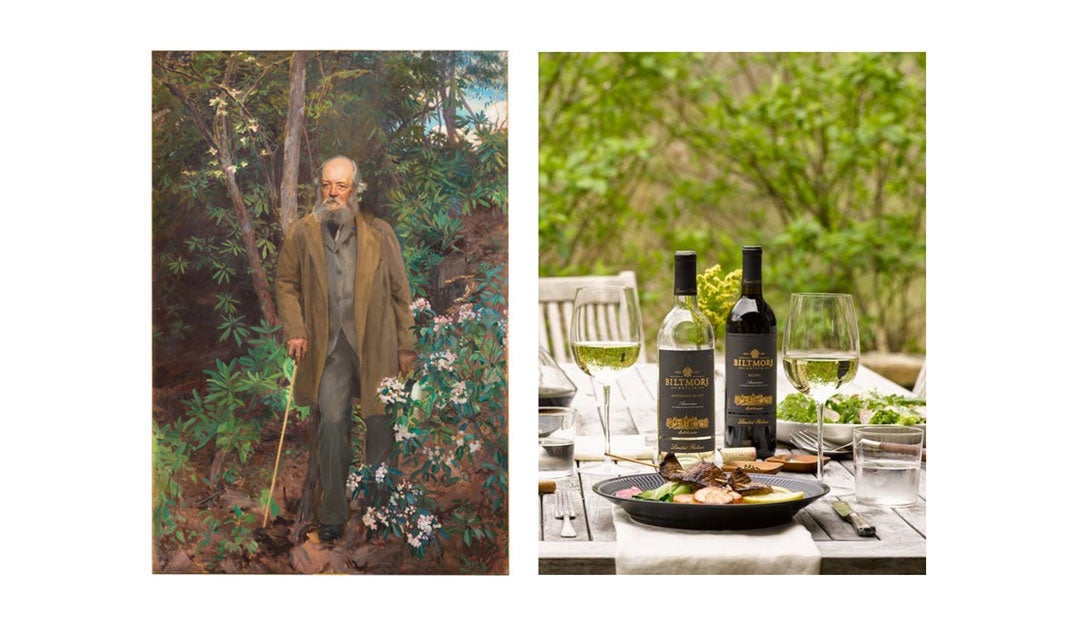
Biltmore Estate Limited Release
Sauvignon Blanc

Frederick Law Olmsted and Biltmore wine
Biltmore Estate Limited Release Sauvignon Blanc reminds us of Biltmore landscape architect Frederick Law Olmsted

Known as the father of American landscape architecture, Frederick Law Olmsted planned the breathtaking gardens and grounds that surround Biltmore.

With classic grassy and herbal varietal characteristics, Sauvignon Blanc is a perfect partner for such an accomplished horticulturalist, and our Biltmore Estate Sauvignon Blanc—refreshing and unexpectedly creamy with hints of toasted coconut, key lime, and oak—is no exception.

Find our award-winning wines online

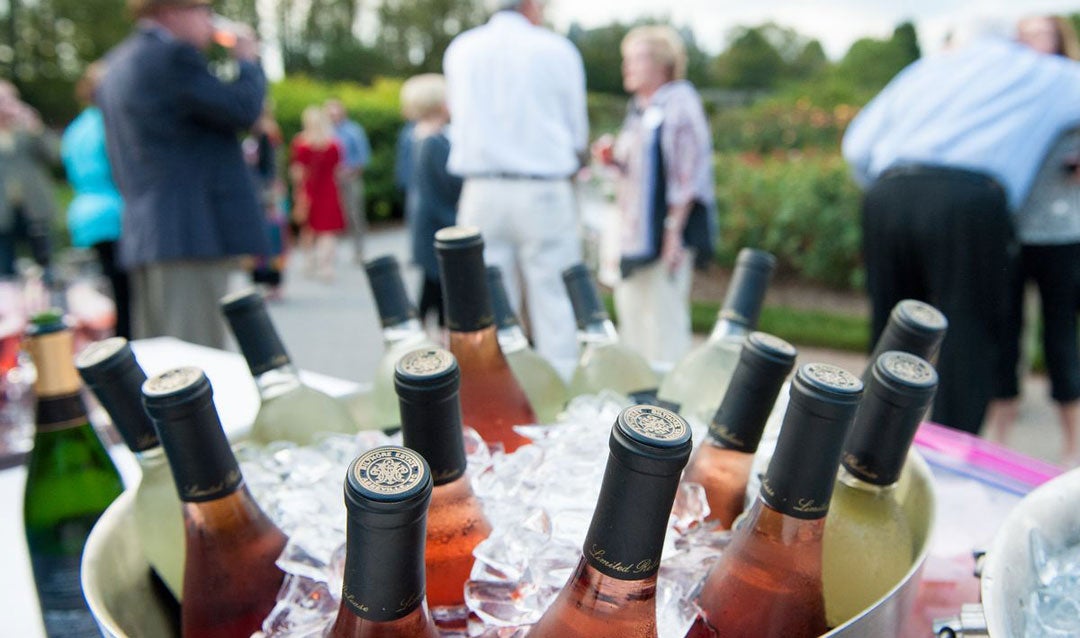
Ice bucket full of Biltmore wines.
Put Biltmore wines on your “bucket list” for spring and summer sipping!

Stock up on your favorites Biltmore wines now and discover new varietals at estate shops, local retailers, and online.

Featured image: Photograph of Edith Vanderbilt paired with Biltmore Reserve Chardonnay North Carolina

Fall Color Abound: Biltmore’s Gardens & Grounds

When Frederick Law Olmsted designed Biltmore’s gardens, he planned their beauty to last through all four seasons, so it’s little wonder the blooms of estate gardens continue well into fall.

The Walled Garden

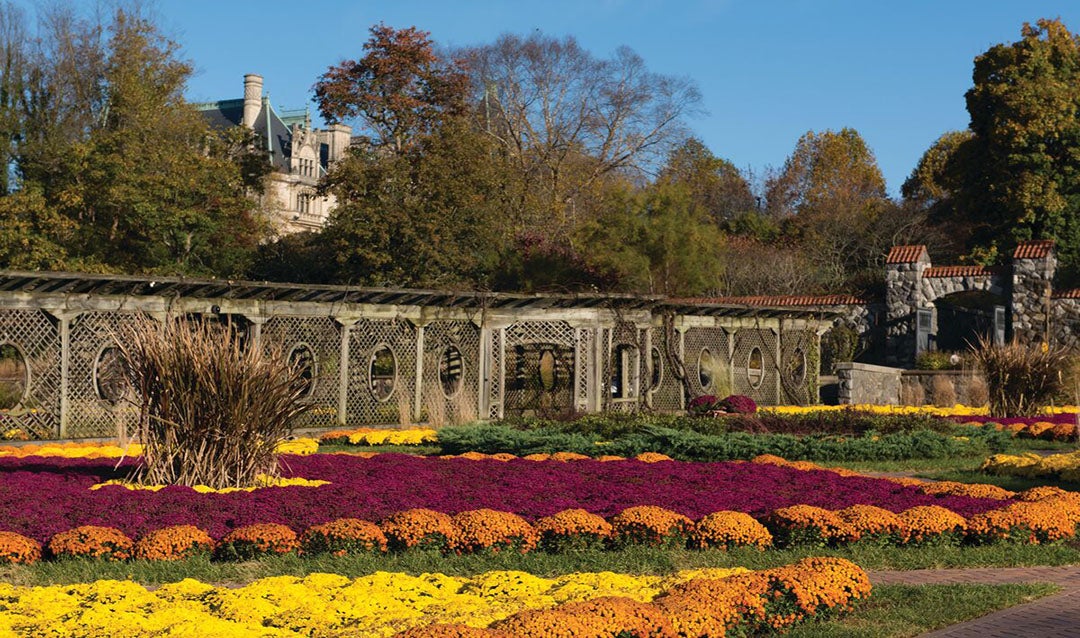
Fall Walled Gardens at Biltmore

In the formal gardens, the show continues with carefully planted flowers designed to blossom through cooler temperatures. The Walled Garden hosts an array of fall mums that provide color from late September through the end of October. This year’s color show includes brilliant blooms in red, purple, orange, and yellow.

The Rose Garden

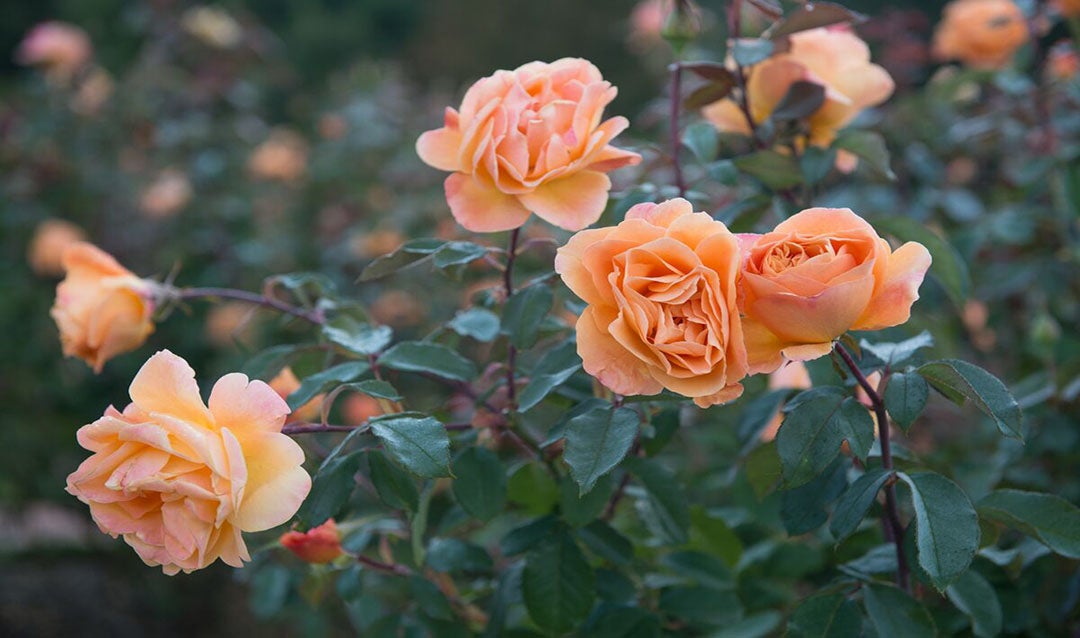
Rose Garden at Biltmore during Fall

Rose lovers can enjoy a sneak peek of the judging of the annual International Rose Trials September 22–23. Since 2011, Biltmore’s historic Rose Garden has served as the home for the trials. More than 90 varieties from growers and breeders worldwide have been planted and cared for by Biltmore’s horticulturalists.

The Azalea Garden

Azalea Garden at Biltmore during Fall

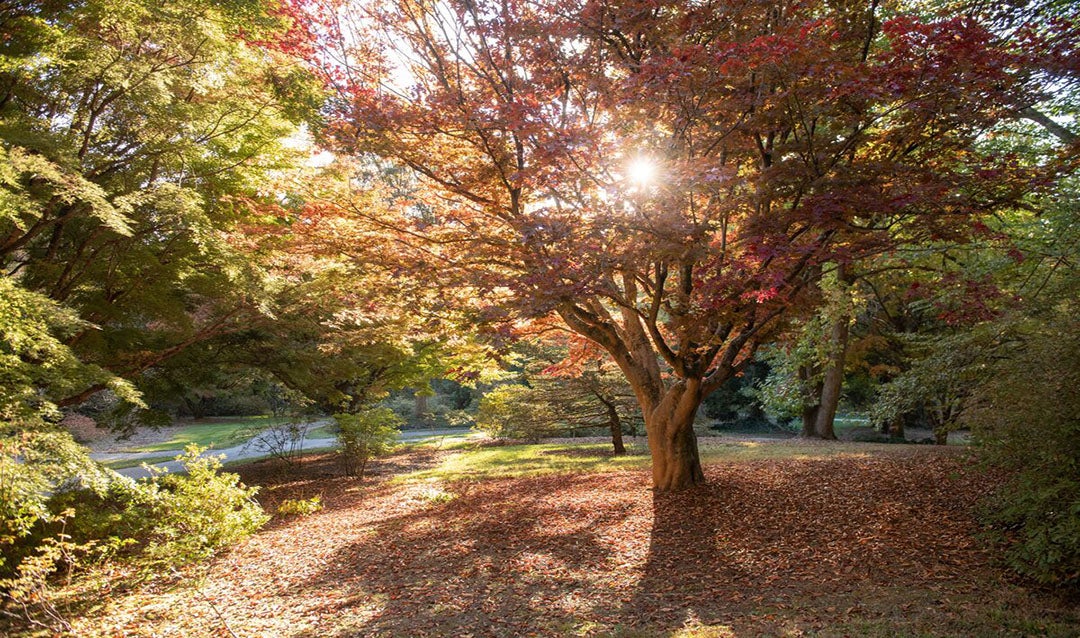
The glory of fall blooms continues through the estate’s informal gardens. The Azalea Garden, filled with 15 acres of native azaleas, enjoys a second bloom in the fall. Other gardens are also alive with late blooming annuals, perennials, and vibrant leaves on the estate’s native and exotic trees.

Estate Grounds

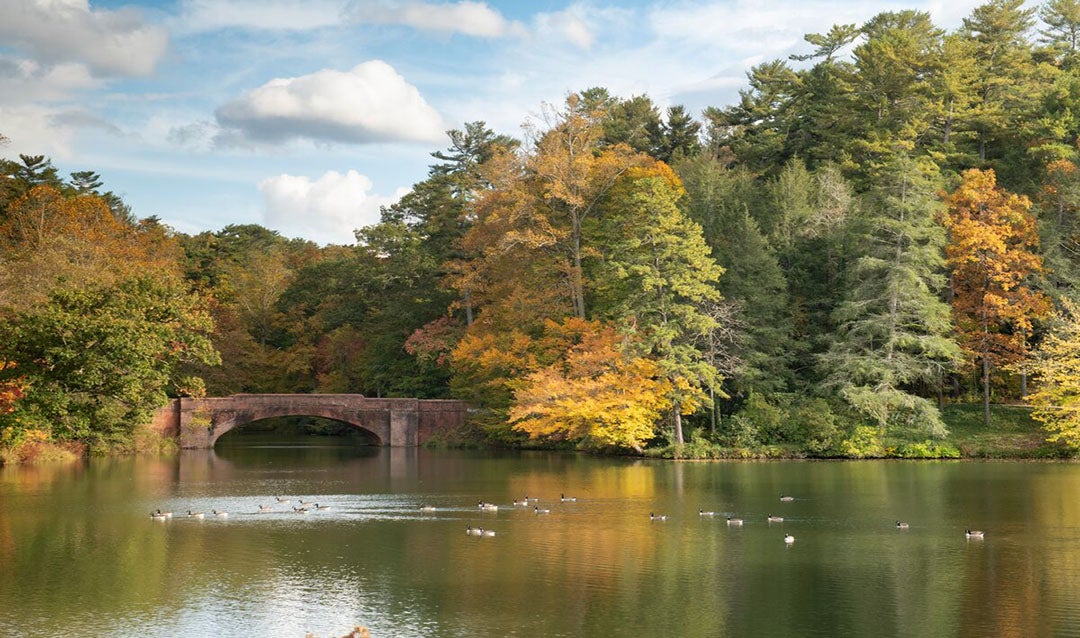
Bass Pond at Biltmore during Fall

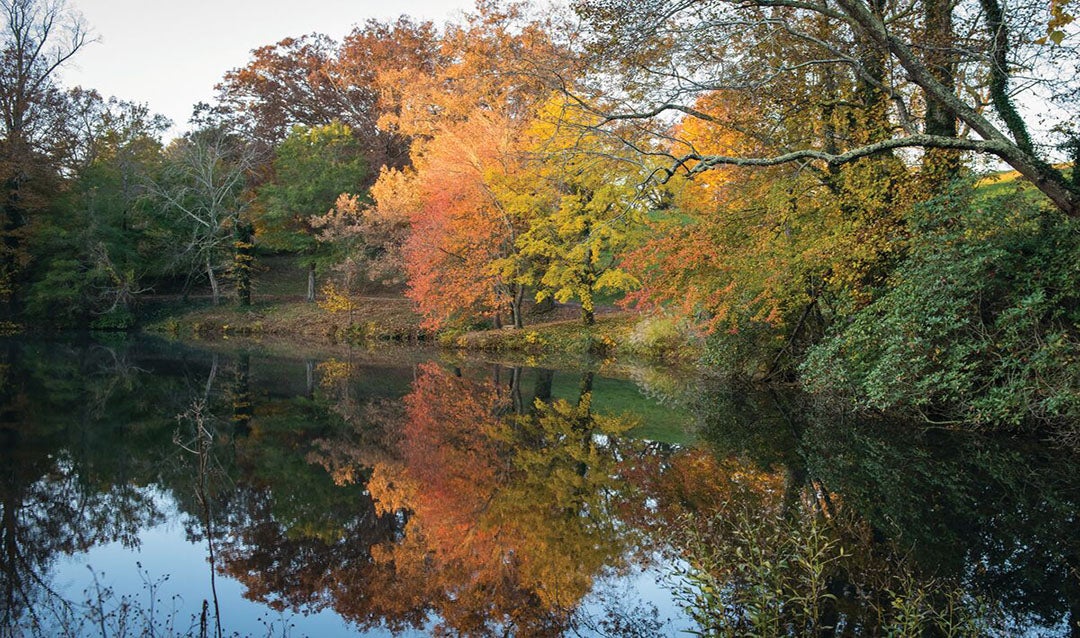
For those looking for fall color beyond the gardens, a scenic drive through the estate provides a wonderful opportunity to slow down and savor views of forests flush with color and panoramic vistas. The road by the Reception & Ticketing Sales Center is populated by vibrant orange and red sugar maple trees, while an afternoon drive by the Bass Pond offers views of bright fall foliage reflecting in the water.

The Lagoon

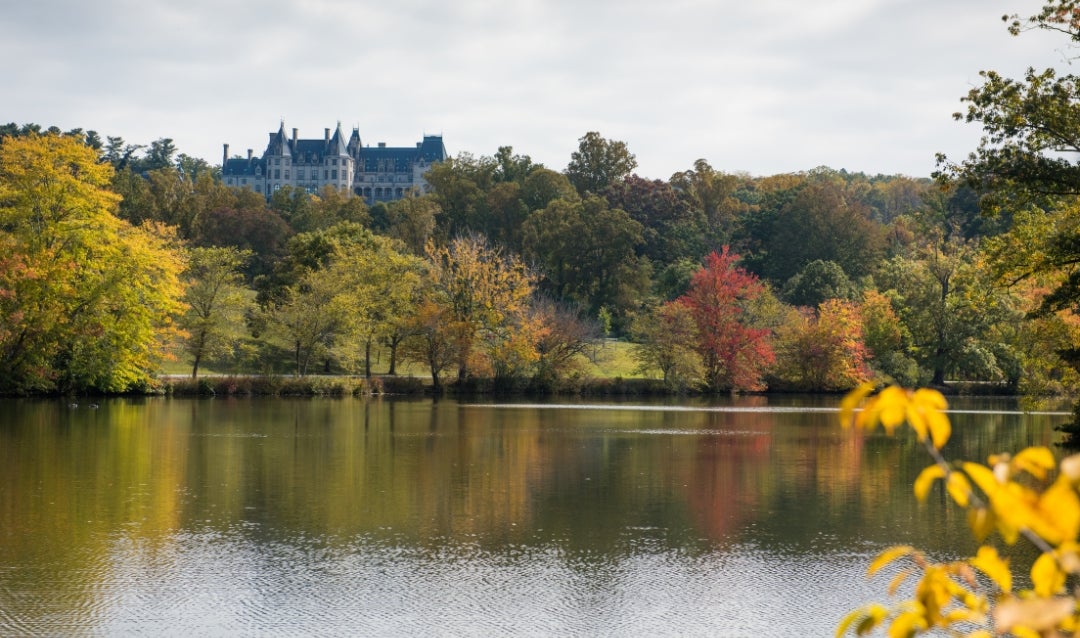
Lagoon at Biltmore during Fall

A trip to Antler Hill Village & Winery provides the chance to drive by the Lagoon and enjoy views of the house’s western façade framed by vibrant leaves. Between the estate’s gardens and grounds, the promise of fall color begins in early September and continues until late October, making any time a perfect time to experience autumn on the estate. Plan your visit today.