Solving a Mystery in the Kitchen Pantry

Solving a mystery in the Kitchen Pantry at Biltmore took some detective work, but our Museum Services staff finally cracked the case!

“Among the many place settings of china in the Biltmore collection, one set had remained a mystery for many years,” said Lori Garst, Curatorial Assistant.
Solving a mystery in the Kitchen Pantry
A cup, saucer, and plate from the collection of unidentified china

While the set was often referred to as “the Christmas china” because it was used during a 1931 holiday party, or “the employee china” because it was later used by staff members, the origin of the china—and its original purpose in Biltmore House—remained unclear.
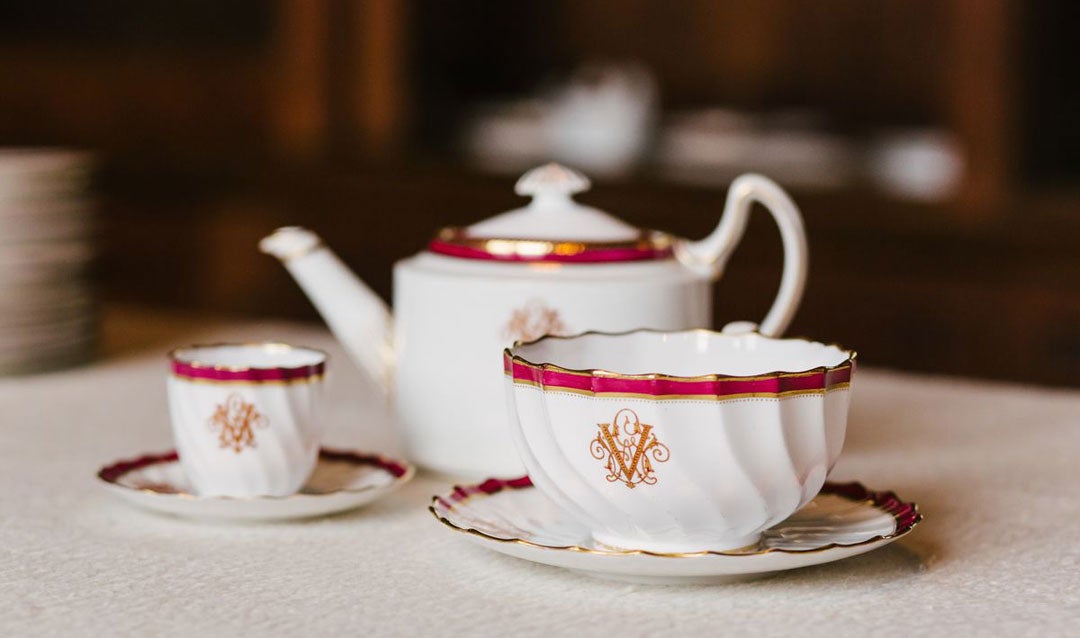
Cup, saucer, and teapot featuring George Vanderbilt's monogram
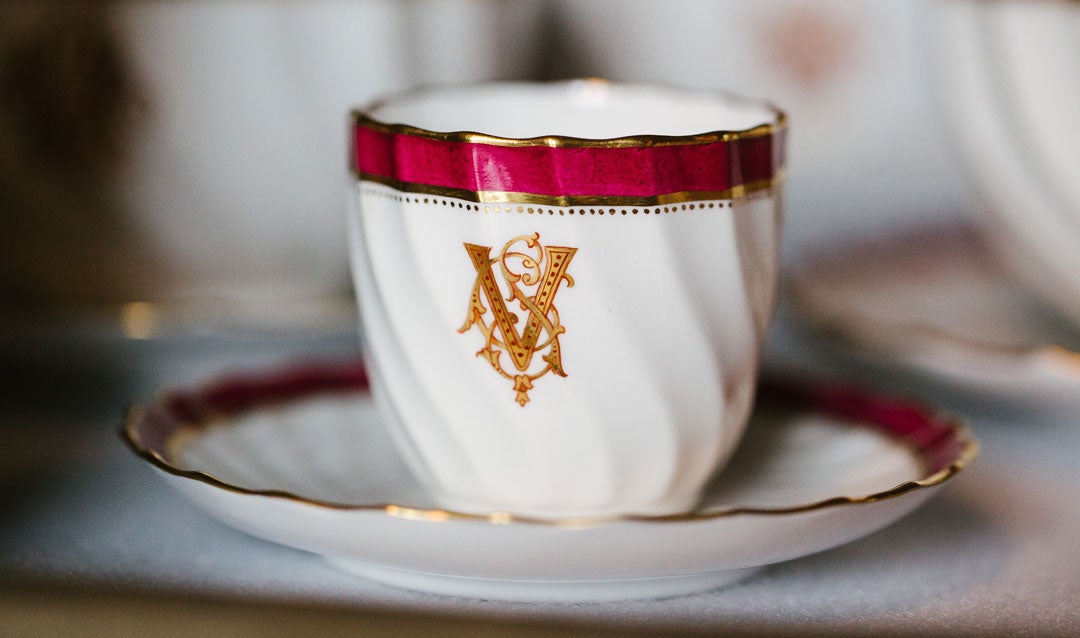
George Vanderbilt’s elegant white china with burgundy and gold trim. It was manufactured by Minton and Spode-Copeland, and used for everyday occasions.

“Most of the china in Biltmore House was chosen by George Vanderbilt,” Lori said. “He selected an elegant white china with a burgundy and gold pattern, manufactured by both Minton and Spode-Copeland. It features his monogram and was used every day for family and guest meals.”

Cornelia Vanderbilt’s china matches her father’s pattern but includes her own CSV monogram.
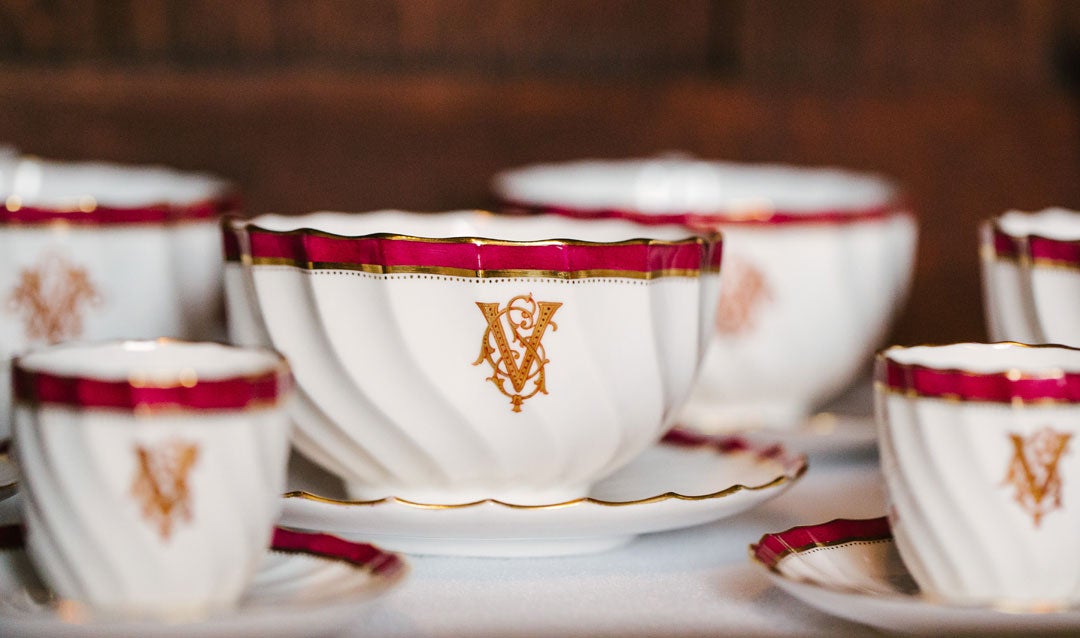
China featuring Cornelia Vanderbilt's monogram
While Cornelia Vanderbilt’s china closely matches the pattern her father selected for use in Biltmore House, their monograms distinguish one set from another

“We know that Edith Vanderbilt ordered Cornelia’s china in 1923,” said Lori. “And Mrs. Vanderbilt requested that Cornelia’s monogram be in the same style as her father’s.  I think it is sweet that her service blended in with the style her father had chosen.”

But what of the mysterious china collection on the shelves of the Kitchen Pantry in the Basement?

Museum Services began to look for clues about its history. While not as fine as the monogrammed Vanderbilt china, the gold-trimmed white pattern rimmed in crisp navy was definitely elegant and the amount of it suggested it had been purchased with a large number of people in mind.
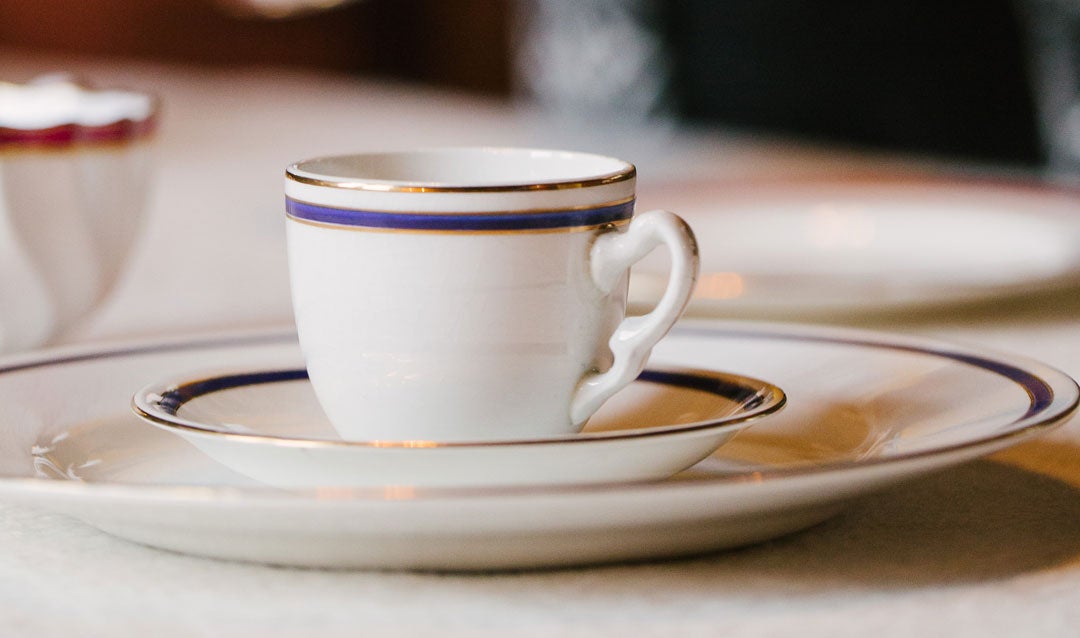
Solving a mystery in the Kitchen Pantry of Biltmore House
Trimmed in gold and rimmed in navy, this china is elegant, but more sturdy than the monogrammed family china in the collection

“We began with the manufacturer’s mark on the bottom of each piece,” said Lori. “Kniffen & Demarest Co. manufactured hotel and steam ship supplies, so the china was well-made and rather sturdy to stand up to use by guests and passengers in public settings.”
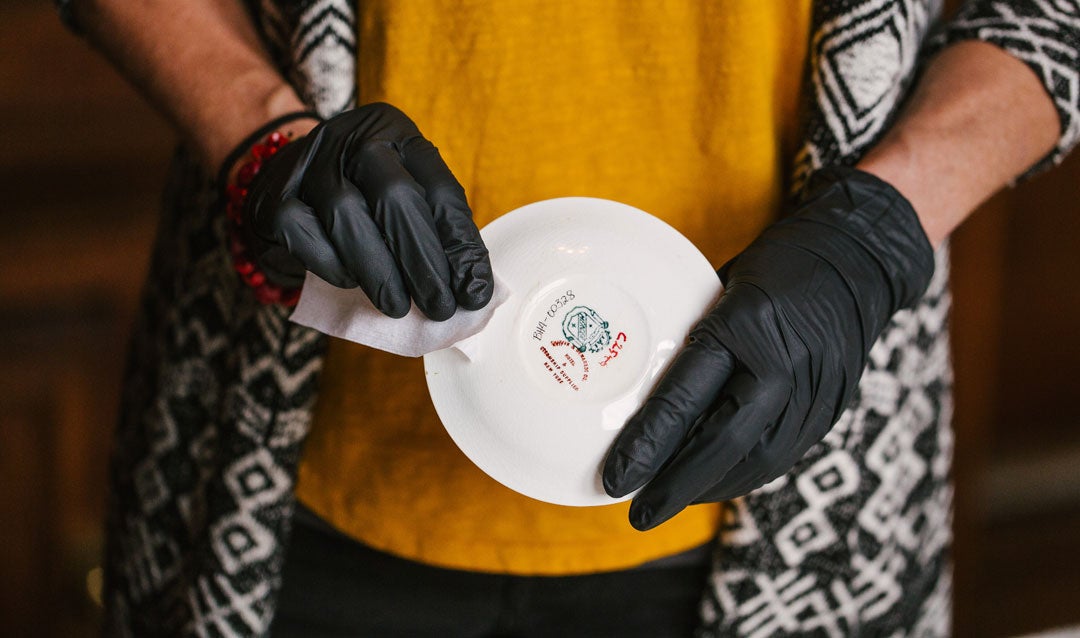
Biltmore conservator shows manufacturer's mark on the bottom of a china saucer
A conservator shows the Kniffen & Demarest Co. name on a piece of the so-called mystery china

While Museum Services was researching details for our Fashionable Romance: Wedding Gowns in Film exhibition, they finally discovered written references to the china in conjunction with Cornelia Vanderbilt Cecil’s wedding. 

“This set was also sometimes referred to as ‘the wedding china,’ but we never knew which of its three names was correct until recently,” said Lori. “The pieces came together at last, and we realized that this was the china that had been ordered for the buffet at Cornelia Vanderbilt and John Cecil’s wedding breakfast.”

After the ceremony at All Souls Church in Biltmore Village, the wedding guests and additional reception guests (500 people were invited to the ceremony and reception; another 2500 were invited only to the reception) arrived at Biltmore House.
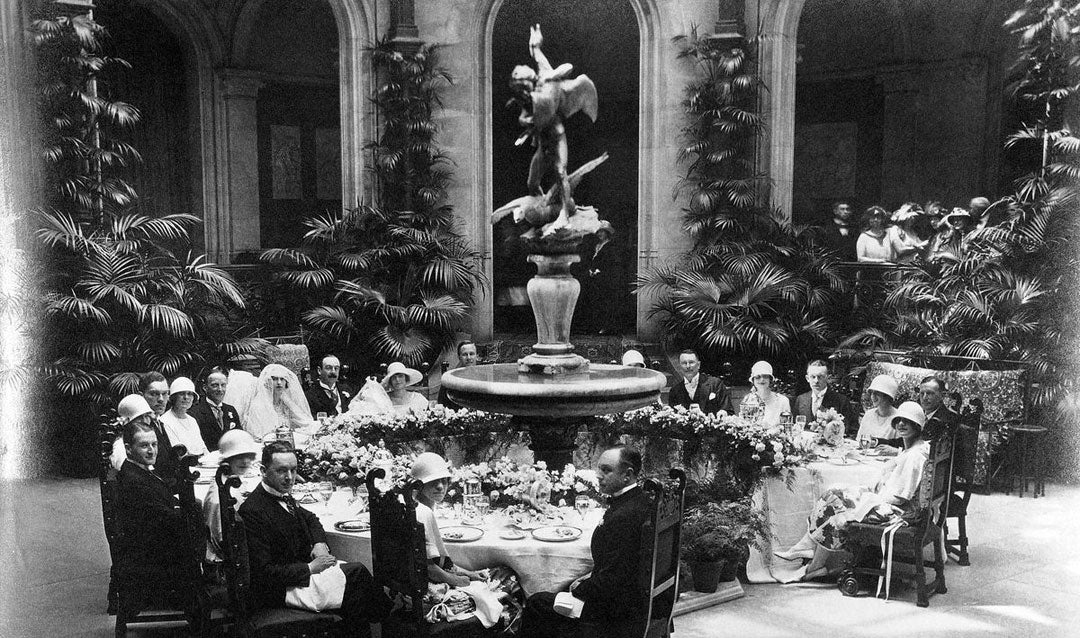
John and Cornelia Cecil wedding party at breakfast in the Winter Garden of Biltmore House
John and Cornelia Cecil and their attendants at the wedding breakfast in the Winter Garden of Biltmore House

The newlyweds and their attendants were served at a table in the Winter Garden, and all the other guests enjoyed a buffet in the Banquet Hall, which featured this china.

As the years passed, the Kniffen & Demarest china was still used, but its original purpose was forgotten.

Today, it’s stored in the Kitchen Pantry where it receives the same care and attention as all the other china in Biltmore’s collection.

Enjoy your own Vanderbilt-inspired china
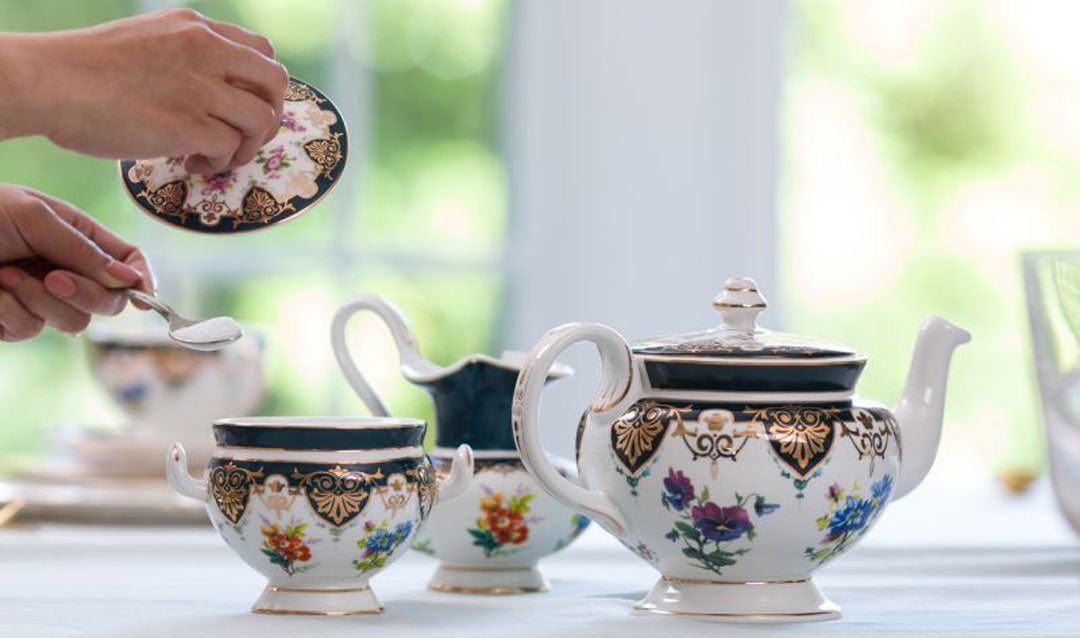
China pattern based on an original Sèvres set used by the Vanderbilt family.
Porcelain tea set from the Vanderbilt Service

Whether you prefer a tea service or an entire place setting, this beautiful porcelain serveware is based on a Sevres pattern, circa 1888, that the Vanderbilt family once used at Biltmore. The original is on display in the Oak Sitting Room, but you can now enjoy the reproduction set in your own home.
Carrying on a Wedding Tradition: The Lee Family Veil

Please enjoy this archived content. Our Fashionable Romance exhibition was on display from February 2016 through July 2016.

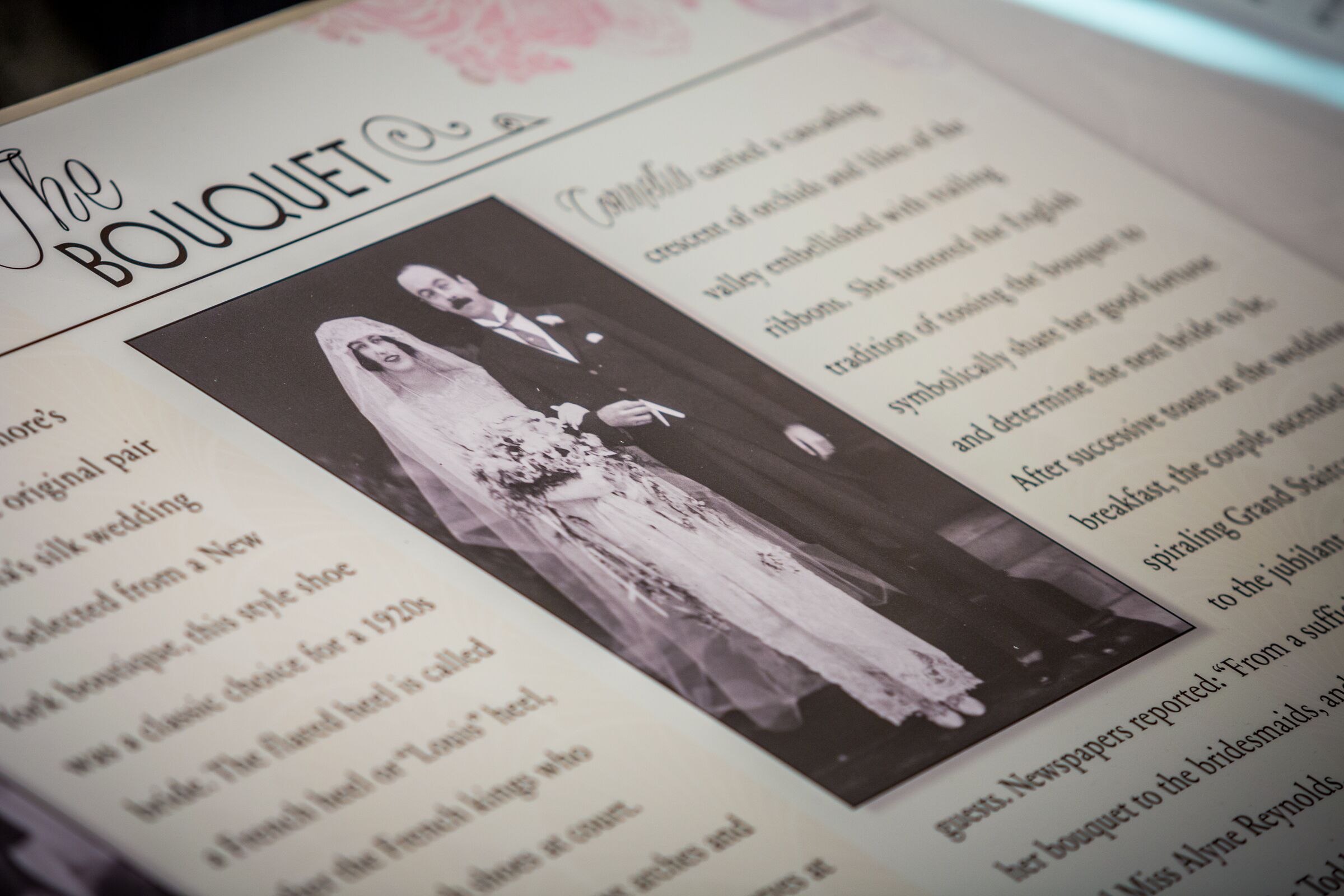
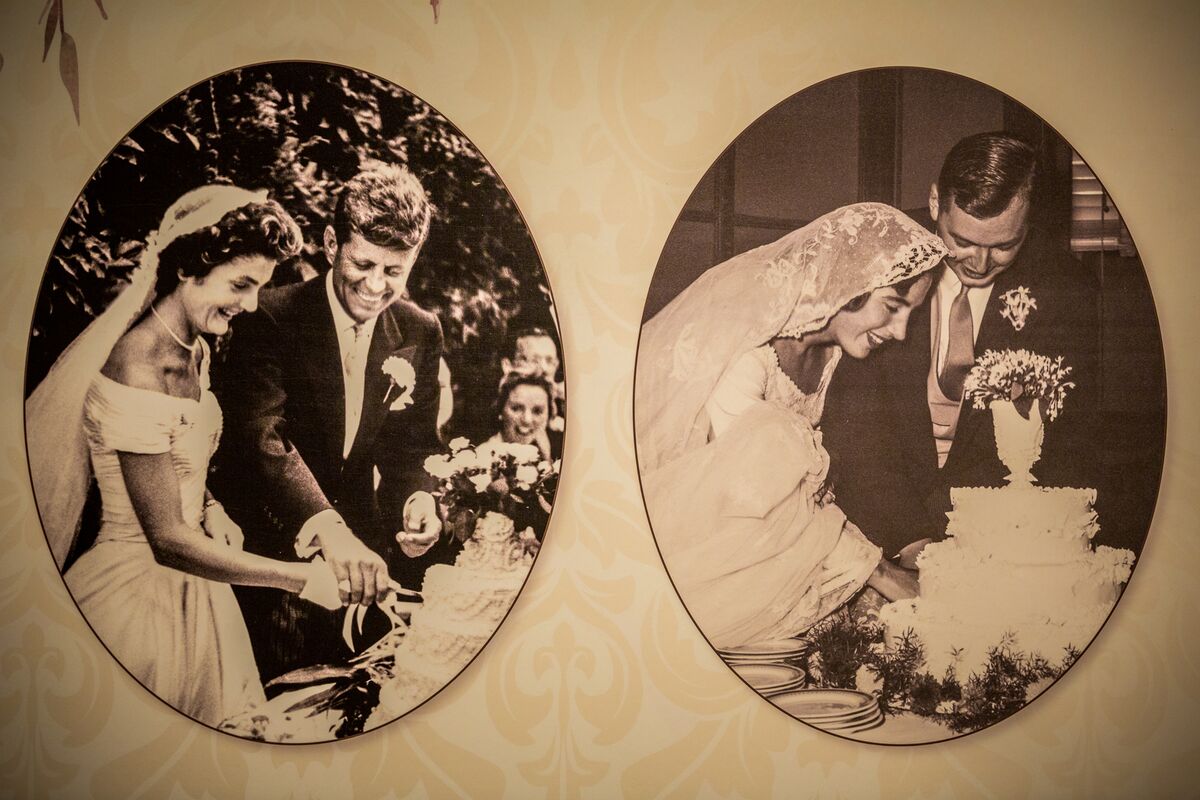
Text panel photos of Jackie Onassis and John F Kennedy wedding and Mary Lee Ryan and William Cecile wedding; both women wore the same veil. On exhibition in Legacy in Antler Hill Village.

A Family Heirloom

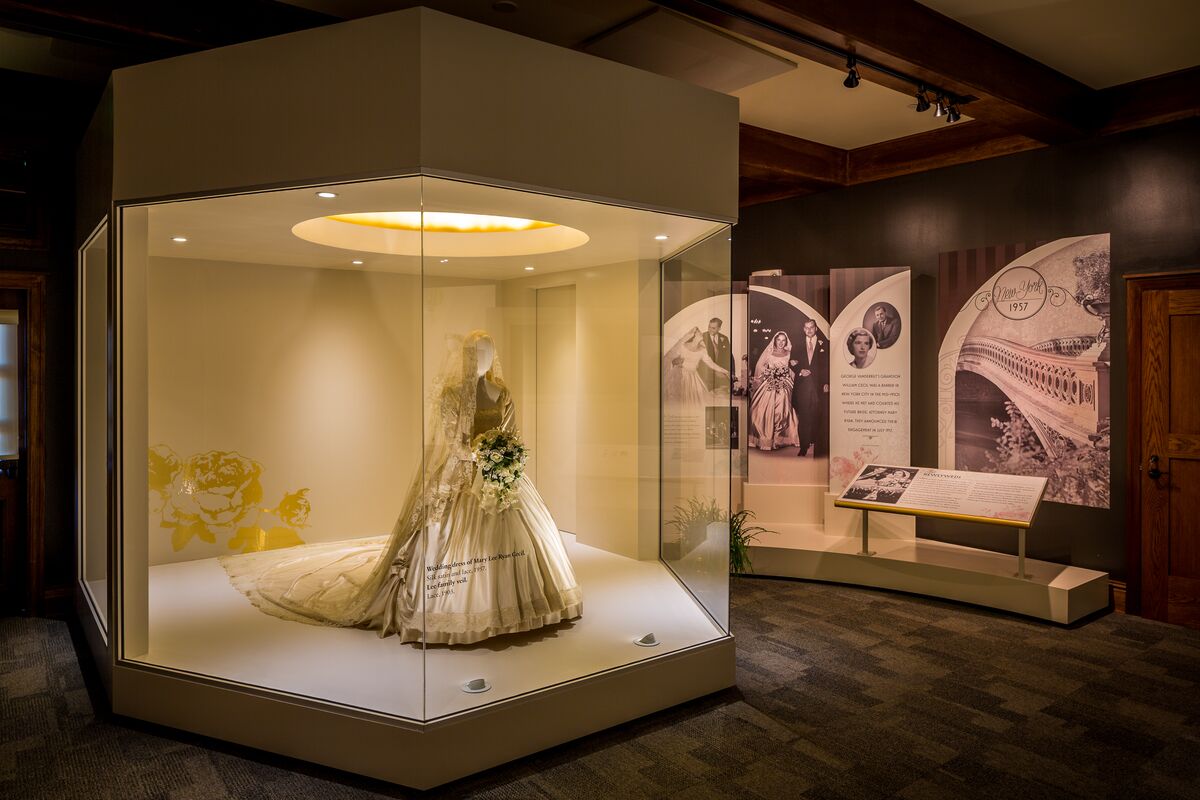
The story begins in 1903, when Margaret Merritt Lee wore the exquisite rose point lace veil when she married James T. Lee, a prominent New Yorker. Some 50 years later, her granddaughters Jacqueline Lee Bouvier and Mary Lee Ryan continued the tradition at their own weddings.

In 1953, Jacqueline Bouvier married then-Senator John F. Kennedy; her first cousin, Mary Ryan, wore the veil in 1957 when she wed William A.V. Cecil, grandson of George Vanderbilt. The original veil will be on display February 12–July 4, 2016 as part of the Fashionable Romance exhibition at The Biltmore Legacy in Antler Hill Village & Winery.

Wedding gown and veil of Mary Lee Ryan Cecil.

The future first lady and fashion icon’s wedding gown had a tremendous impact on bridal fashion. InStyle magazine ranked Jacqueline Bouvier 6th on a list of best-dressed celebrity brides of all time for her “super-romantic ensemble.” Her intricate ivory silk taffeta gown featured a portrait neckline, fitted bodice, and bouffant skirt embellished with bands of 50 yards of flounces. A tiara of lace and orange blossoms anchored the Lee family veil.

Text panel in Legacy at Antler Hill Village with archival photo of Cornelia Vanderbilt's wedding.
Text panel in Legacy at Antler Hill Village with archival photo of Cornelia Vanderbilt’s wedding.

Edith & Cornelia’s Shared Veil

There’s also another wedding veil with Vanderbilt family connections. Edith Stuyvesant Dresser wore her mother’s Brussels rose point lace veil at her 1898 wedding to George Vanderbilt; the veil was also worn by her three sisters at their ceremonies. In 1924, the same veil was part of Cornelia Vanderbilt’s bridal attire when she wed the Honorable John Francis Amherst Cecil. You can see a reproduction of Edith and Cornelia’s veil on display in The Biltmore Legacy as part of the Fashionable Romance exhibition.

As for the Lee veil, brides in the extended family continue to keep the tradition by wearing it at their weddings, including Mary Lee Ryan Cecil’s daughter and daughter-in-law.

Recreating Cornelia Vanderbilt’s Wedding Dress

Go behind the scenes with the talented designers of Cosprop London as they recreate Cornelia Vanderbilt’s wedding dress to be displayed for this special exhibition at Biltmore.

New Life for an Old House

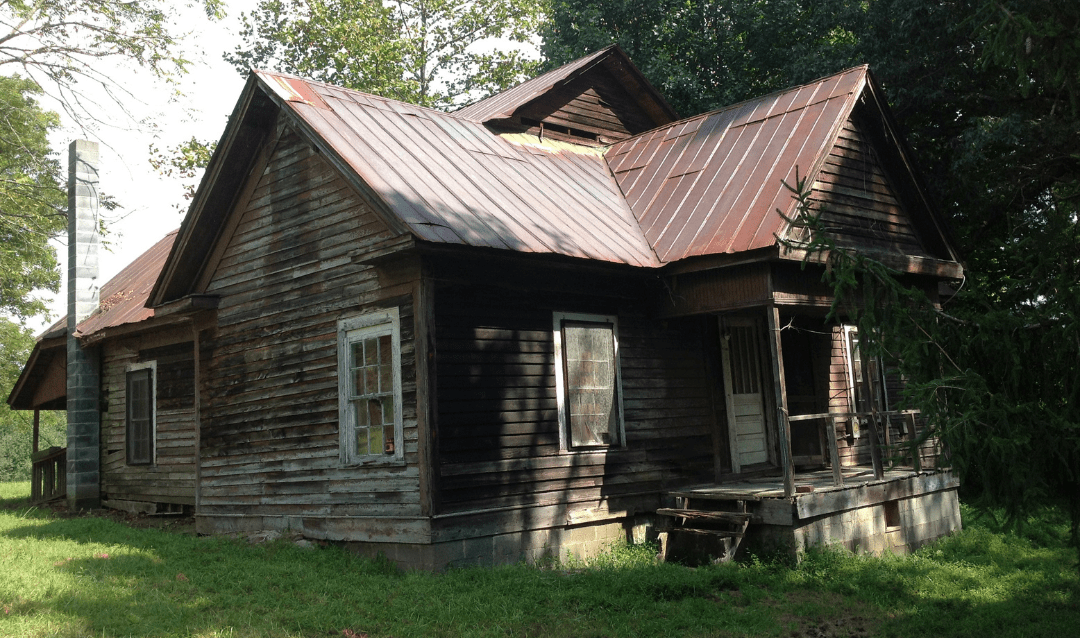
Once an old farmhouse on Biltmore’s West Side, Jones House is now the restored club house for the Biltmore Sporting Clays Club. This remarkable transformation continues to be a contributing building to our national historic landmark designation since May of 1963.

Jones House is only one of two homes remaining on the estate from the pre-Vanderbilt era.

Reviving the past

Biltmore’s Engineering Services team worked hand in hand with architects, the State Historic Preservation Office, and various contractors to adapt Jones House into the Sporting Clays Clubhouse, while preserving portions and features of the building that convey its historical, cultural, and architectural value. This project was completed in December of 2014 and received the 2015 Griffin Award from The Preservation Society of Asheville and Buncombe County in the Adaptive Re-Use category.

Jones House Restored
Jones House was named for the farming family that lived there from 1965–1983.

Retaining authentic details

Brent Merrell, Director of Engineering Services, reflected on the challenges and rewards of the restoration process. He noted, “I thought I knew a lot about restorations until I got involved. Staying true to the heritage of the house proved to be a large task as the structure had deteriorated during the years it sat vacant—the front left corner of the house was 9 inches higher than the back right corner!”

The Jones House was built somewhere between 1879 and 1889, likely by Merritt Roberts, a farmer who sold the land to George Vanderbilt’s agent in 1901. This 1,700 square-foot house was originally designed as a one-story home with a gable roof. Two extensions were later added.

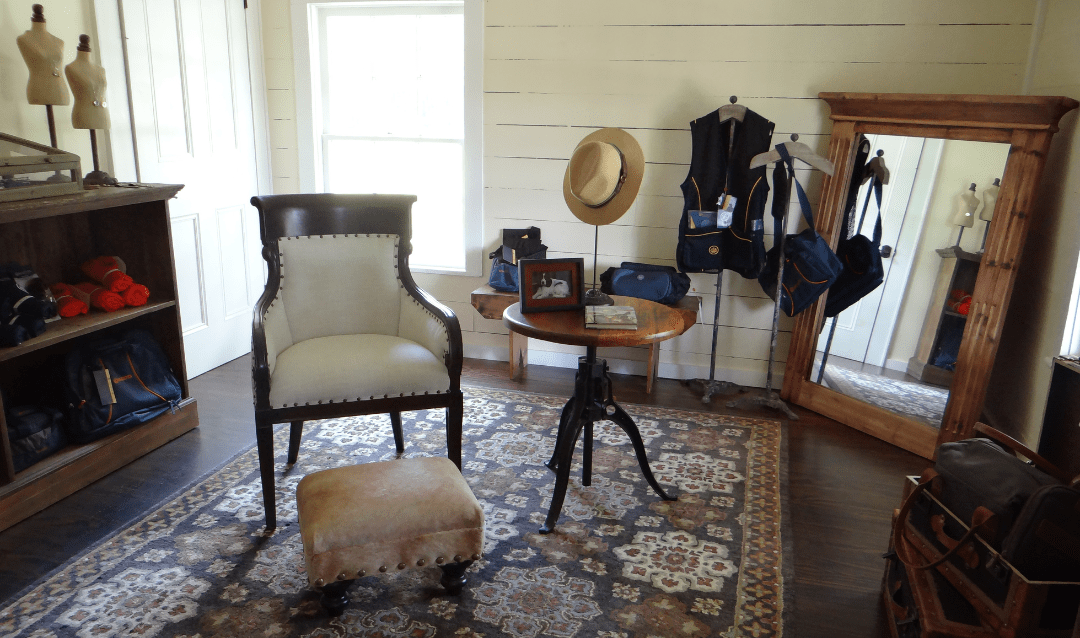
Inside Jones House
Today, the home of the Sporting Clays Club houses a lounge area, retail section, bar, bathrooms, and an upstairs classroom.

“We tried to keep as much of the original material as possible, so we removed exterior siding, walls, and the whole floor, and we put them all back down,” said Brent.

Details like the original windows were also preserved rather than replaced. A nine-pane window upstairs at the front of the house wasn’t centered originally, so the workers removed the wall that held the window pane and replaced it exactly as it was, offset to the left.

Continued preservation efforts

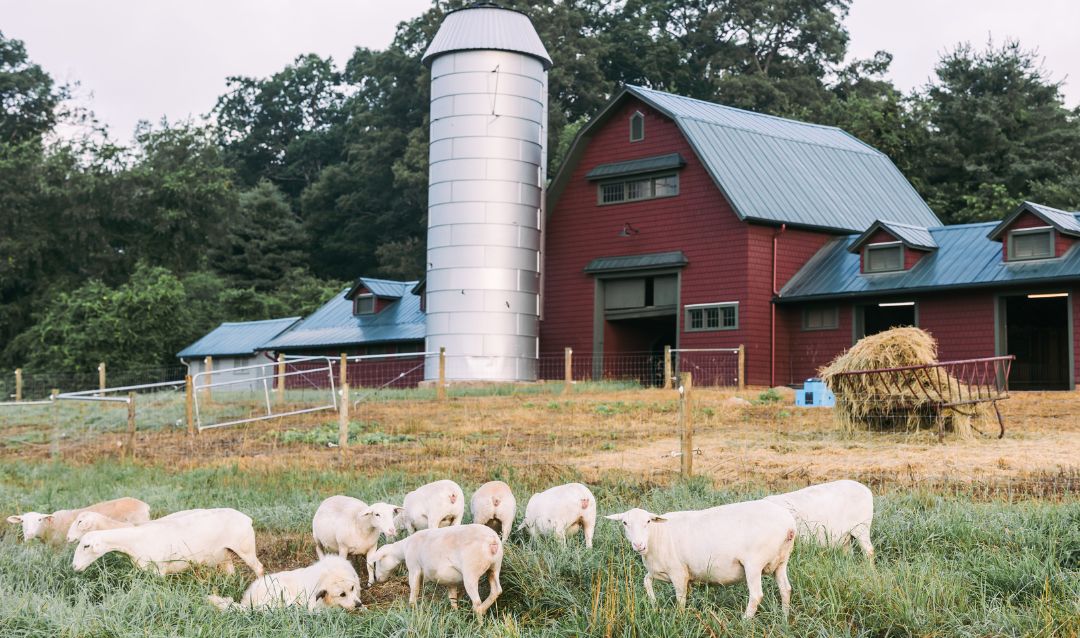
Sheep Barn on Biltmore Estate's West Side
The first woolly residents of the Sheep Barn were Southdown sheep, one of which descended from a flock owned by the Prince of Wales.

While not always visible to all visitors, the restoration of the Jones House and others, such as the recent restoration of the Sheep Barn, highlights our team’s dedication to conserving, preserving, and restoring historic structures throughout the estate.

Designed by farm architect Edward Burnett, the Sheep Barn is currently the oldest structure dedicated to George Vanderbilt’s agricultural legacy. This two-year restoration project focused on preserving key architectural and operational features dating back to its construction in 1890. Originally named the Sheep Shed, it operated as a satellite sheep farm. By 1916, the barn ceased to be used to house sheep and instead was repurposed to shelter Jersey Cattle for the operations of Biltmore Dairy.

Restoration began in earnest in 2022 to restore the Sheep Barn to its former glory. Following the original 1890 Burnett plans, numerous architectural elements were restored, such as doors, windows, dormers, and even the historic red and green exterior paint. For an in-depth look at our restoration efforts and the farming operations on the West Side, join us on The Farm to Table Tour & Taste.

Thank you for supporting our ongoing preservation efforts during your next Biltmore visit.

Biltmore through a literary lens

To understand Biltmore through a literary lens, look no further than the nearly 10,000 volumes in the Library of Biltmore House and you’ll see how important books were to George Vanderbilt.

Cover of one of George Vanderbilt's literary journals titled
One of George Vanderbilt’s journals noting the books that he had read.

Throughout much of his adult life, Vanderbilt read an average of 81 books per year, or approximately one-and-a-half books each week. A New York journalist who knew him wrote “He was a bookworm, a student… I doubt not, he is one of the best read men in the country.” Given his literary leanings, it’s not surprising that he counted several prominent writers of the day among his friends.

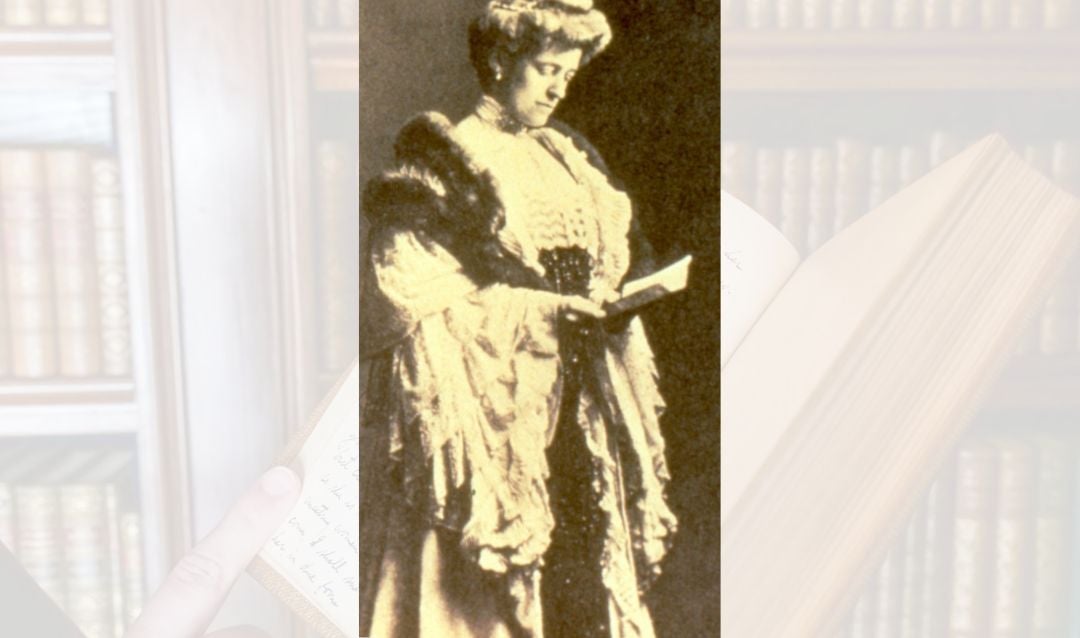
Literary friends: Edith Wharton

Archival photograph of Edith Wharton.
Novelist Edith Wharton.

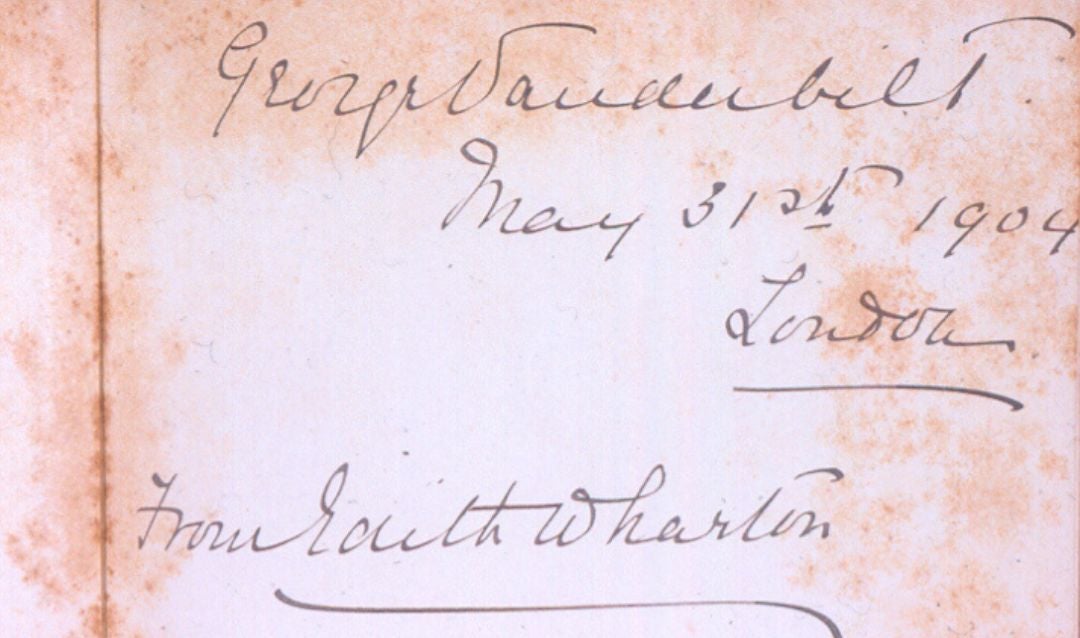
Edith Wharton was born into New York society the same year as George Vanderbilt and moved in the same social circles, so it’s likely that the two knew each other most of their lives. Wharton rented the Vanderbilts’ apartment on the Left Bank in Paris from 1907 to 1910. She also visited Biltmore twice that we know of: her signature can be found in Biltmore’s guest book, dated November 1902 and December 1905.

Edith Wharton's inscription to George Vanderbilt, May 31, 1904.
Inscription from Edith Wharton to George Vanderbilt, London, May 31, 1904.

On December 26, 1905, she sent this correspondence from Biltmore to her friend Sara Norton:

Yesterday we had a big Xmas fete for the 350 people on the estate – a tree 30 ft. high, Punch & Judy, conjuror, presents & “refreshments.” It would have interested you, it was done so well & sympathetically, each person’s wants being thought of, from mother to last baby. (From The Letters of Edith Wharton)

During this holiday visit, the author signed a copy of the recently published The House of Mirth: “To George Vanderbilt from Edith Wharton, Biltmore House, Christmas 1905.”

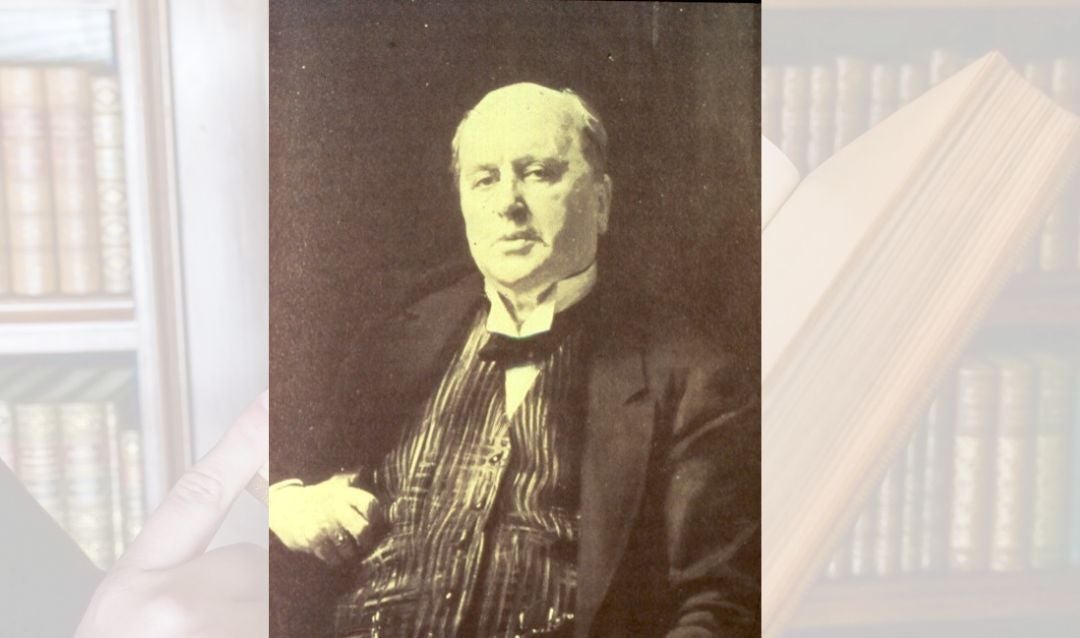
Literary friends: Henry James

Archival photo of author Henry James.
Photo of author Henry James.

The novelist Henry James—author of Portrait of a Lady and Daisy Miller—was a friend of Edith Wharton and also an acquaintance of George Vanderbilt. He stayed at Biltmore in the winter of 1905.

Literary friends: Leicester Ford

One of George Vanderbilt’s closest friends was Paul Leicester Ford, an author who was well known in his time as a biographer of George Washington and Benjamin Franklin. Ford had an affluent upbringing in Brooklyn and it’s believed that he met Vanderbilt at New York’s Grolier Club—a famous association of bibliophiles where both men were members. They became close friends. Ford was a guest at Biltmore in December 1899 and came to the 1901 New Year’s Eve house party.

In 1898, he spent several weeks at Biltmore while working on his novel, Janice Meredith: A Story of the American Revolution.

A literary dedication to George Vanderbilt in the novel Janice Meredith by Paul Leicester Ford.
Dedication to George Vanderbilt in the novel Janice Meredith by Paul Leicester Ford.

When Janice Meredith was published the following year, it contained a dedication to George Vanderbilt:

…And so, as I have read the proofs of this book I have found more than once that the pages have faded out of sight and in their stead I have seen Mount Pisgah and the French Broad River, or the ramp and terrace of Biltmore House, just as I saw them when writing the words which served to recall them to me. With the visions, too, has come a recurrence to our long talks, our work amongst the books, our games of chess, our cups of tea, our walks, our rides, and our drives. It is therefore a pleasure to me that the book so naturally gravitates to you, and that I may make it a remembrance of the past weeks of companionship….

Janice Meredith sold more than 200,000 copies and was adapted for the stage in 1901. In 1902, Ford tragically died in at the hand of his brother.

While George Vanderbilt was not himself a writer, his love of literature created a legacy that we can still admire today in the nearly 24,000-volume collection at Biltmore, part of which is on display in the Library.

Remembering the Forest Fair 1908

“Statesman! Lumberman! Engineer! Forester! Come! And be welcome!

Come as you are, and take us as we are! Come! Rejoice with us!

And join us in giving thanks on Thanksgiving Day, 1908″

― Dr. Carl Schenck’s Biltmore Forest Fair invitation, 1908

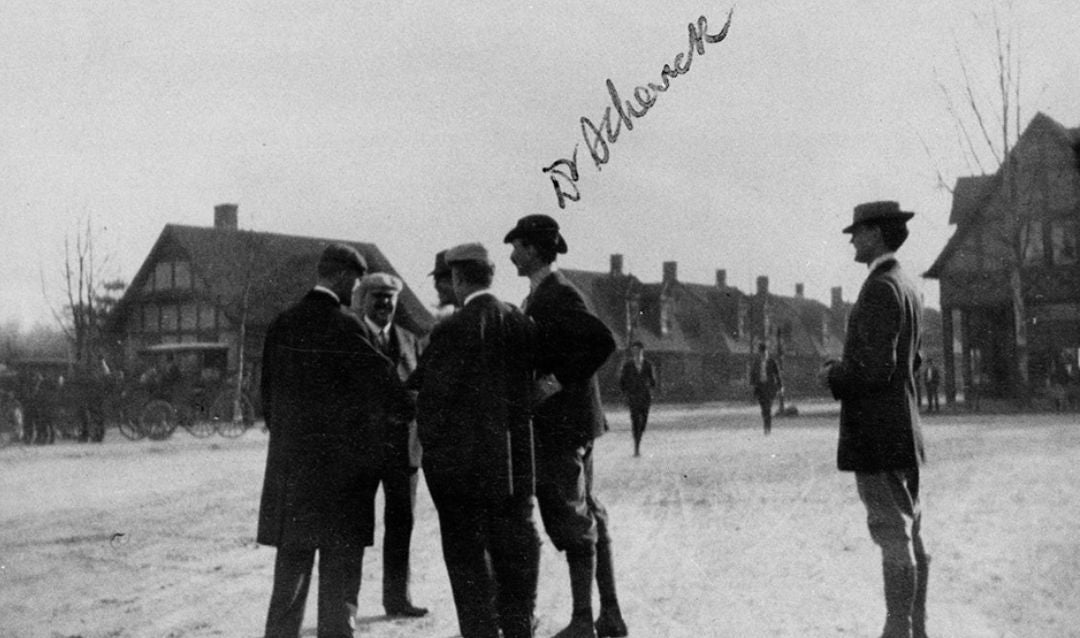
Dr. Schenck greeting guests at Biltmore plaza in 1908
Incoming guests were personally greeted at Biltmore Plaza by Dr. Schenck.

Cause for Celebration

Biltmore forester Dr. Carl Schenck had reason to celebrate in 1908. After 13 years at Biltmore, including a decade at the head of the Biltmore Forest School, he had helped to transform what was a barren landscape of overused terrain into America’s first managed forest, a model for the rest of the country. To increase public awareness of the revolutionary achievements on Biltmore’s 100,000-plus acres of forested land, Schenck orchestrated the Biltmore Forest Fair—a three-day extravaganza held over Thanksgiving weekend. “This event will mark an epoch in American forestry,” proclaimed The American Lumberman.

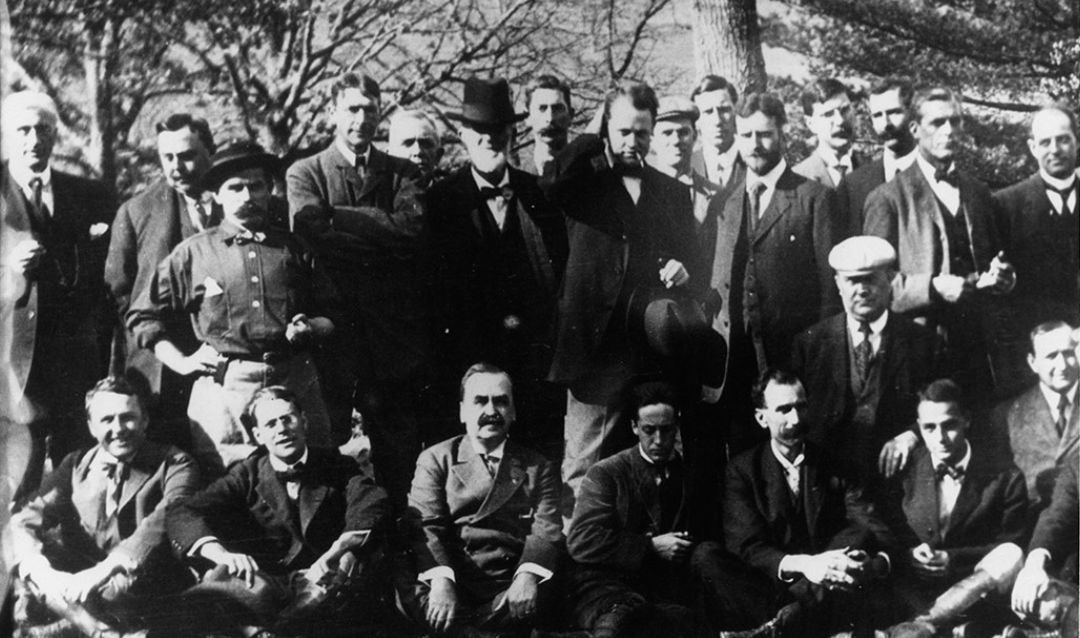
Attendees at the Forest Fair 1908 at Biltmore.
Botanists, forest engineers, lumbermen, state foresters, furniture manufacturers, statesmen, editors, university professors, paper company representatives, and many others attended the Forest Fair.

By Invitation Only

An invitation to the Forest Fair was extended to 400 guests, including President-elect William Howard Taft. “You may have heard something of the farms and of the forests found on the Biltmore Estate,” the invitation read. “Now we beg of you: Come and see them for yourself!” Although the president didn’t attend, about 100 people did, including educators, furniture manufacturers, and many timber industry executives from across the US.

Dr. Schenck overlooked no detail in the planning of the festival. He even advised guests on attire: “Do not don your best! Select a rough, comfortable suit of clothes and a pair of shoes in which you may walk a quarter of a mile without the sensation of ‘walking on a toothache.’” Each guest received a 55-page booklet detailing Schenck’s forest management techniques, including specifics on tree plantings and costs—proof of his dedication to transparency and education.

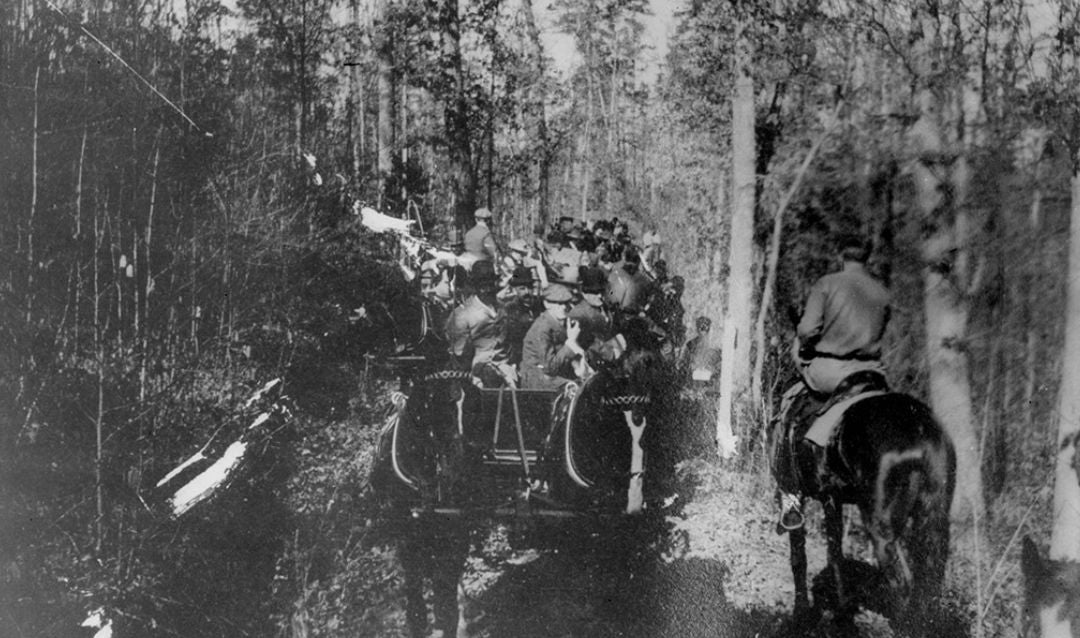
Forest Fair 1908 guests traveling on Biltmore Estate
Festival guests on the trail were escorted by a Biltmore Forest School student to the events.

The Forest Fair Begins

The fair kicked off on Thanksgiving Day, 1908, with a procession of 15 open carriages “decorated in the Biltmore Forest School colors of green and white,” that made its way from the swanky Battery Park Hotel in downtown Asheville to Biltmore Village. Once on the estate, attendees followed their “tireless leader up and down mountain trails” as he “brushed aside apparently impassible thickets.” What he said is lost to time as “the rapid movements of Dr. Schenck and the rustling of innumerable fallen leaves” made it hard to take exact notes.

The guests inspected tree plantings across the estate, then enjoyed Thanksgiving dinner at the Battery Park Inn, during which Schenck led a toast to George Vanderbilt: “a nobly spirited American and as high-principled a man as I ever met.” One attendee reported that the dinner was “in no case indecorous,” but had been “so thorough in a hospitable sense that most of the participants were disinclined to rise at a reasonable early hour” the next day.

Friday’s agenda included a visit to the Biltmore herbarium, plant nurseries, dairy, pig farm, and poultry farm, then enjoyed a possum hunt, capping off the evening with a lovely gala dinner. On Saturday, the group made their way to the lumber camps, enjoyed a fishing and shooting contest, and ended the day on Mt. Pisgah in time for sunset, then spent the night “under the stars” at Buck Spring Lodge. An attendee reported that the weather was “of that kind which no memory can recall any nearer perfection” and the scenery so beautiful that “none left the spot willingly.”

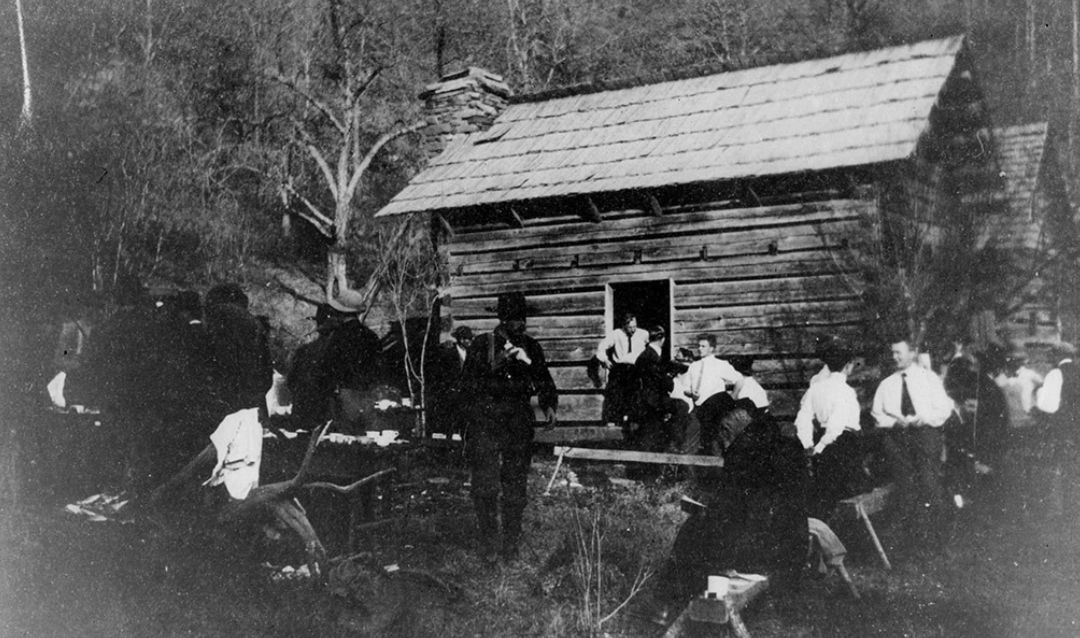
Guests Picnic at Biltmore circa 1908
Mrs. Schenck’s picnic in the wilderness provided guests with lovely hostesses, rest, food, and conversation.

Dr. Schenck’s Enduring Legacy

The Biltmore Forest School closed its doors in 1913, but Dr. Schenck’s legacy in Western North Carolina can still be felt today by all those who enjoy the pristine beauty of Pisgah National Forest, the forest he helped to establish.


Photos provided by Forest History Society of Durham, NC.

A Good Life for Wildlife

Biltmore Estate in Asheville, NC, welcomes more than a million guests each year—and those are just the ones who come through the gates! In addition to our visitors and Passholders, our 8,000-acre backyard is also home to a wide variety of wildlife and birds, including deer, rabbits, turkeys, and migratory waterfowl.

Row Crops at Biltmore
In addition to the colorful sunflowers that bloom in the summer, soybeans, wheat, legumes, and millet are planted in our rich fields on the west side of the estate.

Cultivating care across the estate

We caught up with Kyle Mayberry, Director of Agriculture, and Vince Helton, Senior Director of Facility Operations, to get the ‘outside’ scoop. “We average about 450 acres of field crops each year and 29 of those acres are designated for wildlife food plots,” Kyle explained.

While most of these crops are harvested to feed our cattle, sheep, and other farm animals, there’s still plenty left for wildlife and birds. Smaller plantings of radishes, canola, soybeans, corn, and sorghum are grown around the estate to provide nourishment through the harsh winter months, for our four-legged and feathered friends.

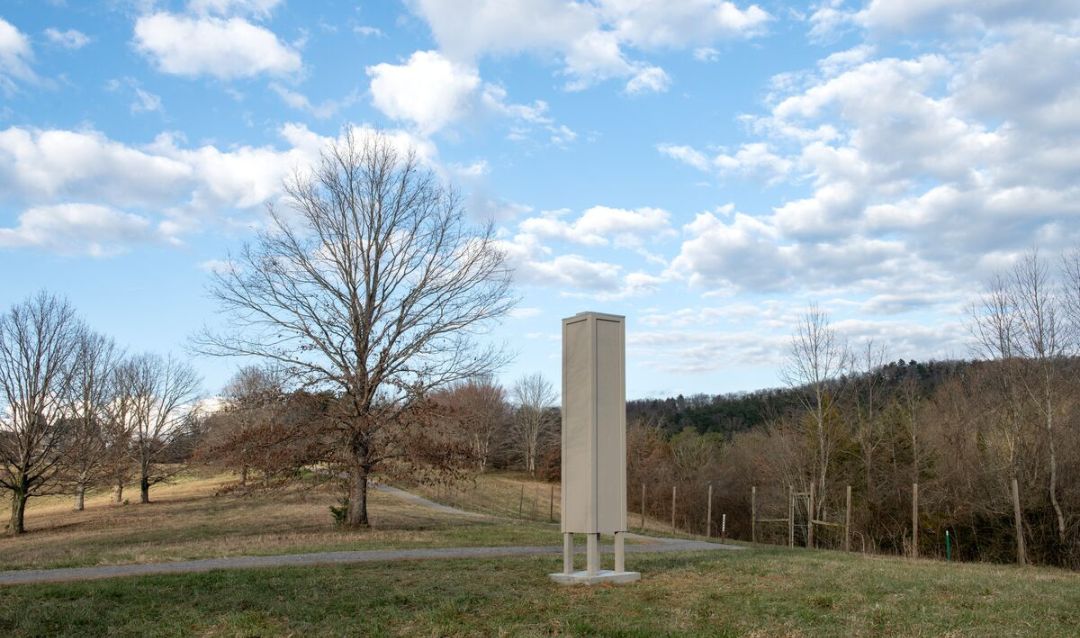
Chimney Swift Tower at Biltmore
Chimney Swifts spend nearly their entire lives in the air, eating, drinking, bathing, and gathering nesting material, landing only to roost and nest.

A new home for Chimney Swifts

Our dedication to creating a welcoming environment extends far beyond our fields and into some unique conservation projects. One such initiative focused on chimney swifts, a small migratory bird renowned for its spectacular flight patterns and distinctive roosting habits. These birds have been facing challenges as traditional nesting sites become inaccessible. To help, we built a custom-designed chimney swift tower on the estate, providing them with the perfect roosting spot.

Biltmore Grown Honey and Sunflower Oil
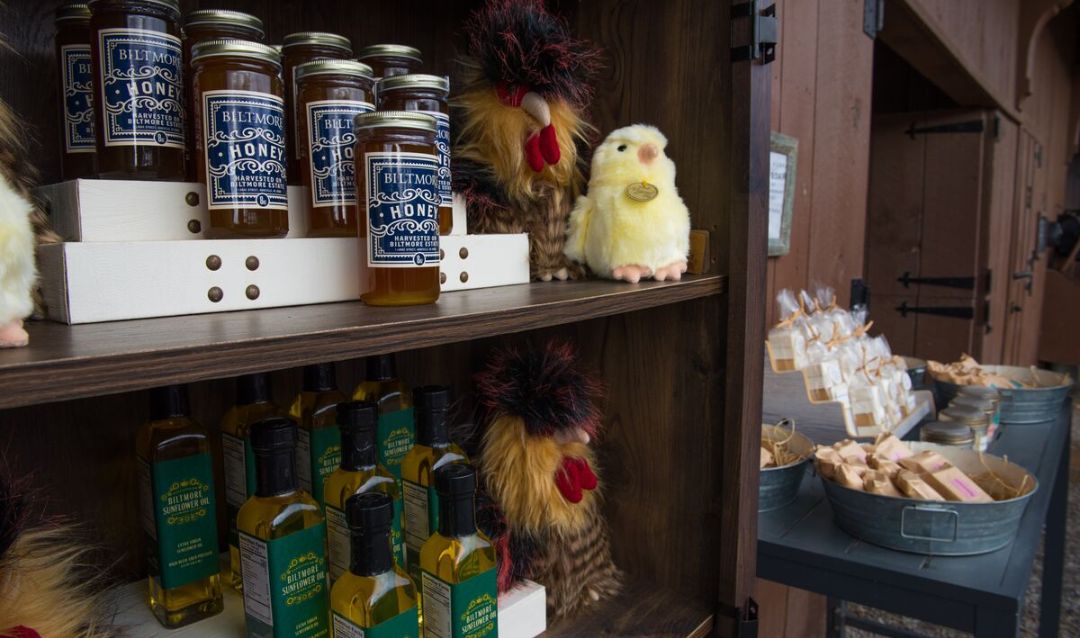
Biltmore® Grown honey and sunflower oil can be purchased at the Farmyard and in estate shops.

The buzz behind Biltmore® Grown

Our commitment to the environment extends to our smallest residents too! Busy bees play a key role in producing Biltmore® Grown sunflower oil. They stay hard at work buzzing more than 140,000 blooms, their tireless efforts transforming each blossom into a seed of potential.

“We take pride in providing these pollinators with abundant nectar sources across the estate,” Kyle said, “ensuring they have everything they need to create high-quality products, like our sunflower oil and honey, for use in our restaurants and for guests to purchase in our shops.”

Group of people bird watching from a rafting tour at Biltmore.
Strap on your life jackets and get your binoculars ready for a trip down the French Broad on our river birding tour.

Discover the call of the wild

“Being good stewards of the land applies to the natural wildlife that exists here, and it’s just as important to maintain healthy populations—something we have been committed to since the days of George Vanderbilt,” said Vince. “We follow the NC Wildlife Resources Commission’s recommendations for monitoring and managing wildlife to ensure the safety of our guests, grounds, and wildlife.”

As always, our guests’ safety is of paramount concern, and we remind you not to approach estate wildlife or birds. In addition, while dogs are welcomed on estate grounds as long as they are securely leashed, state law prohibits pets from entering fenced enclosures protecting farm animals. Visit our complete wildlife viewing policy here.

Interested in learning more? We’ve got plenty of outdoor activities aimed at educating our guests about our wildlife friends and their diverse habitats! Consider going on a guided bird walk or getting up close and personal in our falconry class!

Behind Biltmore’s Hidden Doors

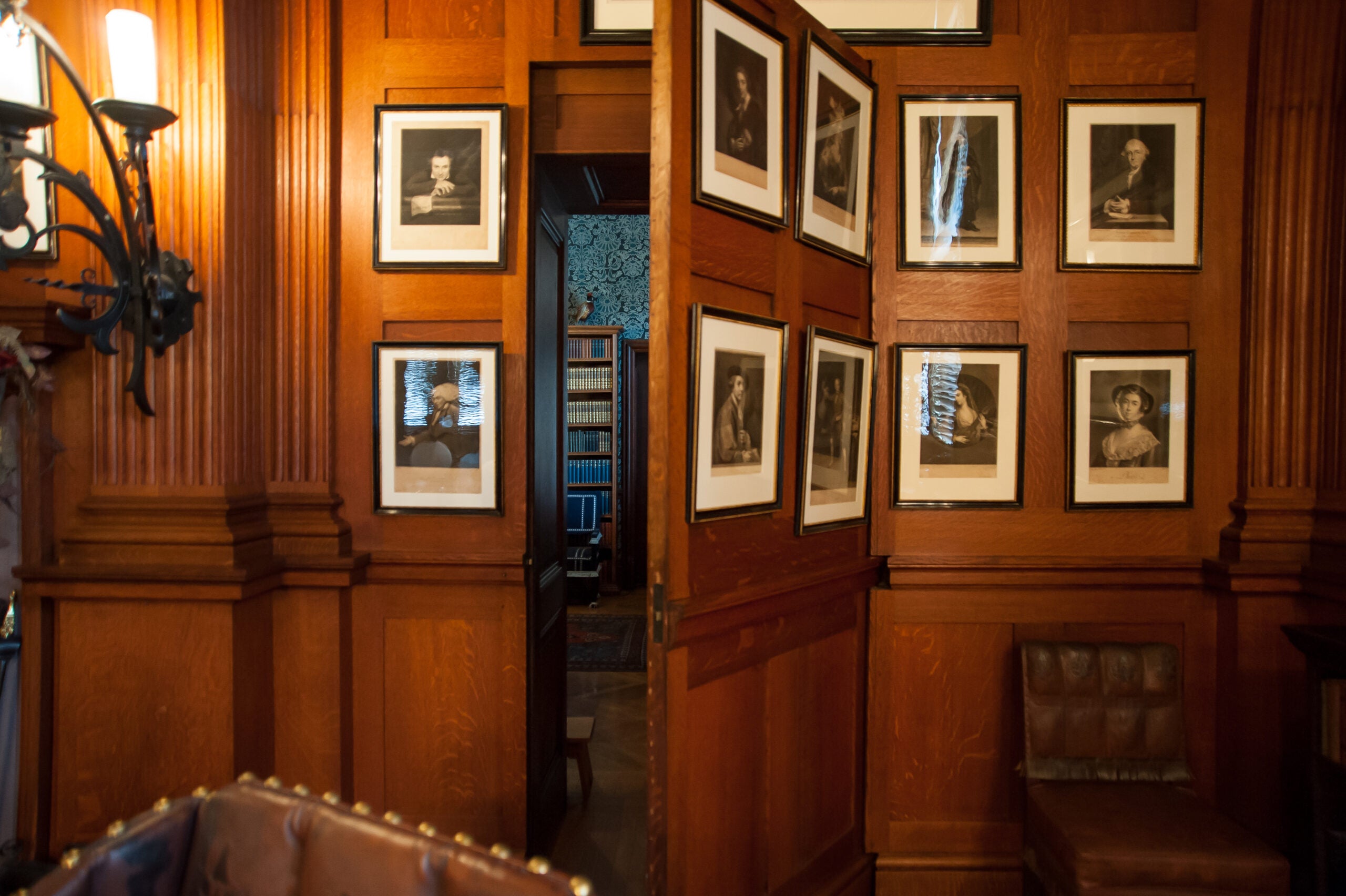
Designed both for aesthetics and hospitality, Biltmore’s hidden doors were designed to create a seamless appearance but provide access for staff providing service and convenience for guests.

Discover a few of the often overlooked doors throughout America’s Largest Home.

Concealed servant's entrance in the Breakfast Room
Concealed servant’s entrance in the Breakfast Room

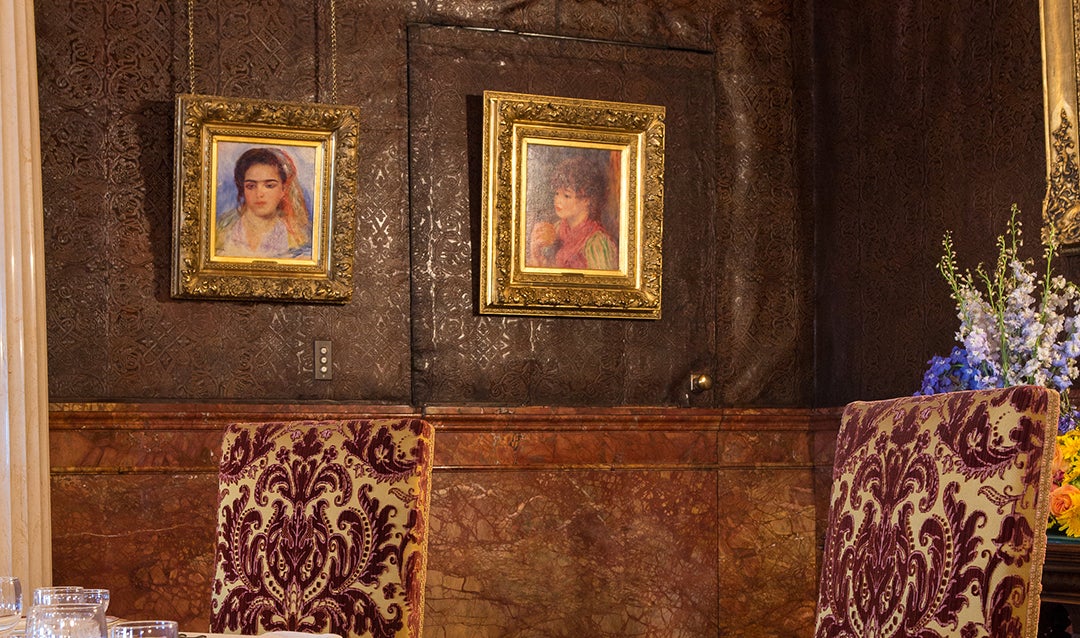
When you’re in the Breakfast Room, your attention is bound to be drawn to the two Renoir portraits “Young Algerian Girl” and “Child with an Orange.” If you look just below “Child with an Orange,” you’ll notice the doorknob to the concealed door, designed to create a seamless appearance on the wall but allow servants to enter with hot meals.

Biltmore House Library Hidden Door
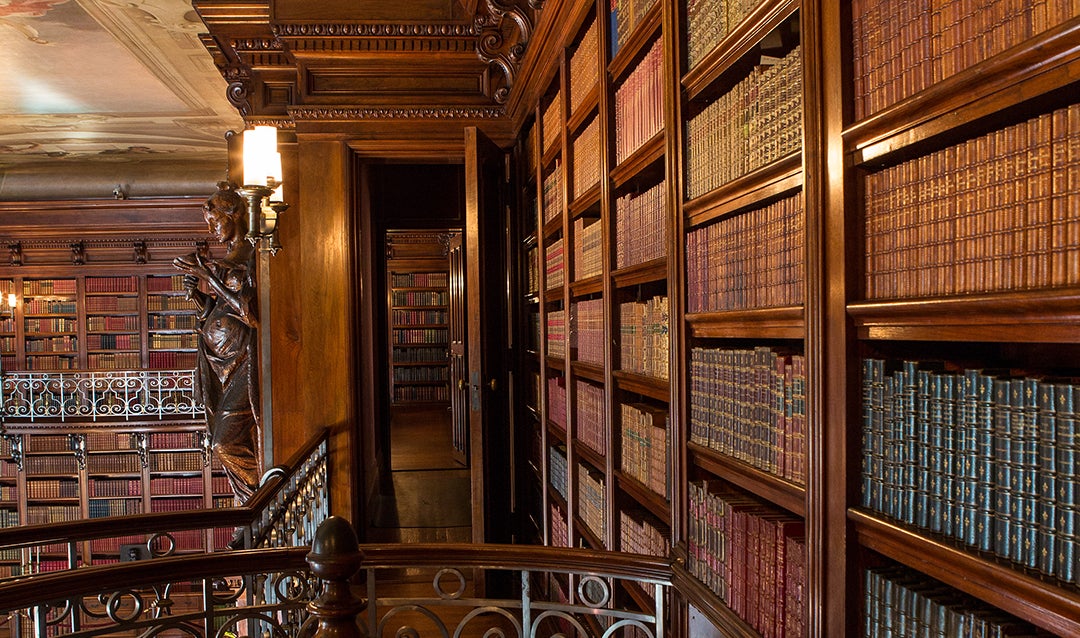
Doors in the Library lead to a passageway connected to the Second Floor Living Hall.

Have you ever wondered what’s behind the hidden doors on the top floor of the Library? Here’s your peek. The doors located on both sides of the overmantel lead to a passageway connected to the Second Floor Living Hall.

Hidden closet door in Mr. Vanderbilt's Bedroom in Biltmore House
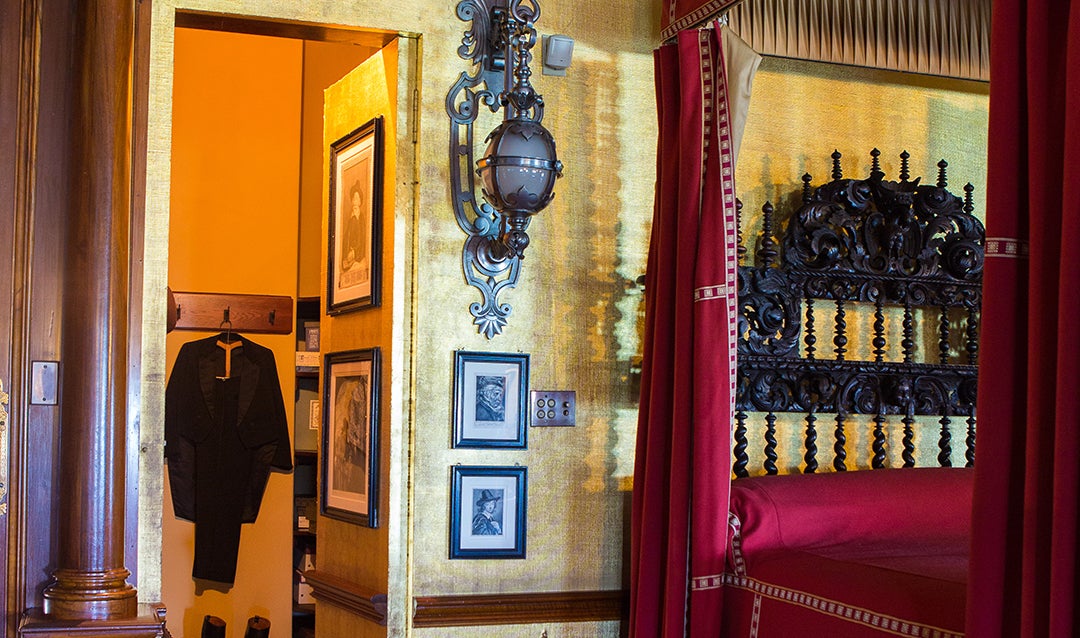
Concealed closet door in Mr. Vanderbilt’s Bedroom

Every detail of the architecture at Biltmore was carefully considered. To avoid the break in symmetry that would be required by a door frame, closet doors were concealed in certain rooms, such as this one in Mr. Vanderbilt’s Bedroom.

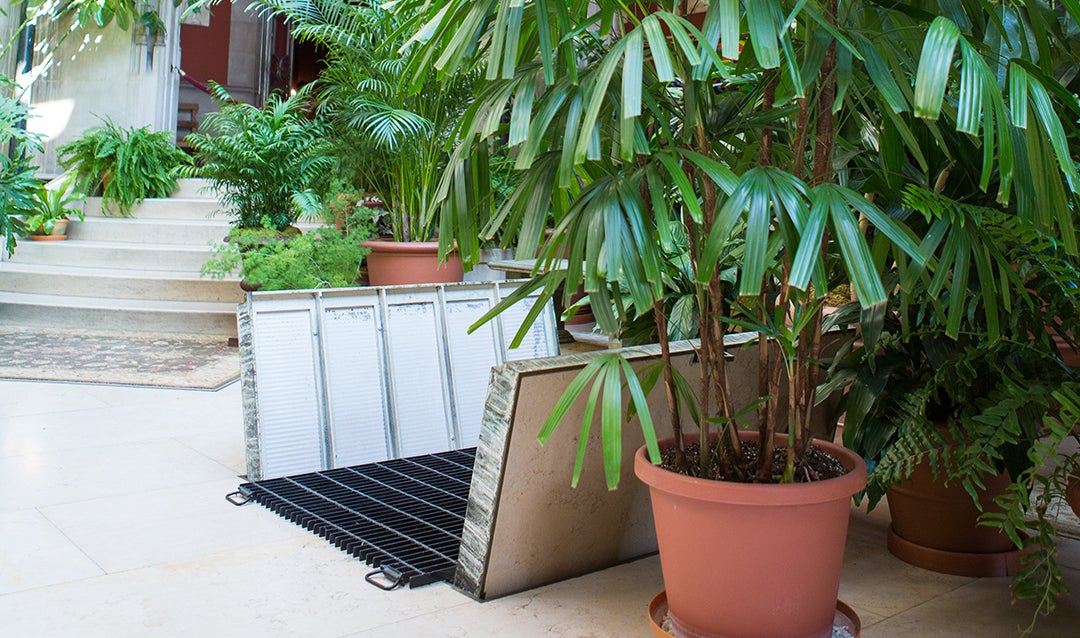
Trap door in the floor of the Winter Garden
This hidden door in the floor of the Winter Garden in Biltmore House allowed plants to be brought back and forth from the Conservatory without disturbing guests.

Although early plans indicate that there was to be an elevator in the Winter Garden, one was never installed and instead, there’s a ladder. The door is covered in marble slabs and is rarely opened except to allow for ventilation in the employee break room below it in the summer.

This hidden door leads to the Smoking and Gun Rooms inside Biltmore House.

Be sure to look for these secret doors inside Biltmore House during your next visit, like this door designed for gentlemen to retire to the Smoking Room after a game of billiards.

An outdoor sculpture comes clean

An outdoor sculpture comes clean, with help from the expert conservators at Biltmore.

“From the iconic marble lions in front of Biltmore House to terra cotta figures, bronzes, and more, the estate features 37 pieces of outdoor sculpture and historic plaques,” said Kara Warren, Preventive Conservation Specialist.

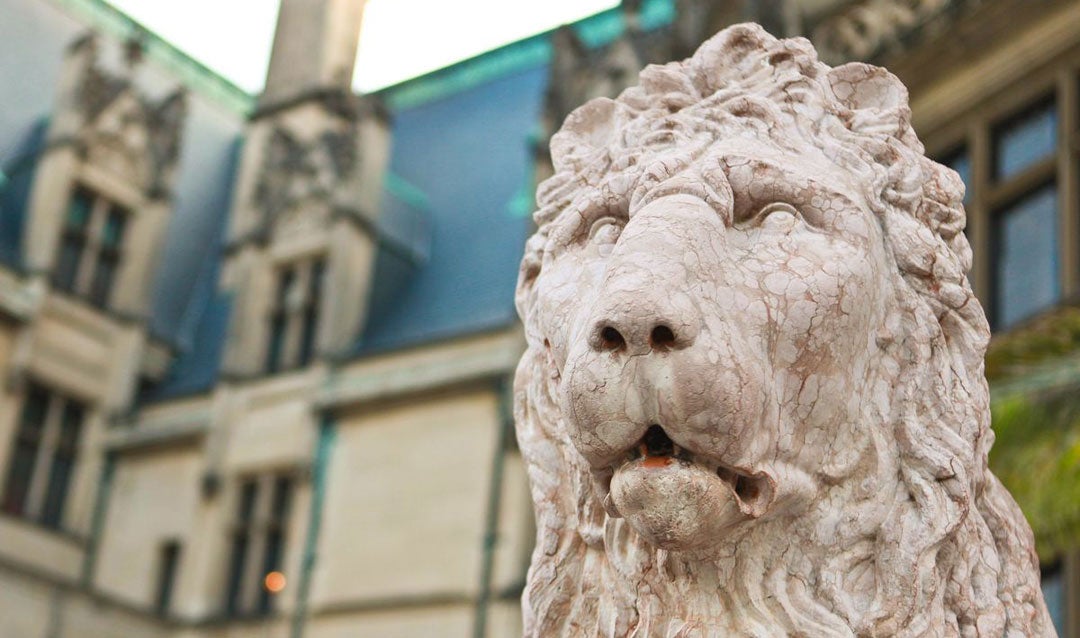
Marble lion sculpture in front of Biltmore House.
One of the two grand marble lion sculptures that guard the Front Door of Biltmore House.

According to Kara, each piece of outdoor sculpture is carefully examined and photographed every six months to determine its “health” and what type of cleaning, stabilization, or repairs might be needed.

There are four sphinx sculptures atop stone pillars guarding the massive iron entry and exit gates through which guests pass to get their first glimpse of Biltmore House.

The sphinx appears in Egyptian and Greek mythology as a creature with a human head and torso–usually female–and the hindquarters of a lion. Egypt’s massive Great Sphinx of Giza sculpture is probably the best-known example in the world.

The following photos illustrate how important Biltmore’s process is and what a difference cleaning and preservation make:

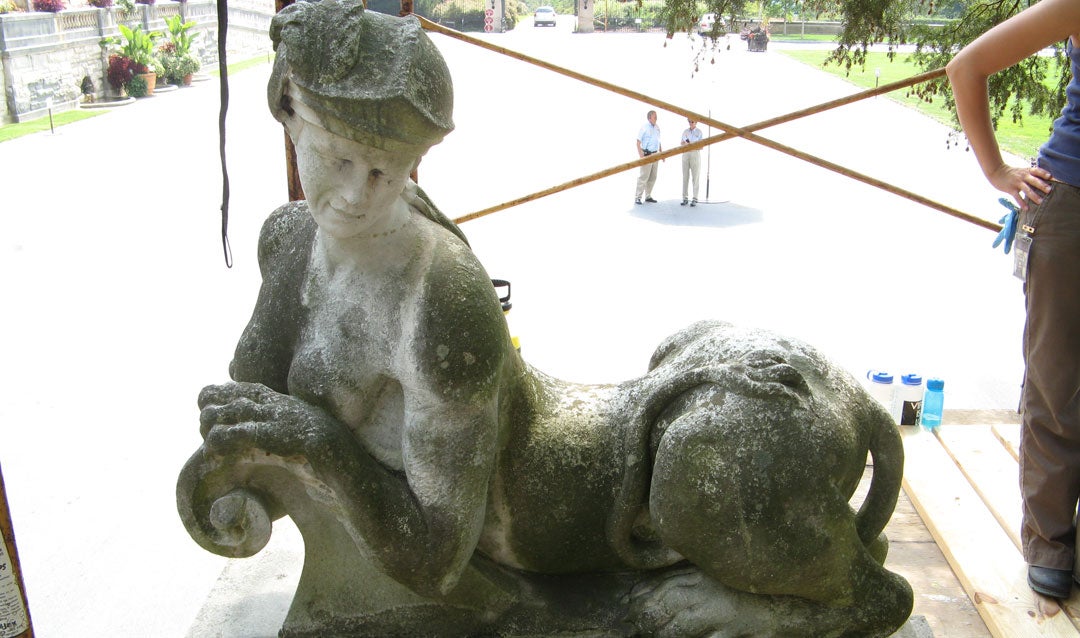
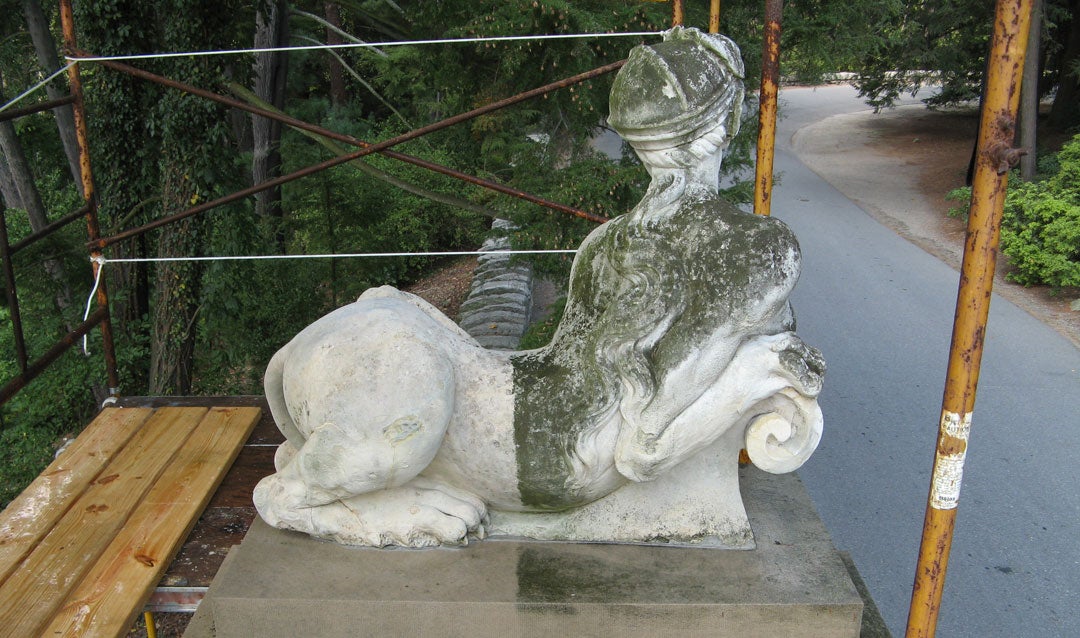
An outdoor sphinx statue at Biltmore before the cleaning process.
This elegant sphinx guards the right side of the North Gate entrance to Biltmore House.

This sphinx is turned as if to watch the Approach Road while the sphinx on the opposite side of the North Gate looks toward Biltmore House. The sculpture was in need of a thorough cleansing to rid it of biological growth. Scaffolding was built around the sphinx so our conservators could clean it in place.

Half of an outdoor sphinx sculpture at Biltmore has been carefully cleaned to show the remarkable difference proper cleaning makes.
Conservators carefully cleaned half of the sphinx to show the remarkable difference proper care makes.

Biltmore’s preservation experts worked on half of the sculpture at a time to illustrate different stages of the cleaning process. Note how much detail is revealed when the dark biological growth was removed from the hindquarters of this sphinx.

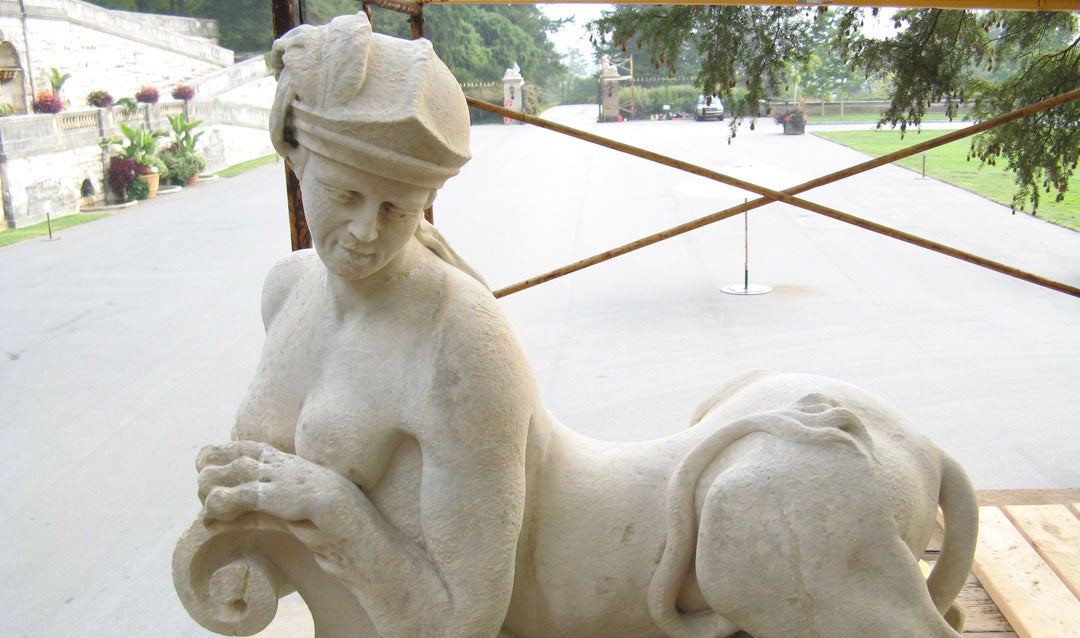
One of four outdoor sphinx statues at Biltmore
This outdoor sphinx sculpture at Biltmore’s North Gate has been cleaned and restored to her full glory.

After a thorough cleaning, the classic sphinx sculpture once again welcomes guests to Biltmore House in regal style. 

Learn more about our extensive process to document, clean, and preserve our outdoor sculpture collection.

A legacy of loving care

At Biltmore in Asheville, NC, our legacy of loving care extends across the estate, encompassing each piece of the collection, from art and furnishings inside America’s Largest Home® to outdoor sculptures and more.

Iconic lions at Biltmore House

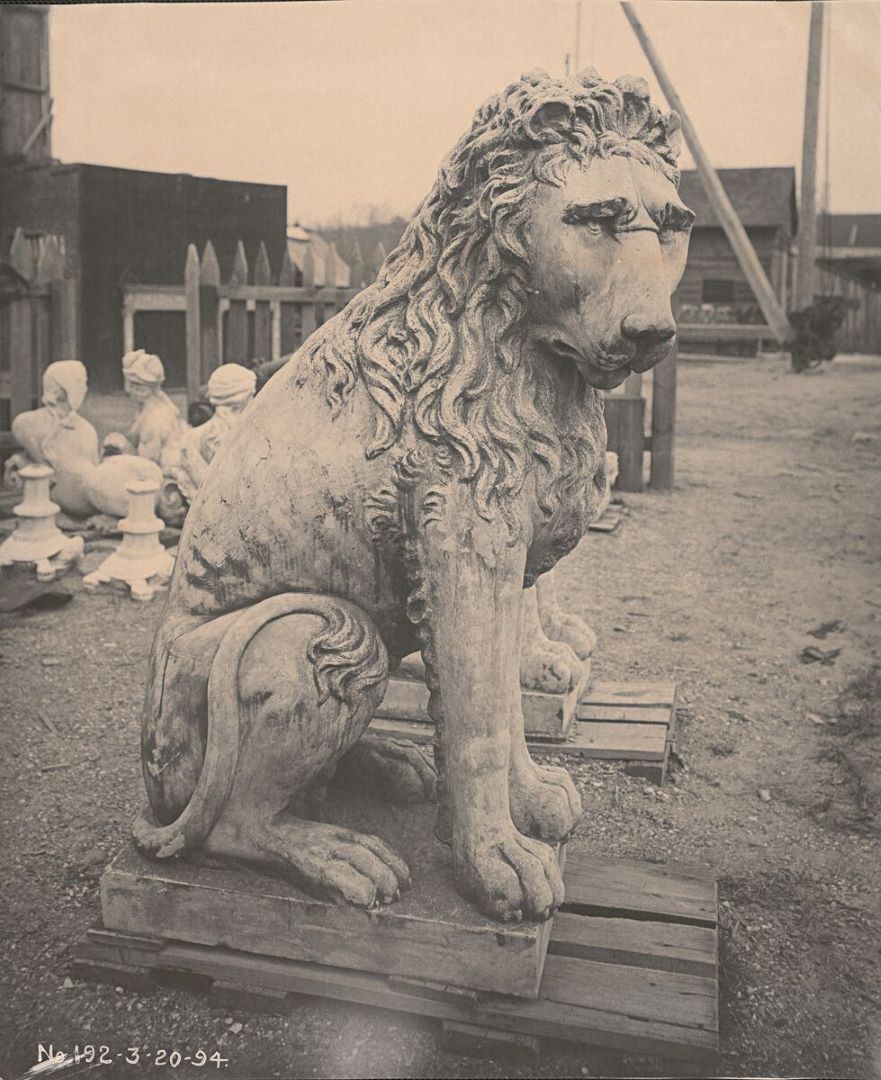
Archival image of a marble lion in front of Biltmore House
One of the two marble lions out of its shipping crate and awaiting placement in front of Biltmore House, circa 1895.

When George Vanderbilt moved into Biltmore House in October 1895, he wasn’t alone—a stately pair of lions was already there, flanking the entrance to his new home.
While the lions may appear to be made of terra cotta, closer inspection reveals the unique and beautiful color patterns of Italian rose marble (Rosso di Verona) ranging from beige to orange to red. Today’s visitors may notice some areas where the surface has been polished to a high sheen.

Our staff at work

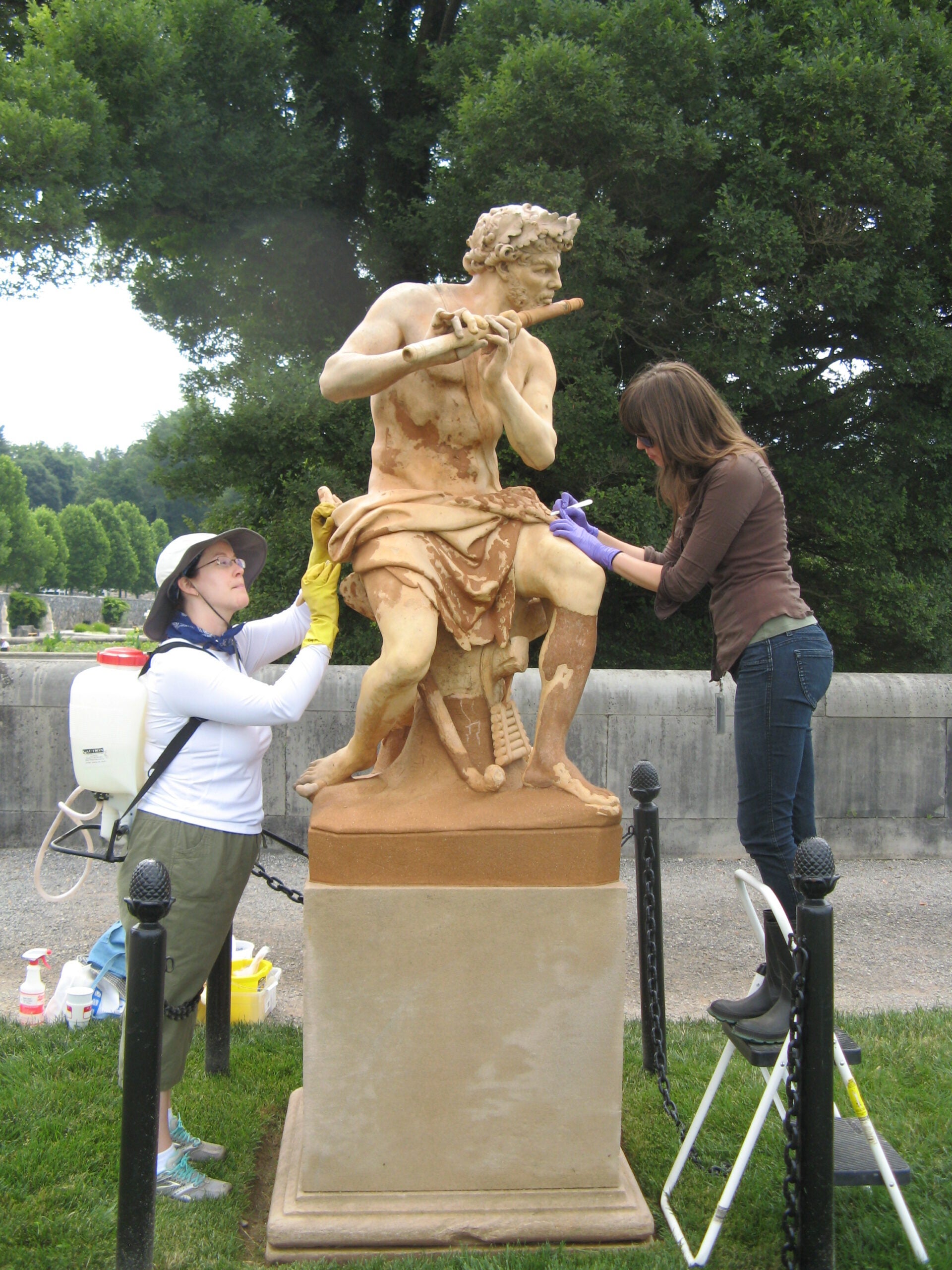
Two women clean an outdoor sculpture of Pan at Biltmore Estate.
Museum Services staff members Genevieve Bieniosek (left) and Kara Warren (right) work together to clean an outdoor statue of Pan on the South Terrace of Biltmore House.

“For more than a century, these friendly beasts have greeted guests as they enter Biltmore House,” said Kara Warren, Preventive Conservation Specialist. “So that sheen is actually the result of millions of hands rubbing the marble away through the years.”

Kara oversees the care for the lions and 37 other outdoor statues and historic plaques through the implementation of the estate’s ongoing preventive conservation program. The job requires a combined knowledge of material science and artistic skill in order to properly analyze, treat, and restore the sculptures.

According to Kara, the longevity of any outdoor statue depends on the nature of its construction, environmental exposure, and the maintenance it receives. Records in our archives indicate restoration to the garden statuary began as early as 1934.The descriptions of repair work have become part of the history of each piece, documenting the care it received over the years.

Preserving each piece

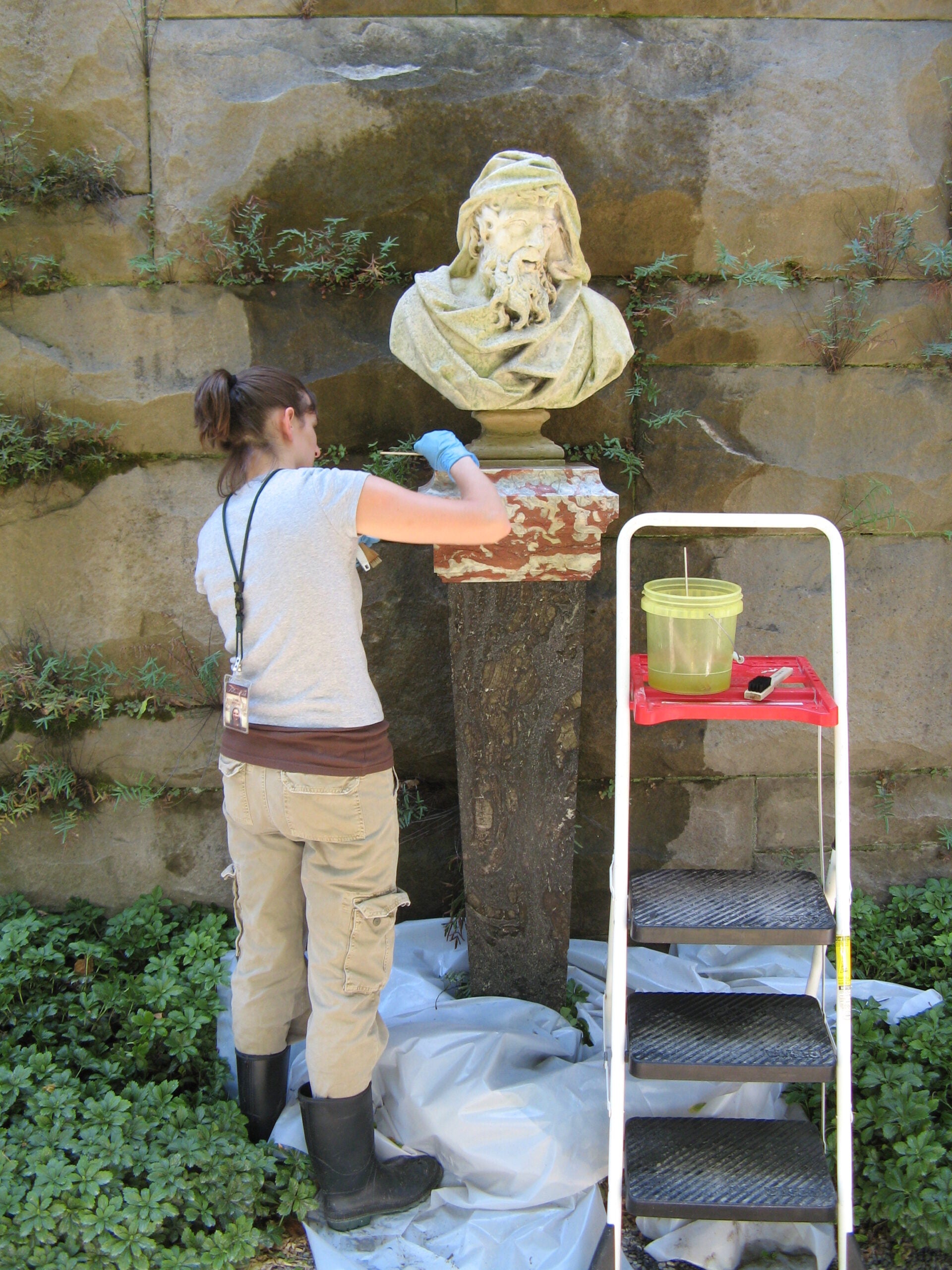
Woman cleans an outdoor bust at Biltmore Estate.
A member of the Museum Services team cleaning the marble plinth of a bust under the Pergola below the Italian Garden.

To help preserve our collection of outdoor statuary, each piece is examined, photographed, cleaned, and stabilized as needed every six months. Sometimes the statues simply need a gentle spray of water and an antimicrobial wash to reduce biological growth. Other times, patching or repair is required.

“Outdoor sculptures are vulnerable because they are exposed to so many types of deterioration,” said Kara. “Our preventive maintenance program is important because pollution, biological growth, and even repeated touching can damage these vulnerable objects. Cyclical maintenance allows us to gently clean, repair, and stabilize the original material before severe damage occurs.”

Our legacy of loving care

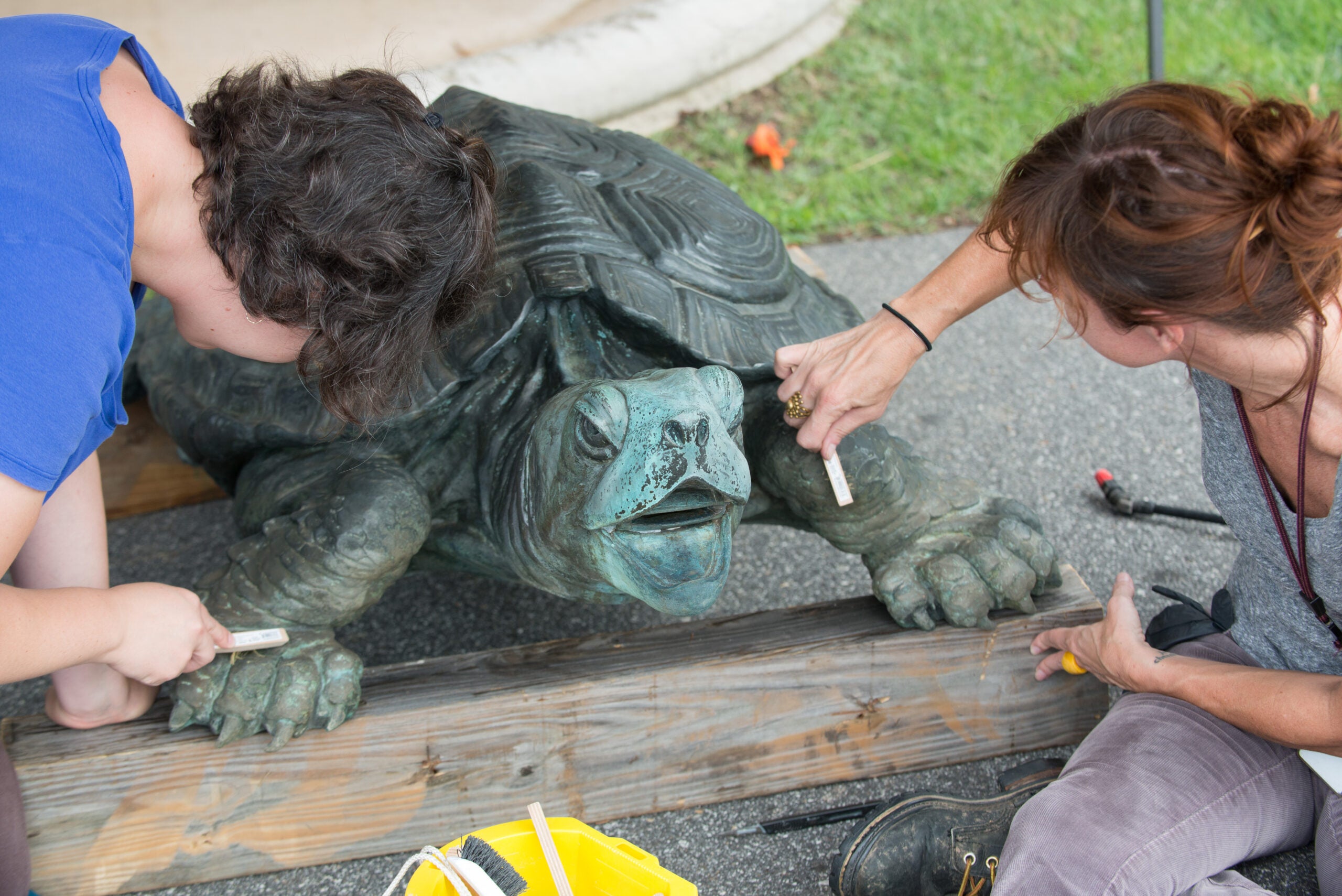
Two women clean a bronze tortoise sculpture at Biltmore Estate.
Staff members clean one of three bronze tortoise fountain sculptures below the Rampe Deuce at Biltmore House.

Most of Biltmore’s outdoor sculptures were purchased from France and Italy in the late 1800s, and some date to earlier times. The collection includes bronze, marble, limestone, granite, and terra cotta sculptures. As with all our efforts to preserve Biltmore, the loving care our statuary receives allows these sculptures to be enjoyed by today’s guests, our Annual Passholders, and future generations.

Preserving Generations of Biltmore China and Crystal

Preserving generations of Biltmore china and crystal is a delicate job.

If you have fine china or crystal handed down in your family, you can imagine the care it takes to clean and preserve all the fragile place settings and glassware in the Biltmore collection!

Generations of fragile china and crystal

Preserving generations of Biltmore china and crystal
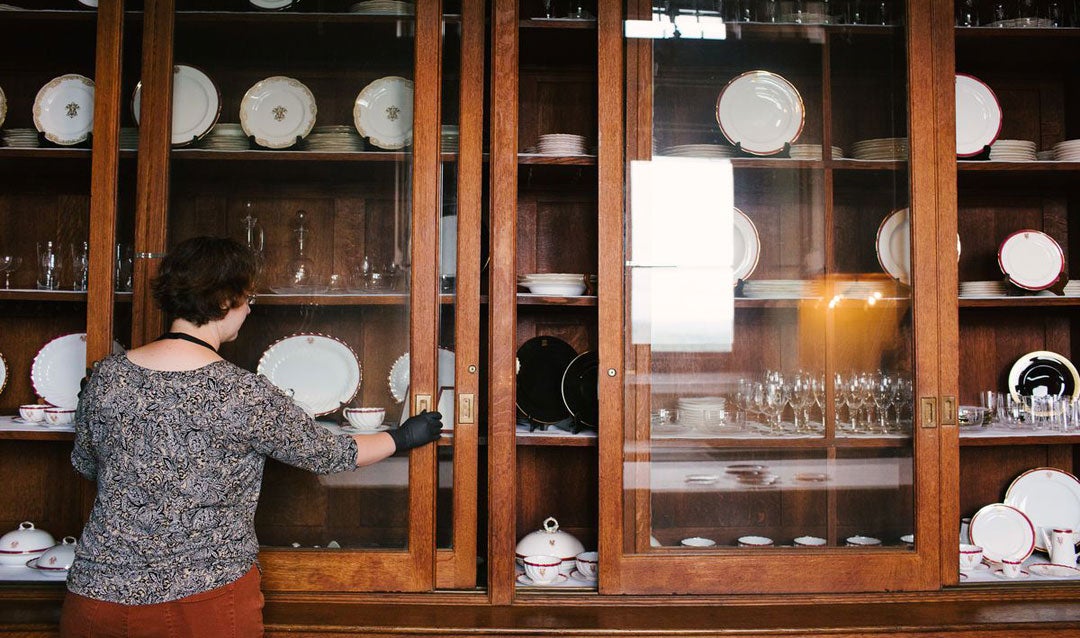
Gevevieve Bieniosek opens the china cabinet in the Butler’s Pantry

There are three generations of china and crystal stored in Biltmore House, and much of it is more than 100 years old.

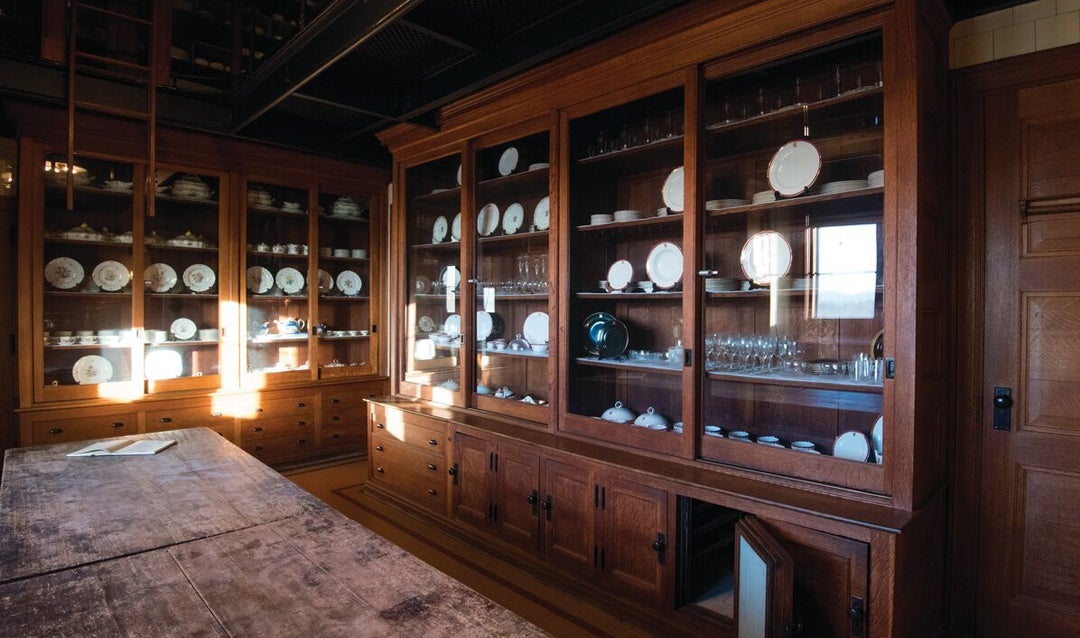
These fragile pieces of the collection are stored in glass-front cabinets in the two-story Butler’s Pantry, and a comprehensive inventory system helps our conservators keep track of each object.

A unique identification number is assigned to every dish and glass, the location of the piece is recorded, and a digital photo of it is included in an inventory database.

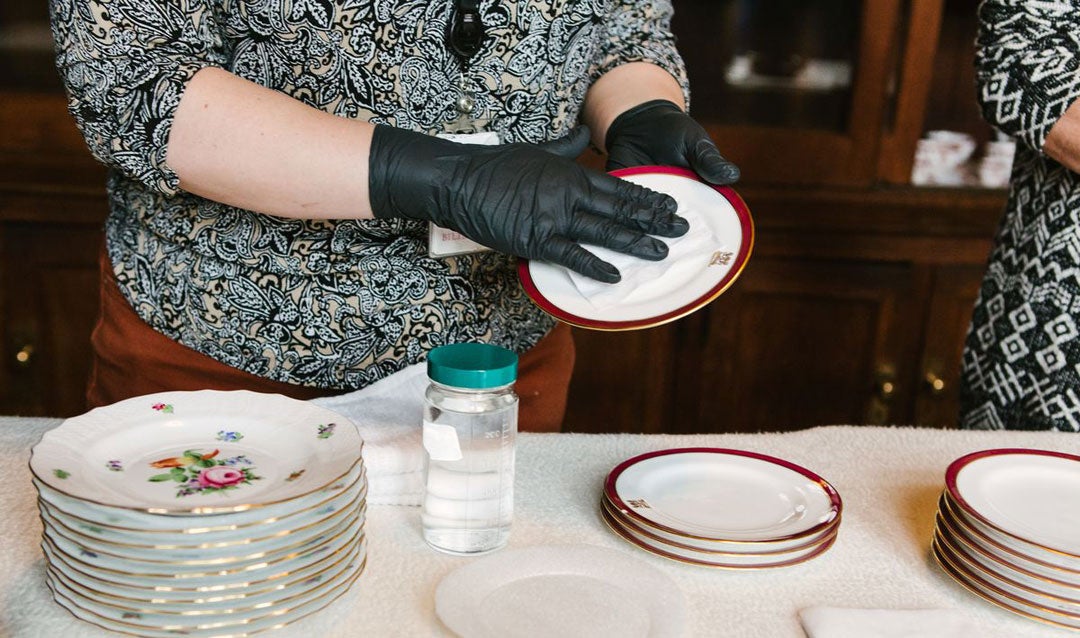
Cleaning generations of Biltmore china and crystal
Genevieve cleans saucers that bear George Vanderbilt’s monogram, while the floral patterned plates on the left were chosen by Vanderbilt’s grandson, William A.V. Cecil, for Biltmore’s centennial celebration in 1995

Cleaning all the china and crystal in the Butler’s Pantry is a process that takes several weeks to complete. Each piece is dusted, wiped with a mixture of ethanol and water, and dried with lint-free cloths. All the objects are inspected for unstable cracks.

“Most of the cleaning and dusting is done in the Butler’s Pantry, because the less we move such fragile pieces, the better,” said Genevieve Bieniosek, Furniture Conservator.

Preventing problems

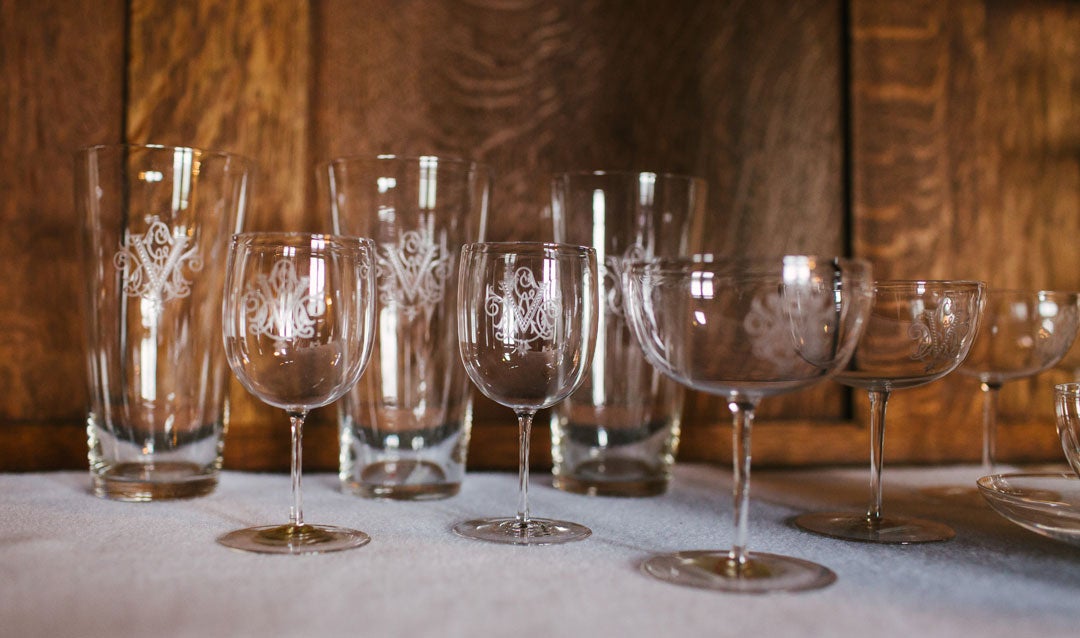
Caring for a fragile part of Biltmore history--crystal glassware
Delicate crystal glassware with George Vanderbilt’s monogram in the Butler’s Pantry

During a recent cleaning project, the conservators noticed that some of the crystal on display was suffering from ‘glass disease.’ According to Genevieve, this is a condition where components in the glass structure leach out over time, causing the glass to appear cloudy.

“If left untreated,” Genevieve explained, “it will eventually create a fine network of cracks over the piece.”

The glasses were treated by washing them with mild soap and water, drying them with soft towels, and letting them air dry for several hours.

“By treating them now, we avoid permanent damage from the glass disease,” said Genevieve.

Improving the process of storing crystal and china

China cup with Cornelia Vanderbilt's monogram
This fluted cup and saucer bear Cornelia Vanderbilt’s monogram

In addition to careful cleaning of these fragile pieces, our conservators are always looking for ways to improve the overall process for preserving the china and crystal.

“We recently looked into different types of padding material to keep the china safer, and placed sheets of polyethylene foam between each dish. The material is very stable, so the sheets don’t break down and create chemicals that could harm the china,” noted Genevieve.

Take a behind-the-scenes guided tour

Biltmore House Butler's Pantry
The Butler’s Pantry, as seen on The Biltmore House Backstairs Tour

Plan a visit to America’s Largest Home today, and treat yourself to The Biltmore House Backstairs Tour. You’ll experience an in-depth look at servant life at Biltmore with this 60-minute guided tour, including rarely-seen areas such as the Butler’s Pantry as you hear fascinating stories of those who worked and lived on the estate in the Vanderbilts’ era.

Featured blog image: Biltmore conservators Genevieve Bieniosek and Renee Jolly clean china and crystal in the Butler’s Pantry of Biltmore House