Camping in Pisgah Forest, circa 1901

Summertime in the mountains brings to mind thoughts of hiking trails, camping along clear creeks, and marveling at a cascading waterfall—sometimes all on the same excursion.

The call of the wild

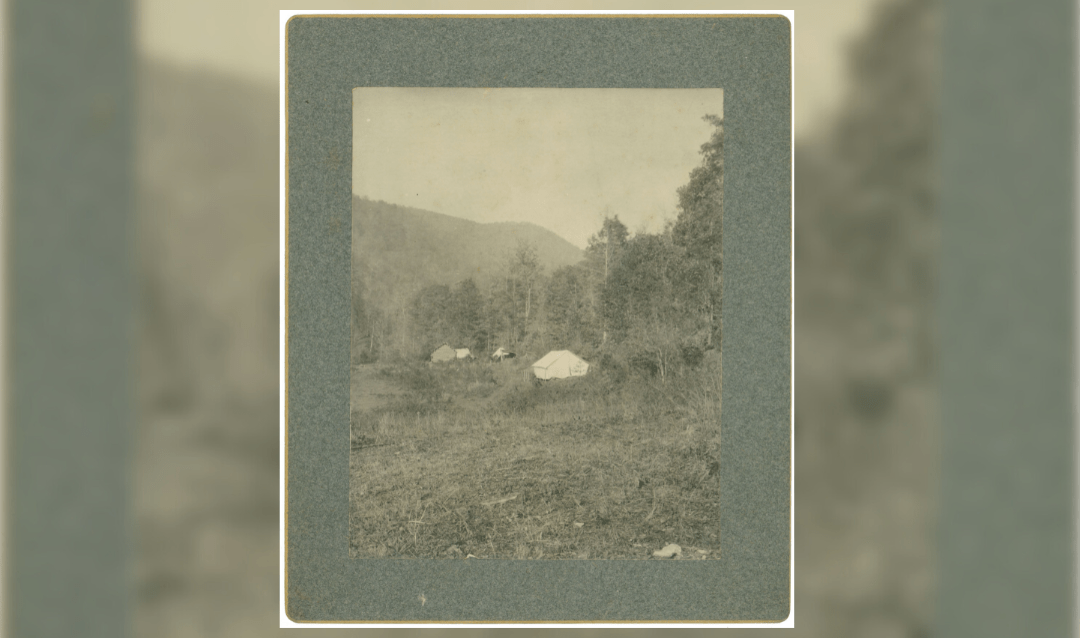
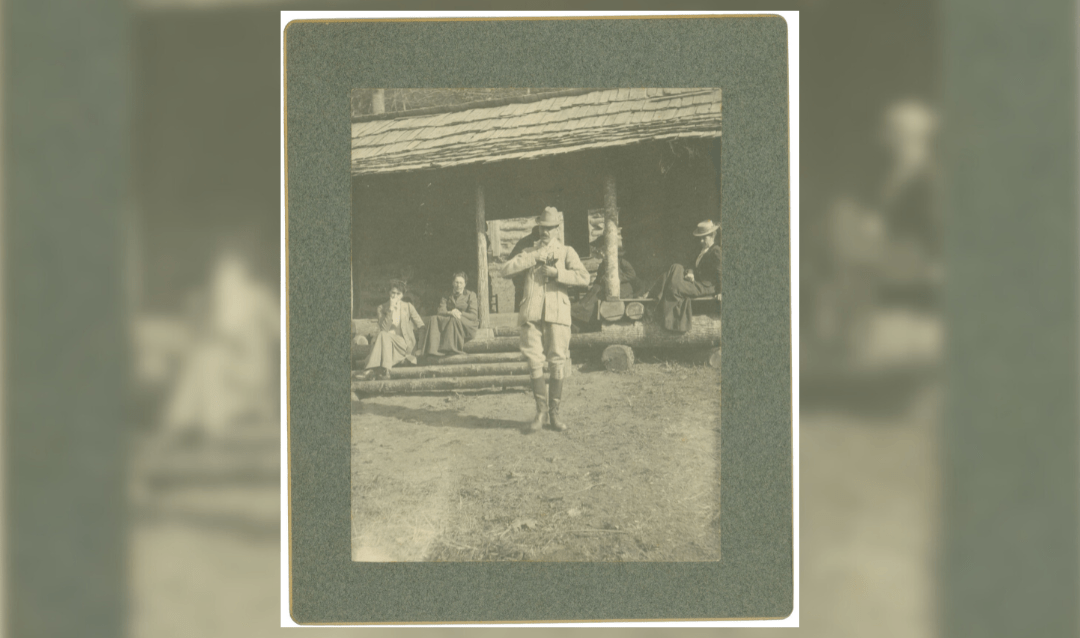
Pink Beds Vanderbilt Campsite, July 1901
Excursions were multi-day affairs, with campsites like this one being moved to new locations every few days.

Just as many of us do today, George Vanderbilt and his friends often found the lush forests of Western North Carolina calling their names. They frequently headed out for multi-day trips to explore the beauty of Pisgah Forest, according to information gathered by Lori Garst, Curatorial Assistant in Museum Services.

Several years before George Vanderbilt’s Biltmore House was completed, the call of the mountains led Vanderbilt and his friends into the forest to camp, fish, shoot, and enjoy the beauty of Western North Carolina.

Gearing up for success

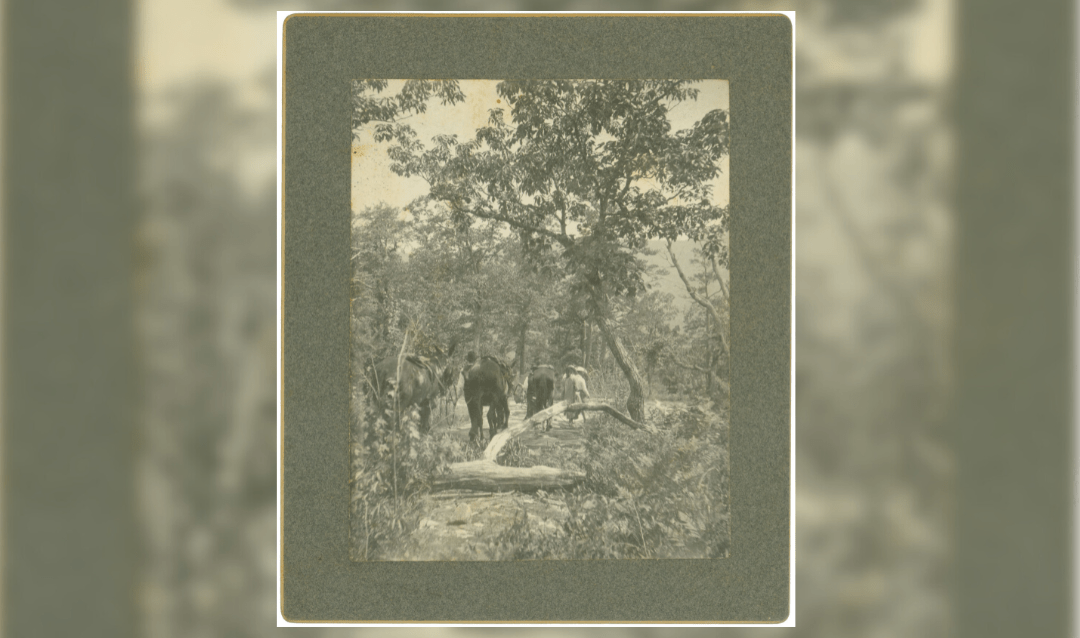
1901 Camping Excursion Pack Mules
Mules could carry up to 20% of their bodyweight for 20 miles a day, during excursions.

In June 1893, Estate manager Charles McNamee wrote to Dr. Westray Battle that he was so glad that Dr. Battle would be joining Mr. Vanderbilt’s camping excursion. McNamee prepared Battle by telling him that the group was headed to a place near Brevard where they would be met by Mr. Vanderbilt’s mules and then would proceed on towards the camp. McNamee outfitted the party for fly fishing and recommended that Battle take a firearm “for service or sport.”

Calming any hesitation about roughing it in the backwoods, the Estate manager assured Dr. Battle that there would be tents, a cot for each man, and even a cook. McNamee writes, “I thought it better to be semi-respectable in our camp rather than to be absolutely savage…”

The great excursion of 1901

George Vanderbilt at
Schenck’s workers built George’s second lodge in three days, earning it the nickname “Three-Day Camp.” The cabin had six rooms, a porch, and a dining room.

Years later, a series of photographs taken by Dr. Carl Schenck, Estate Forester, document a lively 1901 trip into Pisgah by Mr. and Mrs. Vanderbilt. Included in the large party were Dr. Battle, Marion Olmsted (F.L. Olmsted’s daughter), and Dr. Schenk. The Vanderbilts returned from an extended stay in Europe on June 6 and, without wasting any time, Charles McNamee began arranging for the outing within a few days.

McNamee ordered two tents on June 8, 1901; however, he received no reply. Requests for the tents continued until June 26. All other provisions for the excursion were in order. Perhaps in response to the lack of tents, a plea came from Vanderbilt to Schenck to build a place where the group could stay near Looking Glass Rock.

Revisiting lost memories

Edith Vanderbilt at Looking Glass Falls
Edith Vanderbilt favored the beauty of Looking Glass Falls.

We are fortunate to have 22 photographs documenting the Vanderbilts’ excursion in 1901, beginning on June 30 with a photo of the group of men with mules.  The remaining images show the trip to Looking Glass Rock with stops along the way at Looking Glass Falls, an unnamed waterfall which we now recognize as Sliding Rock, Looking Glass Creek, and “Three-Day” Camp. The final image is of Carl Schenck’s house in Pisgah with the men and mules. The back reads, “Making ready to leave for Buck Spring Lodge July 1, 1901.”

Plan your mountain escape!

Today, you can still visit the many sites the Vanderbilts’ went to in 1901 including Looking Glass Rock, Sliding Rock, and Looking Glass Falls. There are several camping spots in the area perfect for your summer getaway, too!

Biltmore wine labels past and present

Our Biltmore Estate American Series wine labels have changed through the years to reflect our brand and align with our legacy of taste and style.

While George Vanderbilt was a well-known collector of wines, it was his grandson William A.V. Cecil who developed the idea of Biltmore wines to expand his grandfather’s vision of a working agricultural property that could sustain itself.

The first grape vines were planted at Biltmore in the early 1970s, and by 1983, Biltmore Estate Wine Company was firmly established. That same year, renovation began on an original estate dairy barn to convert it into a state-of-the-art winery that opened to the public in 1985.

Early wine labels

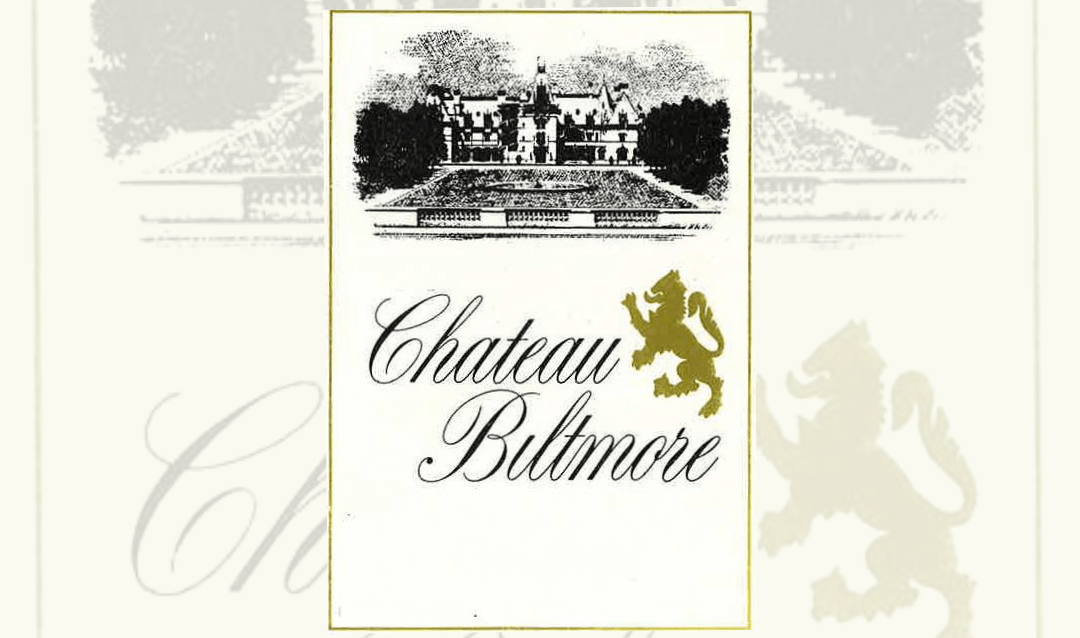
“In 1976, our first wine label featured a sketch of Biltmore House along with the Cecil family crest and a rampant lion. The labels were inspired by the very successful Biltmore Dairy logo that consumers already associated with quality and authenticity. Wines bearing this label were only available on the estate,” said Heather Jordan, Vice President of Beverages.

An original Biltmore wine label known as the Chateau Biltmore label featuring an image of Biltmore House and a rampant lion.
Chateau Biltmore wine label, 1976

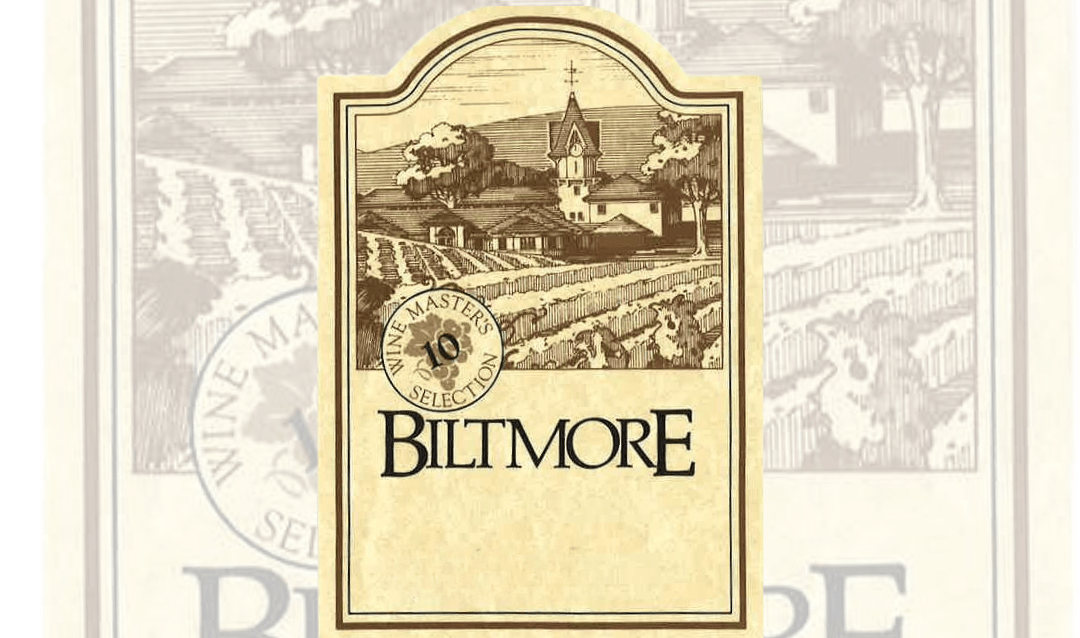
The next iteration of our labels was created in an effort to simplify the process of choosing wines. Each varietal was numbered, beginning with red wines and moving to whites (dryer whites were even numbers and sweeter whites were odd).

“It was a heartfelt method for us,” Heather said, “but we quickly discovered that our customers wanted to know a little bit more about the wine than just its name and number!” 

These labels featuring the iconic clock tower from the original dairy barn appeared in local markets from 1984–1985 and helped kick off the opening of our new Winery.

New wine label designs for new markets

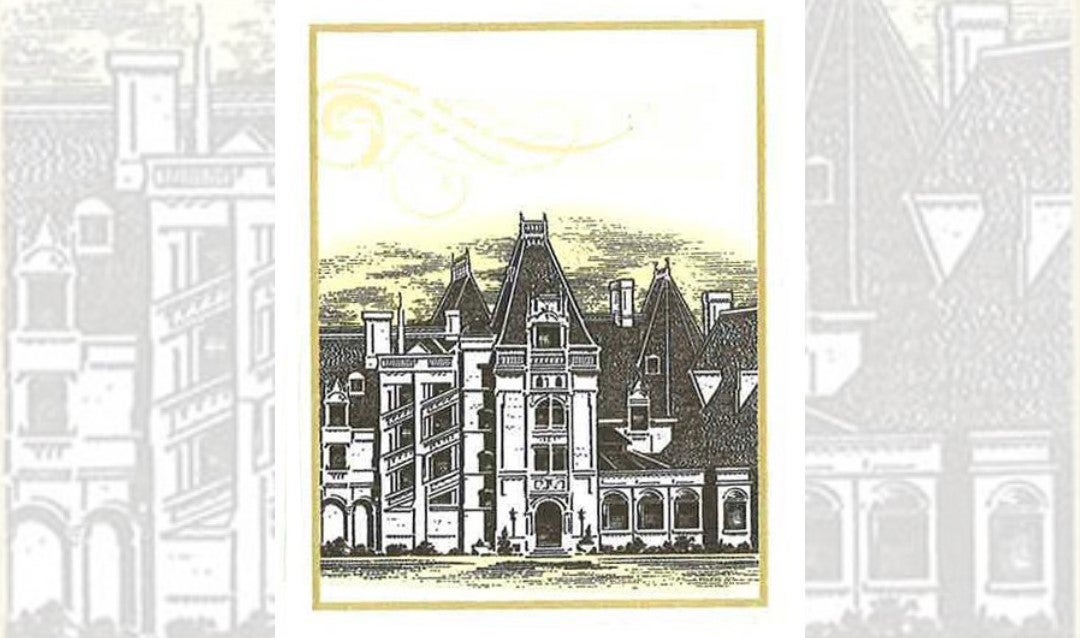
Created for us by the experts of Colonna Farrell Design in Napa Valley, these labels highlighted that our wines were neither “French traditional” nor “California modern,” but authentic to Biltmore and reflective of our own unique style and heritage of winemaking. The labels were a big hit with consumers on and off the estate.

2001-2008 Colonna-Ferrel label

 Five years later, we were ready for the launch of our current wine label. We chose the design experts at CF Napa to help us craft a stunning visual statement that celebrates our history and our passion for fine wines.

Biltmore wine labels: a distinctive look

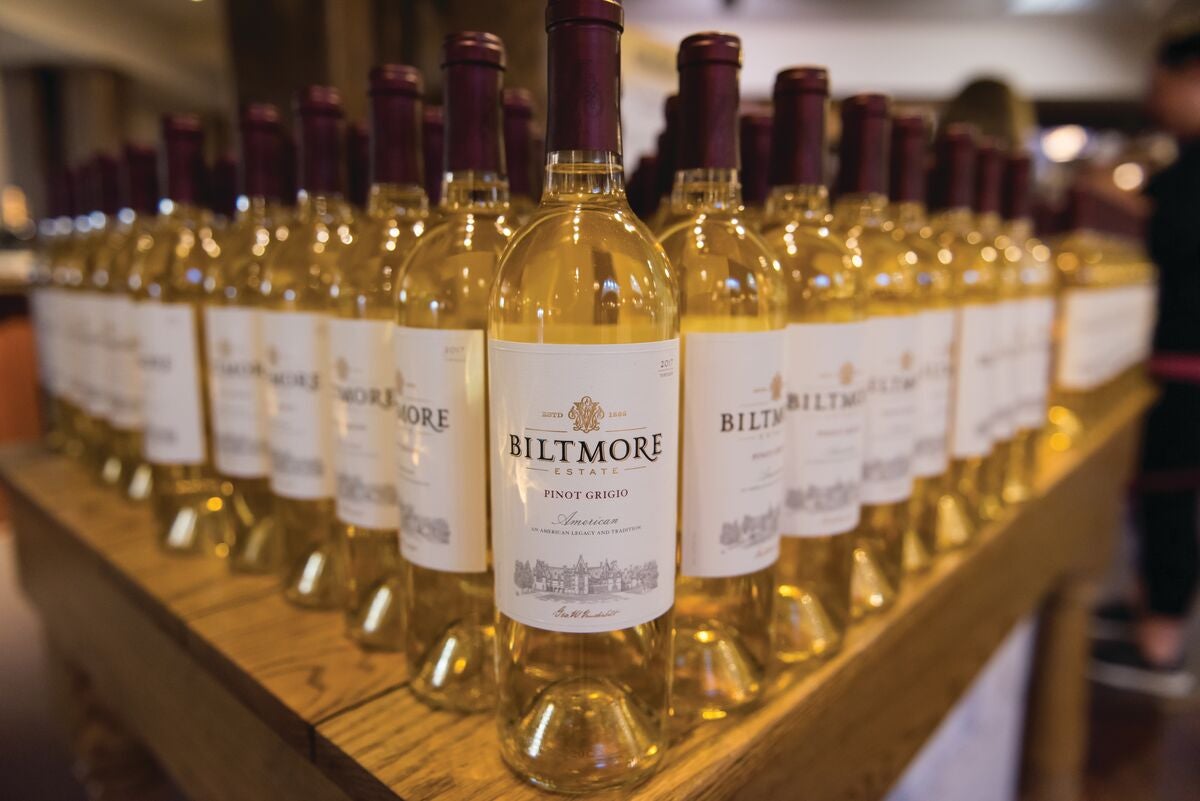
Bottles of Biltmore Estate Pinot Grigio wine
Biltmore Estate American Series wine labels

For our Limited Release wines in the American Series, it was important to create similar-but-distinctive labels to highlight this special collection available only on the estate, online, or through the Vanderbilt Wine Club®.

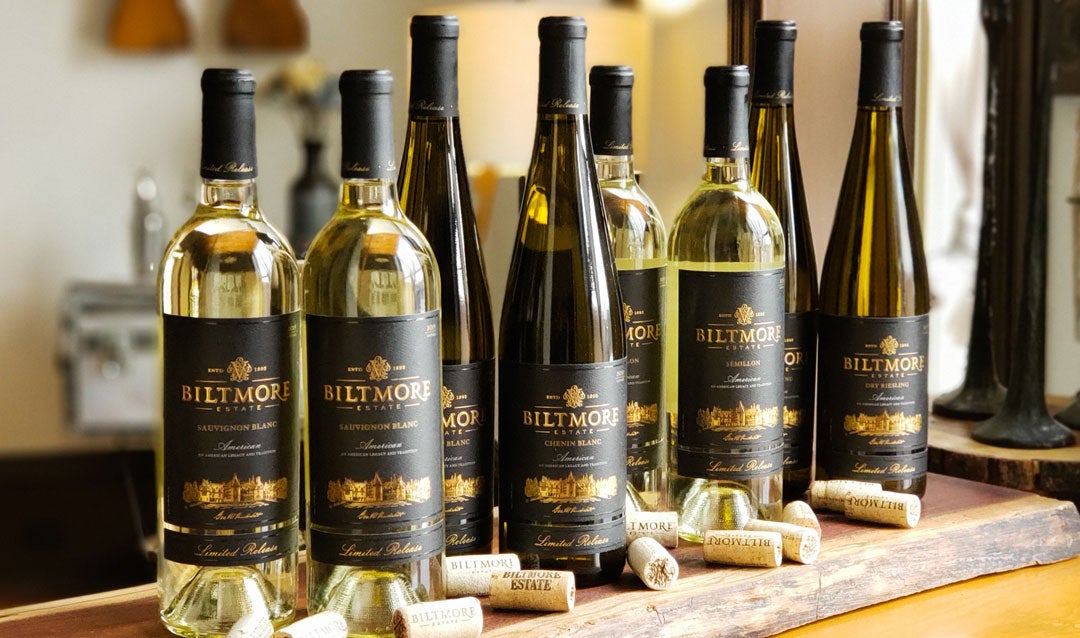
Bottles of Biltmore Estate Limited Release wines
Biltmore Estate® Limited Release wines, distinguished by a matte black capsule and black-and-gold label, are perfect for sipping by the glass or in craft cocktails.

“Handcrafted in smaller quantities, our Limited Release wines are unique,” said Heather. “Sharon Fenchak, our Executive Winemaker, offers creative varietal blends crafted with special techniques, and we invite you to taste them the next time you visit Biltmore.”

Two ceremonies in two days: the Vanderbilt’s wedding

In June 1898, George W. Vanderbilt and Edith Stuyvesant Dresser held their wedding in Paris on June 1 and June 2. Why two ceremonies? The first was a civil service and the second was a religious ceremony, in accordance with French law dating from the French Revolution.

Popular opinion had assumed the wedding would be a grand affair, possibly at George Vanderbilt’s home church of Grace Episcopal Church in New York City. Despite the speculation, the couple decided to be wed in Paris with as little fanfare as possible—as possible for a Vanderbilt, that is.

George and Edith were first married in a 15-minute civil ceremony at 3 p.m. on June 1, 1898 by the mayor of Paris at the Town Hall of the Eighth District in the Rue Anjou. According to one newspaper article, the couple had to comply with all the requirements of French law; the civil ceremony was complete with family witnesses, baptism certificates, the marriage certificate for George’s parents, and proof of American citizenship. The couple signed a contract of marriage.

One newspaper described Edith’s dress at the civil ceremony; unfortunately, no photos are known to exist: “The dress worn by the bride to-day was a creation of Laferrière (a noted Parisian fashion designer). It was of café-au-lait crepon, over a lining of yellow silk. The skirt was cut out in a deep Vandyke edged with a fringe of white silk, which fell to the hem. Underneath the fringe, one caught occasional glimpses of yellow lining. The bodice had a rounded collar of mauve taffeta covered with guipure (a type of lace). The bride wore a white straw hat trimmed with pink roses.

At the end of the civil ceremony, George and Edith left the hall separately, as it would have been scandalous for them to be seen together before the church ceremony the following day.

The religious ceremony was held at the American Church of the Holy Trinity in Paris at noon on June 2, attended by family and close friends. Before the ceremony began, George had to present their civil contract to the clergymen and sign the wedding register. An eyewitness account from the Philadelphia Record reports:

―It was a union of quiet contentment…There probably never was so unostentatious a Vanderbilt wedding since the family made its millions. It is true that the church was full of costumes and the company was very fine, but there was an altogether marked quietness of tone and an absence of display.

​Although there are no wedding photographs available, newspapers described the bride’s attire. Edith—a striking figure at six feet tall—wore an understated Empire-style gown in creamy white satin of French design, with a court train trimmed in the same lace worn by her grandmother nearly a century before. According to the Philadelphia Record, her veil was decorated with lace worn by her mother. Regarding the family lace, the New York Journal declared: “It is an admirable thing to have lace, and it is also an admirable thing to have ancestors, but when one can have both lace and ancestors it is most admirable.

After the ceremony, the wedding party, family and friends attended a breakfast at Edith’s apartment on Rue Vernet. Natalie Brown, Edith’s sister, provided two bottles of special champagne which their maternal grandfather had set aside at Edith’s birth, to be served on her wedding day. From there, the newlyweds left for Geneva by train to embark on a four-month European honeymoon.

Cornelia Vanderbilt’s Wedding: A Sweet Discovery

Our Museum Services team made a sweet discovery related to Cornelia Vanderbilt’s wedding to the Honorable John F.A. Cecil on April 29, 1924. It’s a fascinating detail that was recently uncovered in an attic—a first for Biltmore—and the sweet discovery all started with a simple phone call.

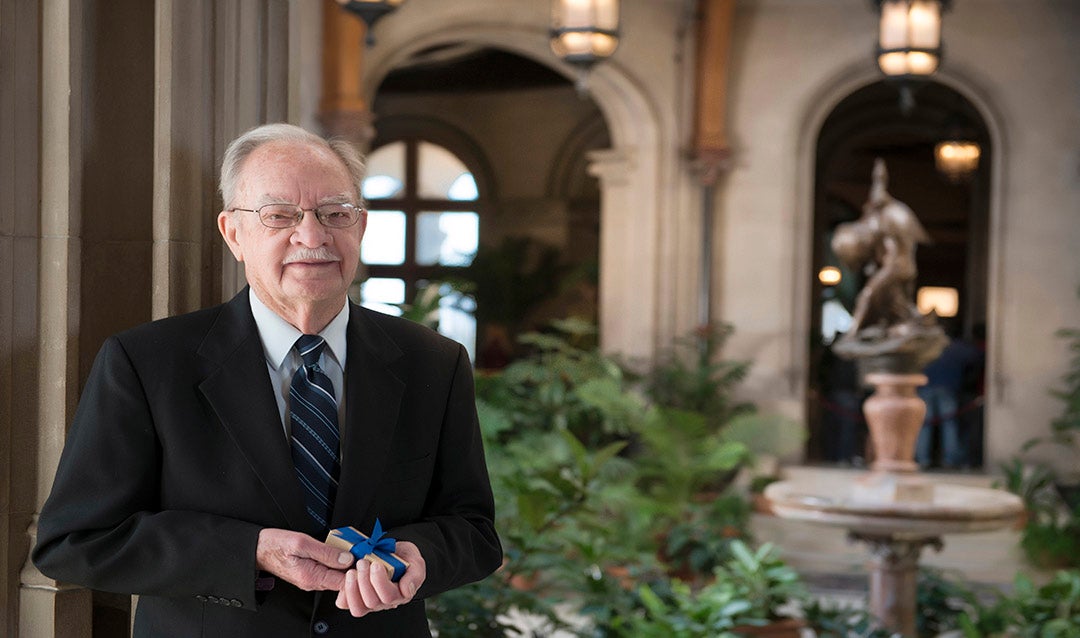
Fred Cothran proudly holds the keepsake cake from the Vanderbilt-Cecil wedding.

A sweet discovery

In 2014, Biltmore acquired a piece of cake for the Biltmore collection, which our curators confirm is the only edible artifact now housed in the archives. Cake? For the archives? Indeed. And even more of an enticing tidbit: we believe that it’s about to be 100 years old!

Candler resident Frederick Cothran, then 96, found the cake in a trunk he inherited from his aunt, Bonnie Revis. Miss Revis was a cook at Biltmore House between 1924 and 1935. He contacted Biltmore’s museum services department to report that he had what he thought was a piece of cheese from Biltmore House. Not wasting any time, Laura Cope, Collections Manager, paid a visit to Cothran.
“Food is personal. People bond over it, and it’s easy to relate to it on several levels,” she says, and that’s why she had to see the cheese for herself.

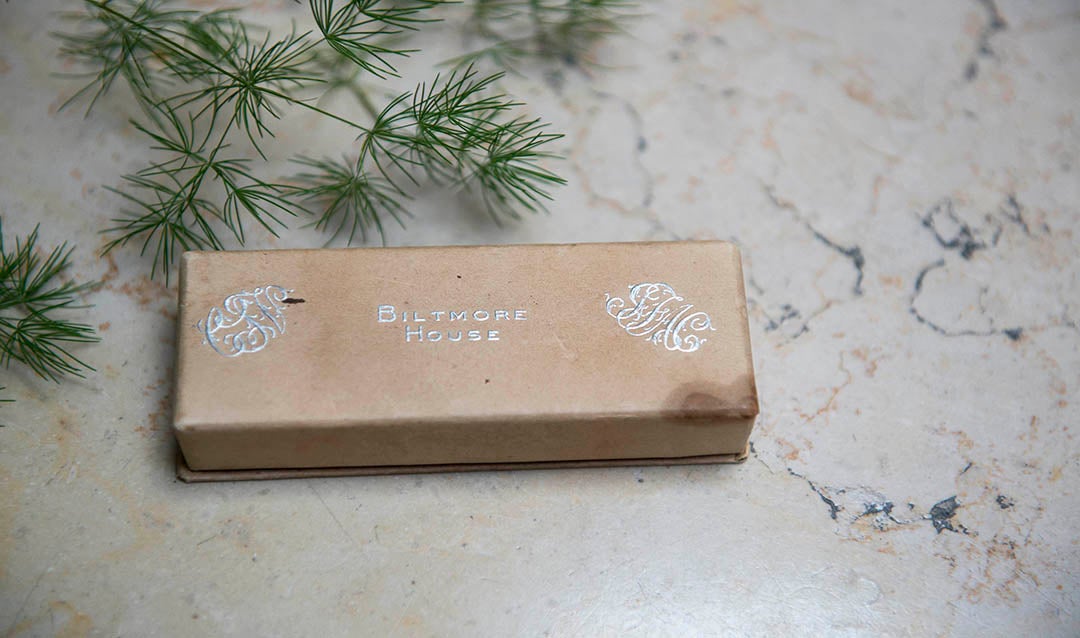
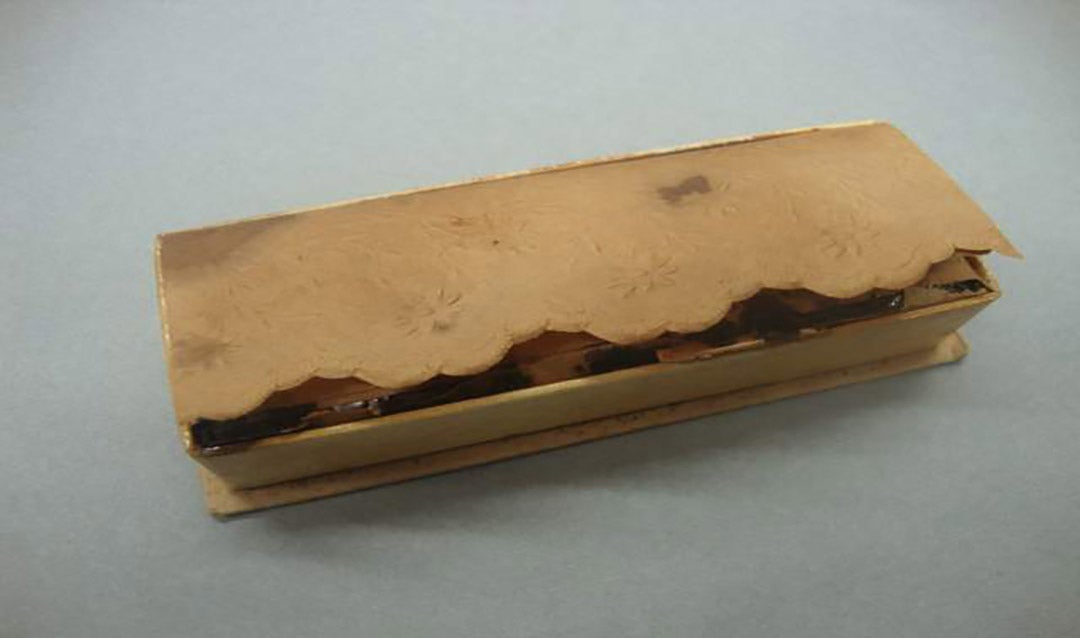
Keepsake cake with monogram details.
Keepsake cake with monogram details. “CVC” for Cornelia Vanderbilt Cecil and “JFAC” for John Francis Amherst Cecil.

When she met Cothran he presented her with a neat and tiny box engraved “Biltmore House” on the top. Two sets of monograms are engraved on either side: “CSV” for Cornelia Stuyvesant Vanderbilt; and “JFAC” for John Francis Amherst Cecil.

After getting back to Biltmore House, Laura researched the customs of the day and realized that this was more than likely cake rather than cheese. Then, upon hearing a recording of Paul Towe from Biltmore’s Oral History collection,  she and her colleagues confirmed that this was indeed cake – fruit cake – that the Cecils gave out as favors on their special day.

Mr. Towe recalled attending the wedding as a small boy. Towe’s father was employed at Biltmore in the 1920s and 1930s, and his sister, Sarah, was a flower girl in the wedding. Towe said that “everybody got a little white box with their name on it with a piece of fruit cake.”

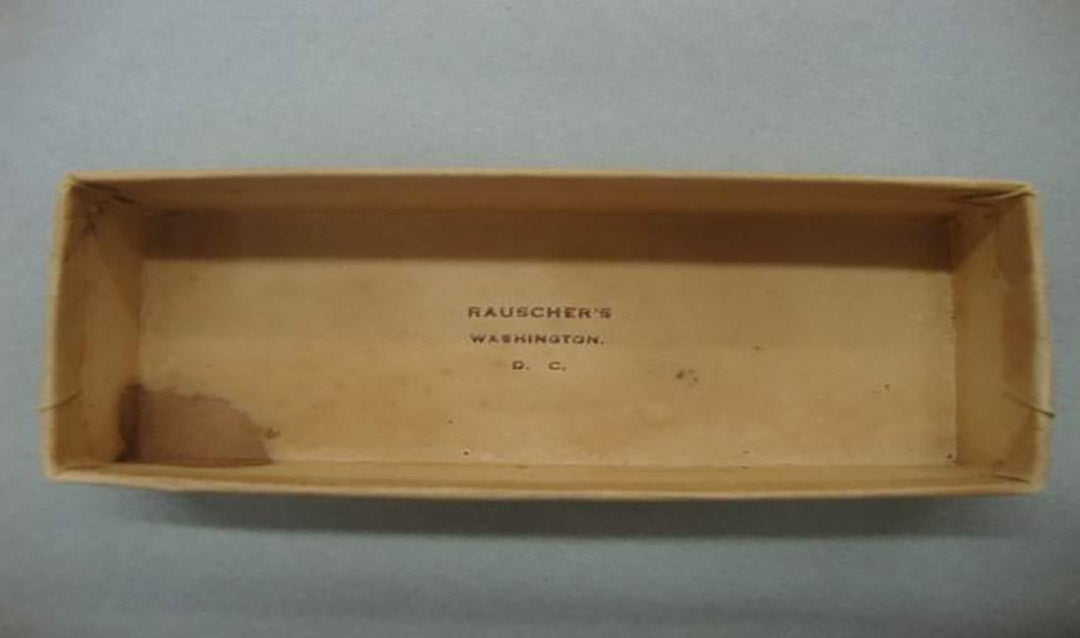
Keepsake cake box with Rauscher's stamp
Charles Rauscher was a French confectioner and caterer, and his business, Maison Rauscher, was known as the ‘Delmonico’s of Washington’.

The box top’s underside has a stamp on it, “Rauscher’s – Washington, D.C.” In her research, Laura learned that Rauscher’s catered and supplied many fine confectionaries and baked goods to society families in Washington, including the wedding cake for President Wilson in 1915.

The tradition of wedding cake keepsakes can be traced back to Victorian times, typically sliced from the groom’s cake, which was often a fruit cake. Slices were wrapped and placed in tiny boxes to take home as a memento of the wedding. The belief was if an unmarried woman slept with a piece of the groom’s cake under her pillow, she would dream of her future husband.

Prince William and Katherine Middleton carried out the tradition by sending pieces of boxed cake to commemorate their wedding in 2011.                              

100 year old keepsake cake box from Cornelia's wedding at Biltmore
Cornelia Vanderbilt and John Cecil’s keepsake cake box has stood the test of time for a century.

This 100-year-old piece of cake may be considered an odd addition to a collection that contains famous works of art, books, ancient tapestries and antiques. Historically speaking, that’s not the case.

“This is a clear line connection between our day and their day, so it’s worth the effort to have it in our collection,” Laura said.

Main photo: Guests at the wedding of Cornelia Vanderbilt and John Cecil enjoyed breakfast in the Biltmore House Winter Garden, April 29, 1924.

Cornelia Vanderbilt’s Wedding: It’s All in the Details

Many people say that the success of an elaborate event lies in the details. Cornelia Vanderbilt’s wedding to the Hon. John F. A. Cecil on April 29, 1924 was no exception—from photographers to invitations to accommodations, many hands insured that all was perfect for the big day.

According to Lori Garst, Biltmore Curator, society columns were aflutter as soon as rumors began about the engagement of John Cecil to Cornelia. Letters from the Washington Times and other inquirers arrived at Biltmore asking if the engagement rumor was indeed true. No information was officially released by Edith Vanderbilt until the decision was made as to what photographer would capture the moments of the wedding and take the official bridal portrait for the newspapers.

An Official Announcement

A formal announcement was made at a dinner hosted by Mrs. Vanderbilt at Biltmore on March 8, 1924. After much conversation, Mrs. Vanderbilt awarded two professional photographers from Washington, D.C. the job. Underwood and Underwood photographed the actual wedding, while Harris Ewing captured incidental photographs including the social whirl which occurred the week prior to the wedding.

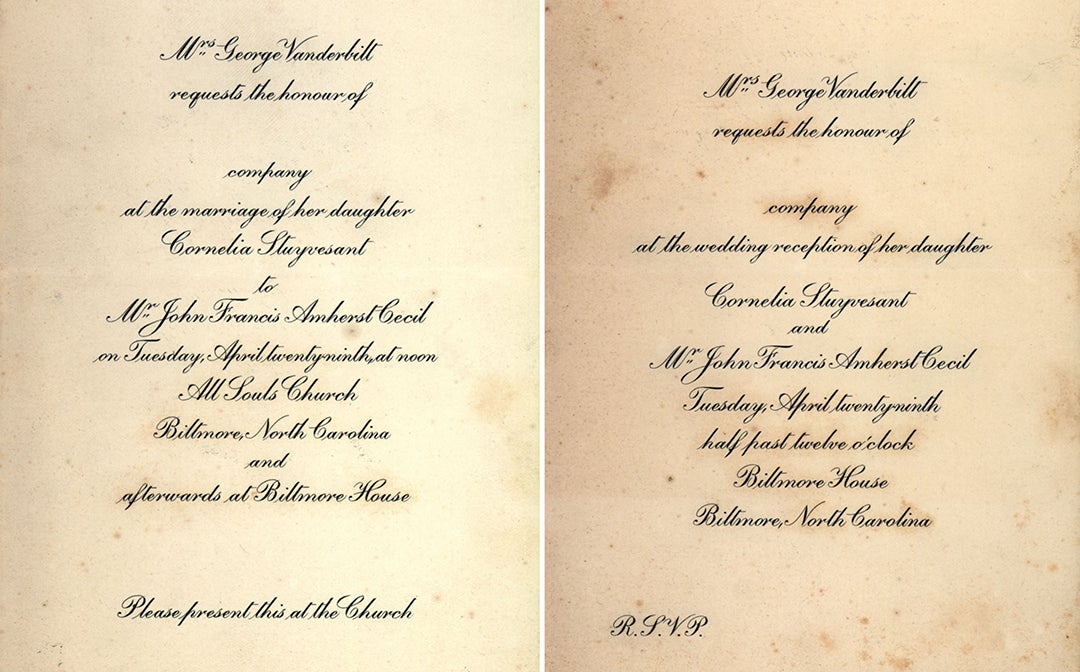
Cornelia Vanerbilt's Wedding Invitations
Invitation to Cornelia Vanderbilt’s wedding (left); invitation to the wedding reception (right)

Wedding invitations were one of the first details to secure. While famous New York jewelers, such as Cartier, wrote offering to print the wedding invitations, Adolph & Dungan engravers of Louisville designed the wedding invitations, and Inland Press of Asheville printed them. There were two separate invitations to the occasion. Five hundred people received an invitation to the ceremony at All Souls Church at 12 noon and the reception immediately following at Biltmore House. Another 2,500 received a separate invitation to attend only the wedding reception at 12:30 p.m.
Arrangements & Accommodations

With guests arriving from across the globe, Mrs. Vanderbilt’s secretary, William Ashby, had the job of making travel arrangements to Biltmore and arranging accommodations for the wedding party, close family, and friends. Most guests stayed at the Grove Park Inn, Biltmore Country Club, and Kenilworth Inn. However, 43 guests including members of the wedding party stayed in Biltmore House. Ashby sent extensive instructions for cleaning and furnishing Biltmore House to Mrs. Donohue, the head housekeeper, as early as March 15.
Rooms were updated with new wallpaper and paint, iron beds and mattresses were ordered for the visiting guests’ staff, and all sheets were washed and ironed. The bride’s wedding party stayed in the Oak Sitting Room and Mr. Vanderbilt’s Room, while the maid of honor, Rachel “Bunchy” Strong, stayed with Cornelia in her room. The groomsmen stayed at the Biltmore Forest Country Club which opened just two years prior.

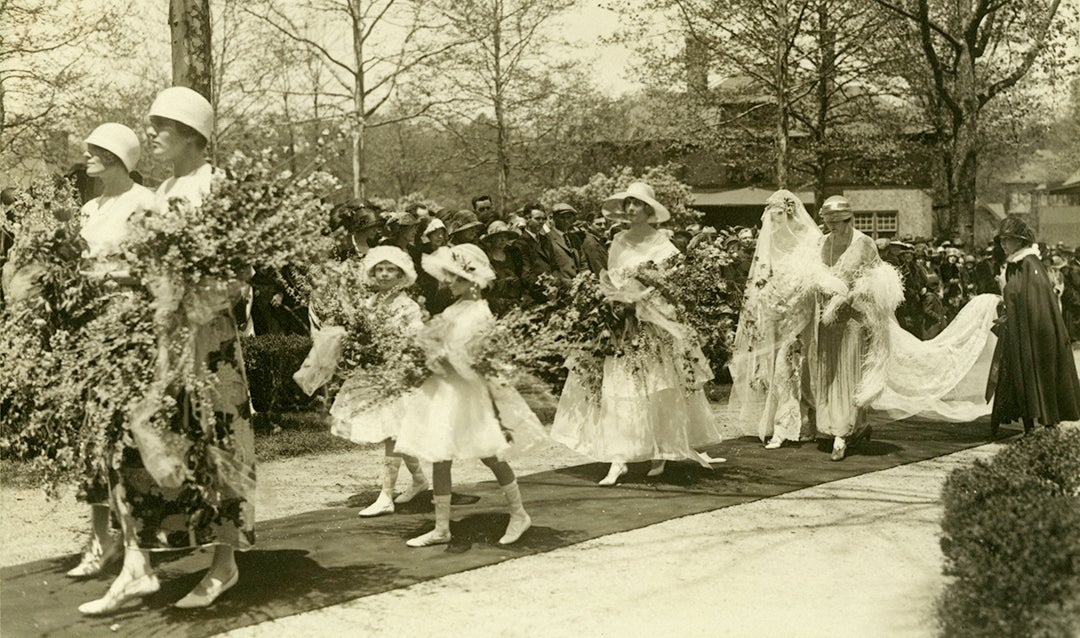
Edith Vanderbilt escorting her daughter Cornelia Vanderbilt for Cornelia's wedding
Edith Vanderbilt escorting her daughter Cornelia into All Souls’ Church for Cornelia’s wedding

Other house guests included the bride’s cousins Mr. and Mrs. John Nicholas Brown, the groom’s father Lord William Cecil, and several of Mr. Vanderbilt’s sisters. Meticulous notes were kept by Mr. Ashby documenting when guests arrived, departed, and what room they stayed in Biltmore House.
No Detail Overlooked

He also kept lists of last minute specifics to make sure nothing was forgotten. His records included seating charts for the church, train reservations for guests’ departures including their preferred train accommodations, wedding gifts and addresses, and cars to be provided for the guests’ convenience. As a final detail, Mr. Ashby secured the assistance of the Biltmore Fire Department to sprinkle the streets of Biltmore with water to keep the dust down.

The Asheville Citizen published extensive accounts of the wedding for two days. While many of the details of the wedding ceremony are found in these articles, the lists and correspondence found in Biltmore’s archives give us a true understanding of the specific arrangements made to insure that Biltmore’s only bride had a perfect day.

Cornelia Vanderbilt Cecil and the Honorable John F.A. Cecil as they left All Souls Church
The Honorable and Mrs. John F.A. Cecil as they left All Souls Church

The First Bride of Biltmore

A poem titled “The First Bride of Biltmore,” written by Mrs. Vanderbilt’s sister, Pauline Merrill, painted a beautiful picture of Cornelia Vanderbilt’s wedding day on April 29, 1924.

The sun rose clear and beautiful from the hills that surrounded Biltmore.
All the world seemed happy on that day.
The daughter of the house was to be married.
The beautiful Cornelia who knew all the mountain people;
The Cornelia who loved the house and grounds;
The Cornelia who was loved by all.
The wedding bells pealed joyfully from the belfry of the little old church.
The tenants were crowding to the gate to behold their beloved mistress.
The guests crowded into the church.
The musicians played his best of the little organ.
Finally the bride entered the church escorted by eight bridesmaids and leaning on the arm of her widowed mother.
She looked more beautiful than ever before.
John Cecil, her bridegroom, had reason to smile proudly on his pretty Cornelia.
The marriage service was gone through with, and when Cornelia walked out, with a radiant smile on her face, the children streamed flowers at her feet.
Then they went back to the house.
The enormous rooms were fuller than ever before as the crowd surged forward to congratulate the first bride of Biltmore House.
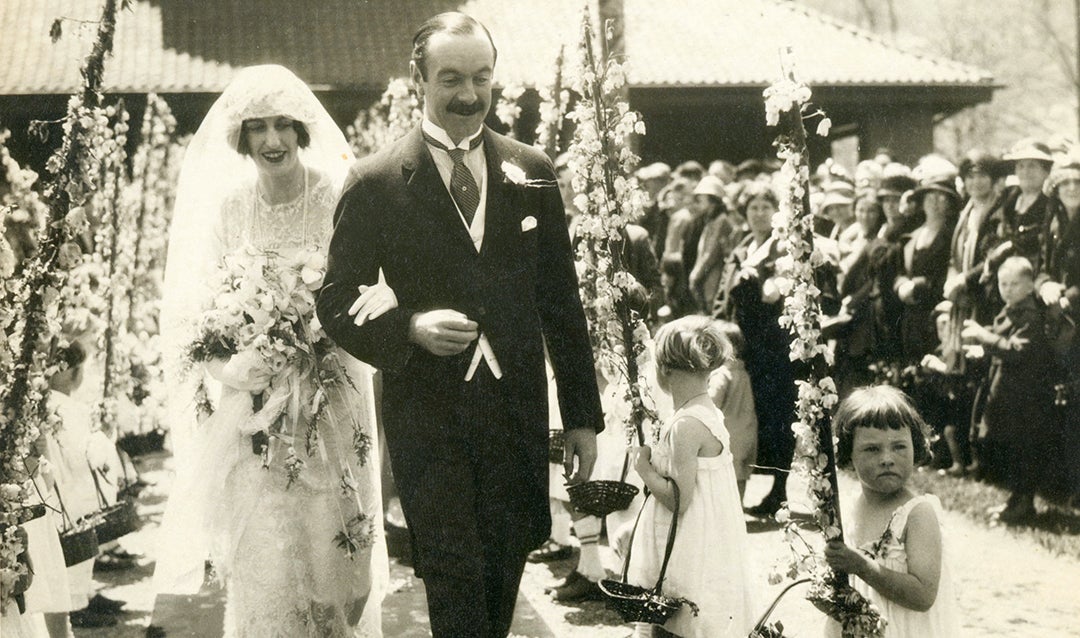
Her English husband shook hands with a proud smile.
But, at last, it was over and the setting sun shone rosily over the young couple as they started on their honeymoon.

The Presence of a President

Biltmore has had the privilege to welcome many notable people through this grand Entrance Hall, but the presence of a president has always been a rare honor.  In recognition of Presidents’ Day, we are remembering those special guests.

President George Washington could not have visited Biltmore in person, but we were honored to serve as a temporary home for his well-known portrait.  The painting was stored here by the National Gallery of Art during World War II.  The unfinished Music Room on the first floor of Biltmore House was refitted with a steel door, bars on the windows, and other protective measures outlined by the gallery staff. On January 8, 1942, 62 paintings (including the portrait of George Washington) and 17 sculptures arrived in Asheville under heavy guard.

The iconic portrait was painted by Gilbert Stuart, an 18th century America’s master portrait artist. In his five-decade career, he produced well over 1100 pictures. Of these portraits, nearly one-tenth are images of George Washington, to whom he was introduced by their mutual friend Chief Justice John Jay. It is interesting to note that each of Stuart’s portraits of Washington, about 100 in all, is based on one of three life portraits of the president.  Happy Birthday Mr. President.

President William McKinley, Jr. visited Biltmore Estate on June 14, 1897.  George Vanderbilt was in Europe at the time and Estate Superintendent Charles McNamee was in London, so Butler Walter Harvey gave President McKinley and his entourage a tour of Biltmore House.

President Theodore Roosevelt visited Biltmore Estate on September 9, 1902.  President Roosevelt met Dr. Carl Schenck, the German forester Mr. Vanderbilt had hired to oversee the Biltmore forestry operation.  He also took a drive across the estate, toured the gardens, and toured the Main Dairy Barn where our Winery is now located.

President Jimmy Carter attended a fundraising dinner on September 22, 1978 at the Deerpark pavilion on Biltmore Estate and spoke to a crowd of approximately 300 guests.

Presidential candidate Ronald Reagan visited Biltmore in early May 1980 as part of a multi-city visit to North Carolina.  Rick King, former vice president of Biltmore House, gave Reagan and his wife Nancy a tour of the home.  Reagan went on to win the presidential election in November 1980.

President and Mrs. Barack Obama visited on April 24, 2010 while on a trip to Asheville and were greeted by the Cecil family for a tour of Biltmore House.

A Vanderbilt Christmas

Biltmore’s archives are full of letters and documents detailing the lives of George and Edith Vanderbilt, their daughter, Cornelia, and many of their friends and family members who visited them at Biltmore.  Below are some of the Vanderbilts’ yuletide traditions…and even a glimpse of the food they enjoyed during the holidays.

How did our Christmas tradition begin?

Although George Vanderbilt moved into Biltmore House in October 1895, the house did not officially open to guests until Christmas Eve of that year.  Great efforts were made to ensure all (or most!) would be ready by this special day.  Mr. Vanderbilt was still a bachelor during the first Biltmore Christmas and his mother, Maria Louisa, presided as hostess. 

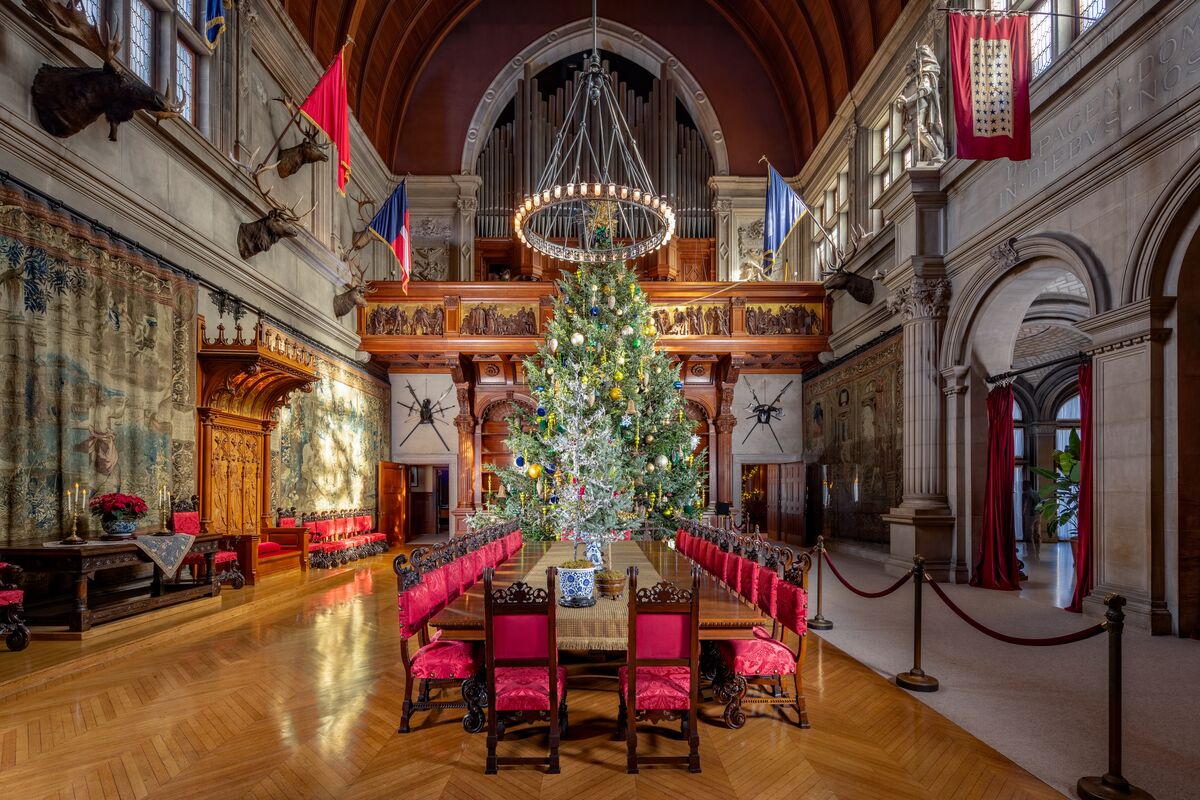
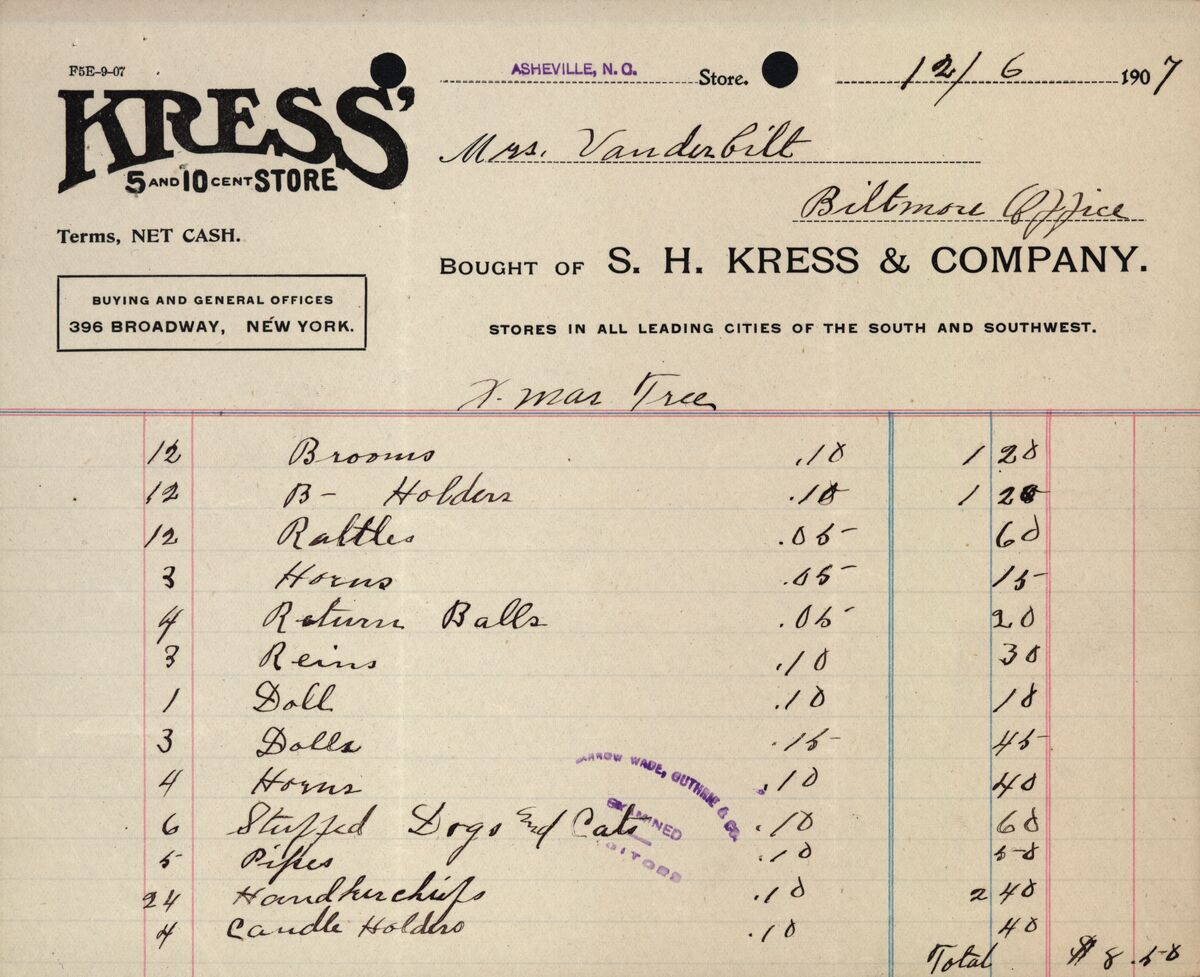
Correspondence between Mr. Vanderbilt and his staff indicates that planning was intensive and no detail was left unattended.  Managers debated which nearby county had the best holly and the most desirable mistletoe, while staff scouted for the perfect candidate for the Banquet Hall Christmas tree.

Mr. Chauncey Beadle, estate horticulturalist, writes estate manager, Mr. Charles McNamee:

“I quite agree with you that we should have a very large tree for this occasion; in fact, I think a twenty foot tree in that large Banquet Hall would be rather dwarfed.”

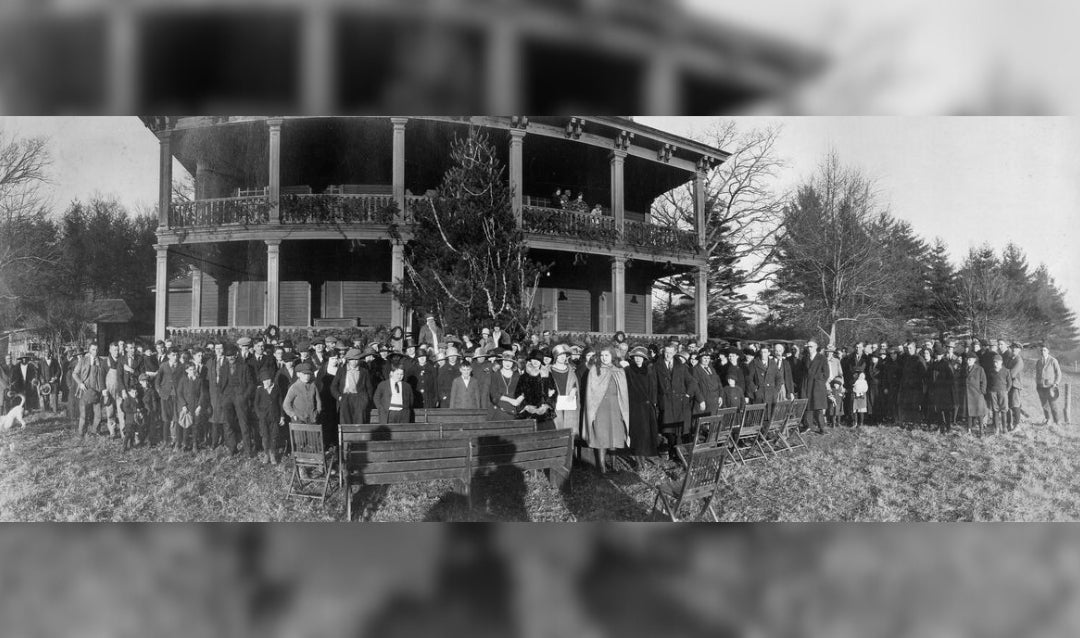
When Mr. Vanderbilt’s mother, several of his brothers and sisters and their spouses, and assorted nieces and nephews arrived, they were greeted in the Banquet Hall by a splendidly tall tree laden with gifts for estate workers.  At the foot of the tree was a table piled high with family gifts.  Because of this, the Banquet Hall has always been the focal point for Christmas celebrations in Biltmore House.  

A Family Gathering

The family and guests gathered around the 40-foot Banquet Hall table for elaborate dinners served both evenings.  Mr. Vanderbilt’s niece Gertrude kept a series of Dinner Books in which she recorded the seating arrangements of all of the parties and dinners she attended as a young woman, and she was one of the guests at the first Christmas dinner in Biltmore House. Gertrude kept two Dinner Books in 1895, and the Christmas meal at Biltmore House was the 193rd formal dinner that she attended that year.  In her diagram of the dinner, she listed 27 Vanderbilt family members.  It was said to be the largest gathering of the family since the death of William Henry Vanderbilt, George’s father, in 1885.

In addition to the grand meals and festive décor, stockings hung on mantles, plum puddings and mince pies were served, and George’s mother read “‘Twas the Night Before Christmas” to the children.  It must have been a grand time — one article even stated that the family exchanged gilded and jeweled Christmas cards!

Christmas and New Year’s meals in Biltmore House, 1904

In 1904, George and Edith Vanderbilt were raising their 4-year-old daughter, Cornelia, in Biltmore House.  The 1904 Menu Book, kept by cook Esther Anderson, contains luncheon and dinner menus for Christmas Day and New Years Day.  Surprisingly, they are not the most elaborate meals included in the book.  The 1904 Christmas Day luncheon featured a fairly light menu that began with clear broth, followed by broiled oysters.

The Christmas Day luncheon entrée consisted of venison steak (very likely from the estate deer herd), served with string beans, potatoes and cauliflower.  The salad course consisted of roast partridge and salad.  Luncheon dessert consisted of apple tart, not surprising, since estate orchards produced over twenty varieties of apples. Coffee followed dessert and served as a separated course.

Christmas dinner began with Consommé Royale, a clear chicken broth thickened with tapioca and served with a savory garnish made from bullion, egg and herbs, poached in buttered molds, floating in the broth. A fish course of broiled Spanish mackerel accompanied by cucumber salad came next. 

The main course featured roast turkey and cranberries, served with potatoes, peas and celery.  The Vanderbilts ate turkey in one form or another on average every three days.  Mrs. Doris Johnson, whose daughter-in-law, Ellen, was a Biltmore House cook at the turn of the century, recalled that turkey and dressing were Mr. Vanderbilt’s favorite of all the things Ellen cooked, and it is very likely that turkey was indeed one of Mr. Vanderbilt’s favorite foods.  A salad of Virginia ham and spinach followed. Christmas dessert consisted of plum pudding, ice cream and cake.

The New Years Eve luncheon began with fish cutlets, followed by braised rabbits and lamb chops served with potatoes, beets and stuffed tomatoes. Chicken salad followed, and dessert consisted of apple tapioca pudding, followed by coffee.  New Years Eve dinner began with either purée of chickens or consommé, followed by the fish course consisting of mousse of bass. The mousse was followed by an entrée of mushroom patties, and a relevé consisting of filets of beef with potatoes, spinach and baked macaroni. Roast partridge accompanied the salad. 

New Years Eve dessert was Fanchonette, an “old-fashioned French cake, somewhat like a pie made with rough puff pastry and a pastry cream filling baked in a slow oven. After cooling, it is piped with meringue, sprinkled with sugar and baked until brown.   Coffee followed dessert, and midnight toasts no doubt welcomed the New Year!

Behind the Scenes: Big Reveal Set For Fall

Two rooms inside the 250-room Biltmore House – the Second Floor Living Hall and the Salon – will re-open this fall after the estate’s Museum Services team restores them to their appearances as they were when George Vanderbilt opened the home in 1895.

In recent years, the Second Floor Living Hall has been used as an exhibition space; prior to that, it was interpreted as a sitting area. An early 1950s photo offered a glimpse of the original furnishings of this space—gilded sconces, paintings and a suite of oversized Baroque furniture placed around the perimeter of the room. Additional research led curators to determine that the room’s primary function was intended as a picture gallery and formal hallway.

“We’re constantly striving to interpret the house authentically as it appeared during the Vanderbilts’ time,” said Darren Poupore, Chief Curator.

Bringing the room back to its original state includes conserving all the furnishings, recreating elaborate window treatments and making structural changes.

“We discovered that the original upholstery was a gauffraged fabric—a rich wool velvet with a pattern pressed into it—in a striking gold color,” said Poupore. “We had it reproduced in France by Prelle, the same company that made many of our historic fabrics for the Louis XV Suite project.”

Green velvet draperies will adorn windows featuring exact reproductions of four pelmets (or valances). For two years, local textile artist Heather Allen Swarttouw painstakingly embroidered and appliquéd each pelmet to match the originals.

As appropriate for such a prominent space, several notable paintings are being returned to their original locations. John Singer Sargent’s portraits of Richard Morris Hunt and Frederick Law Olmsted and Anders Zorn’s painting “The Waltz,” which have been hanging temporarily in the Salon, will once again hang where George Vanderbilt intended. The restored room will be completed and re-opened September 1st, 2013.

Relocating the paintings from the Salon has led to its reinterpretation, centered on the fact that the Salon was one of the few first floor rooms not completed during Vanderbilt’s lifetime.

“Draperies were placed in the archways to prevent the Vanderbilts’ guests from seeing inside the room,” Poupore said. “It had bare brick walls, a rough subfloor and a structural tiled ceiling without its finished treatment. In the 1920s, Edith Vanderbilt turned it into a Turkish sitting room, but in 1930 everything except the 1920s ceiling treatment was removed and it became a space to display special objects.”

Curators decided to tell the story of how the room has changed through the years. Removal of a wall revealed an original firebox and brick walls. A section of the fabric ceiling treatment is being removed to show the terra cotta tiled ceiling above. Information panels will explain the new interpretation of the room when it re-opens October 1st, 2013.

Learn more about the Biltmore house.

Finding Summer Beauty in the Italian Garden

If you’re visiting Biltmore soon, make a beeline for the Italian Garden. Located adjacent to Biltmore House, this formal garden is in its prime late summer.

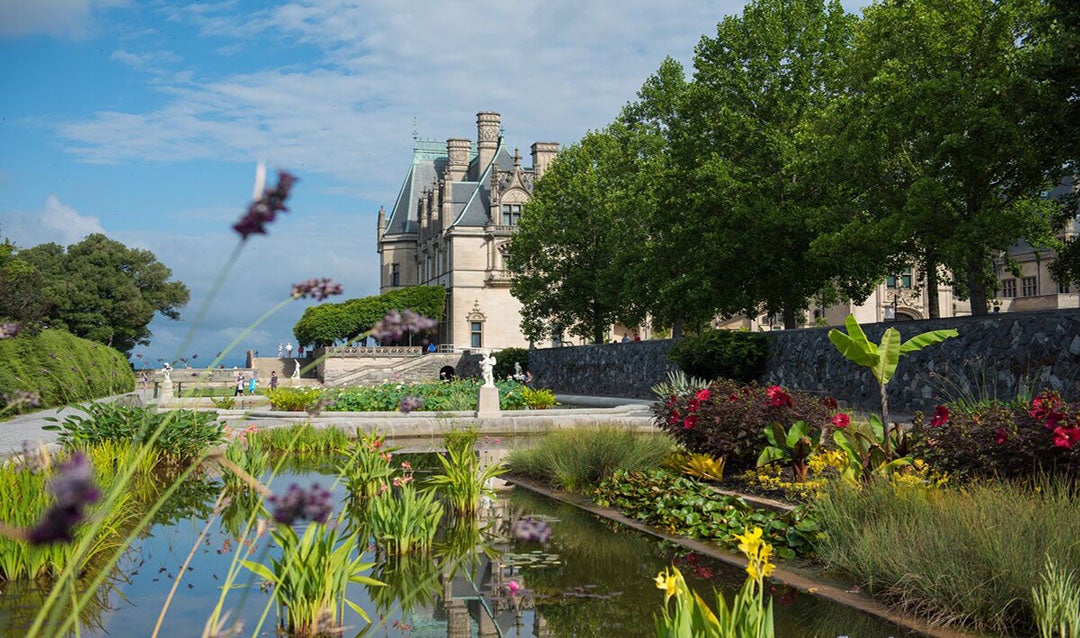
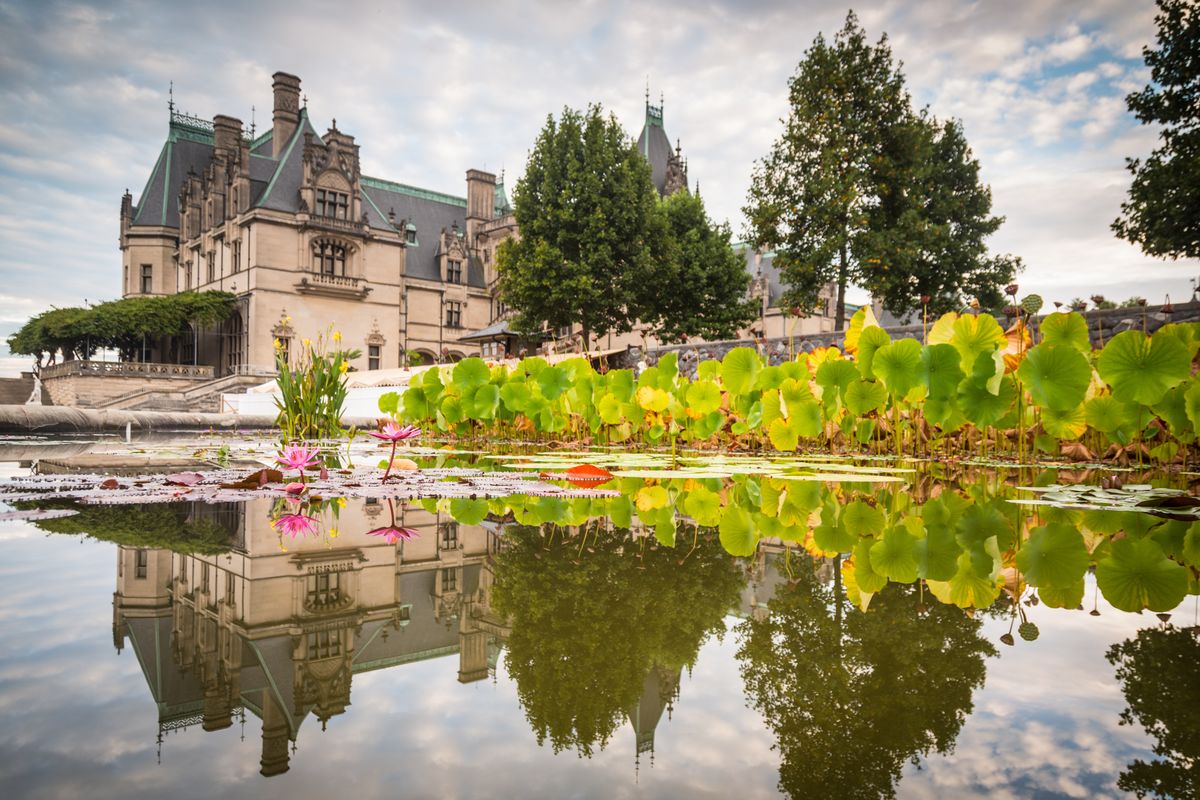
View of the Italian Garden and Biltmore House
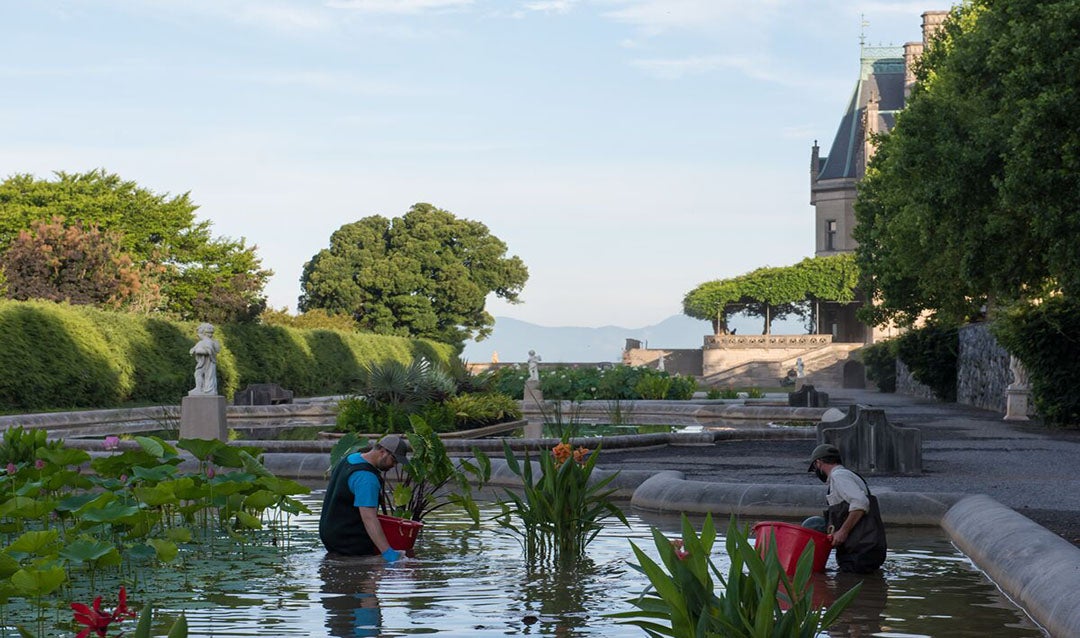
Filled with numerous varieties of exotic water lilies, tropical bananas, papyrus, and koi fish, the Italian Garden is a sight to behold.

Magical Lilies

Biltmore gardeners Chuck Cissell and Steven Ayers have been hard at work all year ensuring all the elements are in place for spectacular summer blooms. The Italian Garden gets better every year. This year, it is over the top again and this is probably the best year yet for seeing our water lilies.

All three pools feature different water lilies including hardy and tropical varieties. We’re especially fond of our tropical water lilies that open up in the evening and bloom until mid-morning. If you’re an early morning guest or an overnight guest, sneak down to the Italian Garden to enjoy this unique display.

Water lilies in the pools of Biltmore's Italian Garden
Many guests don’t realize that lily blooms only last for three days. Many refer to the bloom process as being “sort of magical.”

The blooms from the tropical lilies sit above the water and feature bright white, pink, red and even blue blossoms. It’s a marvelous sight to see and just another amazing example of nature’s beauty.

If you miss the tropical night blooms, don’t worry. We have planted different varieties, so guests visiting during the day can still enjoy flowers from day blooming tropical and hardy lilies as well. Look for the blooms through the first cold snap, which can be as early as September or as late as October.

Full view of flowers blooming at the Italian Garden Pools at Biltmore
The Italian Garden closely resembles the original blueprint by Olmsted, with the only main difference being the center bed display.

Blooming Blueprint

While the lilies are the one the highlights of the Italian Garden, the pools include an array of other plants. Lotus, Victoria water platters, canna lilies, papyrus, water snowflakes, and purple leaf rice are all in bloom right now.

Perhaps one of the most rewarding aspects of visiting the Italian Garden is the fact that the design intent has remained unchanged since Vanderbilt’s time. Two of the pools have been refurbished, and the Hemlock hedges have recently been replaced with American Holly hedges to stay true to Olmsted’s vision for the garden. The plants used pay homage to gardening notes and plant orders found in estate archives. We don’t do anything different in the Italian Garden than what they did back in George Vanderbilt’s day.

Bring Home the Beauty of the Italian Garden

Water Gardening is easier than you think. Below are some quick tips for creating a backyard water garden:

  • Select a sturdy, large ceramic container that can hold water.
  • Find a location that receives at least eight hours of sunlight, and use pavers or bricks to form a level base for the container.
  • Start with a fool-proof water plant such as tropical water lilies.
  • Plant the water lily in a small plastic container filled with topsoil and plunge the pot into the larger container filled with water. Cover the soil with pebbles or sand to prevent muddy water.
  • The top of the lily’s pot should be eight inches below the surface of the water. If necessary, add bricks or blocks to form a base within the water container. Finish off the water garden by adding water lettuce or other floating plants.
  • Maintain your water garden by cutting spent blooms on the lily and pushing a fertilizer tablet into the lily’s soil every few weeks.

Learn more about our gardens and grounds.

Grilled Summer Vegetable & Goat Cheese Pizzetas

Nothing says summer like the fresh, grilled vegetables of the season. Drizzle with a delicious vinaigrette and bake atop a homemade pizza crust and you’ve got an amazing appetizer or light lunch. For the perfect finish, serve with a glass of crisp and refreshing Biltmore Sauvignon Blanc.

Serves 4-5
 

Pizzeta Dough Ingredients

  • 2 3/4 cups all-purpose flour
  • 1 tablespoon sugar
  • 2–3 garlic cloves, minced
  • 1 teaspoon dried basil
  • 1 teaspoon dried rosemary
  • 1 teaspoon dried tarragon
  • 2 tablespoons olive oil
  • 1/4 cup vegetable oil
  • 1/2 teaspoon salt
  • 1 tablespoon quick-rising dry yeast
  • 1 cup warm water

Pizzeta Topping Ingredients

  • 2 heirloom tomatoes
  • 1 red onion
  • 1 small zucchini
  • 1 small yellow squash
  • 2 portabella mushrooms
  • Salt and pepper to taste
  • Herb vinaigrette salad dressing
  • 1/2 cup crumbled goat cheese
  • 12 basil leaves, thinly sliced

Preparation Instructions

Dough: Combine flour, sugar, garlic, basil, rosemary, tarragon, olive, oil, vegetable oil, and salt in a mixing bowl; mix with a dough hook. Add the yeast and mix at low speed. Add ½ cup of the water gradually, mixing constantly. Add the remaining water gradually, mixing constantly until the dough pulls away from the side of the bowl. Mix at low-to-medium speed for 3–4 more minutes. Remove to an oiled bowl, turning to coat the surface. Let dough rise, covered with a clean towel, until doubled in bulk. Punch down the dough and let rise again until doubled in bulk. Punch down to remove air bubbles and divide into 4–5 equal portions. Preheat a grill for 10–15 minutes until hot. Place each portion of Pizzeta Dough on an inverted cake pan or baking pan and press gently into a circle. Invert the pans on the grill so that the dough circles rest on the grill. Grill for 1–2 minutes or until the dough is set. Remove the pans and turn the crusts over. Grill until the other side is marked. Remove from the grill.

Pizzetas: Cut the tomatoes, onion, zucchini, yellow squash, and mushrooms into chunks. Combine with the salt, pepper and dressing in a bowl. Toss to coat evenly. Drizzle vegetables with salad dressing and toss to coat evenly. Grill the vegetables until tender-crisp.  Chop into bite-sized pieces and sprinkle over the pizzetta crusts. Sprinkle the goat cheese over the vegetables. Preheat the oven to 400 degrees. Bake pizzetas until the cheese melts and the crusts are crisp. Sprinkle with chopped basil. Cut into wedges to serve.

Tip

Pizzetas are simply small/individual-style grilled pizzas. Try any combination of toppings and sauces that you enjoy!