Sip, Savor, and Share on Scholar’s Walk

More than three decades after opening, the timing was right to refresh Biltmore’s Winery, creating more spacious tasting rooms and a new wine bar in the area known as Scholar’s Walk.

Modern renovation

Biltmore Wine Bar at Scholars Walk

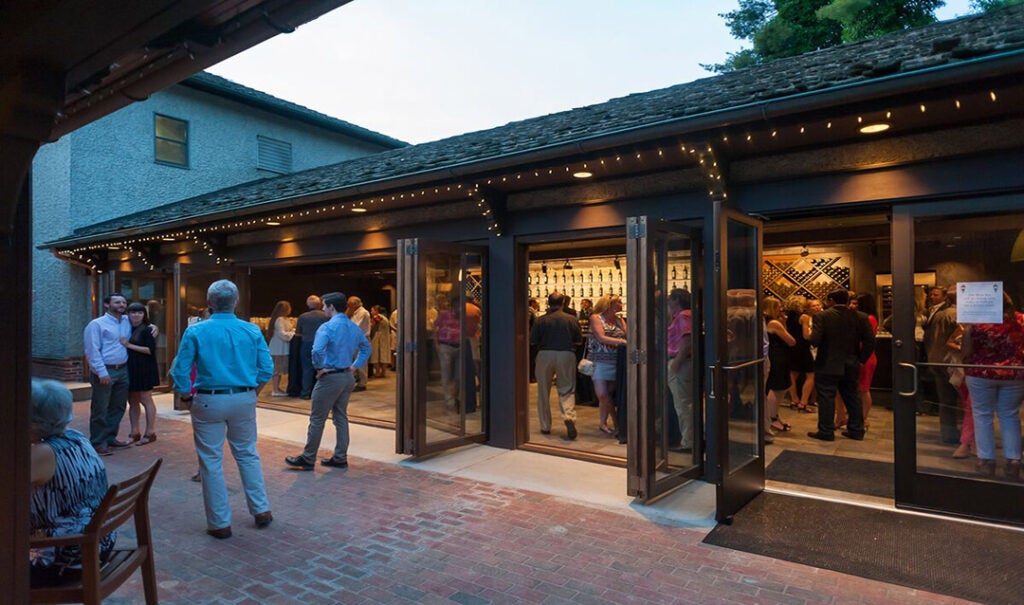
The first phase of the project was completed in April 2016. Plenty of wine enthusiasts were on hand for the special preview event and they added their names and their comments to pieces of lumber that would be used in the next stages of renovation. Our winemakers and hosts were overwhelmed by all the warm wishes that were incorporated into the construction and will now remain a permanent part of the Winery. The final phases of the project will be finished in Spring 2017, with a new space for specialty wine tasting experiences located where the original wine bar was, plus a new wine bar on Scholar’s Walk by the iconic clock tower.

History of Scholar’s Walk

“Scholar’s Walk has an interesting history,” said Heather Jordan, Director of Wine Marketing. “When the Winery was first opened, few people knew as much about wine production as they do today. We wanted to help guests understand what we were doing, so we created Scholar’s Walk as a way to tell our wine story.”

With a mix of photography, videos, informational panels, and a timeline mural, Scholar’s Walk engaged guests and helped them learn about our vineyards and our commitment to handcrafting fine wines.

Ann Ashley, Vice President of Talent and Organizational Development, was a member of the team that opened the Winery in 1985, and she remembers helping develop the educational aspects of Scholar’s Walk.

“We had some wonderful displays,” says Ann Ashley, “including a light-up map of our vineyard and audio recordings that explained our winemaking philosophy. It was state-of-the-art technology for the 80s!”

Learning more

Biltmore Wine Bar at Scholars Walk

Today’s guests can enjoy learning more about the history of Biltmore Wines by exploring the timeline on display at the Winery entrance in Antler Hill Village and the archival photographs and informational panels in the tunnel beyond it—none of which was open to the public when the Winery first opened. We’ve also added more storytelling and behind-the-scenes views in our specialty tours and tastings.

New wine bar

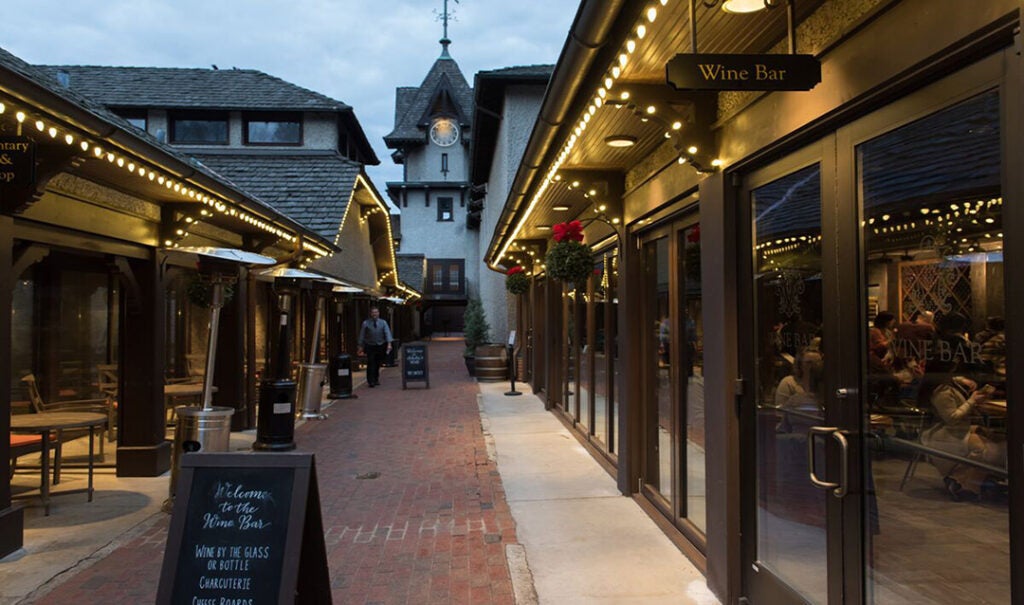
Now that our expanded tastings, tours, and specialty wine experiences have eliminated the need for Scholar’s Walk as an educational tool, we’re ready to convert this elegant brick, beam, and stucco space into a modern wine bar featuring outdoor seating with a view of the iconic clock tower atop the Winery.

“We intend it to be a very relaxing spot,” Heather said, “more like a lounge, where you can linger to enjoy Biltmore wines with friends. We will have a full selection of wines, and there are visually stunning details such as the bar itself, made from a tree that was original to the property.”

Character Arc in a Costume: Isabel Archer’s Evening Gown

Please enjoy this archived content.

Our new exhibition, Designed for Drama: Fashion from the Classics, brings together the artistry of great literary works, film making, and costume design. In honor of its premiere, let’s take a closer look at one of the Academy Award®-nominated gowns showcased in America’s Largest Home® and the narrative that inspired it.

Designed for Drama Biltmore Dress from Portrait of a Lady

Written by Henry James in 1881, The Portrait of a Lady is the story of Isabel Archer: a spirited young woman who inherits a fortune and then falls into an unfortunate relationship. In the 1996 film adaptation of the same name, costume designer Janet Patterson, known for her sumptuous 19th century creations, illustrates the character’s struggles through her Victorian period dress.

Patterson conveys Isabel, played by Nicole Kidman, and her character arc through many evocative outfits—from her charming light blue striped suit and cheerful straw hat worn in the beginning of the film to her more somber, sophisticated suit of deep red damask worn later—but the black and gold sequined evening gown she wears toward the end of the film is particularly expressive. The two-piece costume is made of patterned mesh fabrics over lamé (fabric with interwoven metallic threads) and silk and is elaborately trimmed with beads, sequins, and metal thread embroidery.

The low, wide neck of the gown and its very short cap sleeves are both lined with a band of heavily beaded black net over gold. Beneath is a long-line fitted bodice of diagonally patterned gold net over diagonally gold-embroidered lamé. The complexity of the bodice may reflect the complexity of Isabel’s life at this point, a time when she must make increasingly difficult and emotionally moving choices.

Designed for Drama Biltmore Dress from Portrait of a Lady

Beneath the bodice, the gown’s skirt of vertically striped black net over gold lamé falls straight to the ground with beaded appliqué flowers lining the hem. Underlayers of pleated black silk peek out from the edges.

And, of course, the most dramatic element of Isabel Archer’s evening gown: the train. Made of black silk overlaid with layers of gold net, the purposefully long train trails behind the dress, ending with square edges decorated with gold floral embroidery and sequins. In her journey from a spunky and independent woman to a miserably repressed wife, the repeated shots of Isabel’s long, intricate trains dragging as she walks throughout the film seem to demonstrate all that has held her back.

This exquisite evening gown is just one of 10 costumes on display in Biltmore House designed by four-time Oscar® nominee Janet Patterson. In addition to other designs from The Portrait of a Lady, multiple costumes from Far From the Madding Crowd (2015) will be highlighted as well. Join us for Designed for Drama and discover how the artistry of costume design helps bring classic literary characters to life.

Olmsted’s Deliberate Approach

The three-mile Approach Road that meanders from Biltmore Village up to Biltmore House is not there by accident—it’s the result of a very intentional and complex design by Frederick Law Olmsted, Biltmore’s landscape designer.

Everything by design

In Olmsted’s own words, “…the most striking and pleasing impression of the Estate will be obtained if an approach can be made that shall have throughout a natural and comparatively wild and secluded character; its borders rich with varied forms of vegetation, with incidents growing of the vicinity of springs and streams and the remote depths of a natural forest.”

The road is a perfect blending of forest and landscape with no hard edges to separate the two. The lack of long-range views is intentional.

“The Approach Road is the first important garden and landscape feature you see on the estate,” said Parker Andes, Director of Horticulture. “It gives you a true feel for Olmsted’s skill.”

approach road during spring
Mountain laurel blooms along approach road

“Along the brook and on the edge of the drive, Olmsted planted low-growing plants. For variety of color in the winter, he used hardy olives, evergreens with an olive tint, junipers, red cedars, and yews,” explained Parker. “All of these created the complexity of light and shadow that define a picturesque style.”

Archival photo of digging crew of Approach Road
George Vanderbilt (front row, far right, in a light-colored hat) and Frederick Law Olmsted (to Vanderbilt’s right) with the crew that dug the Approach Road

Changes through time

Over time, all of Biltmore’s landscapes have matured and changed in appearance. The challenge for today’s landscaping team lies in determining Olmsted’s original intent for the approach road, and they use archival resources such as early plans, letters of correspondence written during the construction of the estate, and information about Olmsted’s design philosophies to help them stay true to the original vision.

Sometimes, variations from the approach road plan are necessary. For example, Olmsted planted some exotic plants that were not invasive at that time, including Oriental bittersweet, mahonia, and barberry. We’ve replaced those with others plants that offer similar characteristics and looks. We also now know that certain plants will not thrive where originally planted, so we select others that are able to do well in those original locations. “It’s a continual learning process, and each year I discover something new,” said Parker.

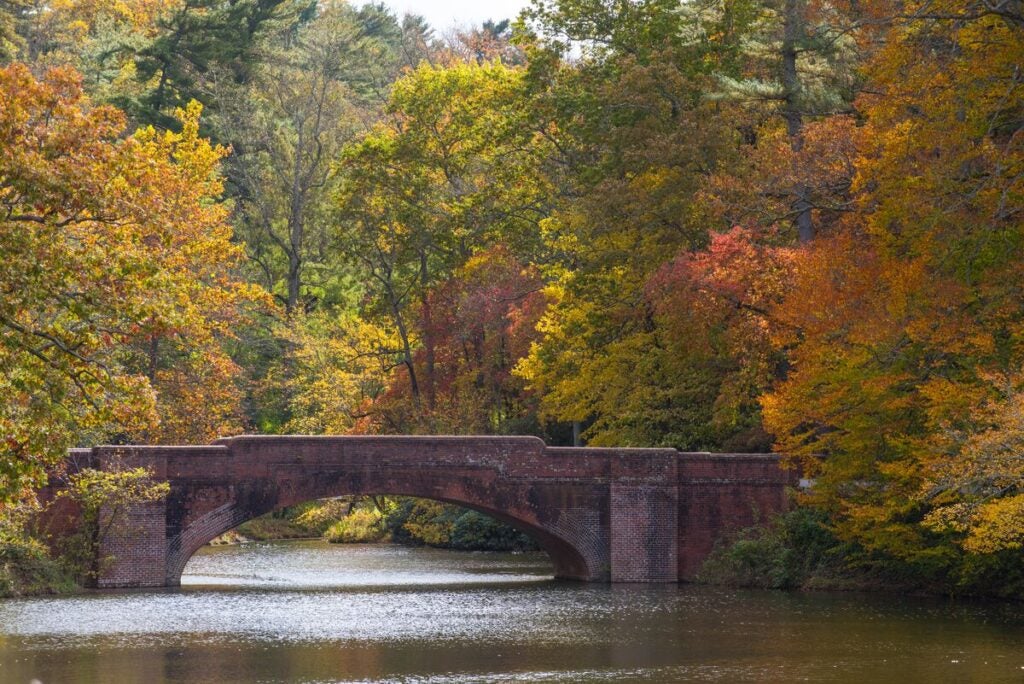
Fall on the Approach Road at Biltmore
Leaf peeping on the Approach Road during fall is a favorite past time for visitors.

Literary Guests of Biltmore House

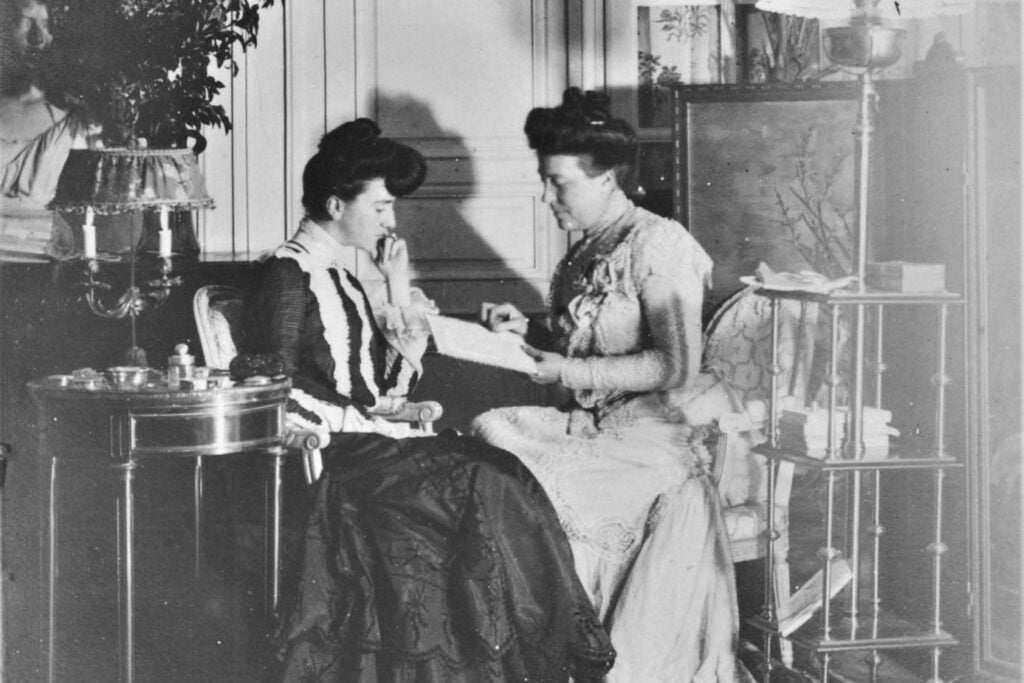
While we aren’t sure exactly when they met, George Vanderbilt and author Edith Wharton likely knew each other most of their lives. Both were born into New York society in 1862 and both moved in the same social circles.

Thanks to the Biltmore House guest book, we know that Wharton visited the estate at least twice: once in November 1902 and again around Christmas 1905.

On December 26, 1905, she wrote from Biltmore to her friend Sara Norton, describing the Vanderbilts’ gracious hospitality:

“Yesterday we had a big Xmas fete for the 350 people on the estate – a tree 30 ft. high, Punch & Judy, conjuror, presents & “refreshments.” It would have interested you, it was done so well & sympathetically, each person’s wants being thought of, from mother to last baby.”

From The Letters of Edith Wharton

During this visit, she signed a copy of her recently completed novel, The House of Mirth:

“To George Vanderbilt from Edith Wharton, Biltmore House, Christmas 1905.”

The House of Mirth later became entry #2,163 in George’s “Books I Have Read” journal series.

In the Biltmore archives, there are a handful of letters from Wharton to George. While many of the letters discuss Wharton subletting the Vanderbilts’ apartment on the Left Bank in Paris from 1907 to 1910, one of them stands out from the rest.

On March 25, 1913, Wharton wrote George regarding a 70th birthday gift for Henry James, author of The Portrait of a Lady. She was sending word of a circular and a collection of money for James to purchase whatever gift he wanted.

But a gift was never purchased. James found out about the collection prematurely and refused it.

Coincidentally, James, who was also a friend of George Vanderbilt’s, stayed at Biltmore—in the winter of 1905, around the same time as Wharton.

George Vanderbilt: One of the Best Read Men in the Country

While other members of the Vanderbilt family were recognized for their lavish parties or successes in the stock market, when it came to George Vanderbilt, the press instead focused on his love of learning and, more specifically, his preoccupation with reading.

A turn-of-the-century New York journalist wrote of the youngest Vanderbilt:

“He was a bookworm, a student… And his love of books came all from his own inner consciousness, for he was not graduated from any college, and his education, while not neglected, had not been carried beyond the ordinary limits of high schools, though now, I doubt not, he is one of the best read men in the country.”

Let’s take a look at a few items in the Biltmore House collection that speak to George Vanderbilt’s passions for reading and books.

Birthday Gift from Mama

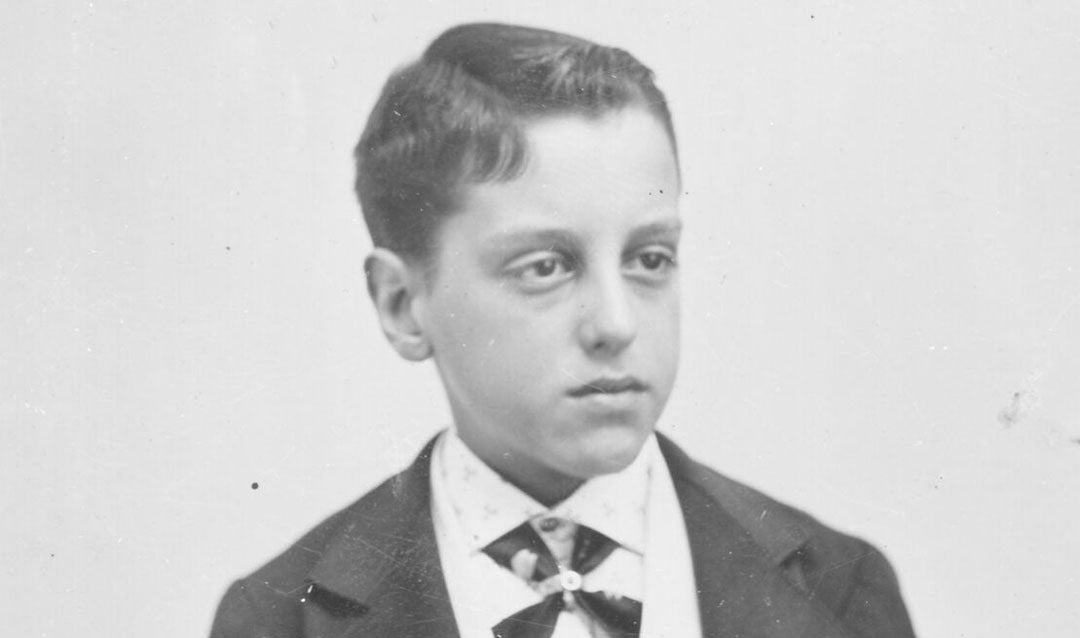
For George Vanderbilt’s ninth birthday, his mother, Maria Louisa Vanderbilt, gave him three volumes from Reverend Elijah Kellogg, Jr.’s Elm Island Series and within each, she inscribed “George from Mama Nov. 14th 1871.” 

Thanks to this special gift set, we gleam that George was interested in reading at a young age.

Portrait by John Singer Sargent

As his interest turned to passion with age, George’s love of books became more prominent.

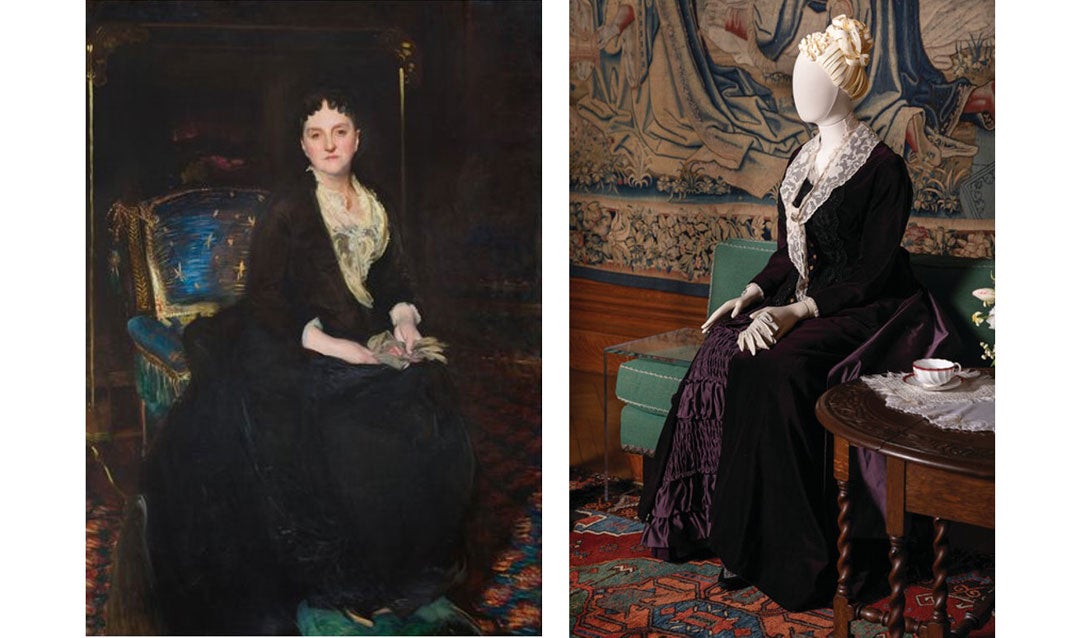
One example of this is his 1890 portrait by John Singer Sargent, one of the most celebrated society portraitists of his time. In it, George holds a book in his right hand.

The portrait hangs in the Tapestry Gallery, above the door leading into the Library.

Bust by Mary Grant

Another example of the prominence of this passion is a bust of George by Scottish artist Mary Grant.

Appropriately displayed in the Library, the bronze sculpture shows George Vanderbilt with his left elbow and right hand resting on a stack of two volumes.

This bust is one of four by Grant in the Biltmore House collection.

Biltmore House Bookplate

Designed by George Vanderbilt himself and engraved by Edwin Davis French, the Biltmore House bookplate is found in nearly all of the books in the Library.

The oil lamp motif featured in the center symbolizes the eternal quest for knowledge and enlightenment.

The surrounding Latin inscription, “Quaero Ex Libris Biltmoris,” may be translated, “Inquire in the books of Biltmore.”

“Books I Have Read”

Finally, the most definitive testament to George’s love of reading in the Biltmore House collection: his journal series titled “Books I Have Read.”

George began logging works and authors at the age of 12 and continued the habit until his death in 1914. 

He ultimately logged 3,159 books, which means he read an average of 81 books each year, or about a book and half per week.

The last entry was the third volume of Henry Adams’ History of the United States.

We invite you to join us as we celebrate George Vanderbilt’s love of reading with more than 40 award-winning movie costumes on display throughout America’s Largest Home®, accompanied by the original books in his 22,000-volume personal collection that inspired the films. 

Feature image: One of George Vanderbilt’s “Books I Have Read” journals opened to the 1,817th entry: Richard Carvel by Winston Churchill. Right above it is George’s note about daughter Cornelia’s birth on August 22, 1900.

On the Archivist’s Desk: A Century’s Worth of Records

Biltmore archivist Jill Hawkins is responsible for cataloging, managing, and preserving Biltmore’s historic records. With more than a century’s worth of manuscripts, books, photographs, drawings, and the like to handle, organization is paramount.

Biltmore Marketing Material

One of Jill’s projects is conducting an inventory of outdated Biltmore marketing materials, which is no small task. Some of the items have labels, helping to put the pieces together, but many do not. From hard copies of video mailing tapes to recordings of commercials from as far back as the 1970s, there are literally dozens of boxes of material to be processed.

The marketing materials include three types of records: audiovisuals, photographs, and paper documents. The audiovisual materials are the least stable of the three and must first be digitized before they can be cataloged. Jill sent the master videotape collection to be digitized first and is now preparing to send a collection of film reels to be digitized.

Chauncey Beadle’s Incoming Correspondence

Jill is also processing estate superintendent Chauncey Beadle’s incoming correspondence. Of all George Vanderbilt’s principal managers, Beadle’s archival collection is by far the largest.

Beadle said he came to Biltmore for a month and stayed for a lifetime. From his initial role as Biltmore nursery supervisor in 1890 to his final role as estate superintendent until his death in 1950, there is an enormous amount of correspondence to be processed. From files and files tightly pressed…

…in boxes and boxes…

…which fill shelves upon shelves.

Accessions: Biltmore Dairy Farms

Cataloging new accessions is an ongoing project for Jill. Accessions are documents and objects acquired through either donation or purchase to be added to Biltmore’s archival collections. Most recently, she received some items from the days of the Biltmore Dairy.

Perhaps most notable is a “Time Book,” providing a record of names, hours, and wages of dairy workers from January 1908 through October 1909.

Another fascinating new accession is a coupon book, likely from around the same time.

With such a massive and ever-growing amount of material to manage, Jill certainly has her work cut out for her—but she assures us that it is a labor of love.

Planning a Christmas at Biltmore getaway for your family

It’s no secret that Christmas at Biltmore is one of the Southeast’s most storied holiday destinations. Families come from far and wide to experience seasonal festivities on the estate, inspired by century-long traditions.

But how exactly does one plan a getaway that will fill every member of the family—from the grandparents to the youngest child—with Christmas joy, without losing that personal sense of Yuletide peace? We’ve got a few suggestions!

Christmas at Biltmore Daytime Celebration Visit

Morning
The entire family can enjoy a hearty breakfast at Village Social in Antler Hill Village for the perfect start to a day of exploration. Then head over to Biltmore House & Gardens for a Christmas at Biltmore Daytime Celebration self-guided visit and be dazzled by America’s Largest Home® decorated for the holiday season.

Floral displays on the Breakfast Room table
Decor including lush floral displays and topiaries top the Breakfast Room table during Christmas at Biltmore.

Worried that the youngest may be too antsy during the two-hour stroll? Bring Cedric’s Sniff-and-Seek Treasure Hunt to keep them occupied or make a game of our Christmas décor: count the Christmas trees, find the largest and the smallest among them, or the first family member to spot a kissing ball wins!

Afterwards, everyone can enjoy the Rooftop Tour, though youngsters may need to be carried as no strollers are allowed. But have no fear—it is surely worth it! As the leaves have dropped, this tour offers unparalleled views of the Blue Ridge Mountain vistas that made George Vanderbilt fall in love with the area.

Afternoon
After the visit to Biltmore House, Mom and Grandma can enjoy a light lunch at The Bake Shop before heading to our century-old gardens to enjoy seasonal shopping at A Gardener’s Place. Afterwards, the ladies can treat themselves to a peaceful stroll through the glass-roofed Conservatory, filled with seasonal poinsettias along with thousands of exotic plants that bring a touch of the tropics to Appalachia.

Tree-shaped tower of poinsettias in Biltmore's Conservatory
A tree-shaped tower of poinsettias in Biltmore’s Conservatory.

All the while, Dad and Grandpa can head down to Antler Hill Village with the kids, where they can experience the timeless tradition of visiting with Santa. There’s plenty to do in the area to keep them busy—from the kids getting their energy out at Pisgah Playground or learning about friendly animals at the Farmyard to handicrafts and craft demonstrations at the Barn that will fascinate grown men and children alike.  

Santa Claus talks to a mother and daughter with lighted trees in the background.
Visit Santa in Antler Hill Village on weekends before Christmas!

Evening
Mom and Dad can enjoy a romantic evening in Antler Hill Village with an intimate stroll through the Winery portal–lined with thousands of beautiful lights–followed by a quiet dinner for two at Bistro.

While Mom and Dad get a kid-free evening, Grandma and Grandpa get a special evening with the grandkids: dinner at the more casual Stable Café and a visit to Toymaker’s shop where the kids can pick out their own old-fashioned toy or game.

Old-fashioned marble game and other toys on display.
Toymaker’s in the Stable Shops next to Biltmore House offers fun options for all ages.

Candlelight Christmas Evenings visit

Morning
You’ve got an exciting day ahead of you–let everyone choose their favorite easy breakfast options at The Kitchen Café in Village Hotel before you jump into your plans.

Afternoon
Have the ladies and gents go their separate ways for the afternoon. Grandma, Mom, and the girls can treat themselves to special seasonal offerings at The Spa at The Inn. After the pampering, enjoy a light lunch with a breathtaking view of the estate at the Library Lounge at The Inn. 

Grandpa, Dad, and the boys can spend this time exploring our 8,000-acre backyard. Get any gear needed for the day’s adventure at Antler Hill Outfitters, then grab a quick bite at Smokehouse Food Truck in Village Hotel before heading to the Outdoor Adventure Center. Choose to spend the day learning the techniques of shooting clay targets with a high-quality shotguns in a Sporting Clays Lesson or enjoy hiking and biking around the estate’s beautiful trails.

Enchanted view of evening Biltmore House illumination
Candlelight Christmas Evenings offers the opportunity to experience Biltmore House aglow with holiday spirit.

Evening
Regroup with the entire family in the evening for a delicious dinner of pub and robustly-flavored American and global cuisine at Cedric’s® Tavern. Named after the Vanderbilts’ beloved Saint Bernard, the restaurant has a statue of the dog with young Cornelia Vanderbilt near its entrance—a photo op everyone will love.

Then head over to Biltmore House for a Candlelight Christmas Evenings self-guided visit, where firelight, candlelight, and thousands of miniature lights reflect countless ornaments adorning Christmas trees, mantels, wreaths, and garlands in America’s largest home.

If the kids get restless or stir-crazy, the Winter Garden offers mesmerizing choir performances featuring traditional carols.

Smiling family in winter clothes looks at lighted outdoor Christmas tree
Enjoy the illumination of Antler Hill Village during Christmas at Biltmore.

Travelling with the entire family can be tricky—especially during the holiday season—but it doesn’t have to be. With such a vast array of happenings and activities, Christmas at Biltmore is a family getaway that truly offers something for everyone. Join us for an experience that everyone is sure to remember for many Christmases to come.

Biltmore becomes a “Port authority”

With Ventágeo Red Dessert Wine, Biltmore first became a “port authority” in 2016. Learn more about the process, including the origin of Port wines.

The origin of Port wines

Glass of red wine over an antique map of Portugal.
Port wines originated in Portugal, and the name reflects the protected designation of origin.

As the name suggests, Porto or Port originated in Portugal—a country with a long grape-growing and wine-producing history. Port is a type of fortified wine, similar in some respects to sherry, Madeira, Marsala, or vermouth.

While most fortified wines are created by adding some type of distilled spirit (such as brandy) after fermentation, distilled spirit is added to Port wines during fermentation, which effectively kills the actively fermenting yeast. Without yeast to consume it, residual sugar levels in the wine remain high, providing Port with its characteristically sweet flavor.

As with Champagnes and wines of other protected designations of origin, Port can only be labeled such if it originates in the Douro River region of Portugal.

Biltmore becomes a “Port authority”

Red wine poured into a glass in front of a barrel with an image of Biltmore House.
Creating a port-style red dessert wine was a lengthy process, but the results are delicious!

In 2016, when our winemakers first began the lengthy process of crafting this style of wine at Biltmore, they knew it would have to be labeled “dessert-style,” which is the legal wording for Ports that are not from the Douro region.

They carefully selected varietals from some of the same West Coast vineyard partners who also supply outstanding fruit for many Biltmore wines.

“Although this new port-type wine could not be labeled Port,” said Sharon Fenchak, Executive Winemaker, “it is handcrafted here at Biltmore from a rich blend of red varietals that give it a similar taste profile to the the traditional Portuguese grapes that would be grown in the Douro region.”

Discover Ventágeo and other fine Biltmore wines

“With Ventágeo, we’ve created a wonderful red dessert-style wine that is barrel-aged, deepening the rich notes of nuts and caramel that you’d expect to taste in a mature port,” Sharon said.

The Ventágeo name combines elements of the Portuguese word for wind with the first letters of George Vanderbilt’s name to create a word that suggests voyage and travel.

Ventágeo honors George Vanderbilt’s journeys around the globe and the treasures—including fine wines—he carefully chose for his private estate. Intense, handcrafted flavor featuring rich layers of sun-dried stone fruit drizzled with hints of caramel and ripe berries makes Ventágeo a stunning finish for any meal or special moment.

Discover all our award-winning Biltmore wines in estate shops, online, or close to home with our Wine Finder.

A Romantic Legacy

William Amherst Vanderbilt Cecil, the younger son of Cornelia and John F. A. Cecil, was born at Biltmore in 1928. He attended schools in England and Switzerland before serving in the British Navy. After earning a bachelor’s degree from Harvard University, William worked as a banker in the international department of Chase Manhattan Bank in New York City.

It was there that he met his future wife Mary “Mimi” Lee Ryan, daughter of textile manufacturer John J. Ryan, Jr., and granddaughter of prominent New York banker, lawyer, and builder James T. Lee. Mimi received her undergraduate degree from Vassar College and her law degree from the University of Michigan. Prior to her marriage, she was an attorney with the Manhattan firm of Cadwalader, Wickersham, and Taft.

A romantic beginning

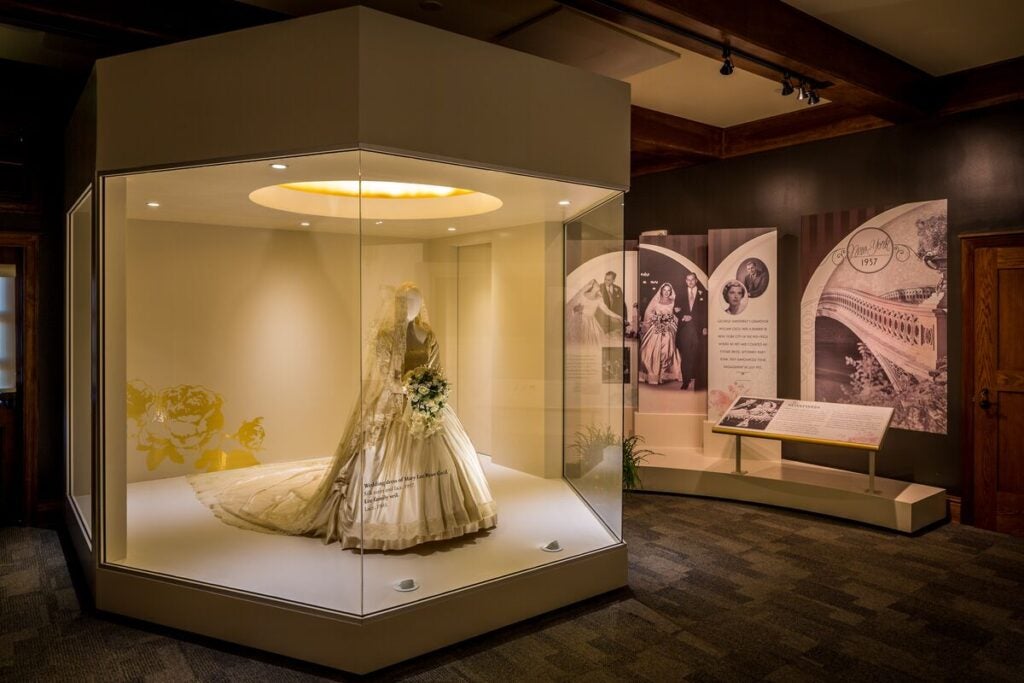
The Cecils married on October 5, 1957, at St. Vincent Ferrer’s Roman Catholic Church in New York City. The bride wore a gown of white satin with a fitted bodice and a full skirt forming a cathedral train. She carried a lush bouquet of white roses, stephanotis, and English ivy. Her veil was a family heirloom originally worn in 1903 by her maternal grandmother, Margaret Merritt Lee, and also worn by her first cousin, Jacqueline Lee Bouvier, at her 1953 wedding to future U.S. President John F. Kennedy. After the ceremony, a reception was held at the elegant River Club in the city.

In 1959, the Cecils moved to Asheville, North Carolina to manage Biltmore, the grand country estate created by Mr. Cecil’s grandfather George Vanderbilt. Their two children grew up in the family business whose mission is preserving Biltmore as a privately owned, profitable working estate. Today, William Cecil, Jr. serves as Biltmore’s CEO and Diana “Dini” Cecil Pickering is president of the Family Office.

The Biltmore Legacy

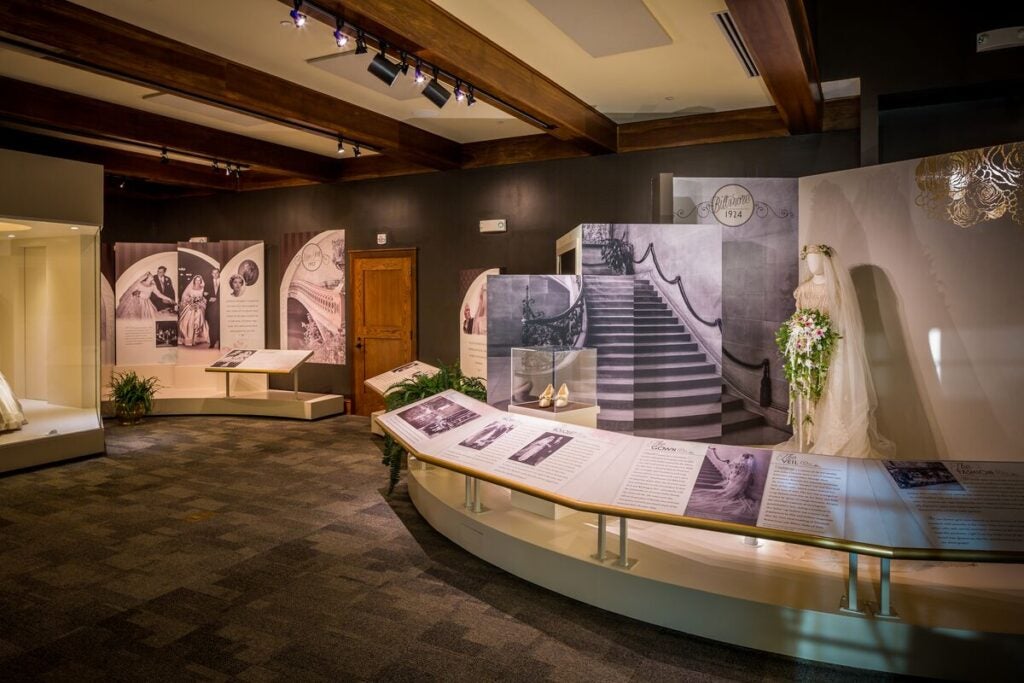
Today, estate guests have an opportunity to visit The Biltmore Legacy located in Antler Hill Village and view our Fashionable Romance exhibition featuring family wedding history and heirlooms, including Mrs. Cecil’s beautiful wedding gown, subsequently worn by her daughter-in-law Virginia Cecil and her daughter Dini Pickering.

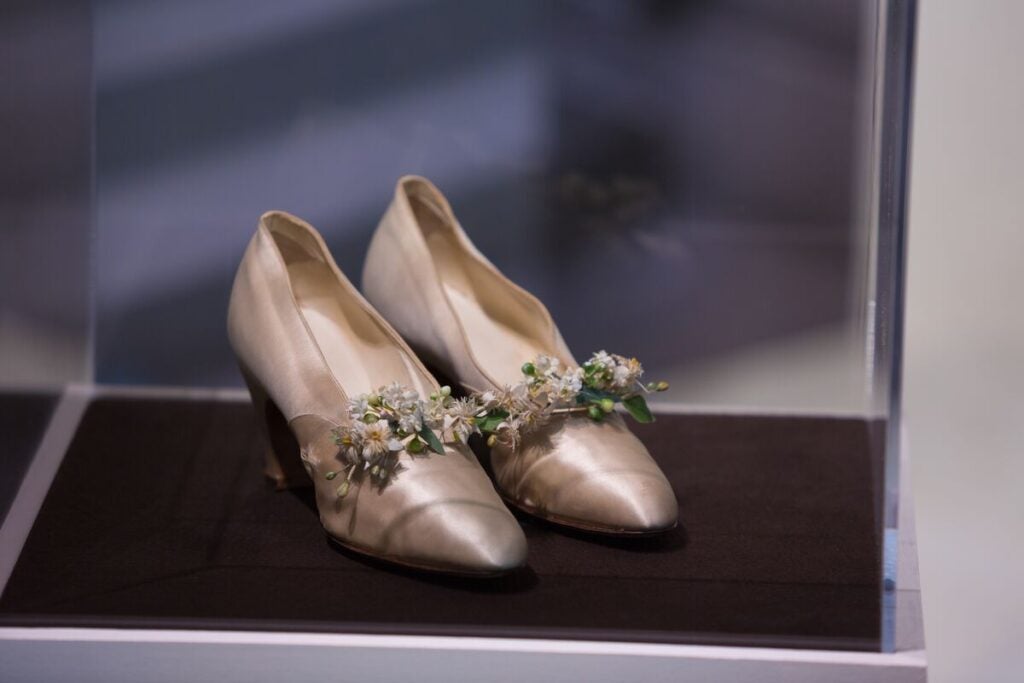
The Lee Family Veil is also displayed in the exhibition along with a stunning recreation of the gown worn by Mr. Cecil’s mother Cornelia Vanderbilt Cecil and her original satin slippers. This outstanding collection of wedding-related fashion offers a rare glimpse into the lives of the fascinating family that has preserved Biltmore for generations to come.

Biltmore’s Winery: A Tradition of Evolution

Biltmore’s Winery is the most visited in the country, producing about 150,000 cases of wine annually. Our award-winning wines are available on the estate and also distributed across the country and even online.

Let’s take a moment to reflect on how we got here. And as it turns out, the Winery’s tradition of evolution is even older than the Winery itself.

Biltmore Dairy milkman and delivery truck, 1930-1940s

The Days of Biltmore Dairy

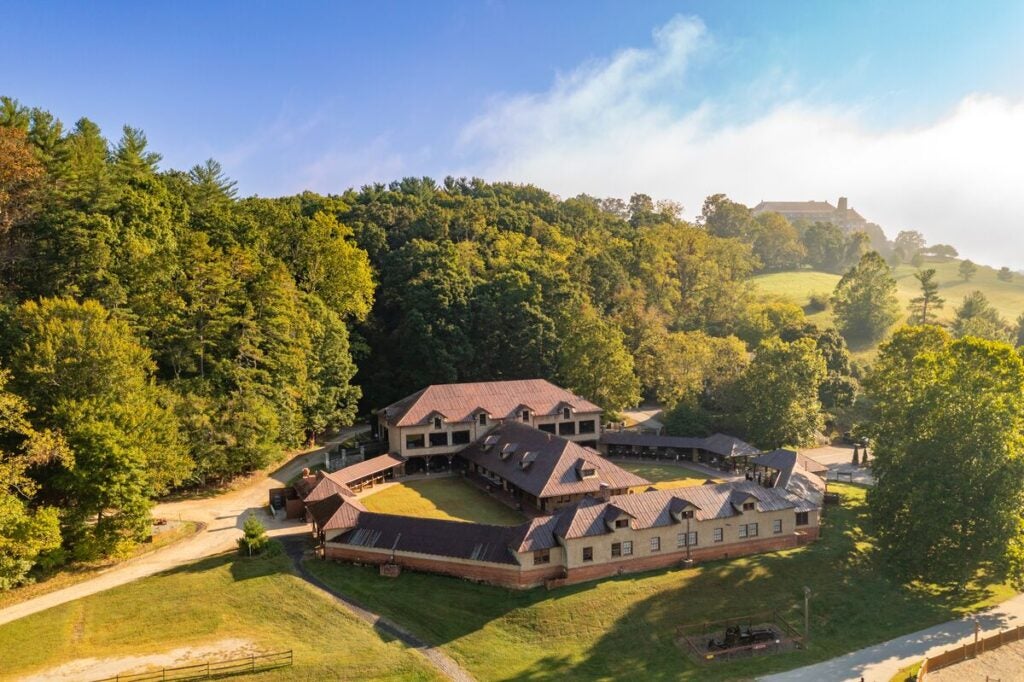
Before it became the Winery in Antler Hill Village, the century-old structure was the main dairy barn for Biltmore Dairy. Designed by Richard Howland Hunt, son of Biltmore architect Richard Morris Hunt, and farm manager George Weston, the barn accommodated 140 cows for one of the largest dairy operations in the Southeast.

Biltmore Dairy was the most successful of all of Biltmore’s enterprises, providing the estate with a financial cushion that would see it through George Vanderbilt’s death, two world wars, the Great Depression, and beyond.

After Biltmore House opened to the public in 1930, guests could view the milking rooms and processing areas in the dairy barn, sample the milk, and buy ice cream. Biltmore Dairy was so successful and its products were so well-known that it became an attraction in its own right for estate visitors.

It was around this time that the dairy’s delivery wagons were replaced with trucks and the fleet grew from 30 vehicles to over 400 in just 15 years.

Unfortunately, the market gradually shifted and, like many other smaller, family-run businesses at the time, Biltmore Dairy became unable to compete with larger commercial operations. With the advent of chain grocery stores came a cheaper, more convenient option for consumers to purchase milk, eventually making door-to-door dairy delivery obsolete. In April of 1985, Biltmore Dairy was sold to Pet, Inc.

Philippe Jourdain, Biltmore’s first Winemaster

A New Drink, A New Day

Even before Biltmore Dairy was sold, George Vanderbilt’s grandson and Biltmore’s owner, William A.V. Cecil, was asking: “What’s more appropriate for a French château than vineyards and a winery?”

In the early 1970s, he planted the first vines on the property, just below Biltmore House, and bottled the inaugural vintage in the Conservatory basement.

Less than pleased with the product, Mr. Cecil traveled to France in search of expertise. He returned with Philippe Jourdain, Biltmore’s first Winemaster. Together, the pair moved the vineyards to their current location on the west side of the estate and established Biltmore Estate Wine Company.

Biltmore’s Winery in Antler Hill Village

Opening Biltmore’s Winery

The conversion of the dairy barn into a state-of-the-art winery began in 1983. Mr. Cecil’s son and Biltmore’s current CEO, Bill Cecil, assumed the leadership role in overseeing the renovation.

In 1985, the Winery opened to the public in what Mr. Cecil called, “the most historic event since my grandfather had opened his estate to his family on Christmas Day ninety years earlier.”

Since the opening of the Winery in Antler Hill Village, we’ve celebrated the release of new Biltmore Wines, expanded our Tasting Room, opened a Wine Bar, and developed tours featuring the Winery’s production facility and wine tastings.

Biltmore’s Winemaker, Sharon Fenchak

The Evolution Continues

French native Bernard Delille joined Biltmore as an assistant winemaker in 1986—making this year his 30th anniversary with Biltmore Estate Wine Company. Bernard was promoted to Winemaster and Vice President of the Winery when Philippe retired in 1995.

Sharon Fenchak joined the team a few years later and now serves as Biltmore’s Winemaker. Her research in grape-growing technology and wine production methods in combination with Bernard’s traditional and artistic perspective proved to be a perfect combination for the Winery. Sales have continued to grow and retail distribution has since expanded.

Indeed, the evolution continues, while at the same time, throughout the dynamic history of the Winery, Biltmore’s winemaking philosophy holds: “To keep each wine true to varietal character, food-friendly, and consistent from vintage to vintage.” 

We invite you to enjoy the fruits of our labors by visiting our estate winery during your next visit, shopping for our award-winning wines online, or finding a retailer near you that carries Biltmore Wines.