Tomato Vidalia Gratin was a perennial favorite with guests and staff alike, and although Deerpark has become a special events location that now hosts groups and weddings rather than a restaurant, we still have frequent requests to share this easy and delicious recipe.
Created by our estate chefs to showcase the naturally sweet southern Vidalia onion, the spicy notes of fresh basil, and the bounty of heirloom tomatoes from our production gardens on the west side of the estate.
Tomato Vidalia Gratin is perfect as a hearty side or light main dish.
Serves 4-6 Total Time: about 40 minutes
Ingredients
1 cup Vidalia (or yellow) onions, diced
1 very large tomato, thinly sliced
1 cup fresh basil, chopped
1 cup shredded cheddar
1 cup shredded mozzarella
½ cup mayonnaise
1 pound of bacon, cooked and chopped (optional)
Salt and pepper to taste
1 unbaked 9-inch deep-dish pie crust
Instructions
Preheat oven to 350 degrees. Bake pie crust for about 8 minutes or until light brown. Cool for 5 minutes.
Arrange tomato slices in the pie crust and top with chopped basil and diced onions. In a small bowl, mix cheddar, mozzarella, mayonnaise, and bacon until combined. Season with salt and pepper. Press the cheese mixture on top of the pie.
Bake uncovered for 20 to 25 minutes or until golden brown. Let cool for at least 5 minutes before serving.
Biltmore’s farm-to-table history has deep roots that were established long before the first guests arrived in 1895. By that time, the land was already being transformed—not just into manicured gardens and grounds, but into a working farm unlike any other.
For George Vanderbilt, the creation of Biltmore was about cultivating something lasting, something rooted. From stewarding thousands of acres of forest to raising livestock and harvesting vegetables, the estate’s early agricultural programs helped shape not only the daily life of the Vanderbilts but also the future of sustainable farming in America.
Today, our farm-to-table legacy continues to grow, nurtured by a commitment to quality, care, and the enduring belief that land, when well-loved, will give back for generations.
How our farm-to-table history began
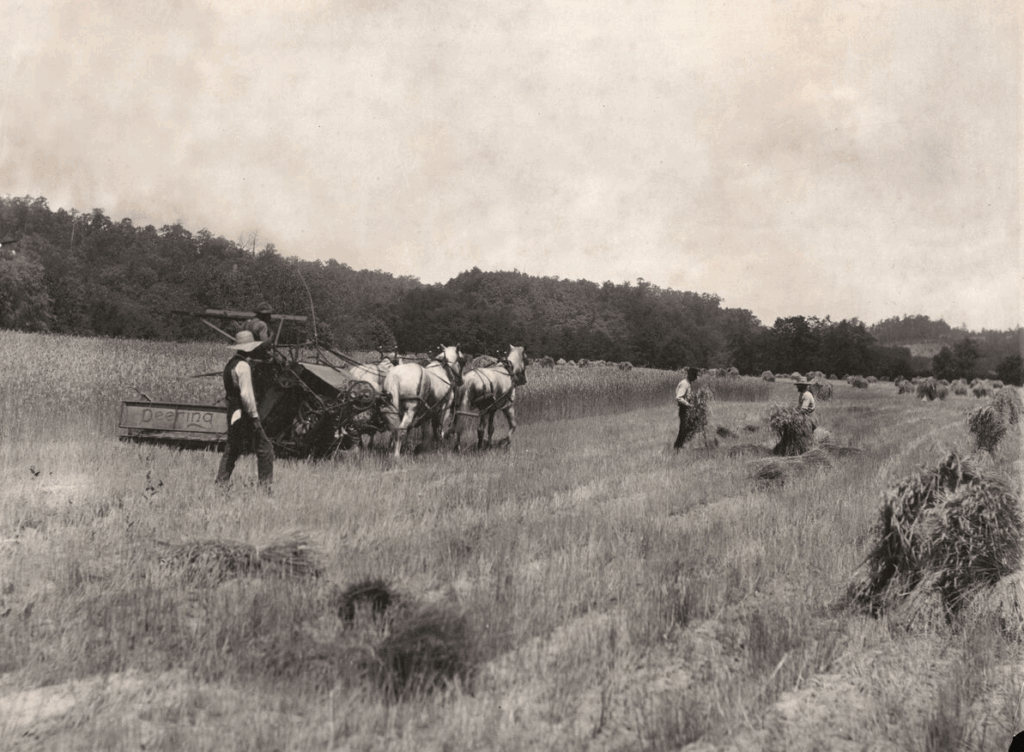
Archival photograph of estate workers harvesting hay at Biltmore.
In 1889, George Vanderbilt and famed landscape architect Frederick Law Olmsted stood at the edge of a vast, overworked site that was slated for transformation into Vanderbilt’s private retreat. Rather than simply tame the land into perfect gardens and grounds, they imagined something bolder: an estate that would restore the soil, support local families, and serve as a model of agricultural innovation.
Olmsted offered a straightforward plan: “Farm your river bottom chiefly to keep and fatten livestock with view to manure and make the rest a forest.”
With barns, stables, orchards, greenhouses, and thousands of acres under cultivation, Biltmore quickly became a living example of responsible land use. Its mission was threefold: to feed the estate, to generate income through the sale of farm products, and to serve as a model for best practices in agriculture.
Farm-to-table foods
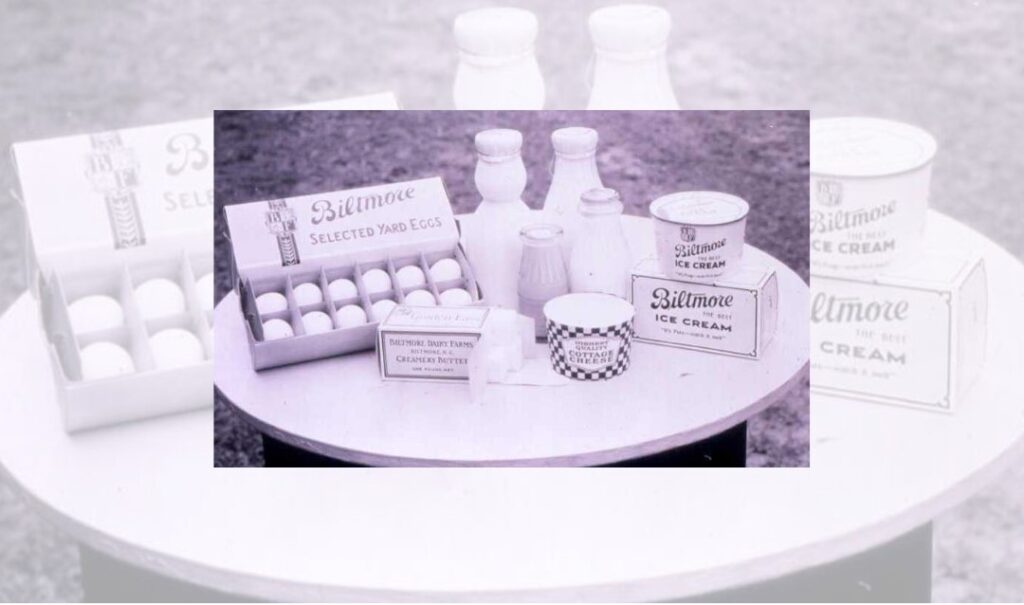
Biltmore Dairy and farm products including butter, milk, and eggs.
By the mid-1890s, Biltmore was producing everything from dairy and poultry products to vegetables, grains, and honey. Estate-grown produce was served at the family table and sold to the surrounding community at wholesale prices.
An 1897 advertisement in the Asheville Daily Citizen offered estate-grown cabbage and three varieties of sweet potatoes. Another article praised Vanderbilt’s use of “brains and science,” predicting Biltmore’s gardens would soon compete with the finest farms of the Northeast.
The gardens weren’t just functional. They were thoughtfully designed and carefully managed. The Walled Garden, originally intended for vegetables, was instead transformed into the flower-filled paths that welcome you today, while the estate’s most fertile bottomland near the Swannanoa River became the site of Biltmore’s new market garden, anchored by a charming farm cottage.
Market Gardener’s Cottage
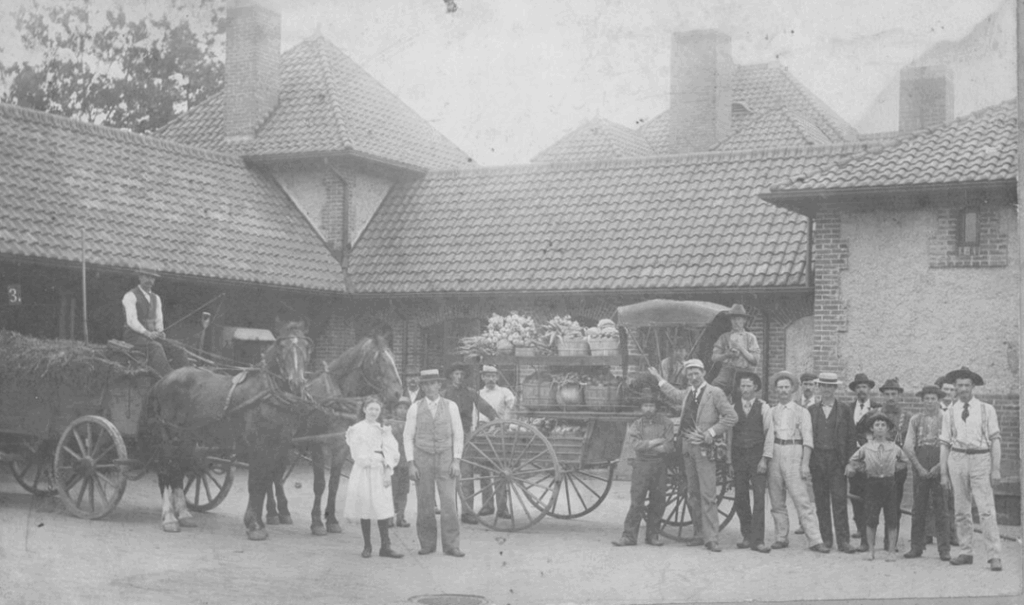
Agricultural workers and estate residents at the Market Gardener’s Cottage, photographed in front of an elaborate display of estate-raised produce.
The Market Gardener’s Cottage, designed by Richard Howland Hunt, son of Biltmore House architect Richard Morris Hunt, overlooked rows of crops and served as the residence of George Stevenson Arthur, Biltmore’s first market gardener, and his family.
From this cottage, Arthur managed planting schedules, tested new techniques, and worked tirelessly to ensure that Biltmore remained at the forefront of agricultural innovation. Over time, the surrounding courtyard became a hub for sorting and packing produce and welcoming local merchants to purchase estate-grown goods.
The Market Gardener’s Cottage was more than a residence. It was the nerve center of Biltmore’s early farming success and an important piece of our farm history.
Restoring a landmark of farm history
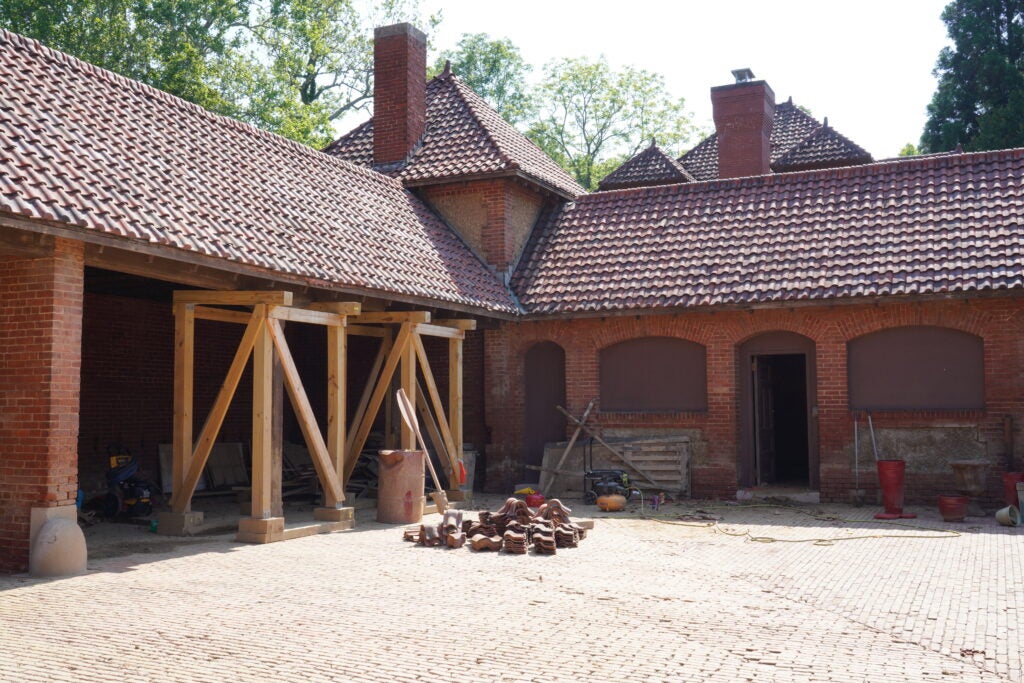
The Market Gardener’s Cottage required extensive cleanup and restoration after Tropical Storm Helene in September, 2024.
In September 2024, Tropical Storm Helene brought historic flooding to Western North Carolina. Among the hardest-hit areas of the estate was the Market Gardener’s Cottage. Positioned near the Swannanoa River, the cottage sustained extensive damage as floodwaters reached its second floor.
“Mud, debris, and trash were deposited in and on the cottage and throughout the courtyard,” said Vince Helton, Senior Director of Facility Operations.
As a contributing structure to Biltmore’s National Historic Landmark designation, the cottage represents a tangible link to the estate’s past. After the storm, Biltmore’s preservation experts quickly got to work—removing debris, cleaning and repairing drains, and stripping damaged interiors to prevent further decay.
Biltmore also partnered with a firm specializing in historic preservation to develop a long-term restoration plan that honors the building’s original design while introducing strategies to help mitigate future storm damage.
“Restoring the Market Gardener’s Cottage is about more than preservation,” Vince added. “It’s about protecting a vital chapter in Biltmore’s agricultural legacy.”
Biltmore® Grown: A farm-to-table legacy
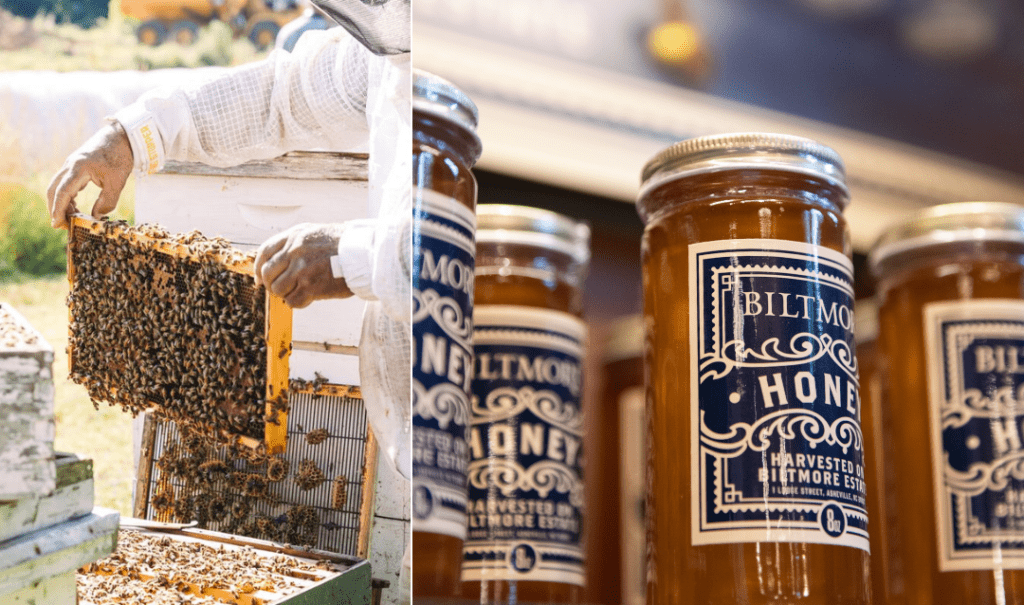
Biltmore Grown products such as cornmeal, grits, and honey are available in estate shops and online, while fresh and frozen cuts of meat are available exclusively at Gate House Shop at the estate’s main entrance.
More than a century after the first harvest, Biltmore’s farm-to-table philosophy remains central to daily life on the estate.
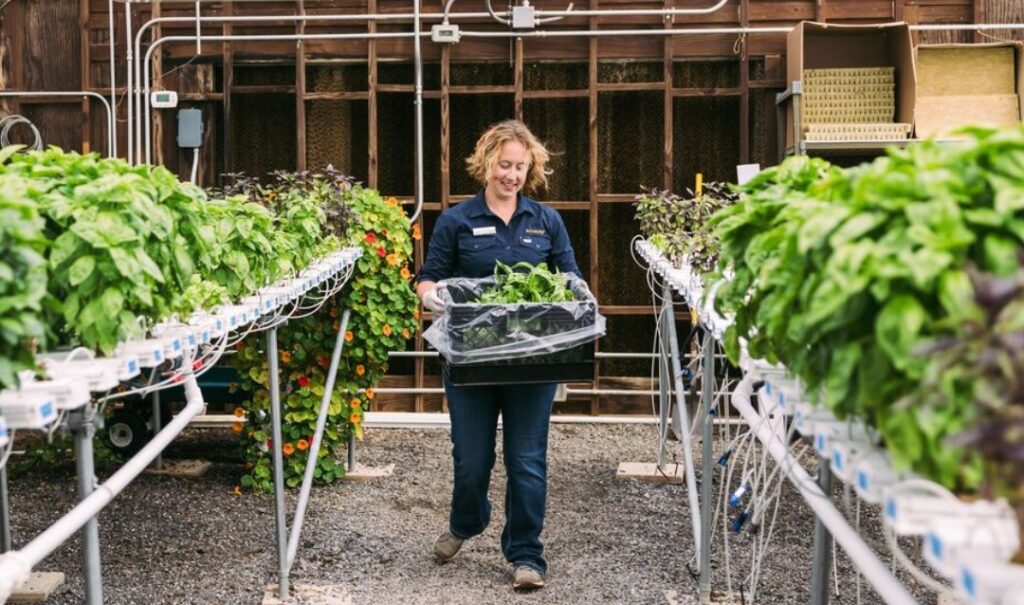
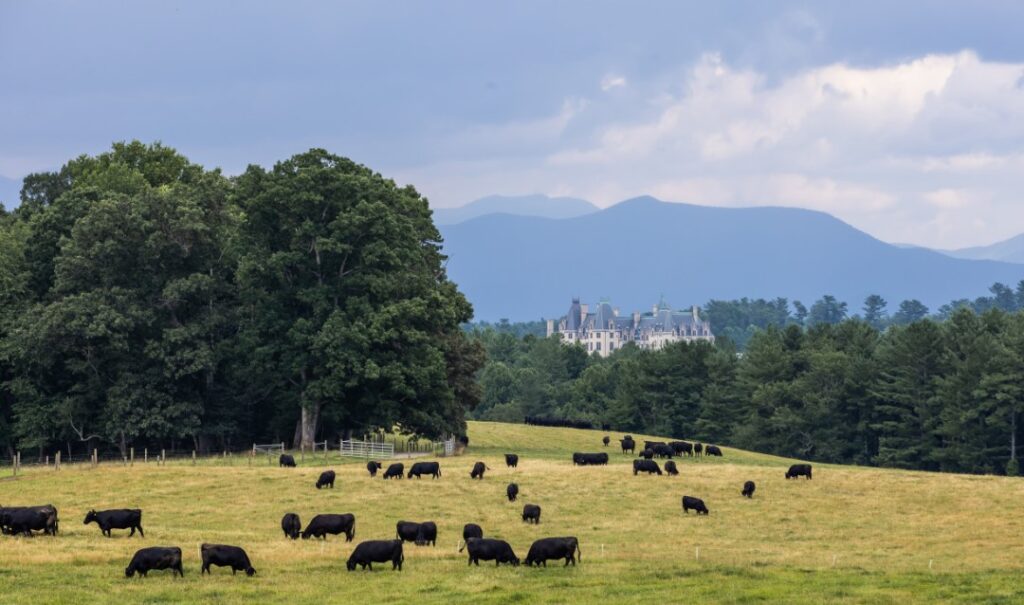
Across 2,500 acres of pasture and farmland, Black Angus cattle, Berkshire hogs, Dorper sheep, goats, and chickens are raised with care. In nearby hydroponic greenhouses, lettuces, herbs, and edible flowers flourish, grown in deep water cultures for vibrant flavor and peak freshness. At the apiary, estate honey is harvested by our fifth-generation beekeeper.
These fresh, seasonal ingredients find their way to estate restaurants every day, while a selection of Biltmore® Grownproducts is available at estate shops and online.
Savor farm-to-table flavor with Biltmore wines
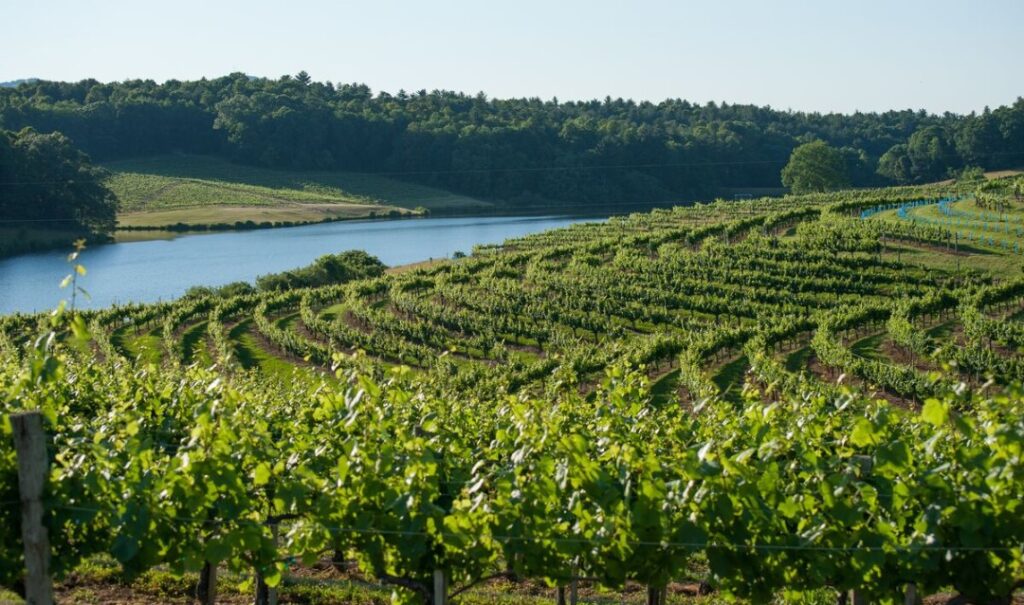
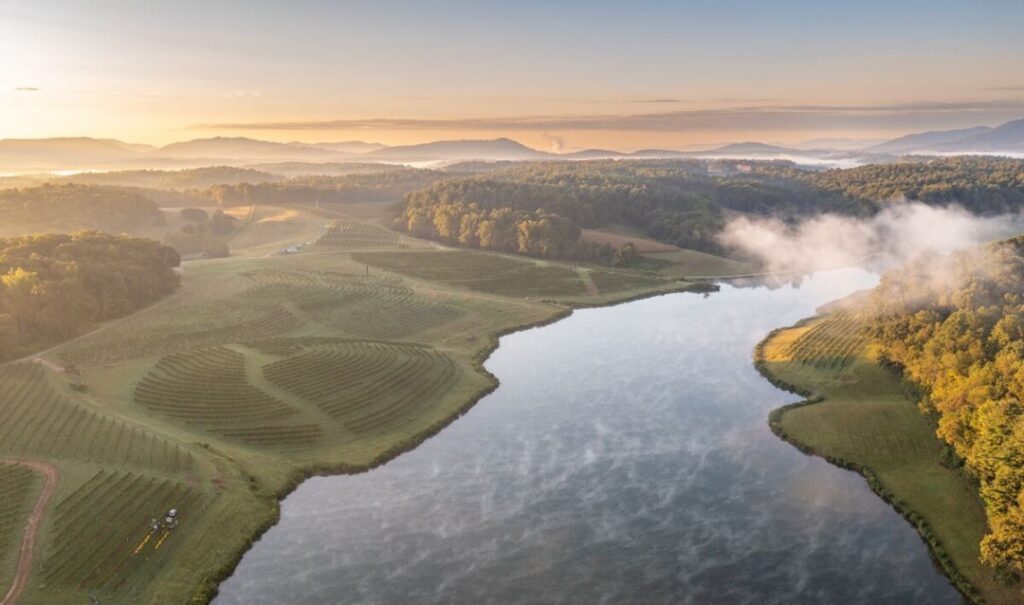
Biltmore’s estate vineyards overlook Long Valley Lake on the west side of the property.
In addition to the pastures and fields, Biltmore has a 50-acre vineyard on the west side of the estate. Varietals including Chardonnay, Cabernet Franc, Cabernet Sauvignon, and Merlot that can thrive in Western North Carolina are hand-harvested and transformed into our outstanding Biltmore® Reserve wines that represent the finest vintages created from our North Carolina estate-grown grapes.
“Whether we’re working in the vineyard or handcrafting Biltmore wines at Biltmore Estate Winery, we’re always thinking about how to tell the estate’s farm-to-table story,” said Sharon Fenchak, Executive Winemaker. “It’s not just about what’s in the glass—it’s about where it came from, who cared for it, and how it connects to the land.”
Our farm-to-table story continues
Our farm-to-table story continues today with innovations like vegetables, herbs, and flowers grown in hydroponic greenhouses.
Biltmore’s agricultural journey began with a belief in the stewardship of land, people, and heritage. Today, that philosophy lives on in every field turned, every vine pruned, and every sip and bite savored in our estate restaurants or purchased online.
Whether you’re exploring the gardens, walking the grounds where crops once grew, enjoying farm-to-table foods at one of our restaurants, or staying overnight in one of our private and historic Cottages on Biltmore Estate™, you are part of the story.
Biltmore is more than a working farm or a historic house; it is a place where legacy is not only preserved but continually planted.
Farm to Table Tour and Taste
Our Farm to Table Tour and Taste offers a look at our farm history and today’s agricultural operations.
Come experience the flavors, stories, and soil that make Biltmore a place unlike any other. Make the most of your visit with our Farm to Table Tour and Taste, which offers a fascinating glimpse into our farming history through a tour of the estate’s rarely seen west side agricultural operations, plus an opportunity to savor our farm-fresh, estate-grown artisanal fare and handcrafted wines.
Few pairings feel as indulgent or timeless as red wine and chocolate! Step inside the Red Wine and Chocolate Tasting offered at Biltmore Winery in Asheville, NC, and discover how expertly selected wines, handcrafted chocolates, and guided tasting techniques come together for a match made in heaven.
How it works
“Pairing red wines and chocolates is an exciting way to discover nuances in both of them,” said Tim Rutherford, one of our outstanding Winery hosts who will guide you through the Red Wine and Chocolate Tasting.
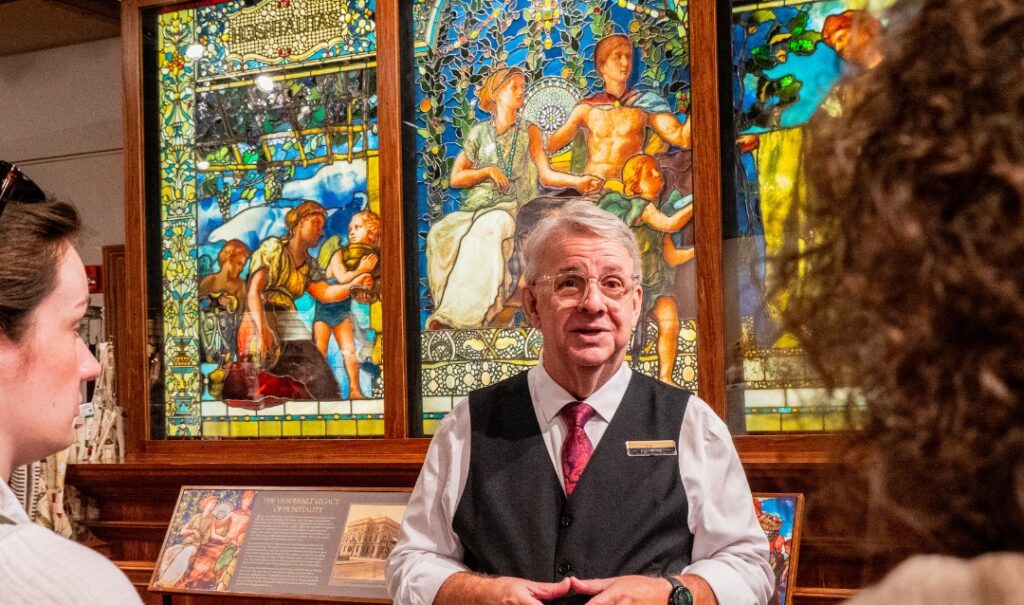
Meet your Red Wine and Chocolate Tasting host at the La Farge Window display inside Biltmore Winery.
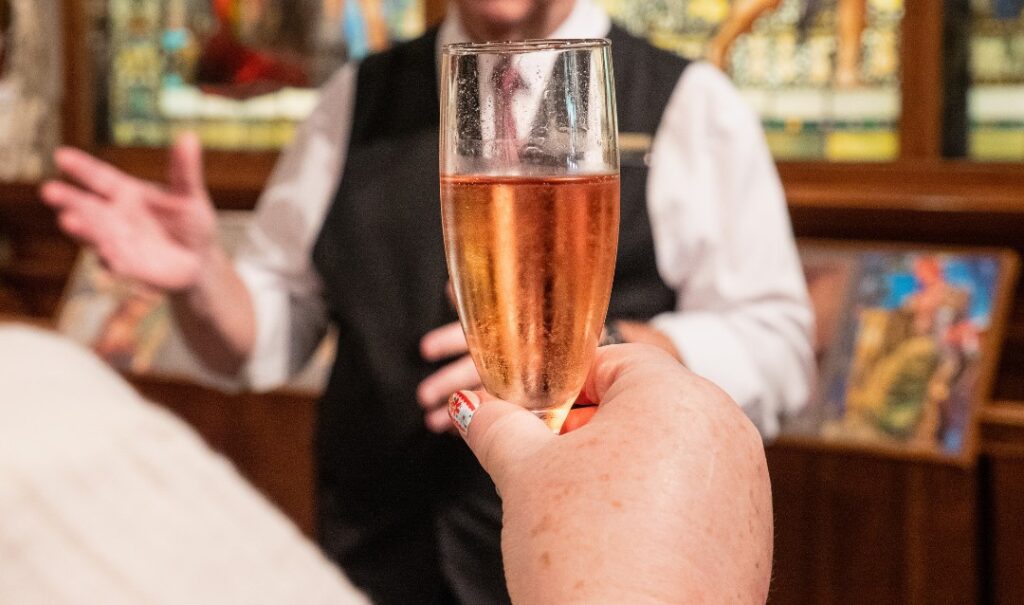
Your experience begins inside Biltmore Winery, where you’ll meet your host at the La Farge Windows and kick off your experience with a glass of Biltmore Estate® Blanc de Noir sparkling wine. Bubbles in hand, follow your host down Scholar’s Walk with its view of the clock tower that once kept Biltmore’s original dairy operation running on time.
A sparkling start
Your experience begins with a glass of Biltmore Estate® Blanc de Noir bubbles!
As you walk–and sip your sparkling wine–your host offers a fascinating glimpse into the Biltmore’s past, from its champion Jersey dairy cows to George Vanderbilt’s grandson’s vision to develop vineyards and a winery for his family’s estate.
Pairing red wines and chocolates
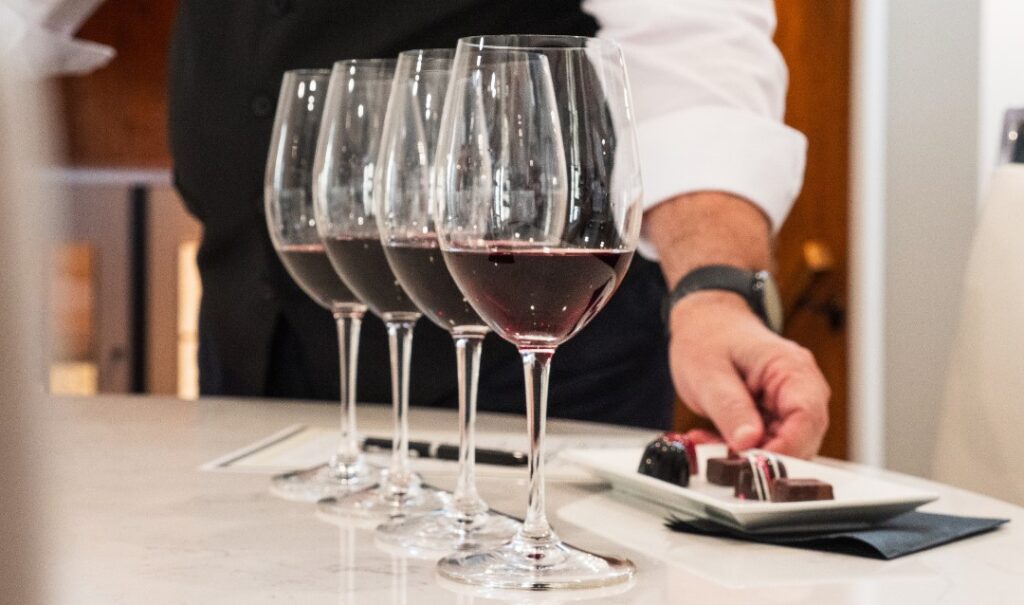
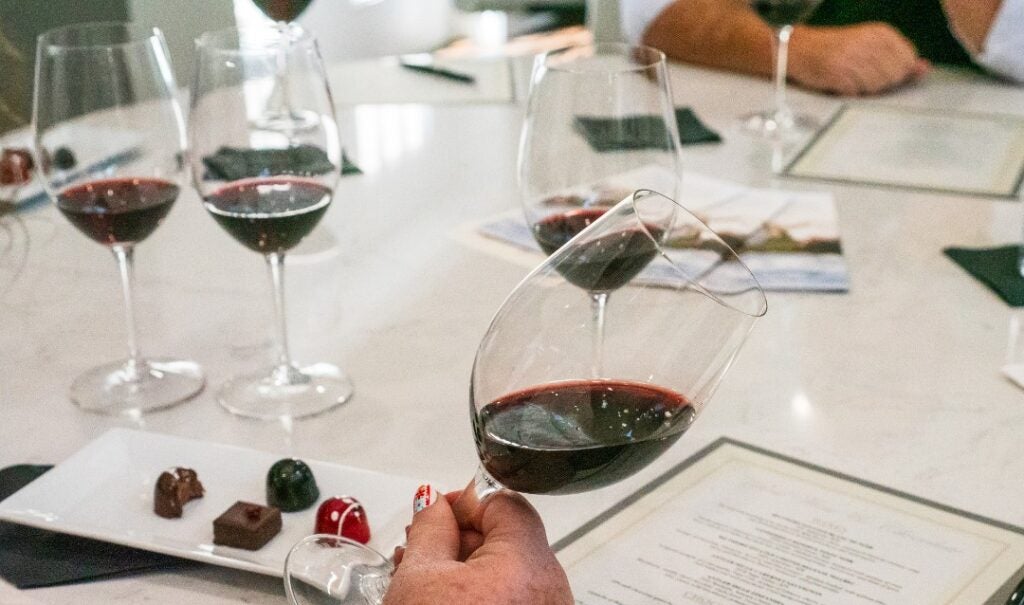
Biltmore red wines and artisan chocolates await each member of the group.
Upstairs* in the Clock Tower Room, you’ll have a chance to look over into the Tank Room where our still wines are fermented and the Champagne Bottling Room where our sparkling wines are bottled, corked, and labeled. You’ll also learn more about today’s production methods and winemaking philosophy under the direction of Executive Winemaker Sharon Fenchak.
Next, take a seat at one of the bistro-style tables where your red wines and chocolates await your tasting experience.
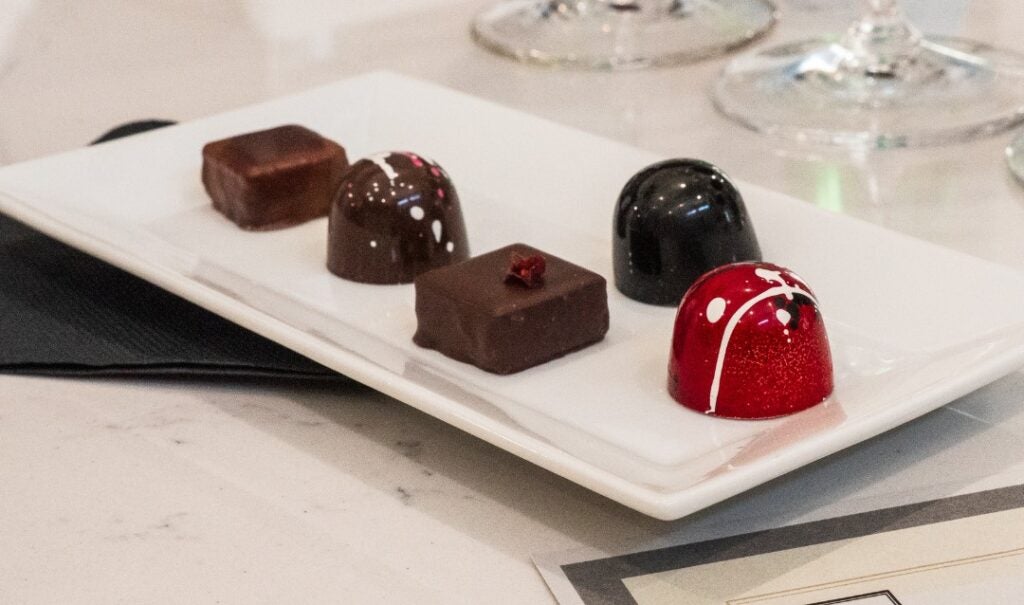
“Biltmore partners with Asheville-based Timothy Maguire Chocolates for the artisan truffles that we pair with a selection of premium Biltmore red wines,” Tim said. “This local chocolatier is able to create flavor profiles that highlight characteristics in our wines.”
*An elevator is also available to access the Clock Tower Room.
We pair red Biltmore wines with stunning selection of decadent artisan chocolates from Timothy Maguire Chocolates.
This is the current tasting list featuring four premium Biltmore red wines and the delicious artisan chocolates selected for each pairing:
You’ll taste the wines one at time in order of body style, beginning with the light-bodied Pinot Noir and moving through to the full-bodied Zinfandel.
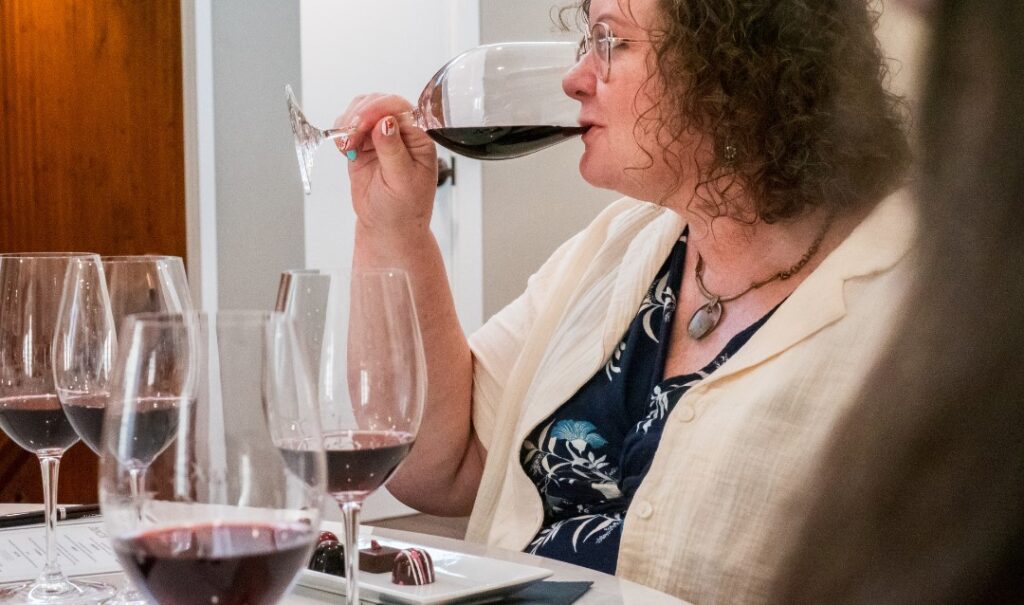
Before you begin the tasting, your host will walk you through the “4 S” method that you’ll use for each wine: See (look at the wine for color, depth, and body), Swirl (carefully swirl the wine in the glass for a few seconds to release its bouquet), Sniff (get your nose in the glass and smell the different aromas in the wine), then Sip (delicious!).
Your host will have you see and swirl the wine before you smell it and sip it.
What do you smell and taste in each wine? There are as many different answers as there are participants. This is a great opportunity to compare notes with the group and see what everyone else is experiencing.
“While there are classic aromas and flavors associated with each wine, every person has a unique palate that reflects their individual taste buds and the types of things they’ve tasted as a reference,” said Tim.
Your Winery host will guide you through each step of the Red Wine and Chocolate Tasting.
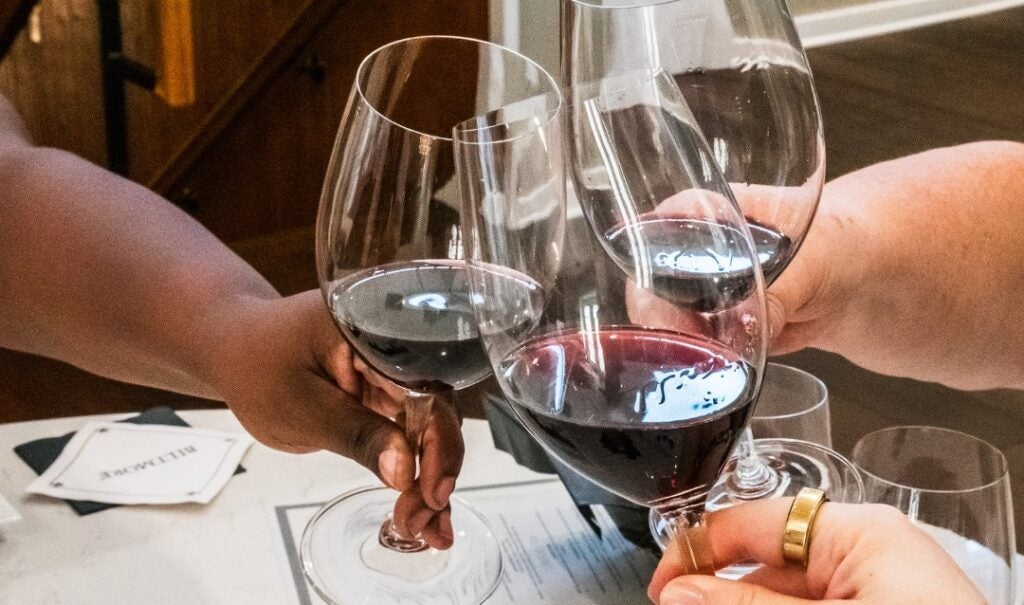
After you’ve tasted a wine, you’ll try the delightful chocolate selected to pair with it, and then you’ll taste them together and see how wine elements like mouthfeel and tannins are affected by cocoa levels and flavors in the chocolates.
“We’ll take each wine and its corresponding chocolate one at a time for this guided tasting,” Tim said, “but afterwards, if you have any wine or chocolate left over, you can try an impromptu pairing to see how they work together.”
Discover the delights of red wine and chocolate
Advance reservations are required for these popular daily tastings. To purchase this activity and reserve your spot, you must have an estate admission ticket, a Biltmore Annual Pass, or be a guest at one of our hotels or cottages on the estate. Guests must be at least 21 years of age with a valid ID to participate in a specialty wine experience.
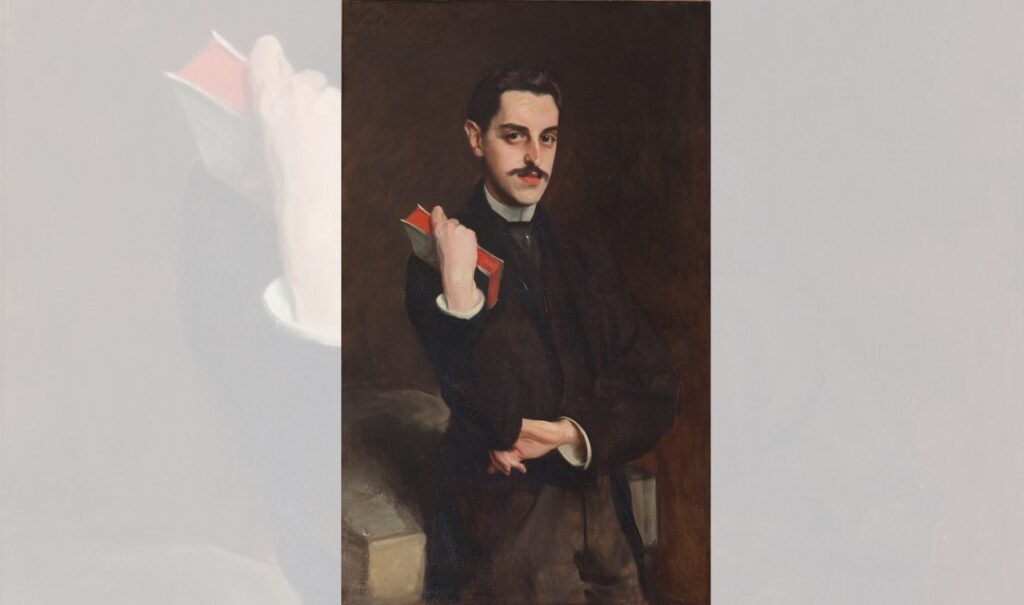
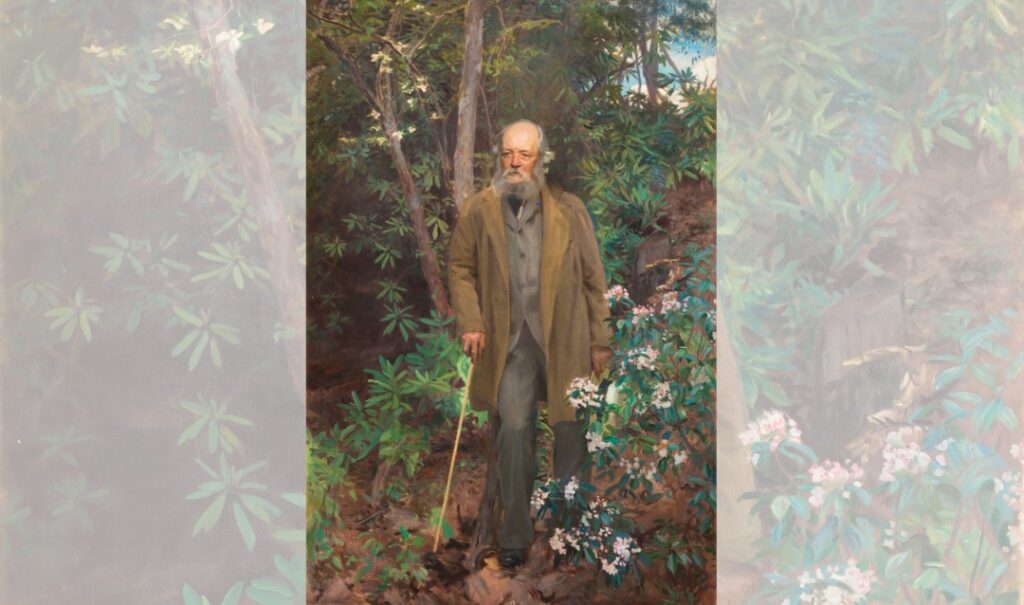
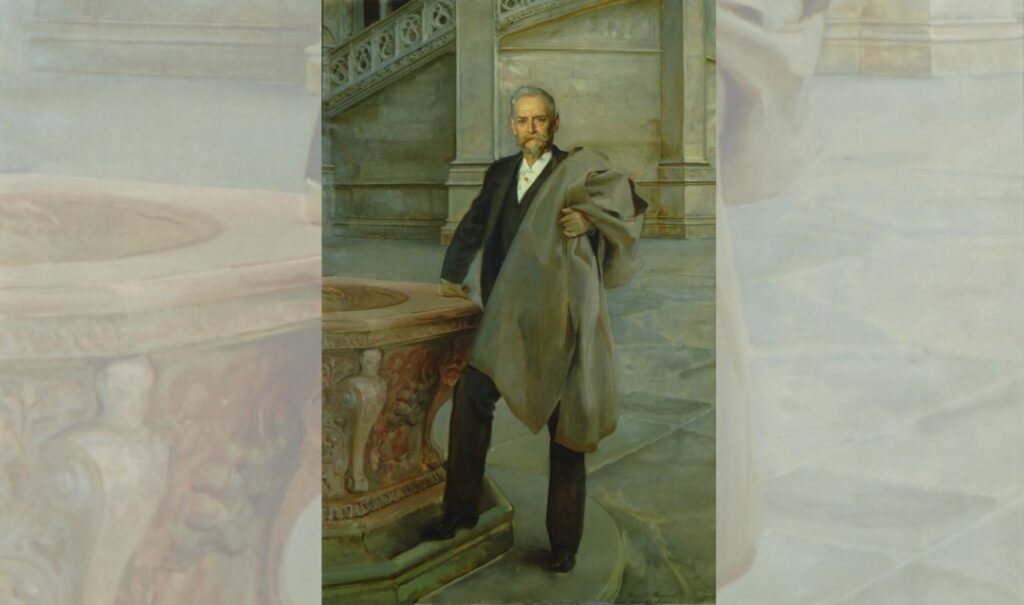
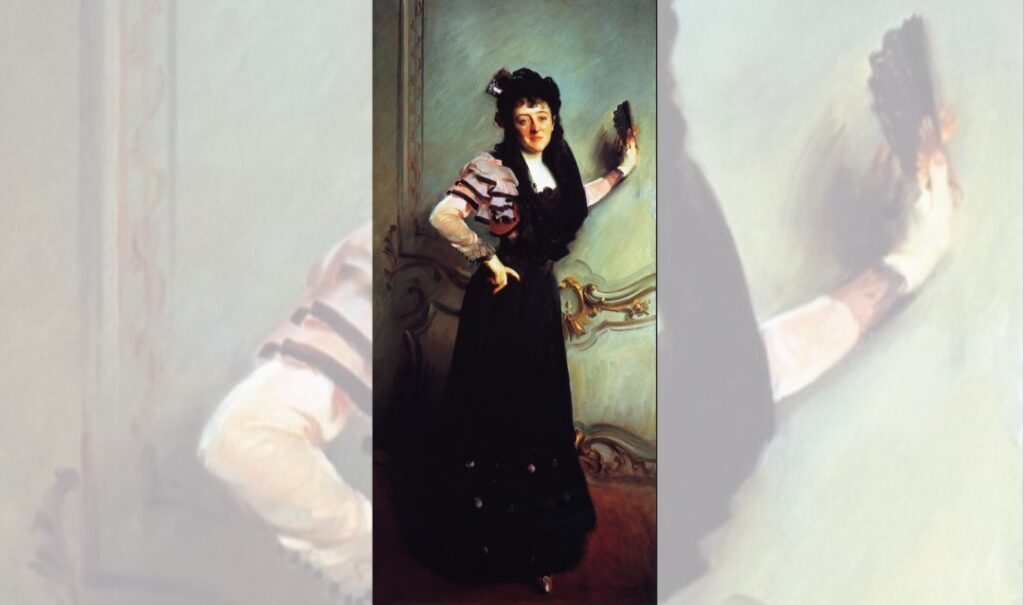
John Singer Sargent was the premier portraitist of the Gilded Age elite, and you can see six of his notable works on permanent display inside Biltmore House. Five portraits were directly commissioned by George Vanderbilt; the sixth was a gift from one of Vanderbilt’s cousins.
Discover how Sargent’s skill as a portrait artist lay not only in capturing a likeness but also in conveying the essence of an era characterized by immense wealth and rapid social change.
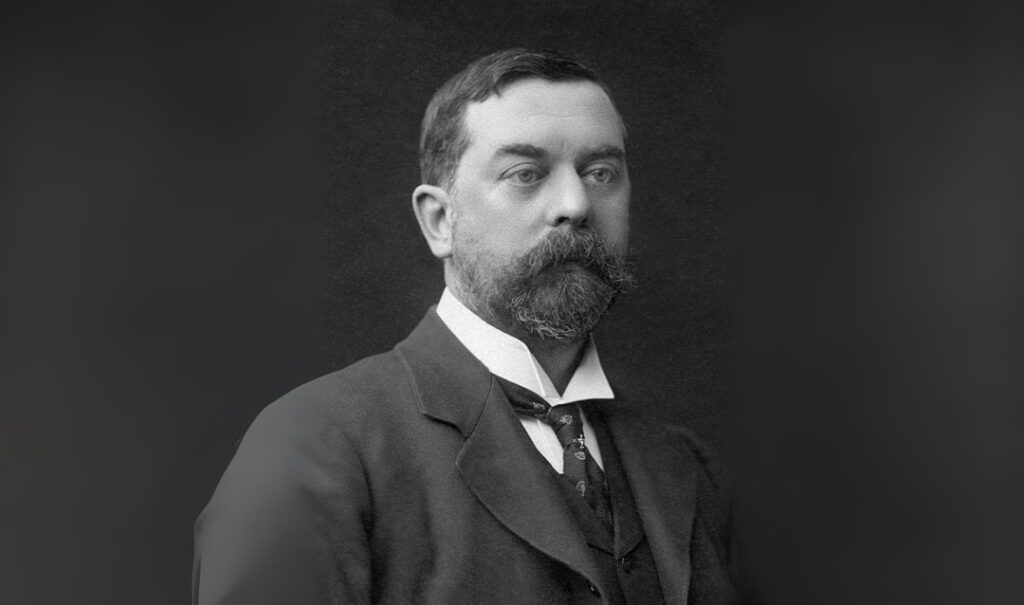
Photograph of John Singer Sargent by James E. Purdy, 1903.
This cosmopolitan figure of the late 19th and early 20th centuries appealed to the increasing elite of both Europe and America, blending traditional techniques with a modern perspective that distinguished his portraits from those of his contemporaries. This year marks the one hundredth anniversary of his death. His obituary referred to him as the “greatest contemporary portrait painter”, a title that still resonates today.
Formative years in Paris
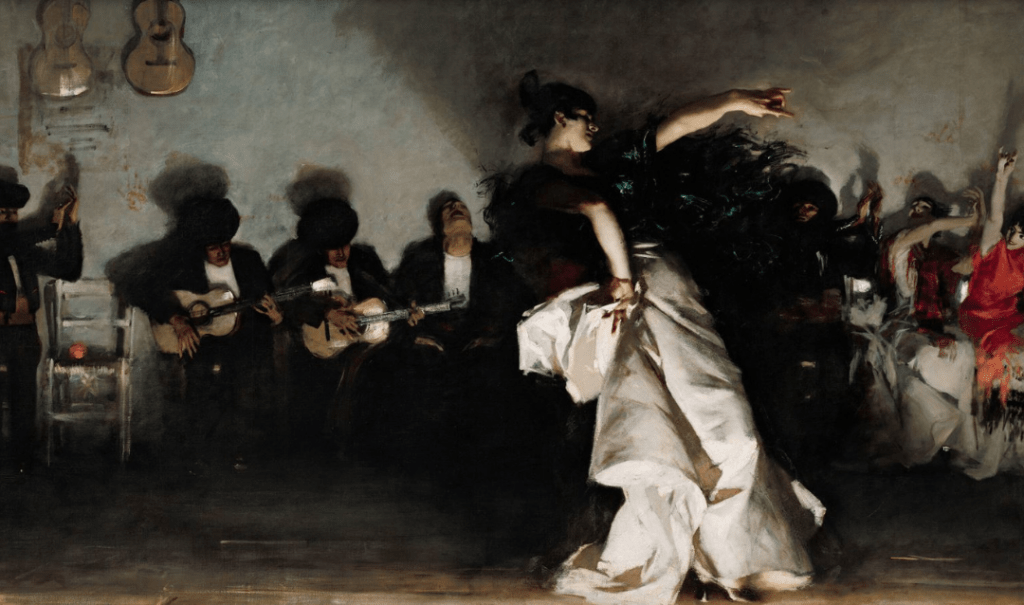
“El Jaleo” by John Singer Sargent, 1882 (Isabella Stewart Gardner Museum, Boston, MA).
Born to American parents in Florence, Italy, John Singer Sargent spent much of his life living in various countries throughout Europe.
In 1874, at the formative age of 18, he moved to Paris, marking a pivotal point in his career. During the late 19th century, Paris was regarded as the world’s most beautiful and dynamic city, attracting painters, sculptors, and intellectuals from around the globe who sought artistic growth and a vibrant cultural environment.
The city offered a stimulating environment filled with galleries and salons where artists could exhibit their works and interact with fellow artists and critics. Noting the influx of artists to the city, in an essay by Henry James on Sargent in 1887, James noted, “when today we look for ‘American art’ we find it mainly in Paris” (Harper’s Magazine, October 1887).
Sargent embraced the city’s cultural life and frequented Paris’s museums, exploring the avant-garde paintings of the Impressionists. He studied under the renowned portrait artist Carolus-Duran and enrolled in the École des Beaux-Arts. During these formative years, he demonstrated an early talent for portraiture, capturing the personality and presence of his sitters through his brushstrokes and engaging compositions, which led to him becoming one of the most sought-after portrait artists of the 19th century.
Upon his arrival in Paris, John Singer Sargent’s primary goal was to exhibit at the Paris Salon, an annual art exhibition in France that served as the primary event for artists to gain recognition and approval, and where critics played a crucial role in shaping public opinion. Exhibiting at the Salon could make or break an artist’s reputation, depending on the final verdict of critics. Their opinions set the standard for what was considered “good” or “high” art throughout Europe.
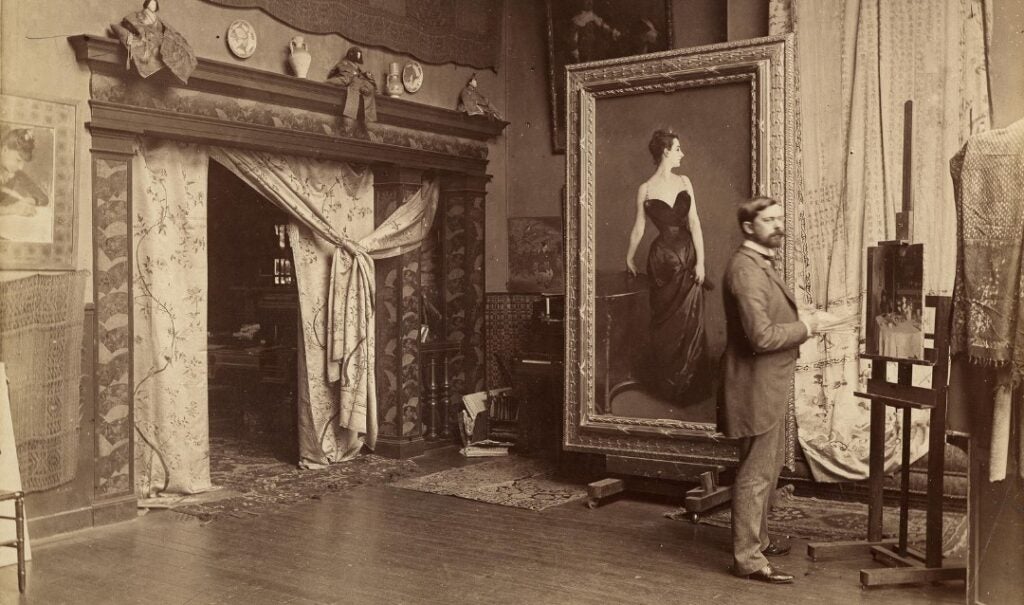
John Singer Sargent in his Paris studio with the portrait of “Madame X”, ca. 1885 (photograph by Adolphe Giraudon).
Sargent’s success at the Paris Salon in 1882 with El Jaleo led him to become one of the most talked-about painters in Paris. After several years of success at the Salon, his exhibition of Madame X in 1884 received negative criticism for the painting’s suggestive pose, the paleness of her skin, and the provocative neckline of her dress. Its unconventional style challenged the more traditional views of the time. Ultimately, the controversy led Sargent to leave Paris and move to London, taking James McNeill Whistler’s old studio on Tite Street.
Sargent’s arrival in America
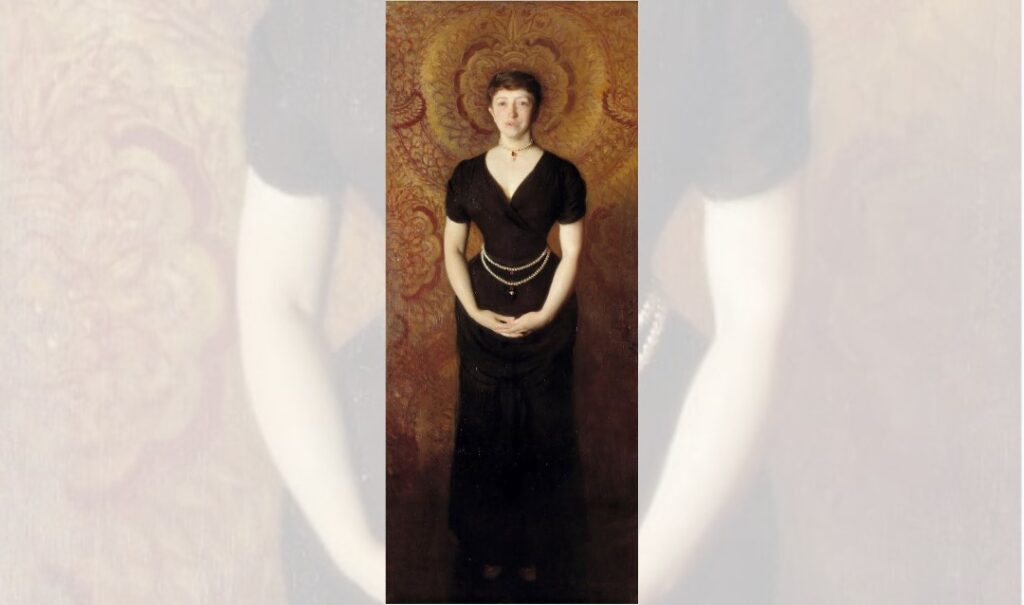
Portrait of Isabella Stewart Gardner by John Singer Sargent, 1888 (Isabella Stewart Gardner Museum, Boston, MA).
John Singer Sargent made several trips to the United States during his career, but his first successful visit as a portrait artist came in October 1887. His work was less successful in London than in Paris, and he was seeking to expand his portraiture and build a reputation in the United States. He arrived in Boston and quickly received commissions from prominent members of American society. Pivotal to his success was an article written by author Henry James in Harper’s Weekly, which introduced the artist’s work to the American public and paved the way for his commissions.
The late 1800s marked a period of unprecedented economic growth and a widening gap between social classes in the United States, characterized by a growing class of wealthy industrialists and financiers who rivaled the lifestyles of the European aristocracy. Into this ripe environment for a portrait artist, Sargent arrived in Boston, eager to immerse himself and gain the patronage of the city’s upper crust. He had established a network of Boston friends while in Paris, and his arrival in Boston was met with the fuss and fanfare of a superstar along with a long list of commissions. His initial portraits included those of Isabella Stewart Gardner (1888) and Mrs. Charles E. Inches (1887), both members of Boston’s elite.
George Vanderbilt’s patronage
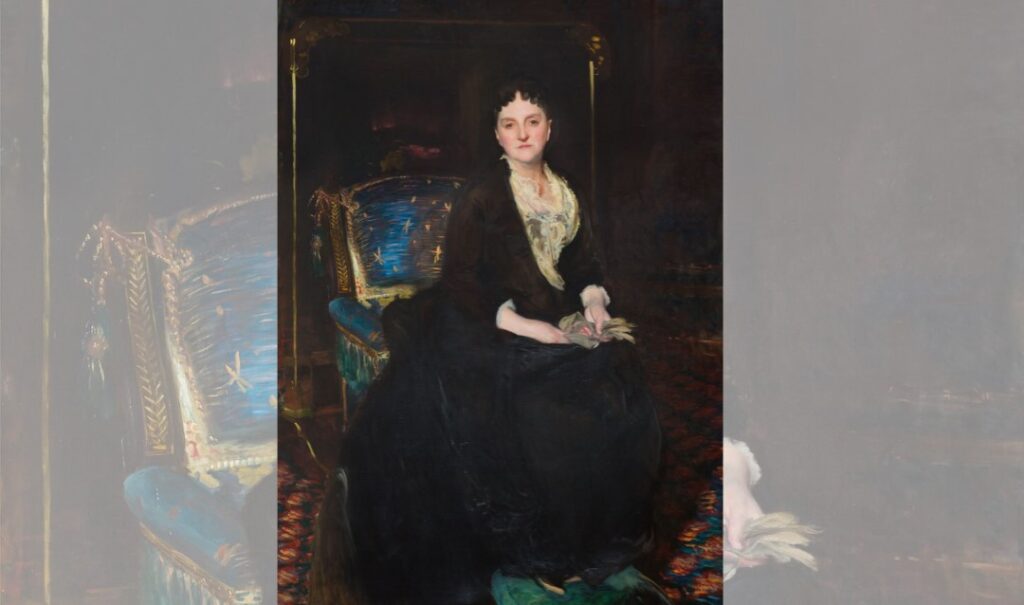
“Mrs. William H. Vanderbilt” by John Singer Sargent, 1888.
Within a few months of Sargent’s arrival, George Vanderbilt commissioned him to paint his mother, Maria Louisa Vanderbilt. Letters exchanged between Sargent and George Vanderbilt regarding the commission of Mrs. Vanderbilt began in November 1887. The following year, Maria Louisa sat for Sargent in her new home at 640 Fifth Avenue. The artist requested that she wear a black dress “that Mrs. Vanderbilt already owns” (Sargent to Vanderbilt, November 22, 1887, The Biltmore Company Archives).
She holds a pair of gloves while seated in an armchair, uniquely designed by the notable Herter Brothers–the same firm that designed and decorated the interiors of the 640 Fifth Avenue home. Although the portrait was not exhibited, critics recognized his ability to capture his sitter through masterful composition and bravura brushwork, deeming it “one of Mr. Sargent’s greatest successes in portraiture.” (The Critic, March 17, 1888)
Sargent’s association with the Vanderbilts and other wealthy families propelled him into the upper echelons of American society, solidifying his reputation as a sought-after portraitist among the elite. The commission from George Vanderbilt to paint his mother’s portrait demonstrated the Vanderbilt family’s recognition of John Singer Sargent’s artistic talent and launched a series of several more commissioned portraits.
Vanderbilt’s collection of John Singer Sargent portraits grows
“George Washington Vanderbilt” by John Singer Sargent, 1890
“Frederick Law Olmsted” by John Singer Sargent, 1895.
“Richard Morris Hunt” by John Singer Sargent, 1895.
“Mrs. Walter Bacon” by John Singer Sargent, 1886.
“Mrs. Benjamin Kissam” by John Singer Sargent, 1888.
During the next nine years, George Vanderbilt commissioned four additional portraits by Sargent: himself, Biltmore’s architect and landscape architect, and his cousin. In addition, he was gifted a sixth portrait from another cousin.
George Washington Vanderbilt – Commissioned in 1890, the portrait was presumably created in Sargent’s New York studio. The artist’s influence from Velazquez is evident in the portrait through his color palette, thickness of brushwork, and overall simplicity. The choice of a red-edged book as a prop in Vanderbilt’s hand stands out in the portrait since Vanderbilt was noted in society for being “bookish” and a recognized bibliophile and collector of books. The portrait fittingly hangs over the door to the Library in the Tapestry Gallery.
Frederick Law Olmsted andRichard Morris Hunt – George Vanderbilt commissioned Sargent in 1895 to paint the portraits of Biltmore’s architect and landscape architect as a tribute to their contributions to the estate. Hunt, nearing the end of his life, posed outside the grand staircase but frequently came inside to warm himself by the fireplace. Olmsted stood in the natural environment of Western North Carolina, surrounded by laurels and rhododendron. As he became weary and anxious to return to work, his son, Frederick Jr., took his place in a room inside Biltmore House, wearing his father’s clothing. Today, both of the portraits hang in Second Floor Living Hall.
Mrs. Walter Bacon(née Virginia Purdy Barker) – Vanderbilt commissioned this portrait of his cousin in 1896. Virginia and George were close and enjoyed travelling together. Sargent recently left Biltmore, and Mrs. Bacon posed in Sargent’s London studio. She wears a black Spanish dress, reflecting the influence of Spanish art and culture in many of Sargent’s works, as well as the growing fascination with Spain and Hispanic culture in the United States. In an effort to find the perfect frame for the portrait, it was almost a year before the painting was shipped to Biltmore in a newly made frame. It now hangs in the Breakfast Room.
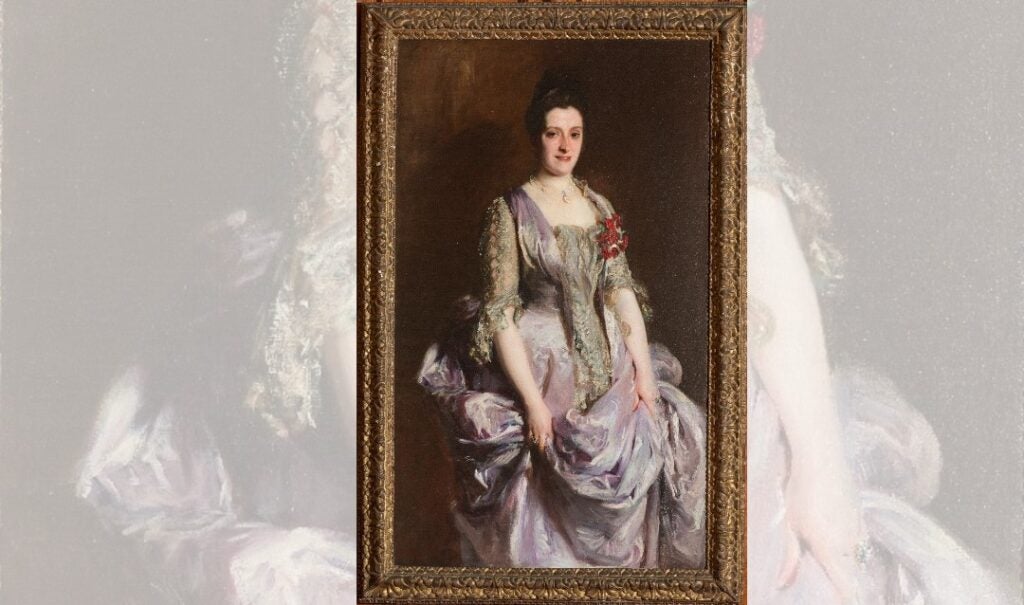
The only Sargent not commissioned by Vanderbilt, which rivals the portrait of Maria Louisa in color and sumptuous texture, is Mrs. Benjamin Kissam(maternal aunt to George Vanderbilt). Sargent’s masterful treatment of fabrics, such as the soft folds of silk in Mrs. Kissam’s dress, exemplifies the luxurious quality that appealed to his patrons. Painted in 1888, the portrait was given to George by the sitter’s daughter, Ethel Kissam Train, after her mother’s death in 1894. This portrait also hangs in the Breakfast Room.
Capturing the essence of an era
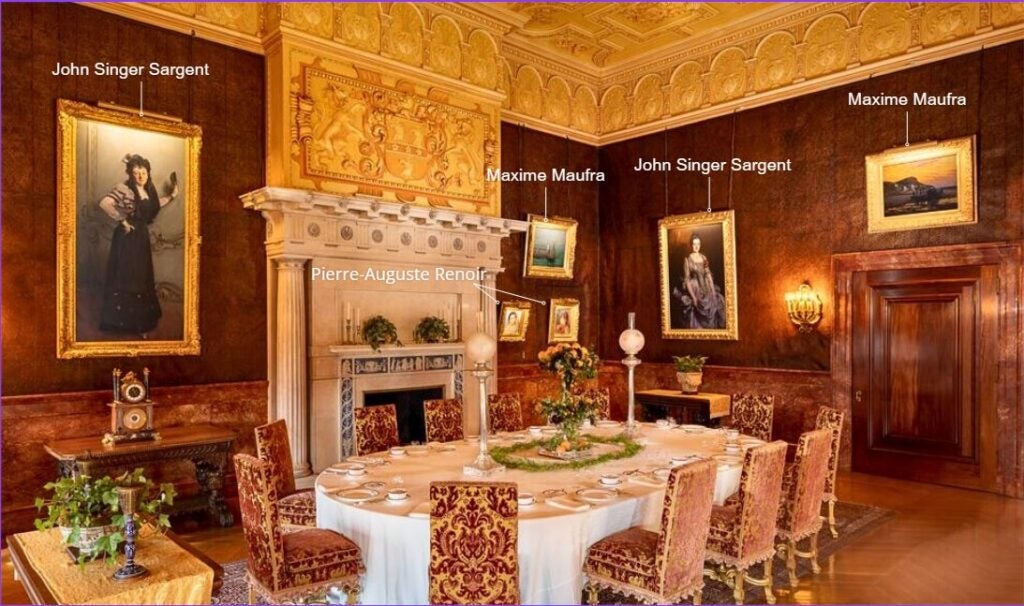
Sargent’s portraits of Mrs. Walter Bacon (left) and Mrs. Benjamin Kissam (right) are displayed in the Breakfast Room of Biltmore House along with paintings by other notable artists, including Pierre-Auguste Renoir and Maxime Maufra.
By the time Sargent moved away from commissioned portraiture in 1907, he had established himself as the foremost portraitist of the period, renowned for his technical mastery and his ability to capture not only the likeness but also the personality of the era’s elite. His portraits remain a captivating visual record of this opulent period, reflecting the ambition and vibrancy of a society undergoing rapid transformation.
His work continues to inspire exhibitions worldwide. The Musée d’Orsay and The Metropolitan Museum of Art organized Sargent and Paris at The Metropolitan Museum of Art in New York in 2025, which focused on Sargent’s early years.
See Sargent on display at Biltmore
Biltmore’s collection of six portraits completes an era of John Singer Sargent’s work that complements the paintings featured in The Met’s show, allowing you to see a different set of works that paint Sargent in a new light. Plan your visit now to see our private collection of Sargent’s portraits on permanent display inside Biltmore House.
Celebrate the warmer months with these sensational sangria recipes featuringyour favorite Biltmore wines! Whether you’re a fan of red or whites wines, there’s a perfect option in these two recipes to help you create fun and fruitysangrias for solo sipping and friendly gatherings all season long.
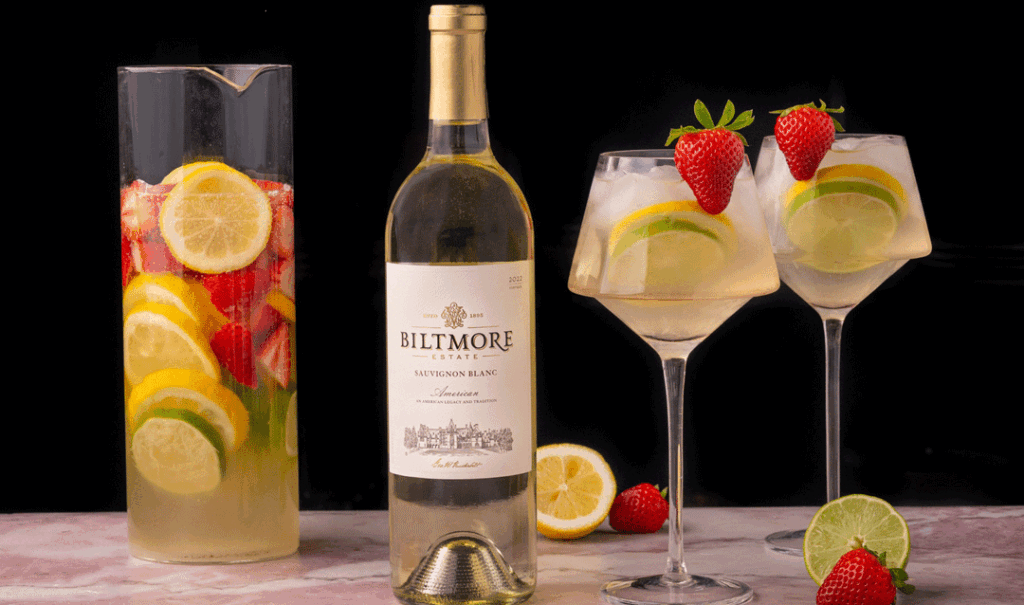
Biltmore Estate Sauvignon Blanc is the star of this refreshing white sangria dreamed up by Marley Goldin / @marleysmenu following a complimentary wine tasting at Biltmore Winery. (Photo courtesy of @marleysmenu.)
Although traditional sangria recipes tend to feature red wines, this delightful Biltmore Estate® Sauvignon Blanc-based version, created for Biltmore by Marley Goldin of @marleysmenu, is a cool, refreshing treat for warm weather. Enjoy with friends and, should you have any leftover (we doubt you will!), freeze it for a fun take on grown-up popsicles or slushies.
1 ½ cups strawberries, washed, tops removed, halved
2 cups club soda
Ice
Instructions:
Into a large pitcher, add the lemon and lime slices and granulated sugar. Muddle for 30 seconds until the sugar combines with the citrus juices.
Add the triple sec, then stir to combine.
Add the Biltmore Estate® Sauvignon Blanc and sliced strawberries to the pitcher and stir again.
Just before serving, add ice and club soda. Serves 8.
Tip: This recipe can be made up to 24 ahead of time! The longer the fruit sits in the liquid, the more its flavor infuses. Hold off on adding the club soda and ice until just before serving.
Cardinal’s Crest Red Sangria
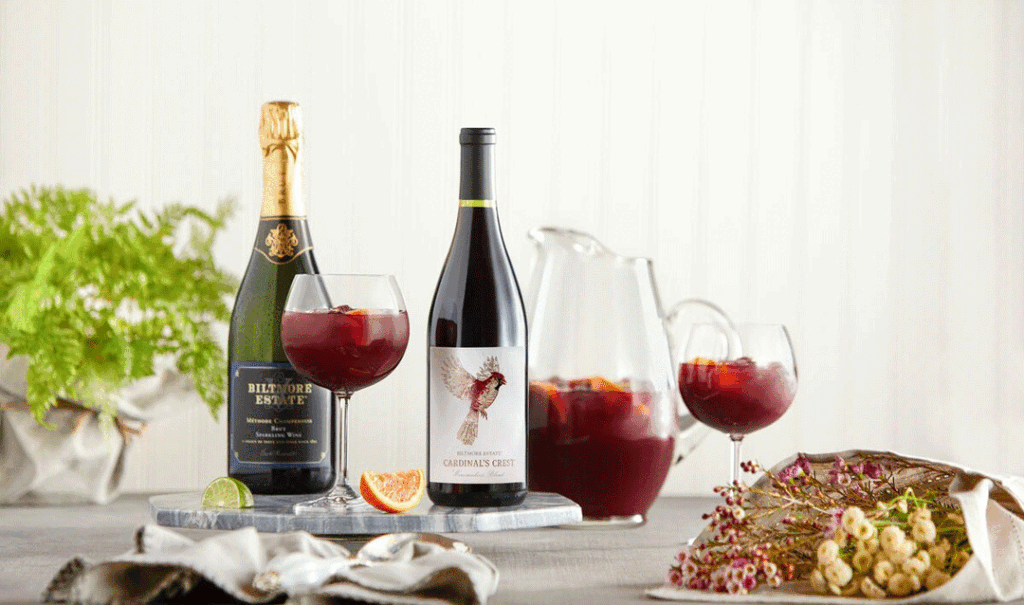
Biltmore Estate® Cardinal’s Crest wine is perfect for sipping, savoring, and sangria!
Take time for yourself with a glass of Biltmore Estate® Cardinal’s Crest Red Sangria—the perfect sparkling treat for a leisurely Sunday morning brunch or a long afternoon on the porch.
Tutankhamun: His Tomb and His Treasures ended March 1, 2026. Please enjoy this archived content.
When you visit Tutankhamun: His Tomb and His Treasures at Biltmore Estate, you might wonder what Biltmore has to do with Egypt.At first glance, ancient Egypt and Gilded Age America may seem worlds apart—but dig a little deeper into our history, and surprising connections to discovering the tomb of King Tut start to emerge.
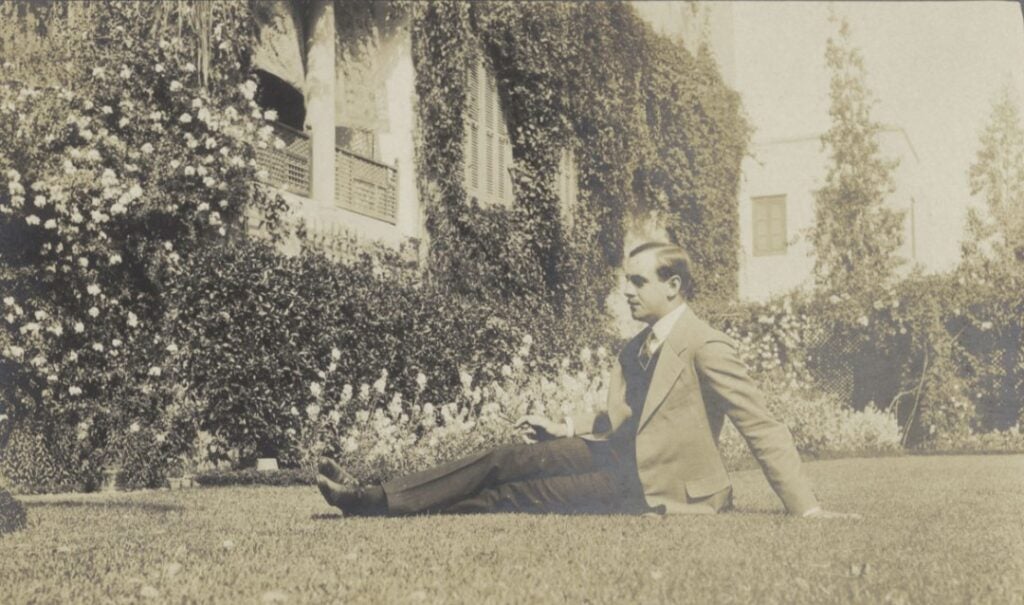
This story began with a discovery in Biltmore’s archives: a carefully curated album of photographs taken by John Francis Amherst Cecil (1890–1954), husband of Cornelia Vanderbilt and longtime steward of Biltmore House. These photographs, captured during Cecil’s diplomatic service in Cairo from 1914 to 1919, offer a personal window into a pivotal place and time where history was being made.
They reveal details of a career spent among ancient wonders, a family friendship with one of archaeology’s most iconic figures, and even a brush with one of the greatest archaeological stories of the 20th century—the discovery of King Tut’s tomb.
Associate Curator, Meghan Forest-Singer, shares a closer look at the connections between King Tut and Biltmore.
Family connections
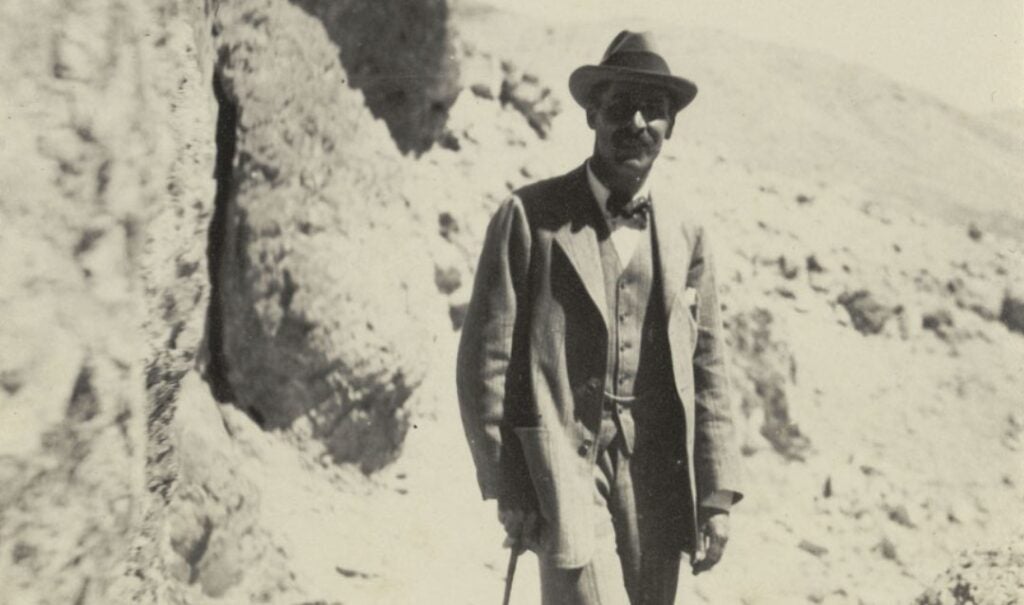
John Cecil in the gardens of the British Embassy in Cairo, ca. 1917.
John Cecil’s link to ancient Egypt began long before his time in Cairo. His mother, Lady Mary Rothes Margaret Cecil, grew up at Didlington Hall in Swaffham, England. Didlington Hall was known for its remarkable collection of Egyptian antiquities assembled by her father, William Tyssen-Amherst. Didlington’s ancient objects did not just leave a lasting impression on “May”, as her family called her, but also on a young boy named Howard Carter, who visited often when his father worked on the estate. Carter’s fascination with Egypt coupled with his artistic talent caught the Amherst family’s attention, and they eventually funded his first position in Egypt when Carter was just 17.
May’s interest in Egypt wasn’t limited to collecting artifacts, though; she actively coordinated their discovery. Between 1901 and 1904, she led two seasons of excavations near Aswan in Egypt, working under Howard Carter’s supervision during his time as Inspector of Monuments for Upper Egypt. These were not casual visits but serious archaeological endeavors, and they left a strong impression on her four sons.
John Cecil, the third of those sons, inherited his mother’s curiosity and enterprising spirit. While his brothers all pursued military careers, John studied at Eton and Oxford before entering the diplomatic service. His first foreign post came in 1914, when he was appointed Undersecretary at the British Embassy in Cairo. By the time he left Egypt in 1919, he had risen to the role of Second Secretary, gaining both rank and experience during a critical moment in world history and in the unfolding story of Egyptian archaeology.
Life along the Nile
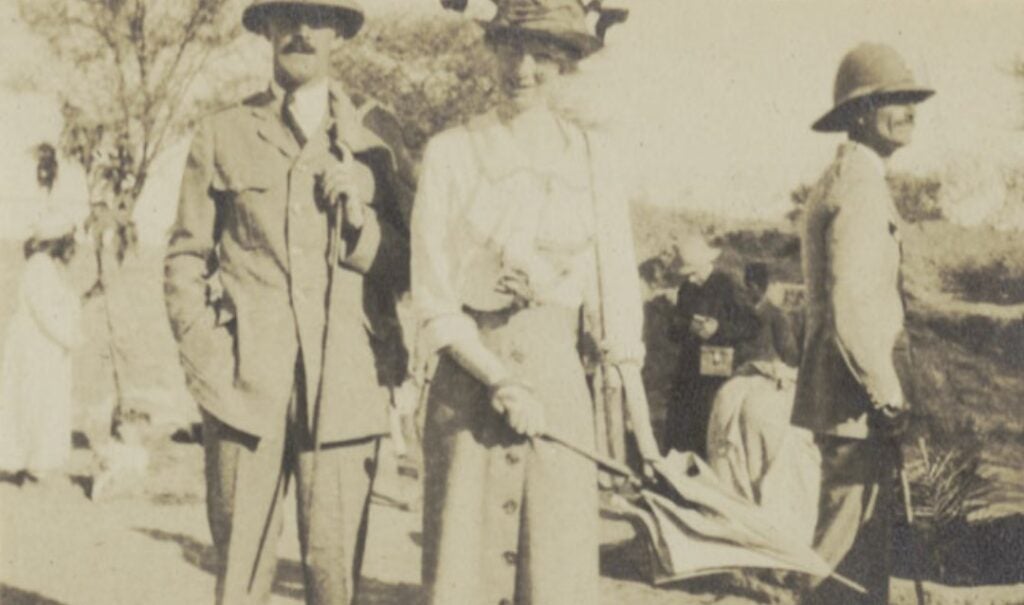
John Cecil, left, readies for a day of exploring with unidentified friends, colleagues, and guides, ca. 1917.
Despite the demands of his position, John Cecil found time to explore the rich cultural landscape of Egypt. His photo album tells the story of a young man fully engaged with the interesting new world around him. Its pages document parades, golf outings, and Nile cruises with colleagues and friends, along with time spent enjoying the Embassy’s gardens and interacting with locals. But perhaps the most compelling are the images he captures of Egypt’s ancient monuments.
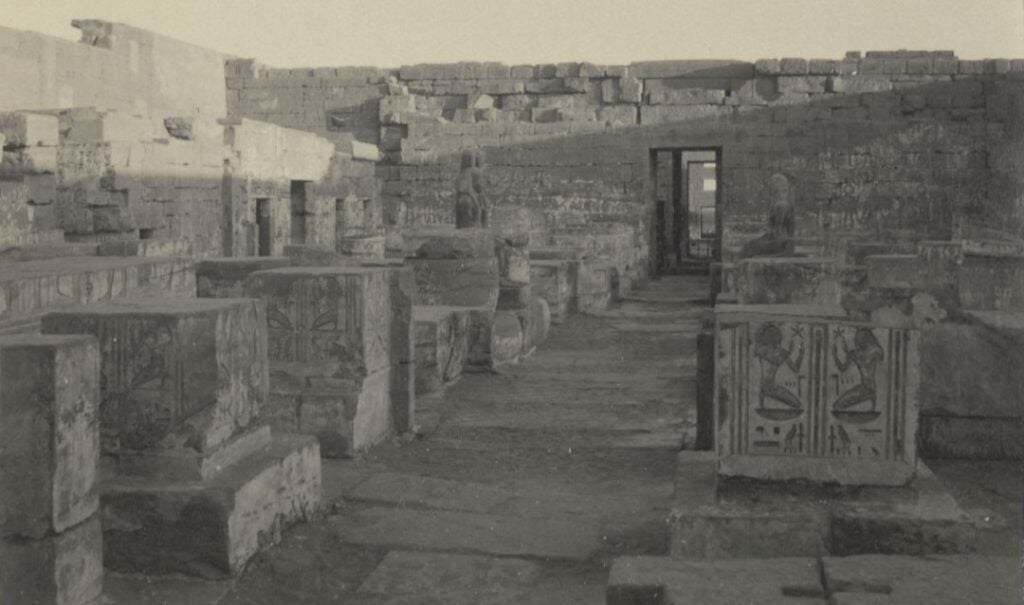
His lens captured moments of stillness, silliness, and awe from the Temple of Luxor, the Ramesseum, Karnak, and many other sites. Some of these visits appear to have been led by local guides. Others, however, suggest a front row seat to history in the making.
An interior view of the mortuary temple of Ramses III at Medinet Habu, late 1917.
At several archaeological sites in the Valley of the Kings, John Cecil appears to have been guided by none other than Howard Carter himself. Excavations in the Valley of the Kings halted in 1915 due to World War I, but, in 1917, Carter resumed searching for a “missing” pharaoh, working in partnership with George Herbert, Fifth Earl of Carnarvon. It was here, in this legendary setting, that Cecil witnessed history in the making.
The mystery of Site A
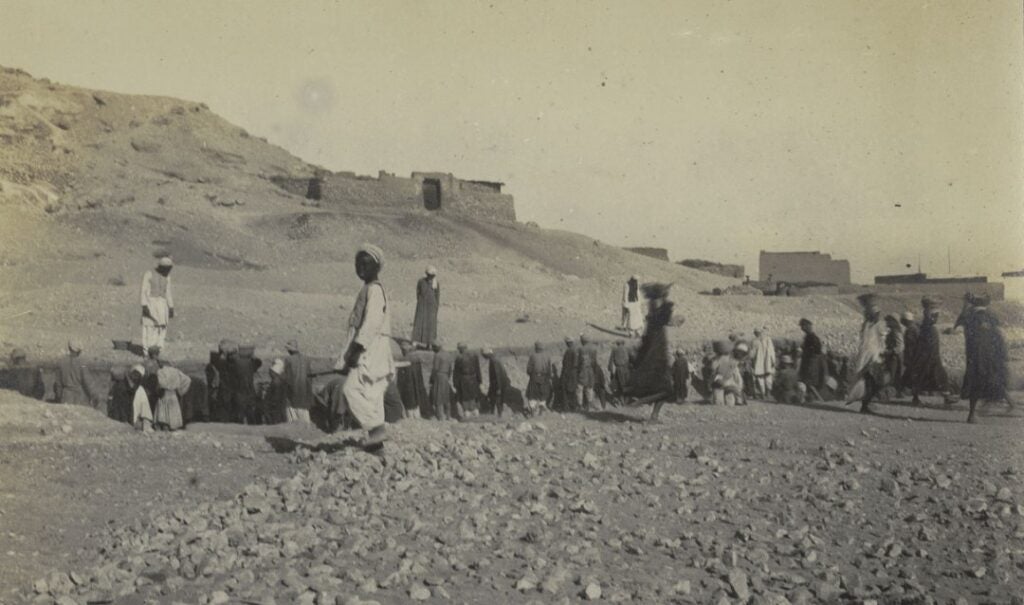
Qurna laborers excavate at Site A in the Valley of the Kings, late 1917.
At first glance, this photo seems like a typical early 20th century excavation scene. But Cecil labeled the back, simply, “Carnarvon digging.” A closer look reveals the landscape matches photographs taken at the same location by Carter’s official photographer, Harry Burton. With that comparison, Biltmore’s curators made an incredible discovery: this photograph captures early excavations of what Howard Carter called “Site A.”
Site A marked Carter’s renewed efforts to locate a lost pharaonic tomb. Fueled by fragmentary but tantalizing evidence at other Thebes sites, Carter felt that Site A was the most likely site of the lost tomb. And he was amazingly close: nestled between the tombs of Ramses I, Ramses II, and Merneptah, Site A lies less than a hundred feet away from what would later be revealed as the tomb of Tutankhamun, better known to the modern world as King Tut.
Carter began excavating Site A in December of 1917 and continued into February of 1918, dating these photos to a narrower span of time than previously realized. Cecil visited the site in the early days, before tracks were laid for a rail system to remove debris. Instead, laborers from nearby Qurna moved debris by hand in baskets balanced on their heads. This photo lets us see the effort, scale, and intensity of the dig, while also giving a sense of the quiet anticipation and excitement that led Cecil to snap a photograph.
Though Site A didn’t yield a major discovery, it revealed artifacts that hinted at a story hidden below the surface. When excavation resumed the next season, Carter dug test trenches just across the central path of the Valley. Although it took a few more seasons of work, what Howard Carter found there took the world by storm: the lost tomb of King Tut.
The road to Tutankhamun
Howard Carter in the Valley of the Kings, 1917.
Four years later, Howard Carter broke through a sealed doorway and entered the tomb of Tutankhamun. This moment captured the world’s imagination and redefined modern archaeology. It continues to captivate people around the globe, even a century later. But behind that moment stood decades of preparation, patronage, and persistence, including the early support of the Amherst and Cecil families.
The Amherst family’s belief in Carter gave him the opportunity to begin his work in Egypt. Lady William Cecil’s own excavations helped establish key professional networks. And her son, John Cecil, bore witness to Howard Carter’s efforts when that work began paying off, capturing in photographic form the work that would one day lead to the greatest archeological discovery of the century.
While neither Lady Cecil nor John Cecil were directly involved in uncovering King Tut’s tomb, their role in the story is undeniable—and largely unknown until now.
Step into history at Biltmore
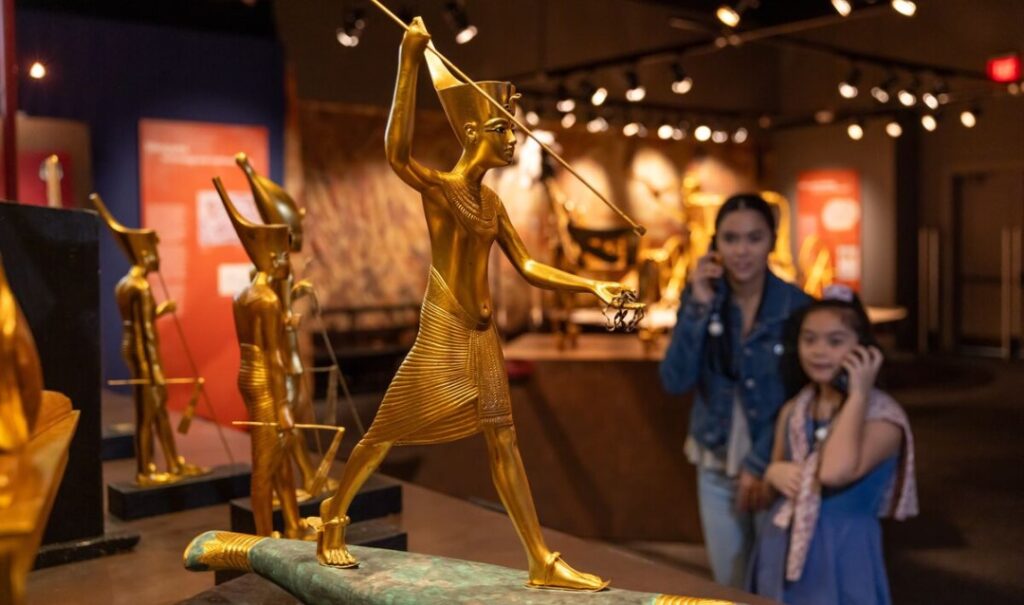
All ages enjoy exploring our “Tutankhamun: His Tomb and His Treasures” exhibition.
Plan now to experience Tutankhamun: His Tomb and His Treasures at Amherst at Deerpark® on the grounds of the estate. This immersive exhibition features breathtaking recreations of every artifact Carter found in the tomb of King Tut, arranged as they were originally discovered.
This exhibit also shines a spotlight on Biltmore’s own unexpected connection to ancient Egypt. From Lady William Cecil’s original watercolors to enlarged prints of photographs of John Cecil’s firsthand travels, you’ll discover how personal history and world heritage intersect in unforgettable ways.
Don’t miss your chance to walk in the footsteps of explorers, diplomats, and royalty, right here at Biltmore—dig into history and discover Biltmore’s fascinating historic connection to King Tut.
Featured image: John Cecil (second rider from right) with a group of unidentified embassy employees and guides on an archaeological tour at the Rammesseum, ca. 1919.
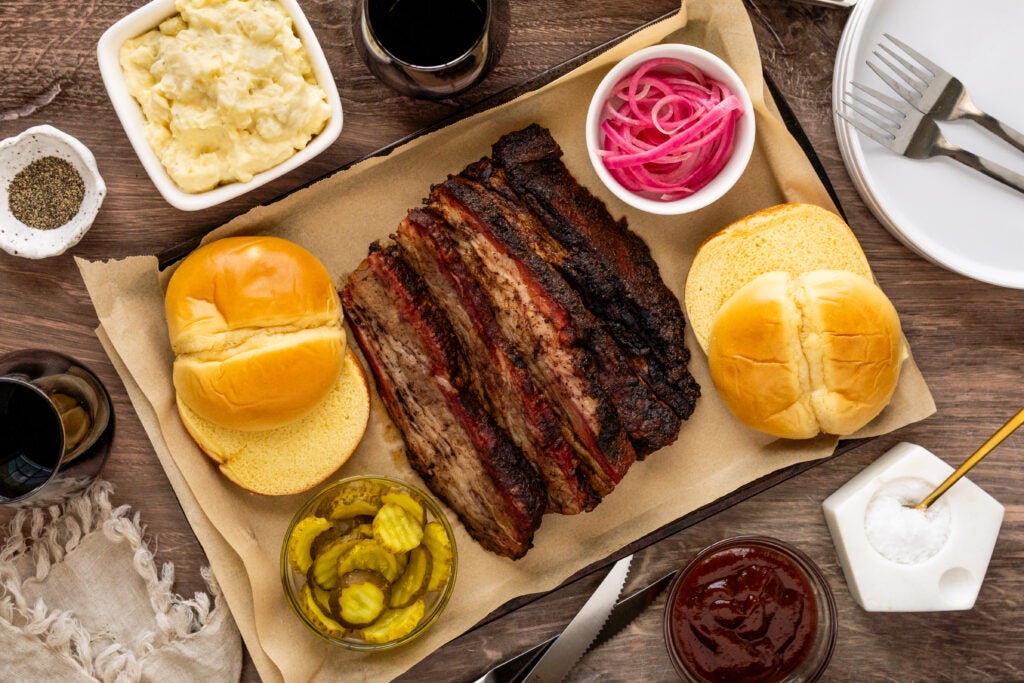
Nothing says summer like the mouthwatering flavors and aromas of BBQ! Follow this recipe from our Biltmore Estate chefs for a tender smoked or oven-roasted beef brisket with a simple Texas-style BBQ sauce.
Fire up the smoker for this mouthwatering Biltmore Brisket recipe with Texas-style BBQ sauce.
Beef Brisket with Texas-Style BBQ Sauce
Total time: 11 hours 30 minutes
Serving Size: 4-6 people
Ingredients:
BBQ Dry Rub
3 pounds beef brisket
½ cup paprika
¼ cup brown sugar
¼ cup chili powder
¼ cup kosher salt
¼ cup black pepper
2 tablespoons cayenne pepper
2 tablespoons ground cumin
Texas-Style BBQ Sauce
4 tablespoons blended oil (such as olive or canola oil)
1 yellow onion, roughly chopped
8 cloves garlic, roughly chopped
16 ounces light brown sugar, packed
16 ounces apple cider vinegar
1 bottle (32 ounces) prepared ketchup
2 teaspoons smoked paprika
2 teaspoons mustard powder
2 teaspoons kosher salt
2 teaspoons ground black pepper
Instructions:
Prepare the Texas-Style BBQ Sauce: Sauté onions and garlic in blended oil over medium heat until soft. Add sugar and vinegar; cook until slightly reduced. Stir in ketchup and spices and simmer for 15 minutes. Blend until smooth and use immediately or refrigerate for up to 7 days.
Smoke the brisket: Rub dry ingredients into brisket and smoke at 275°F for 2 hours. Roast uncovered at 300°F for 6 to 7 hours or until fork-tender. Rest for 30 minutes before slicing, then top with BBQ sauce.
If you don’t have a smoker, try oven roasting the brisket: Rub dry ingredients into brisket and place on a rimmed baking sheet lined with heavy-duty aluminum foil. Cover with aluminum foil and bake at 300°F for 6 hours. Uncover and continue baking for an additional 1-2 hours, or until fork-tender. Rest covered for 30 minutes before slicing, then top with BBQ sauce.
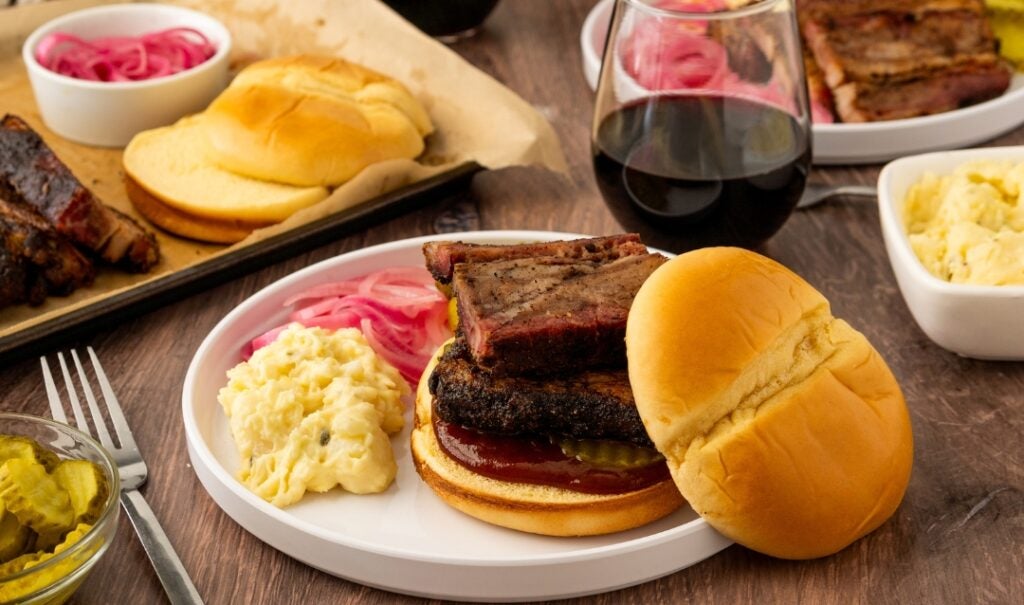
Serve your mouthwatering brisket sandwich or plate with our simple Texas-style BBQ Sauce and enjoy with your favorite sides and Biltmore wines.
Elevate your BBQ brisket by pairing with the rich, fruit-forward flavors of our suggested Biltmore red wines.
Biltmore’s values are rooted in responsibility, and have been since 1895 when George Vanderbilt invited the first guests to experience his new home in Asheville, NC.
If you’ve visited the estate in recent years, you have been immersed in our preservation mission first-hand as you’ve explored a newly restored room, admired an expertly-conserved work of art for the first time, or strolled across hand-laid brick pavers in Stable Courtyard.
What you may not have noticed, however, are the less visible corporate responsibility efforts that go on behind the scenes every day to create focus and accountability for our impact on society and conservation of our environment.
We invite you to take a look at how a family legacy guides the way we care for the people and world around us.
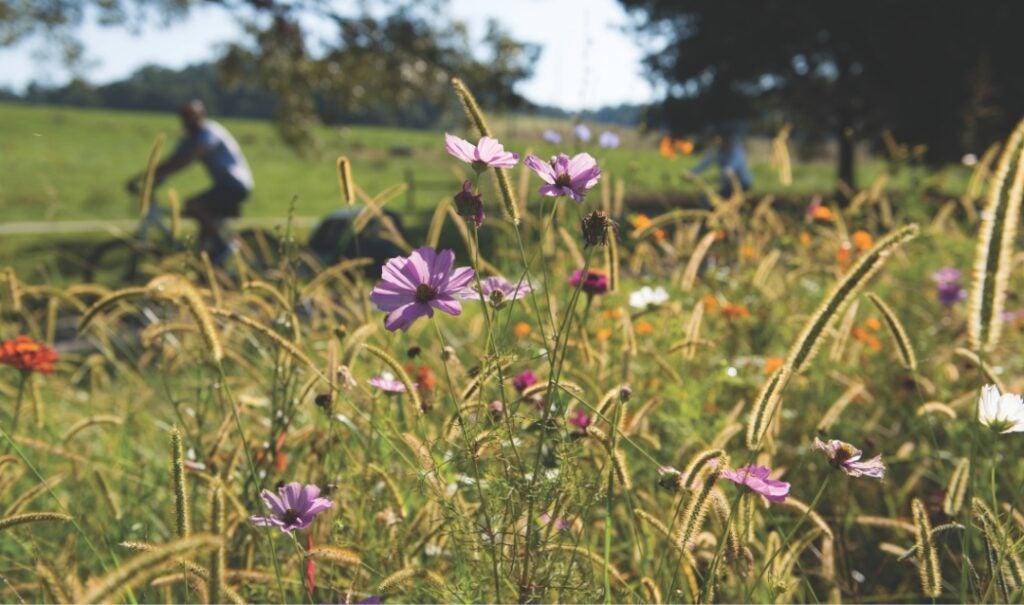
Every year, wildflowers and food plots are planted around the estate to support pollinators and wildlife.
Preservation with purpose
Though the term corporate social responsibility, or CSR, is relatively modern, the work behind the scenes at Biltmore is not.
“Corporate social responsibility has its beginnings in the way George Vanderbilt and his collaborators created this place, and that has continued through all the generations of family owners and leadership,” shares Tim Rosebrock, who serves as Biltmore’s Vice President of Legal & Compliance, and collaborates with leaders across the company and in the wider community to ensure that the values George Vanderbilt instilled are carried out with intention today.
At Biltmore, the purpose of corporate social responsibility is to contribute positively to the environment and society. These two focus areas are directly connected back to George and Edith Vanderbilt’s legacies and are supported through company-wide initiatives for sustained impact over time.
In the 1880s, George Vanderbilt envisioned Biltmore as a self-sustaining estate that nurtured the land and its resources. With the help of experts like Frederick Law Olmsted and Gifford Pinchot, what was once over-farmed and over-forested land became a model for sustainable and regenerative practices.
Today, we continue to honor this vision through our approach to environmental stewardship, sustainable agriculture and forestry, waterway management, and historic preservation of the estate.
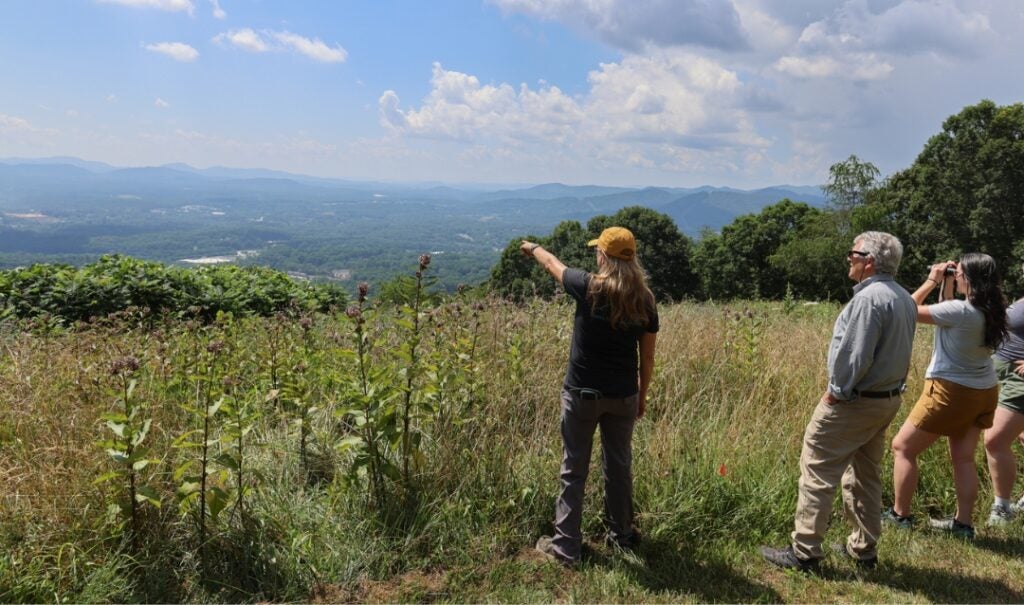
“But our commitment doesn’t stop at the gates,” says Tim. “We support local partners whose missions are to protect the greater region—preserving open spaces, view sheds, and biodiversity across Western North Carolina.”
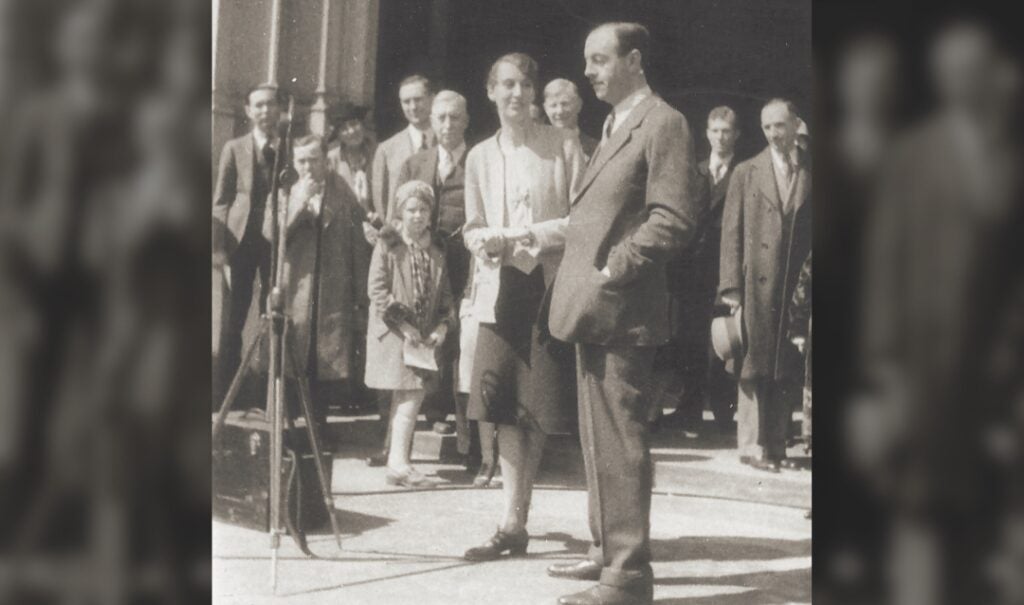
Archival image of Cornelia and John Cecil at the 1930 opening of Biltmore House to the public.
Societal impact: it takes a village
While George and Edith Vanderbilt’s commitment to their community and staff more than a century ago inspires our values, it was the next generation that made a big decision that left a lasting impact on Biltmore’s broader impact on the local economy.
According to Tim, “One of the most important impacts for our community over time goes back to 1930 when Asheville city leaders came to John and Cornelia Cecil and said, ‘Would you open Biltmore House to help us stimulate tourism?’”
Fast forward nearly 100 years, and Biltmore’s leaders remain committed to creating a welcoming culture for employees and guests on the estate and to supporting the community around us through partnerships with local organizations.
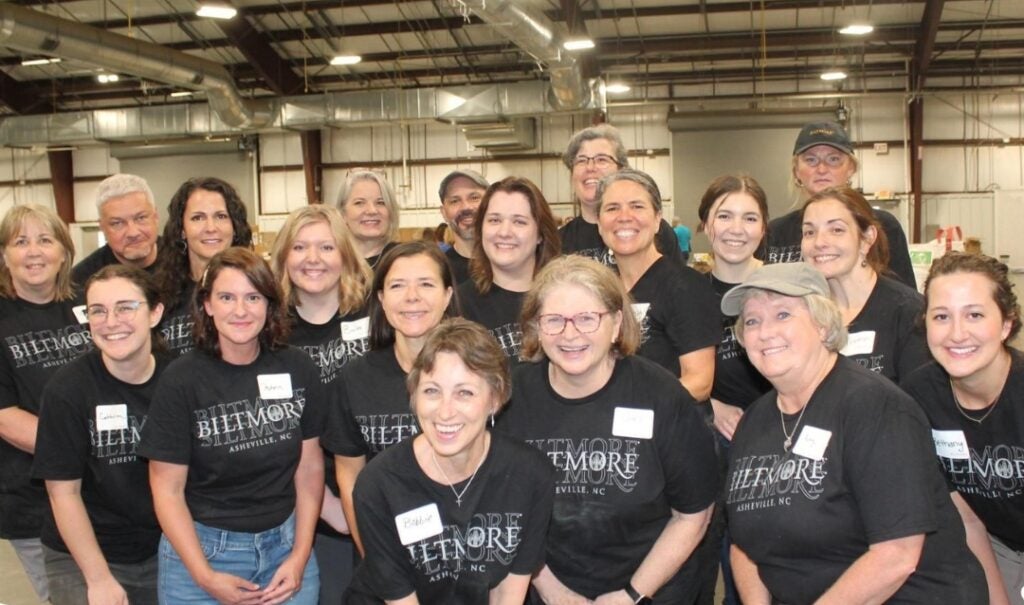
Biltmore team members “Pack to Give Back” with MANNA Foodbank.
Fulfilling our mission
“I think the decisions that every single one of us makes every single day are what ladder up to fulfilling our mission of preservation, living out our core values of integrity and community. And those small decisions make big contributions over time,” shares Tim.
A few real-world examples of decisions we make include:
Composting more than 1 million pounds of waste onsite for horticultural use
Sustainably managing more than 4,000 acres of forests and 2,500 acres of farmland
Ongoing historic preservation projects around the estate
Making financial contributions to local community aid and land conservation organizations
Making our historic interpretation accessible with more language options
Facilitating employee-led “green” teams and volunteer groups
Watch to learn more about Biltmore’s approach to corporate social responsibility.
Sustaining a legacy through corporate responsibility
As a company committed to continuous improvement, we recognize that there will always be more work to be done. We are honored to continue contributing to our society and natural environment for future generations. It’s the passion, purpose, and people of Biltmore who are carrying George Vanderbilt’s vision into the future, one thoughtful choice at a time.
Want to learn more about Biltmore’s ongoing preservation, community involvement, and environmental stewardship efforts? Be sure to follow us on social media, subscribe to our YouTube channel, and sign up for email newsletters for an ongoing look behind the scenes.
Biltmore Winery in Asheville, NC, celebrates its 40th anniversary in 2025, and we can’t wait to share our four decades of winemaking craft and care with two exceptional new wines created in honor of this milestone year!
Join us as we reflect on the legacy and dedication that goes into handcrafting and sharing our estate wines with you.
The beginning of Biltmore’s Winery
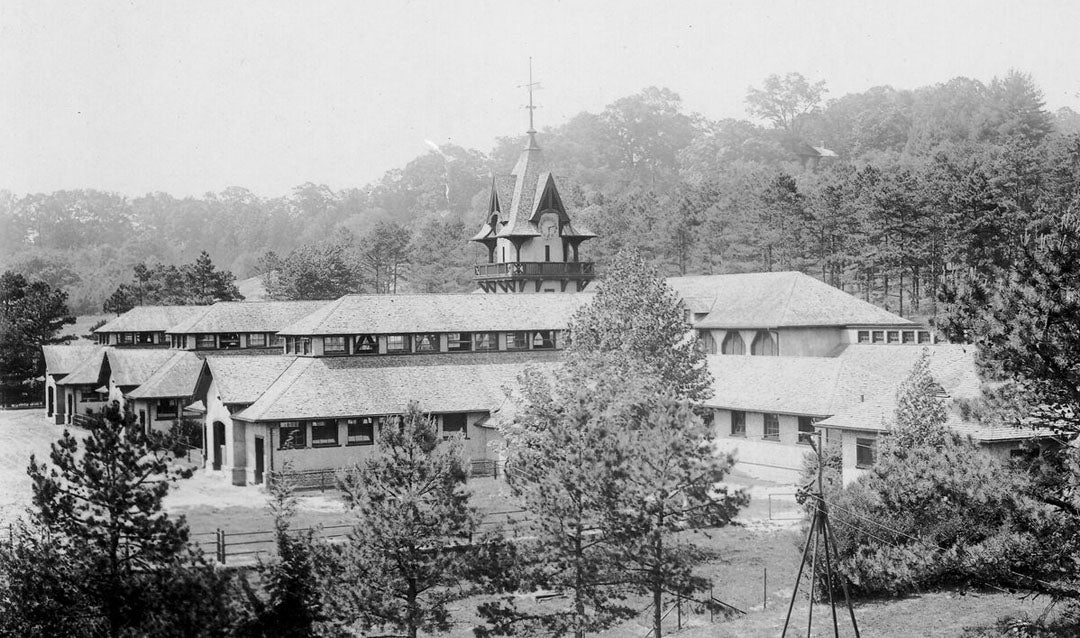
Biltmore’s Dairy Barn (now the Winery), May 30, 1913 (Courtesy of Alice Marie Lewis)
In the early 1970s, William A.V. Cecil, grandson of Biltmore founder George Vanderbilt, asked “What’s more appropriate for a French chateau than vineyards and a winery?”
He answered his own question by planting grapes at Biltmore and hiring French winemaster Philipe Jourdain to guide the process. By 1983, work was underway to convert an original estate dairy barn into a state-of-the-art winery.
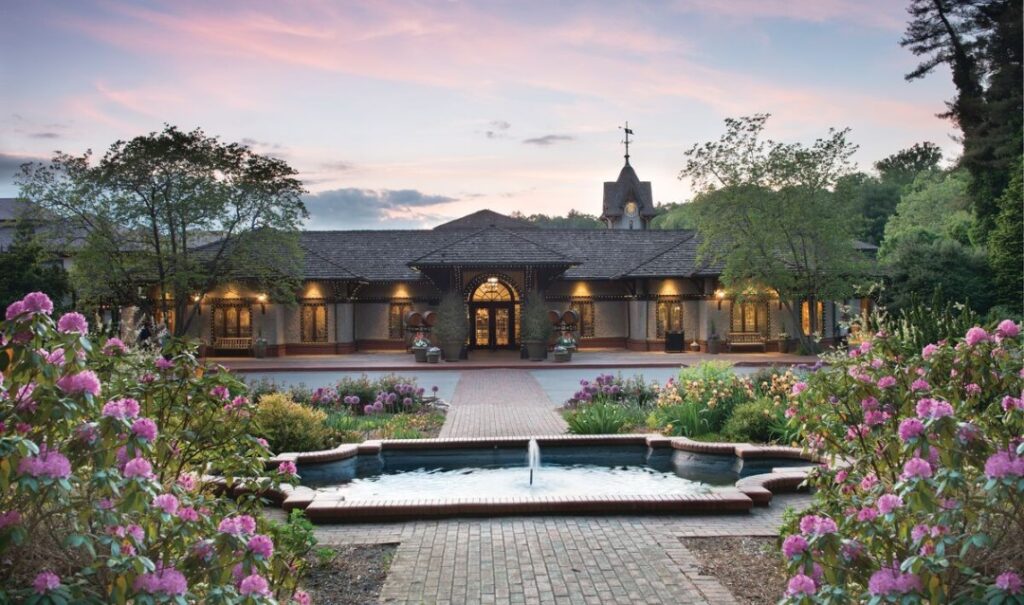
Biltmore Winery is housed in a converted dairy barn that was original to the estate.
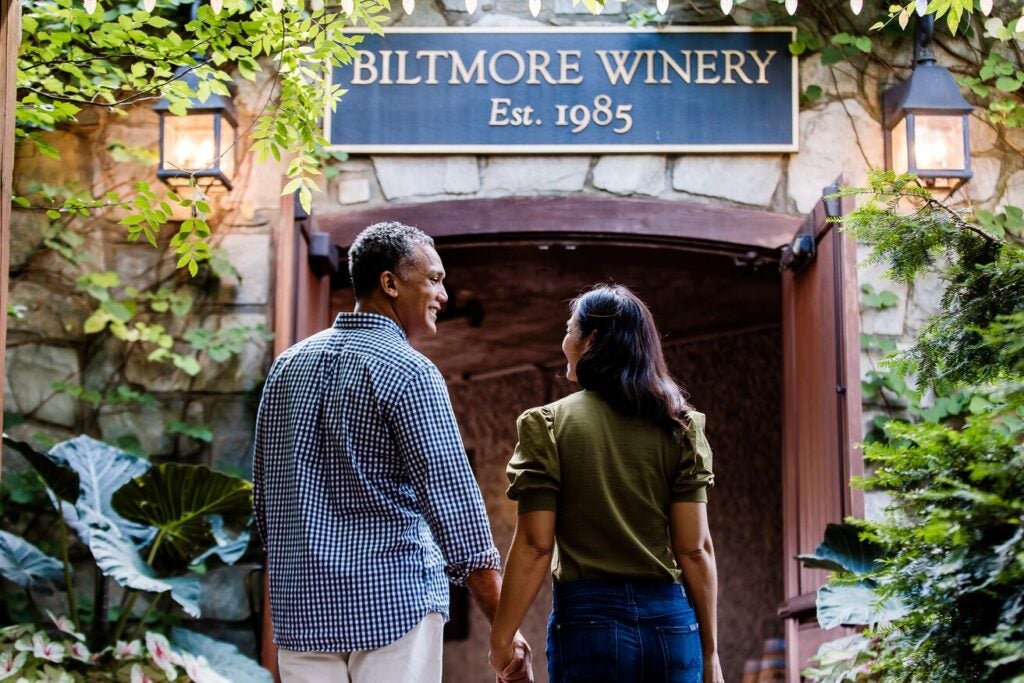
In May 1985, Biltmore Winery opened to the public. Four decades later, we handcraft more than 150,000 cases of award-winning Biltmore wine annually in our onsite production facility.
Biltmore’s woman-led winery
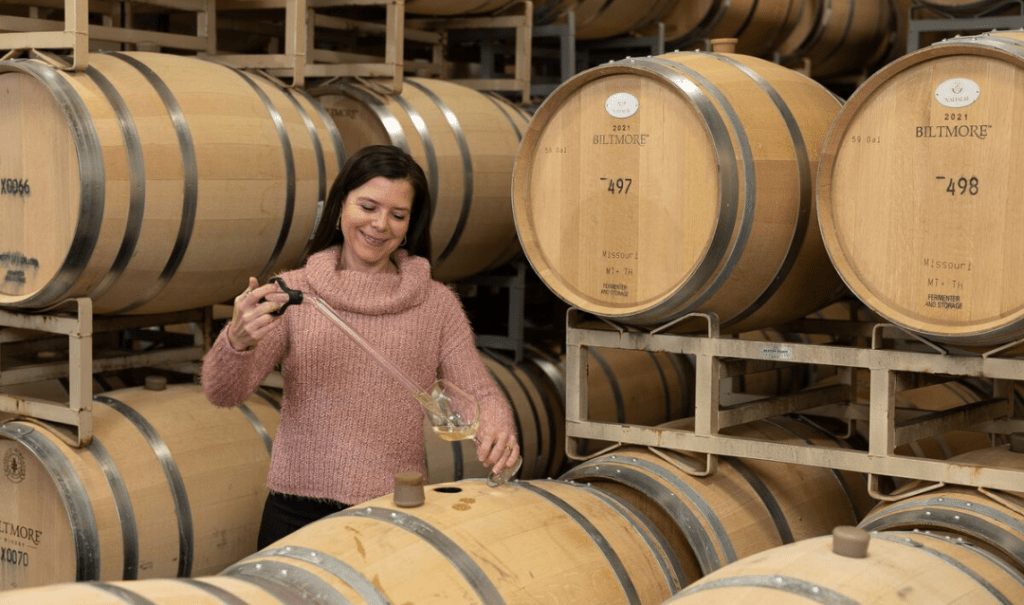
Winemaker Sharon Fenchak uses a wine thief syphon in the Barrel Room at Biltmore Winery.
Sharon Fenchak has served as Biltmore’s head winemaker since 2018, creating wines worthy of the finest Vanderbilt traditions of taste and style. She handcrafts Biltmore wines with the philosophy of keeping each one true to varietal character and consistent from vintage to vintage.
“My love of science at a very young age helped shape what would become my passion for winemaking, and I fell even more in love with the idea and romance of wine when I was serving in the US Army and stationed in Vicenza, Italy,” Sharon says.
Sharon Fenchak is a leader in the field of handcrafting fine wines, and she enjoys a hands-on approach to winemaking.
While winemaking has traditionally been a male-dominated field, Sharon and other women winemakers are crushing that perception as they continue pouring their talents into their craft.
Four decades of award-winning Biltmore wines
From our own vineyards on the west side of the estate to our grape-growing partners across the nation from Virginia to California and Washington, we source only the finest fruit for Biltmore wines.
Biltmore’s vineyards overlook Long Valley Lake on the west side of the estate.
This strategy helps us craft a wide range of palate-pleasing wines, including popular varietals like Pinot Noir and Orange Muscat that don’t thrive in Western North Carolina’s climate.
“Our weather isn’t as predictable as that of other major grape-growing regions,” explains Philip Oglesby, Vineyard Manager, “but when conditions are right, the fruit produced in our estate vineyards is exceptional and earns the Biltmore® Reserve label for our finest North Carolina vintages.”
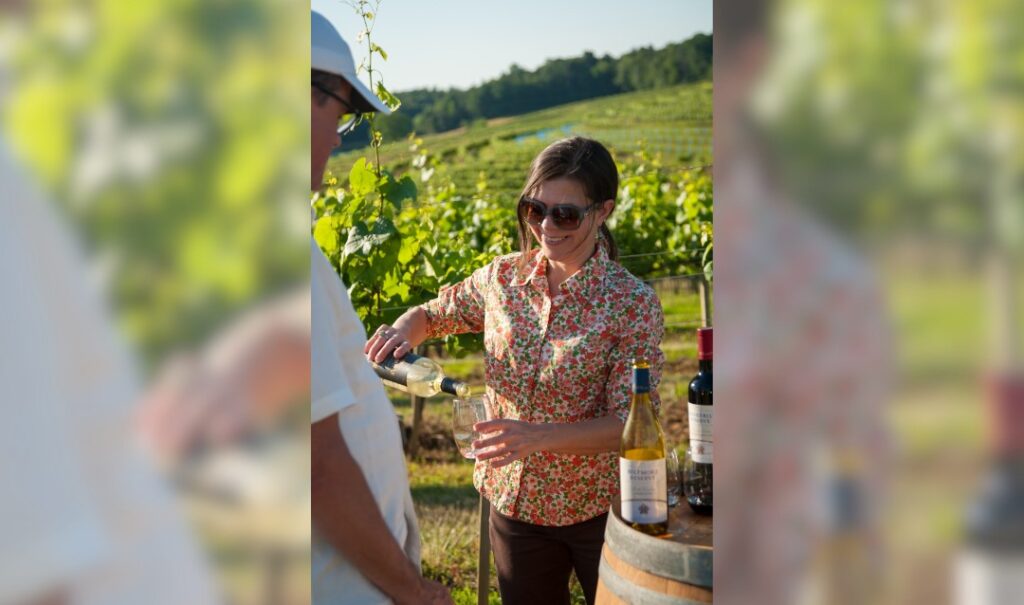
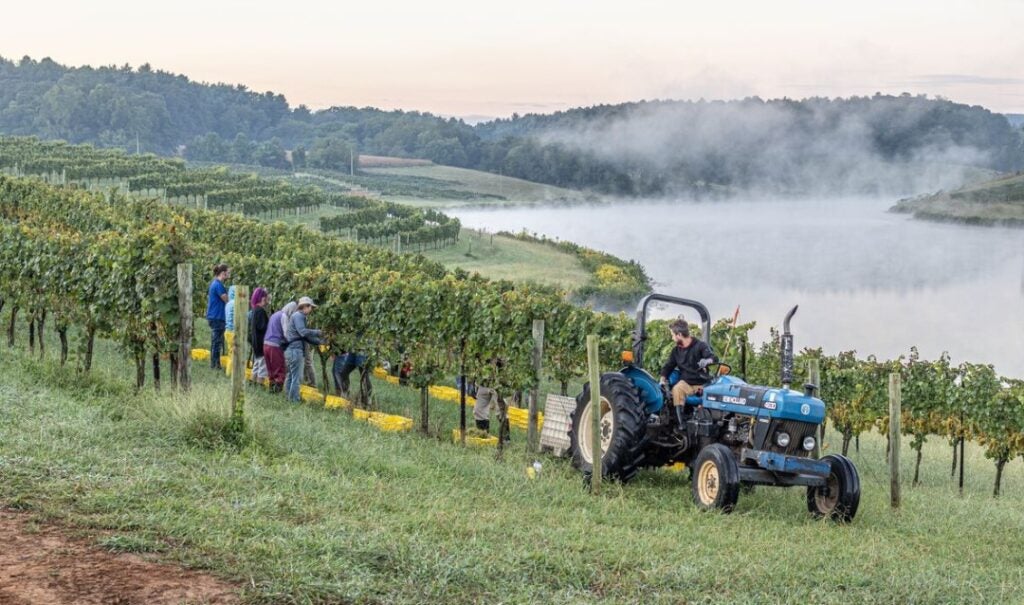
Each fall, Philip and his team harvest grapes by hand in Biltmore’s vineyard on the west side of the estate.
According to Philip, when you taste our wines crafted from estate-grown grapes, you’re tasting the heart of the Appalachian Mountains—some of the oldest terroir in the world. Terroir refers to the complete natural environment in which the grapes for wine are grown and in which the wines themselves are produced and aged. It includes factors such as the soil, topography, and climate.
Biltmore’s Winery is better than ever!
With 40 years of winemaking expertise and gracious hospitality to guide it, Biltmore Winery is more excited than ever to continue entertaining, educating, and delighting you with our family of award-winning wines.
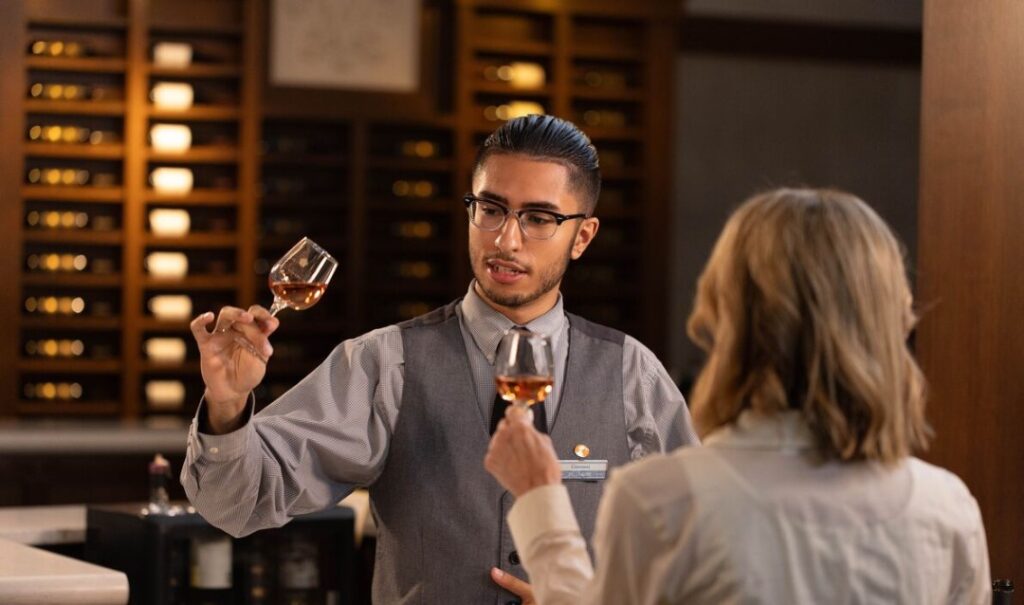
Our knowledgeable Tasting Room hosts guide you through a fun and informative tasting of Biltmore wines.
“Biltmore Winery offers something for everyone, from the wine enthusiast who wants to learn more about our history and winemaking philosophy to the newcomer who just wants to taste our wines for the first time,” says Courtney Miller, Director of Winery Experience. “That’s what makes it such a wonderful part of any Biltmore visit—it’s a fun introduction to the world of wine!”
“Join us for a free tasting,” Courtney advises. “You’ll choose five wines from a seasonal selection of about 20 of our best-selling varietals and blends, and our Winery hosts are on hand to assist you.”
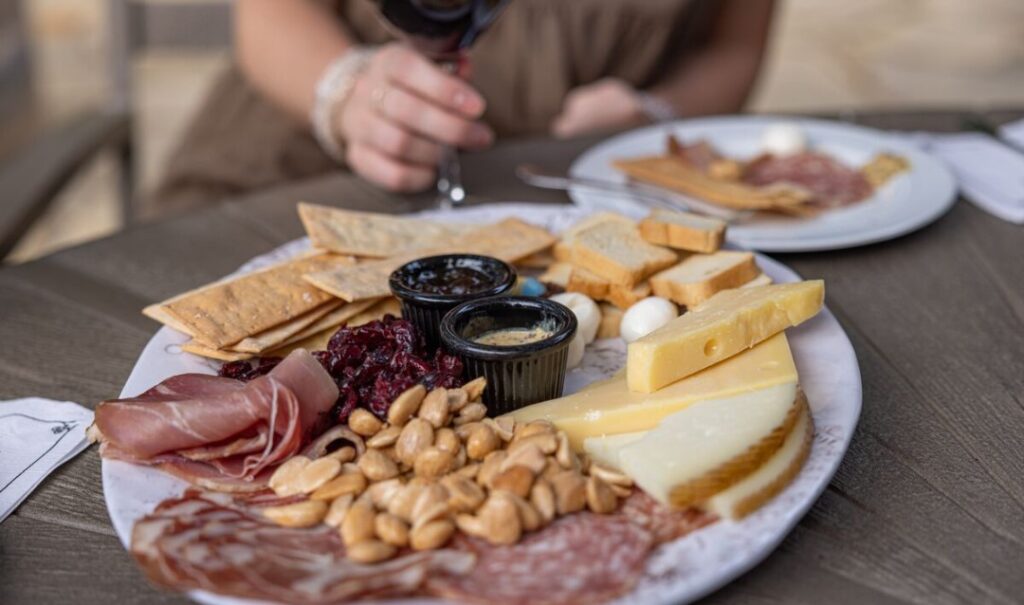
Savor a delicious charcuterie plate along with your favorite Biltmore wines at the Wine Bar.
Access to Antler Hill Village & Winery is included in all types of estate admission.
“The Winery is a great place to unwind at Biltmore,” says Courtney, “and a great place to gather with friends. After all, we’ve had 40 years to practice, and practice makes perfect!”
Ruby-red wines for our ruby anniversary
To celebrate Biltmore Winery’s 40th anniversary—a milestone traditionally honored with rubies—Sharon handcrafted two exceptional red wines that capture different facets of Biltmore’s working winery.
The first is our 40th Anniversary Release Sonoma County Red Blend—a bold, ruby-red fusion of California-grown Cabernet Franc, Cabernet Sauvignon, and Syrah. It pairs perfectly with a wide range of foods and occasions, from casual gatherings with family and friends to elegant evening events.
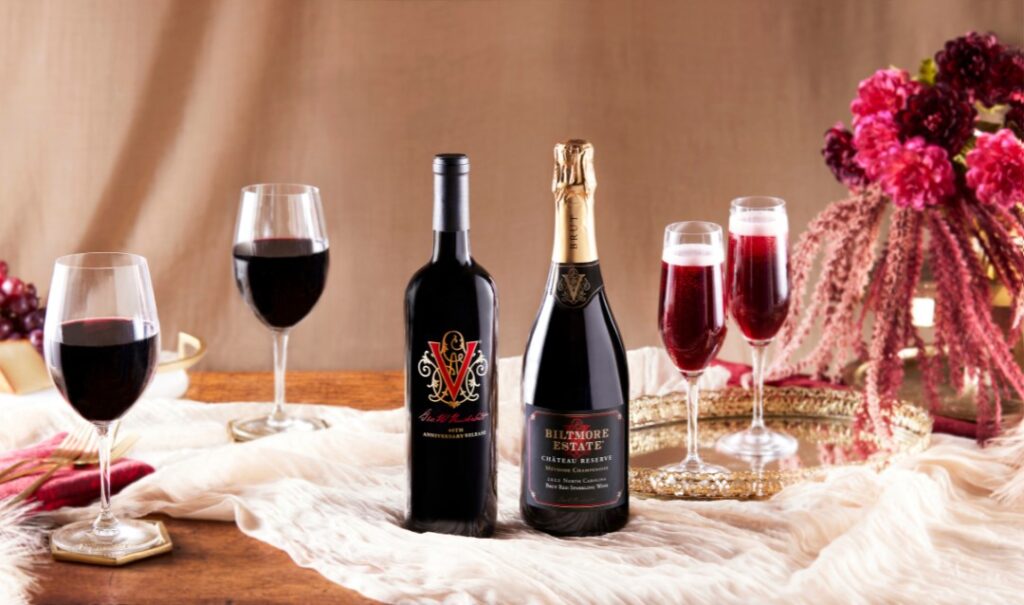
Celebrate Biltmore Winery’s 40th anniversary with two exceptional wines: our 40th Anniversary Release Sonoma County Red Blend and Biltmore Estate® Château Reserve North Carolina Brut Red Sparkling 2022.
Savor delicious flavors of blackberry, pomegranate, spice, and oak now with aged beef, duck, stuffed mushrooms, and Gorgonzola cheese, or allow the wine’s great tannin structure to enhance its excellent aging potential. Created specifically to mark our 40th anniversary, this bold blend will be available beginning May 1 in estate shops and online while supplies last.
We’re also thrilled to share a new release in honor of Biltmore Winery’s 40th anniversary: Biltmore Estate® Château Reserve North Carolina Brut Red Sparkling 2022. Handcrafted in the traditional methode champenoise to create the finest bubbles, the grapes were selected from the best of North Carolina’s 2022 harvest. From appetizers to anniversaries, this outstanding red sparkling wine makes any occasion more special. Find the inaugural vintage in estate shops and online now.
Visit now and celebrate Biltmore Winery’s 40th Anniversary!
After tasting our wines, you can stock up on favorite varietals and accessories in the Wine Shop, savor charcuterie, artisan chocolates, and wines by the glass at the adjacent Wine Bar, and learn more about membership in the Vanderbilt Wine Club®.
From exploring the grand halls of our historic chateau to savoring our handcrafted wines or exploring the rolling hills of our private mountain oasis, there’s something for everyone to enjoy at Biltmore!
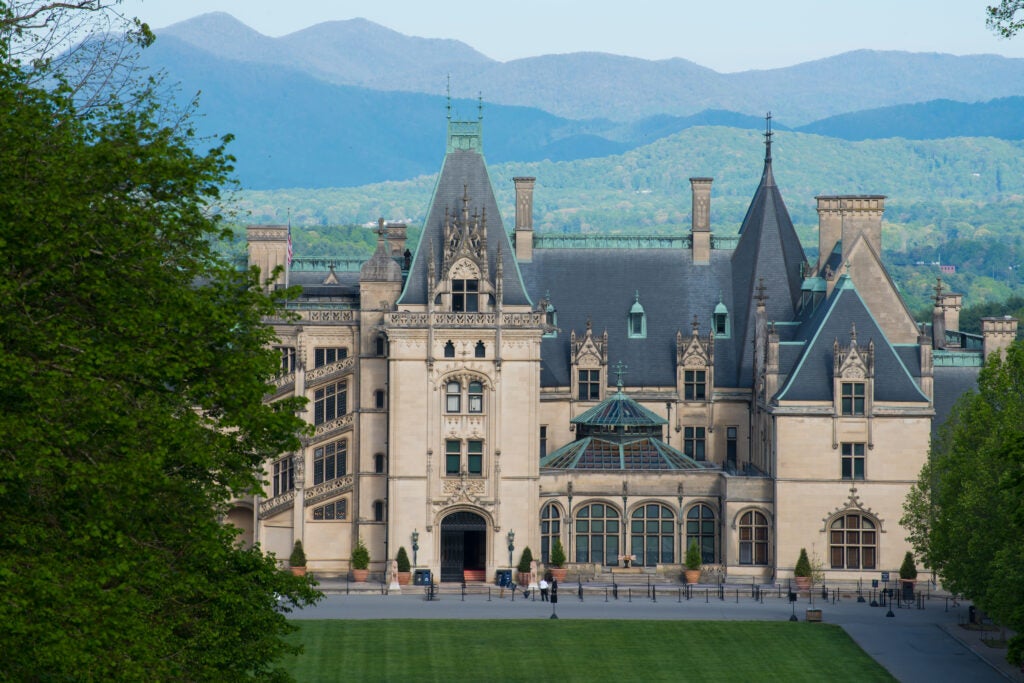
With so many options to explore, we recommend making the most of your visit by planning to spend two (or more!) full days on Biltmore Estate. This flexible Biltmore visit itinerary is designed to be easily tailored based on your preferences, reservation times, and our current activities and events, allowing you to focus on having fun on our 8,000-acre estate.
Make the most of your visit to Biltmore Estate in Asheville, NC.
Two-day Biltmore visit itinerary
For a leisurely and immersive visit to Biltmore, we recommend spreading your estate experiences across two full days, where you will have more time (and energy) to truly soak in all that Biltmore has to offer!
Tip: Select ticket types include FREE next-day access to explore the estate’s gardens and grounds, visit the Winery, or add on guided experiences. Be sure to check your admission type or overnight package for this perk and plan to come back the next day to take advantage of even more time to explore the estate.
DAY ONE
🏰 Morning to mid-day: Biltmore House (1.5 to 2 hours) Step into the grandeur of Biltmore House while learning about the history, the fine art and furnishings, and of course, the people, behind this Gilded Age masterpiece. With our Biltmore House tours, you’ll have the opportunity to discover the home and stories through our complimentary Audio Guide or take a deep dive into one of our fascinating expert-guided tours based on your interests.
Tip: Advanced reservations are required for all Biltmore House visits. If your reservation is in the afternoon or early evening, you may choose to explore the Gardens or Antler Hill Village first!
🥗 Early afternoon: Lunch at an Estate Restaurant (1 to 1.5 hours) Savor a delightful field-to-table meal at one of Biltmore’s distinctive restaurants, including Stable Café, Cedric’s Tavern, Bistro, or Village Social. If casual grab-and-go or picnic is more your style, be sure to stop by The Bake Shop or Biltmore Dairy Bar near Biltmore House, or the Smokehouse food truck or The Creamery in Antler Hill Village. Fine dining is available at our four-star Dining Room at The Inn.
Tip: Dining reservations are highly recommended. If you’re planning to explore the gardens next, we recommend taking advantage of dining options in the Stable Courtyrd area next to Biltmore House.
🌷 Late afternoon: Gardens and Conservatory (1 to 2 hours) Spend time finding your new favorite flower and indulging your senses with a visit to Biltmore’s historic gardens and glass-ceilinged Conservatory. Admire the meticulously maintained historic greenhouses filled with tropical plants year-round.
Tip: Select ticket types include FREE next-day access to explore the estate’s gardens and grounds, visit the Winery, or add on guided experiences.
DAY TWO
🥗 Mid-day to early afternoon: Lunch at an estate restaurant (1 to 1.5 hours) Savor a delightful field-to-table meal at one of Biltmore’s distinctive restaurants, including Stable Café, Cedric’s Tavern, Bistro, or Village Social. If casual grab-and-go or picnic is more your style, be sure to stop by The Bake Shop or Biltmore Dairy Bar near Biltmore House, or the Smokehouse food truck or The Creamery in Antler Hill Village. Fine dining is available at our four-star Dining Room at The Inn.
Tip: Dining reservations are highly recommended.
🧭 Afternoon: Guided experience(1.5 to 2 hours)
Choose from a variety of expert-guided tours and experiences to help make your visit to Biltmore even more memorable! Consider upgrading your visit to include expert-led tours to rarely accessed areas of Biltmore House, guided (or self-guided) outdoor adventures through our historic landscapes, or even a guided wine tasting featuring locally made chocolate pairings.
Tip: Select ticket types and overnight stay packages include length-of-stay access to Biltmore House!Be sure to check current hours of operation to make the most of your visit.
🥂 Evening: Antler Hill Village & Winery (2+ hours) Stop by our award-winning winery to toast two fun-filled days at Biltmore with one of our handcrafted estate wines! Linger into the evening in Antler Hill Village, where you can shop for unique gifts, such as gourmet treats, wines, and the perfect mementos, learn about the Vanderbilt family and their life at home and abroad at The Biltmore Legacy, and savor field-to-table dining.
Tip: If you’re traveling with small children, be sure to visit Pisgah Playground, the Farmyard, and Antler Hill Barn for educational family fun for all ages.
Whether you’re a wine connoisseur or want to experience your first wine tasting, be sure to stop by our estate Winery.
One full day Biltmore visit itinerary
If you only have one day to explore our historic estate, here’s what we recommend prioritizing for an action-packed way to experience all that is included in your Biltmore admission.
Tip: Select ticket types include free next-day access to explore the estate’s gardens and grounds, visit the Winery, or add-on guided experiences. Be sure to check your admission type or overnight package for this perk and plan to come back the next day to take advantage of even more time to explore the estate.
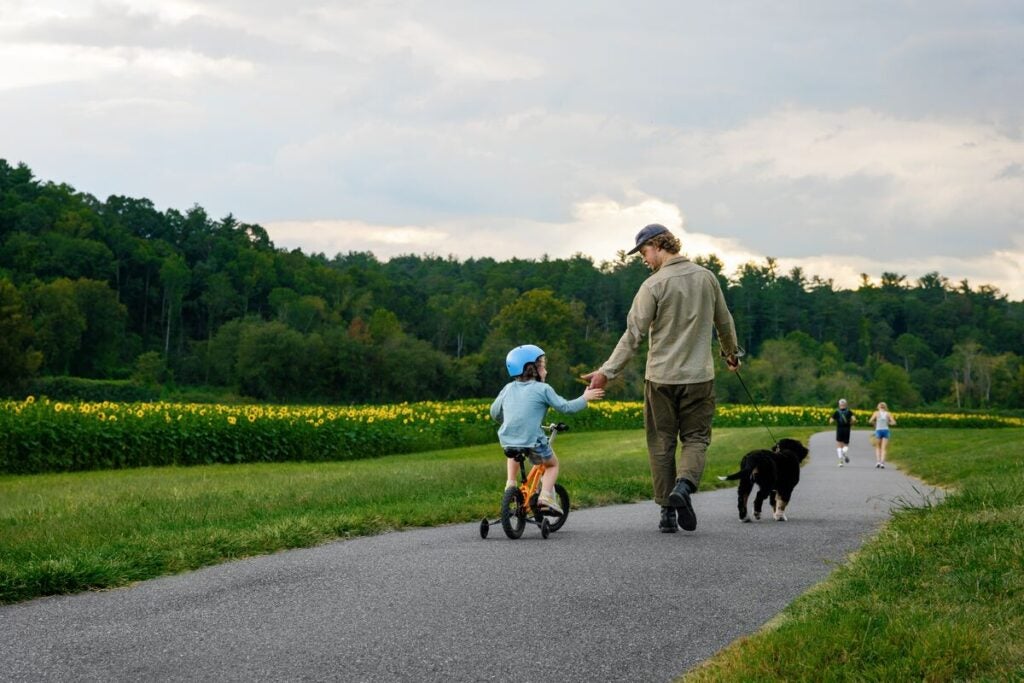
🌤️ Morning: Embark on an adventure (1 to 2 hours) Your estate admission grants you access to come early to explore the gardens, grounds, shops, and more. Take advantage of this quiet time of day to stretch your legs with a morning stroll or bike ride along estate trails, participate in a guided experience through our Outdoor Adventure Center, or arrive early to explore the gardens before your Biltmore House visit.
Tip: Look for special overnight stay packages that feature exclusive early morning visits to Biltmore House.
🥗 Mid-day: Lunch at an estate restaurant (1 to 1.5 hours) Savor a delightful field-to-table meal at one of Biltmore’s distinctive restaurants, including Stable Café, Cedric’s Tavern, Bistro, or Village Social. If casual grab-and-go or picnic is more your style, be sure to stop by The Bake Shop or Biltmore Dairy Bar near Biltmore House, or the Smokehouse food truck or The Creamery in Antler Hill Village. Fine dining is available at our four-star Dining Room at The Inn.
Tip: Reservations are highly recommended.
🏰 Afternoon: Biltmore House (1.5 to 2 hours) Step into the grandeur of Biltmore House while learning about the history, the fine art and furnishings, and of course, the people, behind this Gilded Age masterpiece. With our Biltmore House tours, you’ll have the opportunity to discover the home and stories through our complimentary Audio Guide or take a deep dive into one of our fascinating expert-guided tours based on your interests.
Tip: Advance reservations are required for all Biltmore House visits. If your reservation is in the afternoon or early evening, you may choose to explore the Gardens or Antler Hill Village first!
🌷 Late afternoon: Gardens and Conservatory (1 to 2 hours) Find your new favorite flower and indulge your senses with a visit to Biltmore’s historic gardens and glass-ceilinged Conservatory. Admire the meticulously maintained historic greenhouses filled with tropical plants year-round.
Tip: Select ticket types include free next-day access to explore the estate’s gardens and grounds, visit the Winery, or add on guided experiences.
🥂 Evening: Antler Hill Village & Winery (2+ hours) Stop by our award-winning winery to toast a fun-filled day with one of Biltmore’s handcrafted estate wines! Linger into the evening in Antler Hill Village, where you can shop for unique gifts, such as gourmet treats, wines, and the perfect mementos, or learn about the Vanderbilt family and their life at home and abroad at The Biltmore Legacy, and savor field-to-table dining.
Tip: If you’re traveling with small children, be sure to visit Pisgah Playground, the Farmyard, and Antler Hill Barn for educational fun for all ages.
Plan ahead! Allow yourself plenty of time to relax, play, and enjoy all that your estate visit has to offer.
Helpful Biltmore visit tips:
Below are a few additional tips for your Biltmorevisit itinerary. For even more helpful information to help you prepare for your Biltmore Estate visit, we recommend exploring our Visitor Information site section.
Plan ahead: Don’t wait to purchase your Biltmore admission or special overnight packages to secure your preferred dates and times!
Getting around the estate: Many guests underestimate the vast size of Biltmore Estate. With miles between points of interest, we recommend allowing your party at least 30 minutes for travel and parking between estate locations. For helpful guidance on estate accessibility, please explore our Help Center.
Dress comfortably: Wear comfortable shoes and dress in layers appropriate for the season and the types of activities you plan to do during your visit, especially if you opt to participate in any outdoor adventure activities.
Watch the weather: The weather in our region can change quickly, which may result in unexpected temporary closures of our trails or outdoor activities during severe weather. We appreciate your understanding!
Make it a getaway: With so much to experience, treat yourself and your loved ones to a memorable getaway with an overnight stay on Biltmore Estate. Book an overnight package or stay that includes Biltmore House admission to enjoy a daytime visit to Biltmore House with an audio guide at your leisure and as often as you would like during the length of your stay!
Make the most of your experience: All Biltmore admission types include access to explore Antler Hill Village & Winery and our historic gardens and grounds. Explore ticket types that include access to Biltmore House, Luminere™ (hosted on select evenings), free next-day grounds access, and more! Additional add-on experiences, such as guided tours and guided outdoor activities, are available as well.
Don’t forget your mementos: Visit our exclusive estate shops to find unique gifts and gourmet treats, like award-winning Biltmore Wines or honey from our estate beehives, to bring the Biltmore legacy home with you.
Find more tips: For even more guidance on what activities you might want to consider during your Biltmore visit for family fun, outdoor adventure, or food and wine, be sure to check our other itineraries and guides.