Creating Curb Appeal in front of Biltmore House

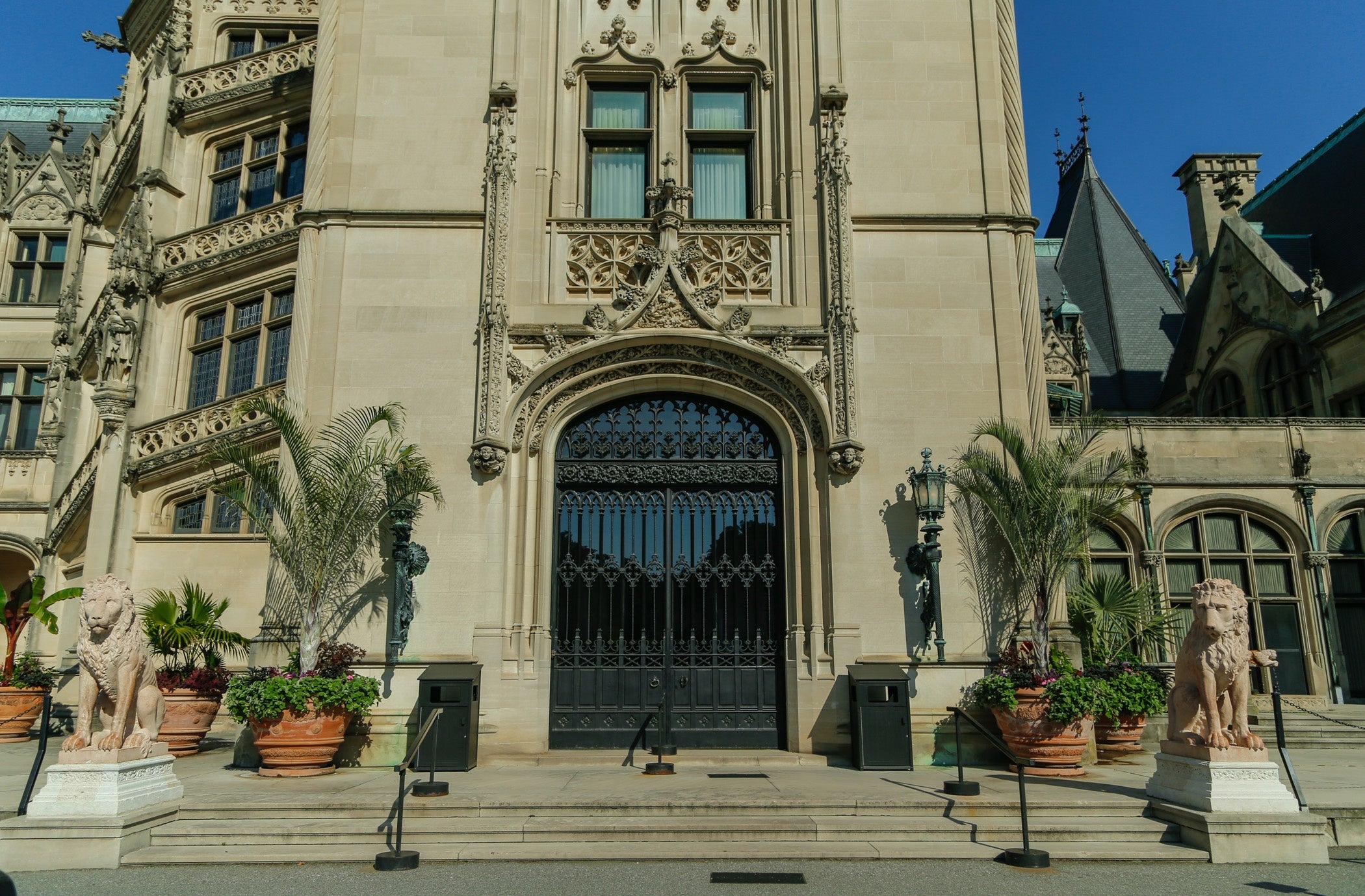
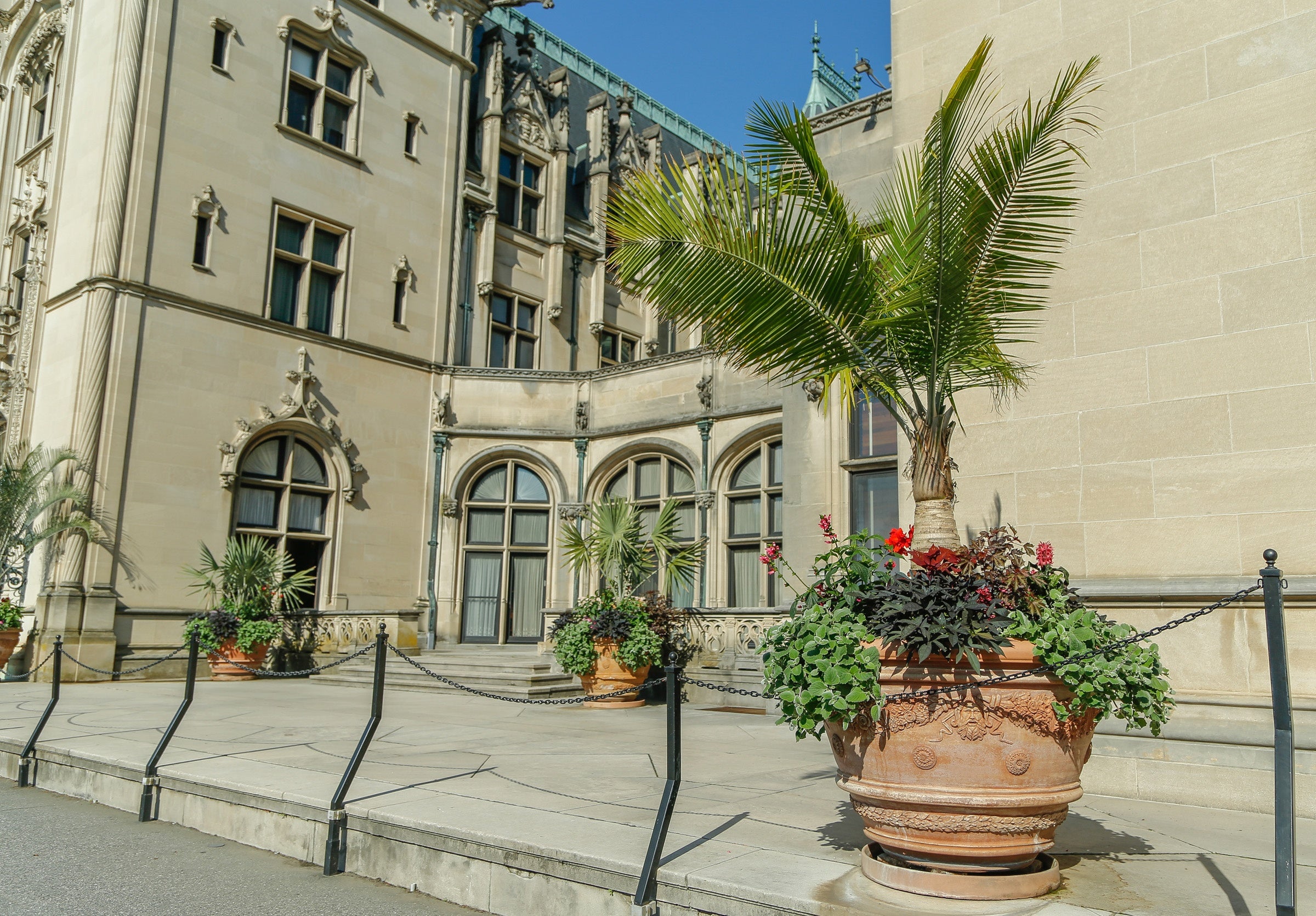
To say that the summertime curb appeal in front of Biltmore House veers toward the dramatic would be accurate! Towering palm trees flank the front door, all of them carefully arranged in terracotta pots sturdy enough to keep the contents secure. For plantings this huge, their containers can measure up to 40 inches tall and 50 inches wide.

Photo of the entrance at front of Biltmore House.

Some of the containers in front of Biltmore are replicas made in Impruneta, Italy, the same town in which the home’s original pots were made in the late 1800s. For the reproductions, the faces and garlands were matched with the ones on the original pots.

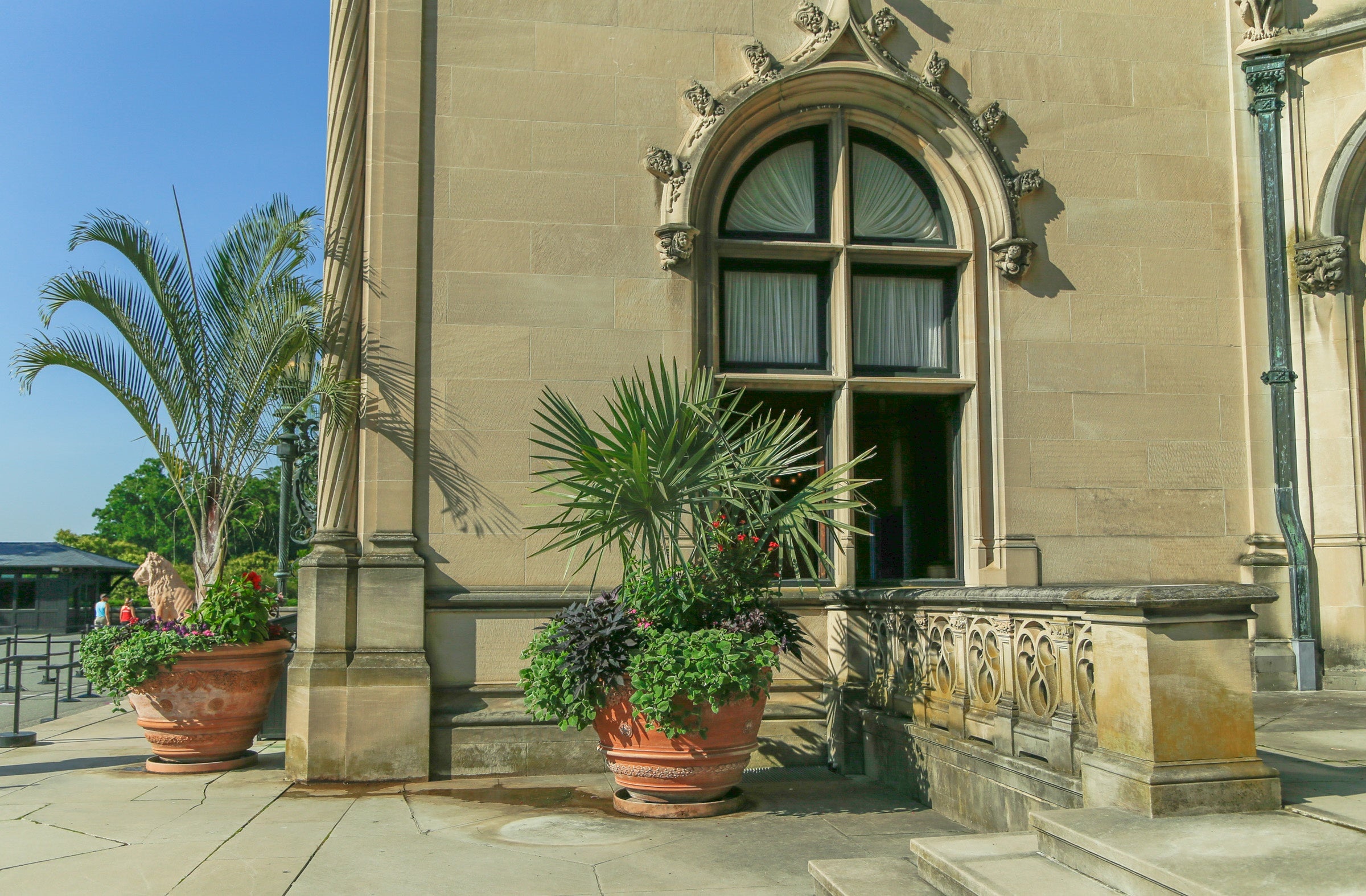
Photo of the side of front of Biltmore House with large potted plants.

This year, Biltmore gardener Todd Roy created the plant design for the containers at the front of the house, the terrace that crosses the facade, as well as the pots at the base of the Rampe Deuce, across from the house.

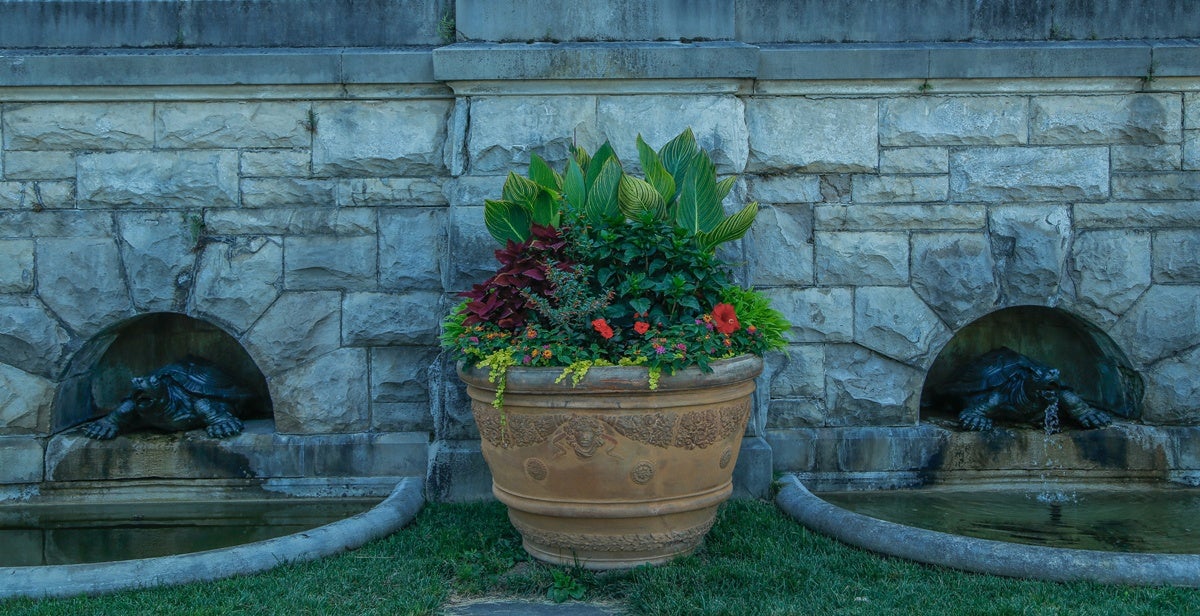
Photos of large potted plants in front of Biltmore

Guests often ask Todd and his cohorts on the horticulture team questions on how best to get the Biltmore look in their home gardens. Here are some of Todd’s favorite tips for creating dazzling container gardens at home.

“Thriller, Filler and Spiller”

To achieve a balanced container, Todd says to design with these basic components.

• “Thrillers” are the upright, tall component.

• “Fillers” are medium-height, middle-area plants.

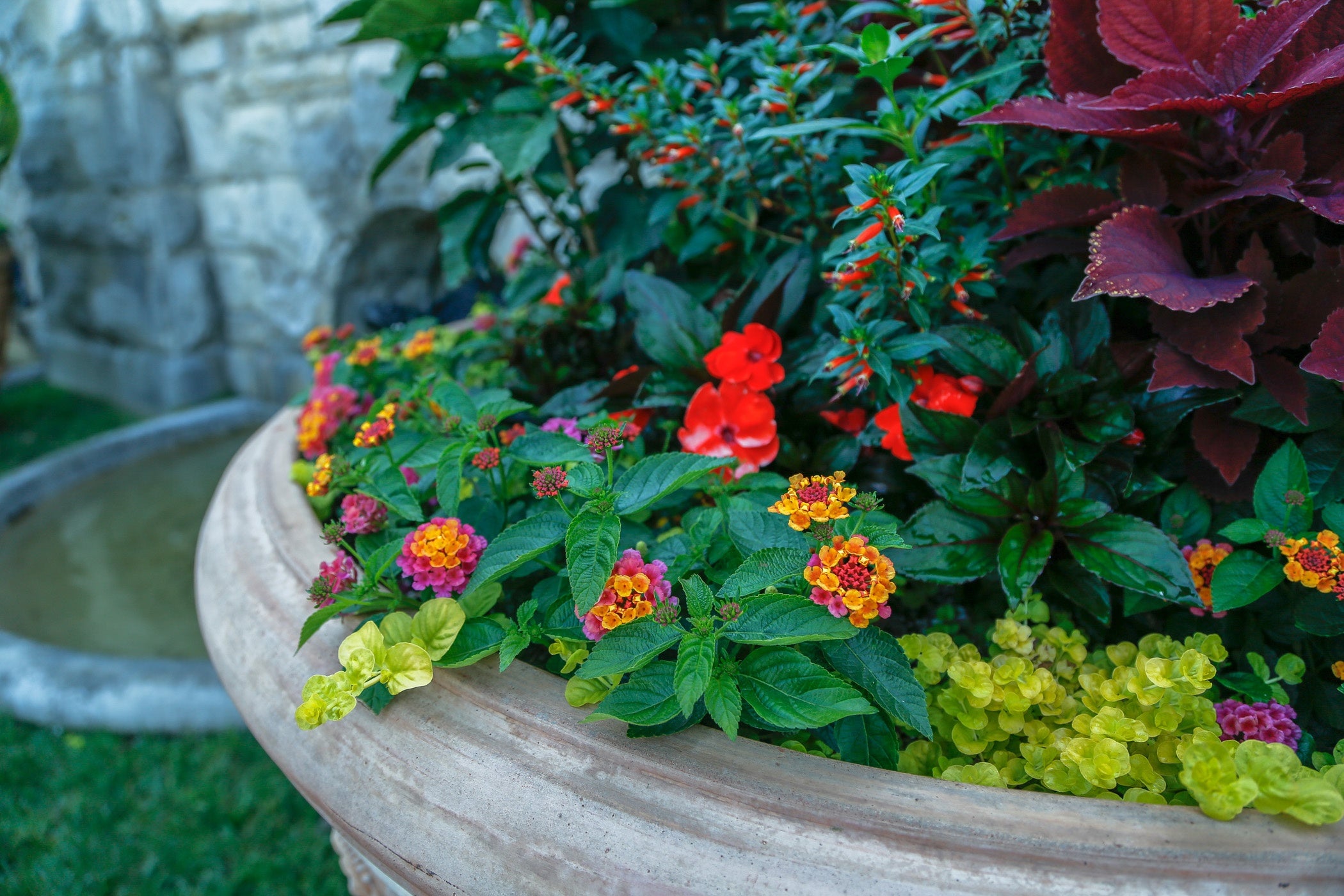
• “Spillers” are the plants that hang over and around the edges of the container.

Photo of beautiful flowers ranging in size, shape, and color.

Select plants with similar watering needs
Consult the plant tags for watering requirements so you are choosing plants that share the same maintenance schedule.

Picture of large potted plants at Biltmore.

Texture
And finally, select plants with differing leaf sizes and colors for a full and lush effect.

More about Biltmore’s historic gardens may be found here.

Savor Summer with Biltmore’s Limited Release White Wines

Savor summer with Biltmore Estate Limited Release white wines, handcrafted by Sharon Fenchak, Executive Winemaker, and refresh your palate all season long.

“Of course, white wines aren’t just for summer,” said Sharon, “but they are uniquely suited to provide crisp, refreshing flavor and pair well with the kinds of lighter foods we enjoy most during warmer weather.”

For our Biltmore Estate Limited Release wines, Sharon seeks smaller lots of exceptional grapes from our partner vineyards in California and Washington, allowing her to showcase her skillful artistry in each bottle.

Let’s take a look at four Limited Release white wines crafted from varietals that may be less well known than more mainstream whites such as Chardonnay and Pinot Grigio:

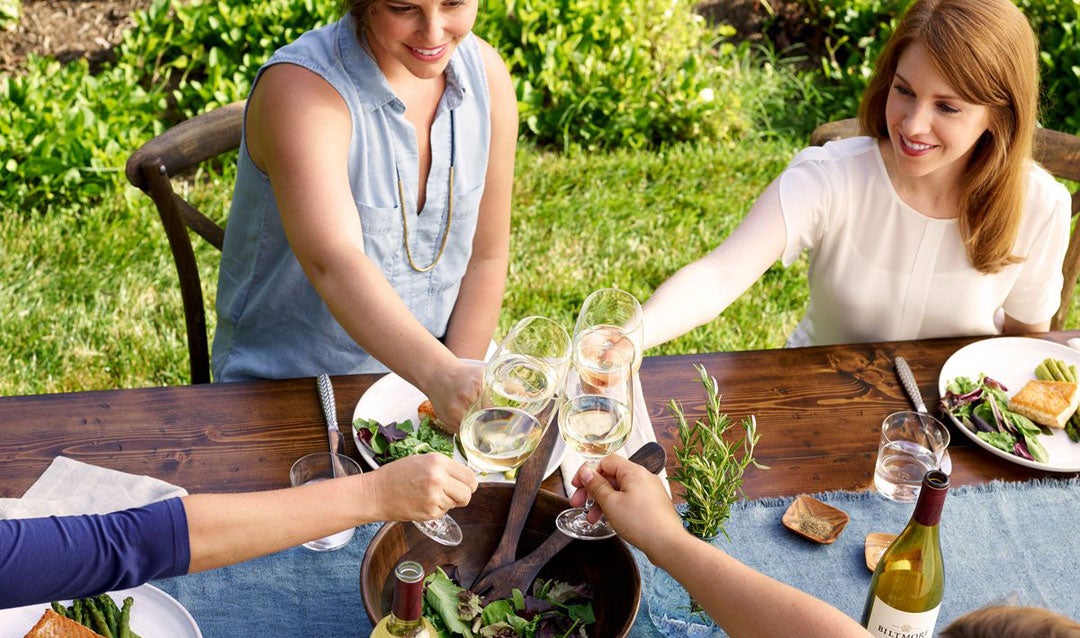
Friends toasting with Biltmore wine
Biltmore Estate® Limited Release white wines makes any occasion more special!

1. Biltmore Estate® Limited Release Dry Riesling

Originally from Germany’s Rhine River region, Riesling is a versatile white varietal that lends itself to a wide range of styles from lightly sweet to quite dry.

After selecting fruit from our California growing partners, Sharon handcrafts our Biltmore Estate Limited Release Dry Riesling to be refreshing and approachable with light floral notes and hints of spearmint. Delicate flavors of lime, kiwi, and honeydew add to its vibrant profile.

Versatile and round, this light-to-medium-bodied Dry Riesling is perfect for summer sipping and outdoor entertaining. It pairs well with pecan-crusted trout, sushi, and vegetarian pad Thai or lo mein. Sip a glass on the porch after a long day at work, or savor it with dinner—especially if you picked up something tasty on your way home!.

If you’re already a fan of Biltmore’s other food-friendly white wines, we predict you’ll love getting to know our Dry Riesling!

2. Biltmore Estate® Limited Release Orange Muscat

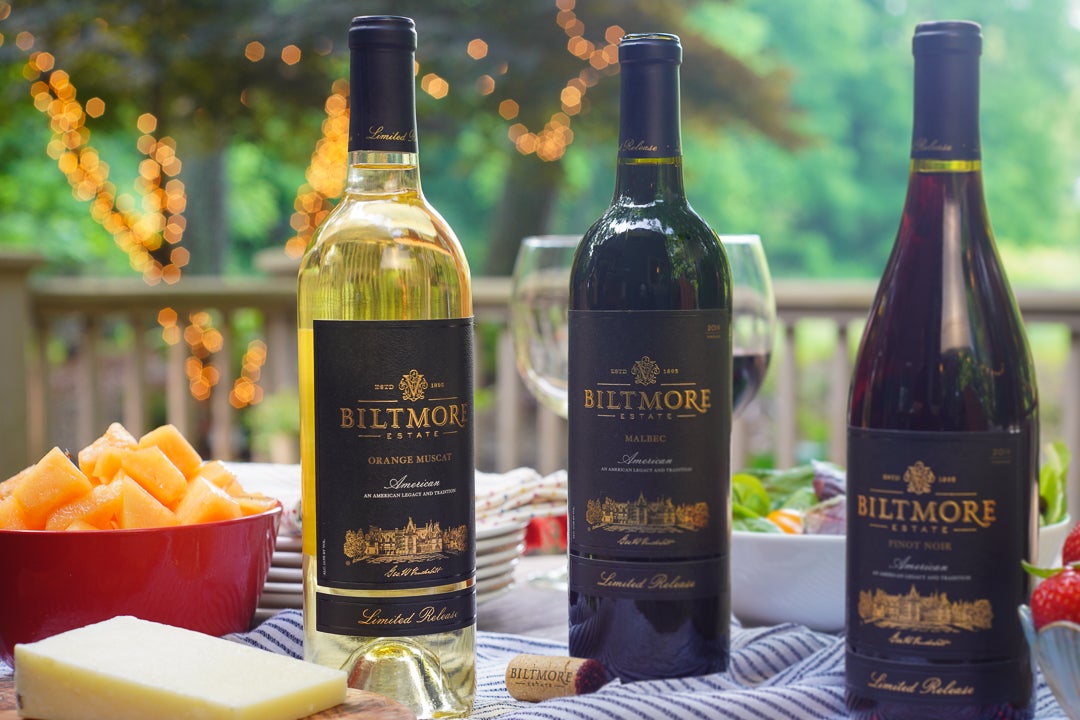
Biltmore Limited Release wines outdoors

Although it has old-world origins in Italy and France, Orange Muscat is better known today through new-world plantings in the U.S. and Australia.

We handcraft this highly aromatic member of the Muscat family into a straw-colored wine with a luscious fragrant bouquet of peach blossom, honey, and ripe melon.

Light-bodied, nicely balanced, and sweet-forward with flavors of honey and tropical fruit, our Biltmore Estate® Limited Release Orange Muscat offers a clean, lightly tart finish that is surprisingly zesty.

Savor this delightful “glass full of summer” with Mexican dishes, crab salad, spicy black bean burgers, Nashville-style hot chicken, fruit salad, angel food cake, and lemon tart.

3. Biltmore Estate® Limited Release Fumé Blanc

Couple in vineyard savors summer with Biltmore Estate Limited Release white wine.
Savor summer with Biltmore Estate Limited Release white wines like our versatile Fumé Blanc.

Our handcrafted Fumé Blanc begins with an outstanding Sauvignon Blanc that we’ve allowed to age, deepening into a full-bodied, creamy wine with aromas of toasted coconut and almond. These rich aromas give way to caramelized notes of roasted pineapple and citrus, making this Limited Release white wine both tropical and spicy with a great mouthfeel and a punch of bright acidity.

This medium-bodied pale gold wine offers scents of lime, pear, and coconut. It is soft, round, and nicely balanced with slight hints of minerality along with flavors of lime, kiwi, and tangerine.

Versatile and food-friendly Fumé Blanc is an excellent wine for a picnic or casual dinner at home. It pairs beautifully with a variety of dishes, from grilled chicken and shrimp to trout almondine, pistachio pesto pizza with burrata, navel oranges, ruby red grapefruit, and pecorino cheese.

4. Biltmore Estate® Limited Release Gewürztraminer

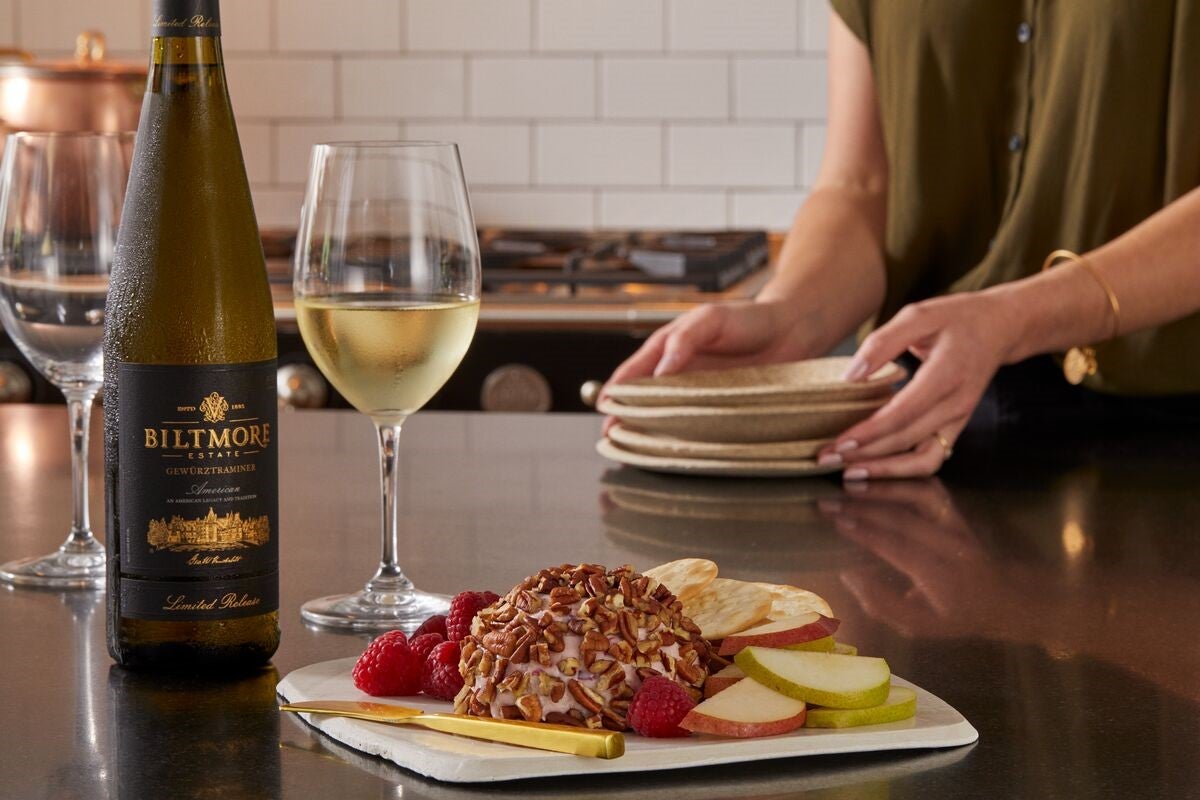
Biltmore Estate Limited Release Gewürztraminer served with a cheese ball.
Pair Biltmore Estate Limited Release Gewürztraminer with a variety of flavors.

Though often considered German in origin, Gewürztraminer grapes also have deep roots in Italy and the Alsace region of France. As a wine, it can range in flavor from lightly sweet to dry, making it an excellent choice with a wide range of foods.

Our off-dry Gewürztraminer offers a fragrant bouquet of lychee, apple, and roses, and will delight your palate with slightly spiced notes of honeydew and key lime.

Vibrant and refreshing with a good balance of sweetness and acidity, it pairs well with Caesar salad, Thai dishes, mahi fish tacos, calamari, cheesecake, and key lime pie. Turn a weeknight dinner into something special with this wine and an order of your favorite spicy Asian takeout.

Savor summer with Biltmore Estate® Limited Release white wines

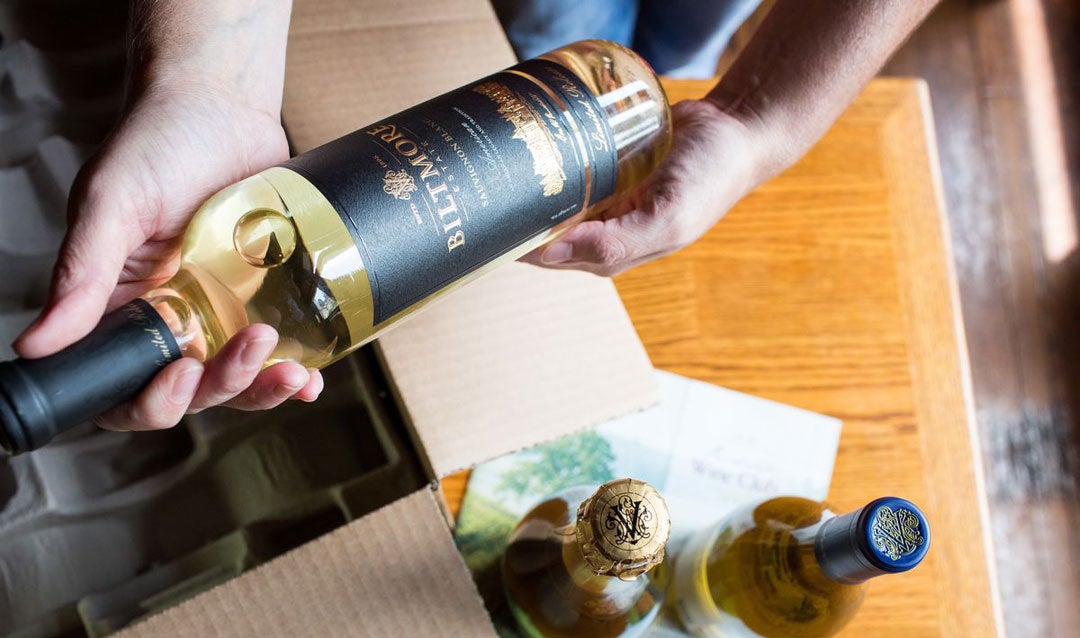
Vanderbilt Wine Club shipment
Vanderbilt Wine Club members receive a shipment of Biltmore wines each season, plus access to exclusive vintages, virtual tasting events, and more.

Our Limited Release wines–including the four that we’ve highlighted in this post–are available on the estate, online, or through the Vanderbilt Wine Club®.

The Railcar Red Wine runs smooth

The Railcar Red Wine runs smooth—and we invite you to try it for yourself when it’s back in stock in Spring 2026!

The powerful red blend—handcrafted to honor George Vanderbilt’s personal ties to the American railroad industry—is just the ticket for sipping and savoring with your favorite foods.

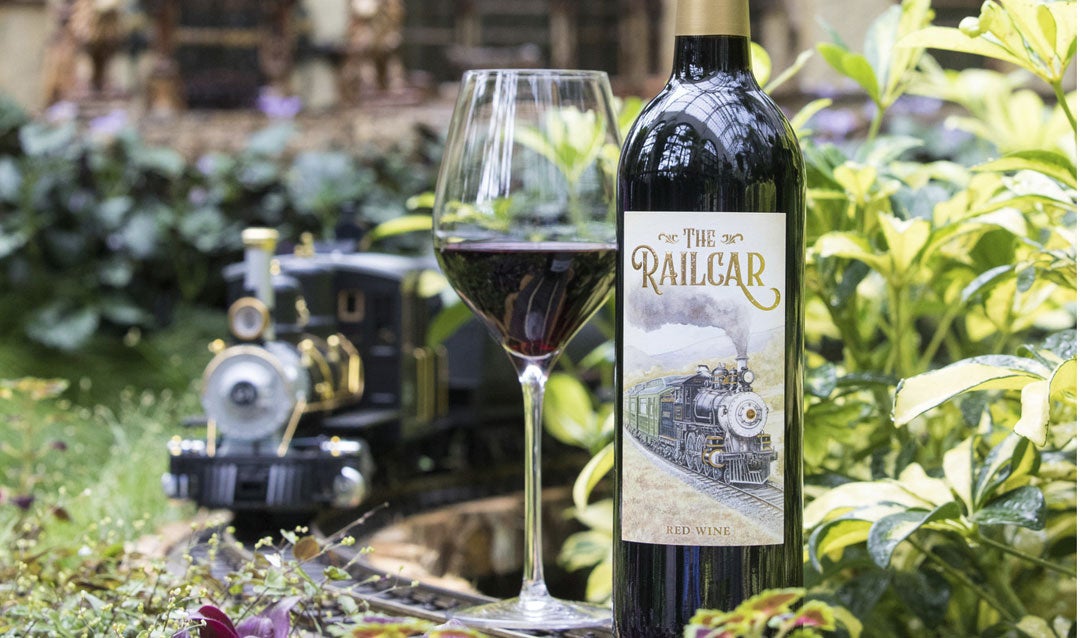
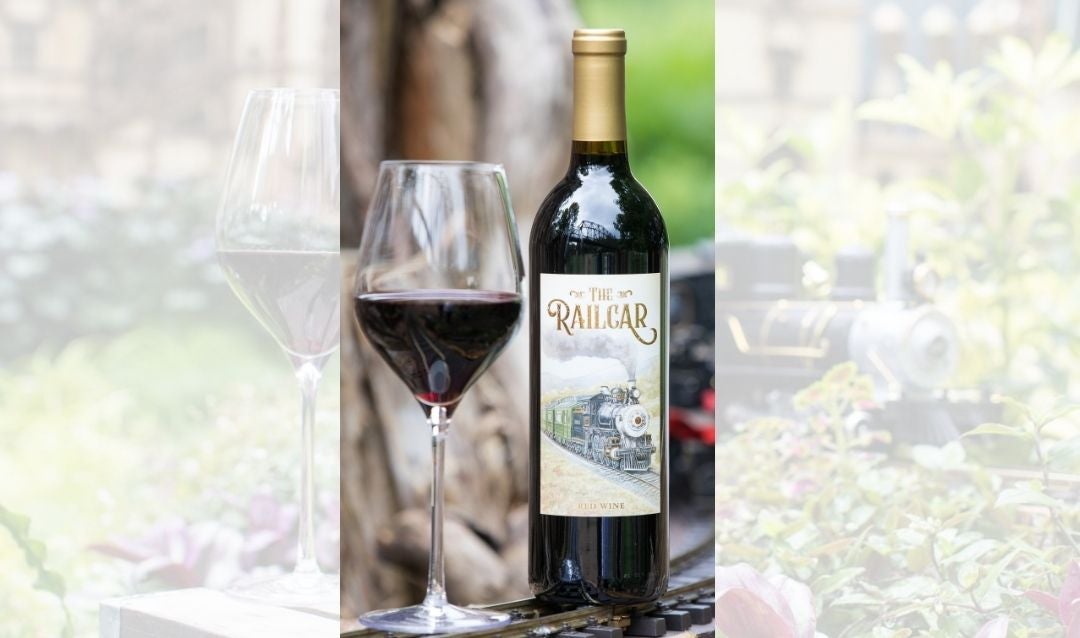
A bottle and a glass of The Railcar Red Wine
The Railcar Red Wine is handcrafted as a powerful complement to George Vanderbilt’s railroad ties.

The Railcar red wine runs smooth

“The Railcar is a distinctive red wine crafted predominantly of Cabernet Sauvignon, Syrah, Petite Sirah, and Merlot,” said Biltmore Winemaker Sharon Fenchak. “I selected fruit from our vineyard partners in Paso Robles and Lake County—two outstanding grape-growing regions in California’s wine country.”

As soon as you uncork The Railcar, you’ll experience its earthy bouquet that includes hints of caramel, vanilla, plum, black cherry, and baking spice.

Man and woman drinking red wine at a table.
Savor The Railcar with barbecue, smoked meats, and pasta with red sauce.

On tasting this medium-to-large bodied garnet-colored wine, you’ll discover bright cherry, plum, and dried fruit flavors up front, a bit of spice, and nice full tannins that make it an excellent pairing partner with barbecue, smoked meats, and pasta with red sauce.

Creating a distinctive label

“When we first talked about creating this wine, we knew it would need a special label that showcased how distinctive it is,” Sharon said. “With that in mind, we reached out to Asheville artist Bryan Koontz to see what he envisioned for The Railcar.”

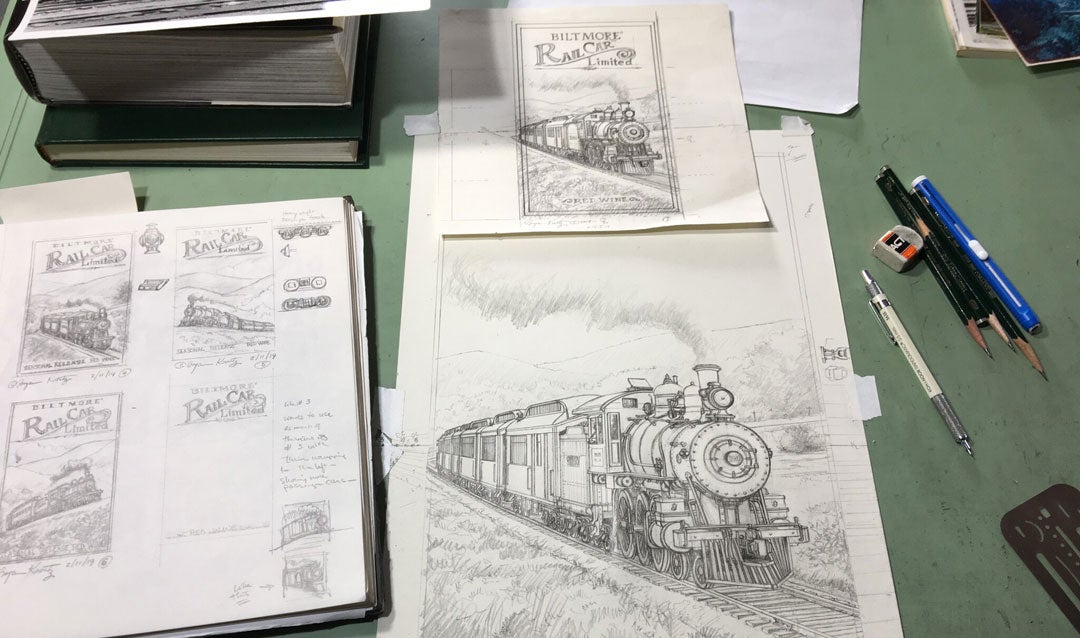
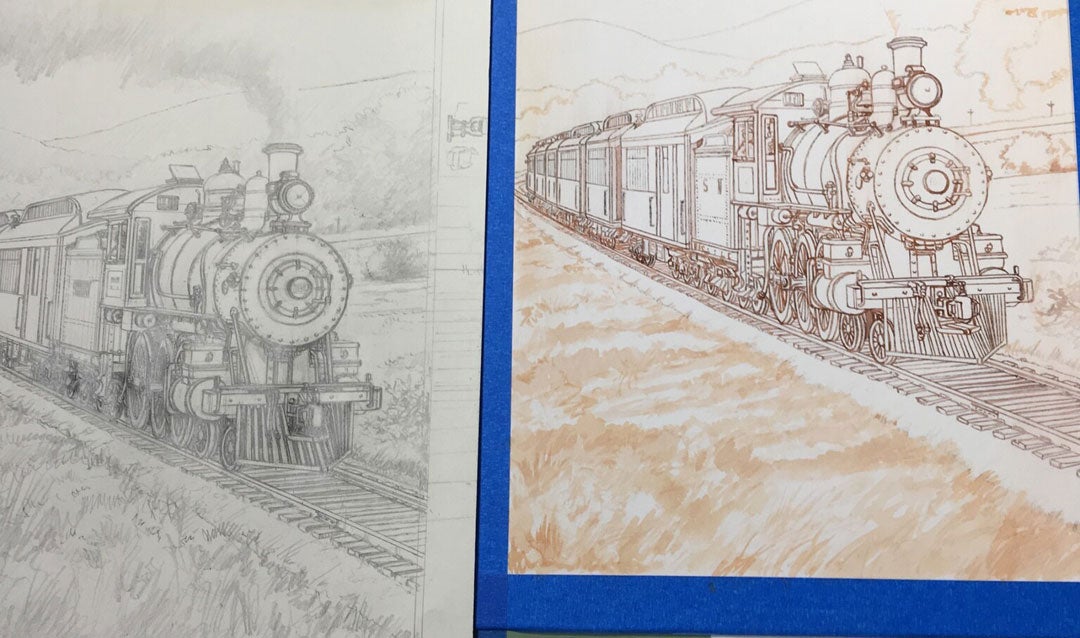
Sketches for The Railcar label
Bryan refines his graphite concept sketches for The Railcar red wine

Getting on track with a local artist

In addition to being an an exceptional artist who created original artwork for the labels of several of our Christmas at Biltmore Wines and our Biltmore Masterpiece Collection labels, Bryan is a train aficionado whose detailed illustrations of trains have appeared in books depicting the historic development of railroads in this country.

Transitioning the sketches from graphite to watercolor
Transitioning from graphite to watercolor

Concepts and sketches

He’s particularly knowledgeable about the types of steam engines that would have been in use in George Vanderbilt’s day, and he drew on that knowledge to create several concepts that he began to refine with a final destination in mind.

“I knew about George Vanderbilt’s railway connections,” said Bryan, “and that he had his own private railcar. That was the height of luxury at that time, to commission a custom-made railcar and travel in style anywhere a train could take you!”

Bryan’s initial concepts and early sketches were rendered in graphite pencil to provide the crisp clarity that characterizes his work. It’s a medium that lends itself to creating all the tiny details of a vintage steam engine.

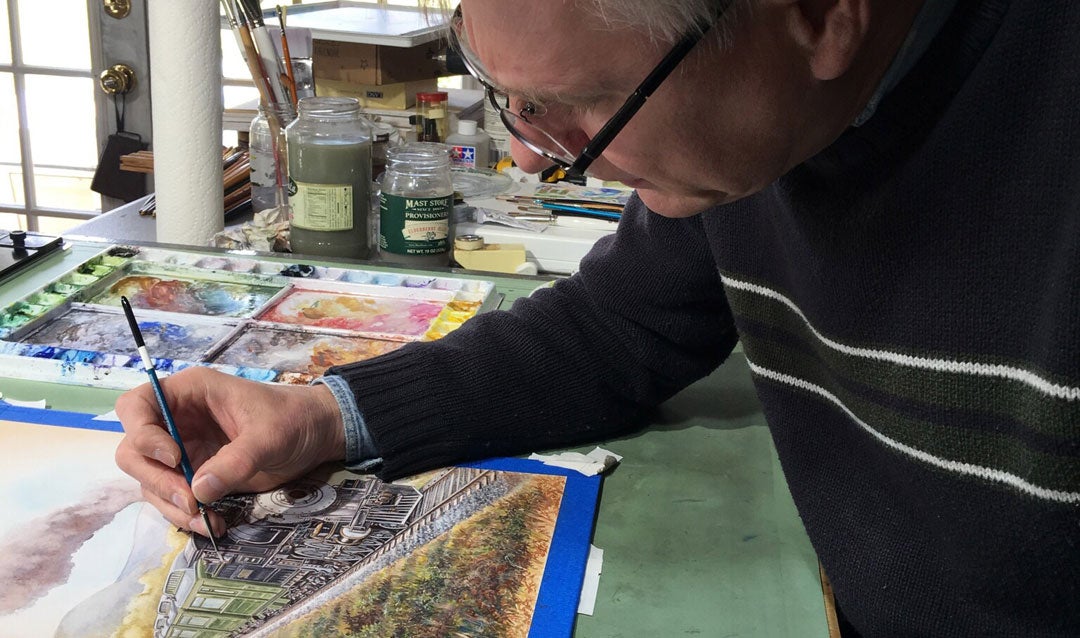
Refining the details

The artist at work on the label in his studio
Bryan at work on the label in his studio

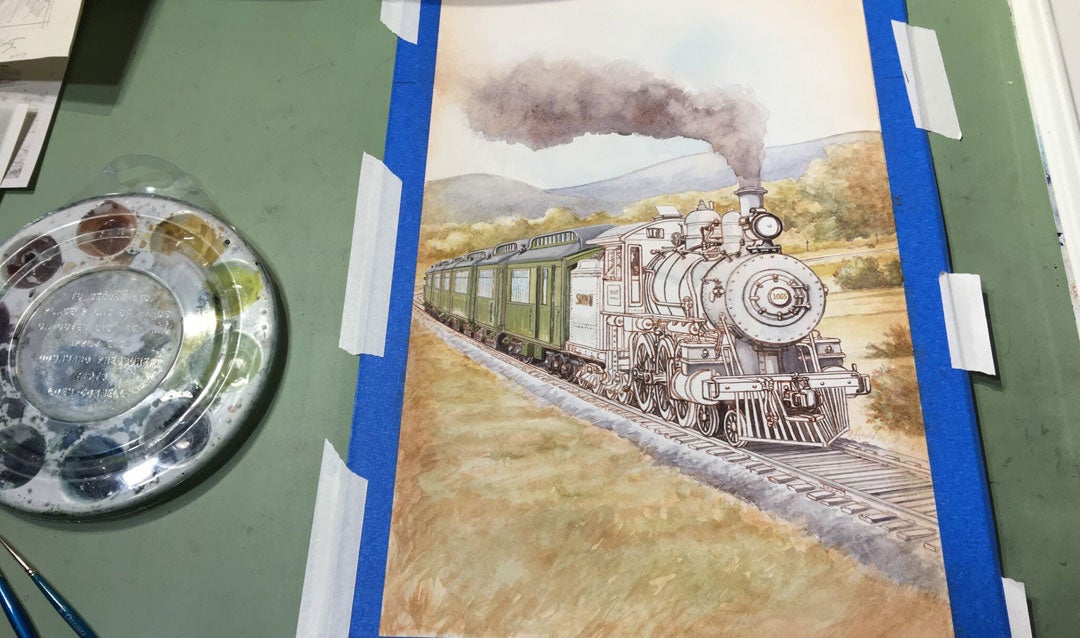
As the concept was refined toward its final iteration, Bryan used watercolors to bring the engine, its cars, and the surrounding landscape to life.

Final touches for The Railcar label
The label nearing completion

The final version looks so real you can almost hear the engine coming down the track toward you—perhaps pulling George Vanderbilt’s private railcar behind it!

Enjoy The Railcar Red Wine

A bottle and a glass of The Railcar Red Wine.
Look for a new vintage of The Railcar Red Wine in Spring 2026.

Harken back to the golden age of train travel with a distinctive bottle of The Railcar Red Wine, available at estate shops, online, or close to home with our Wine Finder.

“Cupid’s Richest Captive”— George Vanderbilt’s engagement

“Cupid’s Richest Captive” was the headline that accompanied the April 1898 announcement of George Vanderbilt’s engagement to Edith Stuyvesant Dresser.

Cupid’s richest captive: George Vanderbilt

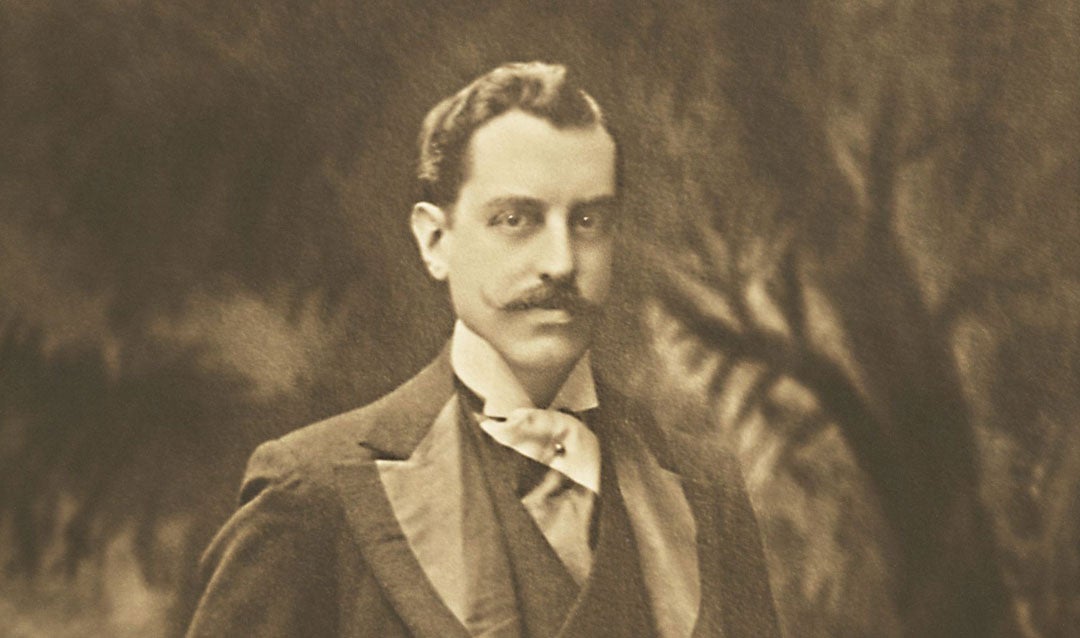
Photographic portrait of George Vanderbilt, labeled
Photographic portrait of George Vanderbilt, ca. 1898

At age 36 and the only unmarried son of William Henry Vanderbilt, George was considered America’s most eligible bachelor. Termed “Cupid’s richest captive” by the popular press, the engagement was a leading topic in newspapers of the era.

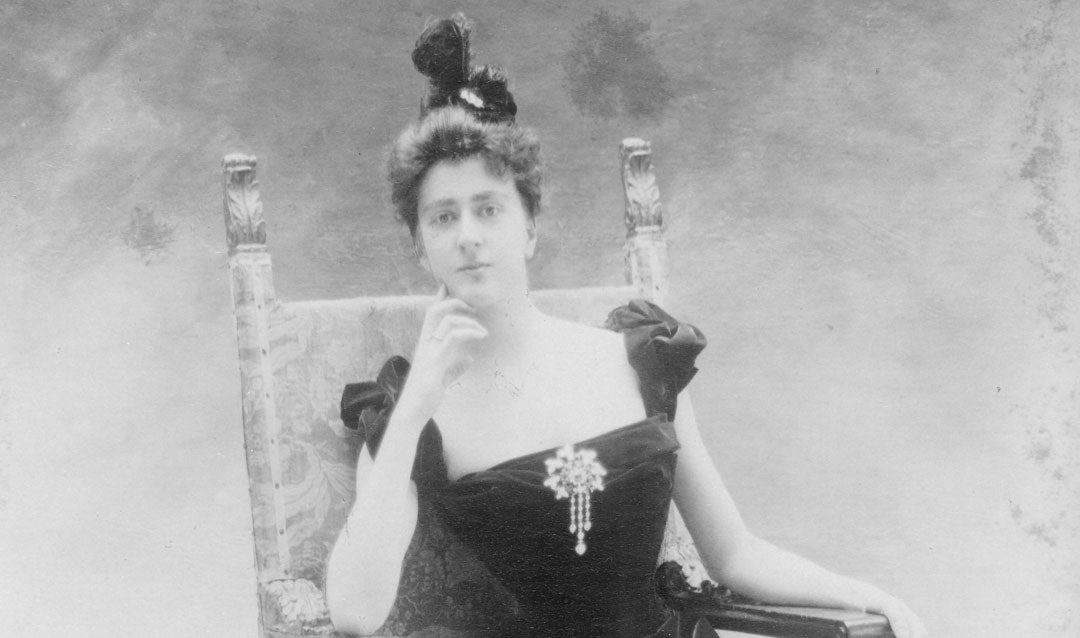
Edith Stuyvesant Dresser

Edith Stuyvesant Dresser's formal engagement photo, 1898
Edith Stuyvesant Dresser’s formal engagement photo, 1898

In comparison, his bride-to-be was a virtual unknown, although her ancestry included Peter Stuyvesant, the first Dutch governor of New York. Edith and her three sisters were popular members of Newport and New York society, and the “Dresser Girls” had lived in Paris after the death of their parents and grandparents. 

Ten years younger than her fiancé, Edith was friends with one of George’s sisters and several of his nieces. While reporters speculated the couple became acquainted when she attended Vanderbilt’s 1897 London party for Queen Victoria’s Jubilee, it’s more likely the pair met through match-making family members.

Congratulatory correspondence for “Cupid’s richest captive” and his fiancée

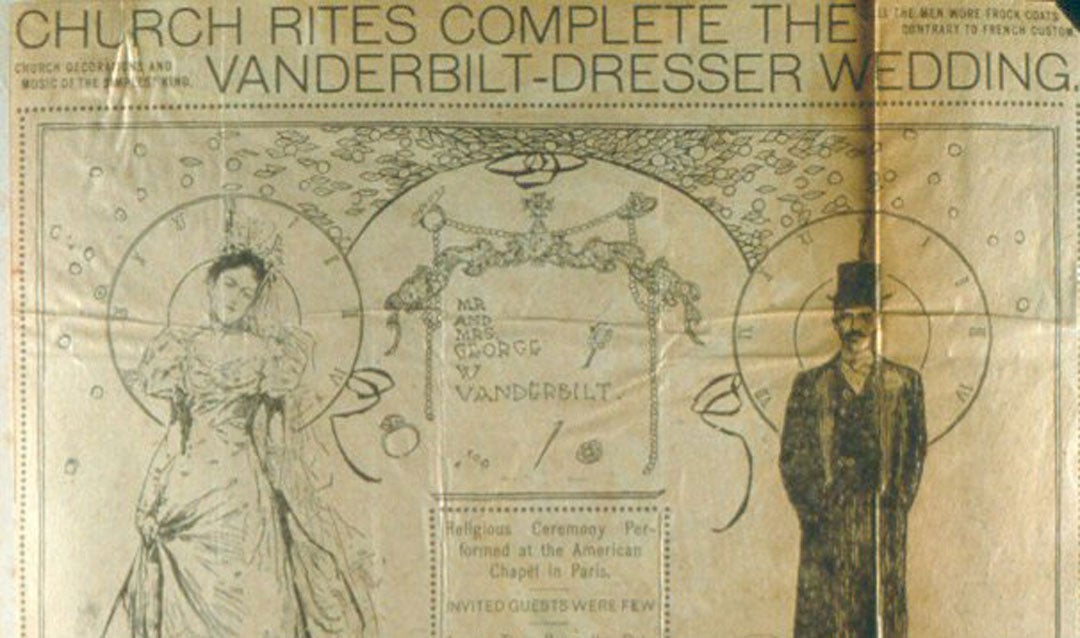
Cupid's richest captive: newspaper clipping of the wedding service
Newspaper clipping of the 1898 Dresser-Vanderbilt wedding program; illustrations were probably made from photographs of the couple.

News of the springtime engagement brought letters of congratulations from Vanderbilt’s friends, and we are fortunate to have some of the correspondence in our archives.

Author Paul Leicester Ford, who stayed at Biltmore several times and dedicated one of his most popular novels to George Vanderbilt, penned the following:

“My dear George,
I am very glad. Marriage is quite good enough for you, and is one of the few really fine things you haven’t had in your life. I wish I knew Miss Dresser better, but the mere glimpse I had of her was enough to make me like her, and time will perhaps fulfill my wish. That you both have my every felicitation, and hope for your happiness, need not be said…..It is a pleasure to me to think of you as having this great happiness added to your life. But in the big love, save a little if you can, for your affectionate friend
Paul.”


Portrait of George Vanderbilt by John Singer Sargent, ca. 1890
Portrait of George Vanderbilt by John Singer Sargent, ca. 1890; on display above the entrance to the Biltmore House Library.

Artist John Singer Sargent, considered the most successful portrait painter of his era, was one of Vanderbilt’s favorite artists. Six of his works are in Biltmore House, including a portrait of George that hangs above the Library door. On April 28, 1898, he wrote:


“My dear Vanderbilt
Please accept my warmest congratulations and best wishes for your engagement, and offer my hommages to the lady…I hope to see you on my way back from Venice…
Yours sincerely,
John S. Sargent”


Chauncey M. Depew, who served as New York Secretary of State and president of the New York Central Railway, was a family friend who had known George Vanderbilt all his life. On May 13, 1898, he wrote:


“My Dear George,
Accept my cordial congratulations on your engagement. Possessing as you do every thing to make a happy home, and Miss Dresser so charmingly forming the complement. Surely the future is (illegible) secure for married life as the fates have arranged it for you…
Faithfully yours,
Chauncey M. Depew”


On May 19, 1898, David H. Greer sent a letter to George Vanderbilt, who was already in Paris where his June 1 wedding would take place. Greer served as the rector of St. Bartholomew’s Church, New York, from 1888–1904.


“Dear Mr. Vanderbilt —
I am sorry I cannot be present to offer my congratulations in person in connection with the happy event which is about to take place in your life; but the steamer that takes your sisters over will hopefully carry this note and enable you to receive it before the wedding.

I have thought of you so long in a state of “single blessedness” that it is a little difficult to imagine you in the double blessedness of matrimony. But it is double blessedness, as I know from my own experience, and I am sure you will find in yours.

With best wishes of a bright future for both of you, believe me,
Very sincerely yours,
David H. Greer”

Learn more about the Vanderbilts

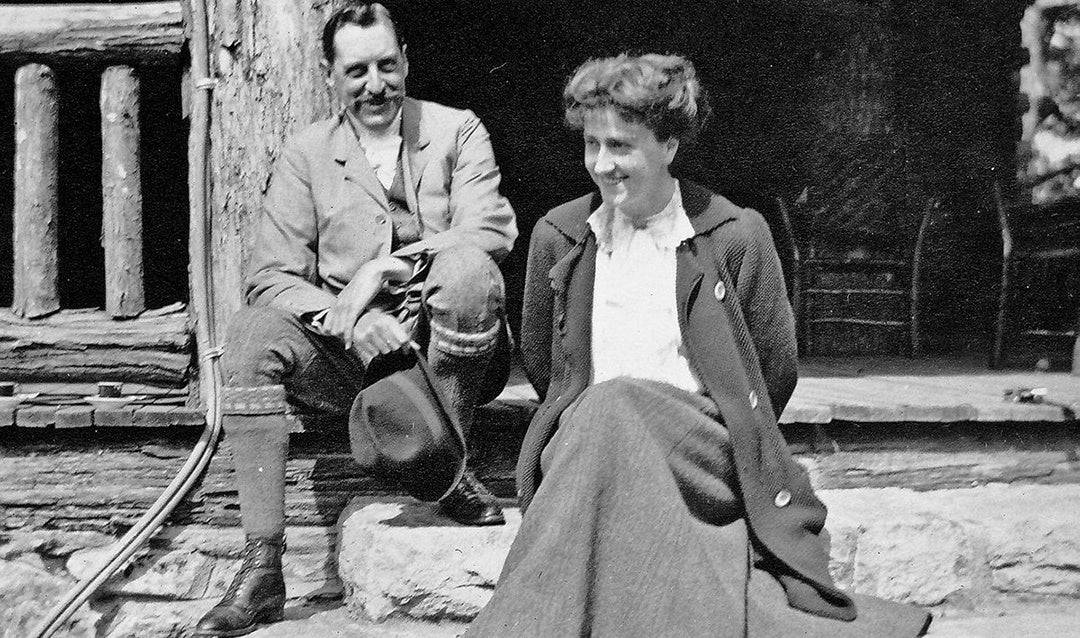
George and Edith Vanderbilt at buckspring Lodge
George and Edith Vanderbilt sitting on the front steps of Buckspring Lodge, their rustic retreat on Mt. Pisgah

After the wedding and a four-month Italian honeymoon, the newlyweds returned to Biltmore to begin their lives together. Learn more about them by visiting The Vanderbilts at Home and Abroad exhibition at The Biltmore Legacy in Antler Hill Village, included with your estate admission.

Featured photo: Place de Chalelet and Seine River, Paris, circa 1898. George Vanderbilt and Edith Stuyvesant Dresser were engaged in Paris in April 1898.

Choose Biltmore’s Most Aromatic Wines for Spring

Spring is the perfect time to choose Biltmore wines, especially if you want to savor the “scent-sations” of our handcrafted varietals that complement the fresh and fragrant aromas of the season.

From soft floral notes like those of a vintage perfume to bright hints of fruit and spice, these wonderful wines will take your senses on an aromatic adventure!

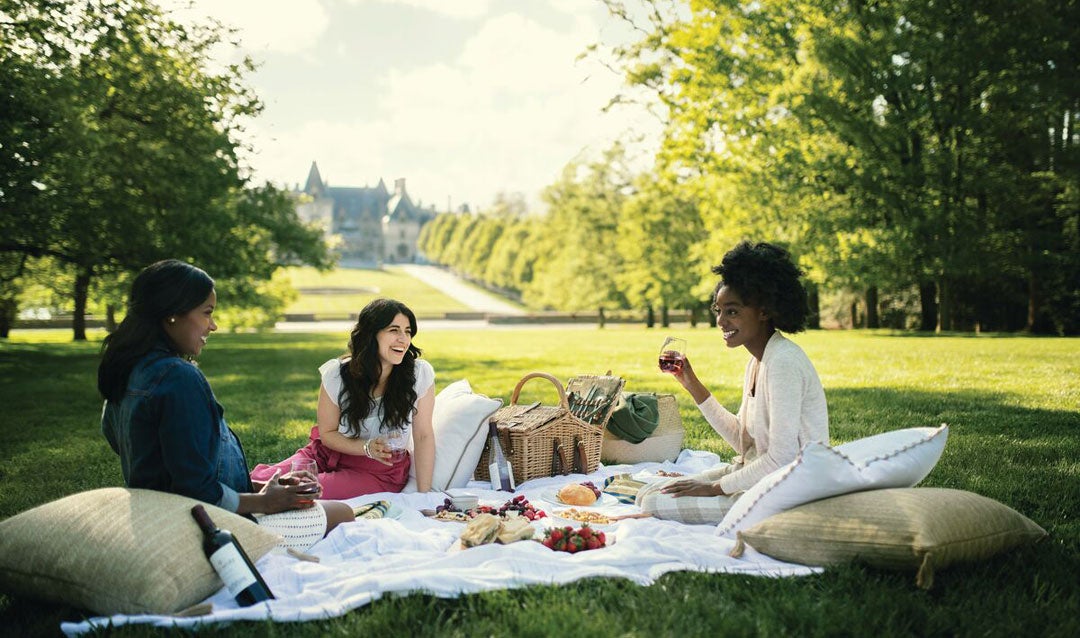
Ladies enjoying a warm weather picnic with wine at Biltmore House
Enjoy warm weather sipping with your favorite aromatic Biltmore wines by the glass or bottle!

Here are our top recommendations for which Biltmore wines you should choose this spring to experience the essence of the season. 

Biltmore® Masterpiece Collection White Wine

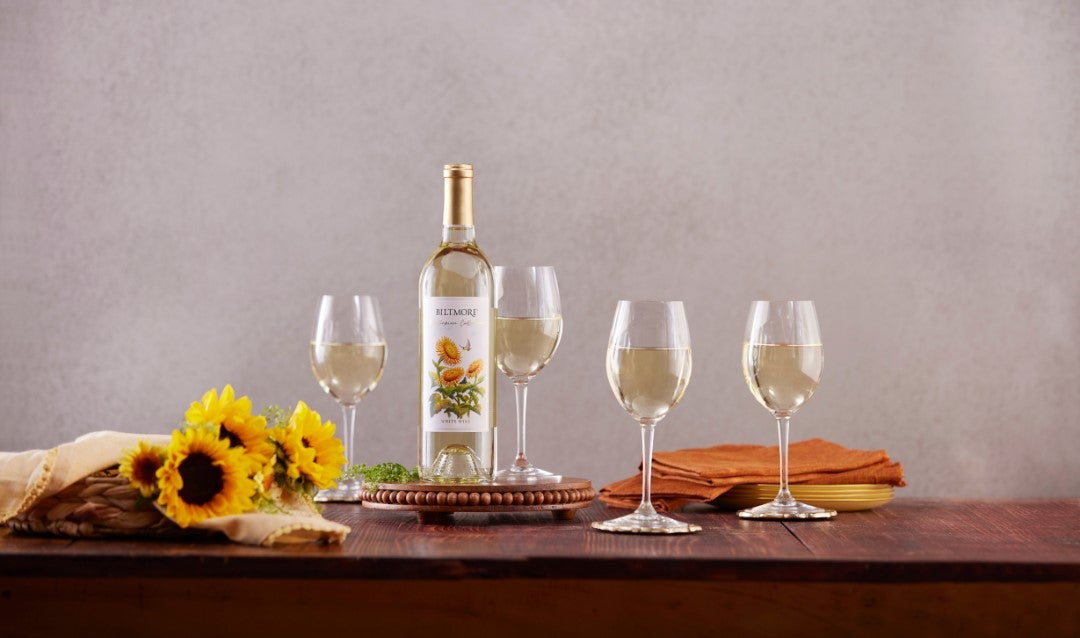
A bottle of Biltmore Masterpiece Collection White Wine with four glasses and a bouquet of sunflowers.
Aromatic and refreshing, our 2025 Biltmore Masterpiece Collection White Wine is perfect for spring sipping!

Versatile and food-friendly, our Biltmore® Masterpiece Collection White Wine is a perfect partner for breezy brunches, lunches, and picnics.

The label, featuring original artwork by artist Bryan Koontz of Weaverville, NC, captures the vibrant sunflowers we plant each year to delight you (along with our birds, bees, and butterflies!). 

PAIRING TIP: Savor our Masterpiece Collection White Wine with a wide range of options including fish tacos, prosciutto-wrapped fruit and cheese, baked brie with strawberry jam, and pound cake with fresh berries.

Biltmore Estate® Sauvignon Blanc

Uncork a bottle of this crisp and refreshing white wine and you’ll encounter bright citrus aromas that speak to the return of warmer weather.

PAIRING TIP: With fresh peach flavors and an elegant finish, our Sauvignon Blanc is a perfect partner for light spring and summer fare such as goat cheese, salads, and seafood.

Pack a bottle of Biltmore wine for your next spring picnic–Gewurtztraminer is always a good choice!

Biltmore Estate® Limited Release Gewürztraminer

Highly expressive aromas reminiscent of spring’s lightly-sweet blooms give way to lush flavors of spice, fruit, and floral notes.

If you’ve ever wondered what to pair with spicier foods, this aromatic wine is surprisingly simpatico with dishes that generate a bit of heat.

PAIRING TIP: pick up your favorite Asian and Indian cuisine and uncork a bottle of our Limited Release Gewürtztraminer.

Red wines aren’t just for winter–enjoy sipping them in every season, including spring!

Biltmore Estate® Sangiovese

If you think red wines are too heavy for the season, just breathe in the elegant cherry aromas of our Sangiovese and you’ll imagine you’ve been transported to spring in the Italian countryside!

The taste—full-bodied with ripe berry flavors intertwined with hints of chocolate—will make you glad you thought outside the red-wine-in-winter box.

PAIRING TIP: For spring, serve our Sangiovese with lighter fare inspired by its Italian origins, including mushroom risotto and pasta with red sauce.

Pas de Deux Sec is perfect for pairing with classic desserts or creating sparkling cocktails!

Pas de Deux® Sec

Semi-sweet and bursting with tiny bubbles, this delightfully aromatic sparkling wine features the essence of orange blossom and flavors of wild strawberry and lemon.

It smells and tastes as if we captured a perfect day in spring and bottled it for you to sip and savor.

PAIRING TIP: Serve Pas de Deux Sec with classic desserts like pound cake and fresh strawberries–or enjoy it in sparkling cocktails

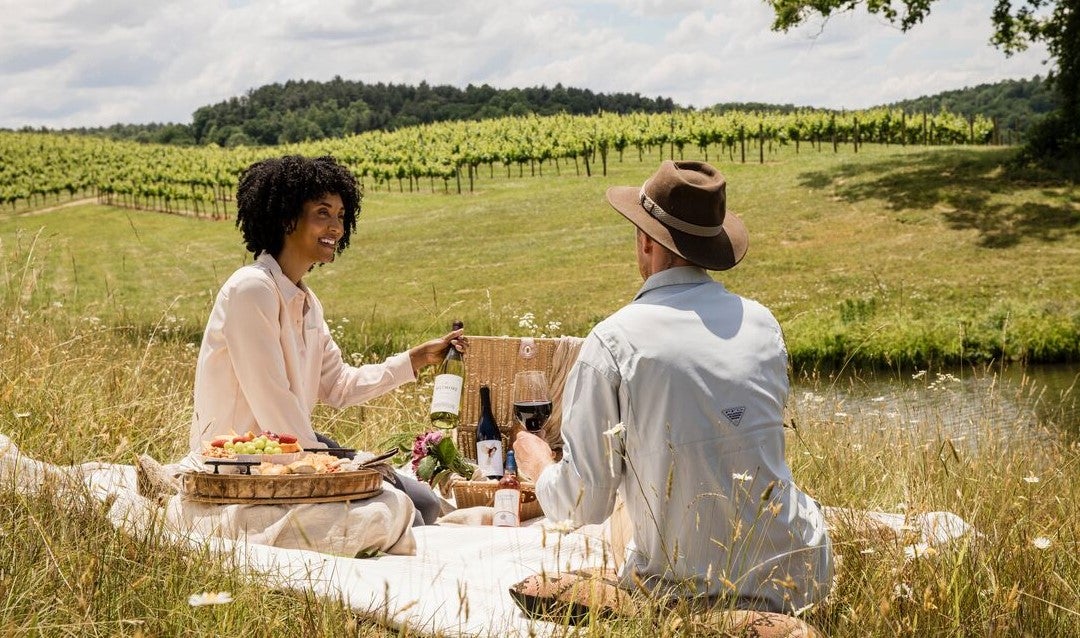
A man and woman with a picnic in a vineyard.
Spring picnics pair perfectly with your favorite aromatic Biltmore wines!

Stock up on aromatic spring favorites!

We hope this round up of Biltmore’s most aromatic wines helps you breathe new life into your spring wine adventures!

Find all our award-winning wines online and through your local retailers.

Biltmore’s Azalea Garden: A Tribute to Chauncey Beadle

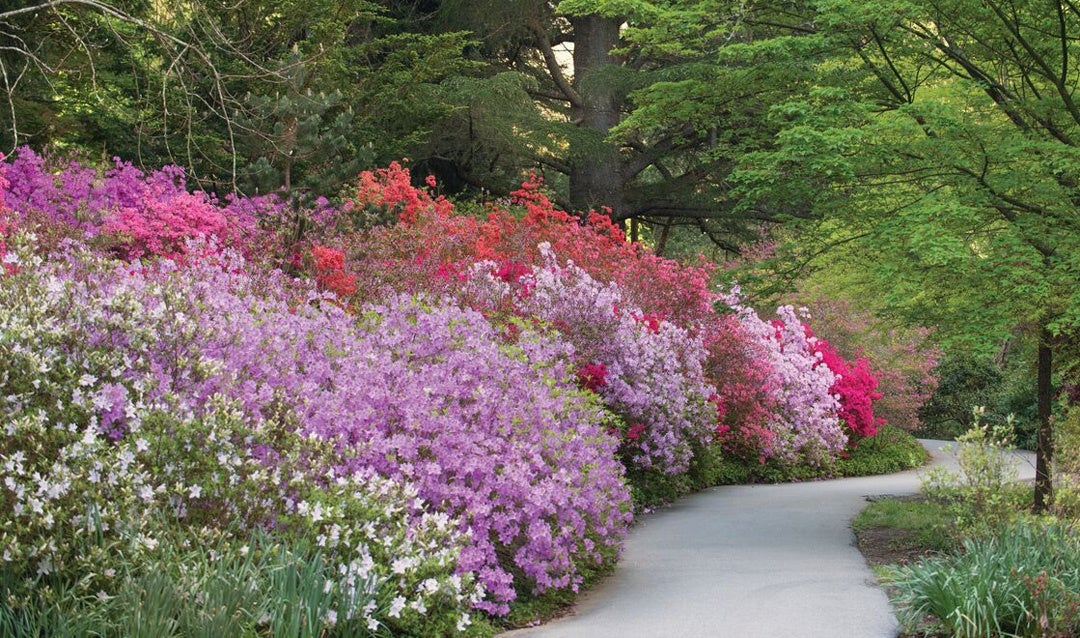
A favorite pastime of Biltmore Blooms is visiting the Azalea Garden—one of the largest selections of native azaleas in the country. The 15-acre garden is home to more than 20,000 plants, offering thousands upon thousands of vivid blooms of white, yellow, orange, and every shade of pink imaginable.

Azalea Garden in bloom
Biltmore’s Azalea Garden in peak bloom

But did you know the Azalea Garden was not actually part of the original plan for the estate?
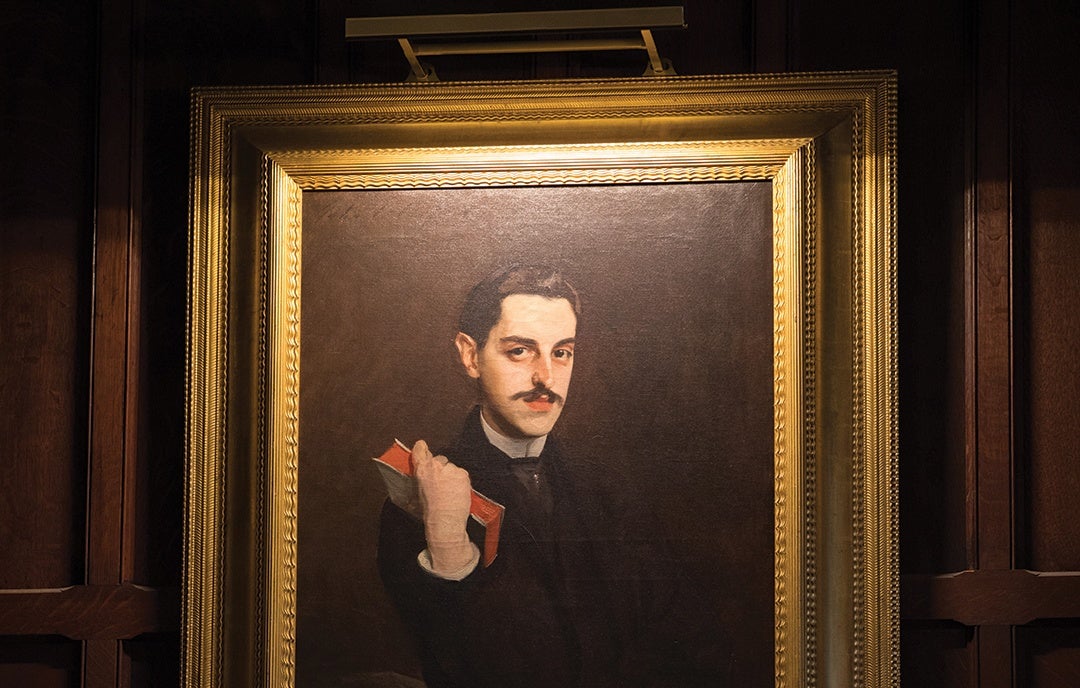
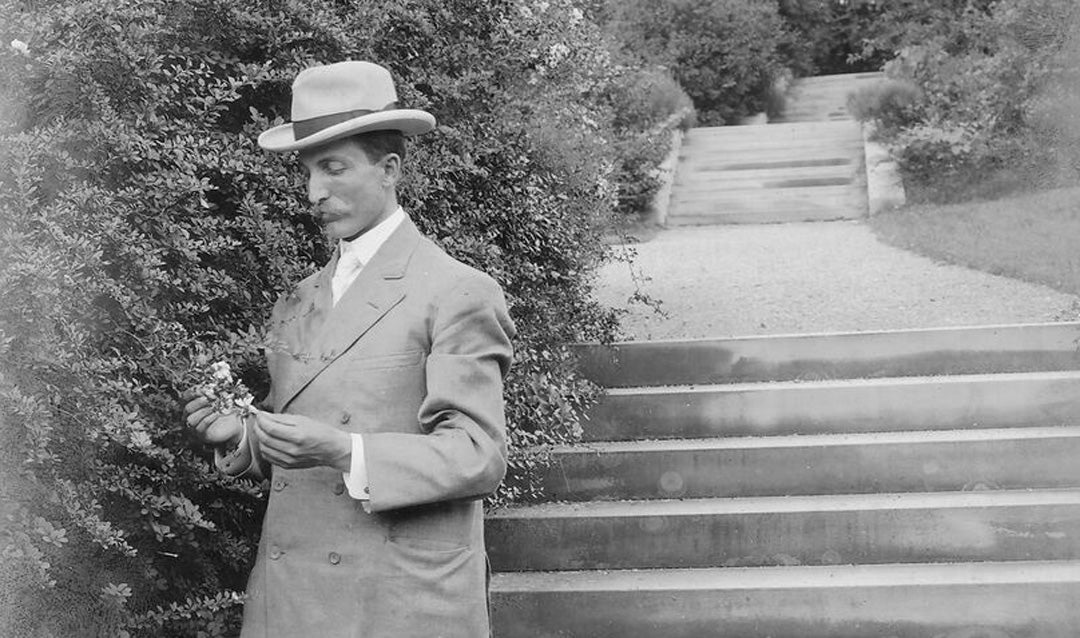
This parade of color is a culmination of the passion of Chauncey Beadle, an avid azalea collector and horticulturist hired at Biltmore in 1890 who later became the estate superintendent.

Chauncey Beadle, ca. 1906

Beadle and “The Azalea Hunters”

Beginning in 1930, Beadle, along with fellow botanists and friends Frank Crayton and William Knight—aptly called “The Azalea Hunters”—spent countless hours over long weekends and holidays driving through each southeastern state searching for every species, natural hybrid, form, and color of azalea.

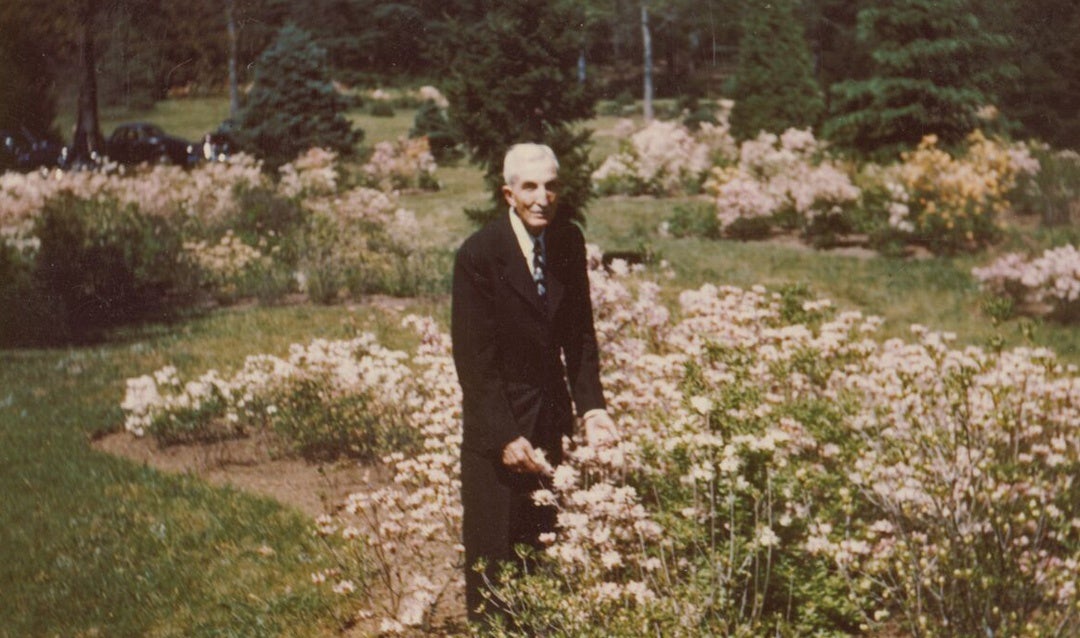
Chauncey Beadle in the Azalea Garden, 1948
Chauncey Beadle in the Azalea Garden, ca. 1948

Beadle maintained his massive personal collection at his farm on the east side of Asheville until 1940, but he knew that he needed to find a home for his azaleas, fondly referred to as his “children,” before he became too old to care for them.

He could think of no better home than the Glen in the valley below Biltmore’s Conservatory and gardens. Edith Vanderbilt Gerry and Judge Junius G. Adams, Biltmore Company president at the time, agreed.

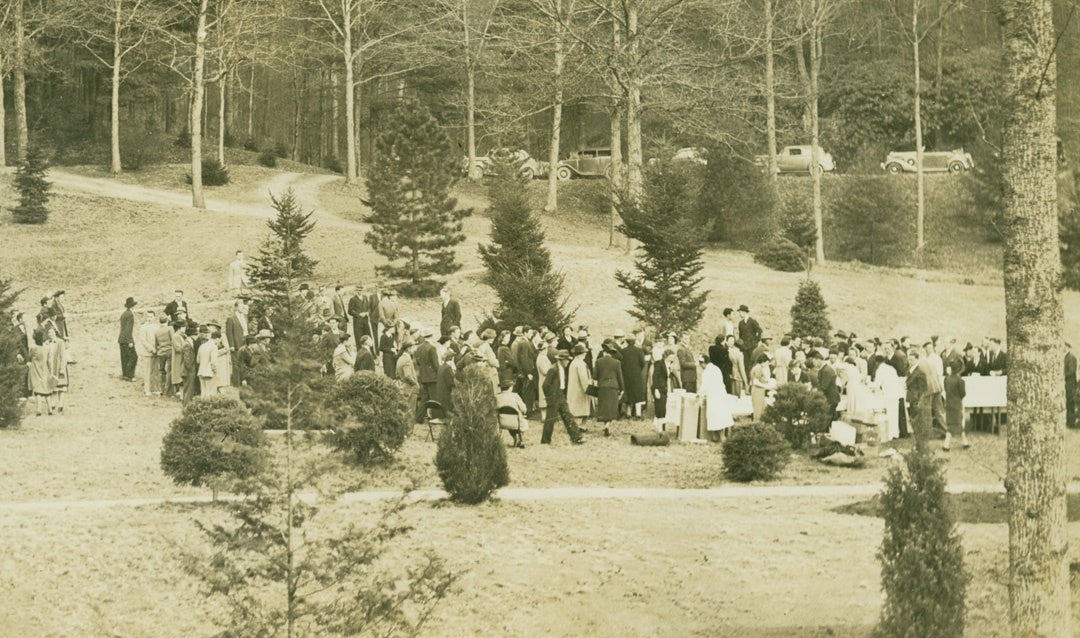
Azalea Garden Ceremony, 1940
Azalea Garden ceremony, ca. 1940

Establishing the Azalea Garden

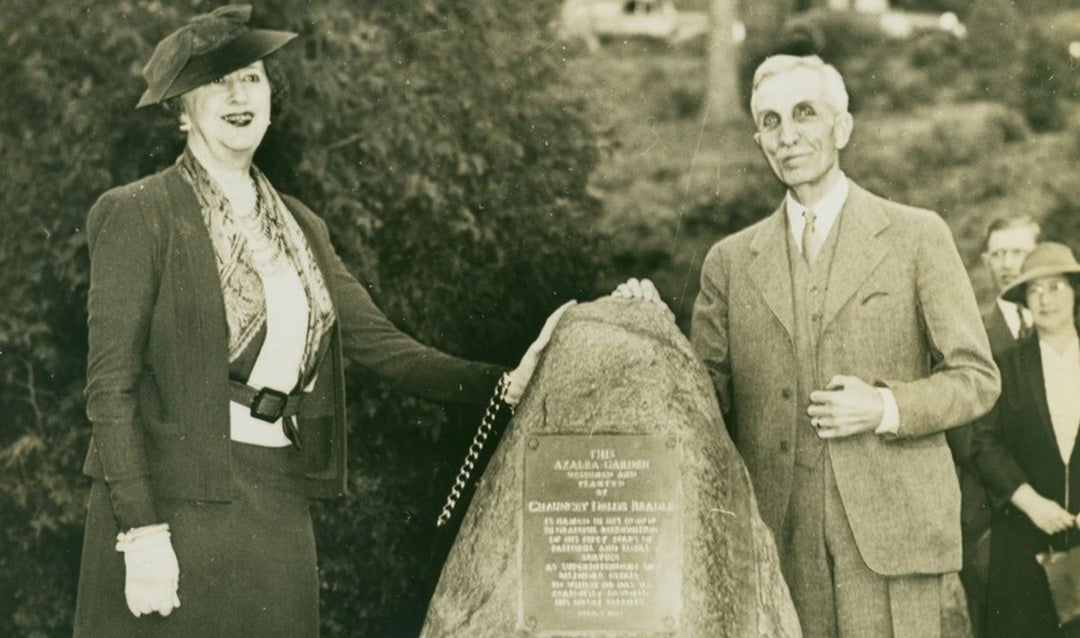
In honor of his then fifty years of service to Biltmore, the estate held a celebration for Beadle* on April 1, 1940, in the Glen, which from that day forward would be named the Azalea Garden. All estate employees and their spouses were invited to the event.

Edith Gerry and Chauncey Beadle, 1940
Edith Vanderbilt Gerry and Chauncey Beadle, ca. 1940

During the ceremony, Edith unveiled a marker that memorializes Beadle’s lifetime of faithful service and gift of his azaleas to Biltmore.

Join us in celebrating the generosity and genius of Chauncey Beadle with a springtime stroll through the Azalea Garden. Plan your visit today!

*Thanks to new research from our Museum Services team, we now know that nine other employees were also honored for their many years of service in the 1940 Azalea Garden ceremony, including four Black men affiliated with the Landscape Department.

Spring tradition: Garden parties at Biltmore

Whether you’ve been to Biltmore many times or are just planning your first visit, Spring at Biltmore is a season you won’t want to miss!

Spring traditions of outdoor festivities

Spring blooms in Biltmore's shrub garden
Colorful spring blooms in Biltmore’s Shrub Garden

Flowers on parade

Spring was always a special time for the Vanderbilts as they enjoyed the beauty of Biltmore’s grounds awakening from winter. The return of warmer weather also brought the opportunity to spend more time outdoors and to host garden parties and festivities for family and guests.

Cornelia and Edith Vanderbilt in a flower-covered carriage, 1905
Cornelia and Edith Vanderbilt in a carriage decorated with flowers for the 1905 Flower Carriage Parade in Biltmore Village

For several years during Cornelia Vanderbilt’s childhood, her family, along with estate residents and members of the local community, celebrated the season with a parade of flower-decked carriages in Biltmore Village.

A spring wedding surprise

On April 29, 1924, as Cornelia Vanderbilt prepared to marry the Honorable John F.A. Cecil, the gardens of Biltmore were called upon to play an important role in her wedding. Luckily, the acres of beautifully-landscaped shrubs and blooms were up to the task!

John and Cornelia Cecil wedding party in 1925
Wedding party of John and Cornelia Cecil in the Tapestry Gallery of Biltmore House, 1925

“The flowers for Cornelia’s bridesmaids were ordered from New York, but they did not arrive on the train in time,” said Lizzie Borchers, Biltmore Floral Displays Manager. “So Biltmore’s gardeners came to the rescue, clipping forsythia, tulips, dogwood, quince, and other flowers and wiring them together. They were quite large compositions, twiggy, open, and very beautiful.”

Cornelia’s garden party

Of course, summer was also a wonderful season for garden parties. In August 1925, Cornelia Vanderbilt Cecil celebrated her 25th birthday with an open air ball at 9:30 p.m. in the Italian Garden.

At least 300 guests were invited, and party-goers danced to the Charles Freicher Orchestra amidst the splendor of twinkling lights from Japanese lanterns placed in trees and shrubbery and torches flaring in potted plants.

Italian Garden at Biltmore House
The Italian Garden pools shimmer with reflections of Biltmore House. Exotic Victoria water platters, canna lilies, papyrus and lotus thrive here in the summer months.

The Asheville Gazette described this garden party as “among the most elaborate and largest celebrations held at Biltmore House” since the estate was established.

The write-up included details such as “the beautiful array of summer gowns of the many dancers made a scene as beautiful as that of gay moths and fireflies in a fairy garden,” and noted that a buffet supper was served at midnight.

Biltmore blooms each spring

Today, we continue to honor the Vanderbilt traditions of celebrating spring by bringing the outdoors inside. Look for special floral arrangements throughout Biltmore House during Spring at Biltmore.

Plan your spring getaway today

Family walking amongst the tulips at Biltmore Gardens during Spring
Experience Biltmore in full bloom

Our restaurants and shops across the estate celebrate spring, too, with delicious seasonal menus and artful arrangements in each venue, plus special packages at The Inn on Biltmore Estate® and Village Hotel on Biltmore Estate®.

Plan your special spring getaway today with admission to Luminere, our spectacular evening light and sound event, and experience Biltmore like never before.

Featured image: Edith and Cornelia Vanderbilt in a flower-covered carriage for a spring parade in Biltmore Village, May 25, 1905

More than a hostess: Honoring Edith Vanderbilt

At the age of 25, Edith Vanderbilt married the nation’s most eligible bachelor and assumed her role as lady of Biltmore House, responsible for ensuring the comfort and entertainment of Biltmore’s many guests. And yet, she was so much more than a hostess.

Let’s take a look at some of Edith Vanderbilt’s most incredible efforts and achievements.

Edith Vanderbilt (far left) and Cornelia Vanderbilt (second from right) attending Pisgah National Forest dedication to the memory of George Vanderbilt, circa 1920. © The Biltmore Company

A force in her own right

After George Vanderbilt’s untimely death in 1914, Edith stepped into the role of preserving the estate and its legacy until their only daughter, Cornelia, came of age. During this era, Edith had to make prudent decisions to reduce the costs of maintaining such a grand estate, including completing the sale of Pisgah Forest on George’s behalf. Throughout the years, she refused to sell off the collection of antiques, furnishings, and fine art still seen inside the home today. This dedication to preserving the home and its collection set the stage for future generations.

School of Domestic Science students
Students of the Biltmore School of Domestic Science, ca. 1901

Biltmore School of Domestic Science

In 1901, Edith Vanderbilt established the Biltmore School of Domestic Science, which trained young Black women in professional housekeeping. The intention behind this initiative was two-fold: to help satisfy the increasing demand for efficient domestic service in the area at the time, and—more importantly to Edith—to help women with socio-economic challenges to become gainfully employed.

Coursework covered the duties of a maid, waitress, laundress, cook, and housekeeper; if a student showed a preference for a special line of work, she was given the necessary training to develop that skillset. Additionally, the school created a network to increase its graduates’ prospects of finding work:

“The graduating classes form a society for houseworkers. The purpose of this society is mutual help, by raising the respect of the general public for such work and workers…Any positions that are vacant if in good families will be reported, and an effort be made to fill them from among the members of the society.” 

The Home Science Magazine, Volume XX, October 1903March 1904

Archival documents of Biltmore Estate Exhibition
Archival list of 1906 Biltmore Estate Exhibition prize winners and first and second prize ribbons

Biltmore Estate Exhibition

In order to nurture a sense of community among estate employees and their families, Edith organized the Biltmore Estate Exhibition, also referred to as the annual fair, in 1905. She distributed seeds as needed to all of the employees to ensure everyone could participate in the competitions.

Some of the initial categories included vegetables and herbs, field crops, domestic products such as breads and preserves, needlework, and baskets. Categories later expanded to include flowers, hogs, and poultry as well as a miscellaneous category to include eggs, honey, and various other items. Prizes included ribbons and a variety of garden books.

Though Edith was in London during the 1907 event, estate superintendent Chauncey Beadle wrote to her: 

“Not another day shall pass without a full report to you of the Exhibition, which was celebrated in the grove above the Farm Cottages yesterday afternoon with the most auspicious weather that it was possible to have. The attendance and exhibits were very satisfactory, and, I believe all who participated enjoyed the day, the social intercourse and objects which were displayed.”

Thanks to oral histories, we know that the fairs continued into the 1940s.

Biltmore Dairy Moonlight School students
Students of the Biltmore Dairy Moonlight School, ca. 1920s (Photo courtesy of the McCarson Family)

Biltmore Dairy Moonlight School

In 1914, Edith founded the Biltmore Dairy Moonlight School to teach illiterate estate workers how to read and write. Her larger intention was to attack the underlying causes of economic inequality and disenfranchisement. Classes were taught by Columbia University interns and graduates, who were receiving arguably the best teacher training in the nation at the time.

Edith Vanderbilt personally selected the textbook used at the school and even taught a class from time to time:  

“It is an interesting picture: one of the world’s richest women… teaching dairy workers how to read and write in a horse barn in the mountains of North Carolina.”

— “Aristocracy and Appalachia: Edith Vanderbilt and Her Moonlight School” (2011) by Wilkie L. Whitney

While Biltmore’s was certainly not the first moonlight school, the model Edith pioneered was so effective, it inspired the foundation of many similar programs across North Carolina—all with the support of Edith as their most vocal advocate.

Edith Vanderbilt and Red Cross
Edith Vanderbilt (second from right) and her fellow Red Cross volunteers, ca. 1917–1919 (Photo courtesy of the Library of Congress: American National Red Cross Collection)

Red Cross efforts during the Great War

When the United States became involved in the first World War, Edith Vanderbilt was splitting her time between Biltmore and Washington, DC—but no matter where she was, she always found ways to support the Red Cross during this turbulent time.

While in Asheville, she sponsored a golf tournament to raise funds for the Red Cross.

The trophy was the gift of Mrs. Edith Vanderbilt, the rules providing that all entrance fees went to the Red Cross, and that no trophies should be given unless donated.

— “Carolina Mountains Having Great Season,” The Times Dispatch, 19 August 1917

While in Washington, DC, she volunteered with the Red Cross as part of a Canteen Unit, which provided hot coffee, light refreshments, and mail services to troops at railroad junctions. True to form, Edith was recognized for going above and beyond at her Canteen’s encampment:

“Mrs. George Vanderbilt is quite wonderful, so cool and collected and executive. She took her motor and went off shopping, bought some extra equipment, a table for the tent to hold the telephone, some camp chairs, a rake to rake up the trash, a pump to pump the water into the cauldron, a mail bag, stamps, wire baskets; besides, she organized the post-office.”  

Presidents and Pies: Life in Washington 1897–1919 (1920) by Isabel Anderson

Edith Vnaderbilt State Fair
Edith Vanderbilt arriving at the first State Fair during her tenure as president, ca. 1921

First female president of the North Carolina Agricultural Society

In 1920, Edith Vanderbilt was elected the first female president of the North Carolina Agricultural Society as well as the 60th State Fair. Her first address in the role was one for the books.

“Anti-suffragists who have feared woman’s entrance into politics found themselves happy today when Mrs. Edith Vanderbilt made about the smartest 15-minute speech to a joint session of the general assembly heard within the historic walls of the state house in a long time…explaining in the outset that it would be like the modern skirt, to the extent that its length would cover the subject and its brevity attract attention. She was right.”

— “Woman Makes First Address to Legislature,” The Charlotte Observer, 3 February 1921

Under her leadership, the State Fair focused more on agriculture as opposed to sideshows. Edith traveled and wrote widely to promote the event and help attract exhibitors. She also led initiatives to improve the fairgrounds.

She would ultimately be re-elected to lead the 1922, 1923, and 1924 fairs, and then continued to serve on the executive committee following her tenure as president.

Edith and Cornelia Vanderbilt
Edith Vanderbilt (center) and her daughter Cornelia (left of center) greet guests arriving in Biltmore Village, ca. 1924

More than a hostess

Beyond her duties as wife, mother, and lady of the house, Edith Vanderbilt felt a great responsibility towards her community. She was passionate about education, agriculture, and literacy. She was active in civic affairs at the local, state, and national level. Perhaps most impressive, she used her privilege to support those in need and the causes in which she so strongly believed.

Cheers to this extraordinary woman!

Feature image: Edith Vanderbilt gathering letters from soldiers while volunteering for the Red Cross, ca. 1918 (Photo courtesy of the Library of Congress: American National Red Cross Collection)

Tulips in Biltmore’s Walled Garden: A Brief History

Each spring, thousands upon thousands of beautiful and brightly colored tulips fill the formal flowerbeds of Biltmore’s Walled Garden pattern beds.

But preparation for the vibrant showcase actually begins long before warmer weather arrives! In fact, planting for spring in the Walled Garden begins months before you see the results. One reason we get continuous color is that we plant several varieties of up to six bulbs per hole!

Let’s take a look at the history of tulips in Biltmore’s Walled Garden.

Archival image of Biltmore Walled Garden
The Vegetable and Flower Garden (now the Walled Garden), cica 1895

Change of Plans: The Vegetable and Flower Garden

Landscape architect Frederick Law Olmsted originally envisioned the Walled Garden as a multipurpose space, providing fine fruits and vegetables as well as fresh flowers for Biltmore House. The design was inspired by English kitchen gardens, which were often walled to protect them from wind and wild animals.

George Vanderbilt, however, did not share this vision. Instead, he thought the Walled Garden should be one of “ornament, not utility.” While fruits and vegetables were grown there intermittently, most of them were gradually phased out over time.

Honoring Vanderbilt’s Dutch Heritage

Tulips have served as a status symbol for the Dutch since the height of “Tulip Mania” in the mid-1600s when speculation on rare bulbs created an investment bubble and the price of one bulb was equal to ten years of income.

The showy flower was perhaps chosen for the dramatic beds of the Walled Garden as an homage to the Dutch heritage of the Vanderbilts—and the term “Biltmore.”

Fun Fact: Biltmore’s name derives from “Bildt,” the town in Holland where George Vanderbilt’s ancestors originated, and “more,” an Old English word for open, rolling land.

Archival image of Tulips in the Walled Garden
Tulips in the Walled Garden, circa 1930

First Signs of Tulips in the Walled Garden

It is difficult to say exactly when tulips first made their debut in the Walled Garden. However, one letter in our archives tells us the blooming bulbs have been planted there for almost a century.

On April 14, 1922, Estate Superintendent Chauncey Beadle wrote to Cornelia Vanderbilt:

The tulips in the walled garden are so glorious that we are trying out an experiment of sending you a box today by express for Easter. We shall hope they will bring you something of their original beauty and charm to make Easter even more wonderful. Spring is very much advanced here, even the yellow rambler roses are opening.

Situated between Biltmore House and the Conservatory, the Walled Garden features geometric pattern beds that come alive with vibrant hues of tulips each spring.

The Tradition of Tulips Continues

Tulips in Biltmore’s Walled Garden have long been a favorite element of the season. Even before Biltmore House opened to the public in 1930, the Vanderbilts allowed some public access to the area a few days a week during spring so that locals and out-of-state visitors alike could enjoy estate gardens in bloom.

This tradition continues today with Spring at Biltmore, our seasonal celebration of the estate’s ever-changing progression of springtime blooms.

Plan your visit today and join us as we delight in the more than 80,000 tulip bulbs that lend their dramatic color to the Walled Garden!

Happy Birthday, Frederick Law Olmsted

Frederick Law Olmsted, born on April 26, 1822, is often referred to as the “father of landscape architecture in America,” and is best known for New York’s Central Park, which he co-designed with architect and landscape designer Calvert Vaux.

We honor Olmsted’s visionary work as the designer of the artful landscape surrounding Biltmore House year-round. However, the breathtaking beauty of our gardens in bloom during Spring at Biltmore aligning with this birthday in April calls for extra celebration!

Learn about Olmsted’s visional design of Biltmore’s landscapes.

Frederick Law Olmsted and daughter Marion at Biltmore
Frederick Law Olmsted and daughter Marion Olmsted near the French Broad River at Biltmore, ca. 1895. (Photo courtesy of the United States Department of the Interior, National Park Service, Frederick Law Olmsted National Historic Site.)

Envisioning Biltmore’s Landscapes

Olmsted knew William Henry Vanderbilt, George Vanderbilt’s father, when they both lived on Staten Island, and the designer had already worked on several Vanderbilt family projects when George Vanderbilt approached him in 1888 to advise on the first 2,000 acres of North Carolina property he’d already purchased.

“Now I have brought you here to examine it and tell me if I have been doing anything very foolish,” Vanderbilt reportedly told Olmsted.

Mountain views at Biltmore
The mountain views from Biltmore House you see today are the same Vanderbilt and Olmsted would have taken in over a century ago.

Olmsted’s Initial Assessment of Vanderbilt’s New Estate

After visiting Vanderbilt’s acreage in Asheville, North Carolina, Olmsted gave his young client a frank assessment of the property:

“The soil seems to be generally poor. The woods are miserable, all the good trees having again and again been culled out and only the runts left. The topography is most unsuitable for anything that can properly be called park scenery. My advice would be to make a small park in which you look from your house, make a small pleasure ground and gardens; farm your river bottoms chiefly and…keep and fatten livestock with a view to manure and…make the rest a forest.”

Photograph from 1892 (left to right) Purchasing agent and agricultural consultant Edward Burnett; architect Richard Morris Hunt; landscape architect Frederick Law Olmsted (seated middle); George Washington Vanderbilt; architect Richard Howland Hunt, son of Richard Morris Hunt (seated right).

Olmsted’s Collaboration with Richard Morris Hunt

Plans for both Biltmore House and its surrounding landscape changed in 1889 when Vanderbilt and architect Richard Morris Hunt toured France together and the scale of Vanderbilt’s new estate expanded.

Olmsted wrote that he was nervous, not sure how to “merge stately architectural work with natural or naturalistic landscape work.” But the architect and landscape designer worked together “without a note of discord,” and Olmsted biographer Witold Rybczynki says that the landscape architect achieved something completely original at Biltmore: the first combination of French and English landscape designs.

Portrait of Frederick Law Olmsted, Biltmore landscape designer, painted by John Singer Sargent.

Designing a living masterpiece

Transitions between formal and natural gardens were important, as was the use of native plants, small trees and large shrubs, and color and texture year-round.

Biltmore Estate would prove to be Olmsted’s last design. As he approached the end of his work on the estate, he said:

“It is a great work of peace we are engaged in and one of these days we will all be proud of our parts in it.”

He said Biltmore was “the most permanently important public work” of his career. More than 125 years later, we continue to benefit from his vision.

Aerial view of Biltmore House and Walled Garden in spring.
Spring at Biltmore offers a dazzling view of Olmsted’s visionary design.

Experience Biltmore in Bloom This Spring

Spring is a wonderful season to experience the mature landscape that Frederick Law Olmsted envisioned. Plan a visit now during our annual celebration of spring.


Featured image: Portrait of Frederick Law Olmsted by John Singer Sargent