Celebrate the warmer months with these sensational sangria recipes featuringyour favorite Biltmore wines! Whether you’re a fan of red or whites wines, there’s a perfect option in these two recipes to help you create fun and fruitysangrias for solo sipping and friendly gatherings all season long.
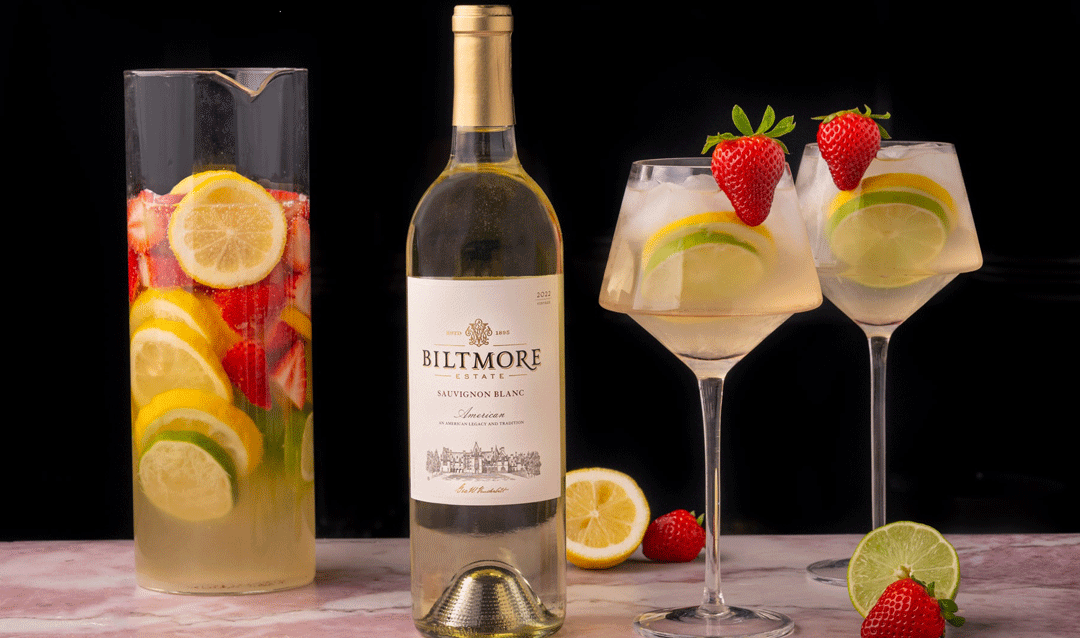
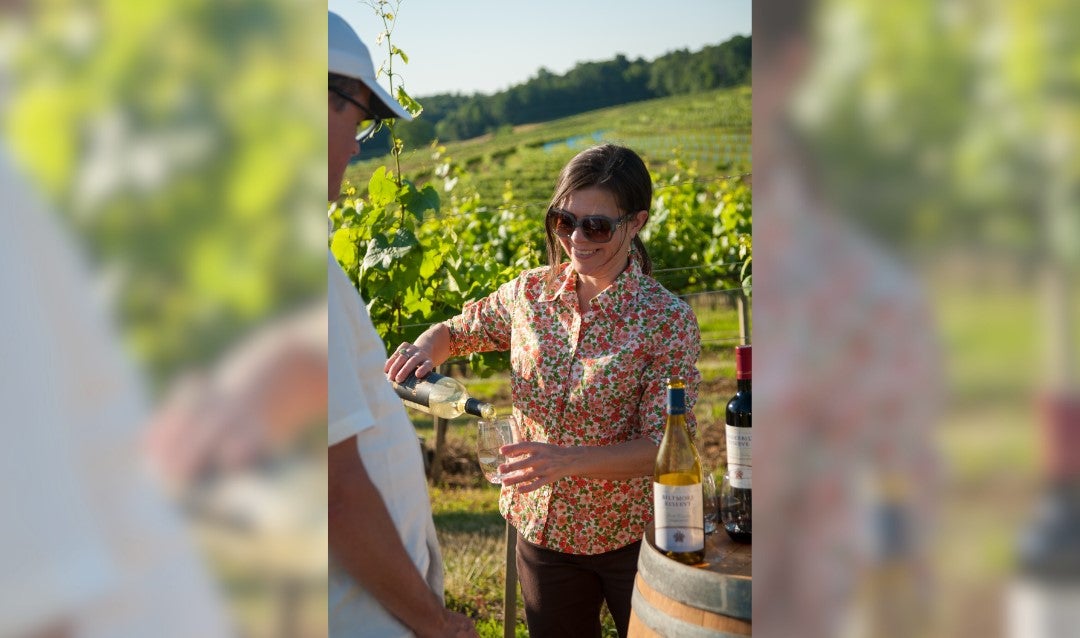
Biltmore Estate Sauvignon Blanc is the star of this refreshing white sangria dreamed up by Marley Goldin / @marleysmenu following a complimentary wine tasting at Biltmore Winery. (Photo courtesy of @marleysmenu.)
Although traditional sangria recipes tend to feature red wines, this delightful Biltmore Estate® Sauvignon Blanc-based version, created for Biltmore by Marley Goldin of @marleysmenu, is a cool, refreshing treat for warm weather. Enjoy with friends and, should you have any leftover (we doubt you will!), freeze it for a fun take on grown-up popsicles or slushies.
1 ½ cups strawberries, washed, tops removed, halved
2 cups club soda
Ice
Instructions:
Into a large pitcher, add the lemon and lime slices and granulated sugar. Muddle for 30 seconds until the sugar combines with the citrus juices.
Add the triple sec, then stir to combine.
Add the Biltmore Estate® Sauvignon Blanc and sliced strawberries to the pitcher and stir again.
Just before serving, add ice and club soda. Serves 8.
Tip: This recipe can be made up to 24 ahead of time! The longer the fruit sits in the liquid, the more its flavor infuses. Hold off on adding the club soda and ice until just before serving.
Cardinal’s Crest Red Sangria
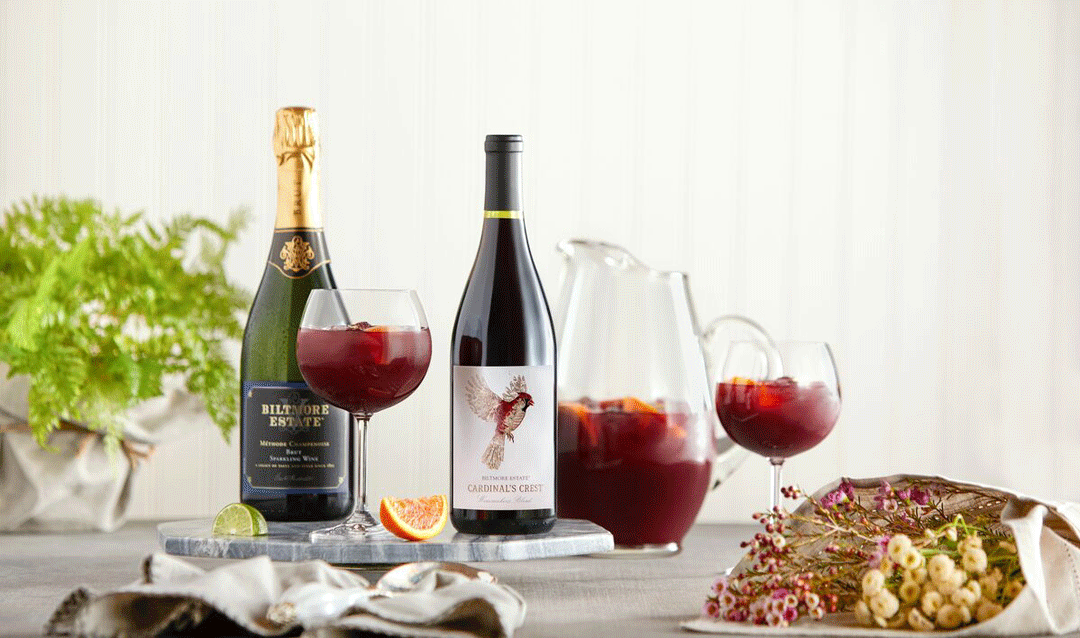
Biltmore Estate® Cardinal’s Crest wine is perfect for sipping, savoring, and sangria!
Take time for yourself with a glass of Biltmore Estate® Cardinal’s Crest Red Sangria—the perfect sparkling treat for a leisurely Sunday morning brunch or a long afternoon on the porch.
Tutankhamun: His Tomb and His Treasures ended March 1, 2026. Please enjoy this archived content.
When you visit Tutankhamun: His Tomb and His Treasures at Biltmore Estate, you might wonder what Biltmore has to do with Egypt.At first glance, ancient Egypt and Gilded Age America may seem worlds apart—but dig a little deeper into our history, and surprising connections to discovering the tomb of King Tut start to emerge.
This story began with a discovery in Biltmore’s archives: a carefully curated album of photographs taken by John Francis Amherst Cecil (1890–1954), husband of Cornelia Vanderbilt and longtime steward of Biltmore House. These photographs, captured during Cecil’s diplomatic service in Cairo from 1914 to 1919, offer a personal window into a pivotal place and time where history was being made.
They reveal details of a career spent among ancient wonders, a family friendship with one of archaeology’s most iconic figures, and even a brush with one of the greatest archaeological stories of the 20th century—the discovery of King Tut’s tomb.
Associate Curator, Meghan Forest-Singer, shares a closer look at the connections between King Tut and Biltmore.
Family connections
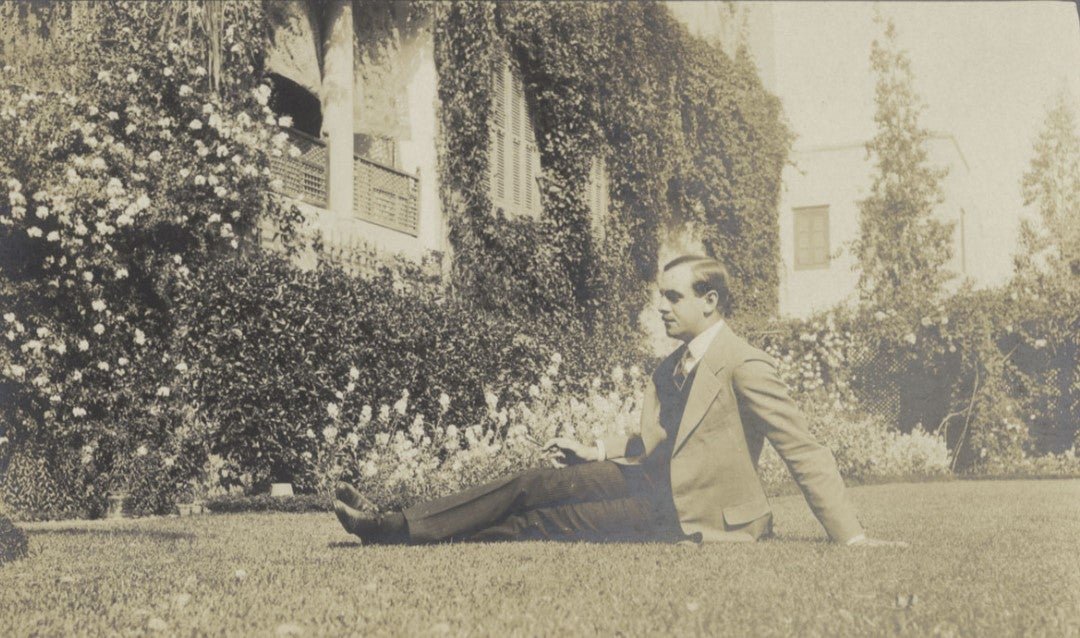
John Cecil in the gardens of the British Embassy in Cairo, ca. 1917.
John Cecil’s link to ancient Egypt began long before his time in Cairo. His mother, Lady Mary Rothes Margaret Cecil, grew up at Didlington Hall in Swaffham, England. Didlington Hall was known for its remarkable collection of Egyptian antiquities assembled by her father, William Tyssen-Amherst. Didlington’s ancient objects did not just leave a lasting impression on “May”, as her family called her, but also on a young boy named Howard Carter, who visited often when his father worked on the estate. Carter’s fascination with Egypt coupled with his artistic talent caught the Amherst family’s attention, and they eventually funded his first position in Egypt when Carter was just 17.
May’s interest in Egypt wasn’t limited to collecting artifacts, though; she actively coordinated their discovery. Between 1901 and 1904, she led two seasons of excavations near Aswan in Egypt, working under Howard Carter’s supervision during his time as Inspector of Monuments for Upper Egypt. These were not casual visits but serious archaeological endeavors, and they left a strong impression on her four sons.
John Cecil, the third of those sons, inherited his mother’s curiosity and enterprising spirit. While his brothers all pursued military careers, John studied at Eton and Oxford before entering the diplomatic service. His first foreign post came in 1914, when he was appointed Undersecretary at the British Embassy in Cairo. By the time he left Egypt in 1919, he had risen to the role of Second Secretary, gaining both rank and experience during a critical moment in world history and in the unfolding story of Egyptian archaeology.
Life along the Nile
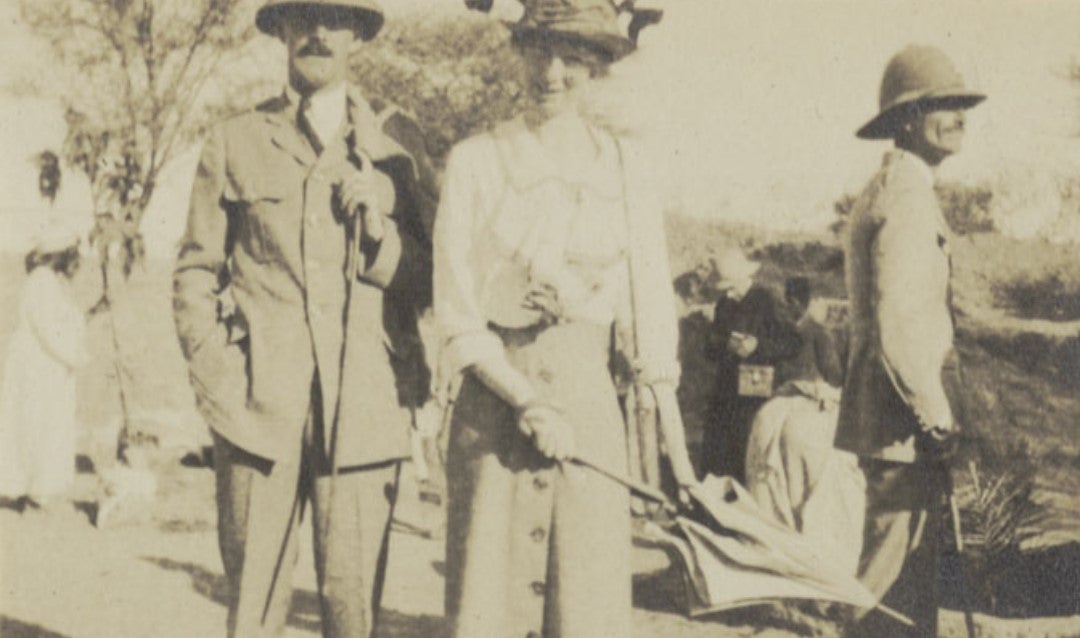
John Cecil, left, readies for a day of exploring with unidentified friends, colleagues, and guides, ca. 1917.
Despite the demands of his position, John Cecil found time to explore the rich cultural landscape of Egypt. His photo album tells the story of a young man fully engaged with the interesting new world around him. Its pages document parades, golf outings, and Nile cruises with colleagues and friends, along with time spent enjoying the Embassy’s gardens and interacting with locals. But perhaps the most compelling are the images he captures of Egypt’s ancient monuments.
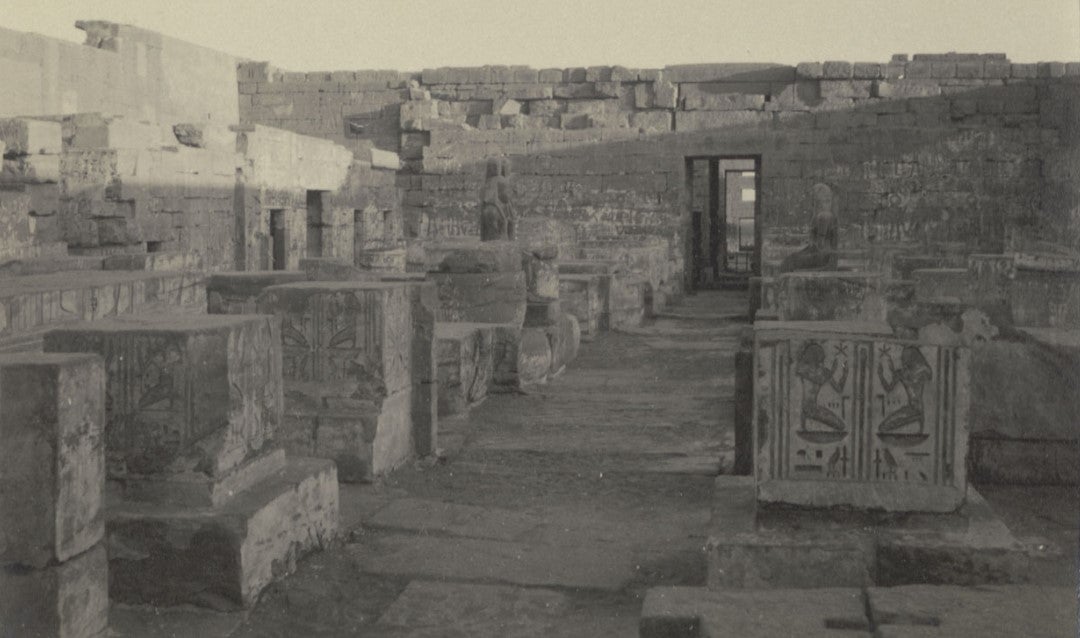
His lens captured moments of stillness, silliness, and awe from the Temple of Luxor, the Ramesseum, Karnak, and many other sites. Some of these visits appear to have been led by local guides. Others, however, suggest a front row seat to history in the making.
An interior view of the mortuary temple of Ramses III at Medinet Habu, late 1917.
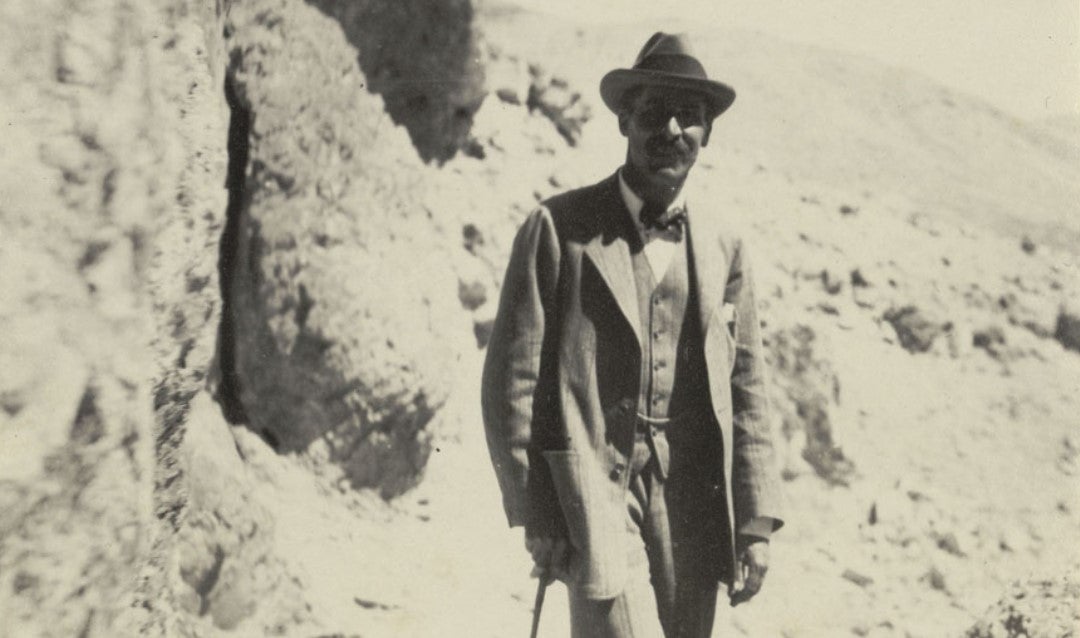
At several archaeological sites in the Valley of the Kings, John Cecil appears to have been guided by none other than Howard Carter himself. Excavations in the Valley of the Kings halted in 1915 due to World War I, but, in 1917, Carter resumed searching for a “missing” pharaoh, working in partnership with George Herbert, Fifth Earl of Carnarvon. It was here, in this legendary setting, that Cecil witnessed history in the making.
The mystery of Site A
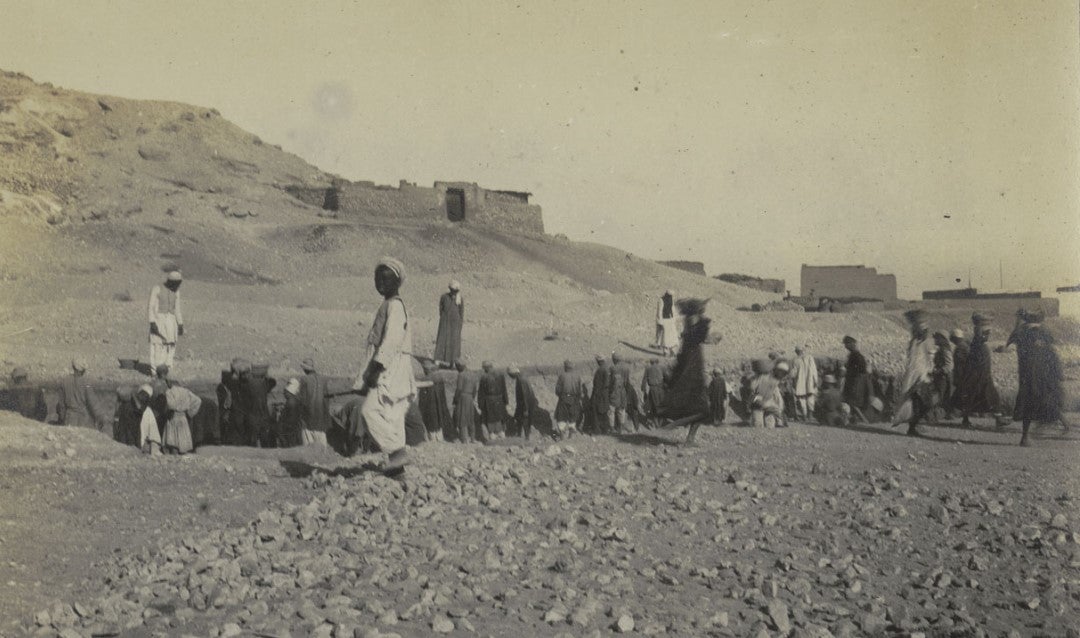
Qurna laborers excavate at Site A in the Valley of the Kings, late 1917.
At first glance, this photo seems like a typical early 20th century excavation scene. But Cecil labeled the back, simply, “Carnarvon digging.” A closer look reveals the landscape matches photographs taken at the same location by Carter’s official photographer, Harry Burton. With that comparison, Biltmore’s curators made an incredible discovery: this photograph captures early excavations of what Howard Carter called “Site A.”
Site A marked Carter’s renewed efforts to locate a lost pharaonic tomb. Fueled by fragmentary but tantalizing evidence at other Thebes sites, Carter felt that Site A was the most likely site of the lost tomb. And he was amazingly close: nestled between the tombs of Ramses I, Ramses II, and Merneptah, Site A lies less than a hundred feet away from what would later be revealed as the tomb of Tutankhamun, better known to the modern world as King Tut.
Carter began excavating Site A in December of 1917 and continued into February of 1918, dating these photos to a narrower span of time than previously realized. Cecil visited the site in the early days, before tracks were laid for a rail system to remove debris. Instead, laborers from nearby Qurna moved debris by hand in baskets balanced on their heads. This photo lets us see the effort, scale, and intensity of the dig, while also giving a sense of the quiet anticipation and excitement that led Cecil to snap a photograph.
Though Site A didn’t yield a major discovery, it revealed artifacts that hinted at a story hidden below the surface. When excavation resumed the next season, Carter dug test trenches just across the central path of the Valley. Although it took a few more seasons of work, what Howard Carter found there took the world by storm: the lost tomb of King Tut.
The road to Tutankhamun
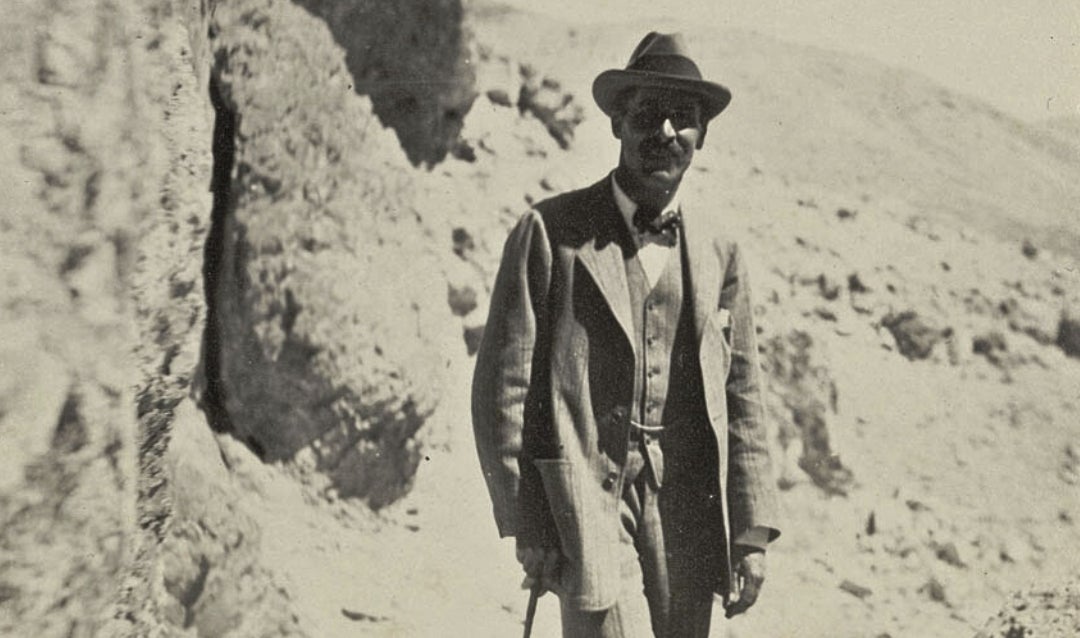
Howard Carter in the Valley of the Kings, 1917.
Four years later, Howard Carter broke through a sealed doorway and entered the tomb of Tutankhamun. This moment captured the world’s imagination and redefined modern archaeology. It continues to captivate people around the globe, even a century later. But behind that moment stood decades of preparation, patronage, and persistence, including the early support of the Amherst and Cecil families.
The Amherst family’s belief in Carter gave him the opportunity to begin his work in Egypt. Lady William Cecil’s own excavations helped establish key professional networks. And her son, John Cecil, bore witness to Howard Carter’s efforts when that work began paying off, capturing in photographic form the work that would one day lead to the greatest archeological discovery of the century.
While neither Lady Cecil nor John Cecil were directly involved in uncovering King Tut’s tomb, their role in the story is undeniable—and largely unknown until now.
Step into history at Biltmore
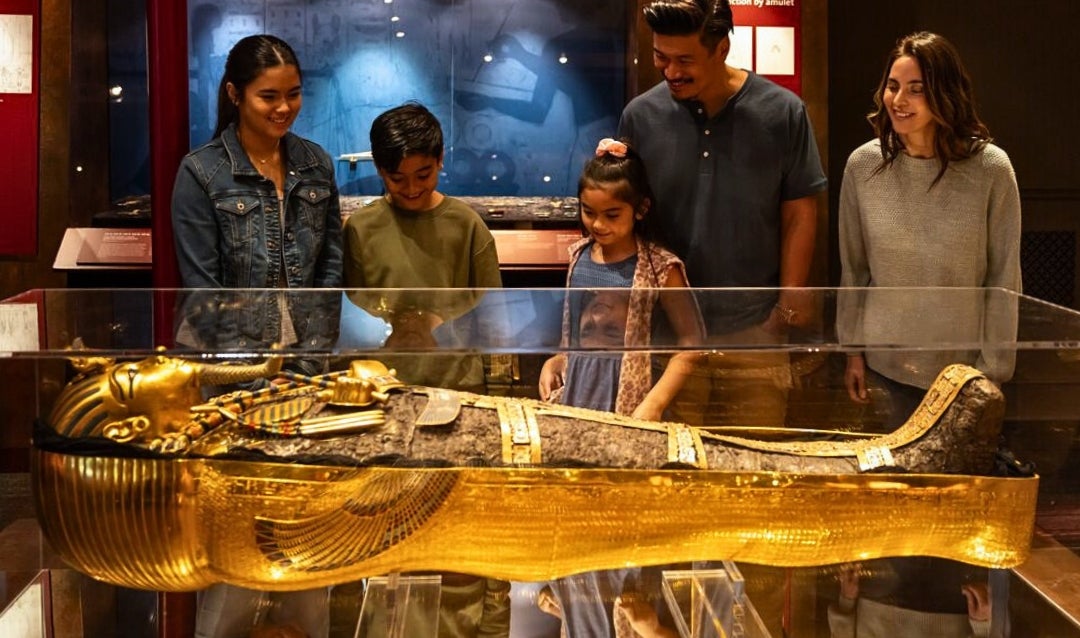
All ages enjoy exploring our “Tutankhamun: His Tomb and His Treasures” exhibition.
Plan now to experience Tutankhamun: His Tomb and His Treasures at Amherst at Deerpark® on the grounds of the estate. This immersive exhibition features breathtaking recreations of every artifact Carter found in the tomb of King Tut, arranged as they were originally discovered.
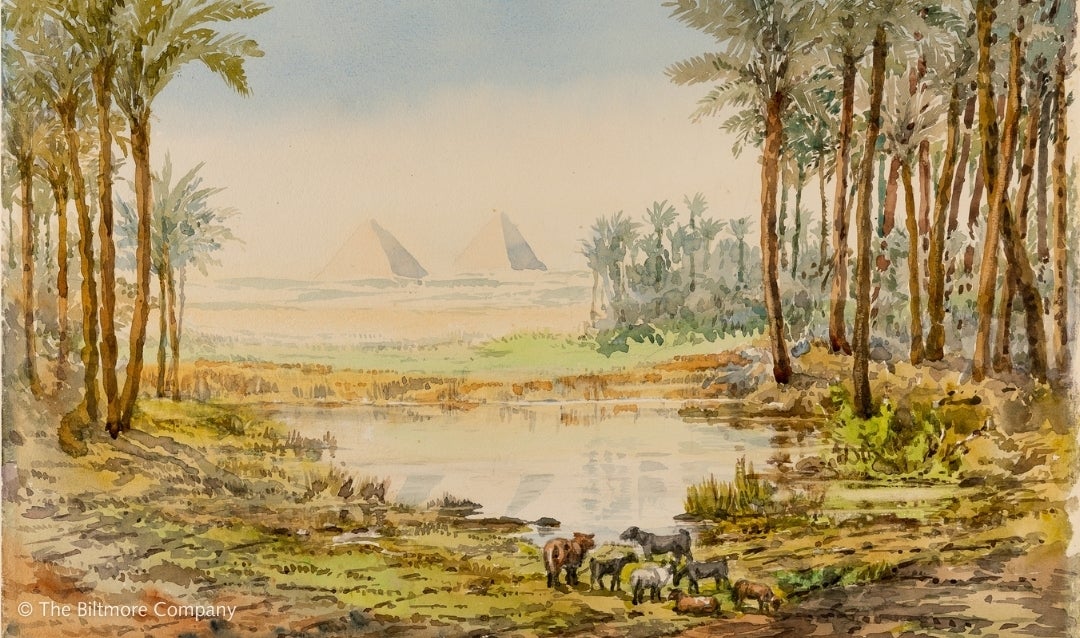
This exhibit also shines a spotlight on Biltmore’s own unexpected connection to ancient Egypt. From Lady William Cecil’s original watercolors to enlarged prints of photographs of John Cecil’s firsthand travels, you’ll discover how personal history and world heritage intersect in unforgettable ways.
Don’t miss your chance to walk in the footsteps of explorers, diplomats, and royalty, right here at Biltmore—dig into history and discover Biltmore’s fascinating historic connection to King Tut.
Featured image: John Cecil (second rider from right) with a group of unidentified embassy employees and guides on an archaeological tour at the Rammesseum, ca. 1919.
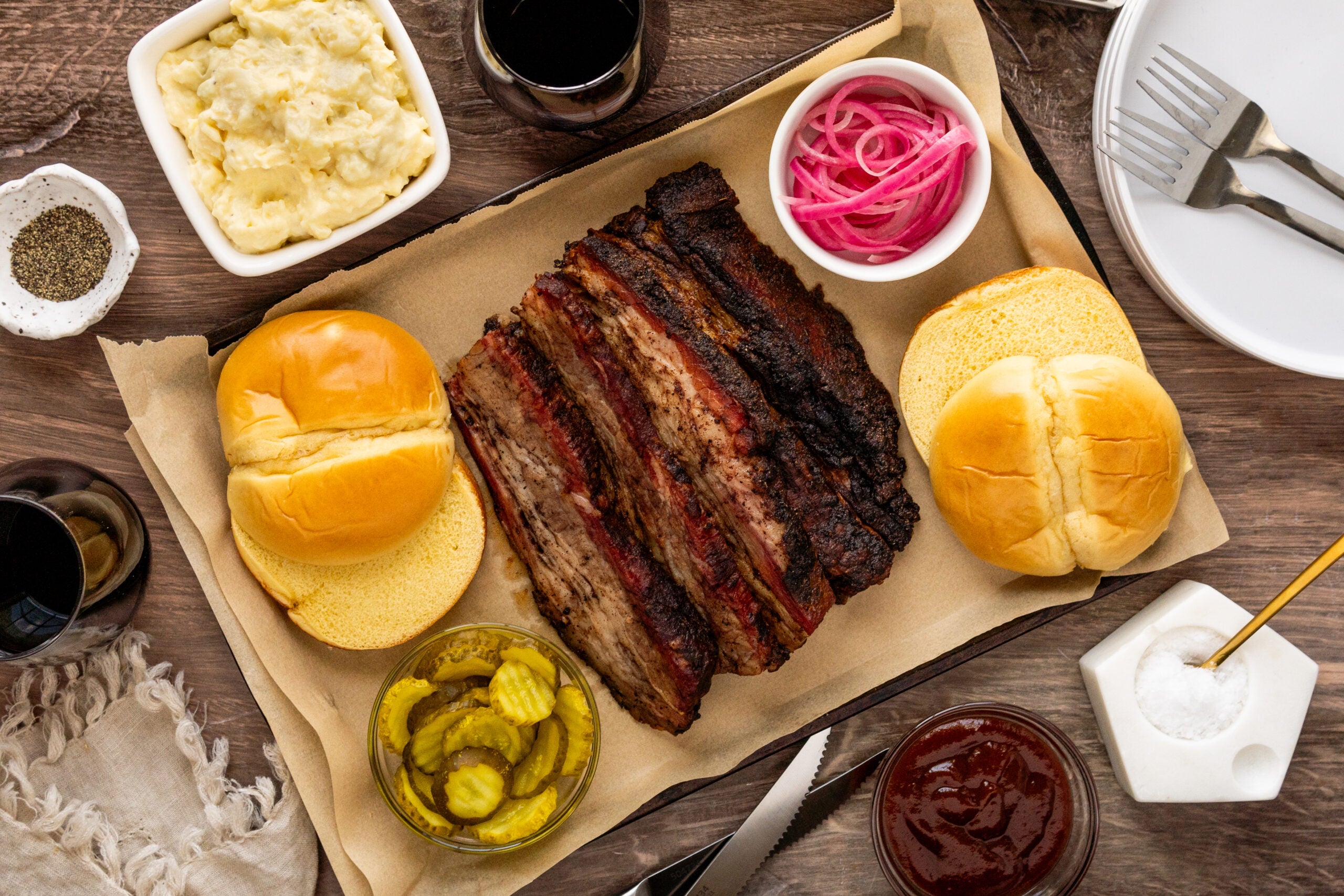
Nothing says summer like the mouthwatering flavors and aromas of BBQ! Follow this recipe from our Biltmore Estate chefs for a tender smoked or oven-roasted beef brisket with a simple Texas-style BBQ sauce.
Fire up the smoker for this mouthwatering Biltmore Brisket recipe with Texas-style BBQ sauce.
Beef Brisket with Texas-Style BBQ Sauce
Total time: 11 hours 30 minutes
Serving Size: 4-6 people
Ingredients:
BBQ Dry Rub
3 pounds beef brisket
½ cup paprika
¼ cup brown sugar
¼ cup chili powder
¼ cup kosher salt
¼ cup black pepper
2 tablespoons cayenne pepper
2 tablespoons ground cumin
Texas-Style BBQ Sauce
4 tablespoons blended oil (such as olive or canola oil)
1 yellow onion, roughly chopped
8 cloves garlic, roughly chopped
16 ounces light brown sugar, packed
16 ounces apple cider vinegar
1 bottle (32 ounces) prepared ketchup
2 teaspoons smoked paprika
2 teaspoons mustard powder
2 teaspoons kosher salt
2 teaspoons ground black pepper
Instructions:
Prepare the Texas-Style BBQ Sauce: Sauté onions and garlic in blended oil over medium heat until soft. Add sugar and vinegar; cook until slightly reduced. Stir in ketchup and spices and simmer for 15 minutes. Blend until smooth and use immediately or refrigerate for up to 7 days.
Smoke the brisket: Rub dry ingredients into brisket and smoke at 275°F for 2 hours. Roast uncovered at 300°F for 6 to 7 hours or until fork-tender. Rest for 30 minutes before slicing, then top with BBQ sauce.
If you don’t have a smoker, try oven roasting the brisket: Rub dry ingredients into brisket and place on a rimmed baking sheet lined with heavy-duty aluminum foil. Cover with aluminum foil and bake at 300°F for 6 hours. Uncover and continue baking for an additional 1-2 hours, or until fork-tender. Rest covered for 30 minutes before slicing, then top with BBQ sauce.
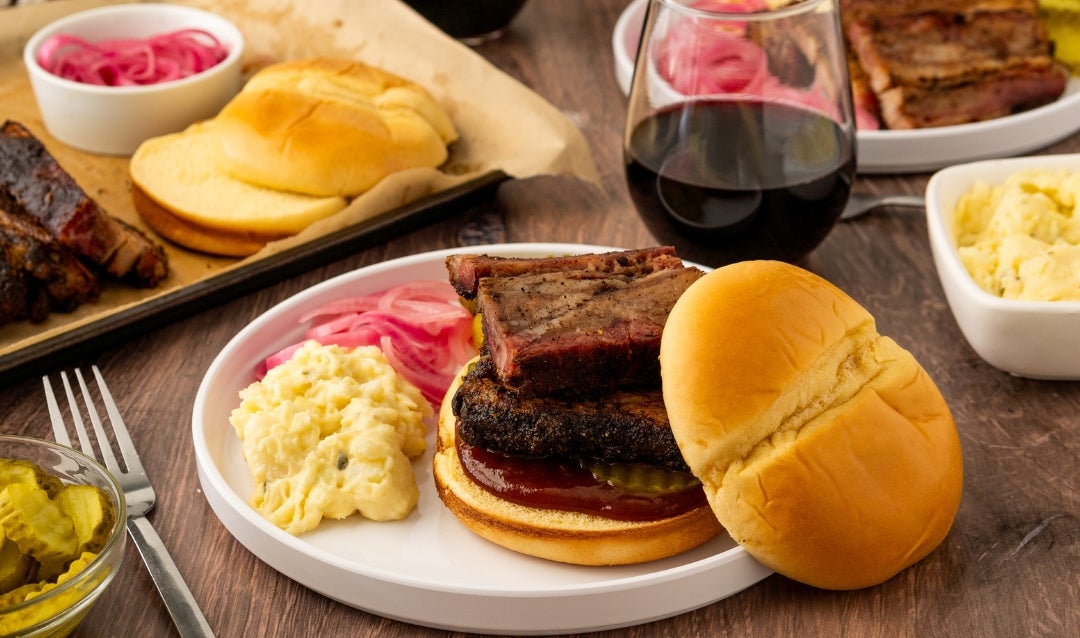
Serve your mouthwatering brisket sandwich or plate with our simple Texas-style BBQ Sauce and enjoy with your favorite sides and Biltmore wines.
Elevate your BBQ brisket by pairing with the rich, fruit-forward flavors of our suggested Biltmore red wines.
Biltmore’s values are rooted in responsibility, and have been since 1895 when George Vanderbilt invited the first guests to experience his new home in Asheville, NC.
If you’ve visited the estate in recent years, you have been immersed in our preservation mission first-hand as you’ve explored a newly restored room, admired an expertly-conserved work of art for the first time, or strolled across hand-laid brick pavers in Stable Courtyard.
What you may not have noticed, however, are the less visible corporate responsibility efforts that go on behind the scenes every day to create focus and accountability for our impact on society and conservation of our environment.
We invite you to take a look at how a family legacy guides the way we care for the people and world around us.
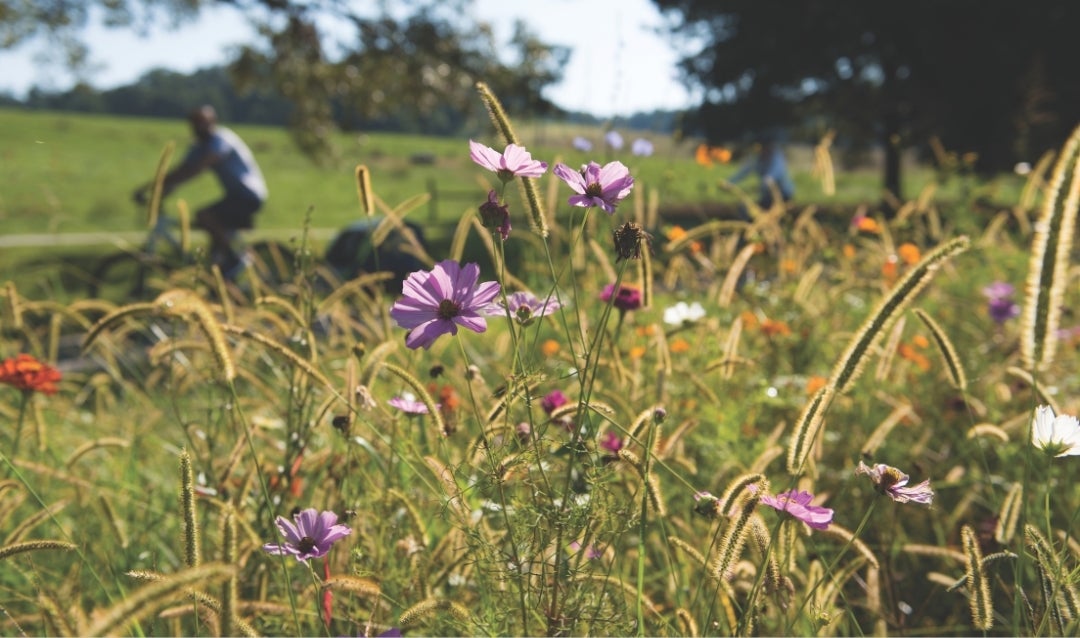
Every year, wildflowers and food plots are planted around the estate to support pollinators and wildlife.
Preservation with purpose
Though the term corporate social responsibility, or CSR, is relatively modern, the work behind the scenes at Biltmore is not.
“Corporate social responsibility has its beginnings in the way George Vanderbilt and his collaborators created this place, and that has continued through all the generations of family owners and leadership,” shares Tim Rosebrock, who serves as Biltmore’s Vice President of Legal & Compliance, and collaborates with leaders across the company and in the wider community to ensure that the values George Vanderbilt instilled are carried out with intention today.
At Biltmore, the purpose of corporate social responsibility is to contribute positively to the environment and society. These two focus areas are directly connected back to George and Edith Vanderbilt’s legacies and are supported through company-wide initiatives for sustained impact over time.
In the 1880s, George Vanderbilt envisioned Biltmore as a self-sustaining estate that nurtured the land and its resources. With the help of experts like Frederick Law Olmsted and Gifford Pinchot, what was once over-farmed and over-forested land became a model for sustainable and regenerative practices.
Today, we continue to honor this vision through our approach to environmental stewardship, sustainable agriculture and forestry, waterway management, and historic preservation of the estate.
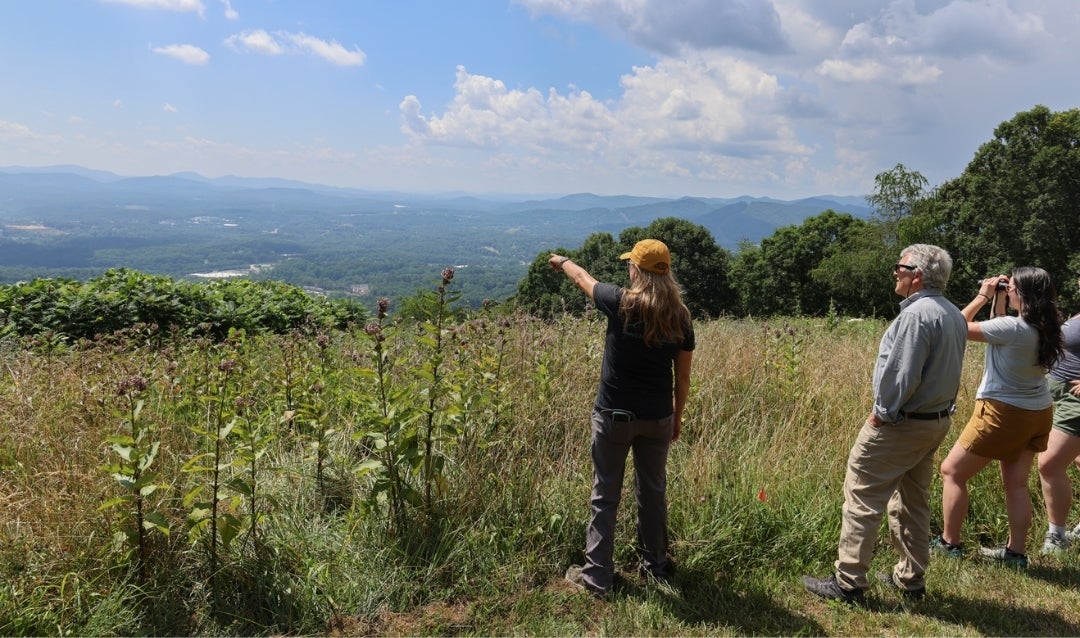
“But our commitment doesn’t stop at the gates,” says Tim. “We support local partners whose missions are to protect the greater region—preserving open spaces, view sheds, and biodiversity across Western North Carolina.”
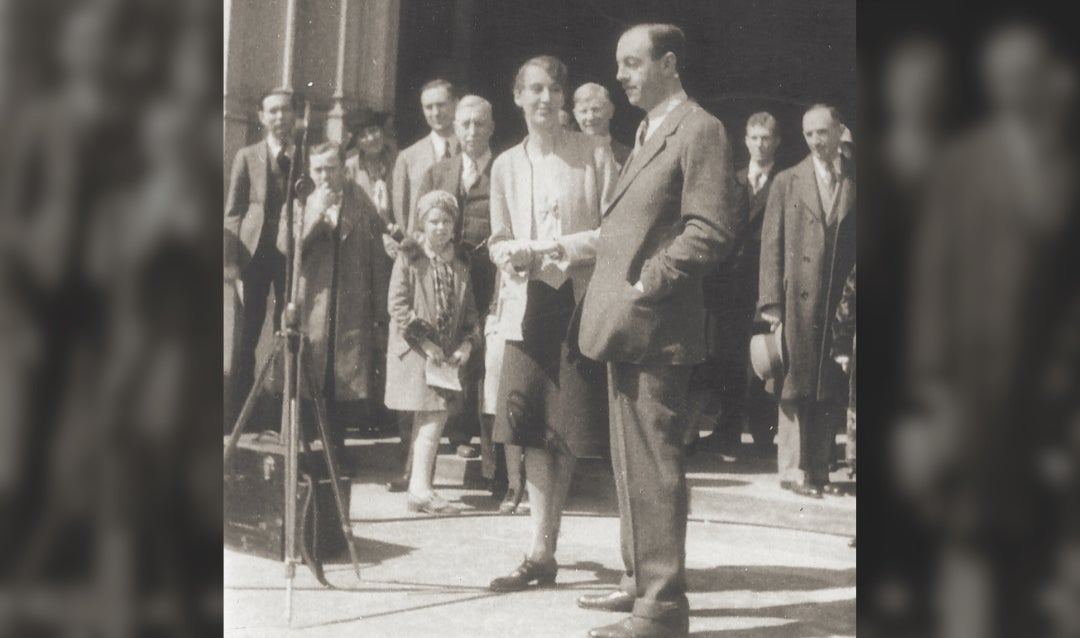
Archival image of Cornelia and John Cecil at the 1930 opening of Biltmore House to the public.
Societal impact: it takes a village
While George and Edith Vanderbilt’s commitment to their community and staff more than a century ago inspires our values, it was the next generation that made a big decision that left a lasting impact on Biltmore’s broader impact on the local economy.
According to Tim, “One of the most important impacts for our community over time goes back to 1930 when Asheville city leaders came to John and Cornelia Cecil and said, ‘Would you open Biltmore House to help us stimulate tourism?’”
Fast forward nearly 100 years, and Biltmore’s leaders remain committed to creating a welcoming culture for employees and guests on the estate and to supporting the community around us through partnerships with local organizations.
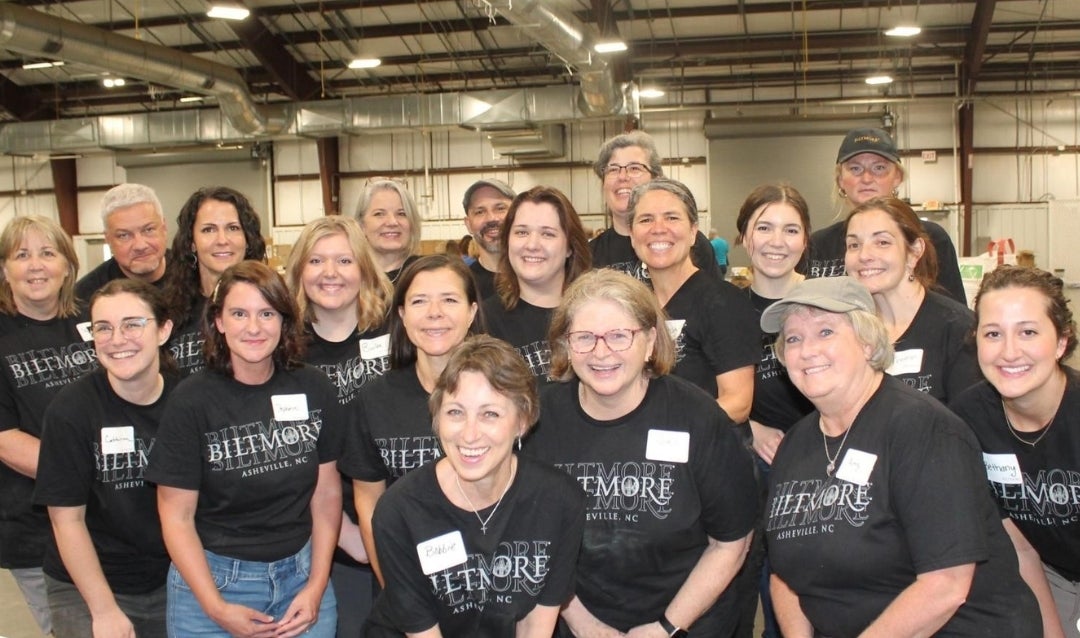
Biltmore team members “Pack to Give Back” with MANNA Foodbank.
Fulfilling our mission
“I think the decisions that every single one of us makes every single day are what ladder up to fulfilling our mission of preservation, living out our core values of integrity and community. And those small decisions make big contributions over time,” shares Tim.
A few real-world examples of decisions we make include:
Composting more than 1 million pounds of waste onsite for horticultural use
Sustainably managing more than 4,000 acres of forests and 2,500 acres of farmland
Ongoing historic preservation projects around the estate
Making financial contributions to local community aid and land conservation organizations
Making our historic interpretation accessible with more language options
Facilitating employee-led “green” teams and volunteer groups
Watch to learn more about Biltmore’s approach to corporate social responsibility.
Sustaining a legacy through corporate responsibility
As a company committed to continuous improvement, we recognize that there will always be more work to be done. We are honored to continue contributing to our society and natural environment for future generations. It’s the passion, purpose, and people of Biltmore who are carrying George Vanderbilt’s vision into the future, one thoughtful choice at a time.
Want to learn more about Biltmore’s ongoing preservation, community involvement, and environmental stewardship efforts? Be sure to follow us on social media, subscribe to our YouTube channel, and sign up for email newsletters for an ongoing look behind the scenes.
Biltmore Winery in Asheville, NC, celebrates its 40th anniversary in 2025, and we can’t wait to share our four decades of winemaking craft and care with two exceptional new wines created in honor of this milestone year!
Join us as we reflect on the legacy and dedication that goes into handcrafting and sharing our estate wines with you.
The beginning of Biltmore’s Winery
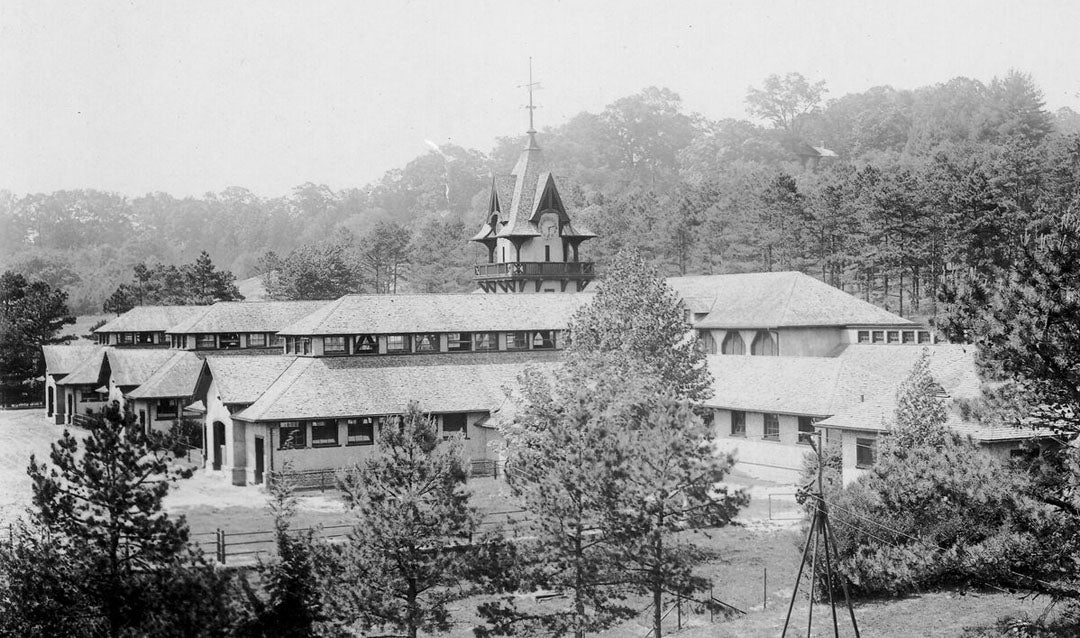
Biltmore’s Dairy Barn (now the Winery), May 30, 1913 (Courtesy of Alice Marie Lewis)
In the early 1970s, William A.V. Cecil, grandson of Biltmore founder George Vanderbilt, asked “What’s more appropriate for a French chateau than vineyards and a winery?”
He answered his own question by planting grapes at Biltmore and hiring French winemaster Philipe Jourdain to guide the process. By 1983, work was underway to convert an original estate dairy barn into a state-of-the-art winery.
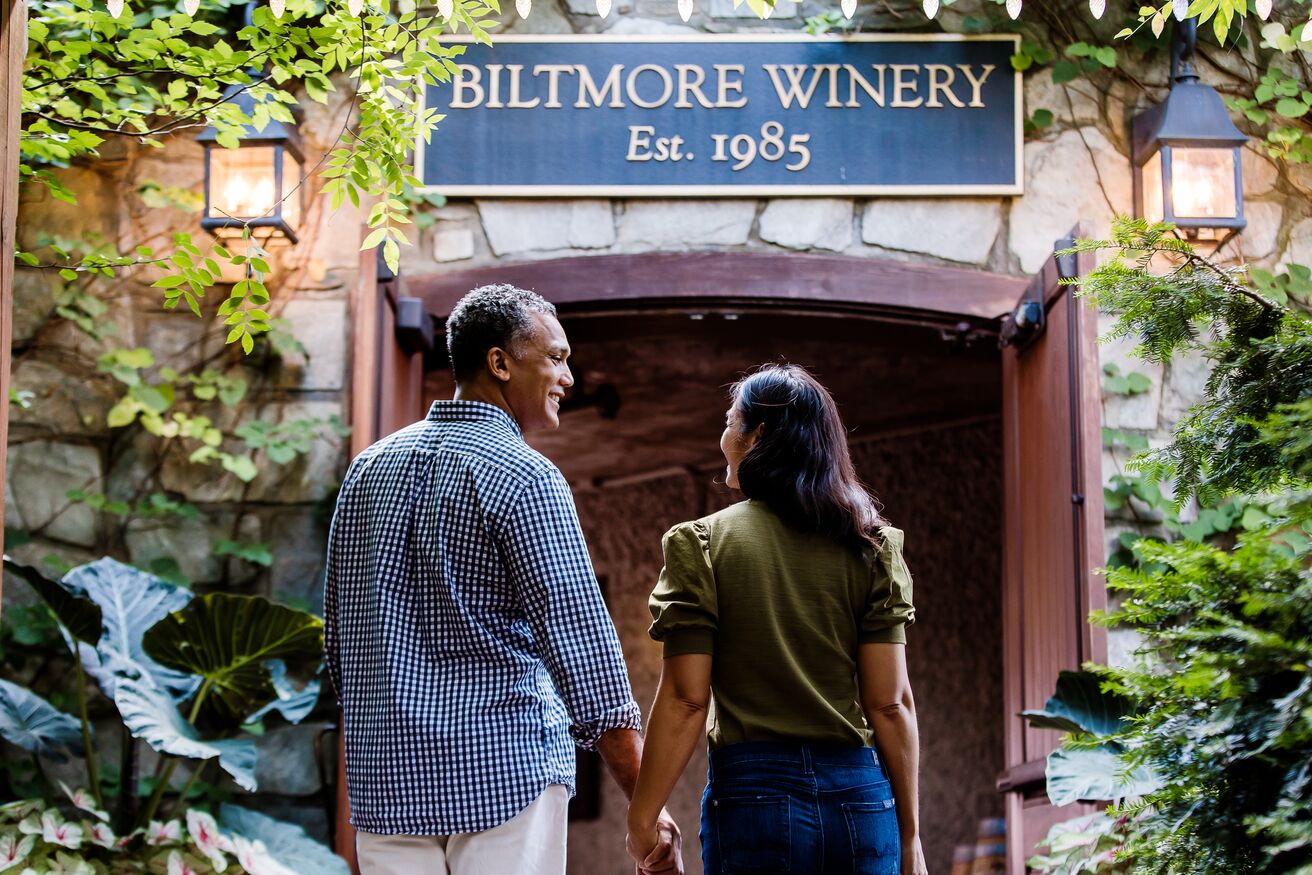
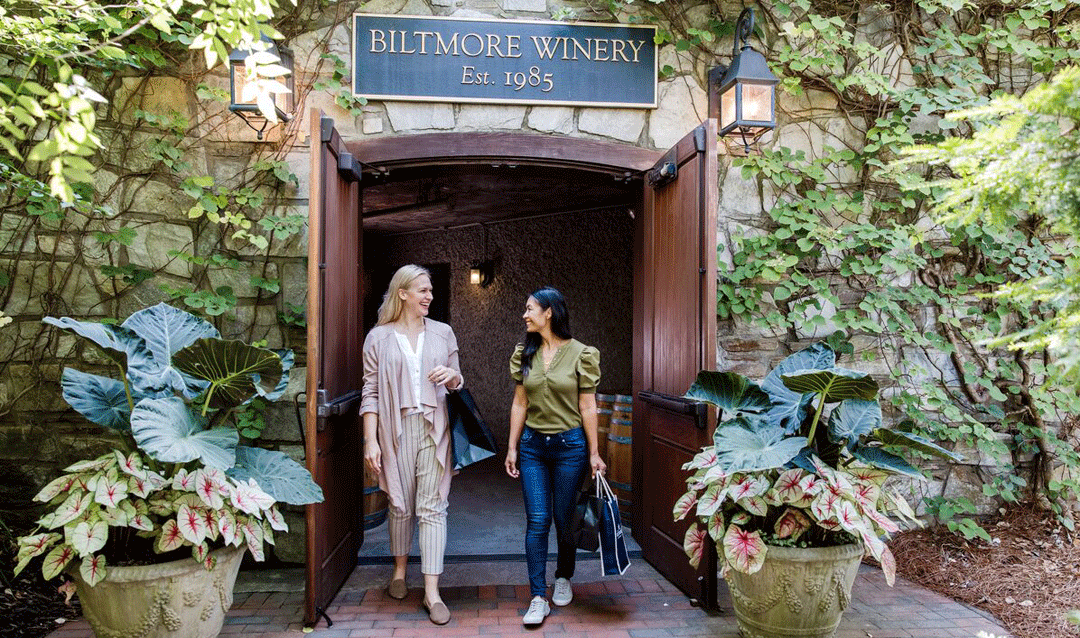
Biltmore Winery is housed in a converted dairy barn that was original to the estate.
In May 1985, Biltmore Winery opened to the public. Four decades later, we handcraft more than 150,000 cases of award-winning Biltmore wine annually in our onsite production facility.
Biltmore’s woman-led winery
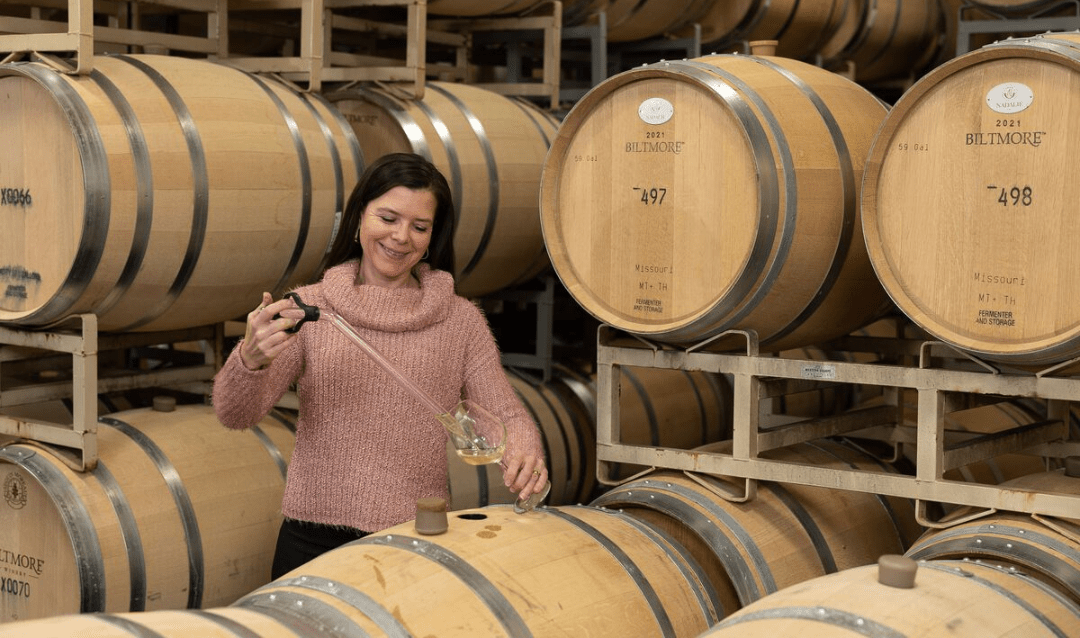
Winemaker Sharon Fenchak uses a wine thief syphon in the Barrel Room at Biltmore Winery.
Sharon Fenchak has served as Biltmore’s head winemaker since 2018, creating wines worthy of the finest Vanderbilt traditions of taste and style. She handcrafts Biltmore wines with the philosophy of keeping each one true to varietal character and consistent from vintage to vintage.
“My love of science at a very young age helped shape what would become my passion for winemaking, and I fell even more in love with the idea and romance of wine when I was serving in the US Army and stationed in Vicenza, Italy,” Sharon says.
Sharon Fenchak is a leader in the field of handcrafting fine wines, and she enjoys a hands-on approach to winemaking.
While winemaking has traditionally been a male-dominated field, Sharon and other women winemakers are crushing that perception as they continue pouring their talents into their craft.
Four decades of award-winning Biltmore wines
From our own vineyards on the west side of the estate to our grape-growing partners across the nation from Virginia to California and Washington, we source only the finest fruit for Biltmore wines.
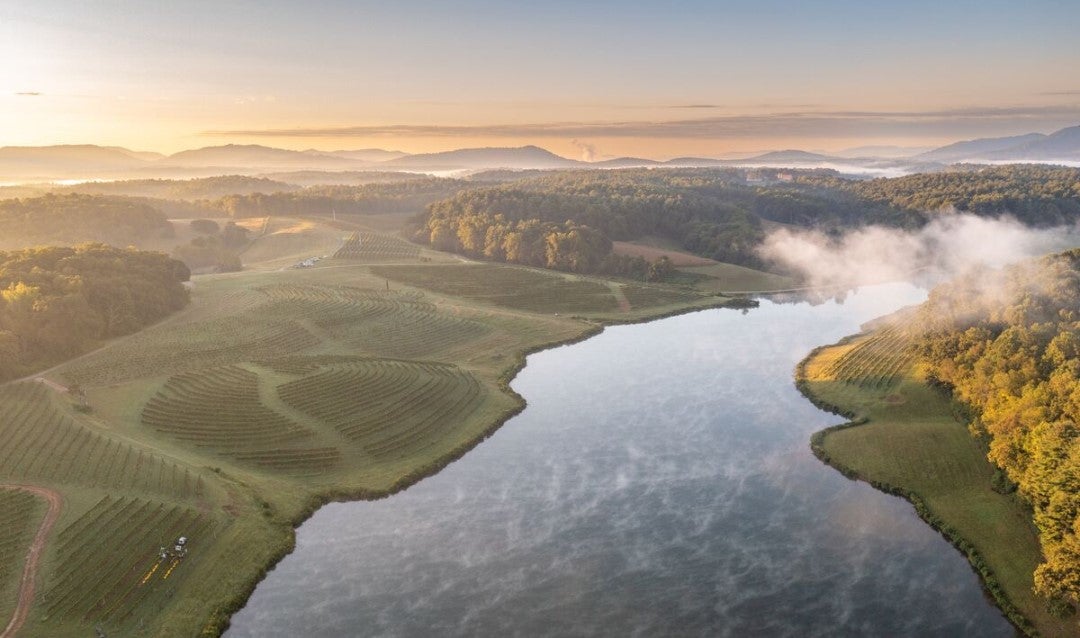
Biltmore’s vineyards overlook Long Valley Lake on the west side of the estate.
This strategy helps us craft a wide range of palate-pleasing wines, including popular varietals like Pinot Noir and Orange Muscat that don’t thrive in Western North Carolina’s climate.
“Our weather isn’t as predictable as that of other major grape-growing regions,” explains Philip Oglesby, Vineyard Manager, “but when conditions are right, the fruit produced in our estate vineyards is exceptional and earns the Biltmore® Reserve label for our finest North Carolina vintages.”
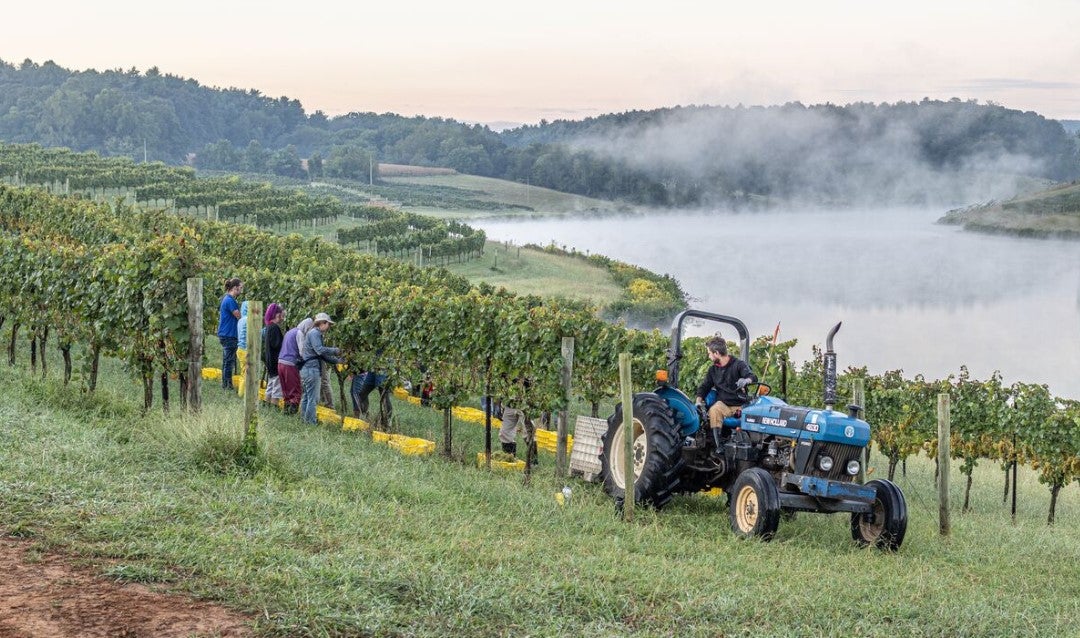
Each fall, Philip and his team harvest grapes by hand in Biltmore’s vineyard on the west side of the estate.
According to Philip, when you taste our wines crafted from estate-grown grapes, you’re tasting the heart of the Appalachian Mountains—some of the oldest terroir in the world. Terroir refers to the complete natural environment in which the grapes for wine are grown and in which the wines themselves are produced and aged. It includes factors such as the soil, topography, and climate.
Biltmore’s Winery is better than ever!
With 40 years of winemaking expertise and gracious hospitality to guide it, Biltmore Winery is more excited than ever to continue entertaining, educating, and delighting you with our family of award-winning wines.
Our knowledgeable Tasting Room hosts guide you through a fun and informative tasting of Biltmore wines.
“Biltmore Winery offers something for everyone, from the wine enthusiast who wants to learn more about our history and winemaking philosophy to the newcomer who just wants to taste our wines for the first time,” says Courtney Miller, Director of Winery Experience. “That’s what makes it such a wonderful part of any Biltmore visit—it’s a fun introduction to the world of wine!”
“Join us for a free tasting,” Courtney advises. “You’ll choose five wines from a seasonal selection of about 20 of our best-selling varietals and blends, and our Winery hosts are on hand to assist you.”
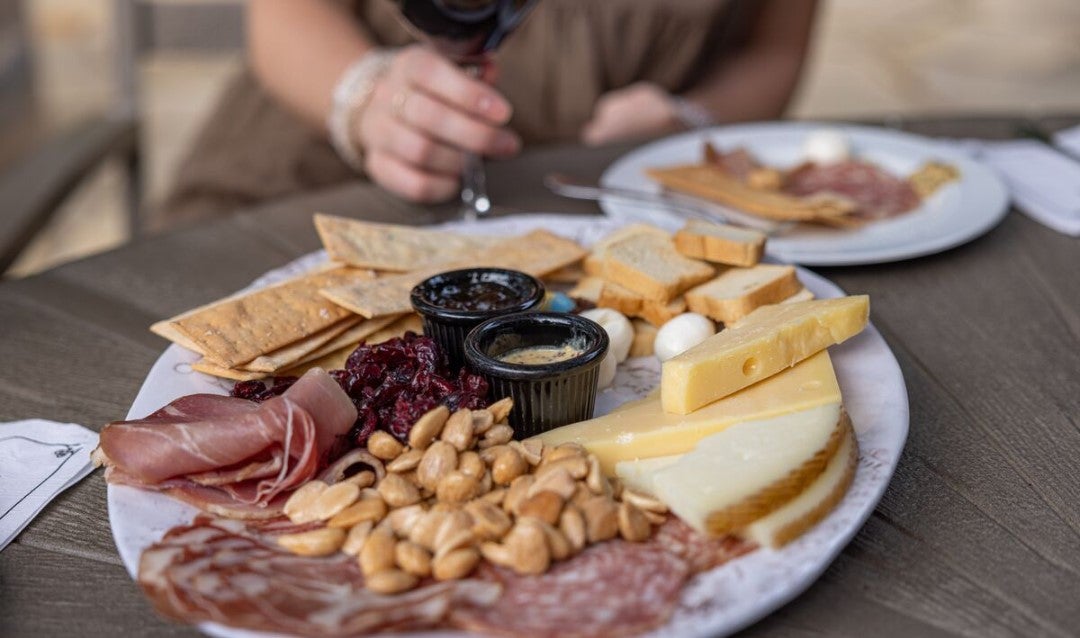
Savor a delicious charcuterie plate along with your favorite Biltmore wines at the Wine Bar.
Access to Antler Hill Village & Winery is included in all types of estate admission.
“The Winery is a great place to unwind at Biltmore,” says Courtney, “and a great place to gather with friends. After all, we’ve had 40 years to practice, and practice makes perfect!”
Ruby-red wines for our ruby anniversary
To celebrate Biltmore Winery’s 40th anniversary—a milestone traditionally honored with rubies—Sharon handcrafted two exceptional red wines that capture different facets of Biltmore’s working winery.
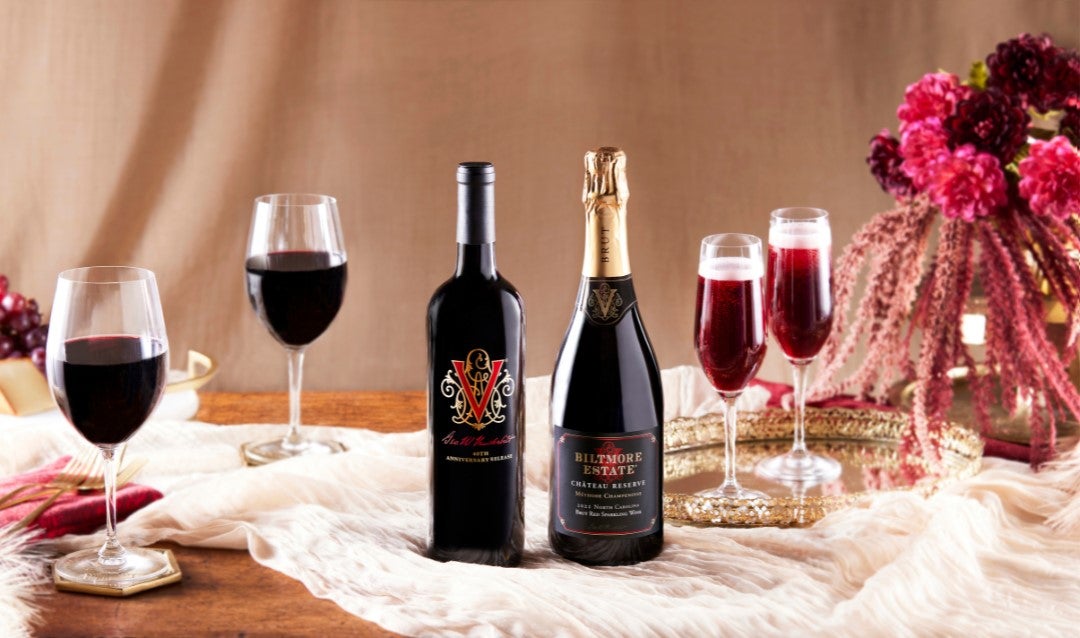
The first is our 40th Anniversary Release Sonoma County Red Blend—a bold, ruby-red fusion of California-grown Cabernet Franc, Cabernet Sauvignon, and Syrah. It pairs perfectly with a wide range of foods and occasions, from casual gatherings with family and friends to elegant evening events.
Celebrate Biltmore Winery’s 40th anniversary with two exceptional wines: our 40th Anniversary Release Sonoma County Red Blend and Biltmore Estate® Château Reserve North Carolina Brut Red Sparkling 2022.
Savor delicious flavors of blackberry, pomegranate, spice, and oak now with aged beef, duck, stuffed mushrooms, and Gorgonzola cheese, or allow the wine’s great tannin structure to enhance its excellent aging potential. Created specifically to mark our 40th anniversary, this bold blend will be available beginning May 1 in estate shops and online while supplies last.
We’re also thrilled to share a new release in honor of Biltmore Winery’s 40th anniversary: Biltmore Estate® Château Reserve North Carolina Brut Red Sparkling 2022. Handcrafted in the traditional methode champenoise to create the finest bubbles, the grapes were selected from the best of North Carolina’s 2022 harvest. From appetizers to anniversaries, this outstanding red sparkling wine makes any occasion more special. Find the inaugural vintage in estate shops and online now.
Visit now and celebrate Biltmore Winery’s 40th Anniversary!
After tasting our wines, you can stock up on favorite varietals and accessories in the Wine Shop, savor charcuterie, artisan chocolates, and wines by the glass at the adjacent Wine Bar, and learn more about membership in the Vanderbilt Wine Club®.
From exploring the grand halls of our historic chateau to savoring our handcrafted wines or exploring the rolling hills of our private mountain oasis, there’s something for everyone to enjoy at Biltmore!
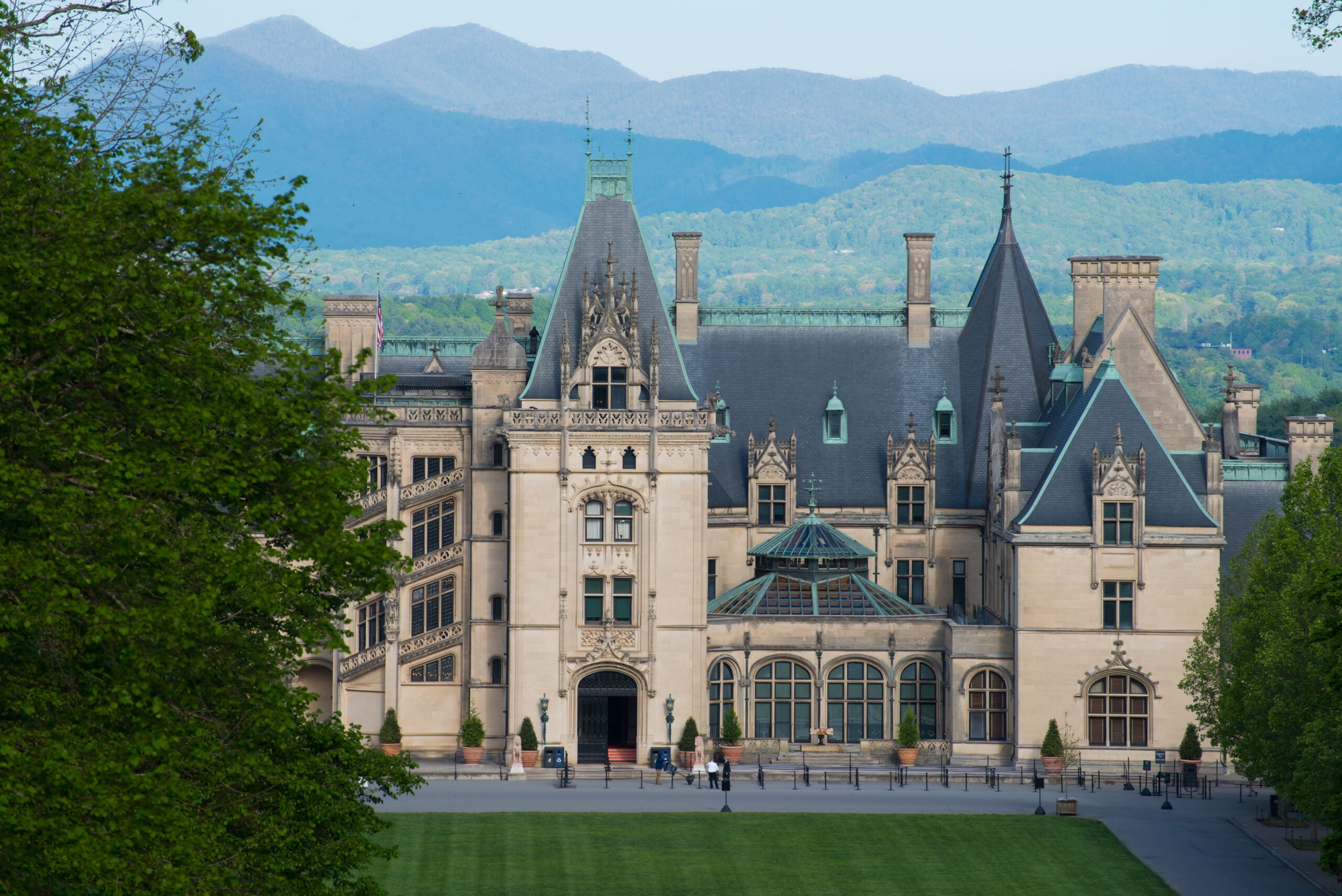
With so many options to explore, we recommend making the most of your visit by planning to spend two (or more!) full days on Biltmore Estate. This flexible Biltmore visit itinerary is designed to be easily tailored based on your preferences, reservation times, and our current activities and events, allowing you to focus on having fun on our 8,000-acre estate.
Make the most of your visit to Biltmore Estate in Asheville, NC.
Two-day Biltmore visit itinerary
For a leisurely and immersive visit to Biltmore, we recommend spreading your estate experiences across two full days, where you will have more time (and energy) to truly soak in all that Biltmore has to offer!
Tip: Select ticket types include FREE next-day access to explore the estate’s gardens and grounds, visit the Winery, or add on guided experiences. Be sure to check your admission type or overnight package for this perk and plan to come back the next day to take advantage of even more time to explore the estate.
DAY ONE
🏰 Morning to mid-day: Biltmore House (1.5 to 2 hours) Step into the grandeur of Biltmore House while learning about the history, the fine art and furnishings, and of course, the people, behind this Gilded Age masterpiece. With our Biltmore House tours, you’ll have the opportunity to discover the home and stories through our complimentary Audio Guide or take a deep dive into one of our fascinating expert-guided tours based on your interests.
Tip: Advanced reservations are required for all Biltmore House visits. If your reservation is in the afternoon or early evening, you may choose to explore the Gardens or Antler Hill Village first!
🥗 Early afternoon: Lunch at an Estate Restaurant (1 to 1.5 hours) Savor a delightful field-to-table meal at one of Biltmore’s distinctive restaurants, including Stable Café, Cedric’s Tavern, Bistro, or Village Social. If casual grab-and-go or picnic is more your style, be sure to stop by The Bake Shop or Biltmore Dairy Bar near Biltmore House, or the Smokehouse food truck or The Creamery in Antler Hill Village. Fine dining is available at our four-star Dining Room at The Inn.
Tip: Dining reservations are highly recommended. If you’re planning to explore the gardens next, we recommend taking advantage of dining options in the Stable Courtyrd area next to Biltmore House.
🌷 Late afternoon: Gardens and Conservatory (1 to 2 hours) Spend time finding your new favorite flower and indulging your senses with a visit to Biltmore’s historic gardens and glass-ceilinged Conservatory. Admire the meticulously maintained historic greenhouses filled with tropical plants year-round.
Tip: Select ticket types include FREE next-day access to explore the estate’s gardens and grounds, visit the Winery, or add on guided experiences.
DAY TWO
🥗 Mid-day to early afternoon: Lunch at an estate restaurant (1 to 1.5 hours) Savor a delightful field-to-table meal at one of Biltmore’s distinctive restaurants, including Stable Café, Cedric’s Tavern, Bistro, or Village Social. If casual grab-and-go or picnic is more your style, be sure to stop by The Bake Shop or Biltmore Dairy Bar near Biltmore House, or the Smokehouse food truck or The Creamery in Antler Hill Village. Fine dining is available at our four-star Dining Room at The Inn.
Tip: Dining reservations are highly recommended.
🧭 Afternoon: Guided experience(1.5 to 2 hours)
Choose from a variety of expert-guided tours and experiences to help make your visit to Biltmore even more memorable! Consider upgrading your visit to include expert-led tours to rarely accessed areas of Biltmore House, guided (or self-guided) outdoor adventures through our historic landscapes, or even a guided wine tasting featuring locally made chocolate pairings.
Tip: Select ticket types and overnight stay packages include length-of-stay access to Biltmore House!Be sure to check current hours of operation to make the most of your visit.
🥂 Evening: Antler Hill Village & Winery (2+ hours) Stop by our award-winning winery to toast two fun-filled days at Biltmore with one of our handcrafted estate wines! Linger into the evening in Antler Hill Village, where you can shop for unique gifts, such as gourmet treats, wines, and the perfect mementos, learn about the Vanderbilt family and their life at home and abroad at The Biltmore Legacy, and savor field-to-table dining.
Tip: If you’re traveling with small children, be sure to visit Pisgah Playground, the Farmyard, and Antler Hill Barn for educational family fun for all ages.
Whether you’re a wine connoisseur or want to experience your first wine tasting, be sure to stop by our estate Winery.
One full day Biltmore visit itinerary
If you only have one day to explore our historic estate, here’s what we recommend prioritizing for an action-packed way to experience all that is included in your Biltmore admission.
Tip: Select ticket types include free next-day access to explore the estate’s gardens and grounds, visit the Winery, or add-on guided experiences. Be sure to check your admission type or overnight package for this perk and plan to come back the next day to take advantage of even more time to explore the estate.
🌤️ Morning: Embark on an adventure (1 to 2 hours) Your estate admission grants you access to come early to explore the gardens, grounds, shops, and more. Take advantage of this quiet time of day to stretch your legs with a morning stroll or bike ride along estate trails, participate in a guided experience through our Outdoor Adventure Center, or arrive early to explore the gardens before your Biltmore House visit.
Tip: Look for special overnight stay packages that feature exclusive early morning visits to Biltmore House.
🥗 Mid-day: Lunch at an estate restaurant (1 to 1.5 hours) Savor a delightful field-to-table meal at one of Biltmore’s distinctive restaurants, including Stable Café, Cedric’s Tavern, Bistro, or Village Social. If casual grab-and-go or picnic is more your style, be sure to stop by The Bake Shop or Biltmore Dairy Bar near Biltmore House, or the Smokehouse food truck or The Creamery in Antler Hill Village. Fine dining is available at our four-star Dining Room at The Inn.
Tip: Reservations are highly recommended.
🏰 Afternoon: Biltmore House (1.5 to 2 hours) Step into the grandeur of Biltmore House while learning about the history, the fine art and furnishings, and of course, the people, behind this Gilded Age masterpiece. With our Biltmore House tours, you’ll have the opportunity to discover the home and stories through our complimentary Audio Guide or take a deep dive into one of our fascinating expert-guided tours based on your interests.
Tip: Advance reservations are required for all Biltmore House visits. If your reservation is in the afternoon or early evening, you may choose to explore the Gardens or Antler Hill Village first!
🌷 Late afternoon: Gardens and Conservatory (1 to 2 hours) Find your new favorite flower and indulge your senses with a visit to Biltmore’s historic gardens and glass-ceilinged Conservatory. Admire the meticulously maintained historic greenhouses filled with tropical plants year-round.
Tip: Select ticket types include free next-day access to explore the estate’s gardens and grounds, visit the Winery, or add on guided experiences.
🥂 Evening: Antler Hill Village & Winery (2+ hours) Stop by our award-winning winery to toast a fun-filled day with one of Biltmore’s handcrafted estate wines! Linger into the evening in Antler Hill Village, where you can shop for unique gifts, such as gourmet treats, wines, and the perfect mementos, or learn about the Vanderbilt family and their life at home and abroad at The Biltmore Legacy, and savor field-to-table dining.
Tip: If you’re traveling with small children, be sure to visit Pisgah Playground, the Farmyard, and Antler Hill Barn for educational fun for all ages.
Plan ahead! Allow yourself plenty of time to relax, play, and enjoy all that your estate visit has to offer.
Helpful Biltmore visit tips:
Below are a few additional tips for your Biltmorevisit itinerary. For even more helpful information to help you prepare for your Biltmore Estate visit, we recommend exploring our Visitor Information site section.
Plan ahead: Don’t wait to purchase your Biltmore admission or special overnight packages to secure your preferred dates and times!
Getting around the estate: Many guests underestimate the vast size of Biltmore Estate. With miles between points of interest, we recommend allowing your party at least 30 minutes for travel and parking between estate locations. For helpful guidance on estate accessibility, please explore our Help Center.
Dress comfortably: Wear comfortable shoes and dress in layers appropriate for the season and the types of activities you plan to do during your visit, especially if you opt to participate in any outdoor adventure activities.
Watch the weather: The weather in our region can change quickly, which may result in unexpected temporary closures of our trails or outdoor activities during severe weather. We appreciate your understanding!
Make it a getaway: With so much to experience, treat yourself and your loved ones to a memorable getaway with an overnight stay on Biltmore Estate. Book an overnight package or stay that includes Biltmore House admission to enjoy a daytime visit to Biltmore House with an audio guide at your leisure and as often as you would like during the length of your stay!
Make the most of your experience: All Biltmore admission types include access to explore Antler Hill Village & Winery and our historic gardens and grounds. Explore ticket types that include access to Biltmore House, Luminere™ (hosted on select evenings), free next-day grounds access, and more! Additional add-on experiences, such as guided tours and guided outdoor activities, are available as well.
Don’t forget your mementos: Visit our exclusive estate shops to find unique gifts and gourmet treats, like award-winning Biltmore Wines or honey from our estate beehives, to bring the Biltmore legacy home with you.
Find more tips: For even more guidance on what activities you might want to consider during your Biltmore visit for family fun, outdoor adventure, or food and wine, be sure to check our other itineraries and guides.
Becoming an Annual Passholder is the key to unlocking the best of Biltmore—but don’t take our word for it. Here’s what real Passholders have to say about what it’s like being a member!
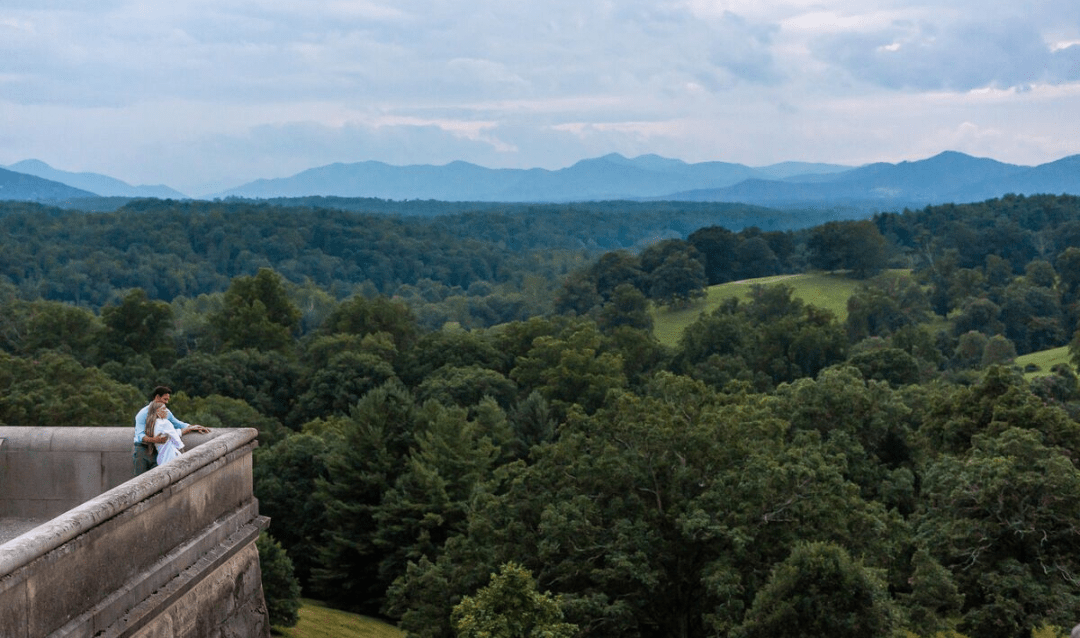
Spectacular views like this from the South Terrace are just one way to enjoy Biltmore. With an Annual Pass, you can visit as often as you like in every season.
Give yourself access to our 8,000-acre oasis 🗝️
“I use mine for the pet-friendly many miles of hiking trails! I enjoy the food, wine and the farm animals. Music on the lawn is a huge plus not to mention the friendly staff of Biltmore!” – Tonya S., Passholder
As a member of our Annual Passholder family, you can visit as often as you like, bring friends and familyalong, and enjoy exclusive perks that make every trip even more special. Picture yourself in the midst of breathtaking gardens designed by Frederick Law Olmsted or exploring the opulent rooms of Biltmore House—the possibilities are endless.
With your Pass in hand, you’ll have FREE daytime access to the house and gardens of this iconic estate as you soak up the grandeur and grace of a bygone era as often as you’d like.
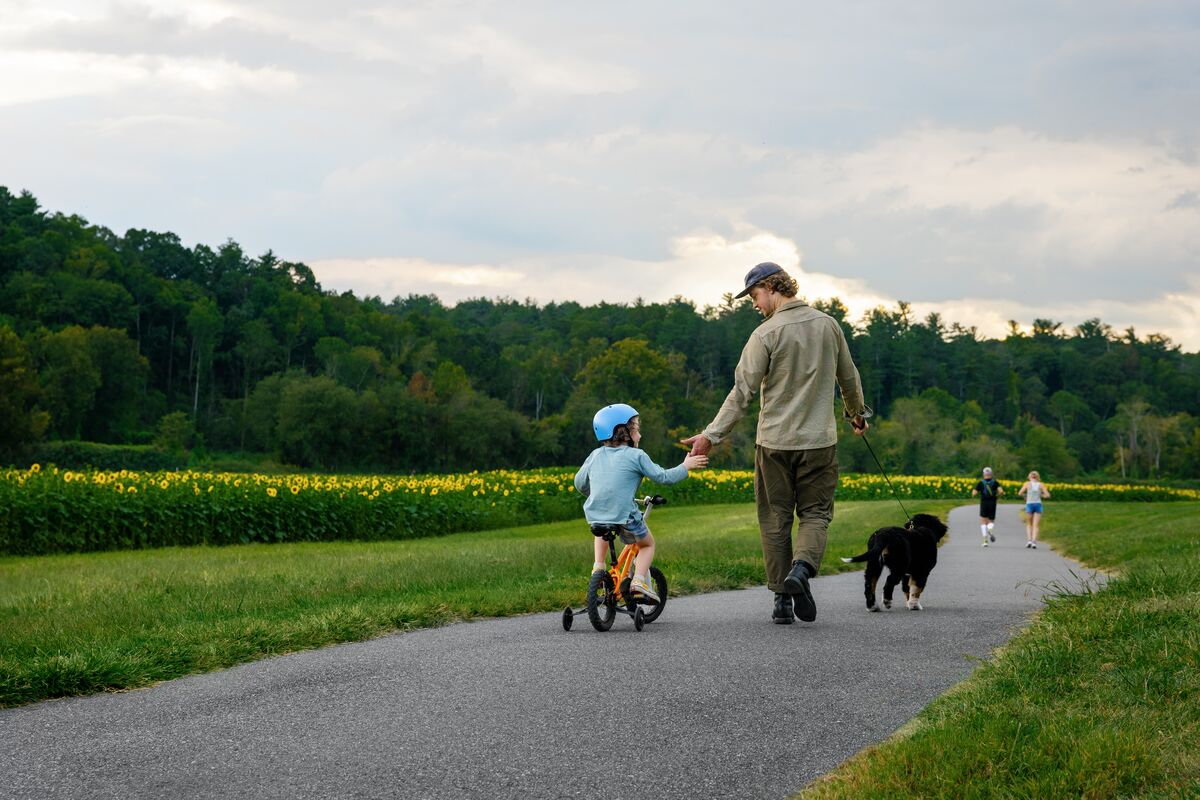
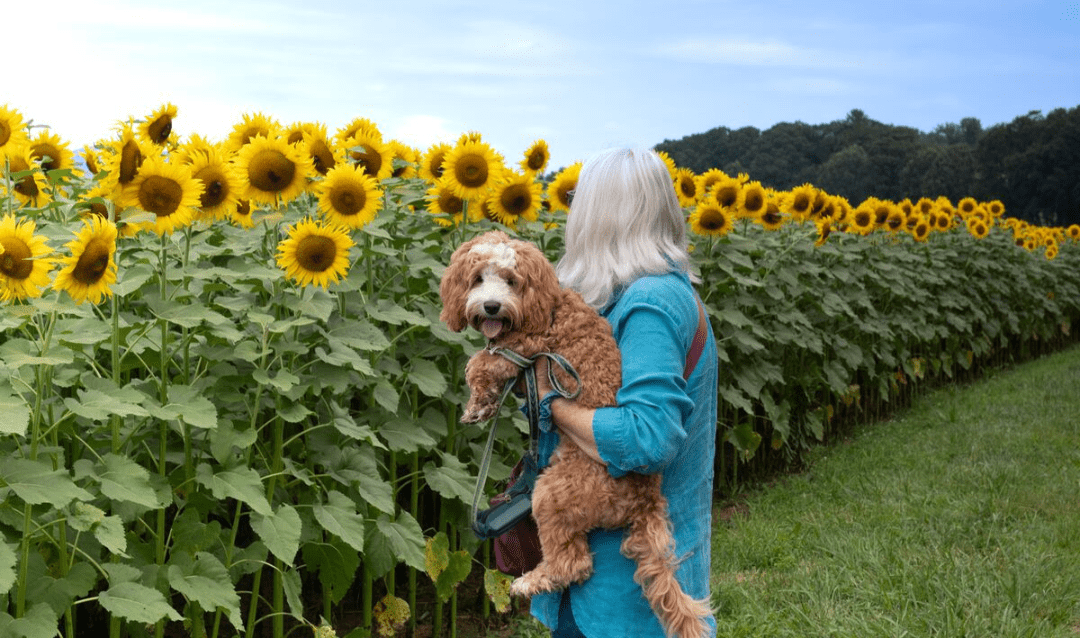
Passholders (and their pups!) enjoy our late-summer swathe of sunflowers along the road to Antler Hill Village.
Perks of being a Passholder 🙌
“I love my Annual Pass – it’s my Christmas present to myself. I use it mostly to drive the loop around the property; sometimes I park and walk the gardens, most times I park and go to the shops and winery. I also use it when friends are in town so we can get discounts on entry fees and special attraction tickets.” – Stacy S., Passholder
Time well spent—on your own or with those you love—is priceless. An Annual Pass is a smart investment that pays for itself in as few as two visits, giving you accessto Biltmore House & Gardens, Antler Hill Village & Winery, our 8,000-acre Blue Ridge Mountain backyard, and more.
Access benefits
Bring your kids 16 and younger with you for FREE.
Bring friends with you to Antler Hill Village & Winery after 4 p.m. to enjoy the Wine Bar, live music, and other delights.
Purchase discounted tickets to share with others.
Save on new exhibitions and select events.
Wining and dining benefits
Preferred pricing at estate restaurants, premium wine tastings, and the Winery.
Join the Vanderbilt Wine Club®—your Pass amplifies your opportunities to enjoy the experience, including access to our members-only lounge.
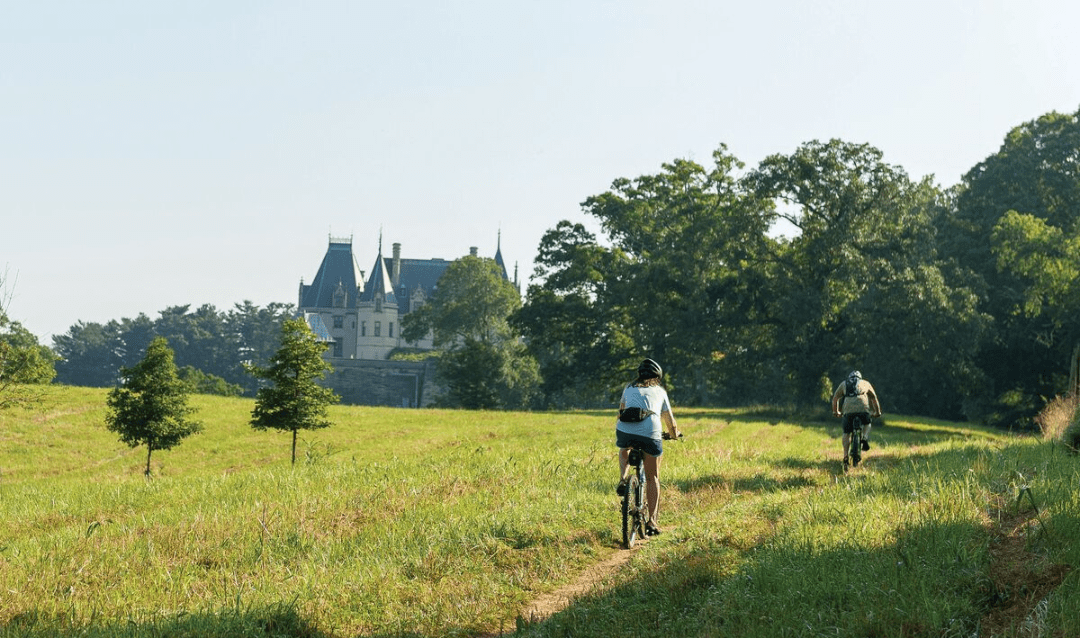
Enjoy miles of biking and hiking trails, from flat easy stretches along the French Broad River to more challenging terrain options.
Visit, wander, relax, and repeat! 🗺️
“Love my annual pass. I use the mountain biking trails quite a bit!”– Kimberly S., Passholder
Live nearby? Biltmore is perfect for a day trip or weekend escape, especially in different seasons. Flying in? With direct flights to Asheville from Colorado, Florida, Texas, and more, it’s easy to visit Biltmore multiple times a year.
With more than 22 miles of private trails to explore, ever-changing gardens and grounds, and new memories to be made around every corner, you’ll WANT to return time and time again, even if you’re local to the greater Asheville area!
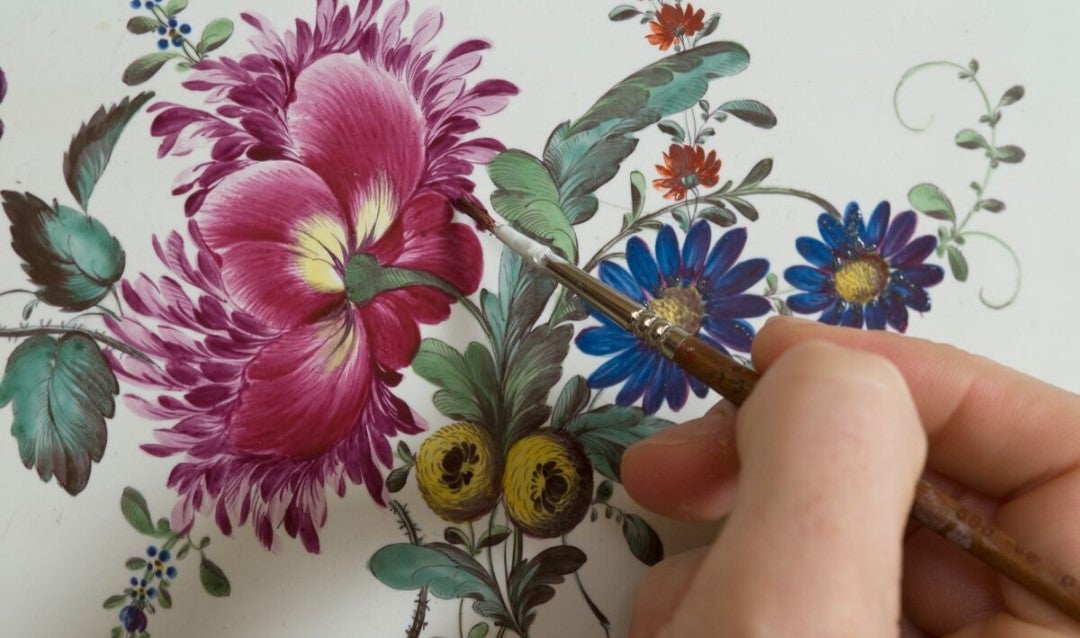
Biltmore’s mission of preservation ranges from large-scale projects to tiny details, like restoring the hand-painted flowers on a ceramic stove in the Chimney Room of Biltmore House.
Meaningful membership: your connection to history 📖
“I use it to help fund preservation and restoration of the House and grounds. I live too far away to visit often. But I enjoy knowing I *can* visit as often as I like. If I don’t make it there every year, my money is supporting a beautiful and important bit of architecture and history.” – Angela P., Passholder
Beyond the perks, Passholders play a role in preserving this historic estate for future generations. Being a Passholder supports Biltmore’s mission of preservation and helps protect our designation as a National Historic Landmark.
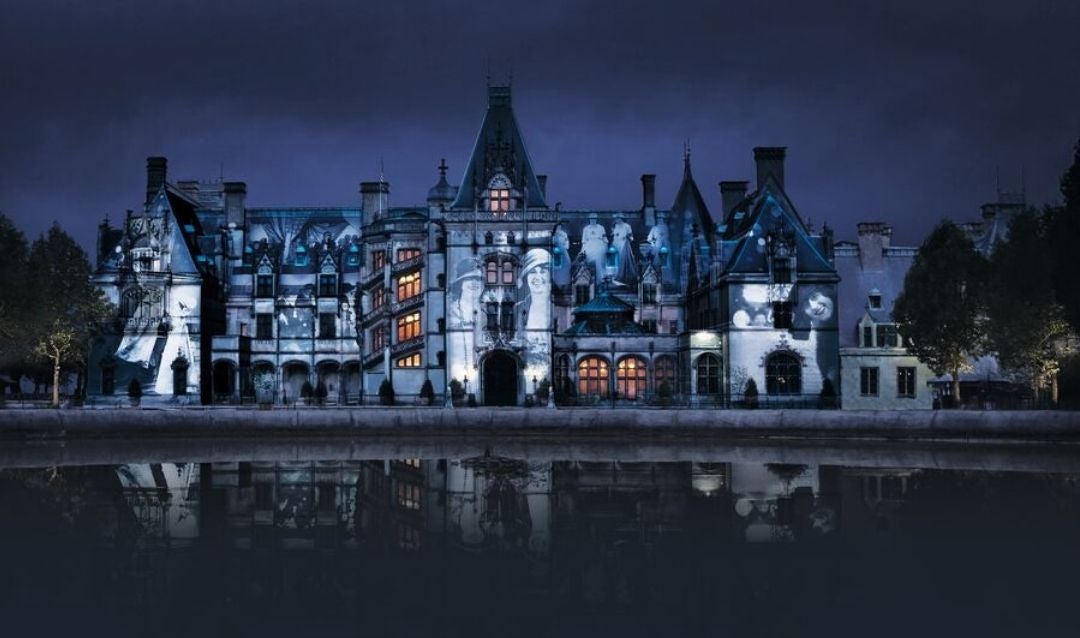
During Luminere evenings, Biltmore House becomes a canvas that illuminates its remarkable story, and our renowned gardens dance before you with breathtaking artistry.
Celebrate the best of Biltmore 🥂
“We love ours for all the discounts it gives on the estate for just about everything plus the opportunity to buy tickets to current exhibits without needing the full 2-day pass. This thing just about pays for itself if you visit the estate two or more times a year.”– Kayce H., Passholder
This year is extra special as we invite you to join us for Luminere, our all-new light and sound evening experience. Under starlit skies, Biltmore House becomes a canvas that illuminates its remarkable story, and our renowned gardens dance before you with breathtaking artistry.
In addition, we’re celebrating our 130th anniversary of welcoming guests just like you to experience all that Biltmore offers with gracious hospitality.
We’re also raising a glass to more than four decades of Biltmore wines—our estate winery opened in 1985, and we’re delighted to share the fruits of our labor with you!
Join us to celebrate the 40th anniversary of Biltmore Winery this year!
Ready to make Biltmore your own?
“The estate is more than just a destination—it’s a timeless place that remains fresh and inviting, no matter how often you return. The magic of Biltmore isn’t just in a single visit—it’s in the way it changes with the seasons and offers something new every time.”– Kim R., an Annual Passholder for more than 15 years.
Become a Biltmore Annual Passholder now and enjoy more access, more perks—including special savings on special events, exhibitions, and tickets for Candlelight Christmas Evenings—and more unforgettable moments. Visit more, share more, and experience more with your Annual Pass.
As an Annual Passholder, you can bring your own children 16 and younger with you–for FREE–to enjoy the estate, including our Christmas at Biltmore daytime celebration and the illumination of Antler Hill Village.
PS: If you’re a current Annual Passholder, be sure to use your special hashtag #BiltmorePassholder and tag our official accounts to share your Biltmore memories with others on social!
“Birds of a feather flock together” is a 16th-century English proverb suggesting that similar things or people tend to be found in groups. It’s especially true at Biltmore where our Conservation team has been busy restoring a collection of birds originally preserved through taxidermy.
“Every detail of preservation matters at Biltmore,” said Renee Jolly, Objects Conservator, “and sometimes those details are as small as a missing feather or a damaged leaf on a taxidermied bird mount.”
Assessing the birds in Biltmore’s collection
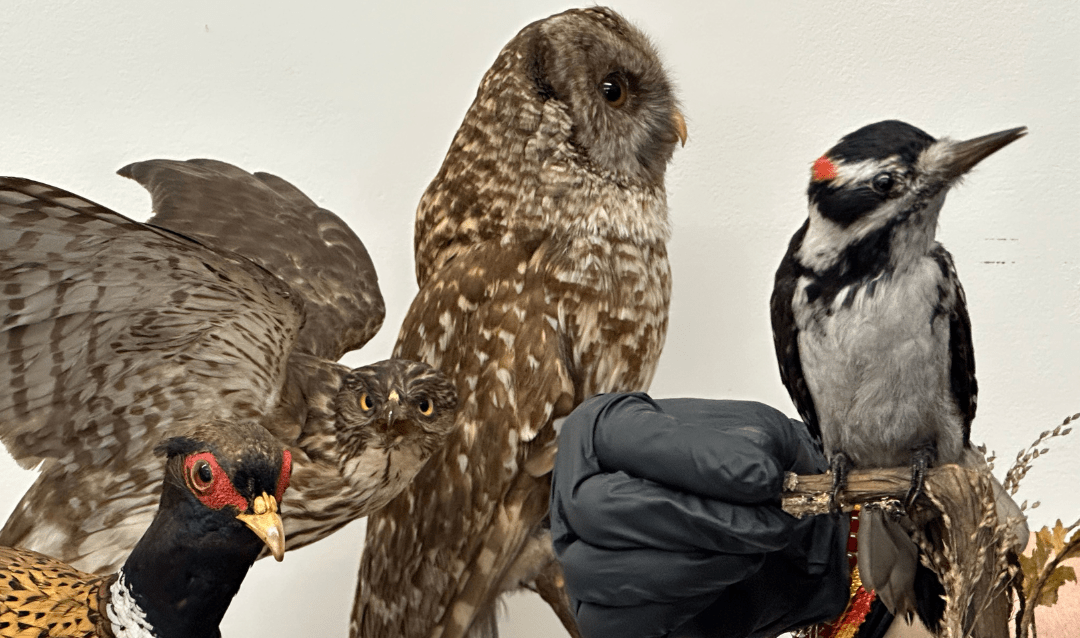
Some of the taxidermied birds in the Gun Room collection: (L-R) Ring-Necked Pheasant, Cooper’s Hawk, Barred Owl, Hairy Woodpecker
In conjunction with a larger project to return the Smoking Room and Gun Room of Biltmore House to their original appearance during the Vanderbilt era, Renee has been cleaning and restoring a number of birds that were previously displayed in the Gun Room or held in storage.
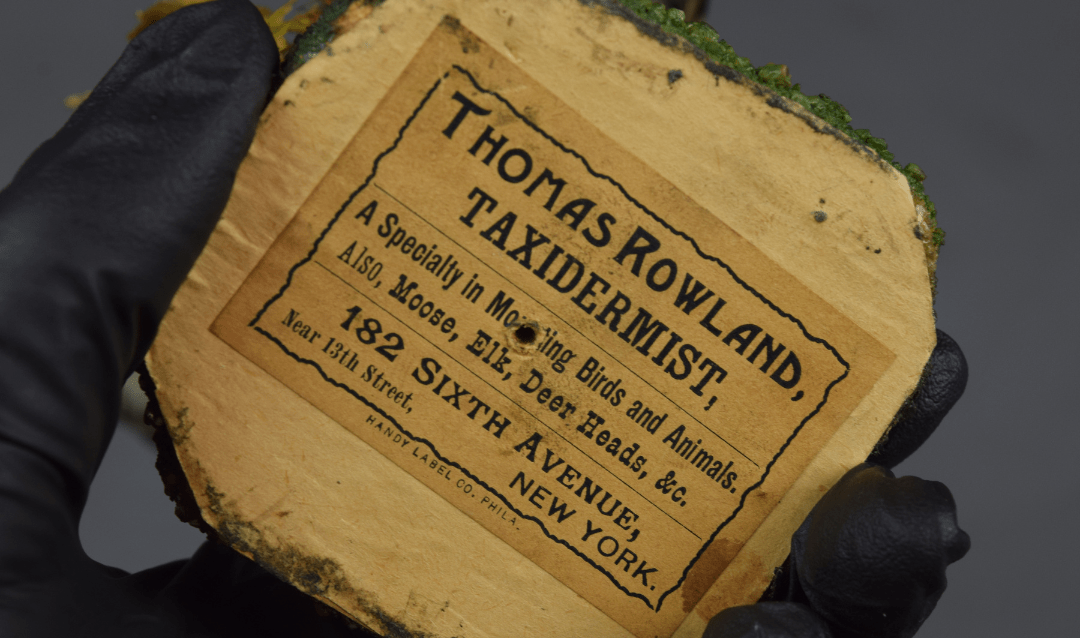
Many of the birds in Biltmore’s collection still have the original Thomas Rowland, Taxidermist, label affixed to the base of their mount.
“We have correspondence in our archives between Dr. Carl Schenk, Estate Forester, and Thomas Rowland, a noted taxidermist in New York City,” Renee said. “From 1898 to 1909, bird specimens from the estate were sent by train to Rowland’s firm on Sixth Avenue where they were preserved and mounted for display, then returned to Biltmore.”
The restoration process begins
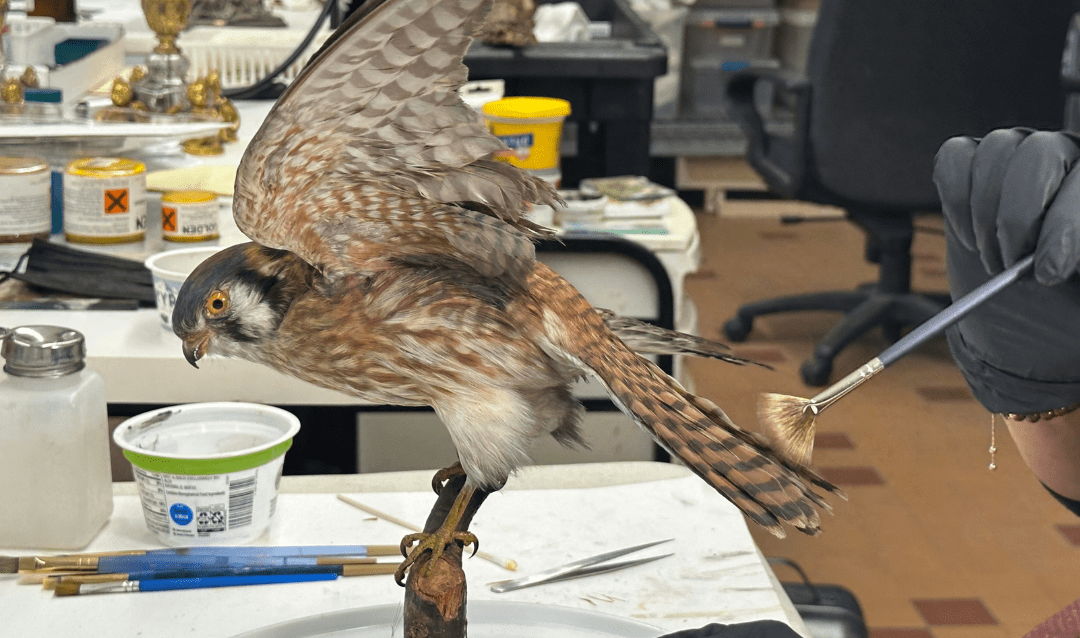
Renee uses a fan brush to smooth the tailfeathers of a female American Kestrel.
According to Renee, the custom of the era was to display the birds in lifelike poses, often perched on real branches, with natural twigs and other flora such as moss, lichens, and grasses around the base of the mount.
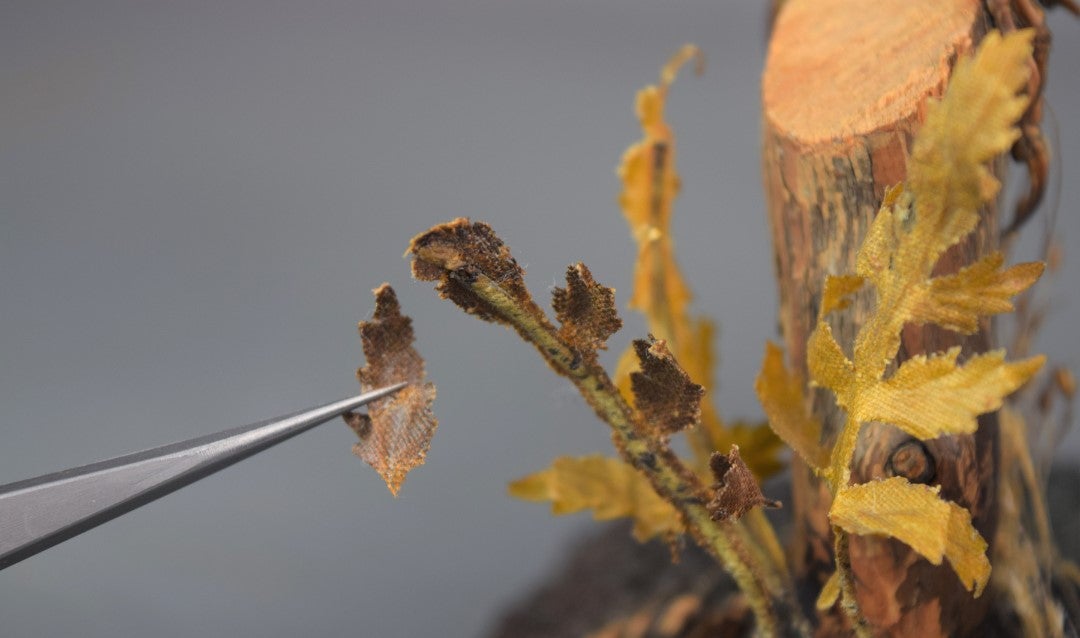
After cleaning, any damage to Rowland’s original canvas botanical leaves is repaired; here a conservator uses tweezers to help put the pieces back in place on the bird’s base.
“To give the mounts an even more realistic appearance, Rowland also used painted canvas and wires to create leaves and other plants that would otherwise have deteriorated rapidly,” Renee said, “so we’ve worked to preserve those details, as well.”
To begin the work of restoring the 125-year-old birds, Renee started by analyzing each specimen in detail and photographing them from multiple different angles to record their condition.
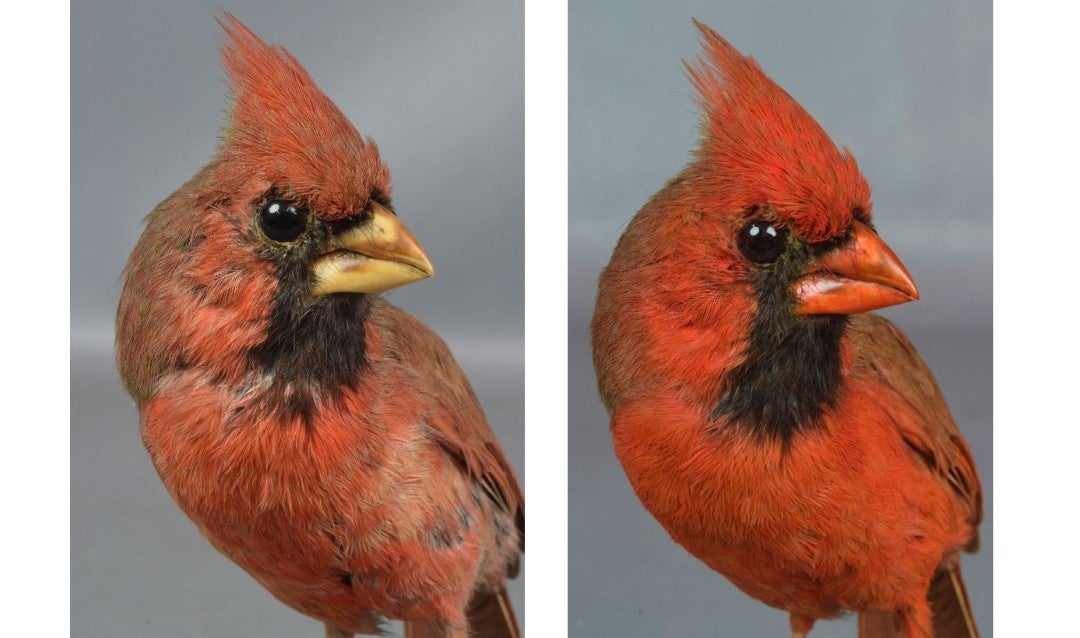
Example of recoloration: before and after pictures of male Northern Cardinal in Biltmore’s collection.
“Many of the birds were quite dusty, and there were differing degrees of deterioration simply because of their age. We began by noting which birds needed cleaning and minimal conservation, and which ones had damage that would need more elaborate repairs,” said Renee.
Repairing damage
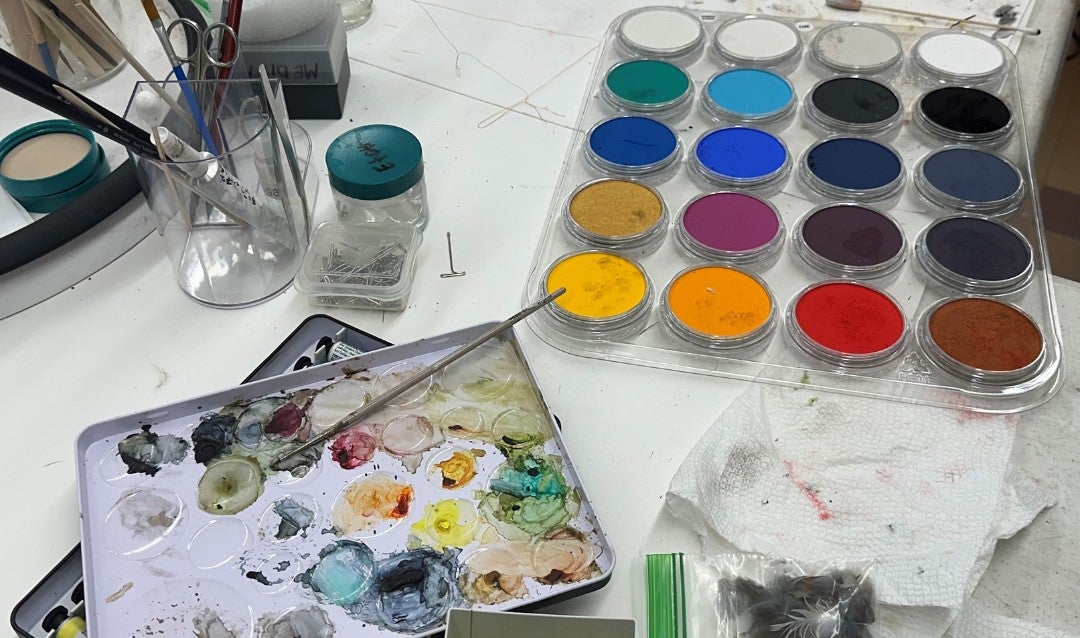
This worktable features a mix of tools for the bird project, including replacement feathers, bright pastels, and a palette for mixing colors.
In keeping with best practices for returning taxidermied birds to their original appearance, Renee used pastels to restore coloration that had changed over time. “Even careful cleaning can’t restore colors that have faded,” Renee said, “or fix white feathers that have darkened with age. These highly pigmented pastels allow us to bring the birds back to life.”
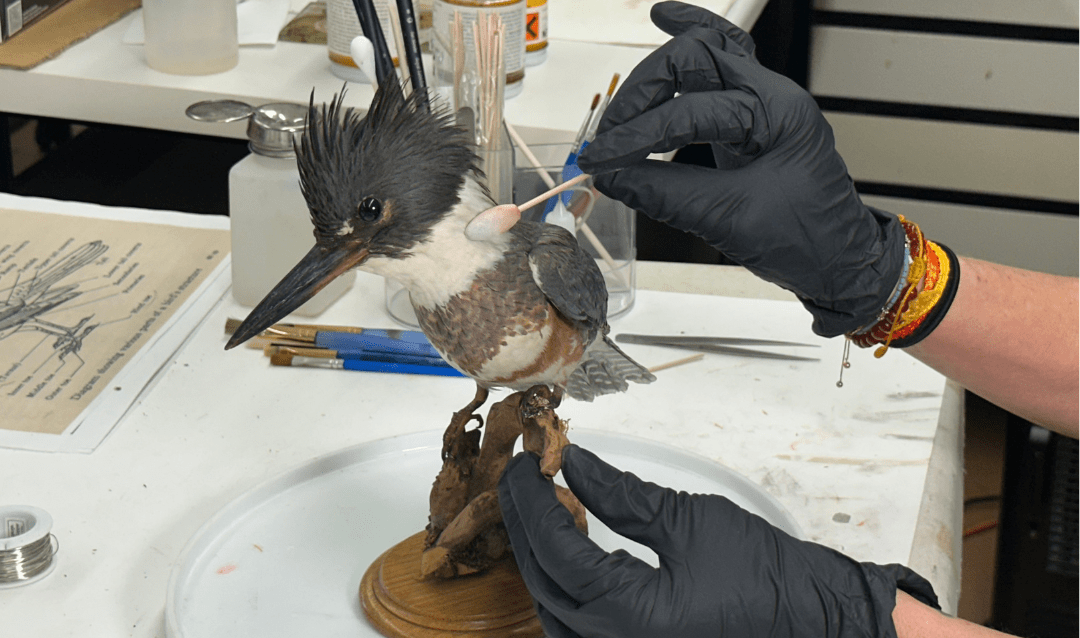
Renee tints the feathers on a female Belted Kingfisher with delicate layers of white pastel.
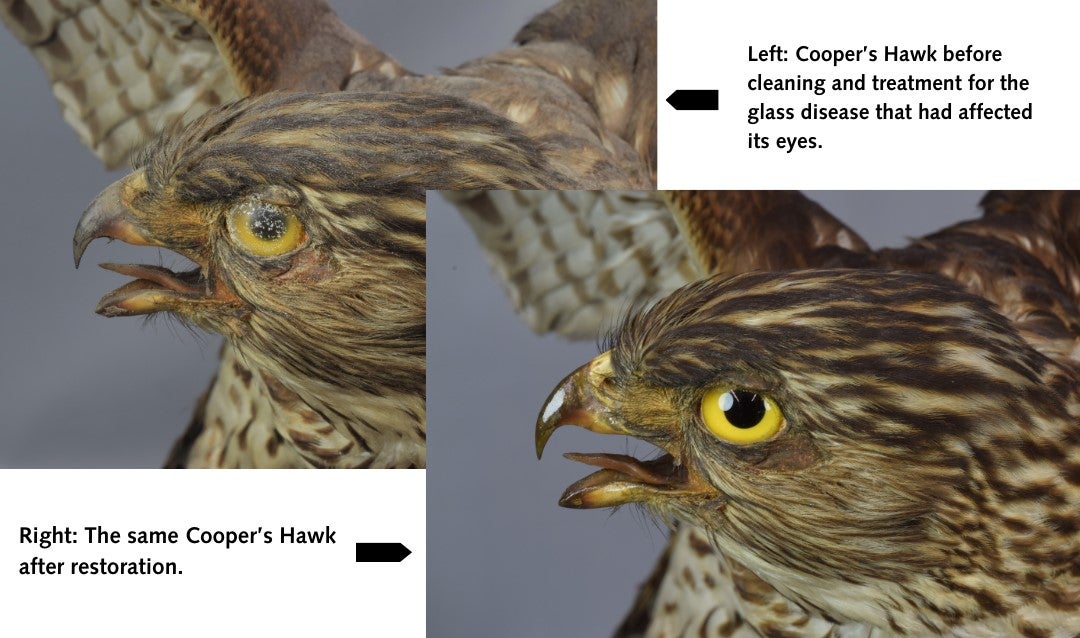
Some of the birds in Biltmore’s collection had an issue with their glass eyes, which are traditionally used in the taxidermy process.
“As it ages, glass can develop ‘glass disease’ that causes a cloudy film to form on the surface. We monitor items such as George Vanderbilt’s monogrammed crystal in the Butler’s Pantry regularly to catch early signs and treat it appropriately. When we assessed these birds as part of the larger preservation project for the Gun Room, we realized it was happening with some of the birds’ eyes,” said Renee.
This Cooper’s Hawk, preserved by Thomas Rowland, Taxidermist, more than 100 years ago, has now been restored to its original appearance. Look closely at the tiny details like the feathers around its beak and its tongue displayed in a life-like position.
Other issues included missing or damaged feathers, damaged limbs and claws, and problems with the branches and other materials on which the birds were mounted.
“We worked through a number of unusual challenges that you don’t encounter on a regular basis,” Renee said.
Birds of a feather
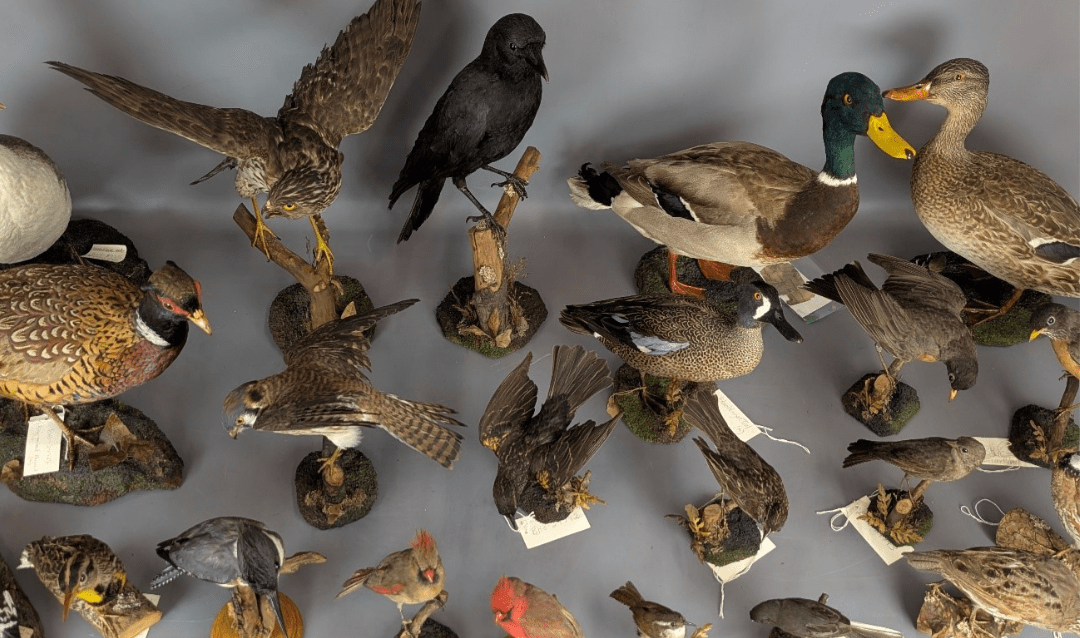
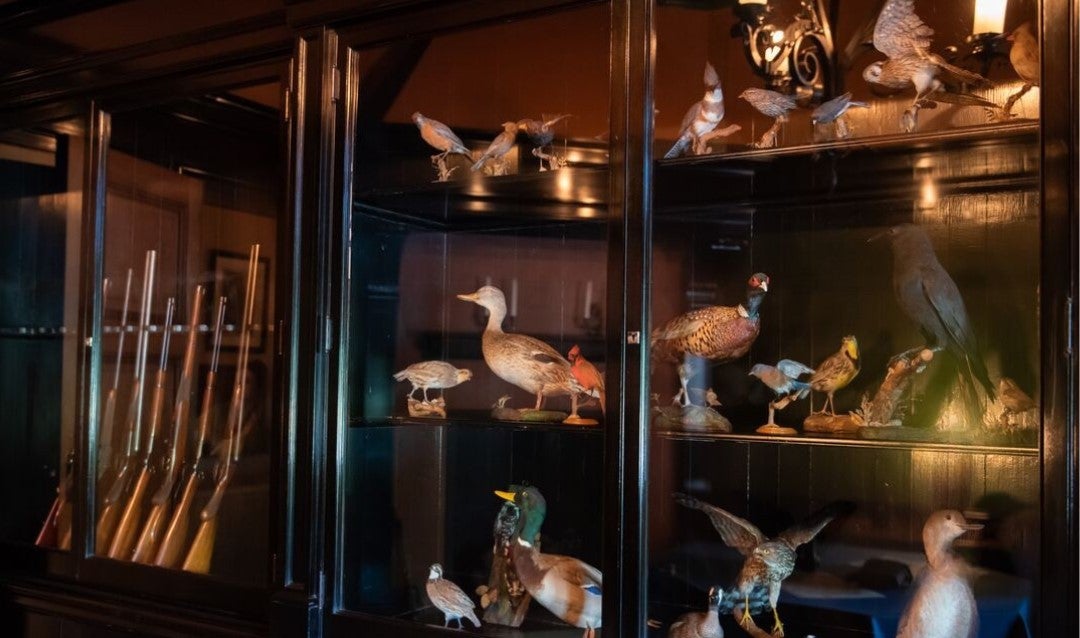
Examples of birds preserved via taxidermy in Biltmore’s collection.
Taxidermy in the Gilded Age was not merely a method of preserving animals; it was an expression of wealth and sophistication. Wealthy individuals would often commission taxidermists to preserve specimens from their private hunting expeditions or to decorate their opulent homes with lifelike representations of birds and other animals. At the time, taxidermy was also viewed as a way to document the changing natural world, particularly as industrialization and urbanization were encroaching on many species’ habitats.
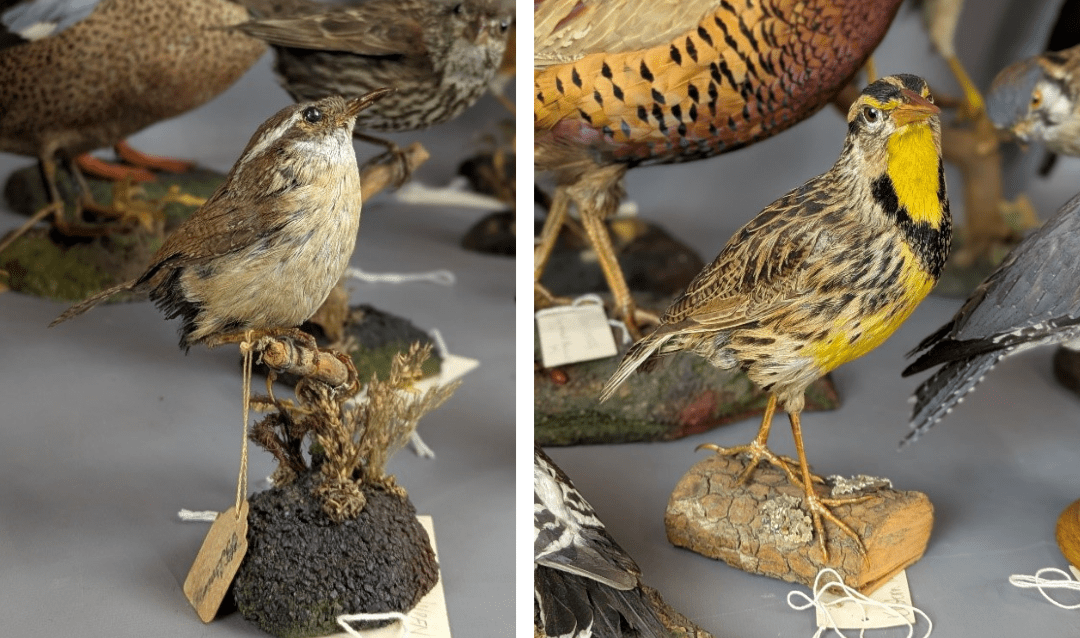
The Carolina Wren (left) and Eastern Meadowlark (right) are two of the smaller birds in the collection.
There are other examples of taxidermy in Biltmore House, including the large heads in the Banquet Hall. “Those were all trophy-size mounts selected from catalogs to fill the expansive space of these rooms,” said Renee, “but this intimate collection of delicate birds, mounted by Thomas Rowland, is truly unique because each one was collected right here at Biltmore. And we can still see those same species on the estate today.”
See the birds for yourself
Collection of birds preserved by taxidermy in the Gun Room of Biltmore House.
Our newest preservation project involving the Gun Room and the Smoking Room is nearly complete, although a few pieces of furniture will be added in the coming months. We hope you’ll join us soon to see the results–including the remarkable collection of beautifully restored birds displayed in the Gun Room.
First look for Biltmore Annual Passholders
This post was originally shared with Biltmore’s Annual Passholders via the Spring/Summer 2025 issue of Ambassador, our exclusive Passholder magazine. Join our Passholder family to get insider access and exclusive benefits—like unlimited daytime visits for a full year!
Tutankhamun: His Tomb and His Treasures ended March 1, 2026. Please enjoy this archived content.
For centuries, the mysterious allure of ancient Egyptian culture fascinated scholars and political elites around the globe. With Howard Carter’s groundbreaking discovery of Tutankhamun’s tomb in 1922, a fascination with King Tut entered mainstream popular culture, sparking a renewed wave of “Egyptomania.”
Unwrap a brief history of this groundbreaking discovery, an unexpected connection to Biltmore’s history, and more with your insider visit guide to the Tutankhamun: His Tomb and His Treasures exhibition on display at Biltmore Estate in Asheville, NC.
Tip: This King Tut exhibition is perfect for sharing with the whole family!
Tutankhamun, or King Tut, was a young pharaoh in Egypt more than 3,300 years ago.
Fast Facts About King Tut:
Name: Tutankhamun (pronounced two-ten-ka-men, also known as “King Tut”) served as pharaoh of Egypt from 1332 to 1323 B.C., more than 3,300 years ago!
Life & Death: Tut is sometimes called the “Boy King” because he ascended to the throne at only 9 years old. Tutankhamun died at age 18 or 19, likely due to illness.
Historical Significance: Tutankhamun was considered to be a relatively unimportant historical figure until the 1922 discovery of his intact tomb in the Valley of the Kings by British archaeologist Howard Carter. The tomb’s remarkable completeness and the treasures it contained are the reasons Tutankhamun became such a prominent figure in ancient Egyptian history.
Tut’s Treasures: The inside of his tomb was filled with magnificent treasures, including a golden mask, jewelry, furniture, statues, weapons, and, of course, the mummy of King Tut.
Real vs Replica: The original artifacts from King Tut’s tomb are now permanently housed in Egypt and are no longer available for international travel or display. This exhibition features meticulously crafted, true-to-life replicas.
Experience the groundbreaking discovery of King Tut’s tomb as if you were there in 1922 with archeologist, Howard Carter. (Archival image of Howard Carter ca 1919.)
Discover Tutankhamun: His Tomb and His Treasures at Biltmore
You don’t have to imagine yourself being in the Valley of the Kings at the time of this groundbreaking discovery… you’ll get to experience it!
“This exhibition will transport you back in time to learn about the culture of Egypt as you follow the story of Howard Carter’s challenges and triumphs in making one of history’s most significant archaeological finds: the 1922 discovery of King Tutankhamun’s tomb,” said Travis Tatham, Director of Events & Guest Experience Development at Biltmore.
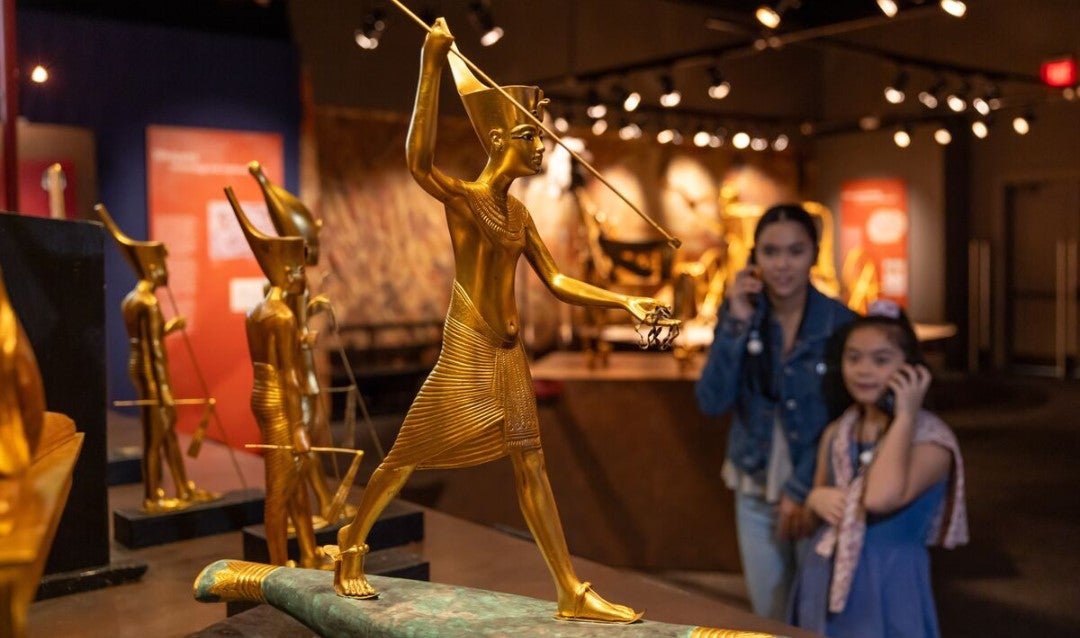
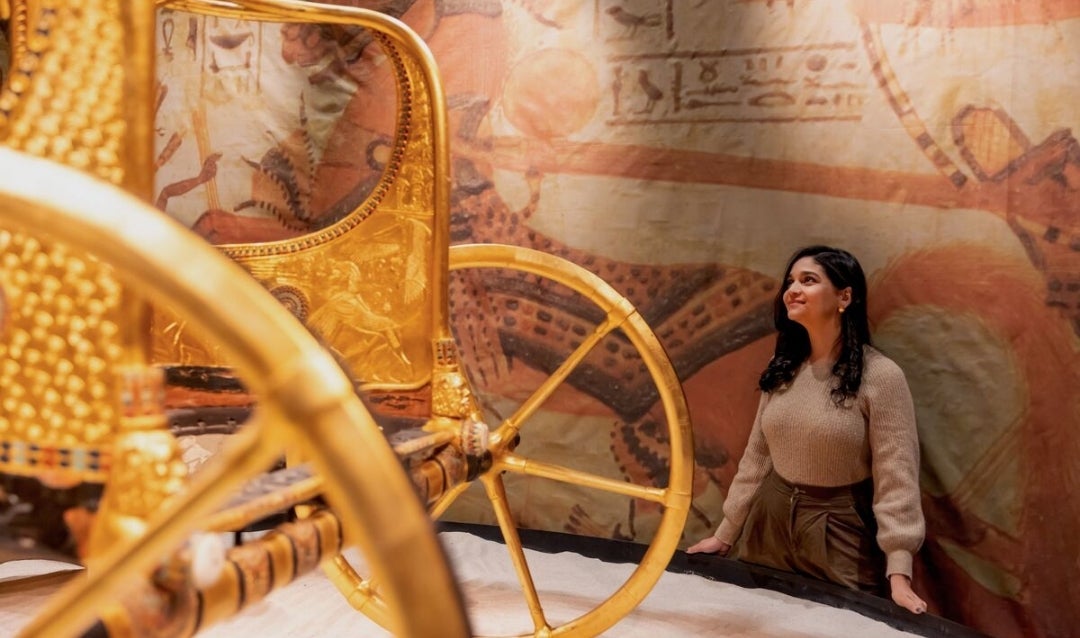
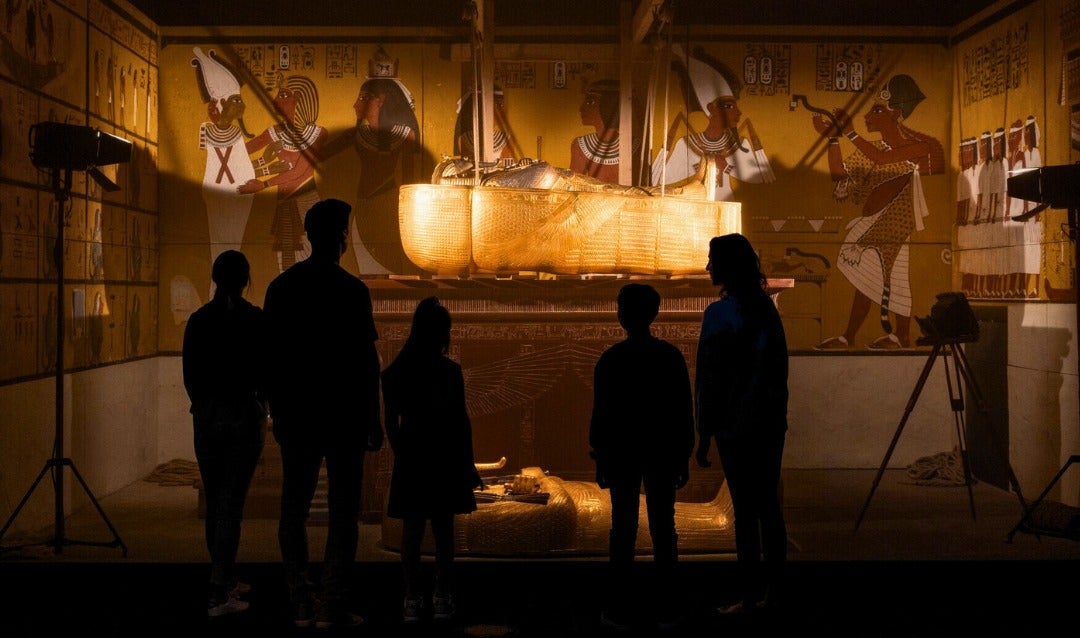
Using media and objects, Tutankhamun: His Tomb and His Treasures culminates with the chance to experience the three-dimensional recreation of the excavation site, the legendary tomb, and precisely crafted replicas of its treasures exactly as they were at the moment of discovery.
Unwrapping Biltmore’s Unexpected Family Ties to King Tut
“We are thrilled to host this King Tut exhibition because it gives us an extraordinary opportunity to share a Biltmore story that may surprise you,” says Travis.
In fact, it was the Cecil family—particularly John Cecil’s mother, Mary “May” Rothes Tyssen-Amherst Cecil—who helped foster Carter’s interest in Egypt, which led to his legendary exploration of Egyptian antiquities. May’s childhood interest in and knowledge of Egypt inspired her to visit the country many times throughout her life, even leading excavations in the country. Biltmore’s archival collection contains travel journals and watercolor paintings from May’s travels to Egypt around the turn of the century.
Tip: You’ll have the unique opportunity to learn more about the fascinating details of this Vanderbilt-Cecil family story during your Tutankhamun experience!
Around 1,000 exquisitely crafted replicas of King Tut’s treasures are on display throughout the exhibition!
Exploring Ethically: Replicas of Tut’s Treasures
With all exhibitions presented at Biltmore, thorough research is conducted behind the scenes to ensure our guests will have access to world-class cultural experiences while visiting George Vanderbilt’s historic estate. The same is true for Tutankhamun: His Tomb and His Treasures.
“There are ethical dimensions to the display of historic artifacts outside their country of origin, especially when the objects are associated with death and burial, and those that were removed as part of an imperial campaign, as is the case with the Tutankhamun collection,” shares Lori Garst, Curator of Collections at Biltmore.
While some of the treasures from King Tut’s tomb have traveled internationally in the past, the original artifacts are now housed permanently in the newly constructed Grand Egyptian Museum in Giza, which aims to preserve significant pieces of history and ensure local citizens have access to their cultural heritage.
“By showcasing meticulously detailed replicas produced by expert Egyptian craftsmen, this exhibition provides an ethical, accessible, and utterly fascinating way for you to experience this remarkable history up close and without traveling to Egypt,” says Lori.
All ages will enjoy this immersive experience recounting the astonishing details of King Tutankhamun’s life and legacy.
Embark on Your Journey to the Valley of the Kings
You don’t have to be an Egyptomaniac to appreciate the mysteries of one of the world’s most iconic discoveries. As enriching as it is unforgettable, you won’t want to miss the chance to pair Biltmore’s exclusive estate experiences with your immersive journey to the Valley of the Kings as you discover King Tut’s tomb.
Be among the first to explore the mysteries of ancient Egypt while digging deeper into a surprising historical connection with Biltmore itself when you experience Tutankhamun: HisTomb and His Treasures, in Amherst at Deerpark®.
Tip: Be sure to tag @biltmoreestate #BiltmoreTut when sharing your memories on social media!
As Biltmore recovers from the damage caused by Tropical Storm Helene in September 2024, our mission statement—to preserve the property as a privately owned, profitable, working estate—has never been more relevant than it is now.
“Biltmore’s mission statement was developed by my grandfather William A.V. Cecil, who was George Vanderbilt’s grandson,” said Chase Pickering, Vice President of Guest Experience. “He put into words what has always been our family’s legacy of preservation.”
We continue the legacy of preservation today as we work to restore areas of the estate that were damaged by the storm and in our ongoing efforts to assist our community with economic support and rebuilding expertise.
Thanks to the efforts of so many, Biltmore reopened in November of 2024.
Sept. 27, 2024: Flood waters from the French Broad River cover low-lying fields near Antler Hill Village on the estate.
Sept. 30, 2024: The entrance to Biltmore and other low-lying areas of the property experienced flooding which has receded.
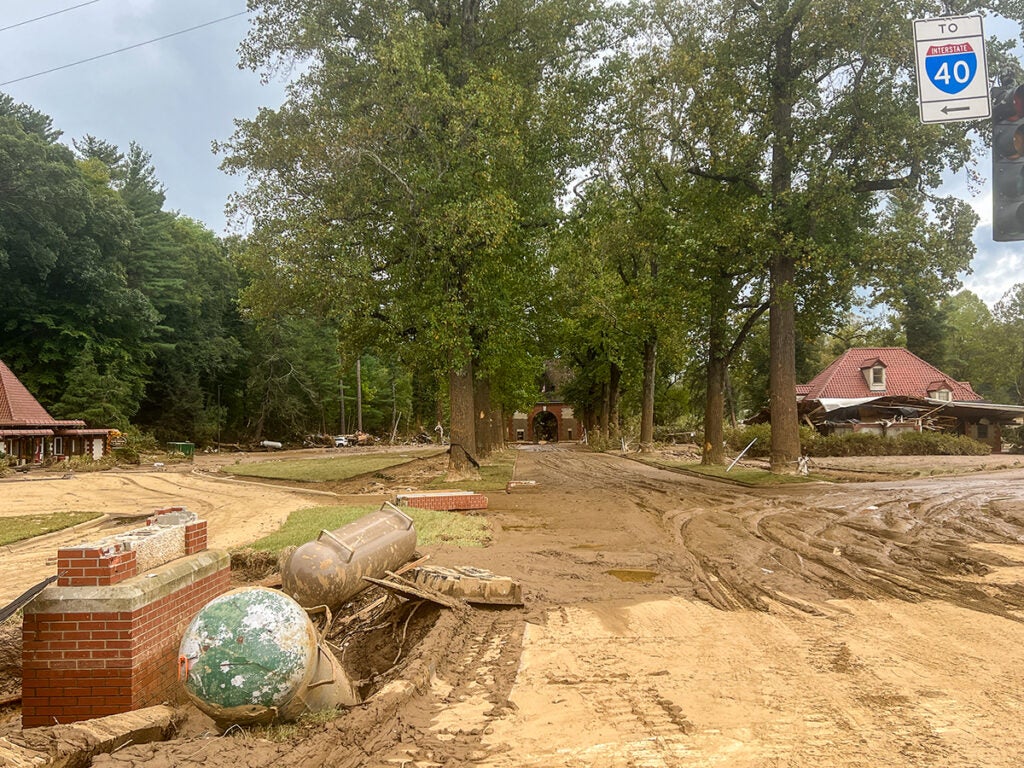
Oct. 3, 2024: Crews work to clear debris from roadways on the estate.
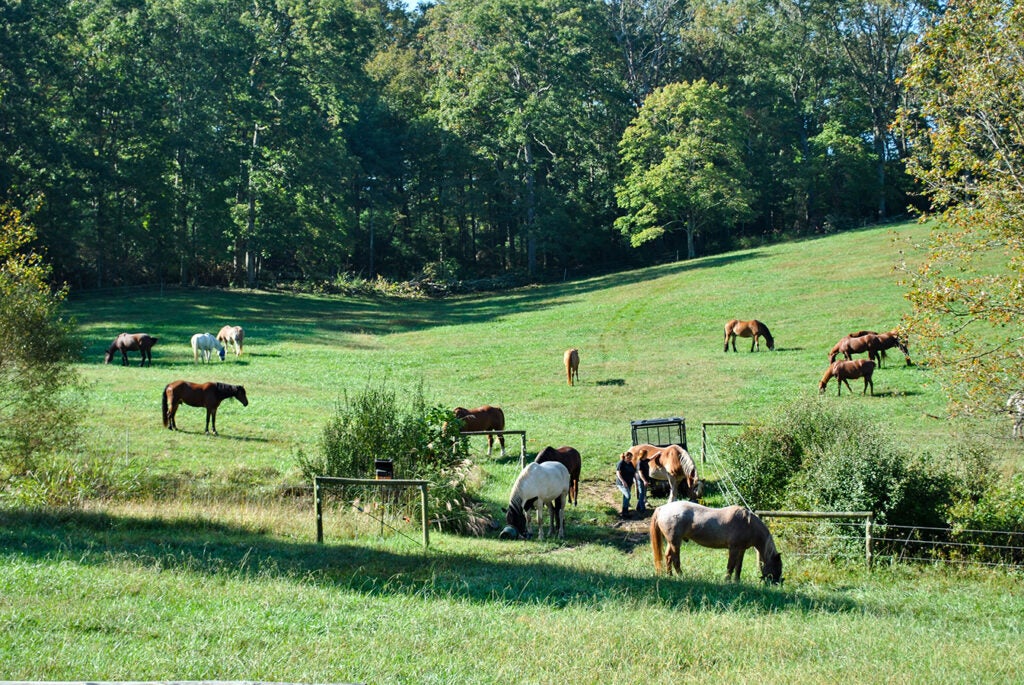
Oct. 3, 2024: Horses graze in a pasture near Deerpark Carriage & Trail Ride Barn.
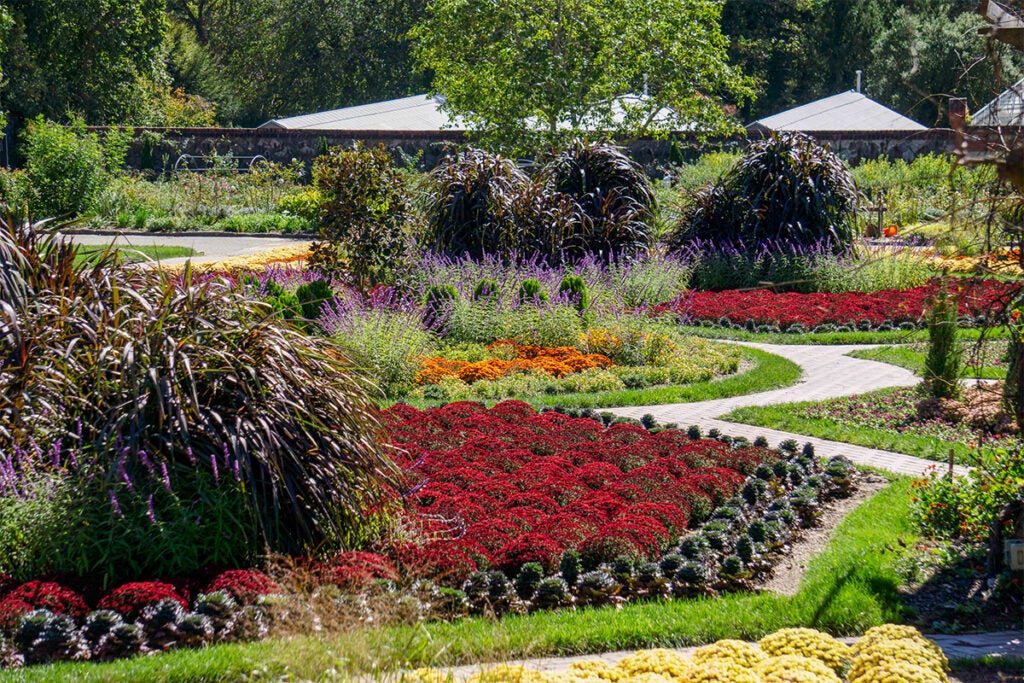
Oct. 9, 2024: As a testament to the hard work of our gardeners earlier in the season, mums have reached peak bloom in the Walled Garden despite the estate being closed.
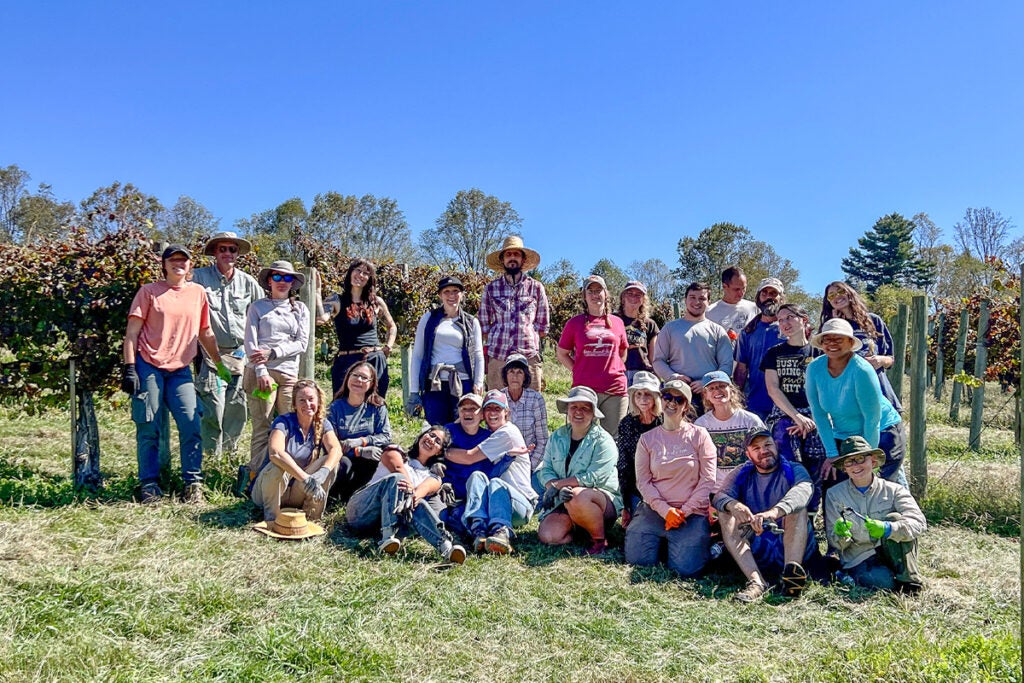
Oct. 14, 2024: Biltmore’s vineyards emerged from the storm unscathed and harvest concluded this week.
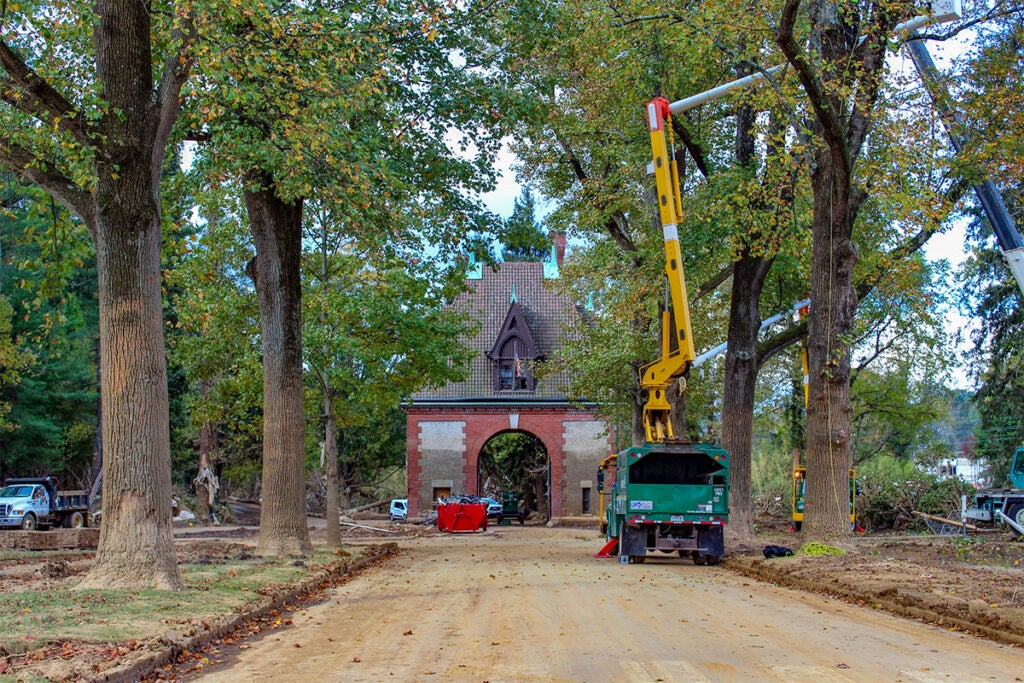
Oct. 16, 2024: Biltmore’s main entrance (in historic Biltmore Village) is undergoing extensive repairs. Part of the recovery effort includes removal of weakened poplar trees lining the entrance gate.
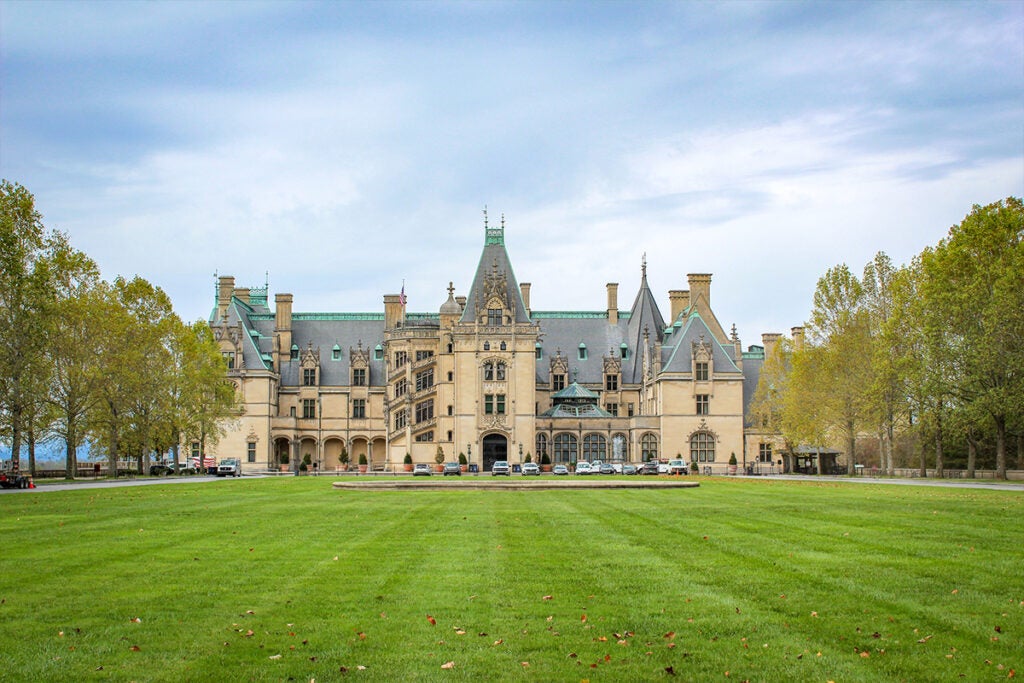
Biltmore House facade. Photo Credit: The Biltmore Company
Reflecting on Helene: Impacts to the Estate
As with our entire region, conditions varied by location across our 8,000-acre property. Biltmore House and our Conservatory, Winery, Gardens, and overnight properties received minimal or no damage from the storm.
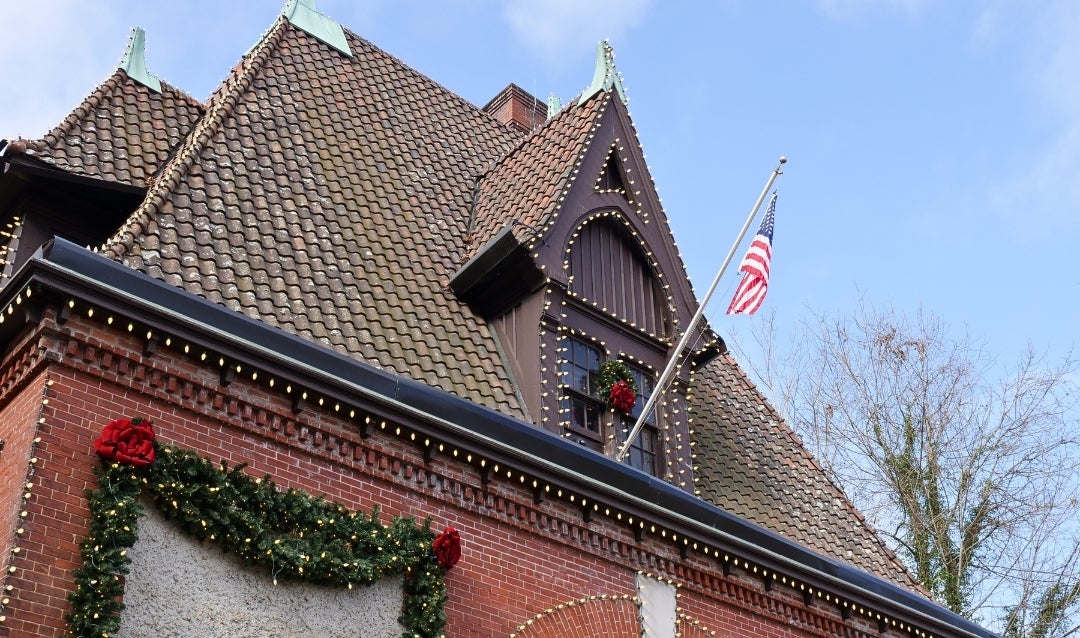
Lodge Gate was decorated for Christmas–a sign of hope and resilience for guests, employees, and the community.
Restoring the Lodge Gate
The iconic Lodge Gate through which most guests enter Biltmore was already slated for preservation even before Helene. When floodwaters rose almost to the bottom edge of the archway—about 27 feet high—the project took on a new urgency.
“You can see the high-water mark on the pebbledash finish of the Lodge Gate—it rose higher than the level of the historic 1916 flood,” said Vince Helton, Senior Director of Facility Operations. “It’s a daily reminder of the impact this storm had.”
While sections of exterior brick and some wooden flooring were lost to the flood, the foundation of the structure was not undermined, keeping Lodge Gate structurally sound as the restoration process began. Preservation efforts include new electrical and all interior finishings.
“Despite the challenges, there are some bright spots, like the discovery of an original fireplace that had been covered during a prior remodeling effort. We also believe we can use about 80-90% of the original tiles to repair the roof,” Vince said.
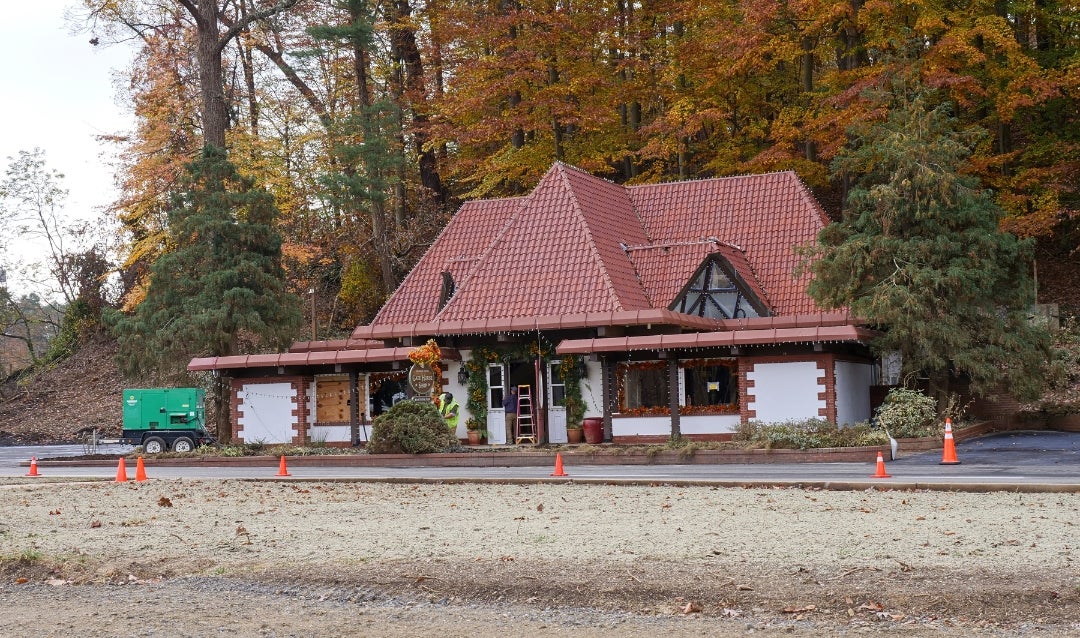
The Gate House Shop at the estate’s main entrance undergoes repairs for reopening in 2025.
Repairing the Gate House Shop
Nearby, the Gate House Shop also sustained considerable damage from flooding. Though not an original estate structure, this charming shop has been welcoming guests since 1968. Located just in front of the Lodge Gate, the shop has always been open to visitors, even without a Biltmore admission ticket.
Preservation efforts for this building include a complete interior rebuild with new sheetrock, HVAC, electrical, flooring, displays, and restrooms.
“We are working hard to have our Gate House Shop open again by summer 2025,” Vince said.
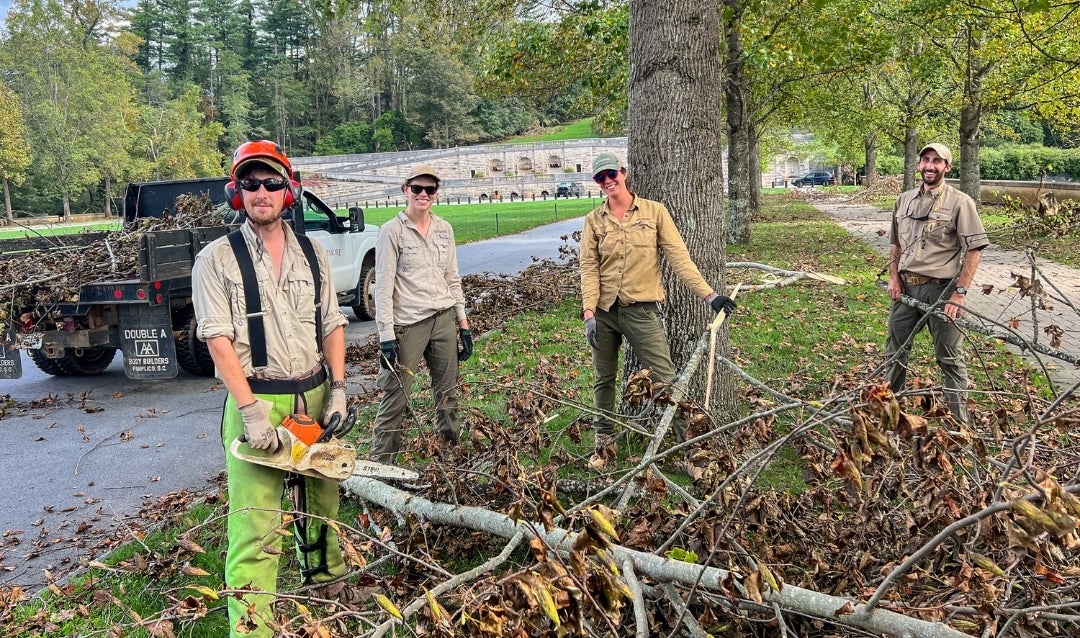
Employees clean up storm damage on the Front Lawn of Biltmore House.
Recovering the Landscape
While Biltmore recovers and preserves its historic buildings, damage from Helene wasn’t limited to estate structures—it also affected the landscape across the property.
“From floodwaters to high winds, we’ve seen a variety of problems in the aftermath of the storm,” said Bill Quade, Director of Horticulture. “Months later, we’re still cleaning up some of the more heavily forested sections of the estate and restoring riverbanks that were stripped away by the height and speed of the water from the French Broad and Swannanoa Rivers that cross the property.”
According to Bill, some of the most obvious damage occurred at the main entrance of the estate.
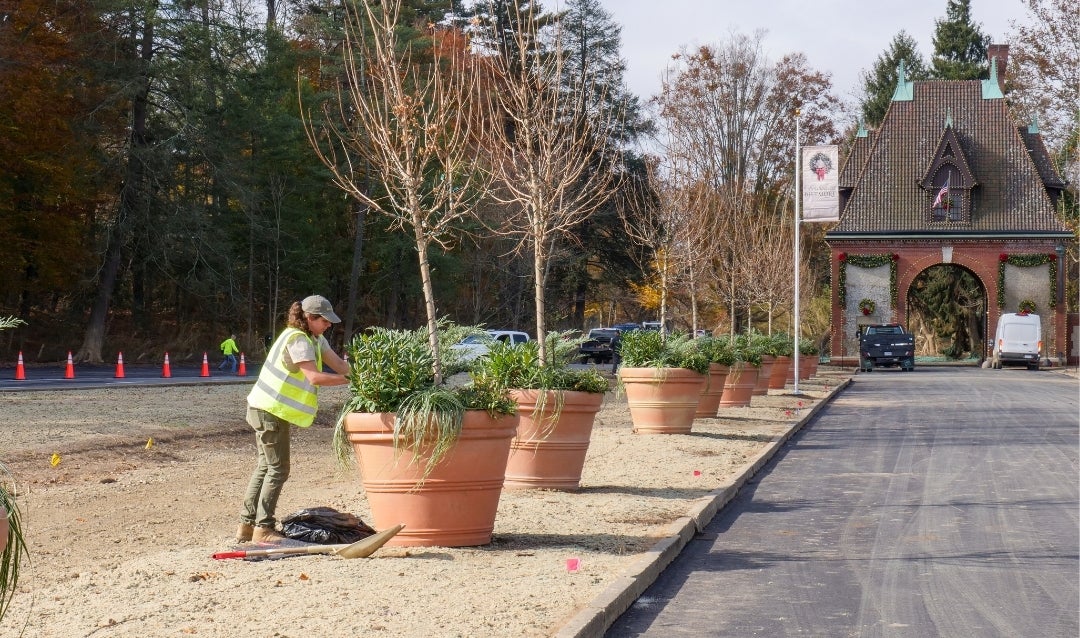
Landscaping crews maintained tradition by lining the entry road with pots filled with trees and decorative greenery to welcome guests during our 2024 Christmas at Biltmore season.
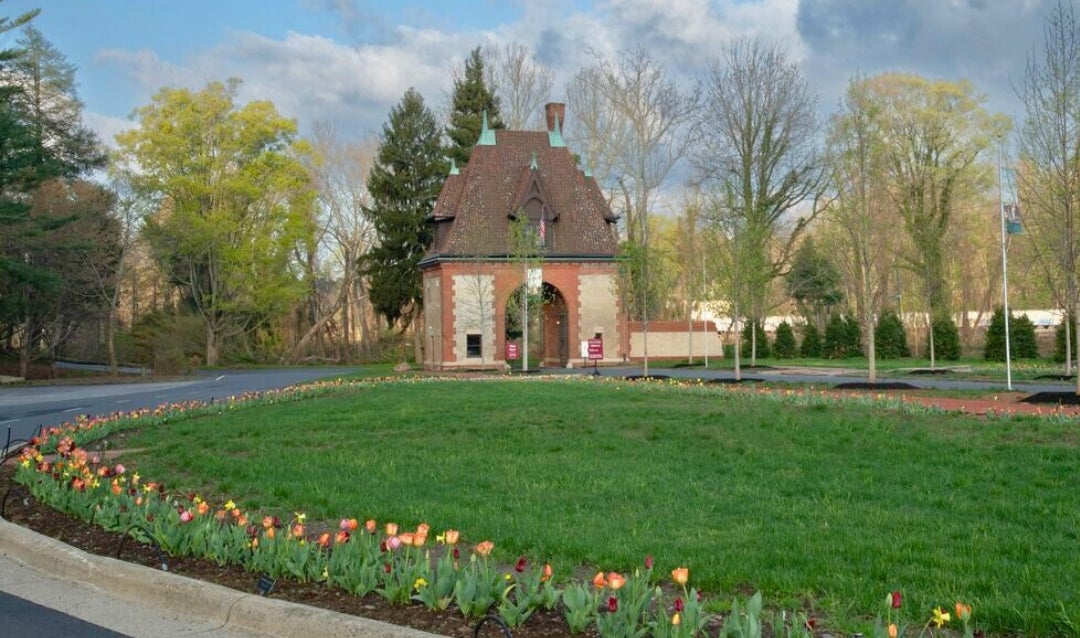
“We had to remove the large tulip poplars that lined the entrance from Biltmore Village to Lodge Gate after the floodwaters receded,” Bill said. “Almost all of them were damaged, and we couldn’t leave the few that were still sound standing by themselves.”
Plans are being developed to install new trees at the entrance to the estate along with new lighting options, similar to the 2005 landscaping initiative in which we replaced the century-old double allée of tulip poplars framing the Front Lawn of Biltmore House.
“If there’s any silver lining to a situation like this, it’s that it gives us an opportunity to make positive improvements to the guest experience,” said Bill. “As Biltmore recovers, we will continue to lean heavily on what Olmsted’s landscape design intent was for specific areas on the estate. This not only centers on hardscapes such as paths, but the plant selection as well. Repairing the land isn’t something that will be done in a year, or even two. It’s a process that guests will enjoy 50, 60, and 70 years from now.”
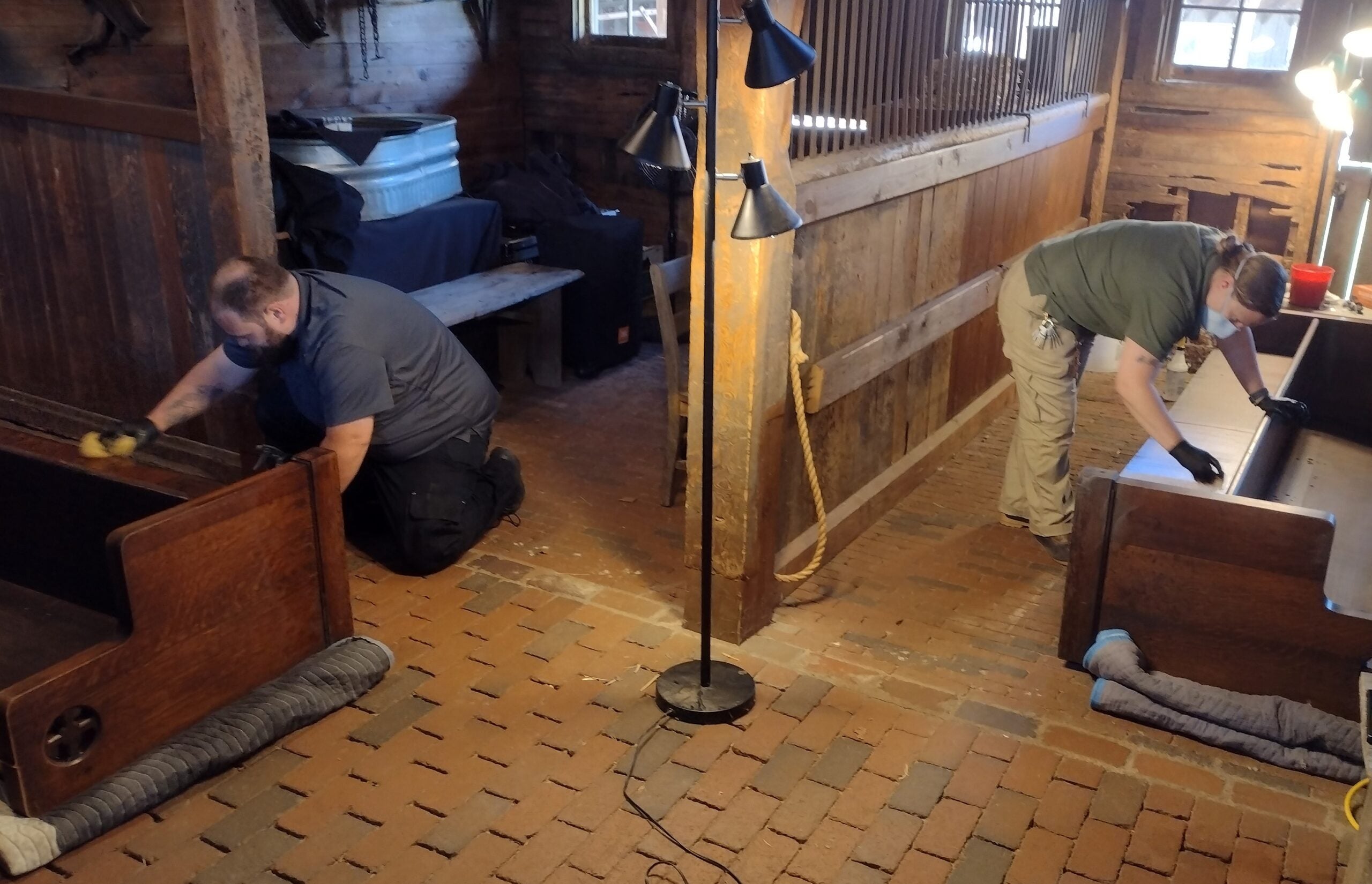
Biltmore staff members carefully cleaned the pews from The Cathedral of All Souls in Biltmore Village.
Preserving Community History
In addition to our own efforts to rebuild and restore damaged areas of the estate, we are honored to support preservation work in our community, including the needs of the Cathedral of All Souls Church in Biltmore Village.
This historic church, commissioned by George Washington Vanderbilt and designed by Biltmore House architect Richard Morris Hunt, was completed in 1896. It is now the only church Hunt designed that is still standing.
After four feet of Helene’s muddy flood water receded from the sanctuary, the Cathedral’s original 46 quarter-sawn oak pews were removed and stored on the estate, along with more than 100 boxes of archival materials.
Our Museum Services Furniture Conservators and members of our Housekeeping team cleaned the pews using soft bristle brushes and sponges dipped in hot water with a very small amount of standard dish detergent to help break up mud. After cleaning, furniture was left to dry in an area with good air circulation to minimize the risk of mold growth.
While the Cathedral Church, Parish Hall, and other buildings have now been cleaned and dried, Biltmore’s teams will continue to assist All Souls in preserving their historic collections. All materials will be returned when the church is able to store them safely.
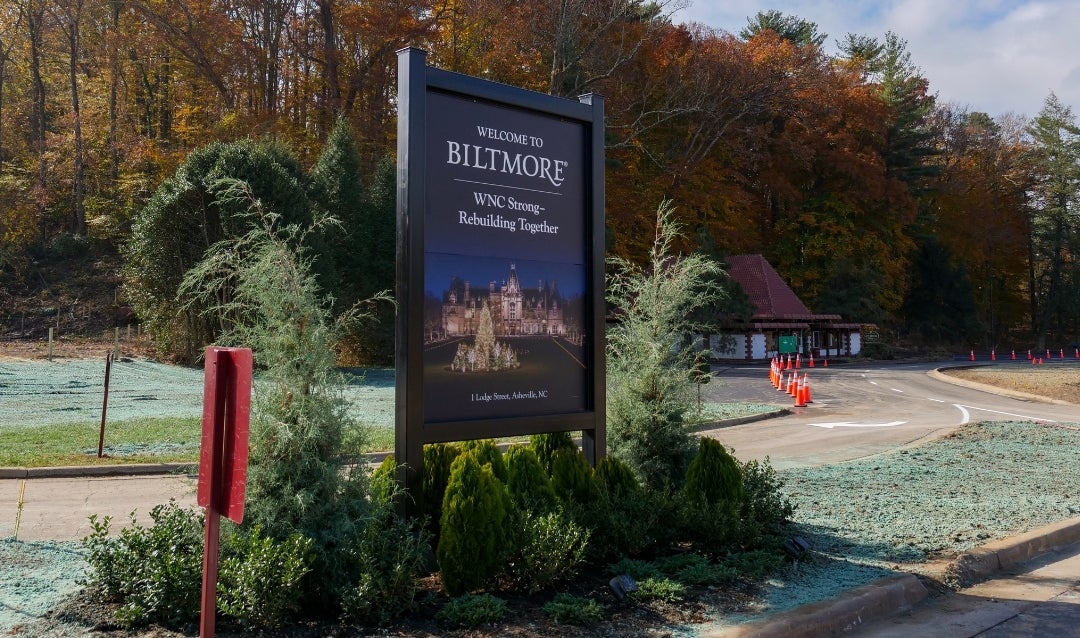
During Christmas, the estate’s main entrance sign displayed our community’s #WNCStrong message of hope during our recovery from Tropical Storm Helene.
WNC Strong – Rebuilding Together
“In the months since Helene, our teams have worked around the clock to rebuild, restore, and repair the damage at Biltmore. We were able to reopen the estate on November 2, 2024, just in time to enjoy our annual Christmas at Biltmore traditions. We are grateful to our many guests and Passholders who returned to celebrate the 2024 holiday season with us, and we appreciate your continued visitation in support of the estate and our region’s economic recovery in 2025,” said Chase.
6 months after Helene, Biltmore’s main entrance, lined with spring blooms and recently planted tulip poplars, provides a warm and welcoming invitation to return to our mountain oasis.
A first look for Biltmore Annual Passholders
This post was originally shared with Biltmore’s Annual Passholders via email and will be included in the Spring/Summer 2025 issue of Ambassador, our exclusive Passholder magazine. Join our Passholder family to get insider access and exclusive benefits—like unlimited daytime visits for a full year!