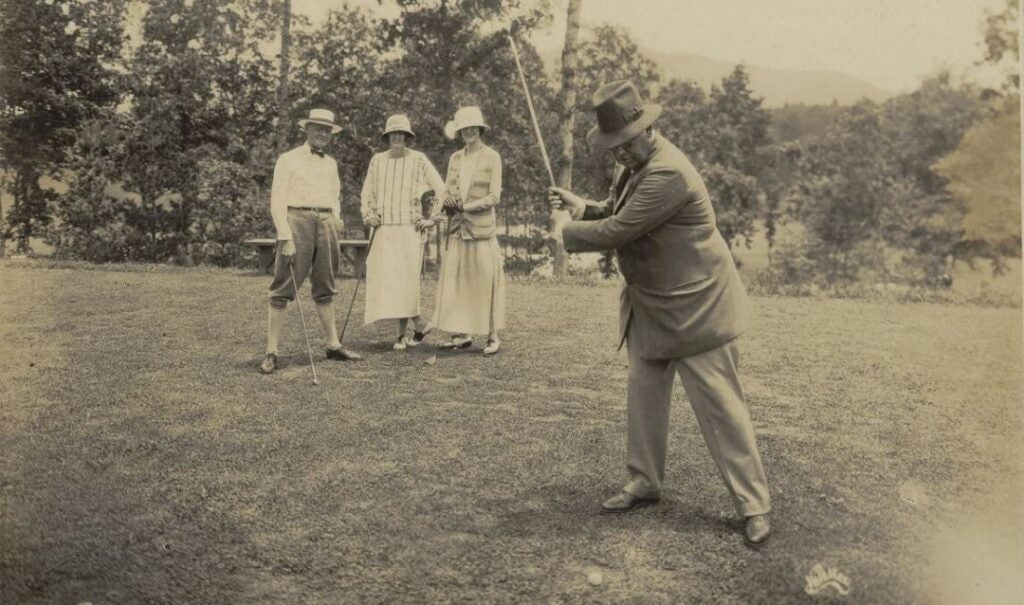
Golf was a popular pastime for George Vanderbilt and his guests, and at one time, there was even a golfing ground at the estate.
In honor of partnering with the PGA TOUR, Explore Asheville, and The Cliffs as a title sponsor of the Biltmore Championship Asheville, we’ve teed up details about the history of the game at Biltmore.
Historic golf grounds at Biltmore
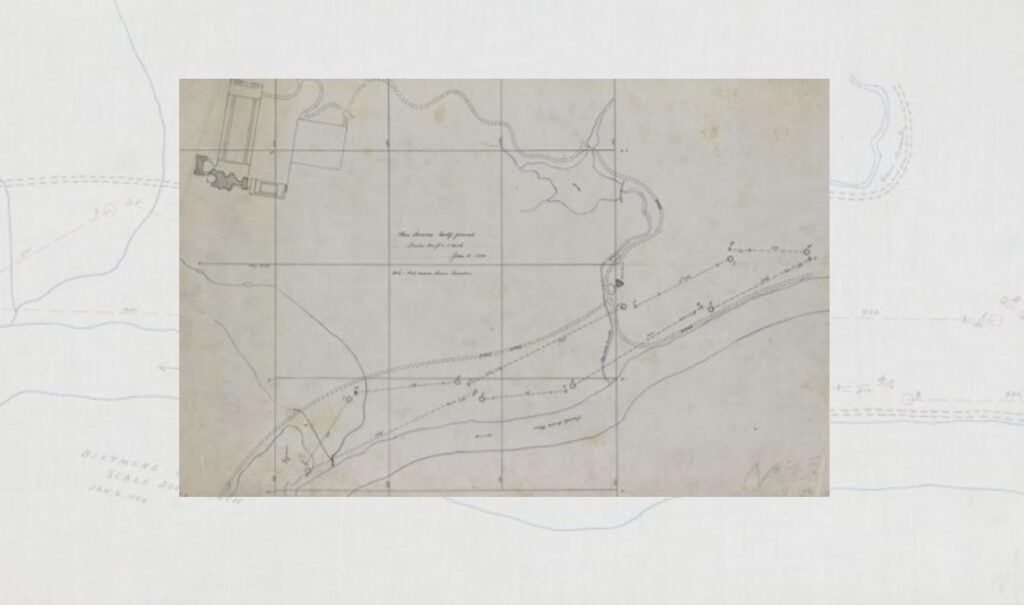
Our historic archives include correspondence about a proposed 9-hole “golf ground” planned for the field along the French Broad River between the Brick Farmhouse site and the Lagoon while construction on Biltmore House was still underway during the winter of 1895–96.
One of two archival drawings of the proposed 9-hole golf course on Biltmore Estate, January 1896. Although the drawings are not labeled as such, they may have been executed for the estate by Frederick Law Olmsted’s landscape design firm.
Charles McNamee, Estate Manager, wrote to George Vanderbilt that a gardener working on the project asked McNamee if he was to cut down all the trees along Four Mile Branch between Brick Farmhouse and the river as instructed. Vanderbilt answered in a note on the letter, “Don’t cut trees until I am on the spot.”
The golf ground was expanded during 1899 and 1900 to include a portion of the Deer Park, with maintenance of the golf links falling to estate employees.
Golf and guests
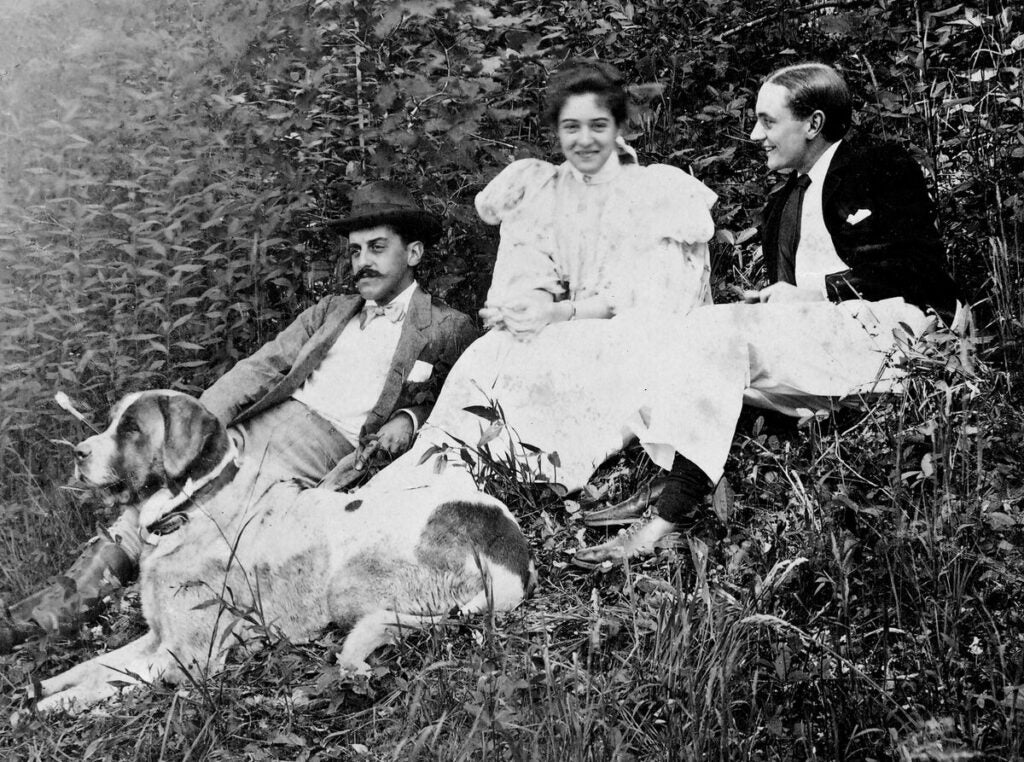
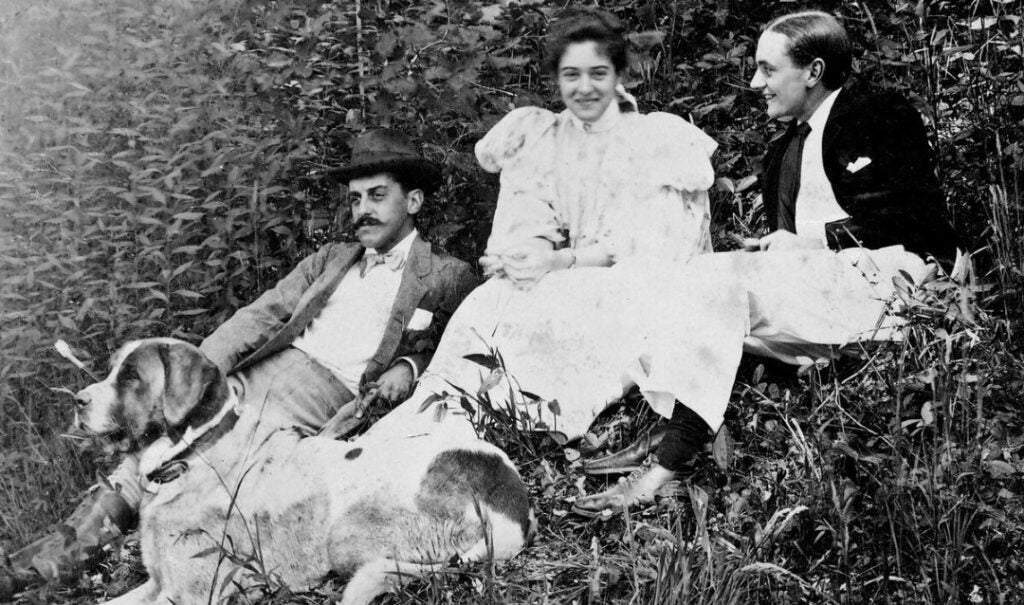
Archival photo of George Vanderbilt with his niece Adele, her husband Jay Burden, and a St. Bernard dog at Biltmore, June 1896
George Vanderbilt’s friends and family are known to have enjoyed playing golf and did so often while staying at Biltmore, weather permitting. In letters to his mother from Biltmore in January and October 1896, William Osgood Field, one of George’s closest friends, describes a range of outdoor activities that almost always include long rides, shooting, and playing golf with George, John Henry Purdy, or Jay Burden (husband to George’s niece Adele).
Other local courses
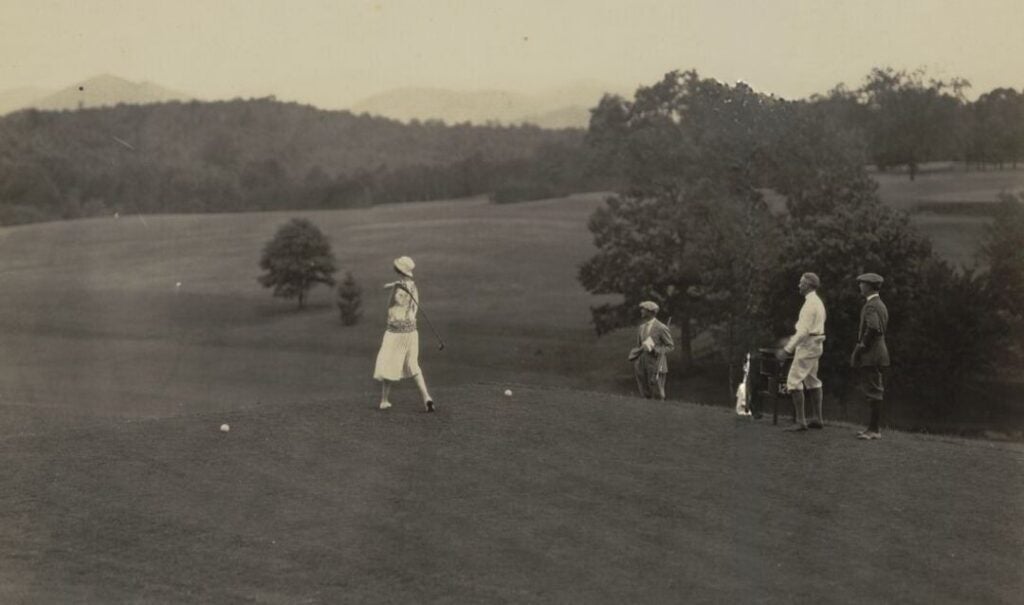
Archival photo of Cornelia Vanderbilt hitting a golf ball at the July 4, 1922 opening of Biltmore Forest Country Club. (Image captured by George Masa for Plateau Studios.)
Both Edith and Cornelia played golf at Biltmore, the Asheville Country Club, and the Biltmore Forest Country Club. On July 4, 1922, at 2:30 p.m., Cornelia Vanderbilt drove the first ball over the links of the Biltmore Forest Country Club, inaugurating the course her mother had envisioned. One reporter traced the link between Biltmore’s golf course and Edith’s interest in establishing one in Biltmore Forest:
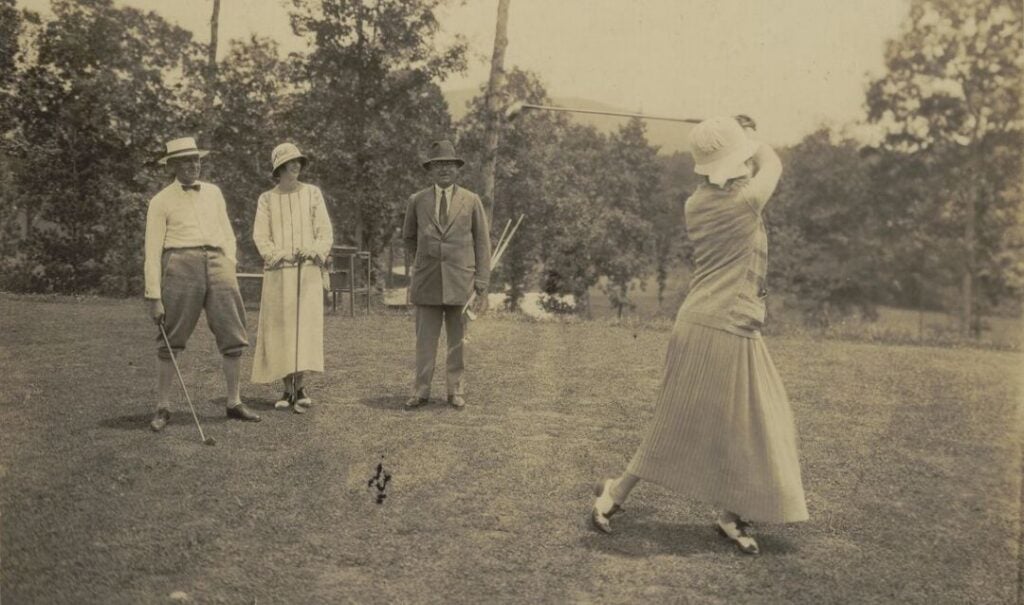
(L-R) Judge Junius Adams, Cornelia Vanderbilt, and Don Juan Riaño y Gayangos, first Spanish Ambassador to the US, watch as Edith Vanderbilt tees off on July 4, 1923, to celebrate the 1st anniversary of the Biltmore Forest Country Club (photo by Herbert W. Pelton)
“In the old days there had been a small private golf link on the estate, but this had fallen into disuse and presented a great undertaking if development were to be considered. But this is just what Mrs. Vanderbilt and Miss Vanderbilt did consider, and wishing to create a golf course equal to any in the country, they still did not care to use it exclusively.”
(L-R) Judge Junius Adams, Cornelia Vanderbilt, and Edith Vanderbilt watch as Spanish Ambassador Don Juan Riaño y Gayangos lines up a shot on July 4, 1923, to celebrate the 1st anniversary of the Biltmore Forest Country Club (photo by Herbert W. Pelton)
Newspapers also repeat that Cornelia was a competitive golfer, competing in the 1922 women’s golf tournament of the Carolinas held in Charlotte. While Edith Vanderbilt played, she seemed to have enjoyed being a patron of the game more than being in the spotlight, as evidenced by her contributing trophies to golf tournaments through the 1910s and 1920s.
Biltmore’s golfing heritage, past and present
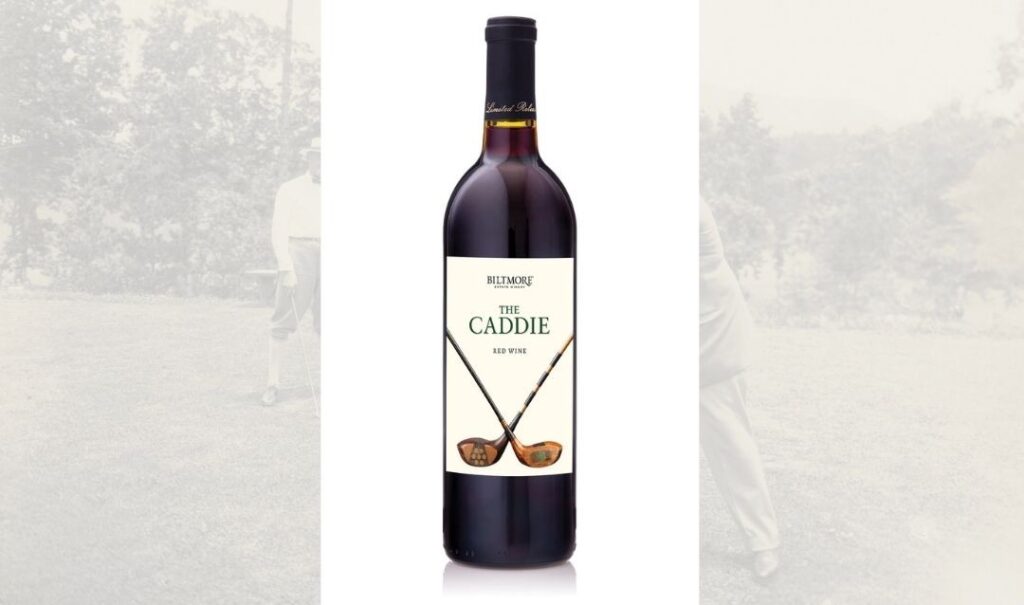
Tee up the perfect partner for a weeknight meal with The Caddie—a robust red wine featuring aromas of tobacco, cherry, and oak, velvety, smooth tannins, and notes of baking spices, plum, and wild raspberries.
Make plans now to visit Biltmore and discover The Caddie Red Wine, an easy-drinking blend of Petite Sirah, Syrah, and Zinfandel handcrafted in honor of Biltmore’s golfing legacy and our sponsorship of the Biltmore Championship Asheville, the PGA TOUR’s first event in Asheville in more than 80 years. (The Caddie is available at the estate and online while supplies last.)
Love the The Caddie’s striking label? It features a pair of golf clubs made by Hillerich & Bradsby Company in 1924. The clubs belonged to Cornelia Vanderbilt Cecil’s husband, the Honorable John Francis Amherst Cecil, and they remain in Biltmore’s collection today.
Edith Vanderbilt’s agricultural legacy is one of leadership, preservation, and advancement of farming practices in Western North Carolina. At a pivotal moment in history, she chose to sustain and strengthen a working agricultural system, while expanding its influence through education, innovation, and public engagement.
Her stewardship of Biltmore Estate and her leadership of the North Carolina State Fair helped shape the agricultural landscape of the region, ensuring that agriculture remained both economically viable and culturally valuable.
Induction into the WNC Agricultural Hall of Fame
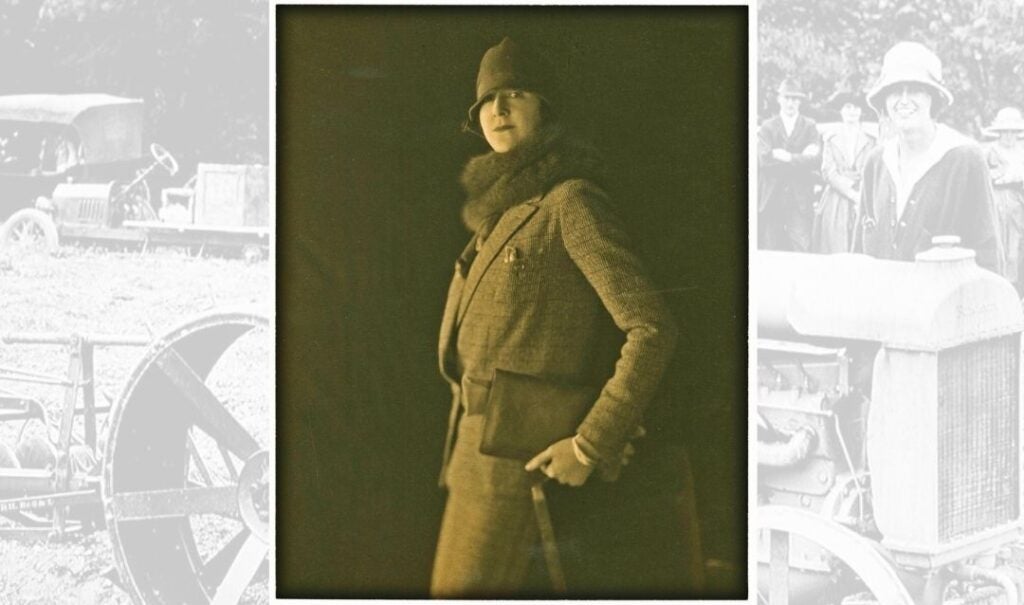
Edith Vanderbilt wearing a suit of Biltmore ‘homespun’ handwoven fabric produced by Biltmore Industries.
In Spring 2026, Kyle Mayberry, Director of Agriculture for Biltmore, had a meeting at the WNC Agricultural Center. As he walked through the WNC Agricultural Hall of Fame area, he spotted plaques honoring George Vanderbilt, his grandson George Cecil, and Dr. Carl Schenck, Estate Forester, for their agricultural contributions to the region.
“It surprised me to learn that Edith Vanderbilt had never been nominated for the Hall of Fame,” said Kyle. “She was a driving force in the success of agriculture in Western North Carolina, and her achievements in this field are an important part of her legacy.”
Kyle then nominated Edith Vanderbilt for inclusion in the WNC Agricultural Hall of Fame, and she was inducted on August 7, 2026.
Edith Vanderbilt’s agricultural legacy
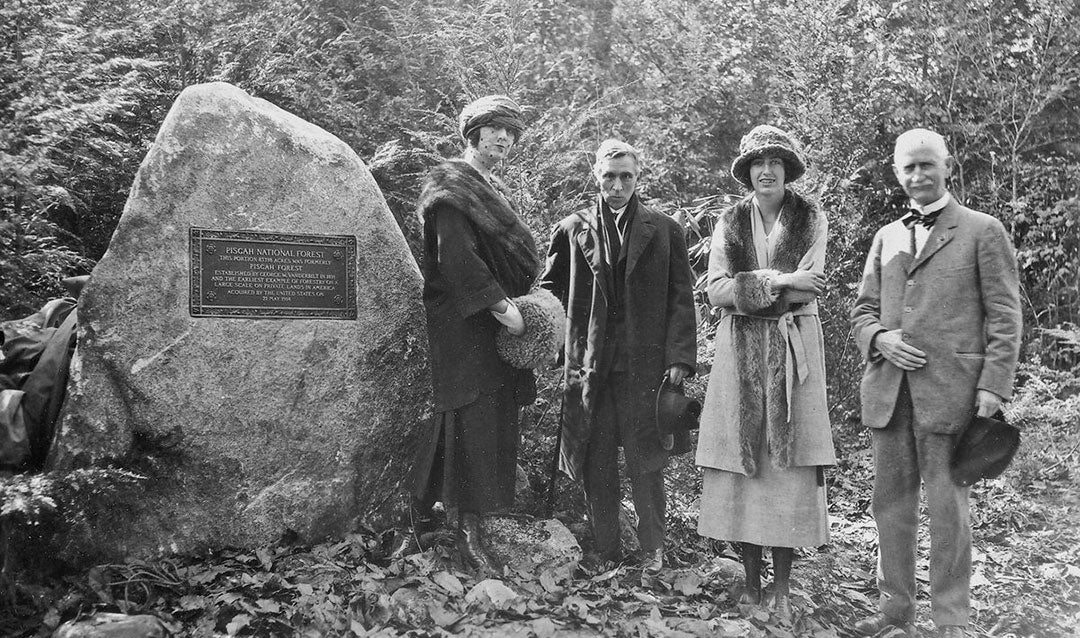
Edith Vanderbilt (far left) and Cornelia Vanderbilt (second from right) attending Pisgah National Forest dedication to the memory of George Vanderbilt, circa 1920.
Edith Vanderbilt’s agricultural influence was centered in Western North Carolina, with the Biltmore Estate in Asheville serving as the foundation of her work.
Through her leadership of one of the region’s most significant agricultural operations, as well as her role in statewide agricultural initiatives, her impact extended beyond Buncombe County to influence agricultural practices, education, and public engagement across North Carolina.
Following the unexpected death of her husband George Vanderbilt in 1914, Edith Vanderbilt assumed full responsibility for managing the estate, including its extensive agricultural and forestry operations. While not formally trained in agriculture, she quickly became an active and capable agricultural leader, working closely with estate managers, foresters, and farmers to sustain and advance the estate’s working farm model.
North Carolina Agricultural Society
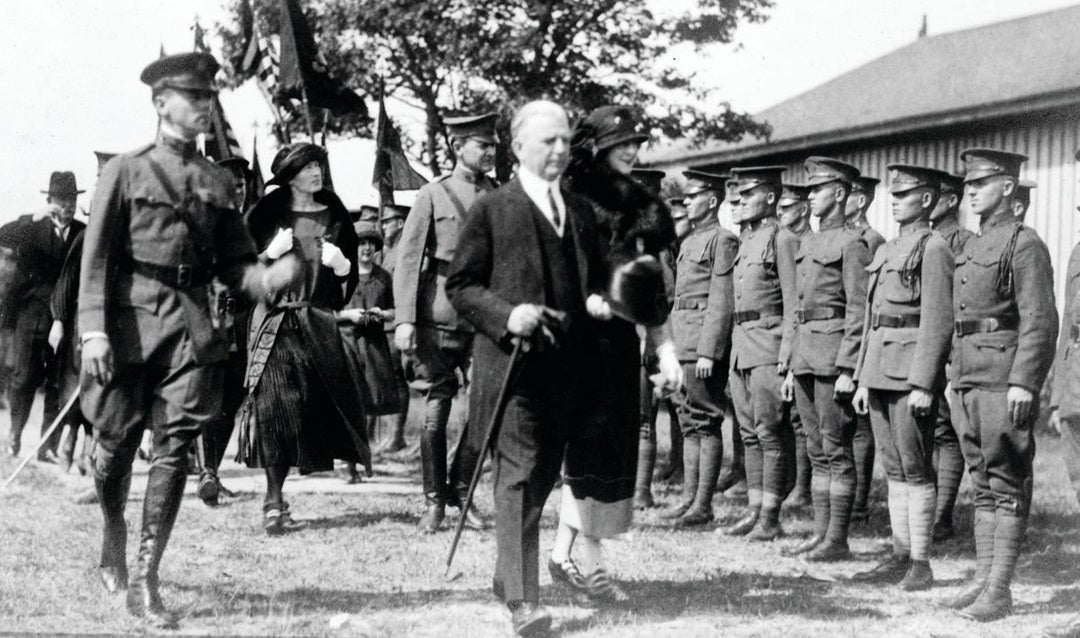
Archival photo of Governor Cameron Morrison (center) and Edith Vanderbilt (right) inspecting troops at the NC State Fair, October 1921
Her leadership extended beyond the estate when, in 1920, she was elected the first female president of the North Carolina Agricultural Society, placing her in charge of overseeing the North Carolina State Fair—one of the most important agricultural institutions in the state.
Edith Vanderbilt’s most significant agricultural contribution was her commitment to preserving and advancing Biltmore as a working agricultural estate during a time when many large estates were being dissolved. Under her leadership, she maintained and strengthened diversified agricultural production, including livestock, crops, and tenant farming systems and actively supported tenant farmers, encouraging productivity and stewardship through hands-on engagement and incentive programs.
She established and expanded the Biltmore Estate Exhibitions, which provided a platform for tenants and workers to showcase crops, livestock, and agricultural skills. These exhibitions included judged competitions, prize incentives, and community participation—serving as an early model of agricultural extension and education.
Modern agricultural technology
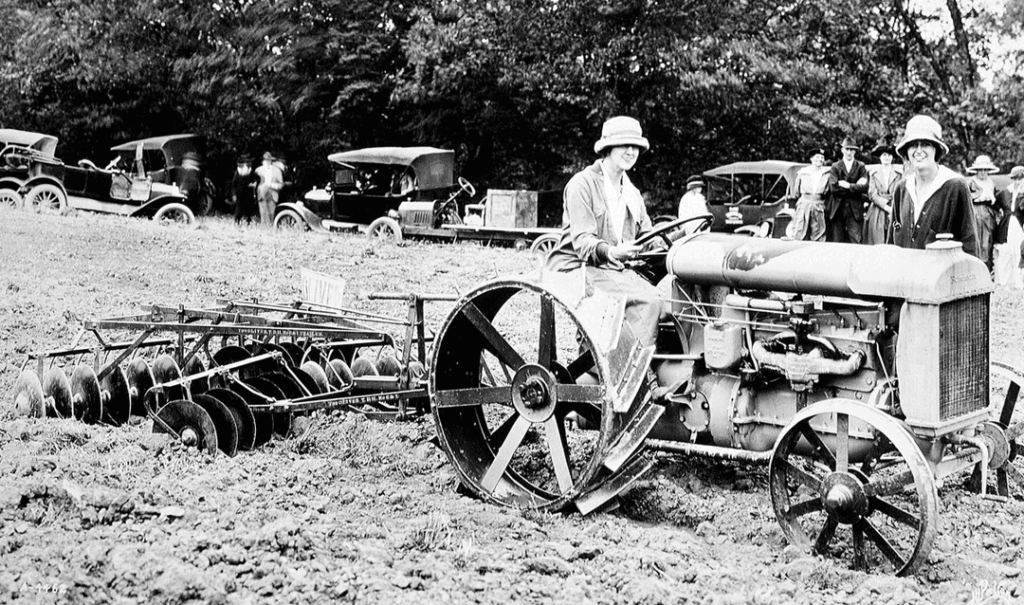
Archival image of Edith Vanderbilt operating a farm tractor while her daughter Cornelia and others watch.
She also promoted the adoption of modern agricultural technology, including participation in early tractor demonstrations and mechanization efforts on the estate. Through these efforts, she created a system that not only produced food and fiber, but also educated, incentivized, and elevated those working within it.
“Among her many other initiatives, Mrs. Vanderbilt established the Biltmore Dairy Moonlight School for adult literacy, finalized the sale of the Pisgah National Forest acreage, created Biltmore Industries as an outlet for local weavers to sell their wool and woven goods, supported farming technology, and revitalized the North Carolina State Fair. Her agricultural legacy is a powerful testament to her commitment to Biltmore and Western North Carolina,” Kyle said.
George Vanderbilt was an American Renaissance man. He embodied many of the ideals of this period that flourished during his lifetime, and you can still see the influence of the era at Biltmore today.
In honor of America’s 250th birthday celebration in summer 2026, we’ll explore the American Renaissance and George Vanderbilt’s place in it.
What was the American Renaissance?
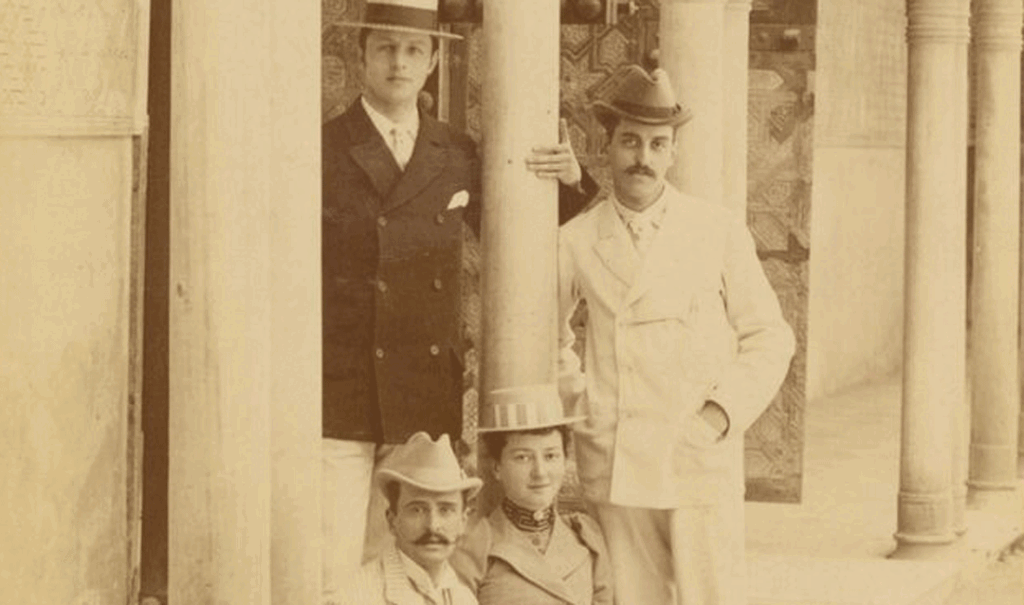
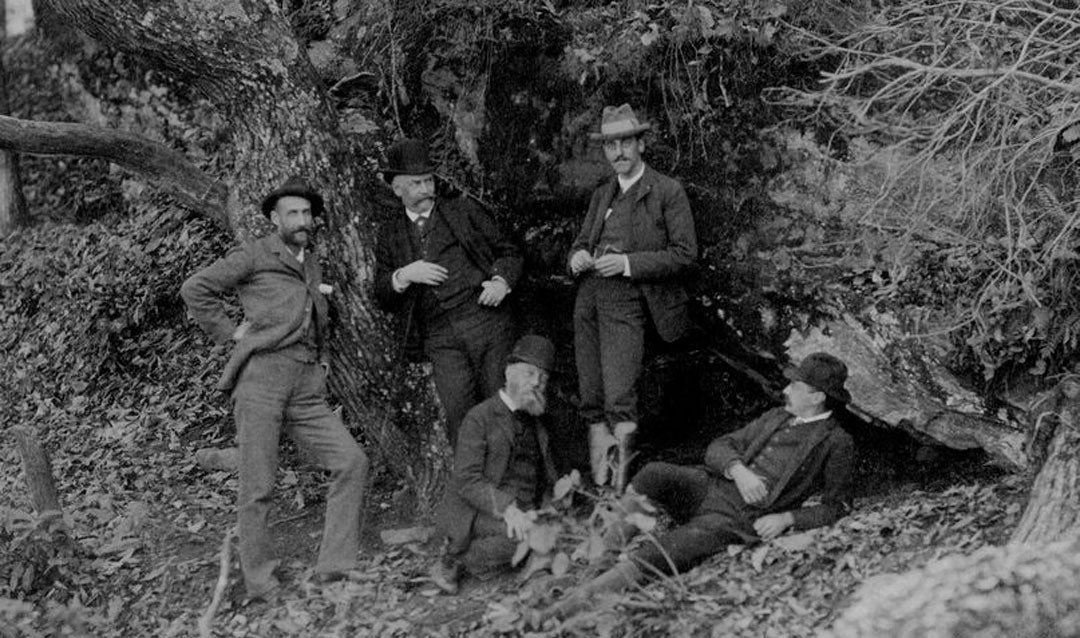
George Vanderbilt (standing, right) traveling in Spain with his cousin Clarence Barker (seated, left), his niece Maria Louisa Schieffelin (seated, right), and her husband William Jay Schieffelin (standing, left), 1891.
In the decades following the Civil War, the United States experienced an optimistic rebirth that mirrored the European Renaissance of the 17th century.
“The American Renaissance was all about developing a national identity of what it means to be American, and part of that was setting up the United States as the successor to the cultural accomplishments of countries across Europe,” said Meghan Forest, Associate Curator.
While the European Renaissance had stirred interest in exploration and experimentation in disciplines such as art, architecture, and science, the American Renaissance awakened a desire to explore classic themes and destinations, drawing inspiration from travels abroad to use at home.
America’s coming of age
The American Renaissance took place in the latter part of the 19th century, marking a renewed confidence in the nation’s outlook with time and attention lavished upon the development of ideas, urbanization, transportation, and new forms of communication.
“It was the American Renaissance that made the Gilded Age possible,” Meghan said. “Innovation in technology, propelled by the intellectual energy of the time, led to industrial growth that gave rise to prominent American families like the Vanderbilts.”
Once such families became wealthy, many contributed to pushing the arts farther than previous generations, so the American Renaissance ushered in the glamorous Gilded Age.
American Renaissance ideals
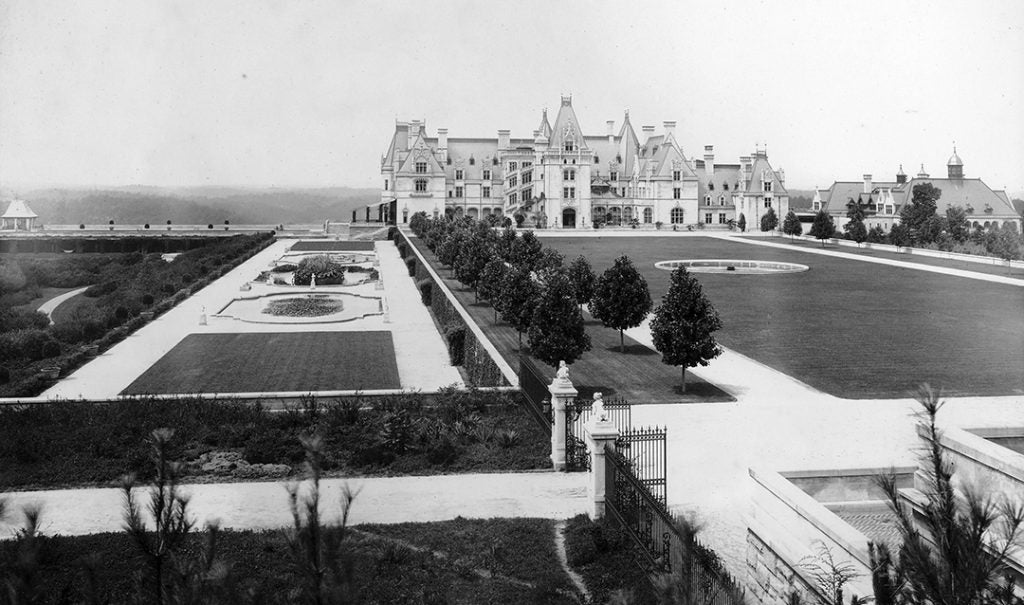
Photograph of Biltmore House and the Italian Garden, ca. 1910
It was during the confluence of both periods that George Vanderbilt first visited Asheville, North Carolina, and became enamored with the area. He envisioned building his new home there, creating a retreat for friends and family that would also showcase his interest in art and literature and house the treasures he collected during his travels.
He retained the services of architect Richard Morris Hunt and landscape architect Frederick Law Olmsted—two of the most influential designers of the American Renaissance era—to create Biltmore House and its magnificent gardens and grounds.
A key theme in Biltmore’s creation and decoration is the search for identity during the American Renaissance. This explains why there is a proliferation of “Americana” in this era: people throughout the country were figuring out what made being American unique.
While drawing on European precedent, the combination of architecture, landscape, and collection at Biltmore is uniquely American in a way that characterizes the Gilded Age. Today’s guests are still invited to reflect on the Gilded Age and America’s history through gardens, architecture, wine, food, farming, and more.
World’s Columbian Exposition
(L-R) purchasing agent and agricultural consultant Edward Burnett, architect Richard Morris Hunt, landscape architect Frederick Law Olmsted, George Washington Vanderbilt, and architect Richard Howland Hunt, son of Richard Morris Hunt, 1892
In 1893, four years after construction began at Biltmore, Chicago hosted the World’s Columbian Exposition. With its remarkable “White City” thoughtfully planned by the nation’s leading designers including Hunt and Olmsted, the extraordinary event further elevated American Renaissance ideals such as world exploration, the experience of different cultures, and new technology like electricity.
With Hunt and Olmsted traveling between Asheville and Chicago during this pivotal time to oversee their roles in both massive projects, it was evident that the Columbian Exposition and Vanderbilt’s new estate shared a common thread: both were created in the regal and fashionable Beaux Arts style that favored neoclassical architecture and European-inspired formal gardens.
“In addition to Hunt and Olmsted’s presence there, we know that George Vanderbilt attended the Columbian Exposition, and that he contributed materials from Biltmore’s managed forestry initiative for estate forester Gifford Pinchot to display,” Meghan said.
According to Biltmore’s curators, the Banquet Hall embodies the American Renaissance more than any other room in Biltmore House. The scale and central location of the Vanderbilt family coat of arms in the center of the overmantel is complimented by distinct American iconography: revolutionary flags and flags purchased at the Columbian exposition that put the founding of America firmly at the heart of this massive space.
Meaningful travel
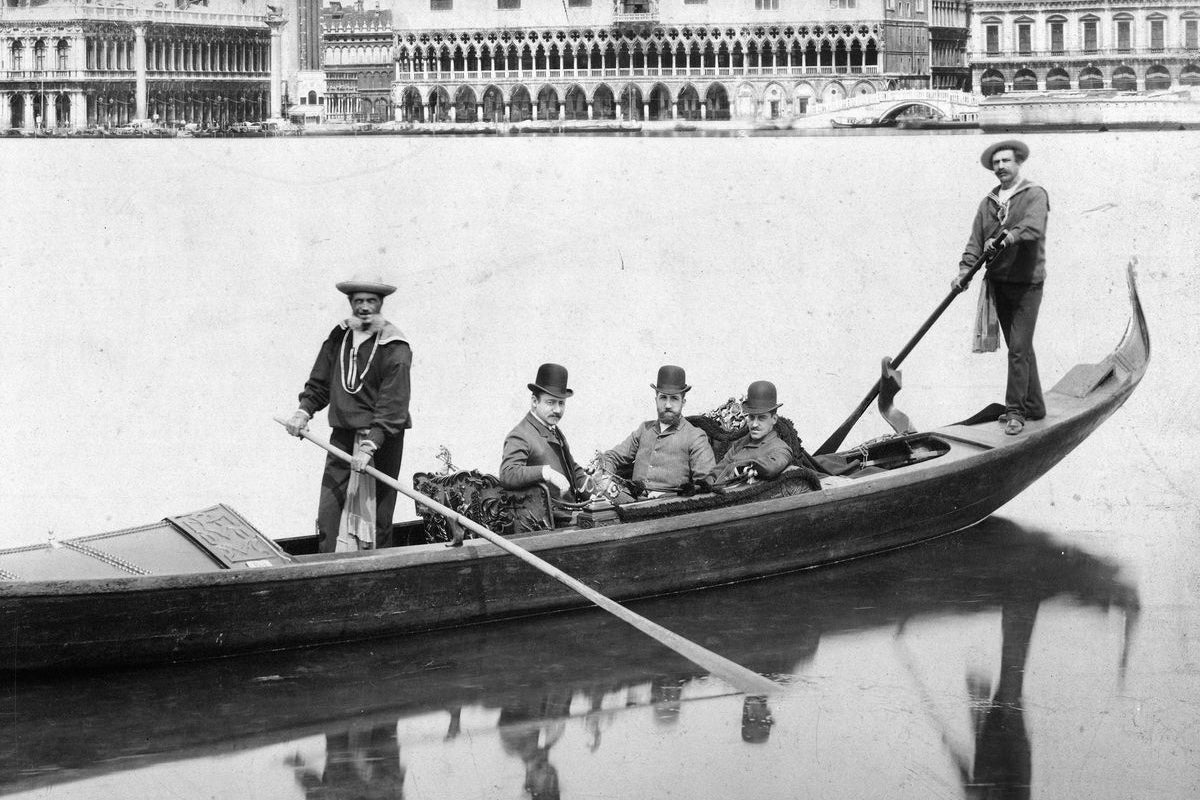
George Vanderbilt (seated, third from left) with unidentified gondola companions in Venice, 1887.
Like many other wealthy Americans of the era, George Vanderbilt traveled extensively, and his trips to Europe, India, and Japan helped fuel his appreciation of history, architecture, and culture.
In particular, his sojourns to Rome, Venice, Milan, and Florence—the epicenter of the Italian Renaissance—gave George Vanderbilt a passion for all things Italian, leading him to choose Italy as a romantic backdrop for the first six weeks of his and Edith Vanderbilt’s four-month European honeymoon.
Included with estate admission, you can learn more about the family with The Vanderbilts at Home and Abroad exhibition hosted at The Biltmore Legacy in Antler Hill Village.
Vanderbilt’s lasting legacy
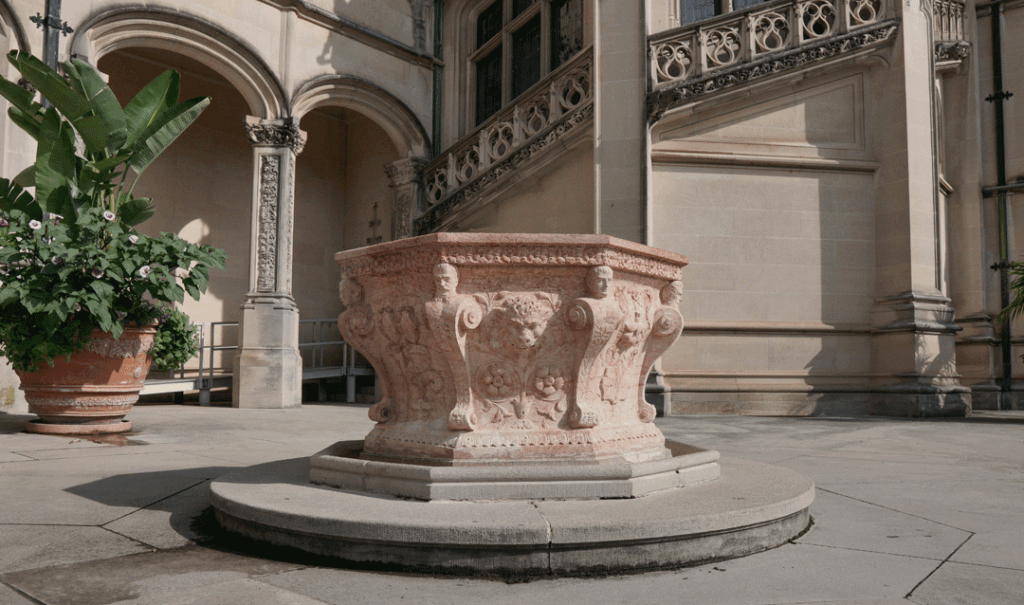
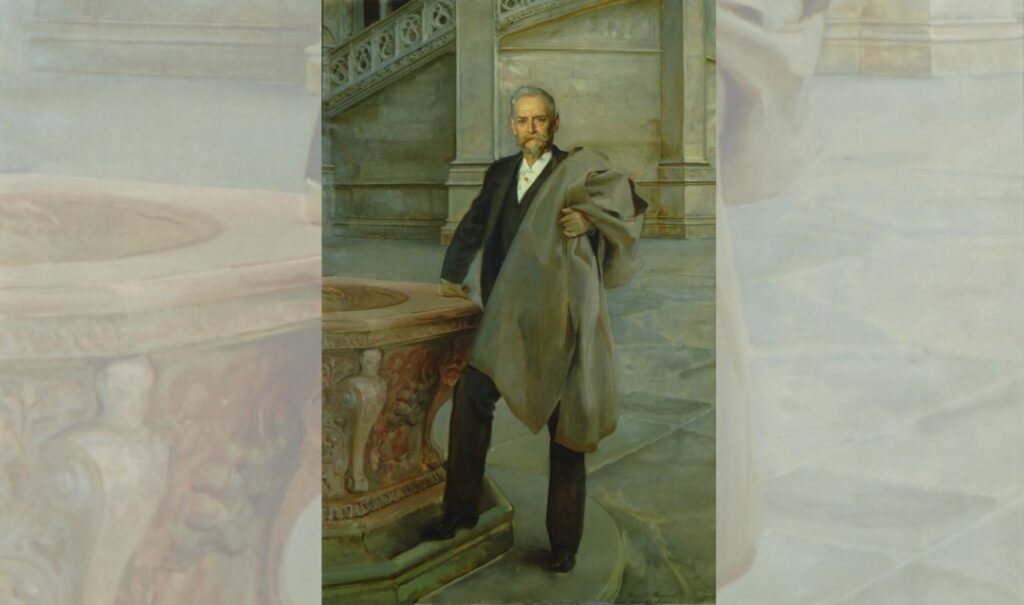
Made of Rosso di Verona marble, this fountainhead was likely originally used to decorate and
protect an active well in Venice during the Italian Renaissance, c. 1500. It has become known as the “Hunt fountain” as it is depicted in the John Singer Sargent portrait of Biltmore House architect Richard Morris Hunt.
The appreciation of man and his capabilities flourished during the American Renaissance, and the nation felt uniquely positioned to take a leading role in the global arena. George Vanderbilt personified the outlook of this important period in our nation’s history. As a true American Renaissance man, his contributions continue to stand the test of time, including his active patronage of the arts.
Today, you can explore lingering expressions of the American Renaissance with a visit to Biltmore Estate in Asheville, NC. Highlights include Biltmore House, still filled with many of the more than 50,000 objects in Biltmore’s collection, plus 75 acres of exquisitely landscaped and preserved formal gardens that gradually give way to meadows, fields, and managed forests surrounding the property.
Experience an American icon for yourself
Plan your visit to surround yourself with the architecture, travel, and art of the American Renaissance, and make your time with us even more unforgettable with an overnight retreat at one of our distinctive lodging properties: Village Hotel on Biltmore Estate®, The Inn on Biltmore Estate®, or our historic private Cottages on Biltmore Estate™.
Summer is the season for outdoor fun at Biltmore Estate in Asheville, NC, and your choices are as plentiful today as they were for the Vanderbilt family and their guests more than a century ago!
Whether it’s your first time visiting Biltmore or you’re an Annual Passholder planning a return, here’s a look at a few of our favorite ways you can vacation like a Vanderbilt this summer by exploring the great outdoors at Biltmore. And don’t forget that kids are free during summer, so the whole family can explore and make memories together!
George Vanderbilt (left) enjoying a summer day at Biltmore with his niece Adele, her husband Jay Burden, and a St. Bernard, June 1896
A grand getaway for summer fun
When George Vanderbilt chose the mountains of western North Carolina as the setting for his country estate in the late 1800s, he sought an antidote to the social pressures and hectic pace of New York City. With Biltmore, he created a retreat where family and friends could relax and immerse themselves in the area’s natural beauty during the summer.
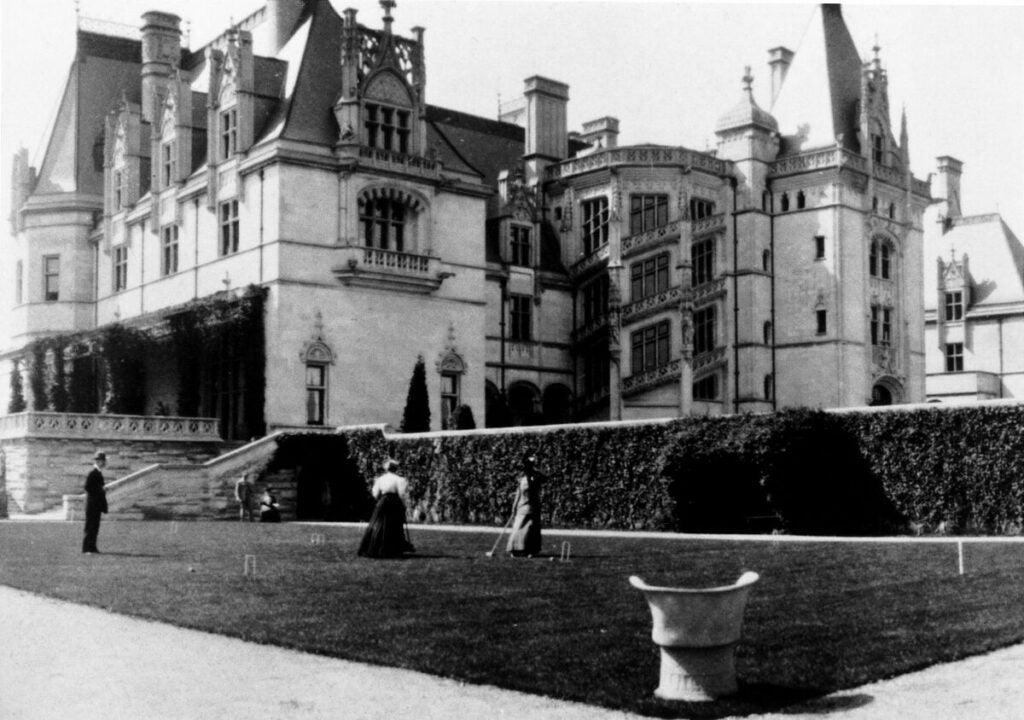
The Vanderbilts offered tennis, croquet, archery, fishing, horseback riding, golf, swimming, “automobiling,” and lawn bowling in the formal gardens and landscaped grounds surrounding Biltmore House.
Guests in 1905 play croquet in the Italian Garden.
Get ready for games
The family welcomed hundreds of guests to Biltmore House through the years. And with all the amenities of a luxury resort, it’s no wonder they stayed for weeks at a time! The combination of the elegant French château, gently rolling hills, and mild weather captured the imagination. Spring and summer lured the hosts and their friends outdoors to play. A dazzling array of activities appealed to nearly every taste and whim, including croquet in the Italian Garden.
How you can experience this: During your summer visit, make sure to spend time in Antler Hill Village, where you’ll find seasonal demonstrations, games, and activities offered at our Outdoor Adventure Center, Bike Barn, and Antler Hill Barn. You can also experience fun lawn games for the whole family in the Italian Garden during Luminere evenings!
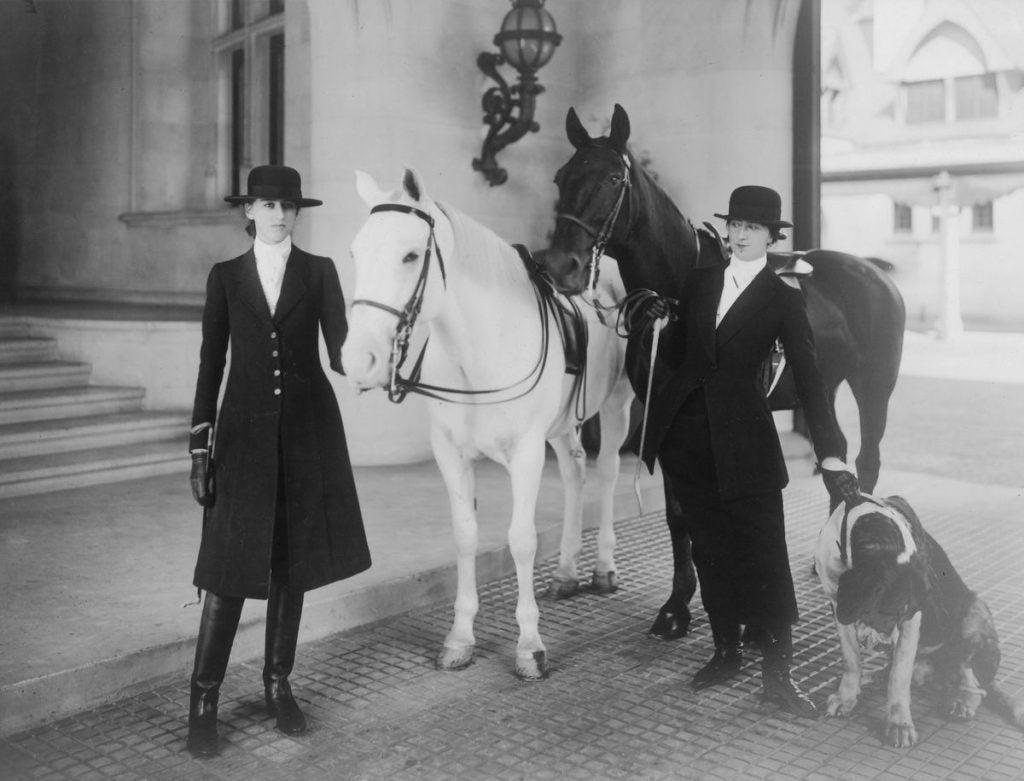
Cornelia and Edith Vanderbilt in Biltmore’s stables, c. 1917
Head out on horseback
George Vanderbilt descended from a family famous for its love of racing and raising horses. Coaching and riding were always favorite recreational activities. Cornelia grew up riding horses, and for a time, she even had a donkey to ride. It’s tough to find a more exciting and beautiful way to see the estate than from the back of a horse.
How you can experience this: Explore the estate’s scenic views on horseback through guided trail rides or with a leisurely carriage ride around the grounds.
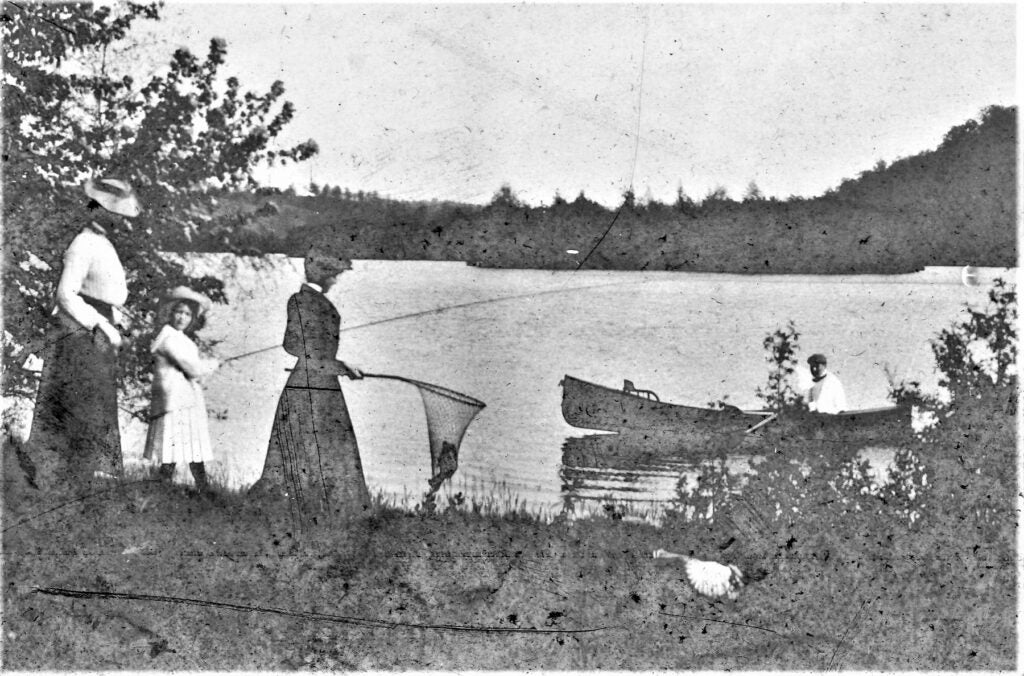
Edith and Cornelia fishing at the Lagoon.
Reel summer fun
Edith was known to be an avid fisherwoman. She often gave fishing parties at Biltmore, and daughter Cornelia fished right alongside her. Our archives note that the family enjoyed hikes into the forest and across estate ridges during the summertime. George Vanderbilt himself loved to get out in the woods and see the estate on foot.
How you can experience this: All estate admission types, including Annual Pass memberships and overnight stays, make our estate grounds easily accessible for you to soak up summer’s longer days with leisurely strolls, bike rides, or hikes to explore the very same scenery George Vanderbilt and his family saw back in their day.
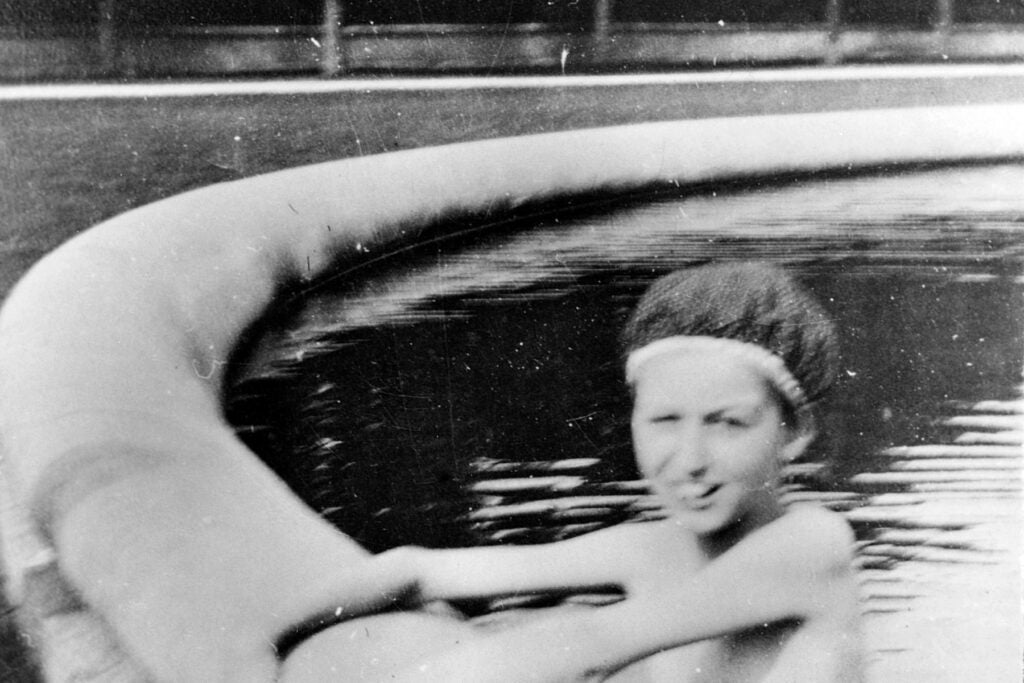
Cornelia Vanderbilt swimming in Front Lawn fountain.
Make a splash
As a little girl, Cornelia Vanderbilt splashed around in the front lawn fountain! Later, as a young woman, she entertained guests poolside on the South Terrace.
How you can experience this: The pool is no longer on the South Terrace, but both The Inn and Village Hotel on Biltmore Estate have swimming pools surrounded by beautiful scenery that are open during summer and are calling your name.
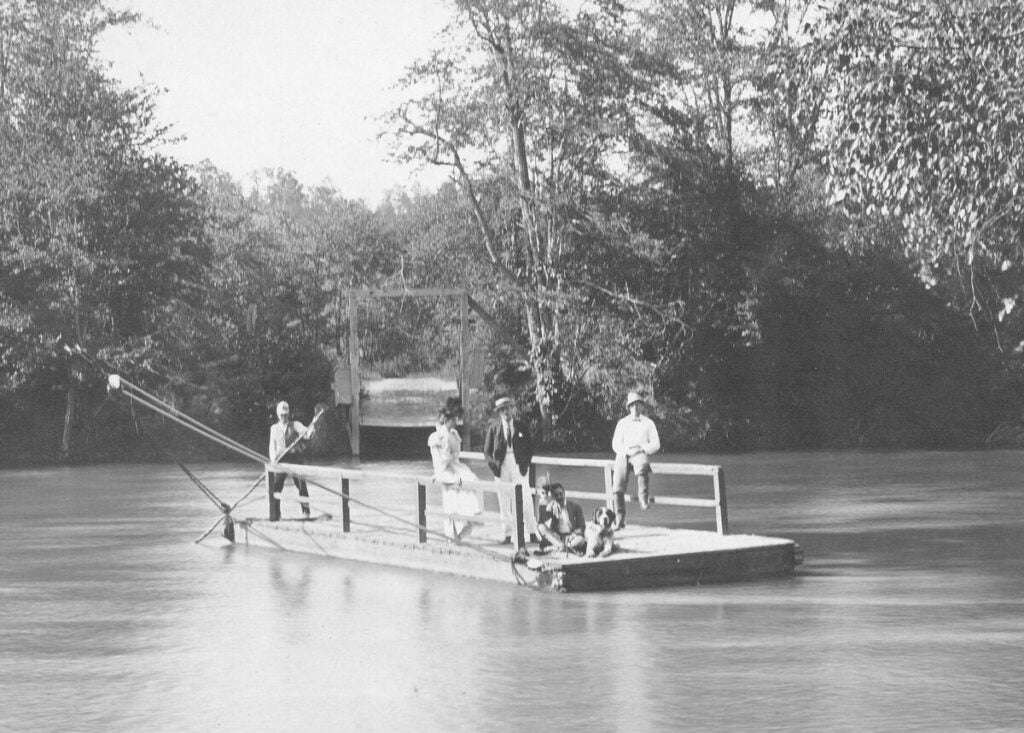
George Vanderbilt (seated) and friends crossing the French Broad River on a ferry, circa June 1896.
Rolling on the river
From the late 1800s through the 1970s, a ferry traveled back and forth across the French Broad River, bringing passengers from the farming operations on the west side of the estate to Biltmore’s main dairy facility, where the Winery is located today. The Vanderbilt family and their guests used the ferry when they ventured to the west side, and employees used it to haul lumber and farm products.
How you can experience this: You can explore the scenic views of this wide river that runs through the estate by walking or biking on easy trails that offer beautiful views. Download our Trail Map or visit the Bike Barn in Antler Hill Village for bike rentals and information on outdoor activities.
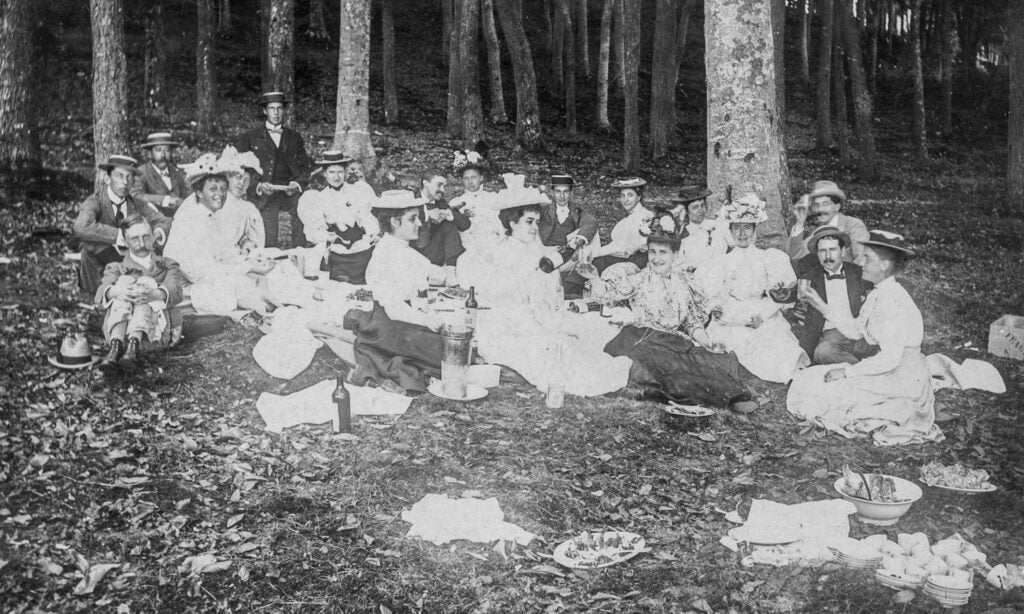
Pauline Dresser, Edith Vanderbilt’s sister, attending a summer picnic in Langrolay-sur-Rance, France, 1895.
Pack a summer picnic
Whether they stayed on Biltmore Estate or traveled to a nearby scenic spot, picnicking for the Vanderbilts and their guests was a much more extravagant outdoor activity that included dining with real china and glassware and sitting atop cushions beneath a tent or shade.
How you can experience this: You are invited to head out and enjoy a more modest picnic on the estate grounds. Enjoy our great outdoors when you pack your own picnic (see policies) or set out with a chilled bottle of Biltmore Wine and some perfectly paired snacks from one of our estate shops or restaurants to enjoy. You can also find a good spot to relax, listen to live music, and hang out with friends and family in Antler Hill Village.
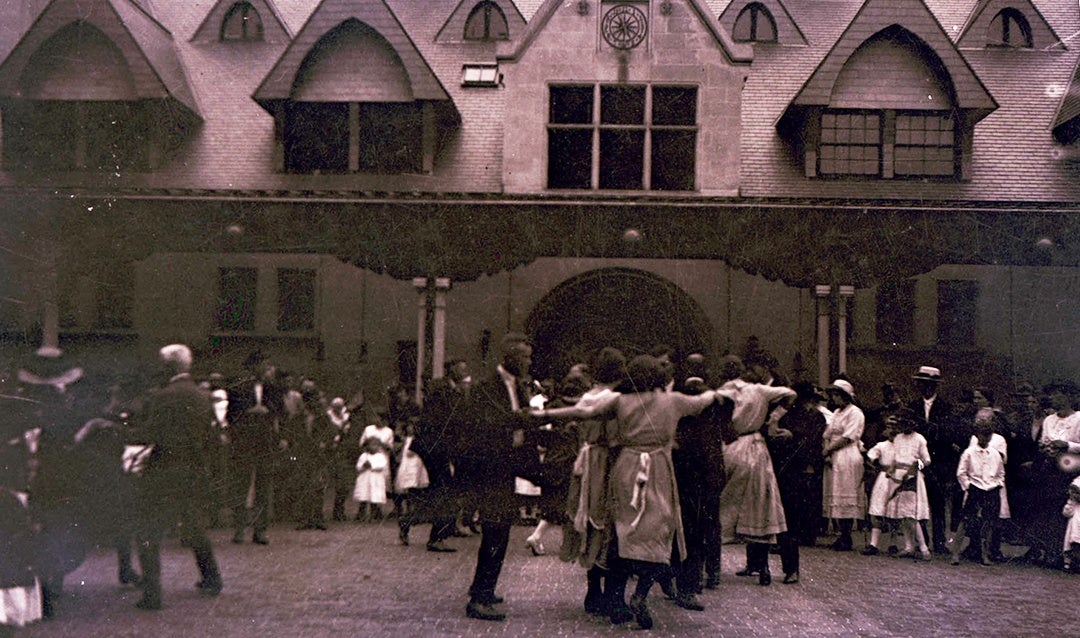
Employees gathered to celebrate Cornelia Vanderbilt’s 21st birthday, August 1921
Experience Biltmore in a whole new light
Outdoor parties were a grand tradition at Biltmore, and the Vanderbilts made the most of the estate’s magnificent gardens and grounds to host evening events filled with lights and music. Based on wonderful archival descriptions of these shimmering celebrations, we created Luminere™ to share a magical new way to experience the estate at night.
How you can experience this: Under starlit skies, Biltmore House becomes a canvas that illuminates its remarkable story, and our renowned gardens dance before you with breathtaking artistry. Join us on select evenings now through October 18, 2026, to immerse yourself in Luminere and enjoy Biltmore in a whole new light.
Explore more of our 8,000 acre estate this summer with free admission for kids.
Savor summer like a Vanderbilt
Summer fun is just a hop, skip, and jump away! From ancient wonders to modern marvels, every day is an invitation to savor summer’s longer days as you connect, unwind, explore, and make memories to last a lifetime.
Plan your visit to join us this summer on George Vanderbilt’s 8,000-acre Blue Ridge Mountain getaway, just as it was intended. For even more Vanderbilt-inspired fun, linger longer with summer days and overnight stays on our historic estate, or join our Passholder family.
Have you ever wondered what it would have been like to be there when George Vanderbilt opened his home to friends and family for the very first time during Christmas 130 years ago?
We invite you to step back in time and experience the magic of Biltmore’s first Christmas in 1895.
While there are no images from the first Christmas, we know from records that the home was elaborately decorated and a towering tree was raised in the Banquet Hall.
Weeks of preparation
Months before the festivities, preparations for Biltmore House’s grand opening were well underway. On October 26, George Vanderbilt officially moved into his new home, signing the first line of the Guest Book.
Deliveries of food, furniture, and art arrived daily, some by private railcar and others by horse-drawn wagon along the newly built estate roads. Inside, workers carried crates through the snow-dusted courtyard as the sounds of hammering, polishing, and unpacking echoed through the halls. Upholsterers adjusted draperies, maids polished marble floors, and gardeners gathered evergreens for garlands and wreaths. By December, the house was alive with anticipation.
Beyond the estate, word of the preparations spread through Asheville. The Des Moines Register reported that “a great many little sewing women in Asheville are the richer at Christmas for the big orders they receive for dozens of simple garments, heaps of knitted things, and scores of children’s frocks meant for the Biltmore celebration.”
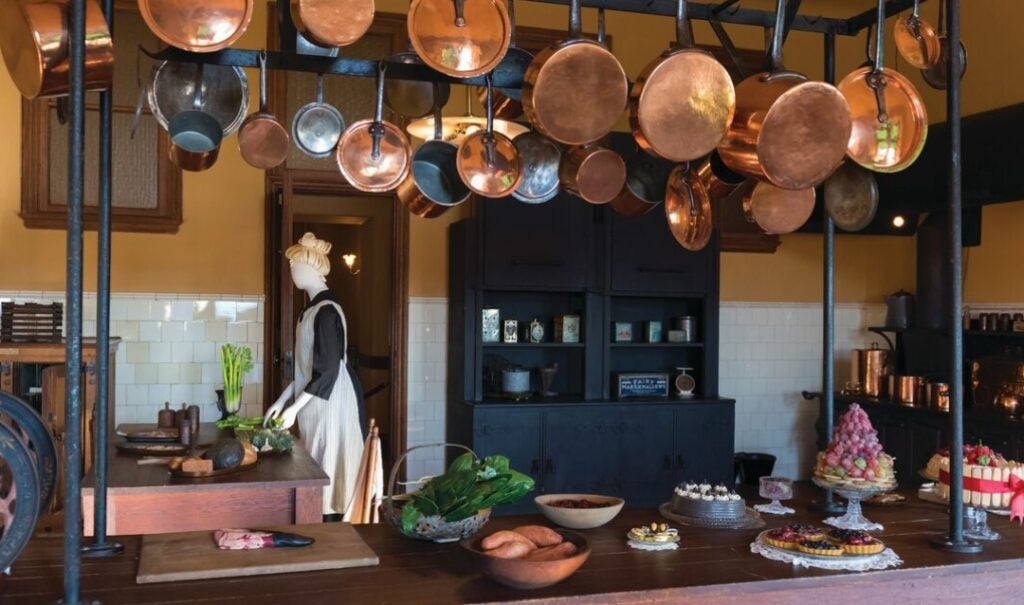
Imagine Biltmore House’s main kitchen abuzz with action in preparation for hosting the first Christmas celebration.
The work behind the wonder
Before dawn on December 24, the kitchens were already humming. Fires were lit in dozens of hearths across the grand home, silver was polished to a mirror shine, and the scent of roasting meats and baked puddings filled the air. Head Housekeeper Mrs. Barker oversaw the final preparations with practiced precision, coordinating footmen, maids, and cooks who had only recently arrived from New York.
Outside, estate workers carted loads of perfectly dried firewood that Vanderbilt had specifically requested, “must be perfectly dry, because if the wood sits in the rain, it snaps when it burns.”
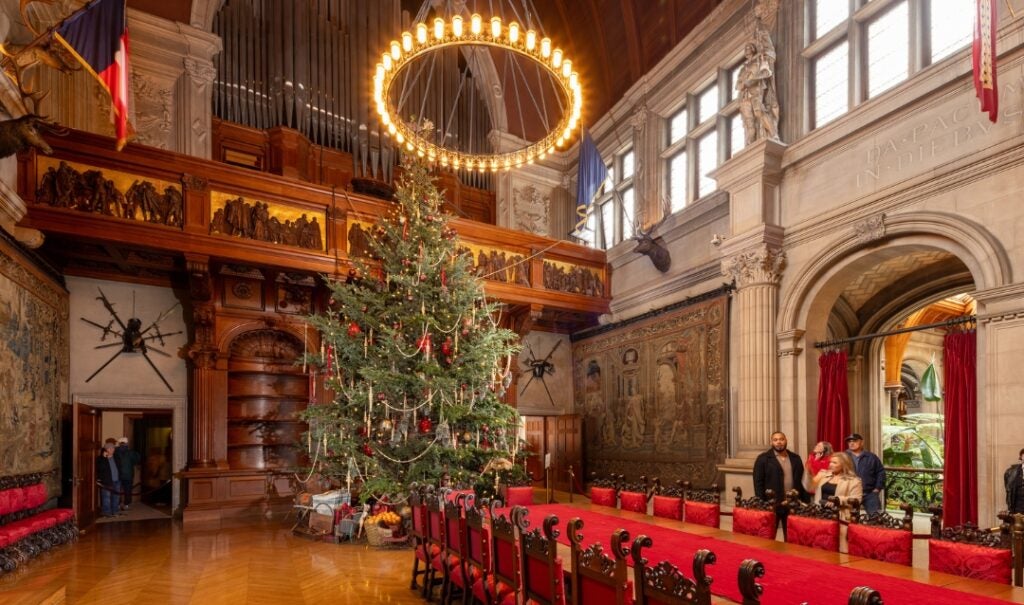
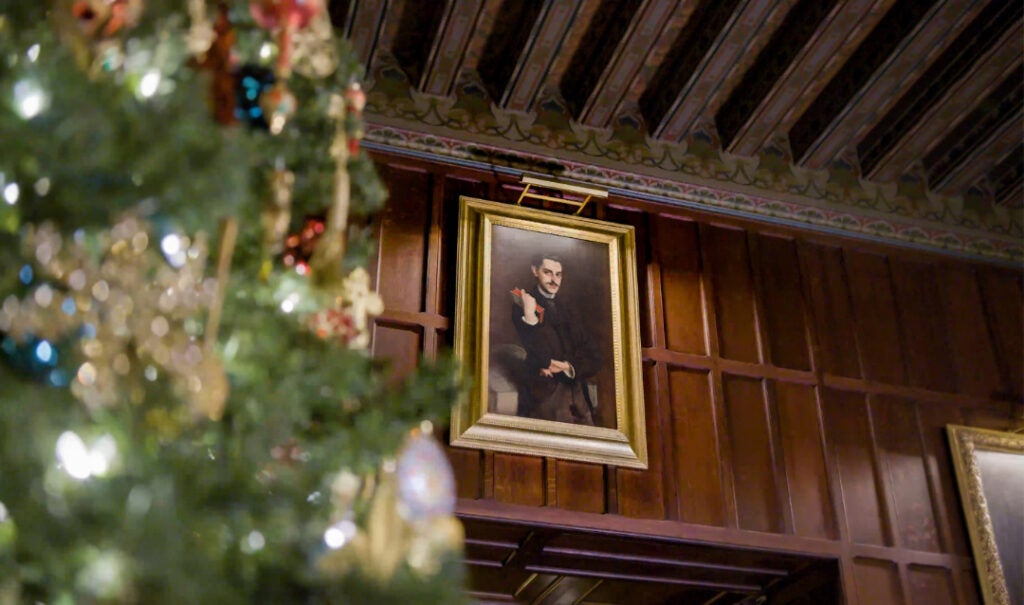
Within the Banquet Hall, last touches were placed on the towering spruce tree that reached nearly forty feet toward the vaulted ceiling. Evergreen garlands, mistletoe, and holly berries adorned the mantels, while the newly installed electric lights glowed softly in the greenery.
Downstairs in the servants’ quarters, anticipation was high. The scent of baking bread mixed with coal smoke, and the echo of hurried footsteps filled the corridor. For the hundreds of employees who kept Biltmore running, the day promised its own well-earned celebration.
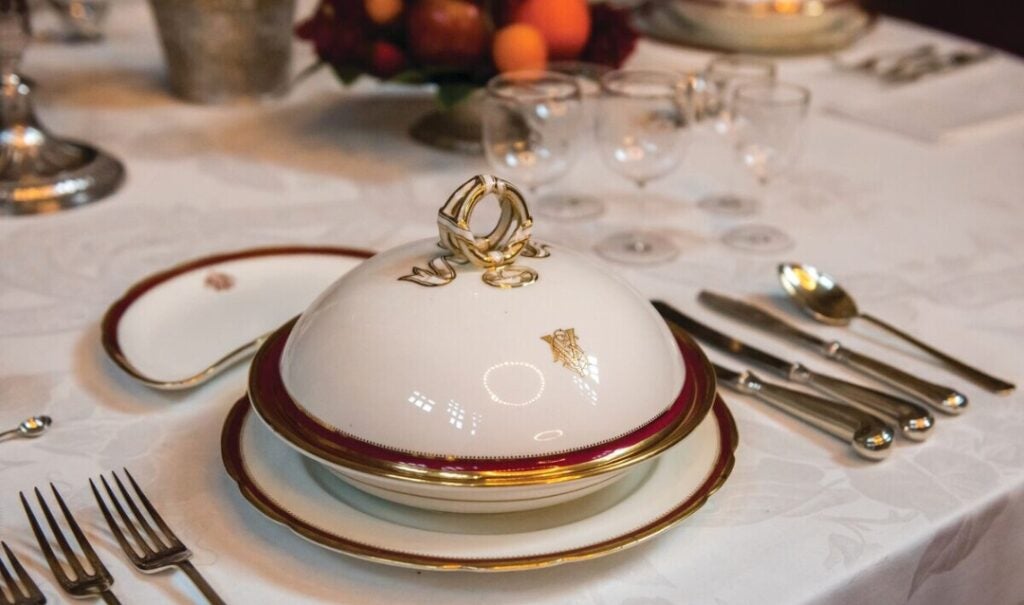
During the first Christmas, newly hired staff dressed in equally formal attire served multiple courses of fine cuisine for Vanderbilt and his guests.
An evening of celebration
On Christmas Eve, dozens of Vanderbilt family members and friends arrived by private railcar at the base of the hill, where George Vanderbilt greeted them warmly at the Esplanade, eager to share his new home.
That evening, the Banquet Hall came alive with music from the Imperial Trio and the sparkle of candlelight reflected in crystal and silver. According to The Asheville News and Hotel Reporter, “the guests gathered in the Banquet Hall, where there was a Christmas tree forty feet high, beautifully decorated… the rich costumes of the ladies, the soft lights and tastefully draped garlands created a scene beautiful to look upon.” Beneath the great tree, gifts were exchanged among family and friends before the evening turned to dinner and celebration.
The long dining table stretched nearly the length of the room, adorned with flowers, polished silver, and fine china. Guests dined on multiple courses prepared by Biltmore’s skilled kitchen staff, featuring local game, seasonal produce, and delicacies brought in from New York. It was a feast that embodied both refinement and abundance, setting the tone for the many more Christmases to come.
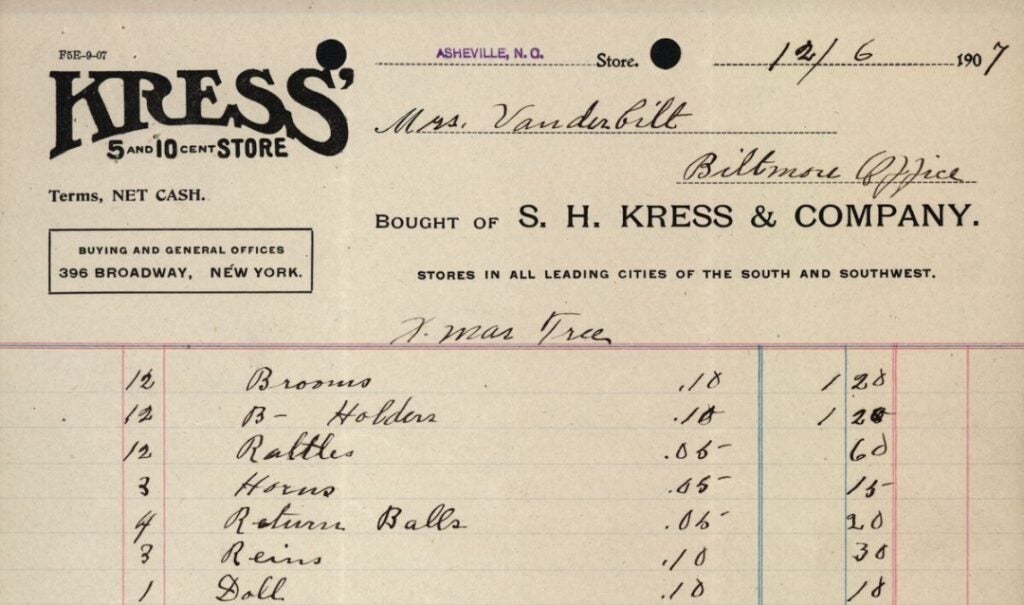
As shown on this 1907 receipt, George’s future bride, Edith, took over the task of gift giving for their celebrations.
The gift of generosity
The next morning brought a celebration of a different kind. At eleven o’clock, George Vanderbilt opened the Banquet Hall once more, this time to the estate’s employees and their families. According to contemporary reports, the eyes of the children danced with delight as Vanderbilt and several guests distributed gifts from beneath the great tree.
During this first employee Christmas celebration, every estate worker received a gift, and each household a hearty Christmas dinner. The Asheville Citizen later reported that “each servant received an envelope containing ten dollars,” a significant sum in 1895. Hundreds of men, women, and children shared in the young host’s generosity, marking a day that combined grandeur with genuine goodwill.
130 years after Vanderbilt first welcomed friends and family to Biltmore, the tradition of hospitality and celebration endures.
From the first Christmas to today
As the festivities continued into the New Year, Biltmore House glowed with the energy of family, music, and firelight. Guests dined beneath the soaring ceiling of the Banquet Hall, toasted “Our Host,” and danced past midnight before greeting 1896 with a chorus of Auld Lang Syne.
Biltmore’s first Christmas was more than a housewarming. It was the beginning of a tradition spanning generations.
As Biltmore marks its 130th Christmas in 2025, Vanderbilt’s vision endures, inviting you and your loved ones to share in the same sense of wonder and welcome of the season.
Avermore Jewelry marks a new chapter in Biltmore’s story and is a testament to the estate’s enduring allure.
Aubrey Vanderbilt Cecil Baliles, the great-great-granddaughter of George and Edith Vanderbilt, is the Founder and Creative Director of Avermore, a fine jewelry brand inspired by the craftsmanship and beauty of Biltmore Estate. Discover how her designs honor her family’s history while embracing a bold, modern vision.
A new chapter in a storied legacy
Avermore Jewelry finds inspiration in the architecture of Biltmore House and the Vanderbilt family.
“In a world where trends and fast fashion often overshadow the true essence of jewelry, Avermore is dedicated to creating pieces that will be cherished and honored,” said Aubrey. “Our designs are meticulously crafted with an unwavering commitment to craftsmanship that reflects our core values.”
The inspiration: Where past meets present
In a recent interview with Town & Country, Aubrey describes how an incident with an emerald was the impetus to go all in with Avermore Jewelry.
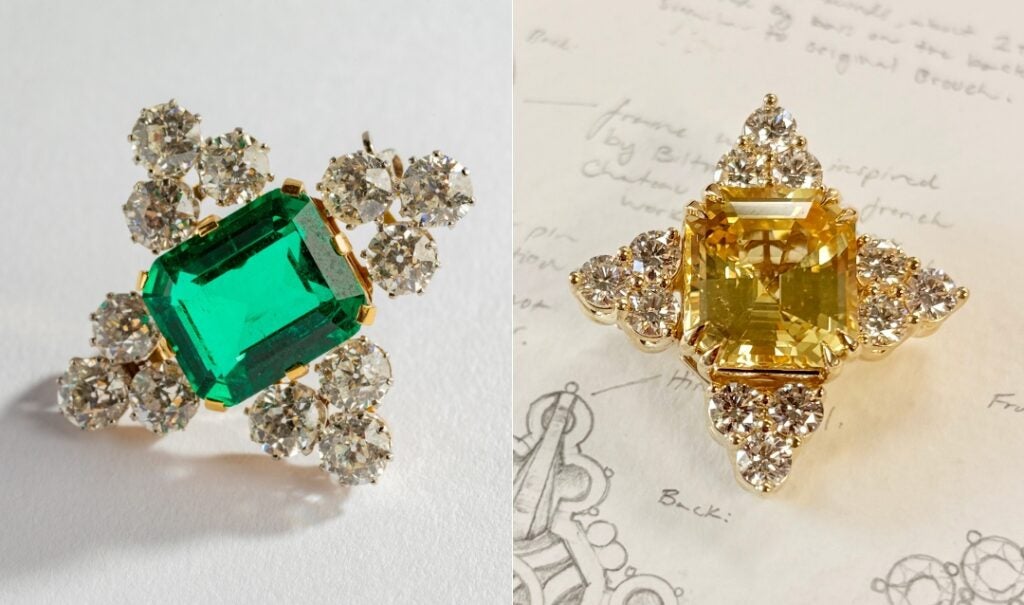
Left: Edith Vanderbilt’s emerald-and-diamond brooch. Right: inspired by her great-great grandmother’s heirloom jewelry, Aubrey designed a brooch featuring diamonds around a yellow sapphire that can also be worn as a pendant.
“My great-great-grandmother had an emerald brooch that I love,” Aubrey said. “A few years ago, the matching ring was being worn at a wedding reception dinner. The stone fell out of its setting and ended up in a butter dish, and that was a turning point for me. I saw that I could modernize an heirloom by turning it into a more wearable piece of jewelry that still carried its history and its connection to my family.”
Aubrey’s vision isn’t just about creating jewelry; it’s about creating a legacy that celebrates the past, honors the present, and inspires the future.
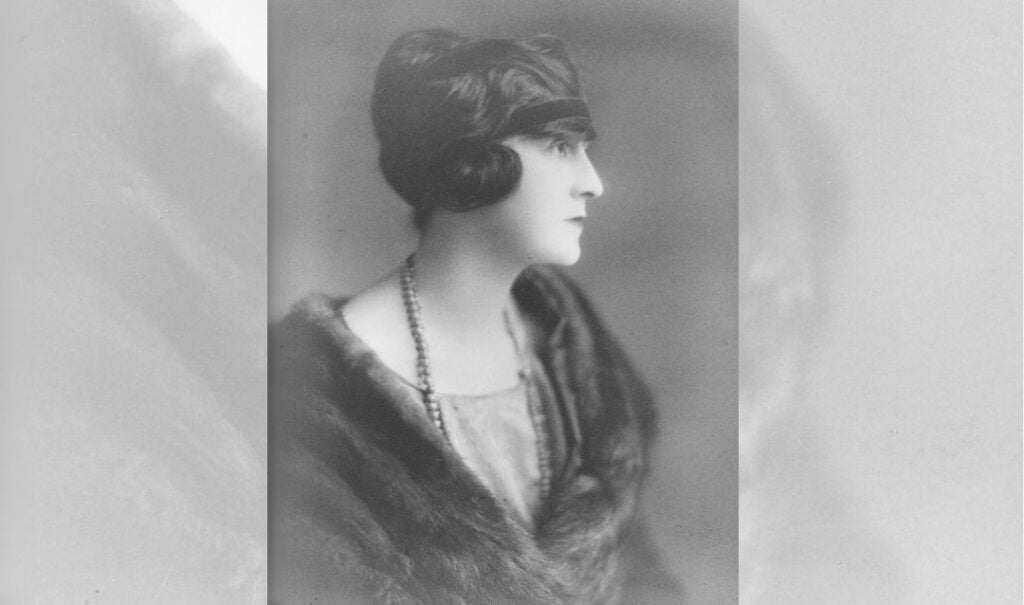
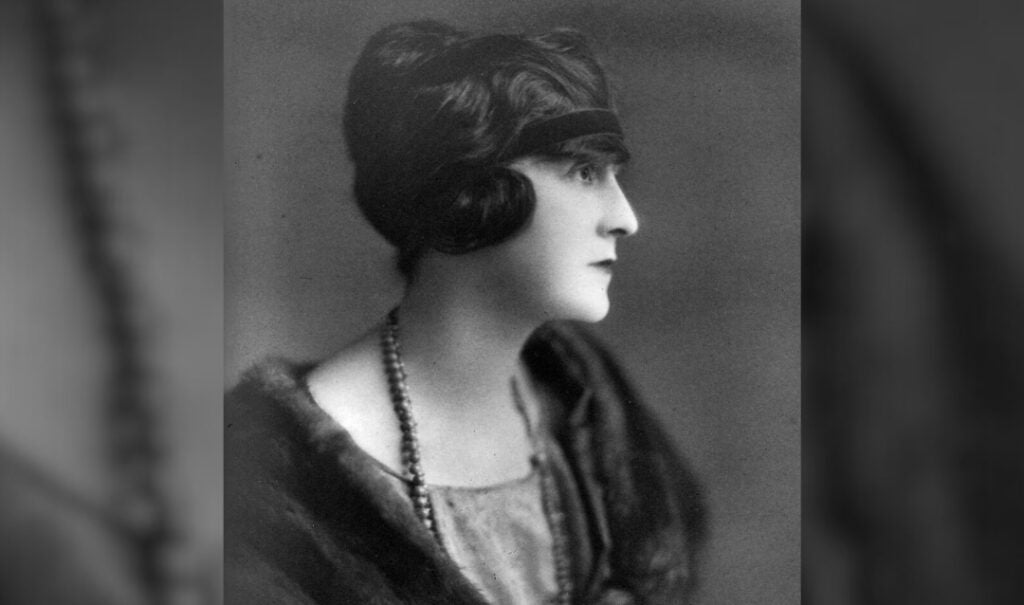
Edith Vanderbilt was known not only for her efforts to preserve Biltmore and her philanthropic work, but also for her bold personal sense of fashion and style, as shown in this 1920’s-era photo.
“With Avermore, I took a page out of the era in history where women were exchanging corsets for slip dresses, incorporating bold design with Gilded Age sensibilities. Avermore is designed in luxurious metals with architectural features to create timeless pieces with notes of modern refinement for everyday wear,” said Aubrey.
The collection: Statement jewelry for the modern heirloom seeker
The Stuyvesant Collection by Avermore features timeless designs with stunning gems set in precious metals.
In an industry often characterized by imitation, Avermore’s commitment to innovative design serves as a key differentiator, with each piece created as a singular work of art.
Designs draw inspiration from a wide variety of elements, with Edith Vanderbilt cited as one of the primary sources for her timeless elegance and self-expression.
Crafted with only solid metals and AAA gemstones, Aubrey’s designs marry sophisticated lines with delicately placed detail. Every element works together in harmony to create a vision of refinement, adding a breath of simplicity and elegance to your day.
Aubrey’s role: Passion, vision, and craftsmanship
Aubrey Vanderbilt Cecil Baliles, founder and designer of Avermore.
“For me, Avermore began as a way I could carve out my own path to honor the Vanderbilt legacy. My husband Kyle and I work as a team, building a new part of our own family legacy for generations to come,” said Aubrey.
Aubrey believes that much of today’s jewelry has been defined by mass production, losing the artistry and soul that make each piece meaningful. Every Avermore design is thoughtfully created and handcrafted in Asheville, North Carolina, preserving the integrity of true craftsmanship and the beauty of individuality.
“With Avermore, we are creating unique jewelry designs that come from the heart just as much as they are inspired by history. Through meticulous design and execution, we are delivering timeless jewelry that tells a story while also exceeding the expectations of quality for fine jewelry,” said Aubrey
Elevate your collection: How to own a piece of history
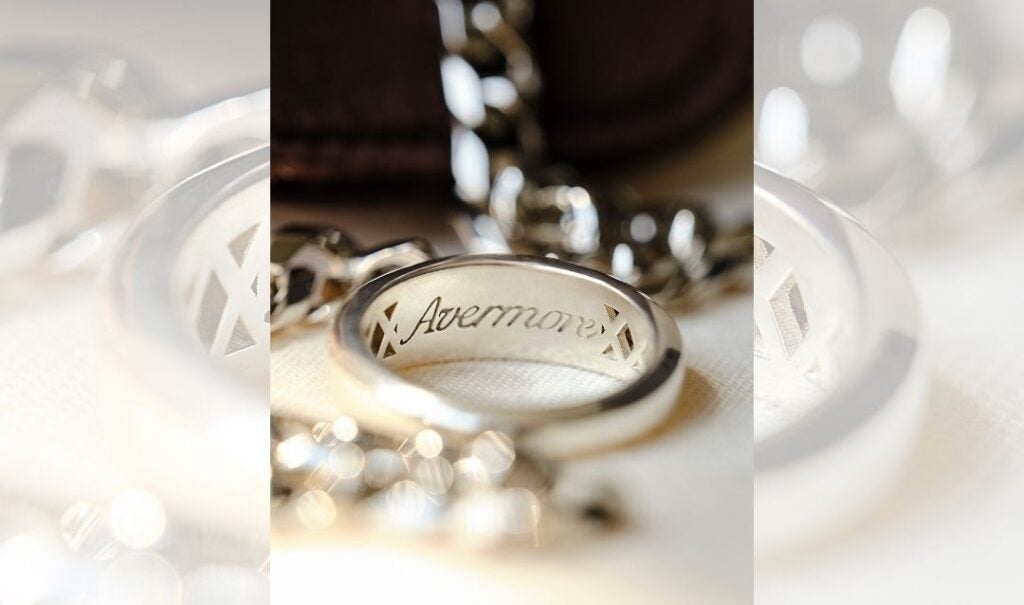
No detail is overlooked in Avermore, like the inner surface of this elegant silver ring from the Stuyvesant Collection.
“Where timeless elegance and craftsmanship meet generational storytelling—that’s where you will find Avermore,” Aubrey said. “Thoughtful pieces provide first-time buyers and collectors with high-quality heirlooms rooted in the enduring legacy of the family that founded and now preserves Biltmore.”
Oak Sitting Collection: Inspired by the ceiling of the Oak Sitting Room, a private family living space into which George and Edith Vanderbilt invited only their most special guests, this collection personifies warmth and intimacy through rich gold and French La Belle Époque style engravings.
Stuyvesant Collection: Avermore’s signature collection began with a beautiful heirloom discovered in Edith Vanderbilt’s home and features the finest gemstones—in cut, quality, and color—representing the quality of Edith’s character and offering sophistication and a little extra sparkle for the contemporary wearer.
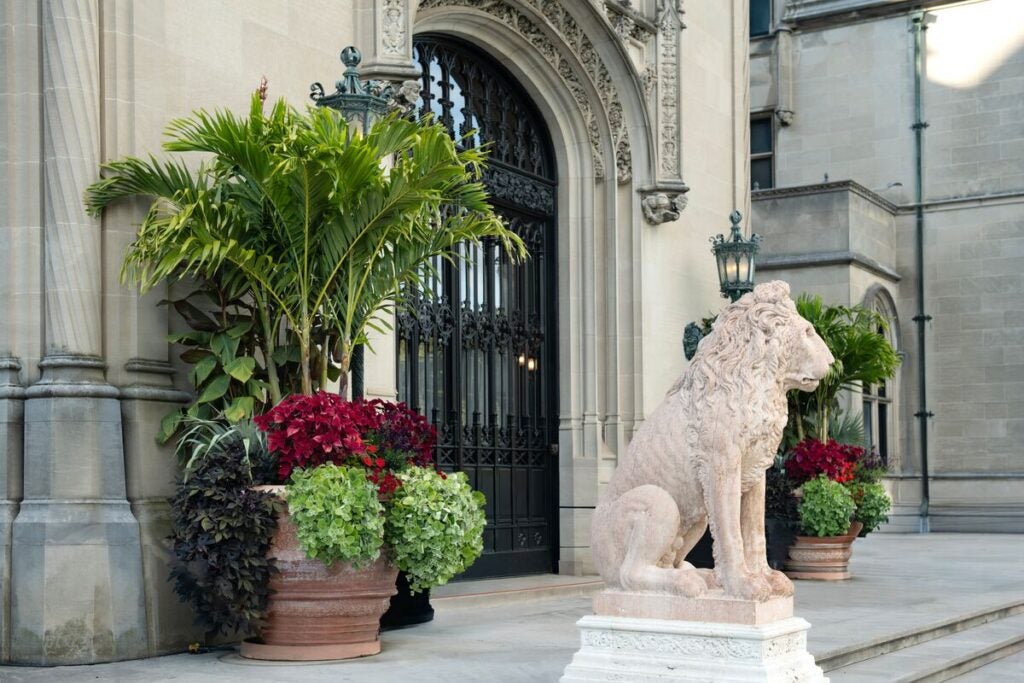
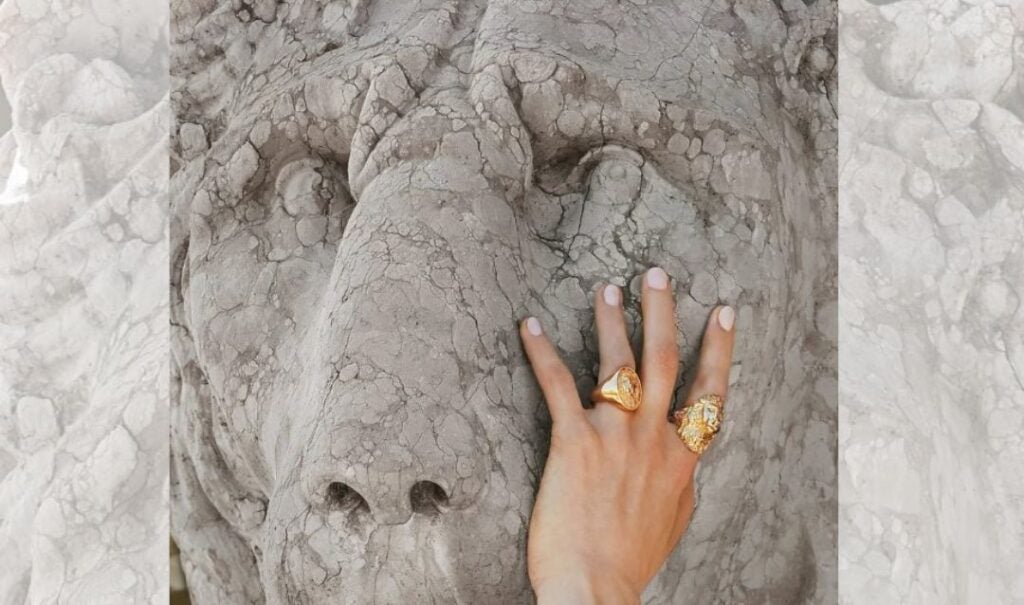
Commodore Collection: Inspired by the bold spirit of Cornelius Vanderbilt, George Vanderbilt’s grandfather, these pieces reflect the strength and regal elegance of the iconic marble lions in front of Biltmore House.
Avermore Heirlooms Collection: Inspired by the expressive tastes of George and Edith Vanderbilt, this collection draws from the colors and architectural elements of Biltmore House to offer distinctive pieces brimming with artistry and meaning.
The iconic marble lions guarding Biltmore House are the “face” of Avermore Jewelry’s Commodore Collection.
Seek the Avermore spirit for yourself with breathtaking displays on the estate at our Traditions and Marble Lion shops and online, and you’ll see what jewelry was always meant to be: timeless treasures, each with a narrative waiting to be discovered, embraced, and shared.
Main image: 1920s-era photograph of Edith Vanderbilt in the Tapestry Gallery of Biltmore House.
Biltmore’s farm-to-table history has deep roots that were established long before the first guests arrived in 1895. By that time, the land was already being transformed—not just into manicured gardens and grounds, but into a working farm unlike any other.
For George Vanderbilt, the creation of Biltmore was about cultivating something lasting, something rooted. From stewarding thousands of acres of forest to raising livestock and harvesting vegetables, the estate’s early agricultural programs helped shape not only the daily life of the Vanderbilts but also the future of sustainable farming in America.
Today, our farm-to-table legacy continues to grow, nurtured by a commitment to quality, care, and the enduring belief that land, when well-loved, will give back for generations.
How our farm-to-table history began
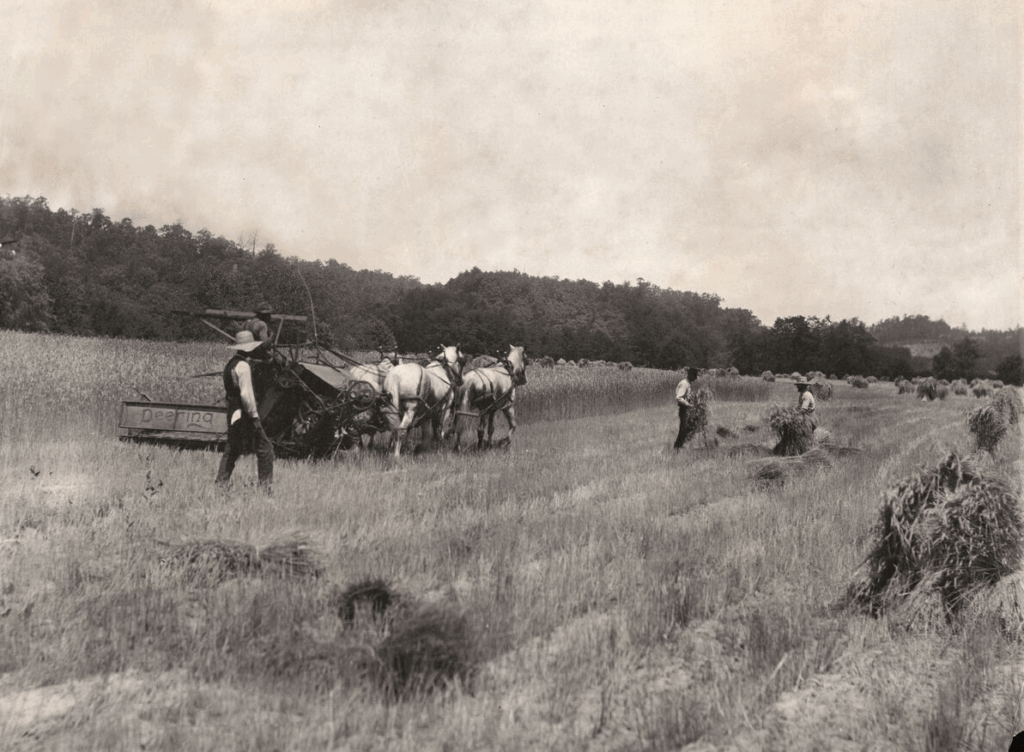
Archival photograph of estate workers harvesting hay at Biltmore.
In 1889, George Vanderbilt and famed landscape architect Frederick Law Olmsted stood at the edge of a vast, overworked site that was slated for transformation into Vanderbilt’s private retreat. Rather than simply tame the land into perfect gardens and grounds, they imagined something bolder: an estate that would restore the soil, support local families, and serve as a model of agricultural innovation.
Olmsted offered a straightforward plan: “Farm your river bottom chiefly to keep and fatten livestock with view to manure and make the rest a forest.”
With barns, stables, orchards, greenhouses, and thousands of acres under cultivation, Biltmore quickly became a living example of responsible land use. Its mission was threefold: to feed the estate, to generate income through the sale of farm products, and to serve as a model for best practices in agriculture.
Farm-to-table foods
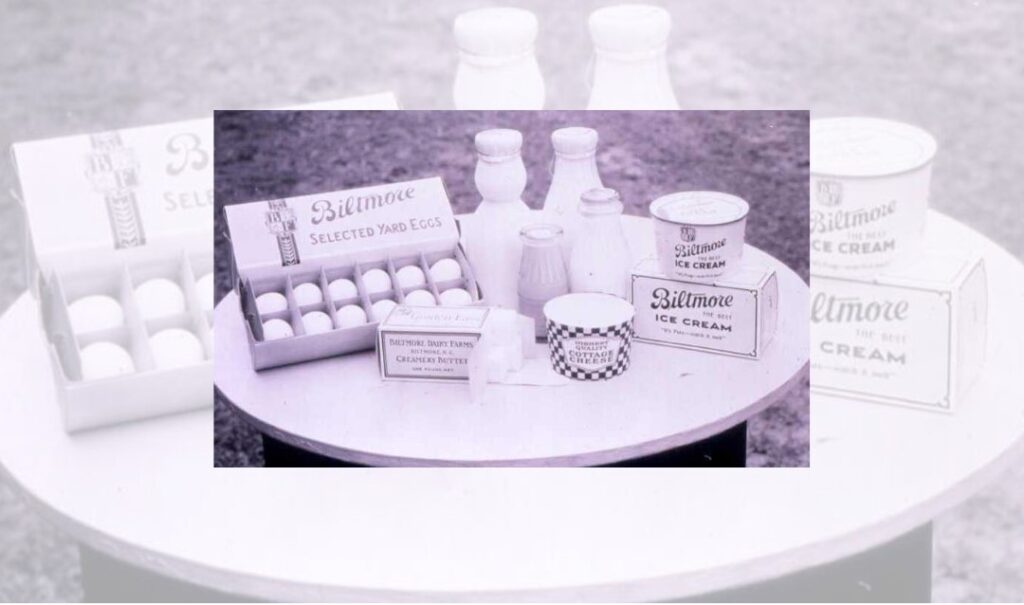
Biltmore Dairy and farm products including butter, milk, and eggs.
By the mid-1890s, Biltmore was producing everything from dairy and poultry products to vegetables, grains, and honey. Estate-grown produce was served at the family table and sold to the surrounding community at wholesale prices.
An 1897 advertisement in the Asheville Daily Citizen offered estate-grown cabbage and three varieties of sweet potatoes. Another article praised Vanderbilt’s use of “brains and science,” predicting Biltmore’s gardens would soon compete with the finest farms of the Northeast.
The gardens weren’t just functional. They were thoughtfully designed and carefully managed. The Walled Garden, originally intended for vegetables, was instead transformed into the flower-filled paths that welcome you today, while the estate’s most fertile bottomland near the Swannanoa River became the site of Biltmore’s new market garden, anchored by a charming farm cottage.
Market Gardener’s Cottage
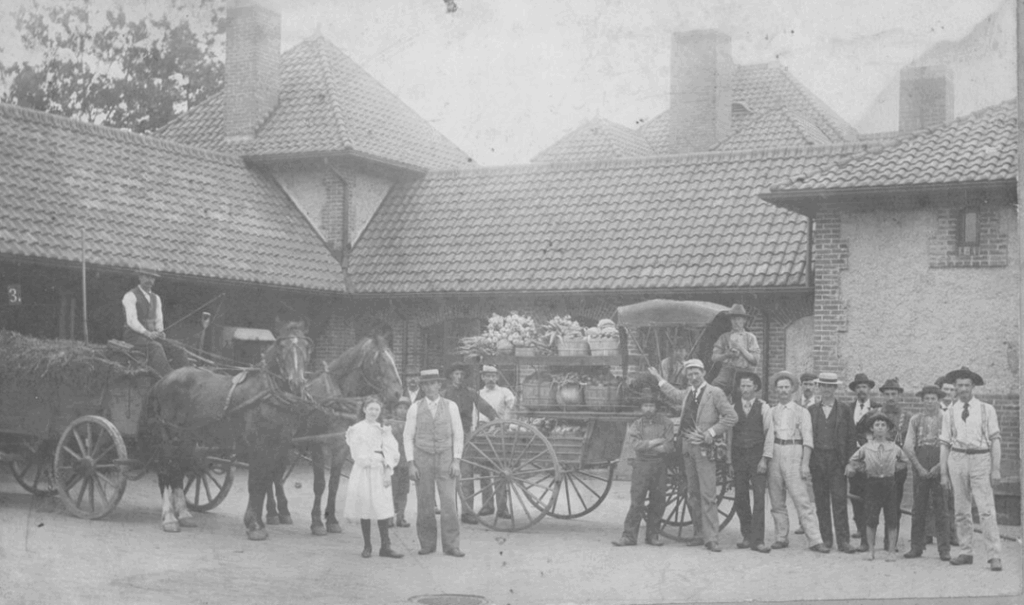
Agricultural workers and estate residents at the Market Gardener’s Cottage, photographed in front of an elaborate display of estate-raised produce.
The Market Gardener’s Cottage, designed by Richard Howland Hunt, son of Biltmore House architect Richard Morris Hunt, overlooked rows of crops and served as the residence of George Stevenson Arthur, Biltmore’s first market gardener, and his family.
From this cottage, Arthur managed planting schedules, tested new techniques, and worked tirelessly to ensure that Biltmore remained at the forefront of agricultural innovation. Over time, the surrounding courtyard became a hub for sorting and packing produce and welcoming local merchants to purchase estate-grown goods.
The Market Gardener’s Cottage was more than a residence. It was the nerve center of Biltmore’s early farming success and an important piece of our farm history.
Restoring a landmark of farm history
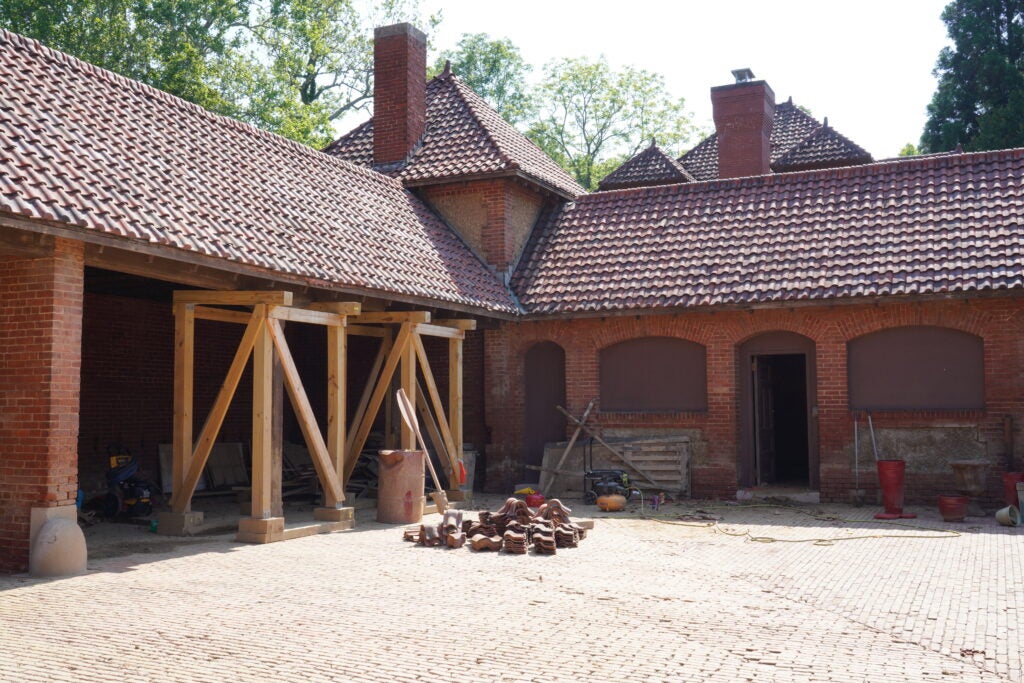
The Market Gardener’s Cottage required extensive cleanup and restoration after Tropical Storm Helene in September, 2024.
In September 2024, Tropical Storm Helene brought historic flooding to Western North Carolina. Among the hardest-hit areas of the estate was the Market Gardener’s Cottage. Positioned near the Swannanoa River, the cottage sustained extensive damage as floodwaters reached its second floor.
“Mud, debris, and trash were deposited in and on the cottage and throughout the courtyard,” said Vince Helton, Senior Director of Facility Operations.
As a contributing structure to Biltmore’s National Historic Landmark designation, the cottage represents a tangible link to the estate’s past. After the storm, Biltmore’s preservation experts quickly got to work—removing debris, cleaning and repairing drains, and stripping damaged interiors to prevent further decay.
Biltmore also partnered with a firm specializing in historic preservation to develop a long-term restoration plan that honors the building’s original design while introducing strategies to help mitigate future storm damage.
“Restoring the Market Gardener’s Cottage is about more than preservation,” Vince added. “It’s about protecting a vital chapter in Biltmore’s agricultural legacy.”
Biltmore® Grown: A farm-to-table legacy
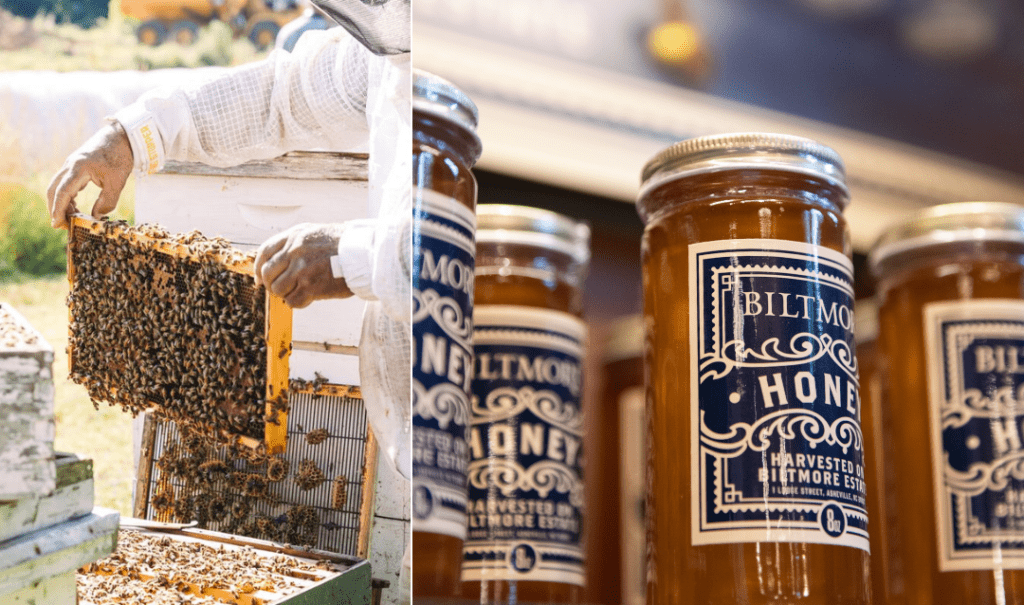
Biltmore Grown products such as cornmeal, grits, and honey are available in estate shops and online, while fresh and frozen cuts of meat are available exclusively at Gate House Shop at the estate’s main entrance.
More than a century after the first harvest, Biltmore’s farm-to-table philosophy remains central to daily life on the estate.
Across 2,500 acres of pasture and farmland, Black Angus cattle, Berkshire hogs, Dorper sheep, goats, and chickens are raised with care. In nearby hydroponic greenhouses, lettuces, herbs, and edible flowers flourish, grown in deep water cultures for vibrant flavor and peak freshness. At the apiary, estate honey is harvested by our fifth-generation beekeeper.
These fresh, seasonal ingredients find their way to estate restaurants every day, while a selection of Biltmore® Grownproducts is available at estate shops and online.
Savor farm-to-table flavor with Biltmore wines
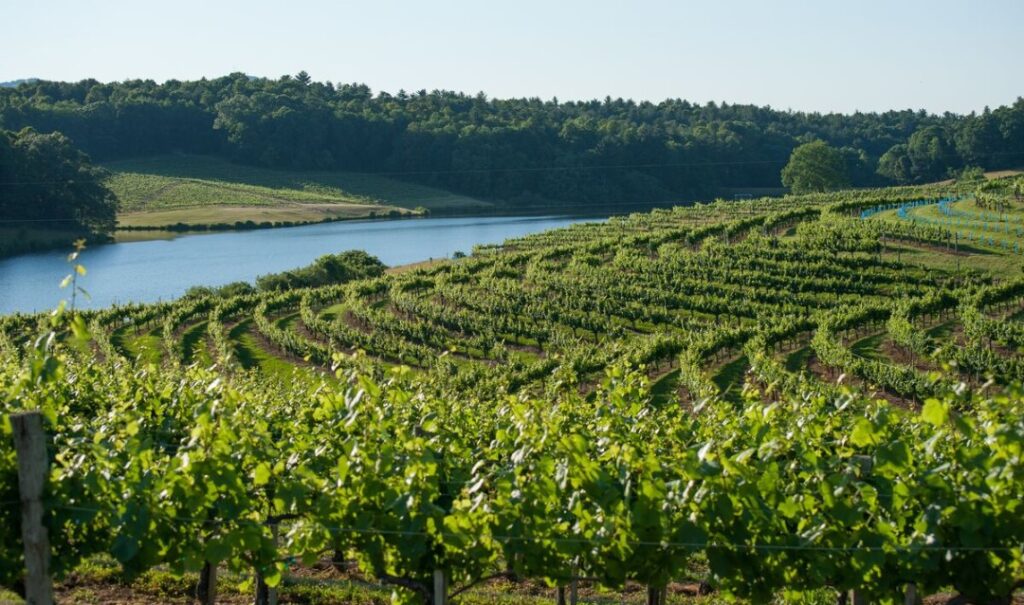
Biltmore’s estate vineyards overlook Long Valley Lake on the west side of the property.
In addition to the pastures and fields, Biltmore has a 50-acre vineyard on the west side of the estate. Varietals including Chardonnay, Cabernet Franc, Cabernet Sauvignon, and Merlot that can thrive in Western North Carolina are hand-harvested and transformed into our outstanding Biltmore® Reserve wines that represent the finest vintages created from our North Carolina estate-grown grapes.
“Whether we’re working in the vineyard or handcrafting Biltmore wines at Biltmore Estate Winery, we’re always thinking about how to tell the estate’s farm-to-table story,” said Sharon Fenchak, Executive Winemaker. “It’s not just about what’s in the glass—it’s about where it came from, who cared for it, and how it connects to the land.”
Our farm-to-table story continues
Our farm-to-table story continues today with innovations like vegetables, herbs, and flowers grown in hydroponic greenhouses.
Biltmore’s agricultural journey began with a belief in the stewardship of land, people, and heritage. Today, that philosophy lives on in every field turned, every vine pruned, and every sip and bite savored in our estate restaurants or purchased online.
Whether you’re exploring the gardens, walking the grounds where crops once grew, enjoying farm-to-table foods at one of our restaurants, or staying overnight in one of our private and historic Cottages on Biltmore Estate™, you are part of the story.
Biltmore is more than a working farm or a historic house; it is a place where legacy is not only preserved but continually planted.
Farm to Table Tour and Taste
Our Farm to Table Tour and Taste offers a look at our farm history and today’s agricultural operations.
Come experience the flavors, stories, and soil that make Biltmore a place unlike any other. Make the most of your visit with our Farm to Table Tour and Taste, which offers a fascinating glimpse into our farming history through a tour of the estate’s rarely seen west side agricultural operations, plus an opportunity to savor our farm-fresh, estate-grown artisanal fare and handcrafted wines.
John Singer Sargent was the premier portraitist of the Gilded Age elite, and you can see six of his notable works on permanent display inside Biltmore House. Five portraits were directly commissioned by George Vanderbilt; the sixth was a gift from one of Vanderbilt’s cousins.
Discover how Sargent’s skill as a portrait artist lay not only in capturing a likeness but also in conveying the essence of an era characterized by immense wealth and rapid social change.
Photograph of John Singer Sargent by James E. Purdy, 1903.
This cosmopolitan figure of the late 19th and early 20th centuries appealed to the increasing elite of both Europe and America, blending traditional techniques with a modern perspective that distinguished his portraits from those of his contemporaries. This year marks the one hundredth anniversary of his death. His obituary referred to him as the “greatest contemporary portrait painter”, a title that still resonates today.
Formative years in Paris
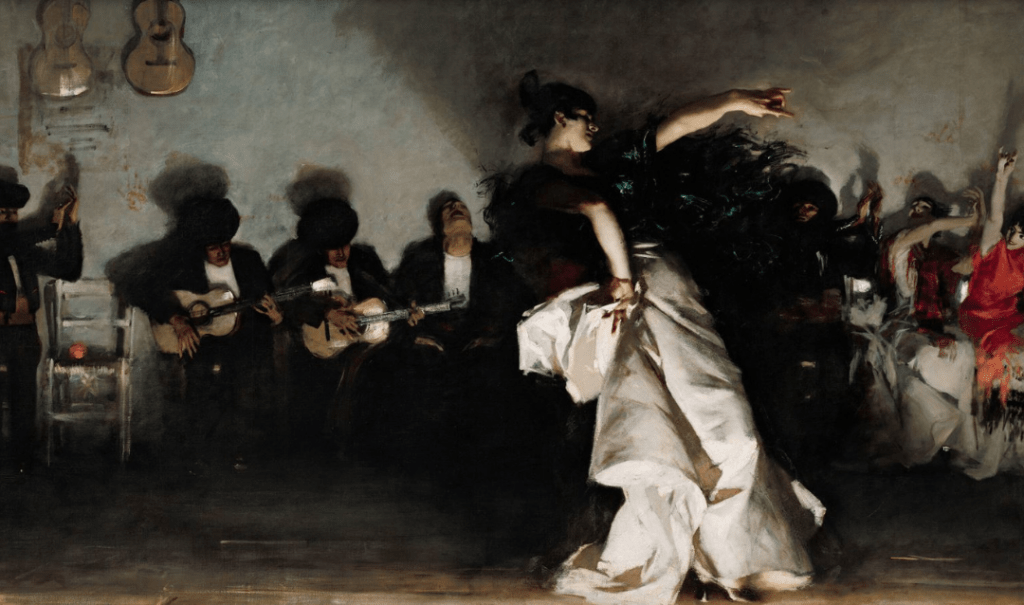
“El Jaleo” by John Singer Sargent, 1882 (Isabella Stewart Gardner Museum, Boston, MA).
Born to American parents in Florence, Italy, John Singer Sargent spent much of his life living in various countries throughout Europe.
In 1874, at the formative age of 18, he moved to Paris, marking a pivotal point in his career. During the late 19th century, Paris was regarded as the world’s most beautiful and dynamic city, attracting painters, sculptors, and intellectuals from around the globe who sought artistic growth and a vibrant cultural environment.
The city offered a stimulating environment filled with galleries and salons where artists could exhibit their works and interact with fellow artists and critics. Noting the influx of artists to the city, in an essay by Henry James on Sargent in 1887, James noted, “when today we look for ‘American art’ we find it mainly in Paris” (Harper’s Magazine, October 1887).
Sargent embraced the city’s cultural life and frequented Paris’s museums, exploring the avant-garde paintings of the Impressionists. He studied under the renowned portrait artist Carolus-Duran and enrolled in the École des Beaux-Arts. During these formative years, he demonstrated an early talent for portraiture, capturing the personality and presence of his sitters through his brushstrokes and engaging compositions, which led to him becoming one of the most sought-after portrait artists of the 19th century.
Upon his arrival in Paris, John Singer Sargent’s primary goal was to exhibit at the Paris Salon, an annual art exhibition in France that served as the primary event for artists to gain recognition and approval, and where critics played a crucial role in shaping public opinion. Exhibiting at the Salon could make or break an artist’s reputation, depending on the final verdict of critics. Their opinions set the standard for what was considered “good” or “high” art throughout Europe.
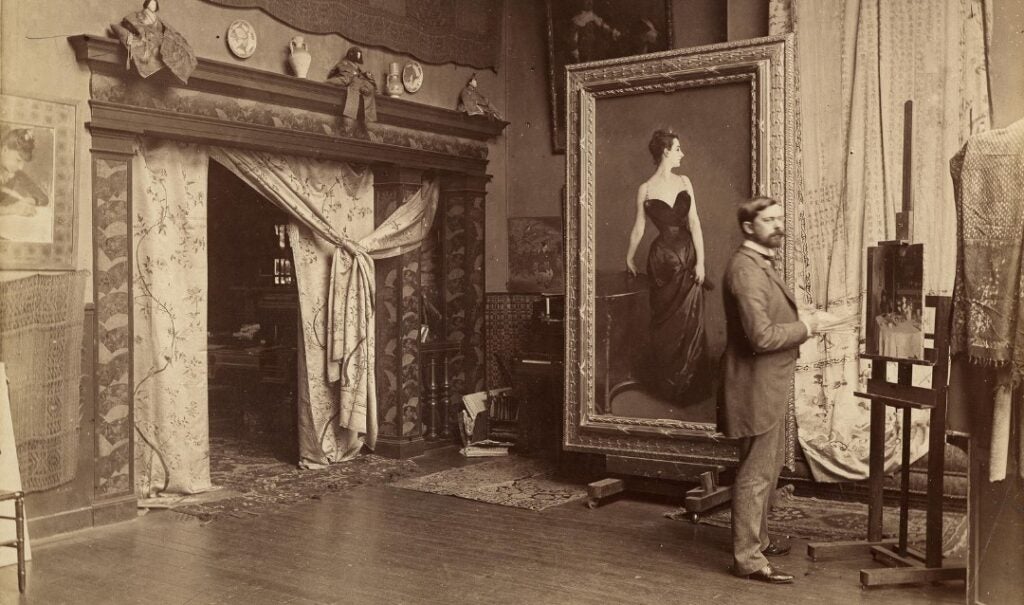
John Singer Sargent in his Paris studio with the portrait of “Madame X”, ca. 1885 (photograph by Adolphe Giraudon).
Sargent’s success at the Paris Salon in 1882 with El Jaleo led him to become one of the most talked-about painters in Paris. After several years of success at the Salon, his exhibition of Madame X in 1884 received negative criticism for the painting’s suggestive pose, the paleness of her skin, and the provocative neckline of her dress. Its unconventional style challenged the more traditional views of the time. Ultimately, the controversy led Sargent to leave Paris and move to London, taking James McNeill Whistler’s old studio on Tite Street.
Sargent’s arrival in America
Portrait of Isabella Stewart Gardner by John Singer Sargent, 1888 (Isabella Stewart Gardner Museum, Boston, MA).
John Singer Sargent made several trips to the United States during his career, but his first successful visit as a portrait artist came in October 1887. His work was less successful in London than in Paris, and he was seeking to expand his portraiture and build a reputation in the United States. He arrived in Boston and quickly received commissions from prominent members of American society. Pivotal to his success was an article written by author Henry James in Harper’s Weekly, which introduced the artist’s work to the American public and paved the way for his commissions.
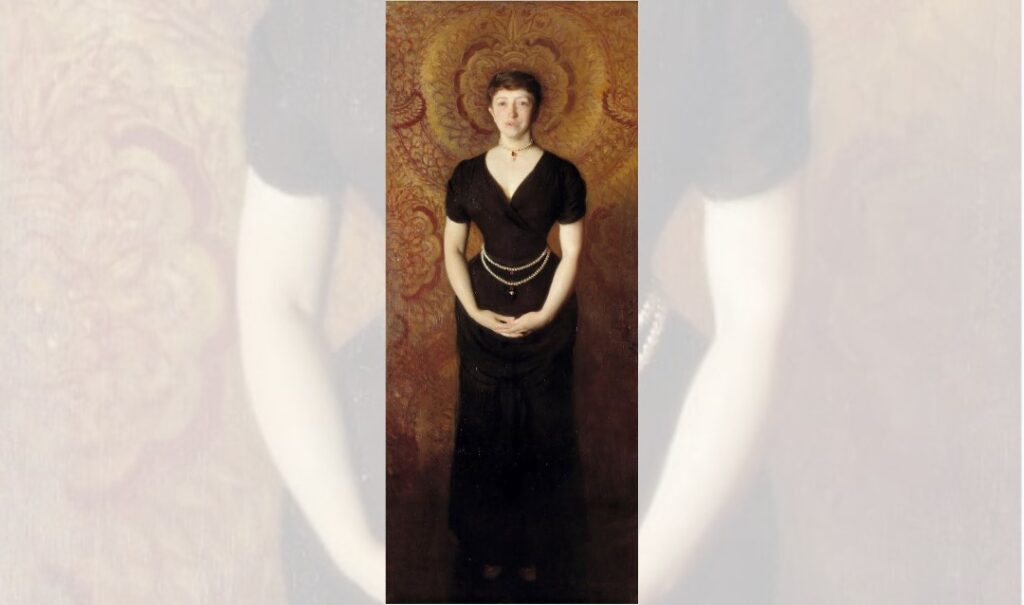
The late 1800s marked a period of unprecedented economic growth and a widening gap between social classes in the United States, characterized by a growing class of wealthy industrialists and financiers who rivaled the lifestyles of the European aristocracy. Into this ripe environment for a portrait artist, Sargent arrived in Boston, eager to immerse himself and gain the patronage of the city’s upper crust. He had established a network of Boston friends while in Paris, and his arrival in Boston was met with the fuss and fanfare of a superstar along with a long list of commissions. His initial portraits included those of Isabella Stewart Gardner (1888) and Mrs. Charles E. Inches (1887), both members of Boston’s elite.
George Vanderbilt’s patronage
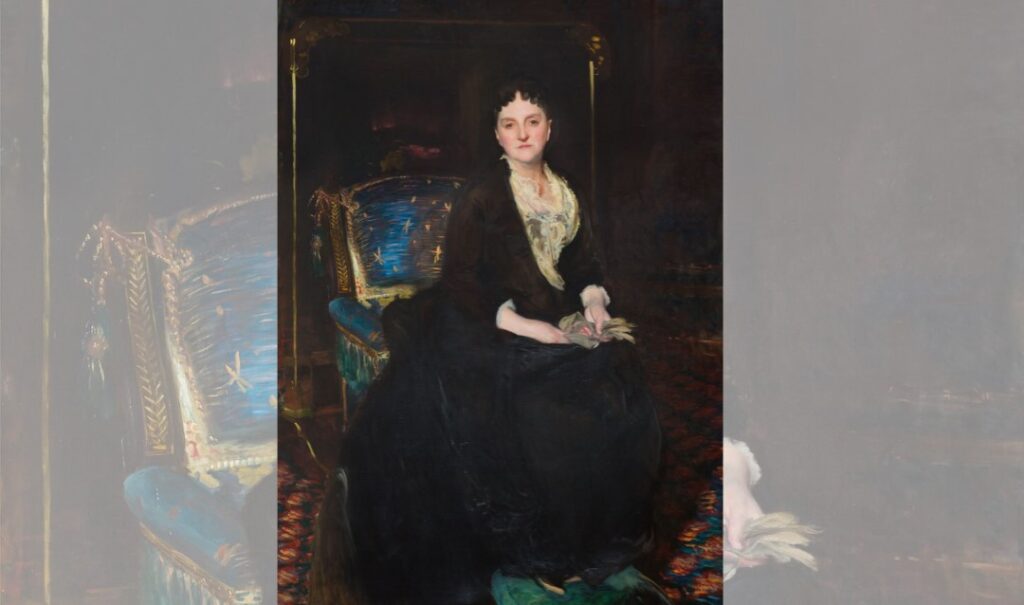
“Mrs. William H. Vanderbilt” by John Singer Sargent, 1888.
Within a few months of Sargent’s arrival, George Vanderbilt commissioned him to paint his mother, Maria Louisa Vanderbilt. Letters exchanged between Sargent and George Vanderbilt regarding the commission of Mrs. Vanderbilt began in November 1887. The following year, Maria Louisa sat for Sargent in her new home at 640 Fifth Avenue. The artist requested that she wear a black dress “that Mrs. Vanderbilt already owns” (Sargent to Vanderbilt, November 22, 1887, The Biltmore Company Archives).
She holds a pair of gloves while seated in an armchair, uniquely designed by the notable Herter Brothers–the same firm that designed and decorated the interiors of the 640 Fifth Avenue home. Although the portrait was not exhibited, critics recognized his ability to capture his sitter through masterful composition and bravura brushwork, deeming it “one of Mr. Sargent’s greatest successes in portraiture.” (The Critic, March 17, 1888)
Sargent’s association with the Vanderbilts and other wealthy families propelled him into the upper echelons of American society, solidifying his reputation as a sought-after portraitist among the elite. The commission from George Vanderbilt to paint his mother’s portrait demonstrated the Vanderbilt family’s recognition of John Singer Sargent’s artistic talent and launched a series of several more commissioned portraits.
Vanderbilt’s collection of John Singer Sargent portraits grows
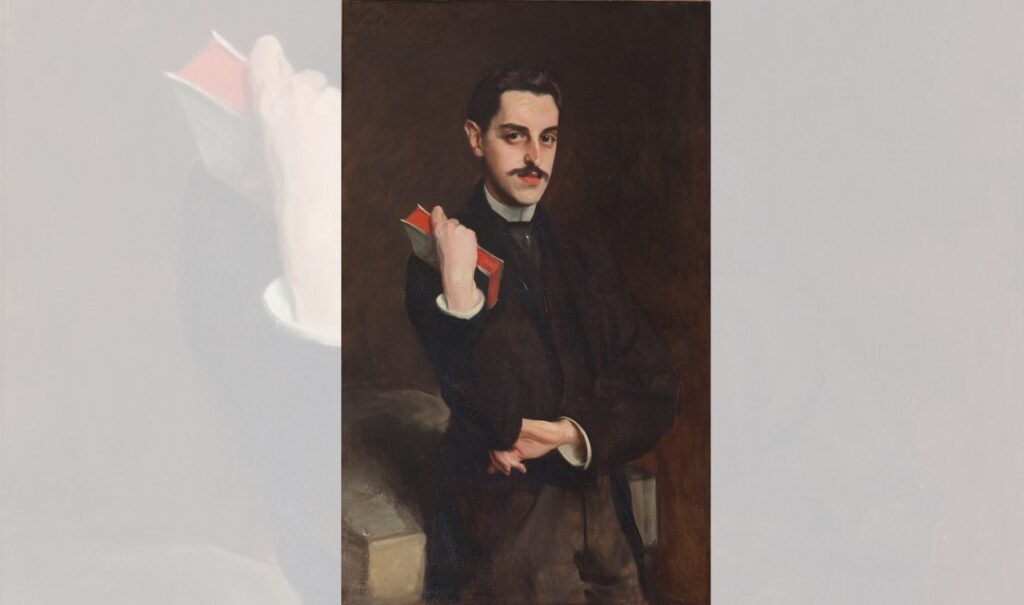
“George Washington Vanderbilt” by John Singer Sargent, 1890
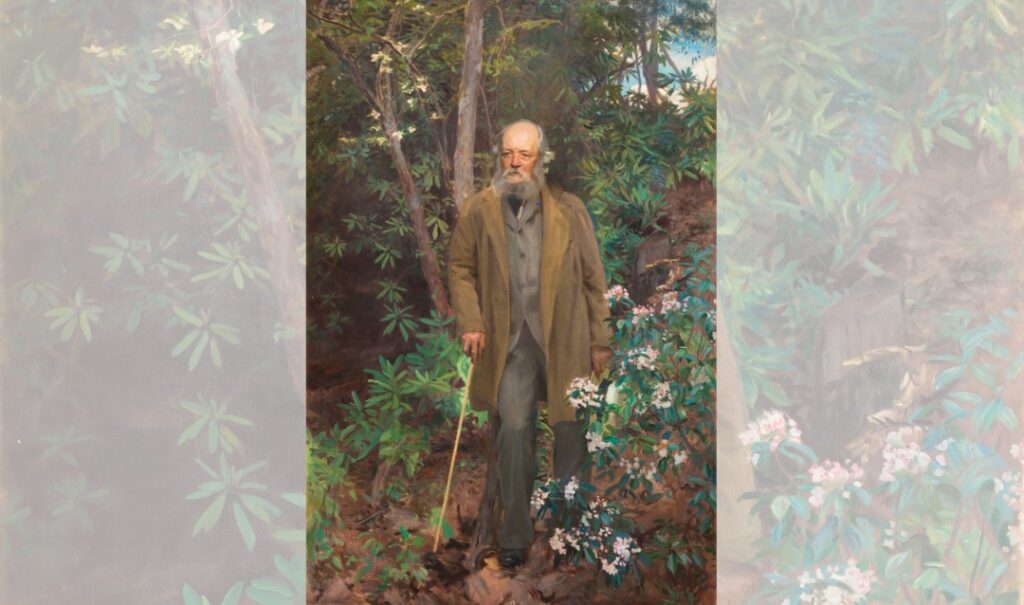
“Frederick Law Olmsted” by John Singer Sargent, 1895.
“Richard Morris Hunt” by John Singer Sargent, 1895.
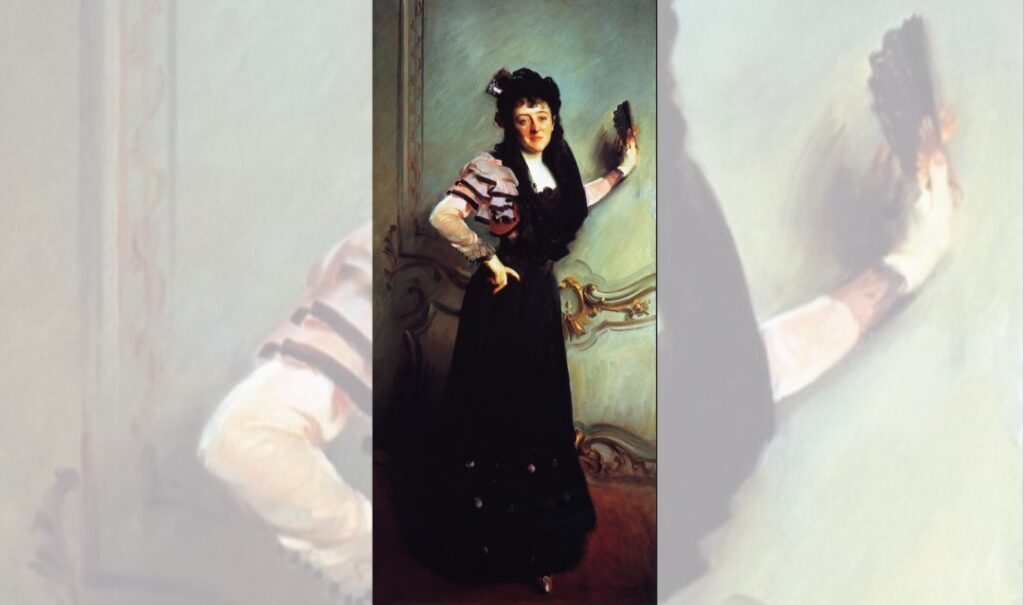
“Mrs. Walter Bacon” by John Singer Sargent, 1886.
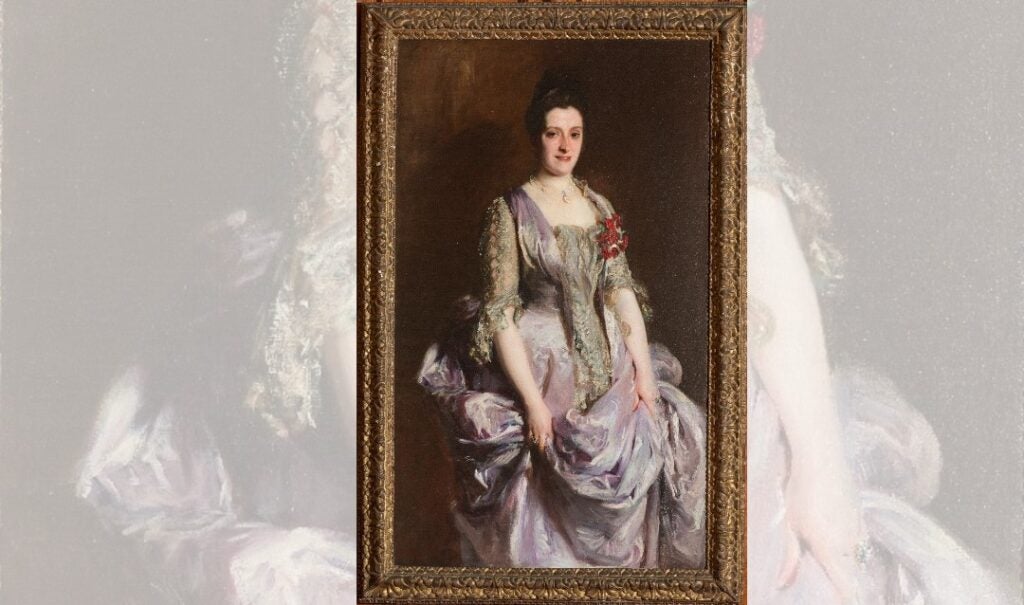
“Mrs. Benjamin Kissam” by John Singer Sargent, 1888.
During the next nine years, George Vanderbilt commissioned four additional portraits by Sargent: himself, Biltmore’s architect and landscape architect, and his cousin. In addition, he was gifted a sixth portrait from another cousin.
George Washington Vanderbilt – Commissioned in 1890, the portrait was presumably created in Sargent’s New York studio. The artist’s influence from Velazquez is evident in the portrait through his color palette, thickness of brushwork, and overall simplicity. The choice of a red-edged book as a prop in Vanderbilt’s hand stands out in the portrait since Vanderbilt was noted in society for being “bookish” and a recognized bibliophile and collector of books. The portrait fittingly hangs over the door to the Library in the Tapestry Gallery.
Frederick Law Olmsted andRichard Morris Hunt – George Vanderbilt commissioned Sargent in 1895 to paint the portraits of Biltmore’s architect and landscape architect as a tribute to their contributions to the estate. Hunt, nearing the end of his life, posed outside the grand staircase but frequently came inside to warm himself by the fireplace. Olmsted stood in the natural environment of Western North Carolina, surrounded by laurels and rhododendron. As he became weary and anxious to return to work, his son, Frederick Jr., took his place in a room inside Biltmore House, wearing his father’s clothing. Today, both of the portraits hang in Second Floor Living Hall.
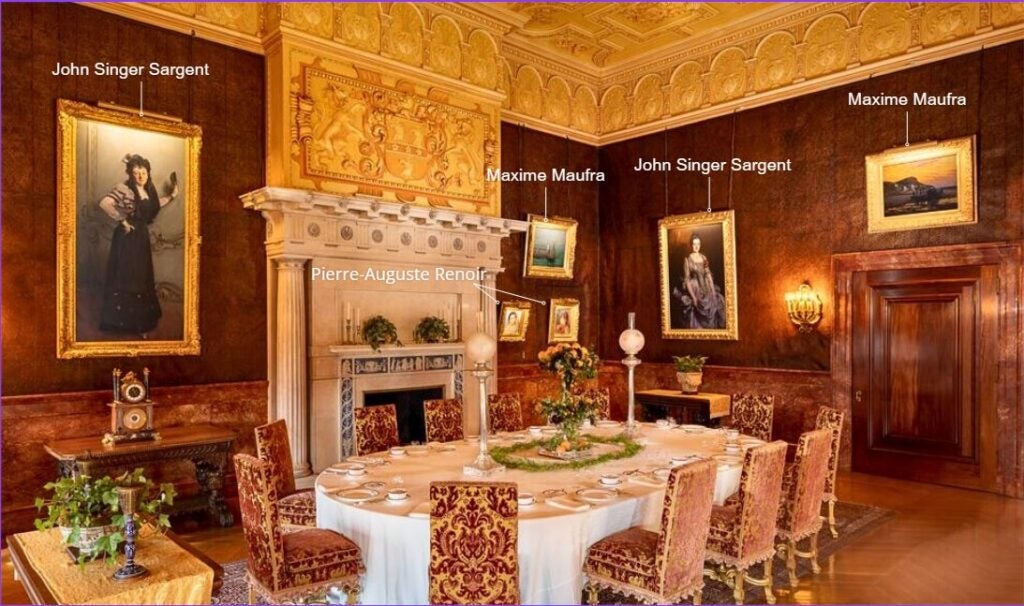
Mrs. Walter Bacon(née Virginia Purdy Barker) – Vanderbilt commissioned this portrait of his cousin in 1896. Virginia and George were close and enjoyed travelling together. Sargent recently left Biltmore, and Mrs. Bacon posed in Sargent’s London studio. She wears a black Spanish dress, reflecting the influence of Spanish art and culture in many of Sargent’s works, as well as the growing fascination with Spain and Hispanic culture in the United States. In an effort to find the perfect frame for the portrait, it was almost a year before the painting was shipped to Biltmore in a newly made frame. It now hangs in the Breakfast Room.
The only Sargent not commissioned by Vanderbilt, which rivals the portrait of Maria Louisa in color and sumptuous texture, is Mrs. Benjamin Kissam(maternal aunt to George Vanderbilt). Sargent’s masterful treatment of fabrics, such as the soft folds of silk in Mrs. Kissam’s dress, exemplifies the luxurious quality that appealed to his patrons. Painted in 1888, the portrait was given to George by the sitter’s daughter, Ethel Kissam Train, after her mother’s death in 1894. This portrait also hangs in the Breakfast Room.
Capturing the essence of an era
Sargent’s portraits of Mrs. Walter Bacon (left) and Mrs. Benjamin Kissam (right) are displayed in the Breakfast Room of Biltmore House along with paintings by other notable artists, including Pierre-Auguste Renoir and Maxime Maufra.
By the time Sargent moved away from commissioned portraiture in 1907, he had established himself as the foremost portraitist of the period, renowned for his technical mastery and his ability to capture not only the likeness but also the personality of the era’s elite. His portraits remain a captivating visual record of this opulent period, reflecting the ambition and vibrancy of a society undergoing rapid transformation.
His work continues to inspire exhibitions worldwide. The Musée d’Orsay and The Metropolitan Museum of Art organized Sargent and Paris at The Metropolitan Museum of Art in New York in 2025, which focused on Sargent’s early years.
See Sargent on display at Biltmore
Biltmore’s collection of six portraits completes an era of John Singer Sargent’s work that complements the paintings featured in The Met’s show, allowing you to see a different set of works that paint Sargent in a new light. Plan your visit now to see our private collection of Sargent’s portraits on permanent display inside Biltmore House.
Tutankhamun: His Tomb and His Treasures ended March 1, 2026. Please enjoy this archived content.
When you visit Tutankhamun: His Tomb and His Treasures at Biltmore Estate, you might wonder what Biltmore has to do with Egypt.At first glance, ancient Egypt and Gilded Age America may seem worlds apart—but dig a little deeper into our history, and surprising connections to discovering the tomb of King Tut start to emerge.
This story began with a discovery in Biltmore’s archives: a carefully curated album of photographs taken by John Francis Amherst Cecil (1890–1954), husband of Cornelia Vanderbilt and longtime steward of Biltmore House. These photographs, captured during Cecil’s diplomatic service in Cairo from 1914 to 1919, offer a personal window into a pivotal place and time where history was being made.
They reveal details of a career spent among ancient wonders, a family friendship with one of archaeology’s most iconic figures, and even a brush with one of the greatest archaeological stories of the 20th century—the discovery of King Tut’s tomb.
Associate Curator, Meghan Forest-Singer, shares a closer look at the connections between King Tut and Biltmore.
Family connections
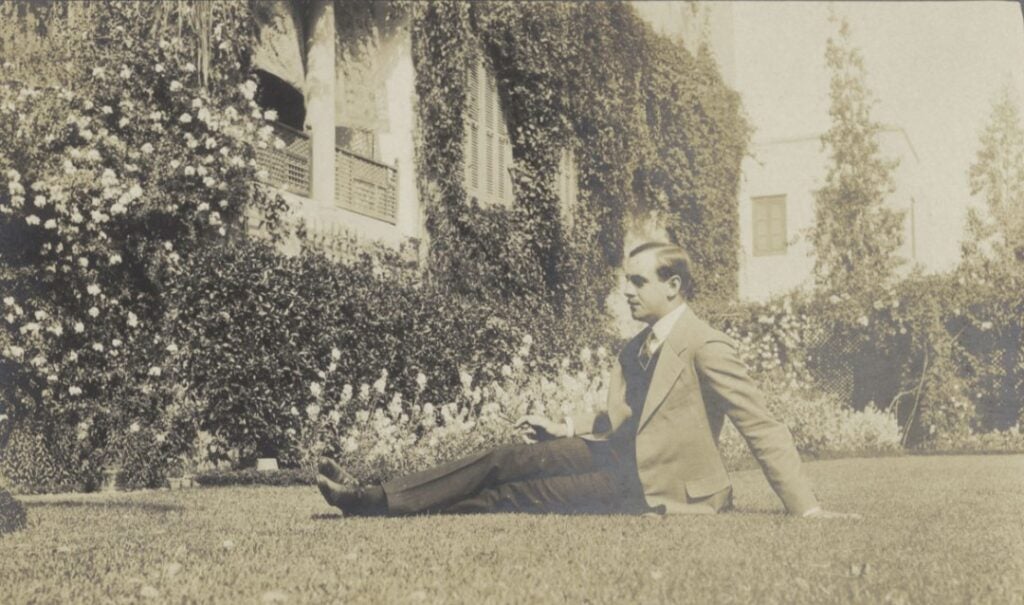
John Cecil in the gardens of the British Embassy in Cairo, ca. 1917.
John Cecil’s link to ancient Egypt began long before his time in Cairo. His mother, Lady Mary Rothes Margaret Cecil, grew up at Didlington Hall in Swaffham, England. Didlington Hall was known for its remarkable collection of Egyptian antiquities assembled by her father, William Tyssen-Amherst. Didlington’s ancient objects did not just leave a lasting impression on “May”, as her family called her, but also on a young boy named Howard Carter, who visited often when his father worked on the estate. Carter’s fascination with Egypt coupled with his artistic talent caught the Amherst family’s attention, and they eventually funded his first position in Egypt when Carter was just 17.
May’s interest in Egypt wasn’t limited to collecting artifacts, though; she actively coordinated their discovery. Between 1901 and 1904, she led two seasons of excavations near Aswan in Egypt, working under Howard Carter’s supervision during his time as Inspector of Monuments for Upper Egypt. These were not casual visits but serious archaeological endeavors, and they left a strong impression on her four sons.
John Cecil, the third of those sons, inherited his mother’s curiosity and enterprising spirit. While his brothers all pursued military careers, John studied at Eton and Oxford before entering the diplomatic service. His first foreign post came in 1914, when he was appointed Undersecretary at the British Embassy in Cairo. By the time he left Egypt in 1919, he had risen to the role of Second Secretary, gaining both rank and experience during a critical moment in world history and in the unfolding story of Egyptian archaeology.
Life along the Nile
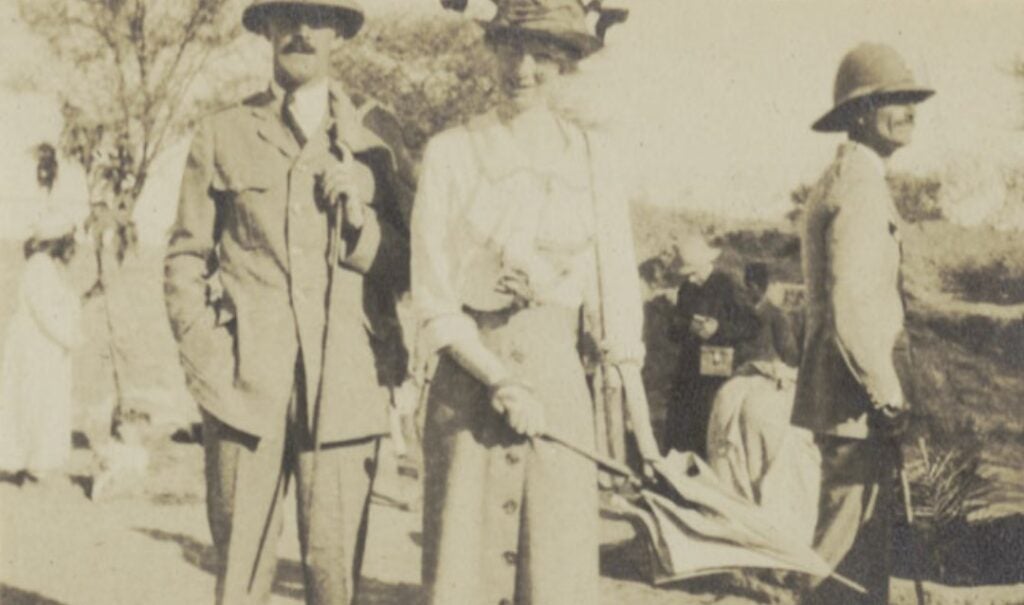
John Cecil, left, readies for a day of exploring with unidentified friends, colleagues, and guides, ca. 1917.
Despite the demands of his position, John Cecil found time to explore the rich cultural landscape of Egypt. His photo album tells the story of a young man fully engaged with the interesting new world around him. Its pages document parades, golf outings, and Nile cruises with colleagues and friends, along with time spent enjoying the Embassy’s gardens and interacting with locals. But perhaps the most compelling are the images he captures of Egypt’s ancient monuments.
His lens captured moments of stillness, silliness, and awe from the Temple of Luxor, the Ramesseum, Karnak, and many other sites. Some of these visits appear to have been led by local guides. Others, however, suggest a front row seat to history in the making.
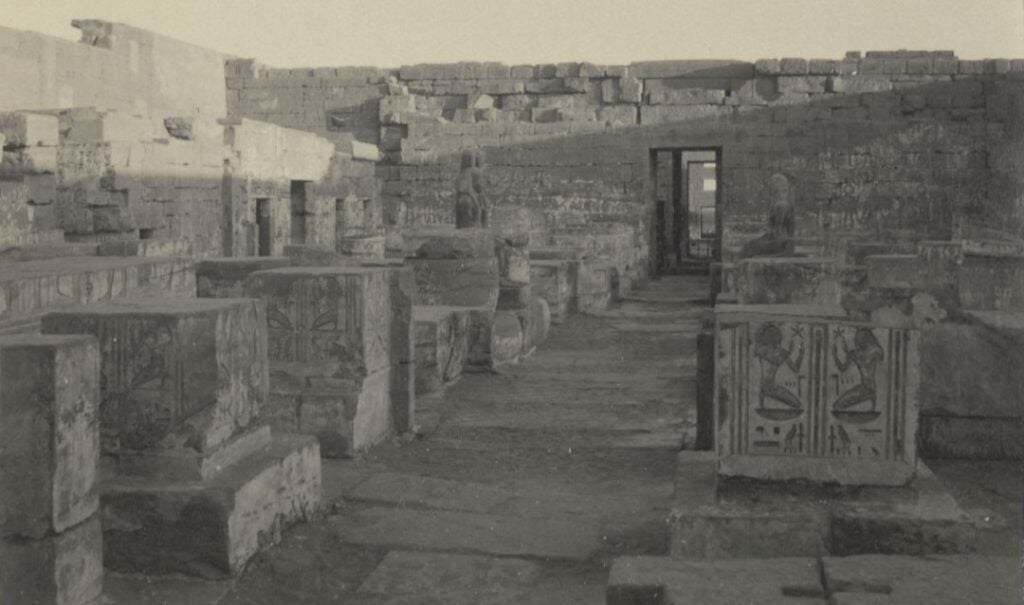
An interior view of the mortuary temple of Ramses III at Medinet Habu, late 1917.
At several archaeological sites in the Valley of the Kings, John Cecil appears to have been guided by none other than Howard Carter himself. Excavations in the Valley of the Kings halted in 1915 due to World War I, but, in 1917, Carter resumed searching for a “missing” pharaoh, working in partnership with George Herbert, Fifth Earl of Carnarvon. It was here, in this legendary setting, that Cecil witnessed history in the making.
The mystery of Site A
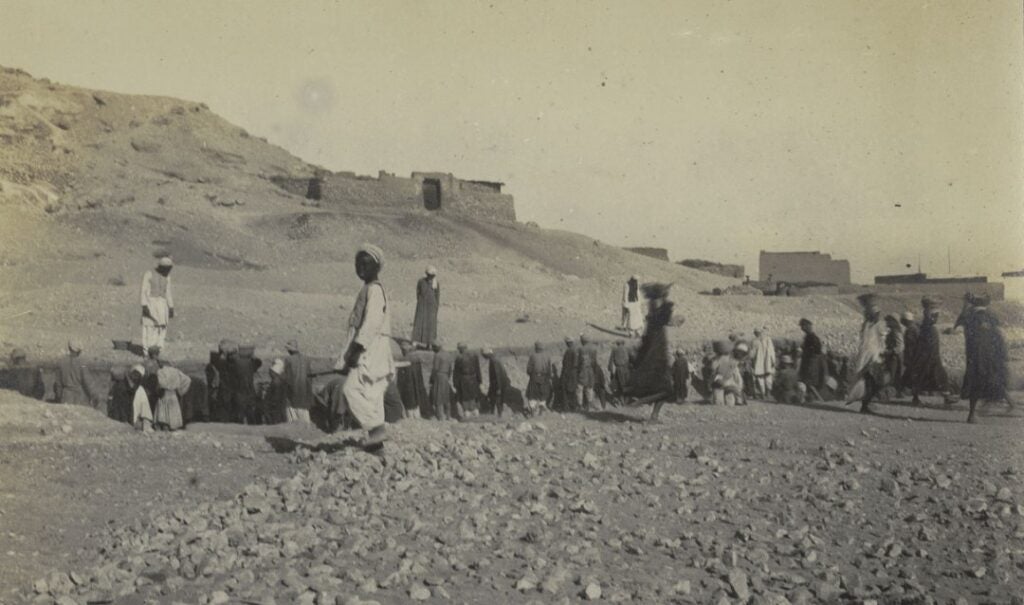
Qurna laborers excavate at Site A in the Valley of the Kings, late 1917.
At first glance, this photo seems like a typical early 20th century excavation scene. But Cecil labeled the back, simply, “Carnarvon digging.” A closer look reveals the landscape matches photographs taken at the same location by Carter’s official photographer, Harry Burton. With that comparison, Biltmore’s curators made an incredible discovery: this photograph captures early excavations of what Howard Carter called “Site A.”
Site A marked Carter’s renewed efforts to locate a lost pharaonic tomb. Fueled by fragmentary but tantalizing evidence at other Thebes sites, Carter felt that Site A was the most likely site of the lost tomb. And he was amazingly close: nestled between the tombs of Ramses I, Ramses II, and Merneptah, Site A lies less than a hundred feet away from what would later be revealed as the tomb of Tutankhamun, better known to the modern world as King Tut.
Carter began excavating Site A in December of 1917 and continued into February of 1918, dating these photos to a narrower span of time than previously realized. Cecil visited the site in the early days, before tracks were laid for a rail system to remove debris. Instead, laborers from nearby Qurna moved debris by hand in baskets balanced on their heads. This photo lets us see the effort, scale, and intensity of the dig, while also giving a sense of the quiet anticipation and excitement that led Cecil to snap a photograph.
Though Site A didn’t yield a major discovery, it revealed artifacts that hinted at a story hidden below the surface. When excavation resumed the next season, Carter dug test trenches just across the central path of the Valley. Although it took a few more seasons of work, what Howard Carter found there took the world by storm: the lost tomb of King Tut.
The road to Tutankhamun
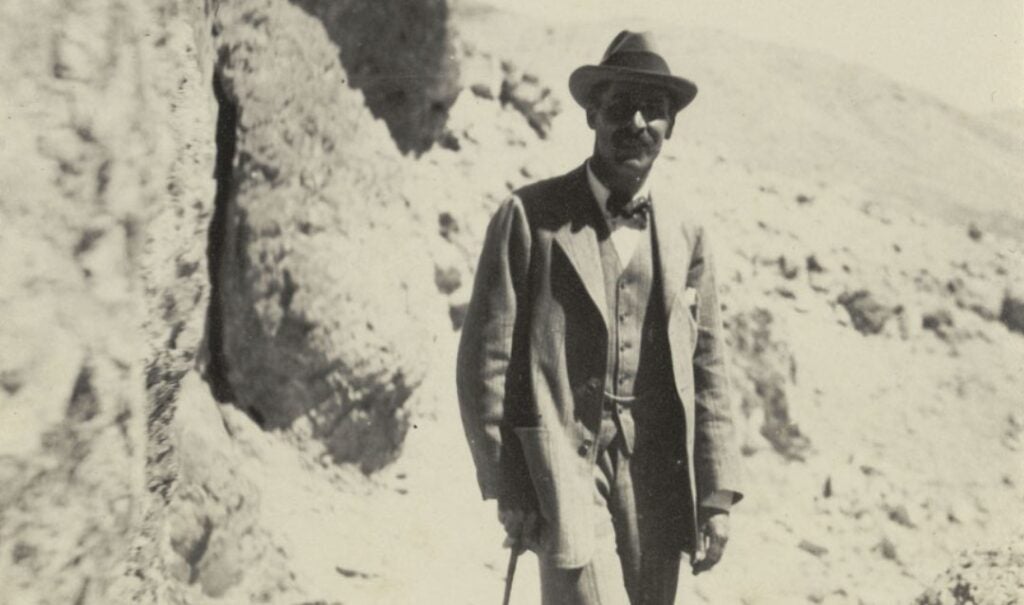
Howard Carter in the Valley of the Kings, 1917.
Four years later, Howard Carter broke through a sealed doorway and entered the tomb of Tutankhamun. This moment captured the world’s imagination and redefined modern archaeology. It continues to captivate people around the globe, even a century later. But behind that moment stood decades of preparation, patronage, and persistence, including the early support of the Amherst and Cecil families.
The Amherst family’s belief in Carter gave him the opportunity to begin his work in Egypt. Lady William Cecil’s own excavations helped establish key professional networks. And her son, John Cecil, bore witness to Howard Carter’s efforts when that work began paying off, capturing in photographic form the work that would one day lead to the greatest archeological discovery of the century.
While neither Lady Cecil nor John Cecil were directly involved in uncovering King Tut’s tomb, their role in the story is undeniable—and largely unknown until now.
Step into history at Biltmore
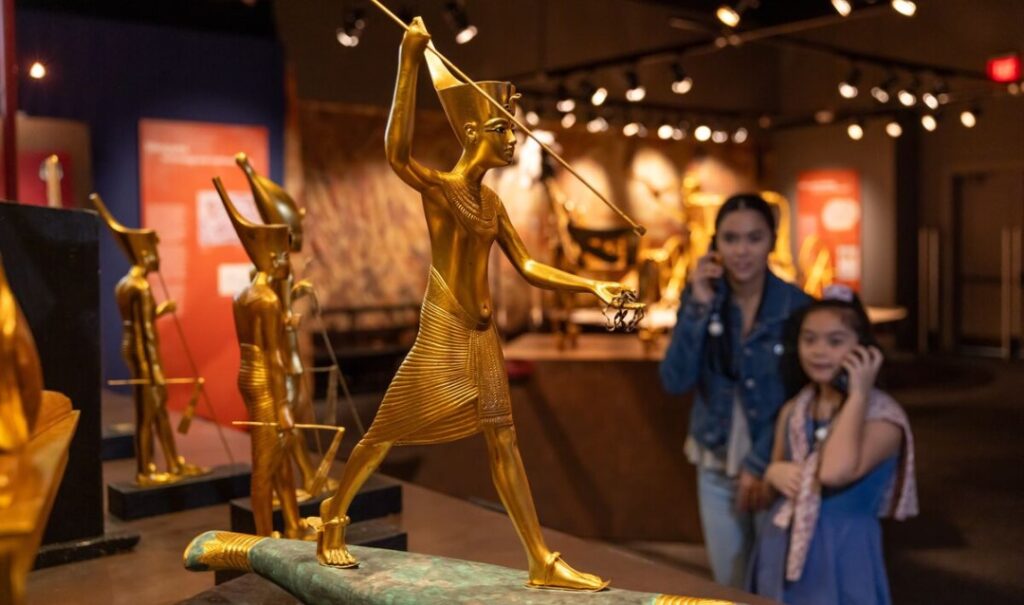
All ages enjoy exploring our “Tutankhamun: His Tomb and His Treasures” exhibition.
Plan now to experience Tutankhamun: His Tomb and His Treasures at Amherst at Deerpark® on the grounds of the estate. This immersive exhibition features breathtaking recreations of every artifact Carter found in the tomb of King Tut, arranged as they were originally discovered.
This exhibit also shines a spotlight on Biltmore’s own unexpected connection to ancient Egypt. From Lady William Cecil’s original watercolors to enlarged prints of photographs of John Cecil’s firsthand travels, you’ll discover how personal history and world heritage intersect in unforgettable ways.
Don’t miss your chance to walk in the footsteps of explorers, diplomats, and royalty, right here at Biltmore—dig into history and discover Biltmore’s fascinating historic connection to King Tut.
Featured image: John Cecil (second rider from right) with a group of unidentified embassy employees and guides on an archaeological tour at the Rammesseum, ca. 1919.
“New Discoveries” is a standing agenda item during our Museum Services team’s monthly meeting. Rarely does a month go by without someone bringing something new to the meeting. And when it’s something that provides the answer to a long lingering assumption, “it’s like Christmas morning,” says Lauren Henry, Biltmore’s Curator of Interpretation.
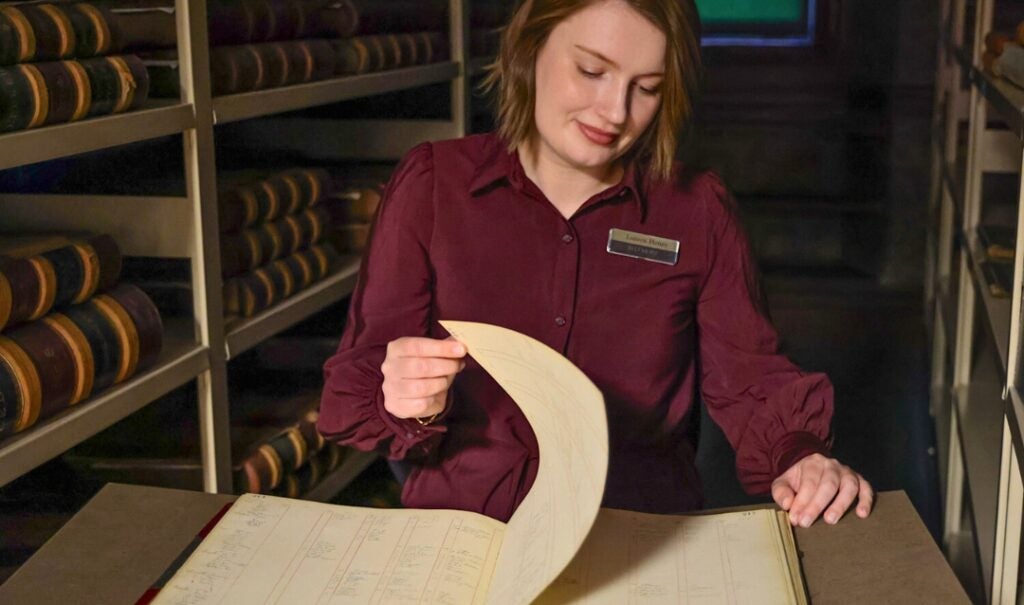
Christmas morning came in the spring of 2024 when Jill Hawkins and Caragh Koon, archivists on the team, presented a new finding at the April meeting.
Edith Vanderbilt’s legendary generosity during the holidays was exemplified by her thoughtful gift-giving to employees and their families.
A Legacy of Generosity: Edith’s Holiday Spirit
The stories about Edith’s generosity are legendary, especially during the holidays. She gave back to the community and showed her appreciation for her employees by selecting gifts for them and each of their children and giving out the gifts at the annual grand employee Christmas party, which is a tradition we continue to this day.
We’ve known that Edith kept notes on the gifts she gave to each person from year to year to avoid duplications, but it wasn’t until this discovery of this gifts ledger that we have tangible proof that she indeed kept meticulous track.
This historical treasure also reveals in charming detail more information about the gifts and their recipients.
“It’s exciting to see the specificity of the gifts, and that every member of the household (for those living on-property) received a gift, not just the employees and their children, but also what appears to be employees’ parents and maybe even in some cases their servants,” Lauren says.
More than 600 names are listed in Edith’s gifts ledger, which covers roughly the years 1909 to 1930.
Many of the names are familiar to Lauren and the team since their work puts them in consistent contact with the estate’s vast collection of archival material.
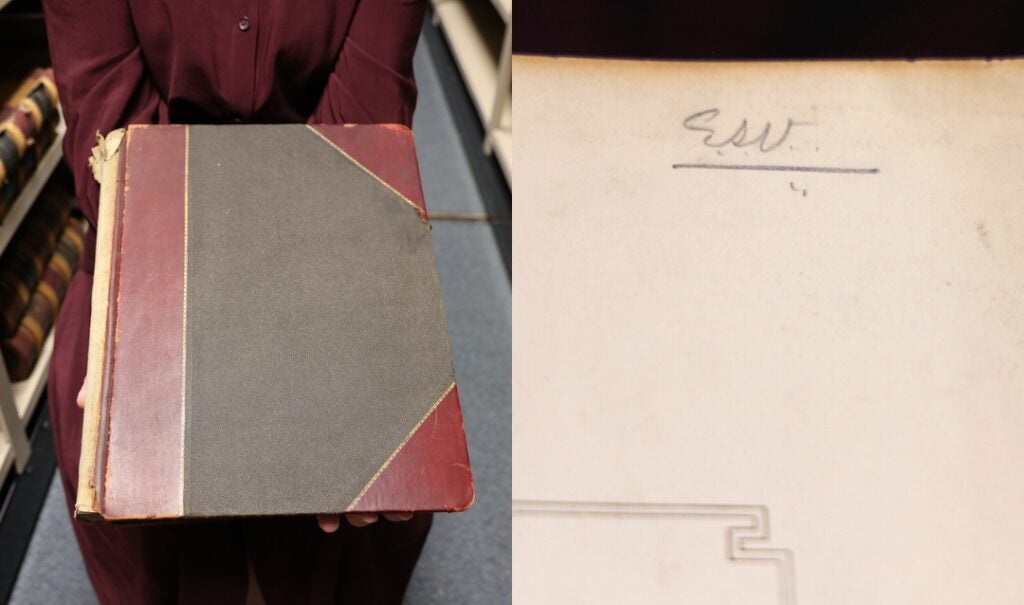
Despite its unassuming appearance, the well-worn Christmas gifts ledger, discovered among other accounting books, serves as a vital historical record showcasing Edith’s meticulous administrative skills.
Exploring Edith’s Historical Record
The Christmas ledger is typical-looking for its time and rather unassuming, yet between its covers exists an important historical record. The 12”x18” volume is covered in oxblood-colored leather binding, is slightly tattered, and missing a spine. Given its well-worn condition, it was surely a go-to source for Edith and her staff. Jill and Caragh happened to find it during an inventory project, blending in with other ledgers that served as cash books, accounts receivable records, and other accounting notes.
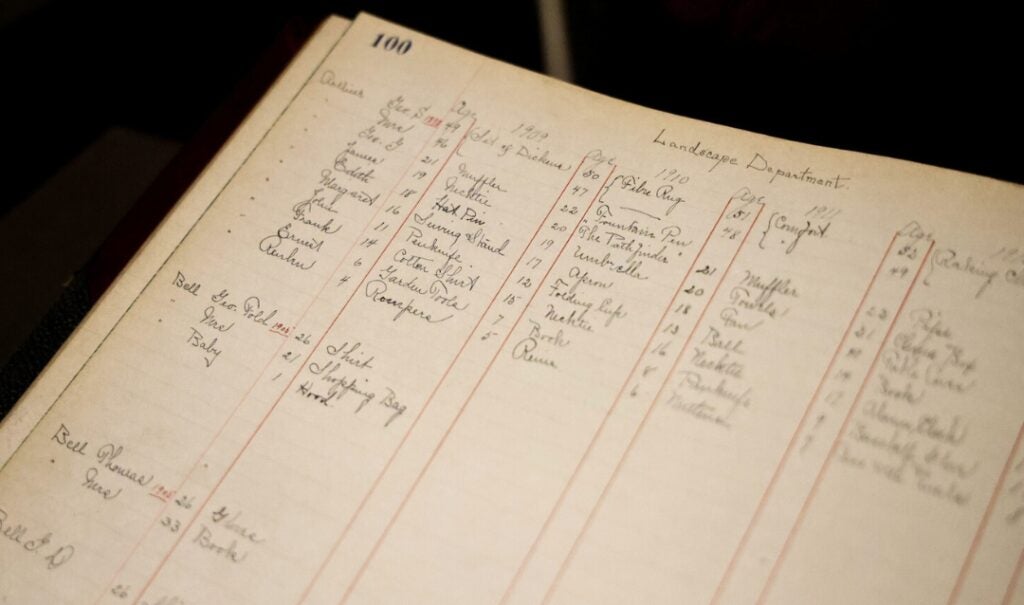
Edith’s administrative skills are demonstrated throughout. Interior pages look like precursors to Excel spreadsheets, each distinguished by bookkeeping columns filled with beautiful, swirly cursive handwriting. Lauren has confirmed that there are two sets of handwriting in the ledger – neither of which are Edith’s, but that of her secretaries. At the top of the first page, in the right-hand corner, “ESV” is written in pencil, Edith’s initials – in Edith’s handwriting.
The gifts ledger reveals a detailed account of recipients, tracking their ages and presents over the years, illustrating Edith’s deep understanding of the families she supported.
Growing Up in the Gifts Ledger
Down the left-hand column of each page is a list of names. To the right a column notates the person’s age, the year, and what gift they were given. As you move across the page to the right, you can track what that person received for several years in a row. Often, names are organized by family, with the parents’ names and ages first, then all the children and their ages listed below them.
“It’s great to see in the ledger who those items went to… How those things changed as they grew up,” Lauren says.
“You see a baby getting something like soap or diapers, or a toy or ball, and as they get older, they might get a hand mirror, perfume, makeup, a money safe. Here’s one for a boy named Neil. He was 7 months old, and he got socks, and then sandals, then a toy car, and then a ball at 3 years old.”
Edith often gave clothing or practical household items, like an umbrella or a bookcase, to the adults on her list. One year a family received a set of books by Charles Dickens.
“This helped her get to know the families better, by knowing how old they were and the kinds of things they liked,” Lauren says. It’s also a priceless record of Edith’s fondness for her employees and her attention to detail.
Edith’s gifts ledger documentation extends beyond presents to include employee addresses and occupations, offering a comprehensive view of life on the estate and humanizing the Vanderbilts and their staff.
Employee Details in Edith’s Documentation
Edith’s documentation also includes employee addresses, their occupations, and in some cases, the data is indexed based on the department in which employees worked, like Landscaping.
“This is one of the most complete documents we have for employees in this time period,” Lauren says. “It also further humanizes the Vanderbilts and the people who worked and lived on the estate.”
Details from Edith’s ledger provide the team with fresh and new insights into the era and support their ongoing research to understand what life was like during the time when the Vanderbilts lived in Biltmore House.
“We have the pleasure to make discoveries like this because we have such a huge archive – over 100 years’ worth. It’s fun for us to realize what we have here right under our noses,” Lauren says.
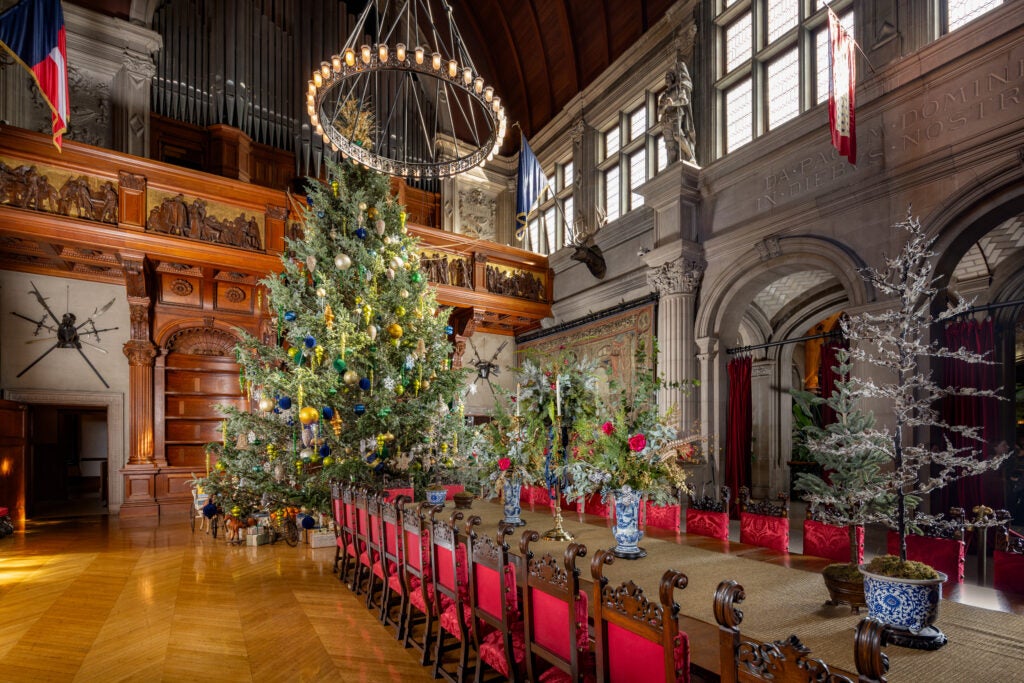
A towering Banquet Hall Christmas tree is one of the many traditions spanning generations that you can experience for yourself with a Christmas visit.
Experience Biltmore’s Christmas Traditions for Yourself
This recent discovery of Edith’s Christmas gifts ledger not only sheds light on her generosity and excellent bookkeeping but also helps connect us all to Biltmore’s thoughtful holiday traditions that span generations.
From the grand Banquet Hall tree to estate-wide decor and celebrations, we invite you to experience our beloved traditions when you visit this Christmas at Biltmore.