Downton Abbey: The Exhibition ended September 7, 2020. Please enjoy this archived content.
In honor of Downton Abbey: The Exhibition—on display at Biltmore now through September 7, 2020—let’s take a closer look and add up some of the elements of this immersive estate experience has to offer.
Showcased at The Biltmore Legacy in Antler Hill Village
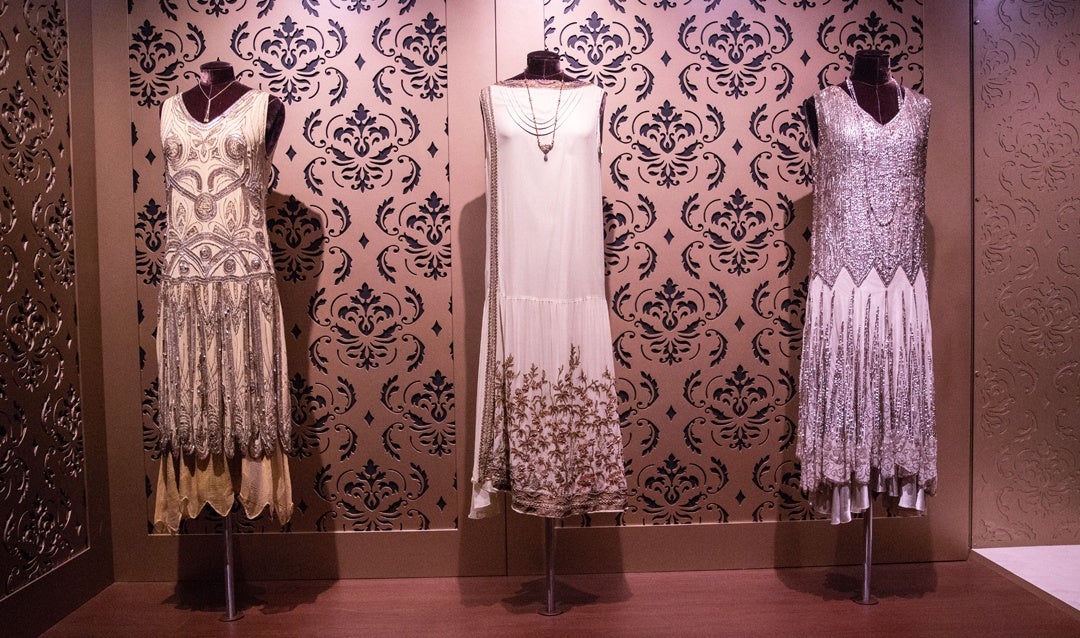
58 costumes on display
This tally includes 53 costumes from the television series—plus 5 costumes from the recent feature film. Notable pieces: both of Lady Mary’s wedding gowns and both of Lady Edith’s wedding gowns.
44 ½ minutes of video from 16 segments
Video segments and compilations are played throughout the exhibition itself, including a 5-minute introduction film as well as a 6-minute farewell film.
Take a deeper dive into Downton Abbey
35 display drawers and glass cases
The interactive display drawers and showcases feature a variety of props from the series—from books, letters, and postcards to gloves, necklaces, and tiaras.
Marvel at the Crawleys’ Dining Room
6 of the series’ most recognizable sets
Get a remarkably up-close look at Mrs. Patmore’s Kitchen, the Crawleys’ Dining Room, Lady Mary’s Bedroom, the Servants’ Stairs & Hallway, the Servant’s Dining Room, and Mr. Carson’s Pantry.
Rediscover your favorite characters
21 characters highlighted
These profiles are largely featured in the exhibition’s “Great Hall of Character Stories”—an interactive hallway where you can get better acquainted with those associated with Downton Abbey.
22 days of installation
While plans to bring this exhibition to Biltmore began long before, it took the better part of a month to prepare the infrastructure and physically install the exhibition in its entirety.
Exterior of Amherst at Deerpark
10,860 square feet spanning 2 estate locations
Multimedia presentations in the ballroom of Amherst at Deerpark (8,260 square feet) combined with costume displays at The Biltmore Legacy (2,600 square feet) make for one not-to-be-missed experience.
Plan your visit today and join us for Downton Abbey: The Exhibition. Discover the magic of America’s Largest Home®
Downton Abbey: The Exhibition ended September 7, 2020. Please enjoy this archived content.
In honor of Biltmore playing host to Downton Abbey: The Exhibition, we’ve recognized some of the similarities—and differences—between these two great houses. Now, let’s take a deeper dive into one of the primary differences of domestic service in American and English households of the era were managed. It all boils down to one simple question: Who runs the house?
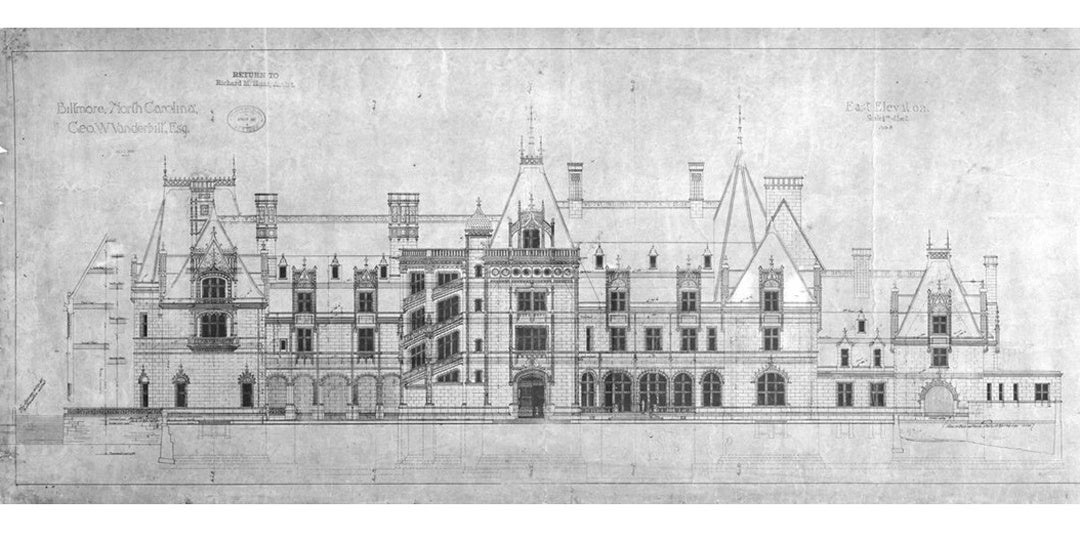
Archival sketch of Biltmore House façade, drafted prior to construction, does not include the glass-roofed Winter Garden that was added as plans were finalized
George Vanderbilt’s vision for Biltmore was heavily influenced by the model of similar English estates, much like Downton Abbey; however, the American interpretation of this system had its differences to the British one.
Though they often hired British staff to manage Biltmore House, in the United States it was the standard for the head housekeeper to be in charge over the staff, rather than the butler.
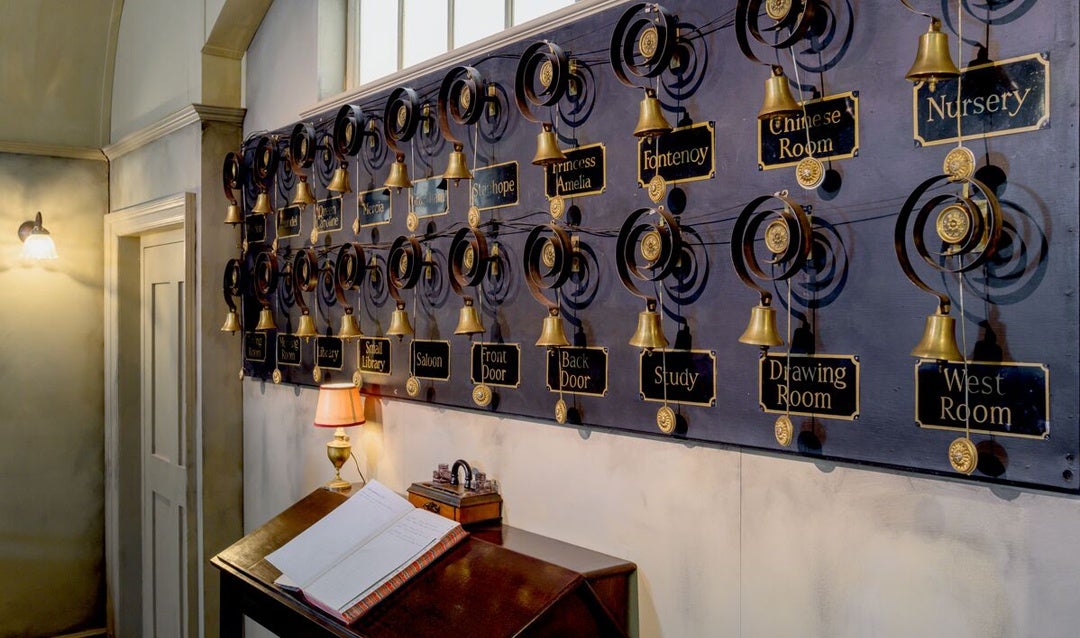
Bell Board from below stairs in Downton Abbey, as seen in our newest exhibition
At Downton Abbey, it’d be hard to imagine Mr. Carson, the butler, serving beneath Mrs. Hughes, the head housekeeper—though she certainly illustrated that she was more than capable of influencing him.
At Biltmore, head housekeeper Emily Rand King, affectionately known as Mrs. King although she was unmarried, ran almost everything downstairs at Biltmore just as Mr. Carson does at Downton Abbey.
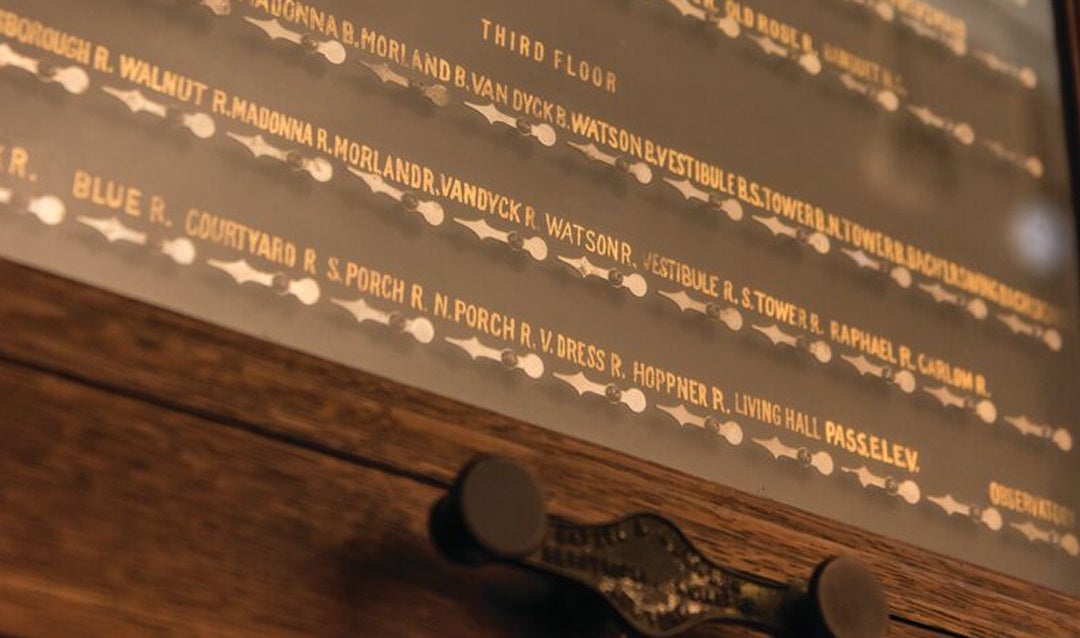
Detail of Call Box in the Butler’s Pantry in Biltmore House
“Mrs. King was the boss,” said Winnie Titchener-Coyle, associate archivist. “That’s one of the differences—in the U.S., women could have that high-level managerial role.”
While Mrs. King didn’t oversee the butler’s work per se, she certainly had more responsibilities than that of a head housekeeper in a British household—Downton Abbey’s Mrs. Hughes, for instance.
“Mrs. King administered salaries and had to have her own budget,” Winnie said. “She supervised staff, and she managed household supplies and linens, cleaning supplies and tools.”
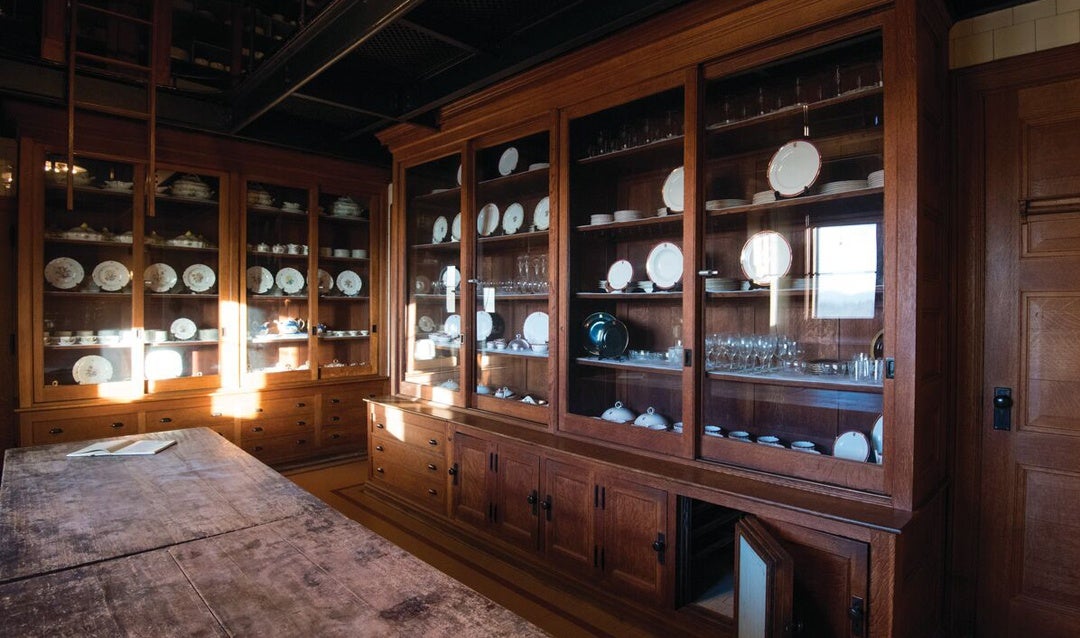
The Butler’s Pantry, as seen on The Biltmore House Backstairs Tour
We invite you to learn more about the staff of Biltmore House—as well as the staff of Downton Abbey—with our new Through the Servants’ Eyes Tour during your next visit to Biltmore.
Feature image: Servants’ Hall in Biltmore House, where staff could relax and socialize when not on duty
This charming confectionery delight was displayed in the Lobby of The Inn during our 2019 Christmas at Biltmore celebration. Thank you for enjoying this archived content.
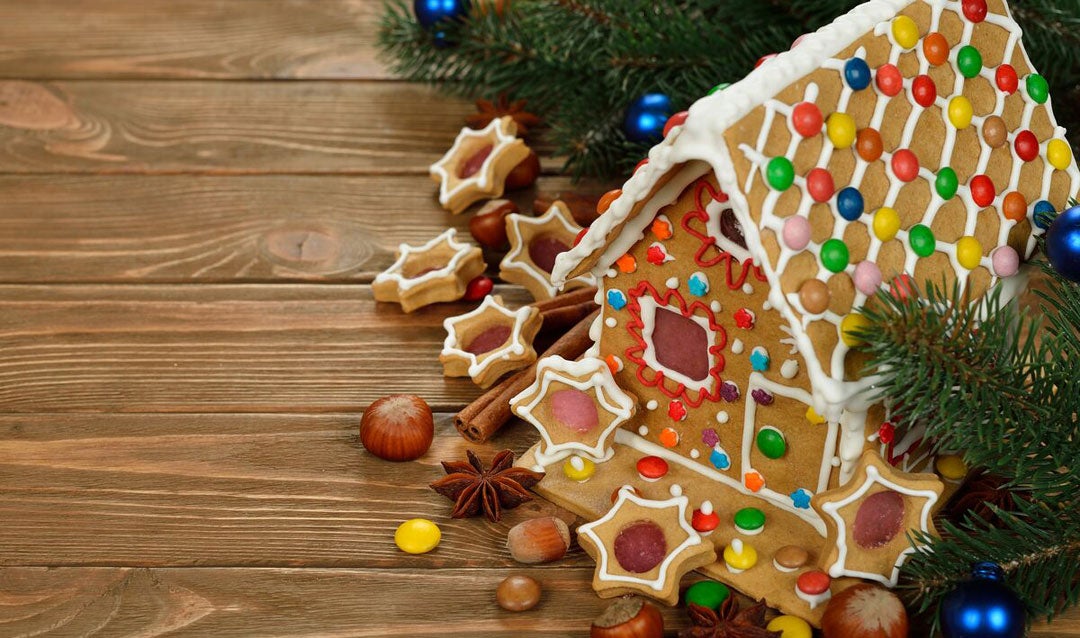
Each year, the pastry team at The Inn on Biltmore Estate® welcomes Christmas at Biltmore with a special tradition: the construction of a gingerbread cottage inspired by the beautiful details of George Vanderbilt’s private estate.
The Cottage on Biltmore Estate
Choosing the perfect gingerbread cottage
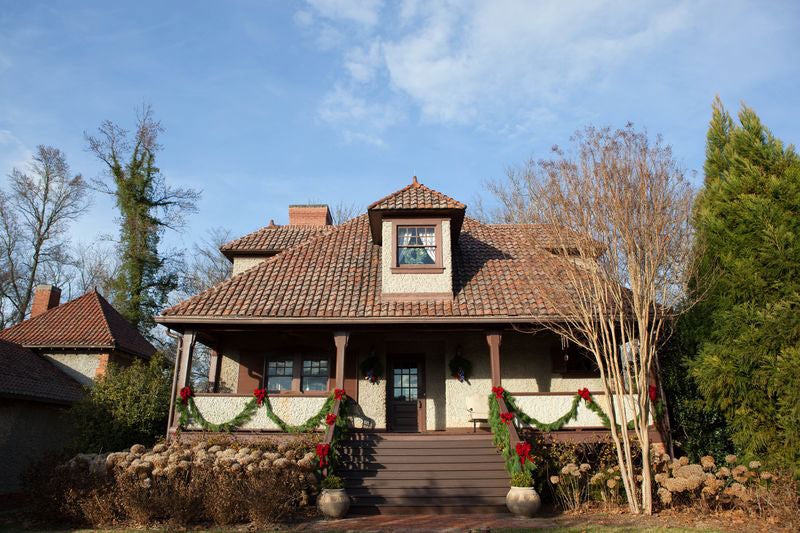
For 2019, the team chose to reproduce the charming Market Gardener’s Cottage that greets guests as they travel to and from The Inn on Biltmore Estate.
Designed by Richard Howland Hunt, son of Biltmore House architect Richard Morris Hunt, the Market Gardener’s Cottage dates back to 1896. It was the site of the estate’s Market Garden, also known as the Truck Farm.
Fresh fruits and vegetables grown in the fertile fields surrounding the cottage were served in Biltmore House, and the surplus was sold to area hotels, grocers, and community members.
Now one of our private, historic Cottages on Biltmore Estate, this historic structure is offered as a premier overnight property that allows guests to enjoy an extraordinary lodging experience.
A challenging creation
Members of The Inn’s pastry team contributed more than 295 hours of labor to construct this gingerbread replica of Biltmore’s historic Market Gardener’s Cottage.
“Creating the cottage was extra challenging for us this year because we had to halt production for two days since Thanksgiving was so late,” said Pastry Chef Dana McFarland who oversees the project each year.
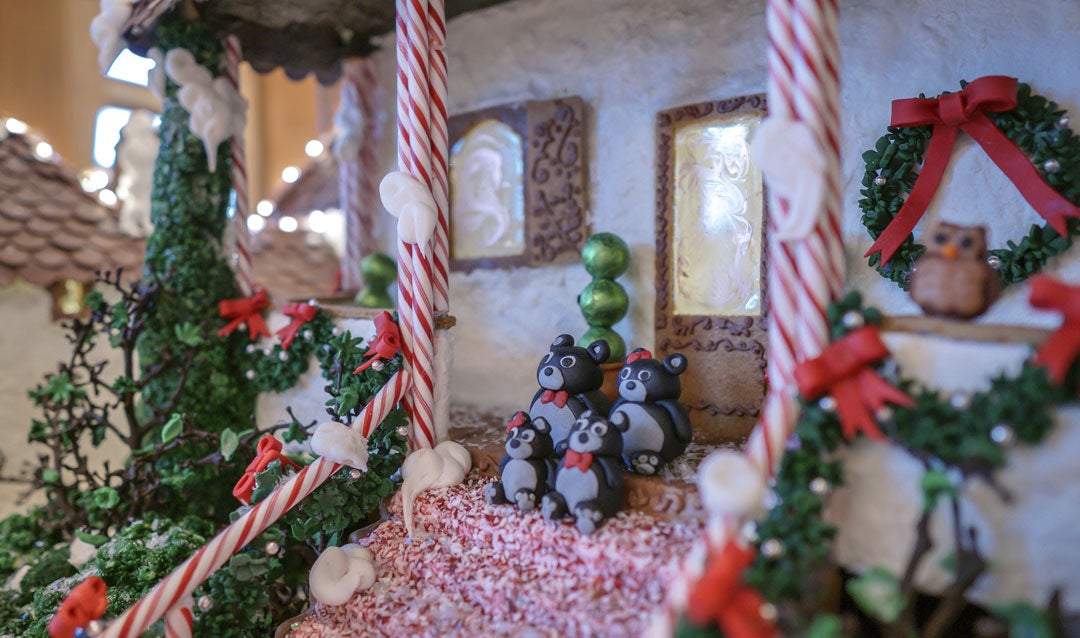
A family of bears on the steps of the gingerbread cottage
Special gingerbread cottage ingredients
Her team used the following ingredients for their massive gingerbread construction project:
124 pounds of powdered sugar
17 pounds of gingerbread
15 pounds of modeling chocolate
14 pounds of Jolly Rancher® hard candies
8 pounds of fondant
5 pounds of old-fashioned candy sticks
5 pounds of caramel chocolate balls
4 pounds of Jelly Belly® jelly beans
9 ounces of M&M’s®
2 ounces of Sixlets®
In researching the Market Gardener’s Cottage to make sure they had the details correct, the pastry team learned that there were originally several greenhouses behind it. They created an array of fruits and vegetables that might be grown in a greenhouse at this time of year to display in the cottage’s courtyard, including apples, butternut squash, carrots, pears, and pumpkins.
Confection perfection!
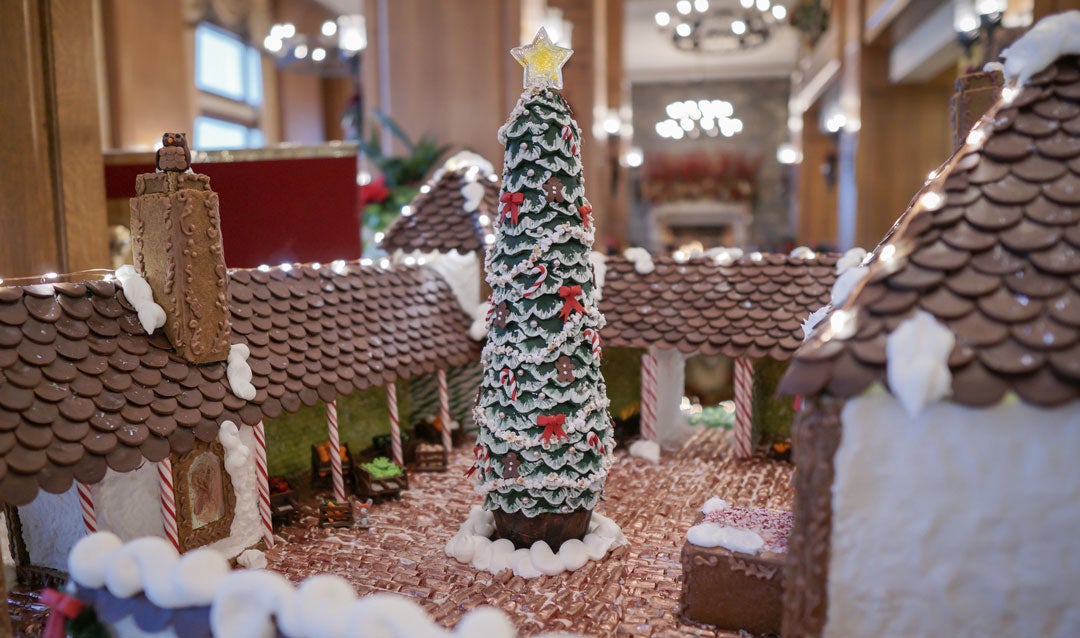
“All the shingles on the cottage were hand-cut out of modeling paste,” Chef McFarland said. “And though most guests have guessed that the courtyard bricks are made out of Tootsie Rolls®, we actually used Jolly Rancher candies to get that look.”
The decorated Christmas tree in the courtyard of the cottage
One special highlight of the gingerbread cottage is the Christmas tree in the courtyard–it has tiny garlands of popped sorghum on it–and it spins!
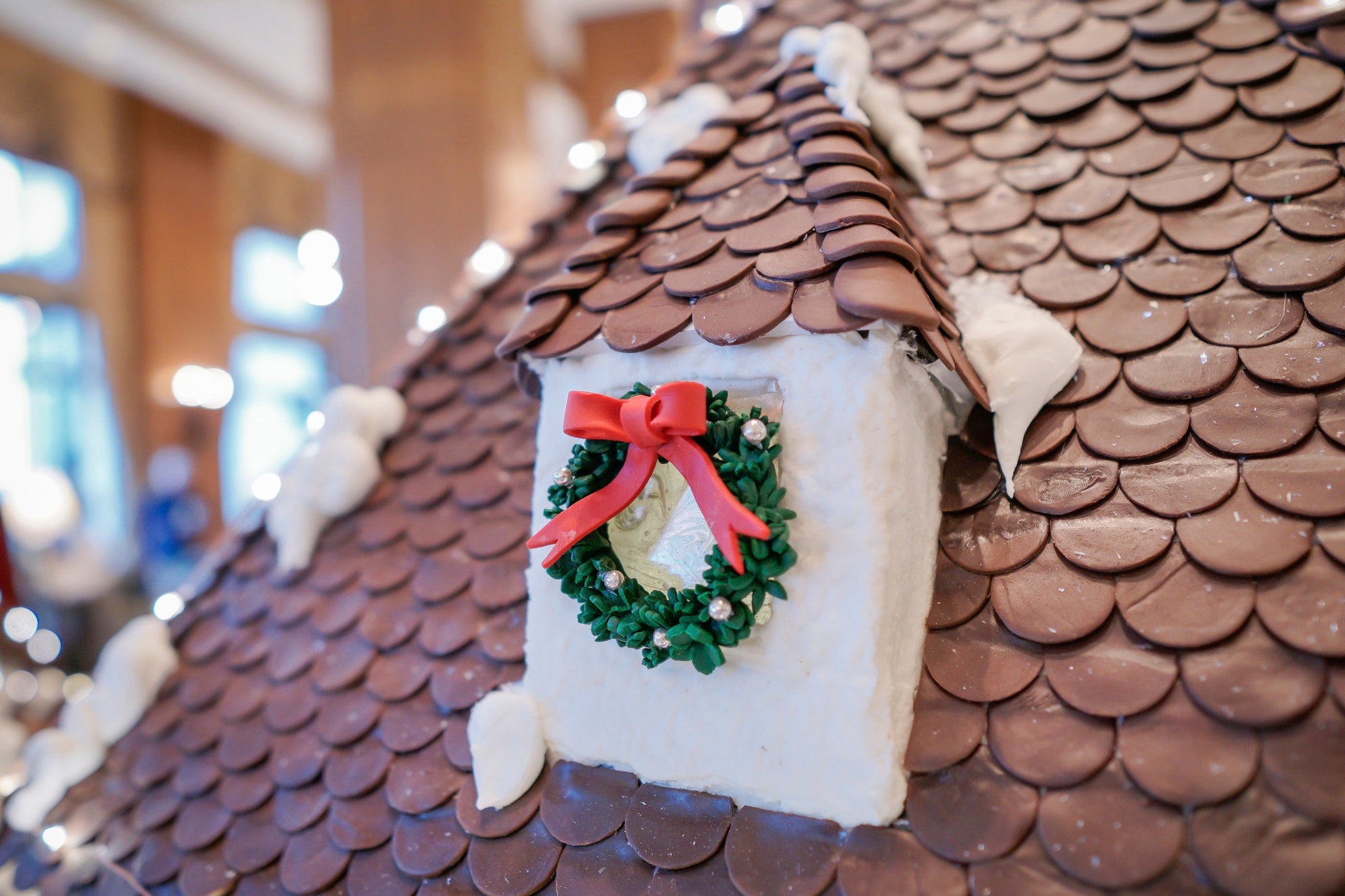
“The wreaths and garlands on the cottage all have individually-cut cut green flowers on them to give the appearance of evergreens,” said Chef McFarland, “while the bushes in the front and the trees in the back are made with Rice Krispy® treats.”
A perfectly detailed gingerbread wreath
Last but certainly not least, Chef McFarland notes that there are 60 feet of mini lights on the outside of the gingerbread cottage, and an infuser placed inside the structure makes it look as if there’s real smoke rising from the chimney.
Special thanks to The Inn’s talented pastry team of Chef Dana McFarland, Megan Shreve, Ron Levitan, Lucas Conti, Leilani Padilla, Rachel Tipping, Ashley Buchleitner, Laura Hinzman, Danyelle Sander, Sarah Vess, and Anthony Mushinski for all their hard work!
Visit now
Create your own charming confection at one of our Gingerbread House Tea events!
In addition to being America’s Largest Home®, Biltmore also features a state-of-the-art working winery. There are other distinctions that set Biltmore’s Winery apart, such as the fact that our winemaker crafts both still and sparkling wines here. It’s unusual to offer both—most wineries specialize in one or the other—but Biltmore has a long history of doing the unexpected.
Our sparkling legacy
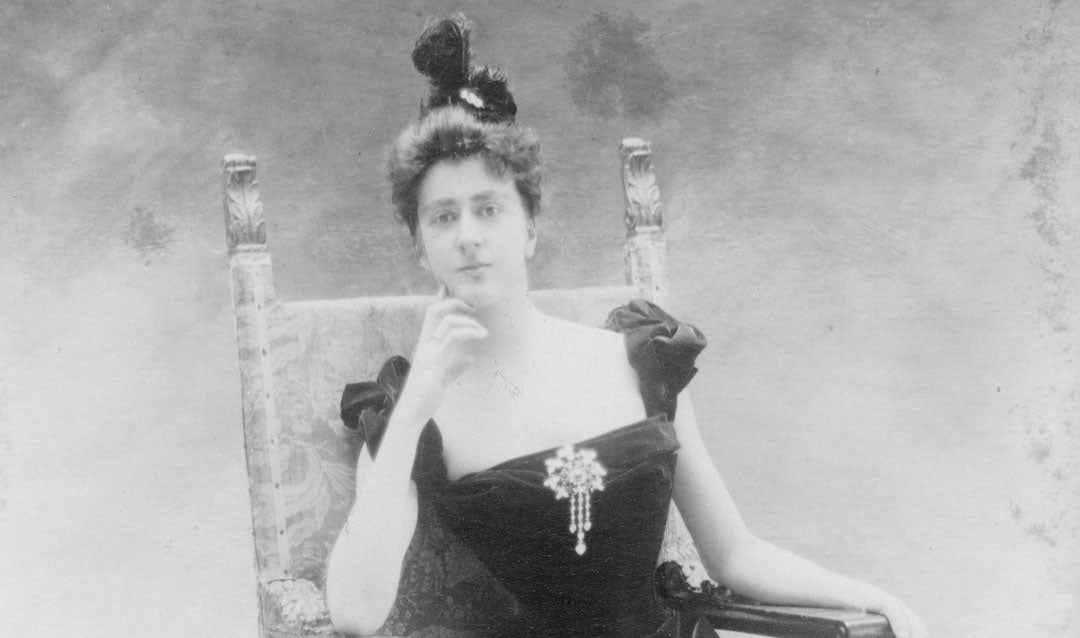
One reason for our sparkling wine program is to honor the legacy of Edith Stuyvesant Vanderbilt’s family.
On May 31, 1898, the Asheville Citizen reported the following story in connection with the upcoming marriage of George Vanderbiltand his fiancée Edith Stuyvesant Dresser:
The wine with which the health of the bride is to be drunk at the wedding breakfast of Miss Edith Stuyvesant Dresser and George Vanderbilt Thursday has a history, according to the Washington Post. Many years ago the wine cellar of Daniel Le Roy, one of the pioneer summer residents of Newport, was famous, and large sums were offered for what remained of it when Mr. Le Roy died.
None of this famous wine was ever sold, but as the stock decreased Mrs. Le Roy directed that it should not be used except at the wedding of her grandchildren and their descendants, a certain number of bottles being apportioned to each.
“Once we discovered this story,” said Jill Whitfield, senior marketing manager for Biltmore Wines. “We wanted to share the details so that everyone could enjoy it. It continues to inspire us as we create different styles of sparkling wines perfect for all celebrations,” Jill said.
Isn’t it romantic?
Romance features a stunning floral label
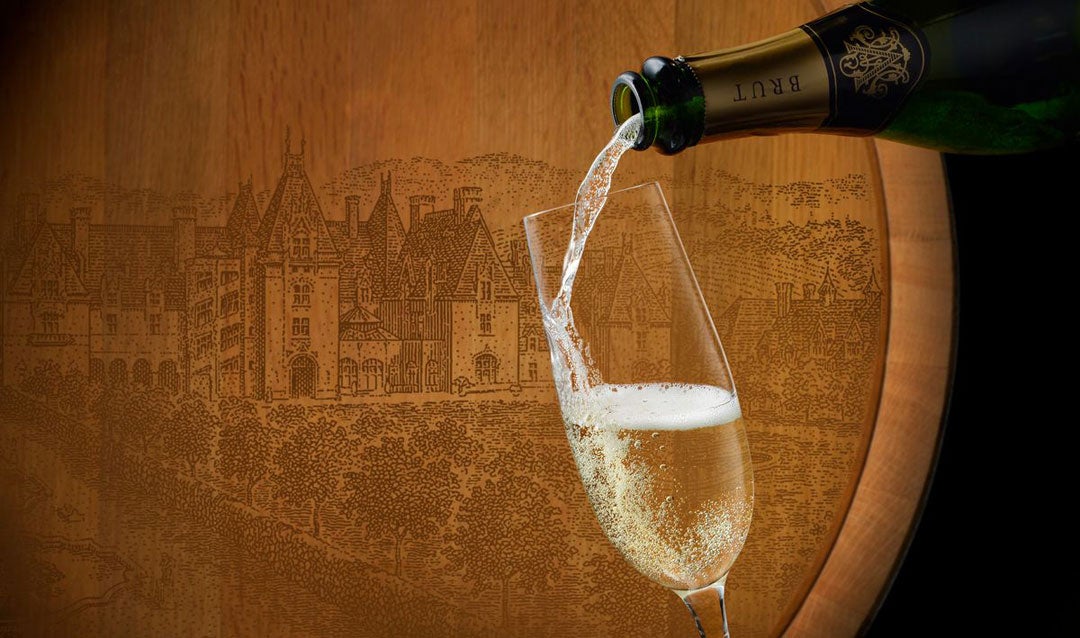
Our Biltmore Estate® Romance Brut honors that charming gesture. Romance is handcrafted from grapes selected from our California vineyard partners, including a hint of Pinot Noir that shows up in its delicate rosy straw color. The soft bouquet offers hints of citrus, apple, and brioche, while fine, tiny bubbles give way to flavors of white peach and a surprisingly creamy mouthfeel. Pair it with your favorite party fare including prosciutto-wrapped melon, chicken salad croissants, brie, and—of course—wedding cake!
In addition to being an exceptional sparkling wine, Romance features a lovely floral label that enhances any special occasion, from bridal showers and receptions to engagements and anniversaries.
Handcrafted in traditional style
Our sparkling wines are handcrafted in the traditional style
“All our sparkling wines are handcrafted in the traditionalméthode champenoise,” said Jill. “This process requires a secondary fermentation in the bottle, and is vital for developing the delicate bubbles that characterize outstanding sparkling wines.”
Let the party bubble up!
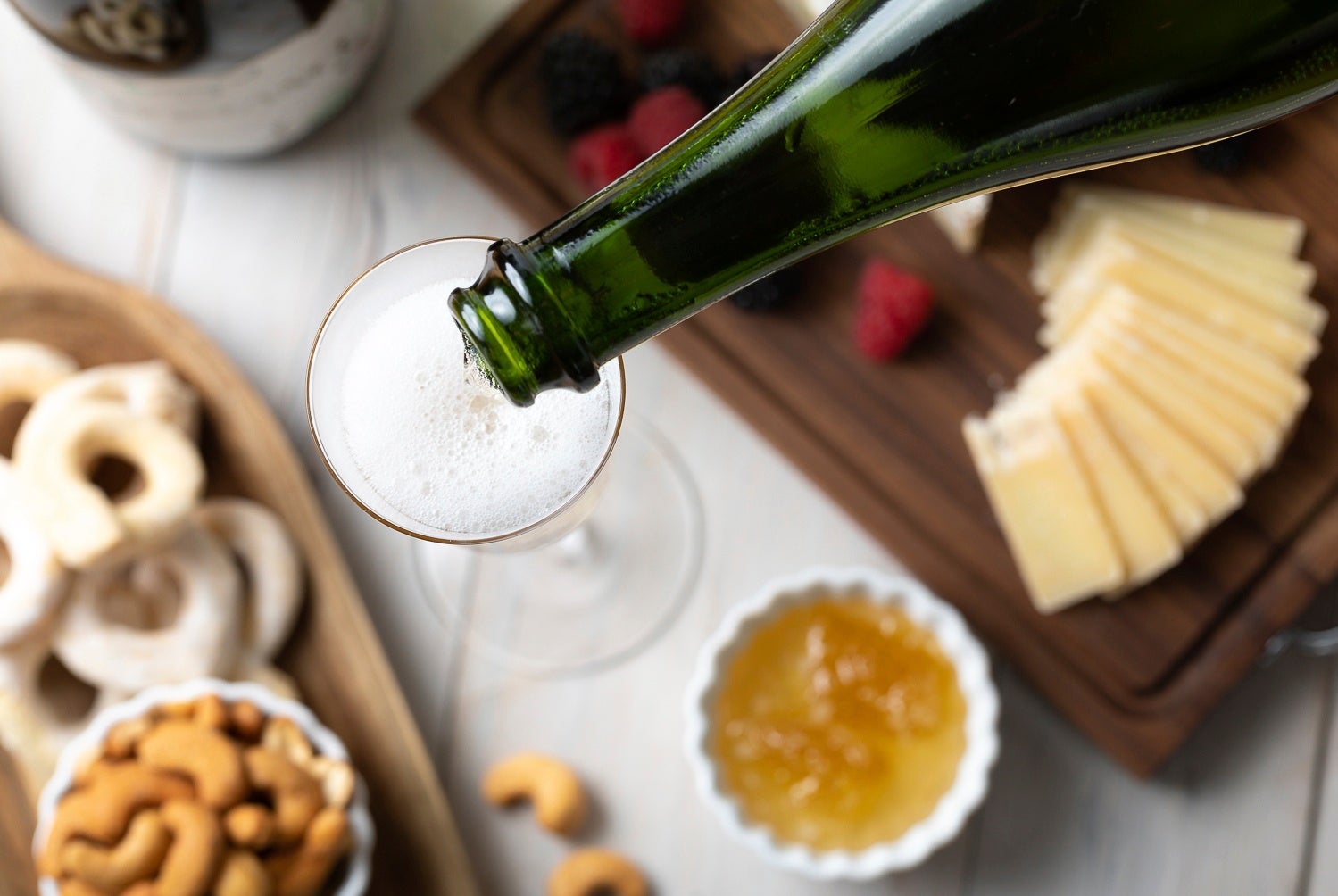
Sip Pas de Deux Sec with food or create sparkling cocktails
If you’re looking for a versatile sparkling wine that pairs well with a surprising variety of foods, opt for ourPas de Deux® Moscato Sparkling Wine. “This semi-sweet sparkler has a slight orange aroma that complements its flavor profiles, plus flavors of wild strawberry and lemon,” said Jill.
“Our Pas de Deux is a delightful addition to sweet treats such as fresh fruit, pound cake, and crème brûlée, and it’s a perfect partner for spicy cuisines,” Jill noted. “And it was recently awarded 90 points by Beverage Testing Institute!”
More great ratings
Put Biltmore Estate Brut on your “bucket list!”
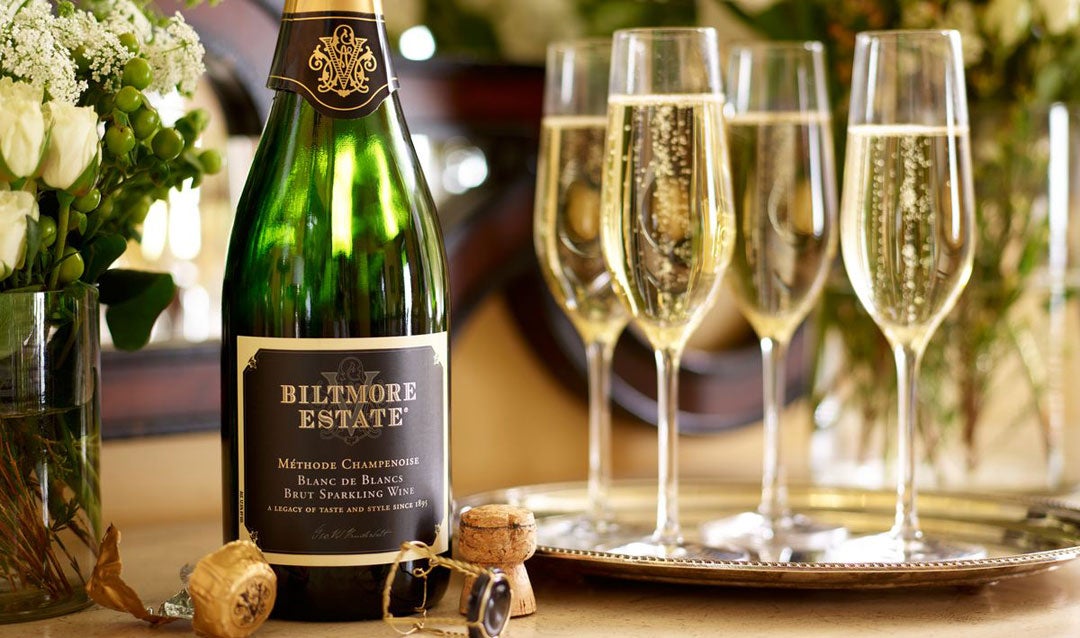
OurBiltmore Estate® Brutrecently earned 90 Points + Editor’s Choice from Wine Enthusiast, making it another excellent choice for celebrations or any occasion that calls for bubbly.
“It’s a refreshing blend of Chardonnay and Pinot Noir ,” Jill said, “and it offers a good balance of citrus and strawberries with hints of honey and apricot.”
Our finest sparkling
Biltmore sparkling wines are characterized by fine, tiny bubbles
“This is our finest sparkling wine,” Jill said. “It is crafted from North Carolina Chardonnay grapes and features tiny, elegant bubbles that burst to release tropical and citrus flavors. If you want to make an impression on someone special, this is the wine to choose.”
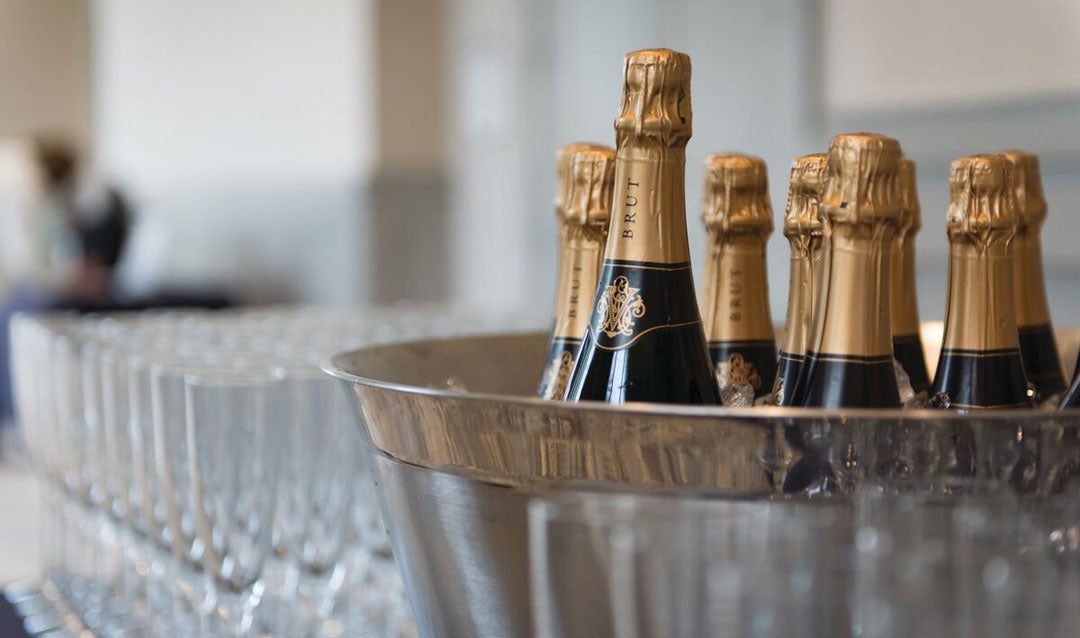
Celebrate any occasion with Biltmore sparkling wines.
No matter what you’re serving or celebrating, pair your good times withBiltmore wines!
Downton Abbey: The Exhibition ended September 7, 2020. Please enjoy this archived content.
From November 8, 2019 through April 7, 2020, Biltmore is hosting Downton Abbey: The Exhibition, an immersive, must-see event that pays homage to the show.
The multimedia display in Amherst at Deerpark includes holograms, video, and life-size imagery—plus some of the series’ most recognizable sets, including Mrs. Patmore’s kitchen and the gossip-fueled servants’ quarters.
The estate has a variety of additional offerings that connect to the exhibition. Here are our top 5 picks:
The limited-time exhibition continues in Antler Hill Village with costumes on display at The Biltmore Legacy.
5. Costumes at The Biltmore Legacy
Downton Abbey: The Exhibition itself extends to The Biltmore Legacy in Antler Hill Village where more than 50 official costumes from the series’ six-season run—worn by actors such as Michelle Dockery, Hugh Bonneville, and Dame Maggie Smith—will be on display.
Stroll through lush late summer blooms in the Walled Garden.
4. Stroll Through Stunning Gardens
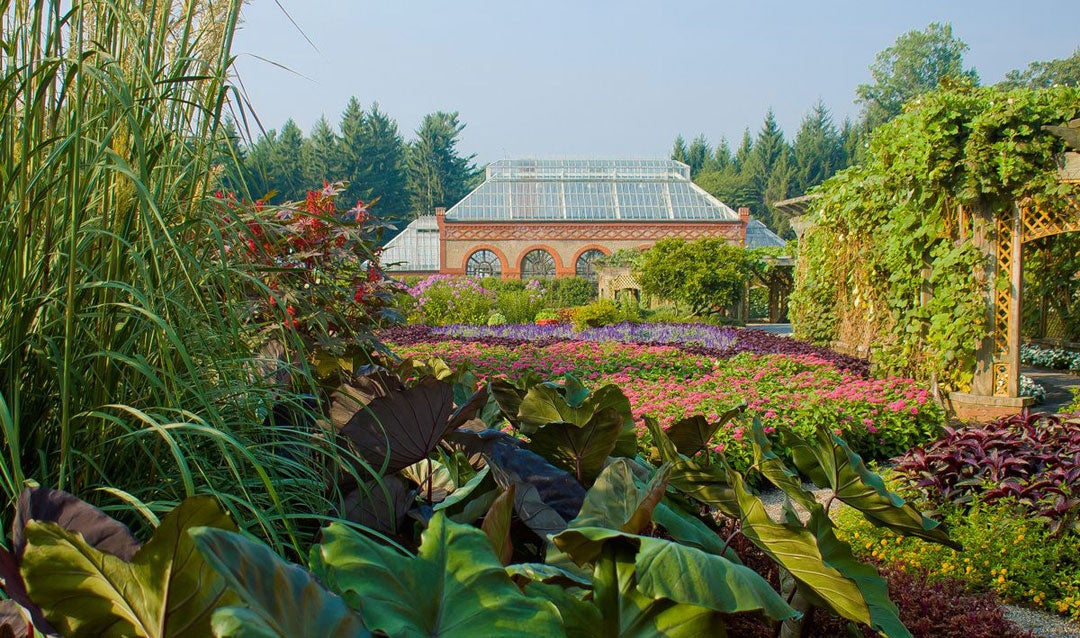
In one episode of the series, Lord and Lady Grantham had the delightful task of presiding over the annual village flower show. While visiting Biltmore, be sure to stroll through our four-acre English-style Walled Garden filled with roses and a glorious mix of summer annuals and perennials, exotic grasses, and more–and don’t miss the glass-roofed Conservatory that houses hundreds of tropical specimens.
Our charming estate shops offer a wide range of Downton Abbey-inspired items, including a variety of lovely tea sets.
3. Downton Abbey-Inspired Products
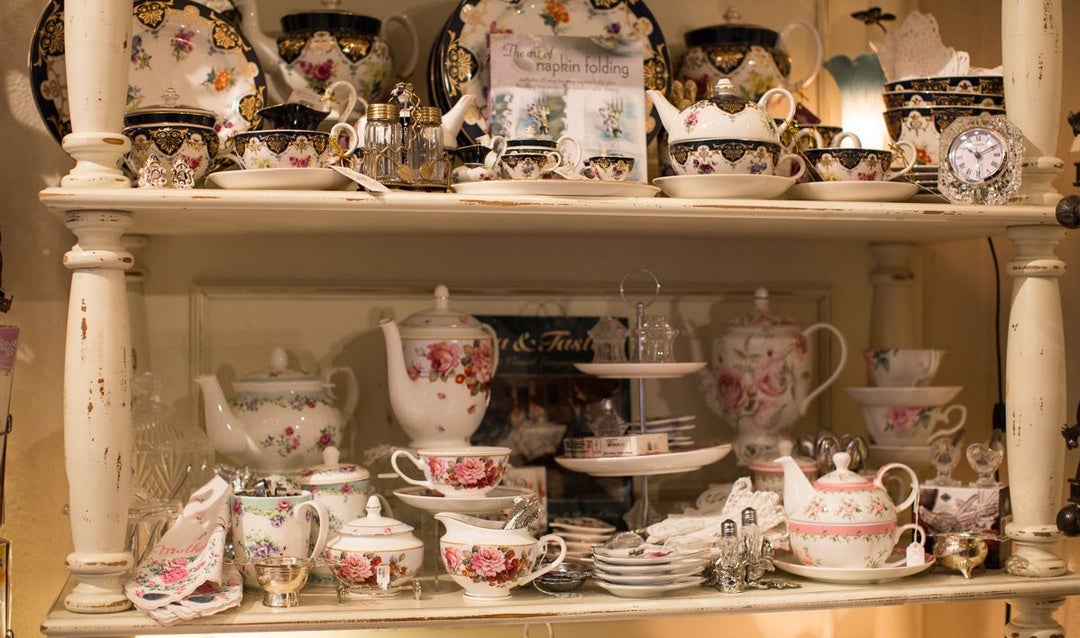
For a limited-time, shops throughout the estate are offering a variety of Downton-inspired items. Browse fashions such as fascinators, jewelry, scarves, hat pins, and more—inspired by the styles worn by characters in the show. Tea sets, books, and additional accessories relating to the era are also available.
Our newest tour takes you into rarely seen areas of Biltmore House, such as fascinating parts of the Sub-Basement.
2. The Biltmore House Backstairs Tour
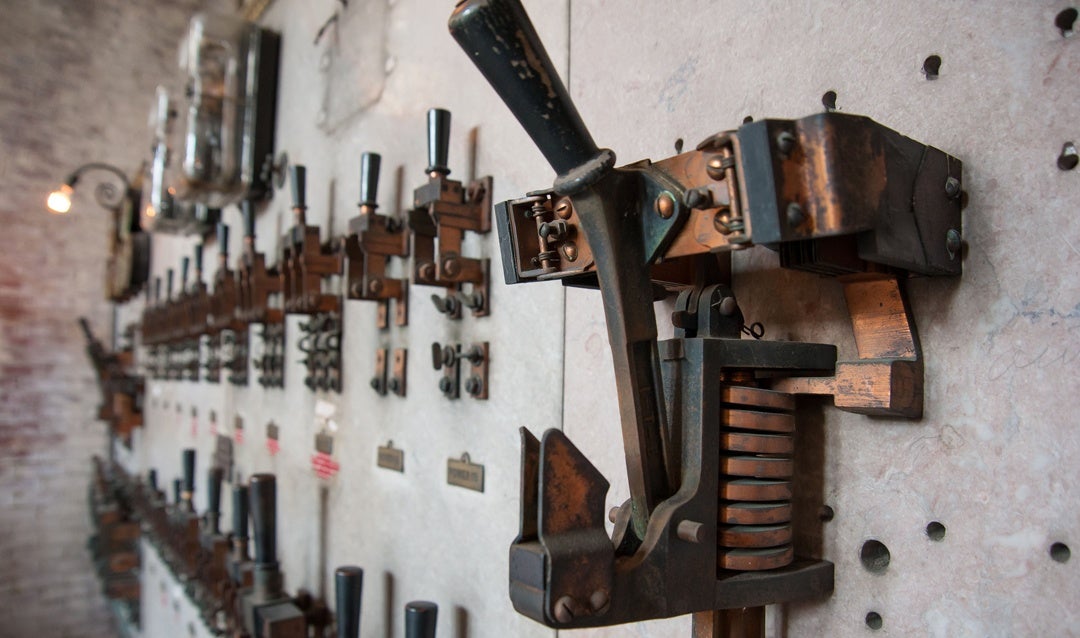
Developed exclusively to coincide with Downton Abbey: The Exhibition, The Biltmore House Backstairs Tour is a brand new behind-the-scenes tour. Hear the fascinating stories of those who worked and lived on the estate while visiting rarely seen servants’ areas including the Butler’s Pantry and beyond.
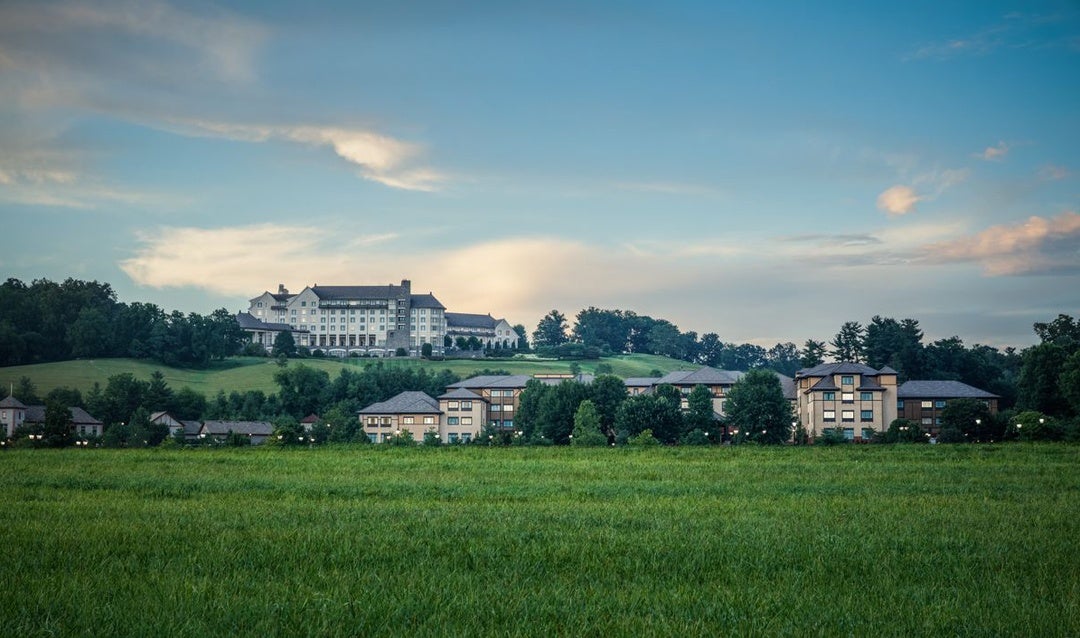
With so much to see and do at Biltmore during your getaway, stay overnight at The Inn (above), Village Hotel (below), or one of our private historic cottages to ensure you have time to experience it all.
1. Stay Overnight to Make the Most of Your Visit
Both The Inn on Biltmore Estate® and Village Hotel on Biltmore Estate® offer an exciting opportunity to stay overnight on the property, ensuring you have time to see and do it all. Take your time while enjoying Downton Abbey: The Exhibition, and take in all the glorious costumes from the series on display at The Biltmore Legacy in Antler Hill Village.
Please enjoy this archived content from Christmas 2019.
Each year, our Floral Displays team takes pride in decking the halls of America’s Largest Home® for Christmas at Biltmore.
For 2019, discover how they draw inspiration from the beautiful details, including the art and furnishings, in Biltmore House.
Winter Garden and Surroundings
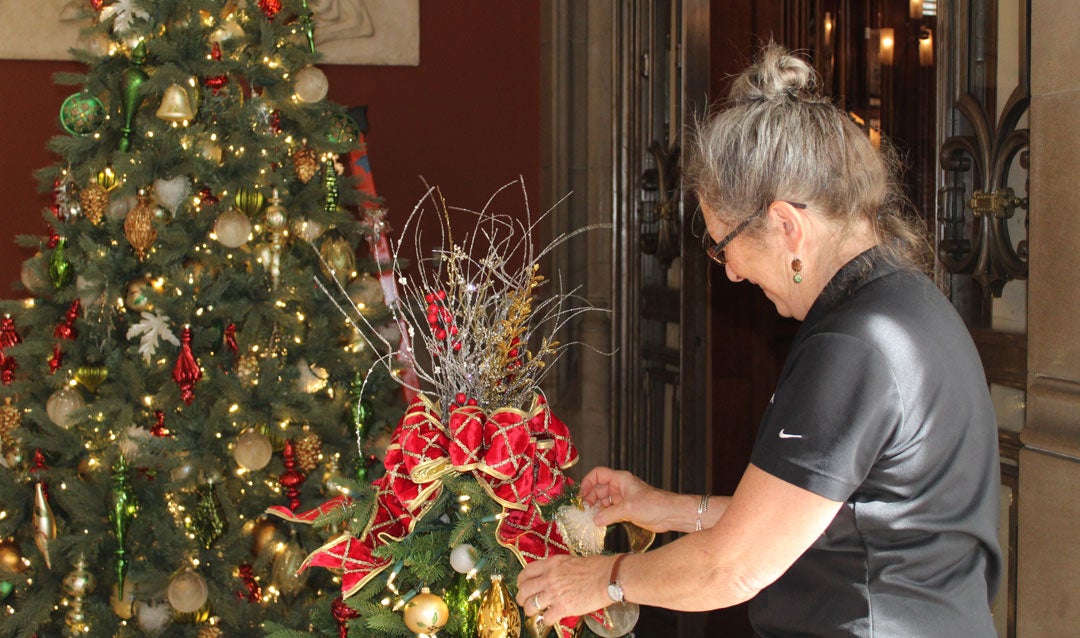
Norene Barrett puts finishing touches on a Christmas tree topper
Norene Barrett began working at Biltmore 18 years ago in the mail services department. Though she enjoyed her role, she looked for different ways to express her own creativity.
In 2015, after taking an intensive course in floral design, Norene joined Floral Displays and is now responsible for decorating sections of Biltmore House and the estate.
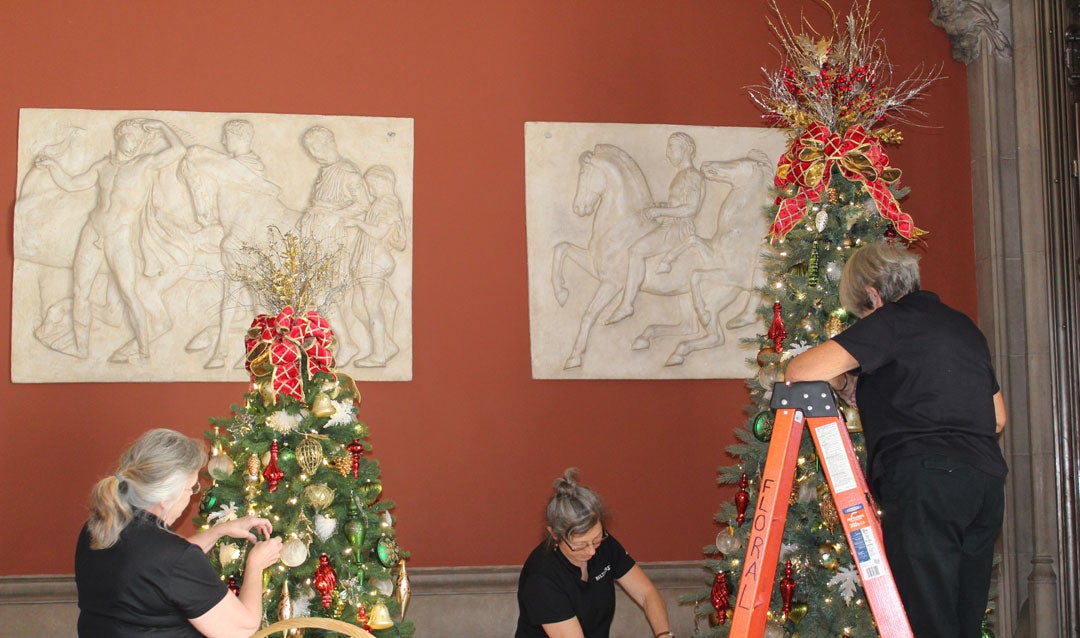
Floral team members Feny Bryan, Norene Barrett, and Kathy Nameth decorate a trio of trees inspired by the Greek friezes on the wall
“This trio of trees is meant to take guests back in time,” Norene said of her design for the area between the Winter Garden and the Billiard Room. “The trees are cheery and bright, but I used a lot of white elements for continuity with the series of Greek friezes on the walls.”
Norene added snowy branches to her décor along with period ornaments to bring a nostalgic feeling of Christmas past.
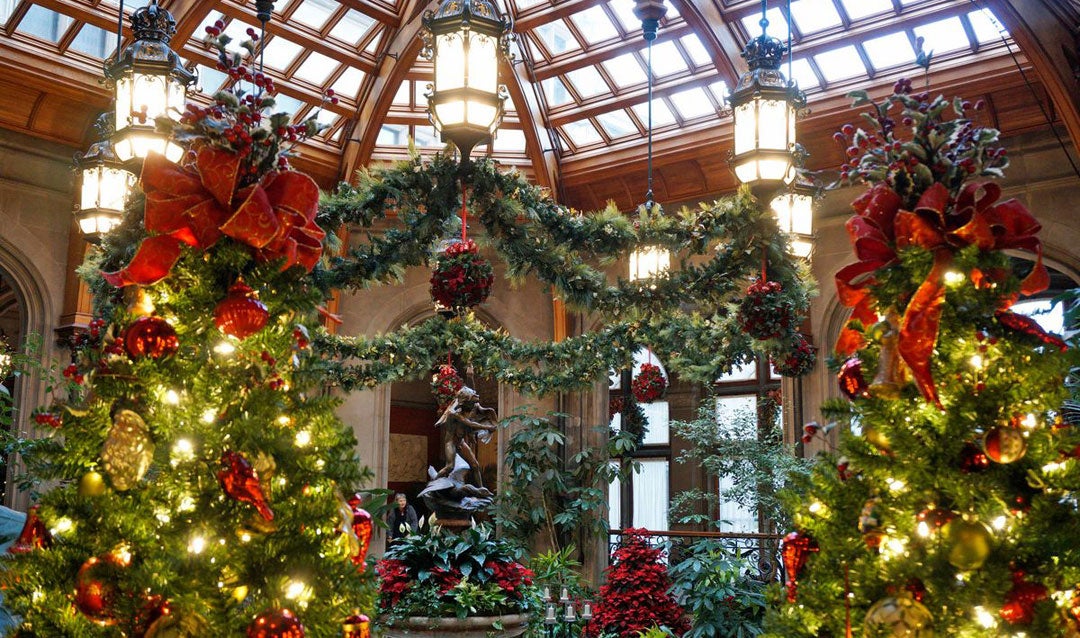
Winter Garden decorated for Christmas at Biltmore
For the Winter Garden, Norene is planning to light the evergreen garlands so that they glow, and instead of traditional kissing balls suspended from the greenery, she has created sparkling swags that catch the light. She’ll also add plenty of poinsettias to emphasize the garden feel of the space.
Breakfast Room
Joslyn Kelly adds ornaments to the Breakfast Room tree
“This
is the room where the family would eat breakfast, so I wanted it to have a
warm, homey feeling as if you’re being welcomed to the table,” said Joslyn
Kelly, floral designer.
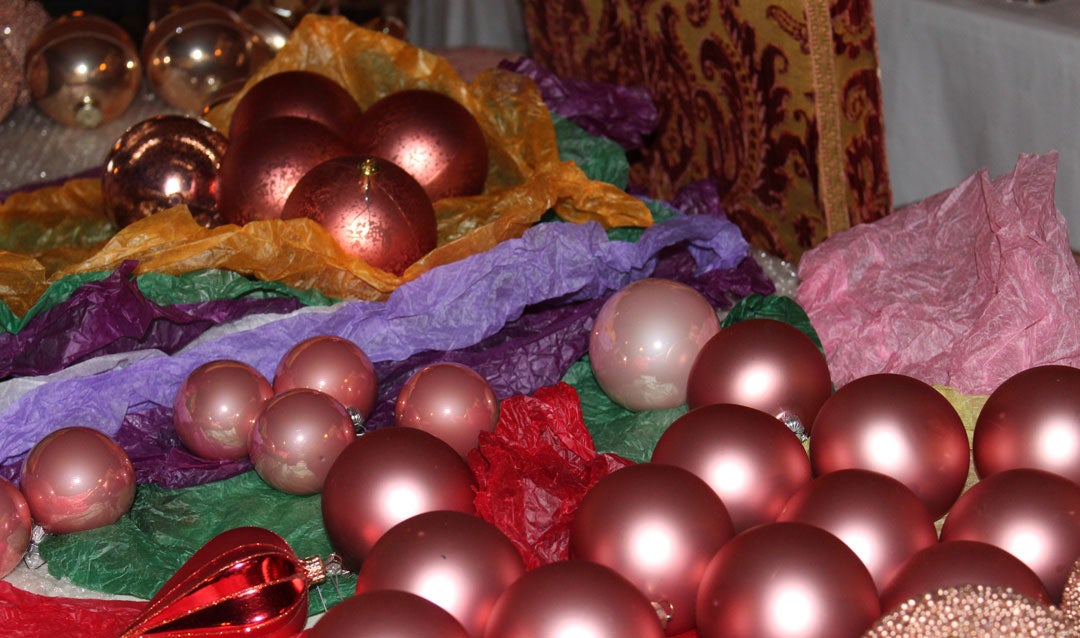
A selection of red and pink Christmas ornaments chosen to complement the Breakfast Room decor
Drawing inspiration from the room’s elegant cut velvet draperies and upholstery, Joslyn decked the halls with ornaments in a range of pinks and reds to complement the lovely patterns and colors of the fabric.
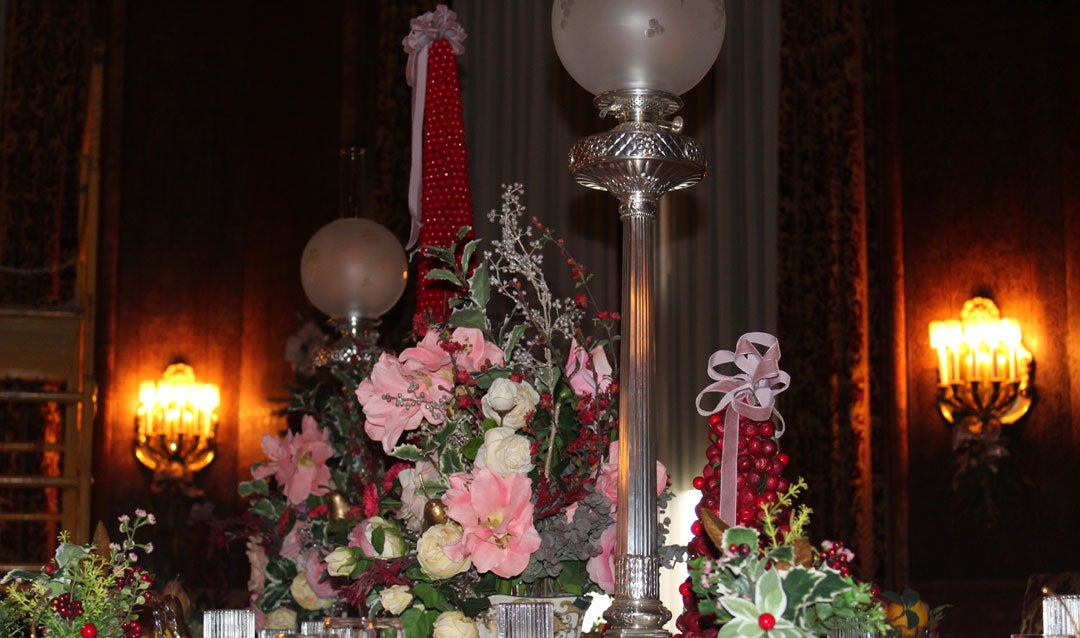
Decor including lush floral displays and topiaries top the Breakfast Room table during Christmas at Biltmore.
Look for glorious floral arrangements, towering topiaries of deep burgundy cranberries, and gilded pears among the delicate crystal and china place settings on the table.
Morning Salon
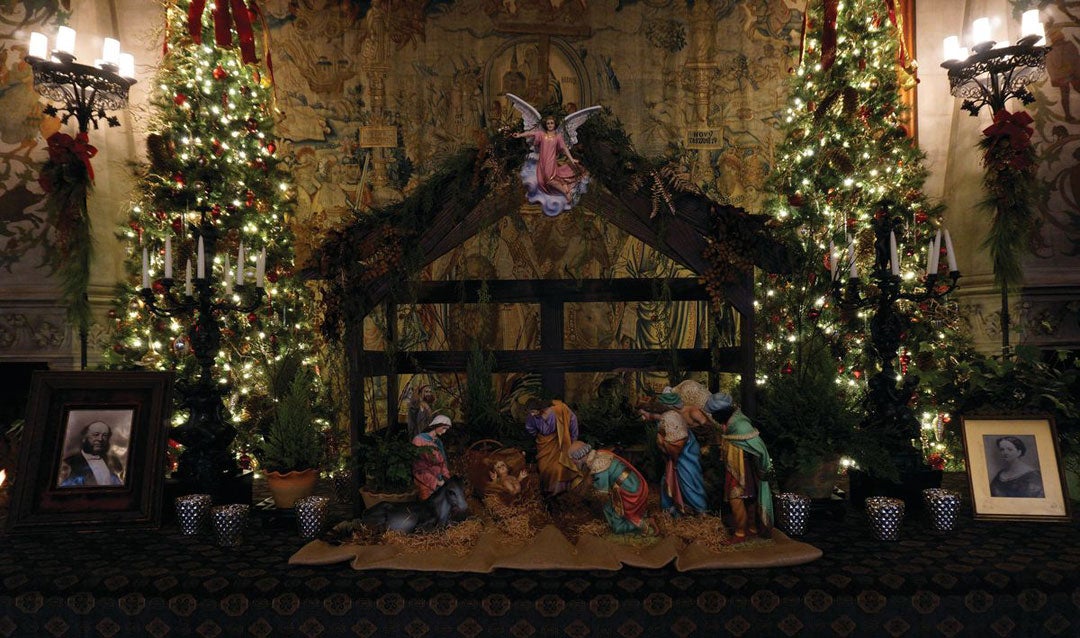
The estate’s Nativity scene, often staged in the Tapestry Gallery in years past
Cristy Leonard has been a member of the floral team for seven years, and the Salon is one of her areas to decorate for our 2019 Christmas at Biltmore celebration.
The estate’s large traditional Nativity will be staged in the Salon this year, and according to Cristy, the set has been a major source of inspiration for her designs.
“I’ve planned special new surroundings that includes twinkling lights to resemble nighttime in Bethlehem,” Cristy said.
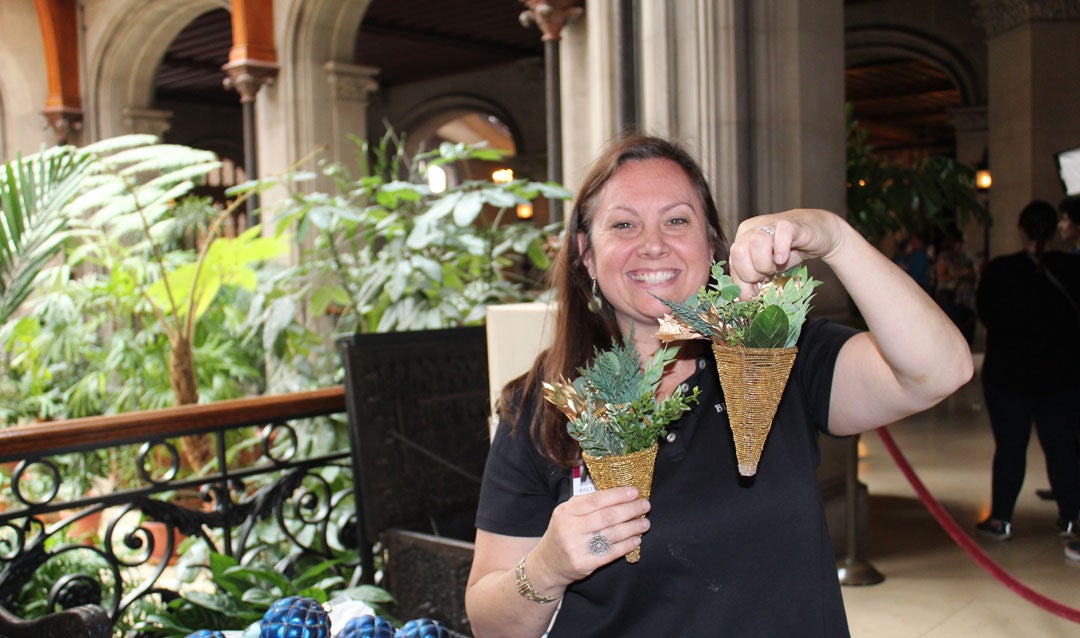
Cristy Leonard displays ornaments she created for the Salon tree
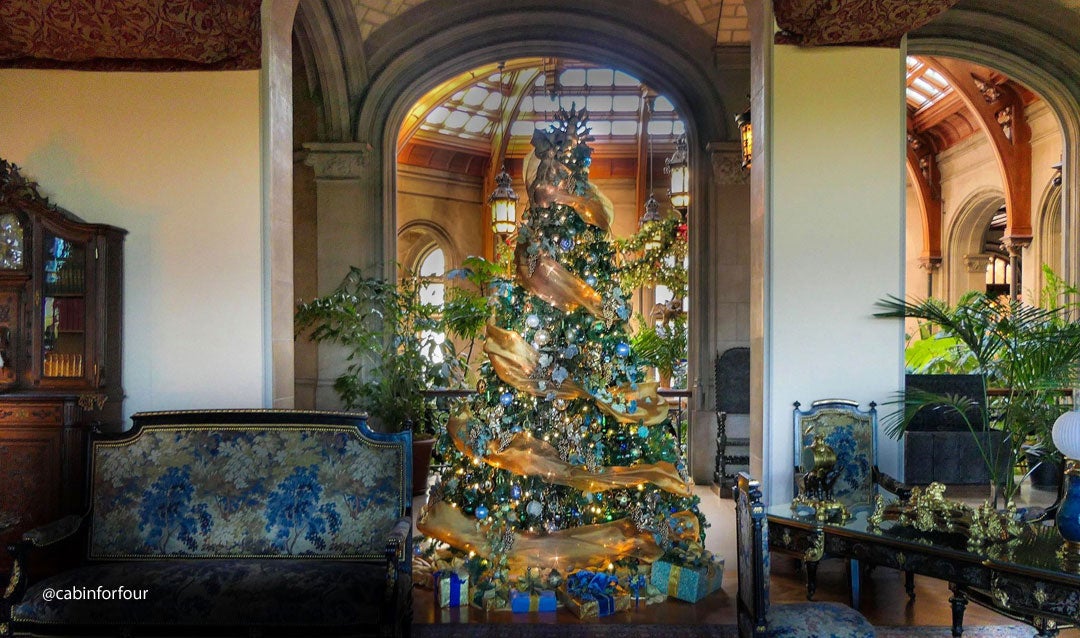
Cristy chose to deck the halls of the Salon’s main tree in brilliant peacock blues and greens with bright touches of gold. She added cherubs, gilded grapes, and grapevines to symbolize the prosperity and blessings of the season.
Salon Christmas tree wound with gold fabric
As a finishing touch, Cristy swathed the tree in yards of gauzy golden fabric, echoing the look of the room’s iconic draped and tented ceiling.
Third Floor Living
Hall
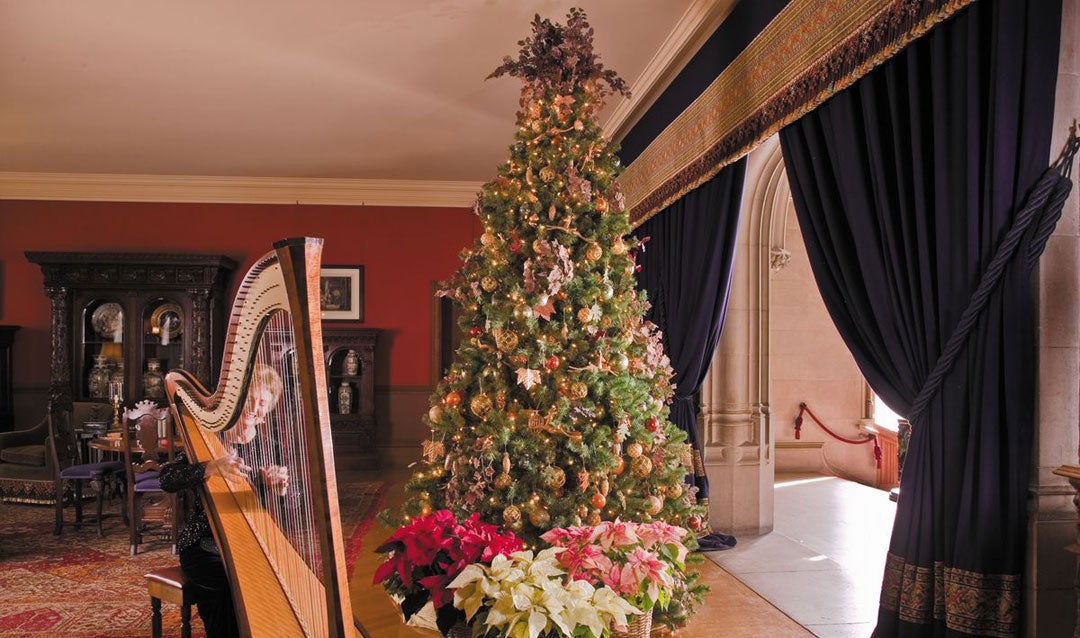
A harpist plays Christmas carols in the Third Floor Living Hall
During the Vanderbilt era, Third Floor Living Hall was a place for guests to relax in the evenings, share the events of the day, and perhaps read or catch up with friends.
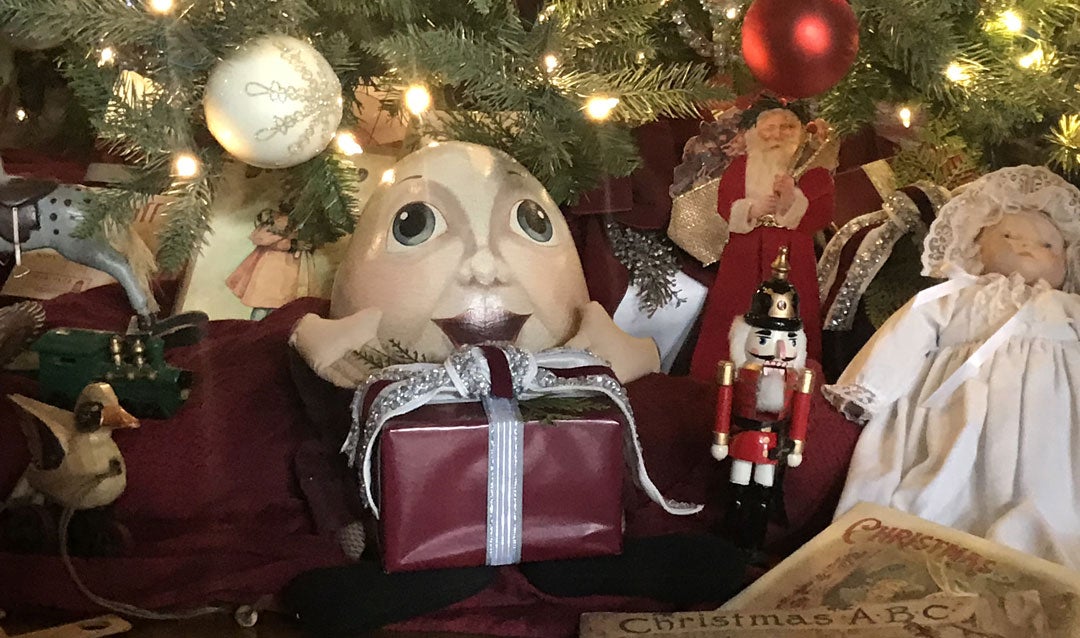
Michelle Warren of Biltmore’s floral team created a child’s tree for this room, complete with dolls, toys, and wooden soldiers around the base, ready for the younger set to play with them while their parents indulged in a sing-along or a game of cards.
A whimsical Humpty Dumpty and other toys under the Third Floor Living Hall Christmas tree
As you enter Third Floor Living Hall, look for a charming scene featuring a table set up with paper, ribbon, and tags, just as if Edith Vanderbilt were wrapping her gifts for the Christmas season!
Other 2019 Christmas at Biltmore highlights:
Grand Staircase
This elegant Christmas tree is centered under the Grand Staircase Chandelier, making it appear as though the four-story light is the tree topper.
Banquet Hall
From the 35-foot fresh Fraser fir at one end to the triple fireplaces at the other, the Banquet Hall is a traditional guest favorite and one of the most beloved rooms in Biltmore House.
Library
Themed around the idea of Christmas Traditions, the Library incorporates traditional colors such as gold, red, green, plaids, and a tartan print.
Oak Sitting Room
The colorful décor in rich jewel tones of red, cobalt, gold, and green is drawn from the room’s splendid Axminster—the only rug of English origin in Biltmore House.
Mrs. Vanderbilt’s Bedroom
The tree ornaments are inspired by the Vanderbilts’ courtship which took place in Paris. The room features a soft mix of lilac, amber, and cream colors drawn from the distinctive oval ceiling.
Main Kitchen
Look for a whimsical gingerbread replica of Biltmore House.
Christmas at Biltmore
Enjoy the daytime celebration November 1, 2019–January 5, 2020, and experience Candlelight Christmas Evenings through January 4, 2020.
There’s no doubt that the unusual wall decor in the Halloween Room of Biltmore House has raised many questions throughout the years. Ongoing archival research and discoveries from our Museum Services team allow us to shed new light on the origins of this brightly-colored room.
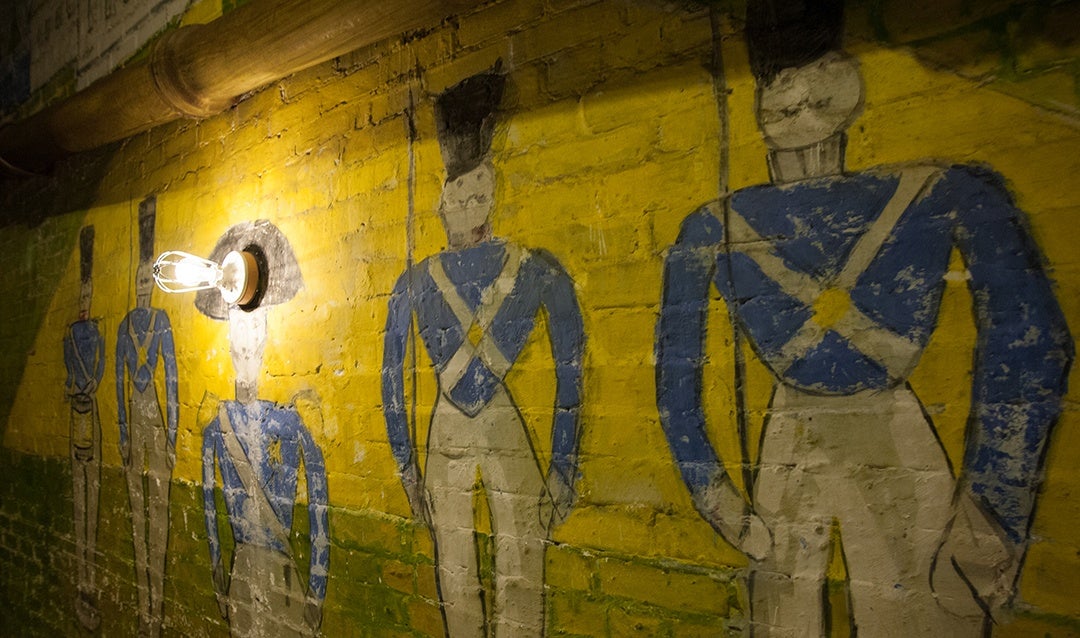
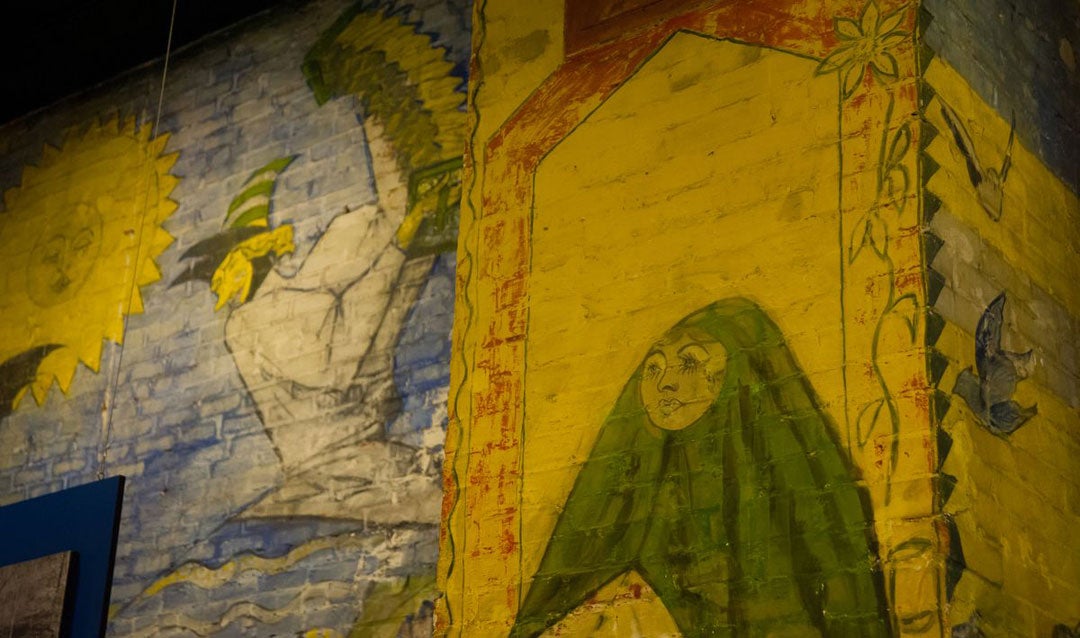
Painted soldiers depicted in Halloween Room mural
Naming the Halloween Room
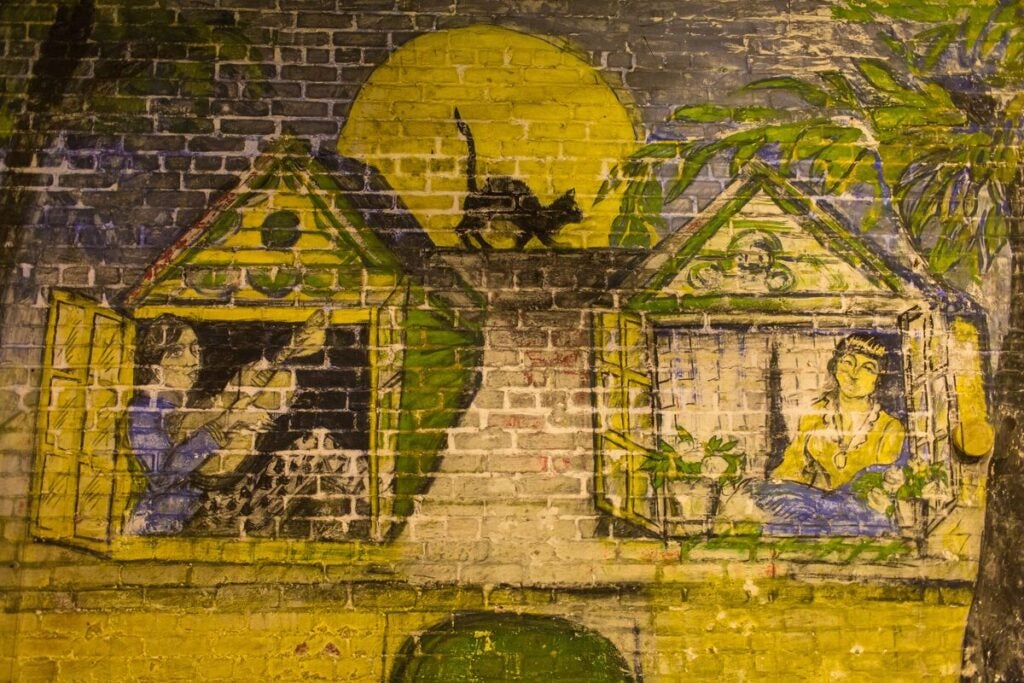
Witches, bats, and black cats don’t usually come to mind when you think of Biltmore, but deep in the basement of America’s Largest Home®, there’s a cavernous room with brick walls painted in brightly-colored murals depicting an array of such creatures.
The paintings include characters from folklore, a platoon of soldiers, and other imaginative imagery that eventually caused this area to be dubbed the “Halloween Room.”
For many years, the colorful murals remained a bit of a mystery, with some thought that the room was the scene of a 1920s Halloween weekend house party during which guests of John and Cornelia Cecil were invited to make their mark on the walls.
Subsequent research revealed, however, that the paintings were created in December 1925 to prepare the room for a New Year’s Eve celebration–but that still didn’t explain the slightly eerie tone of the murals.
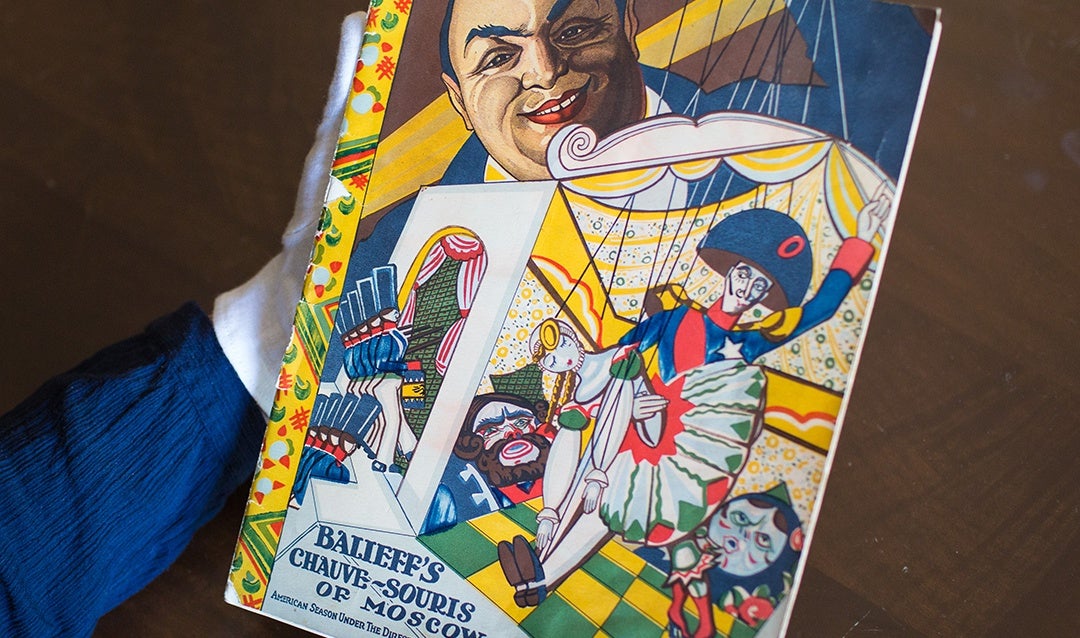
Theatrical program for La Chauve-Souris
Uncovering the inspiration behind the murals
Our Museum Services team discovered an obscure connection between the scenes on the walls and an avant-garde Russian cabaret and theatrical troupe called La Chauve-Souris, which translates to The Bat.
The troupe toured America in the 1920s, performing on Broadway in 1922 and again in 1925. The vaudevillian comedic acts were set off by abstract sets designed by two Russian artists, Sergei Sudeikin and Nicolai Remisoff. The show met with great success, triggering a rage for all things Russian in New York City and beyond.
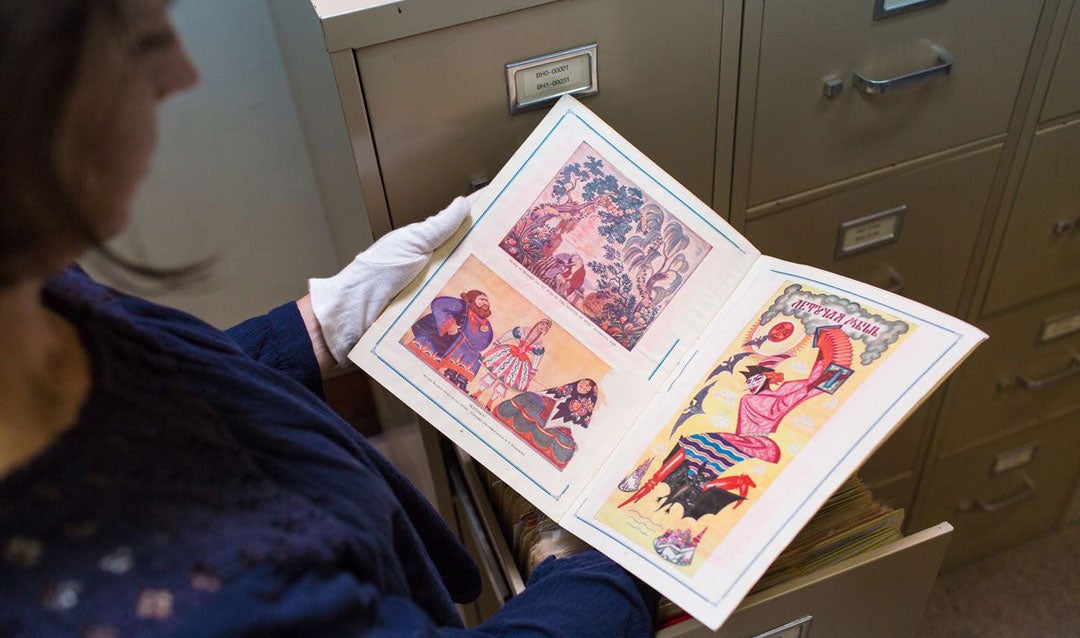
Leslie Klingner reviews an archival copy of the La Chauve-Souris program
The Cecils must have been fans of the cabaret as they and their friends created their own version of La Chauve-Souris on the basement walls of Biltmore House. Most of the murals were drawn directly from Remisoff and Sudeikin’s illustrations for the theatrical program.
After three weeks of painting, the Cecils hosted a Bohemian ball on December 30, 1925, as part of their New Year’s celebration.
“This connection was really exciting to us because we didn’t expect it at all,” said Curator, Leslie Klingner. “It wasn’t until we read an autobiography of a local man who went to that party that we put it together.”
Painted scenes in the Halloween Room
“The best party I have ever attended”
The Charleston Daily Mail reported that 100 guests attended the Cecil’s New Year’s Eve festivities. One costumed attendee, local resident James G.K. McClure, recalled arriving in the basement of Biltmore with his wife Elizabeth, armed with a guitar and an old accordion, to find a room full of “cauldrons and pots and glowing fire … all around.”
Enchanted by the unexpected theatrics, he wrote a detailed account of the holiday soiree to a friend, reminiscing that it was “the best party I have ever attended.”
Painted scenes in the Halloween Room
A new look inside the glamourous soiree
“We know that John and Cornelia Cecil were interested in many aspects of Russian culture, and Biltmore House wasn’t the only place Cornelia painted using these sorts of images. Combine that with their flair for entertaining, and you get what must have been the social event of the Asheville season,” shares Curator, Meghan Forest.
We also know that friends and family traveled from far and wide to attend the exciting soiree. Among the attendees were Cornelia’s recently remarried mother, Edith, and her second husband, Senator Peter Gerry from Rhode Island. Also present was John Cecil’s brother and his family from England.
According to Meghan, a recently discovered newspaper article also mentioned that Edith and Cornelia wore similarly styled costumes featuring bright colors, bouffant skirts, and brilliant shawls befitting the theme. “For a social event of this profile, they were likely wearing clothing that was custom-designed for them,” shares Meghan.
The article also stated that the nearby dressing rooms were used as private dining rooms for small groups, helping us better understand how the family and guests would have utilized the vast basement level of Biltmore House during this era.
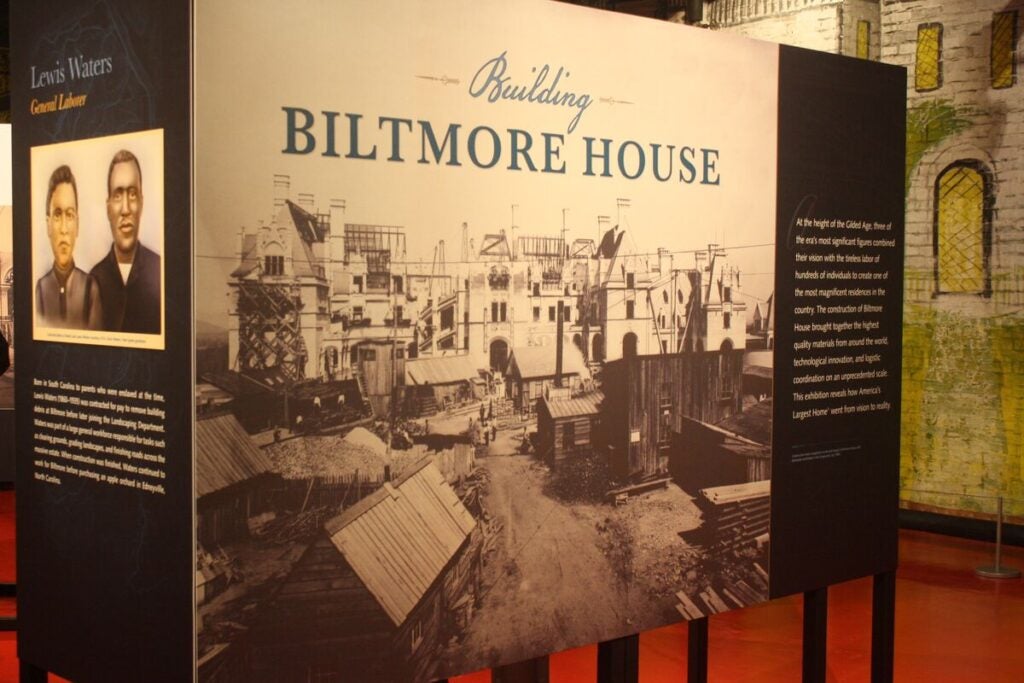
Our Building Biltmore House exhibition explores the construction of George Vanderbilt’s magnificent home—a massive project that took hundreds of workers seven years to complete.
On display in the Halloween Room: Building Biltmore House
In addition to piquing the curiosity of our guests, the Halloween Room currently showcases our Building Biltmore House exhibition which features additional in-depth information about the people, circumstances, and innovations surrounding the building of George Vanderbilt’s magnificent estate.
Building Biltmore House also offers a special focus on thecraftsmanship and labor of the employees who worked on the project rather than just the construction techniques.
Thank you for enjoying this archived information about our 2019 Christmas at Biltmore wine labels!
Ready to pour on the cheer this holiday season? We’re excited to share the process of crowdsourcing our 2019 Christmas at Biltmore® Wine labels!
“In previous years, we held a competition for artists to share their interpretation of what Christmas at Biltmore means to them,” said Jill Whitfield, senior wine marketing manager. “We chose several finalists, then asked our online audience to vote for their favorite design.”
Crowdsourcing for creativity
In 2018, Biltmore Wines decided to shake things up a bit. Instead of asking artists to submit their work, they asked our Facebook followers to help them develop that year’s Christmas label, one step at a time.
It worked so well that we decided to repeat the process of crowdsourcing our 2019 Christmas at Biltmore Wine labels.
Creating mood boards
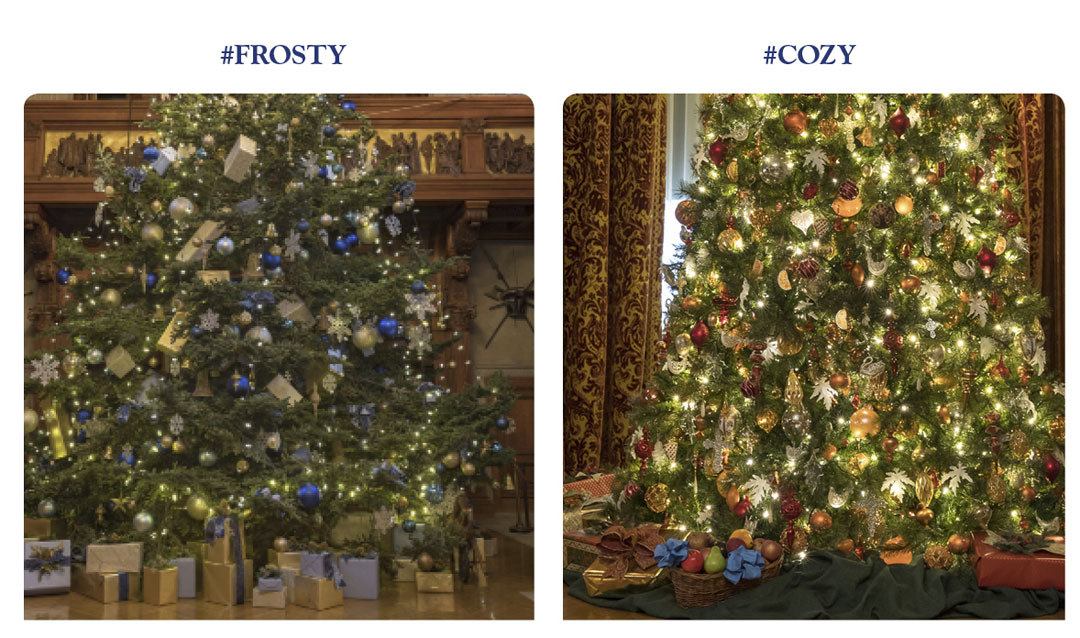
Mood boards featuring #Frosty and #Cozy elements
“First, we worked with Biltmore’s art team to create a pair of mood boards,” Jill explained. “One featured #Frosty elements including a palette of cool, wintry colors and silvery metallics. The other was #Cozy, with warmer tones and sparkling gold ornaments. We then posted them on Facebook and asked our fans and followers to vote for their favorite mood.”
Setting the tone
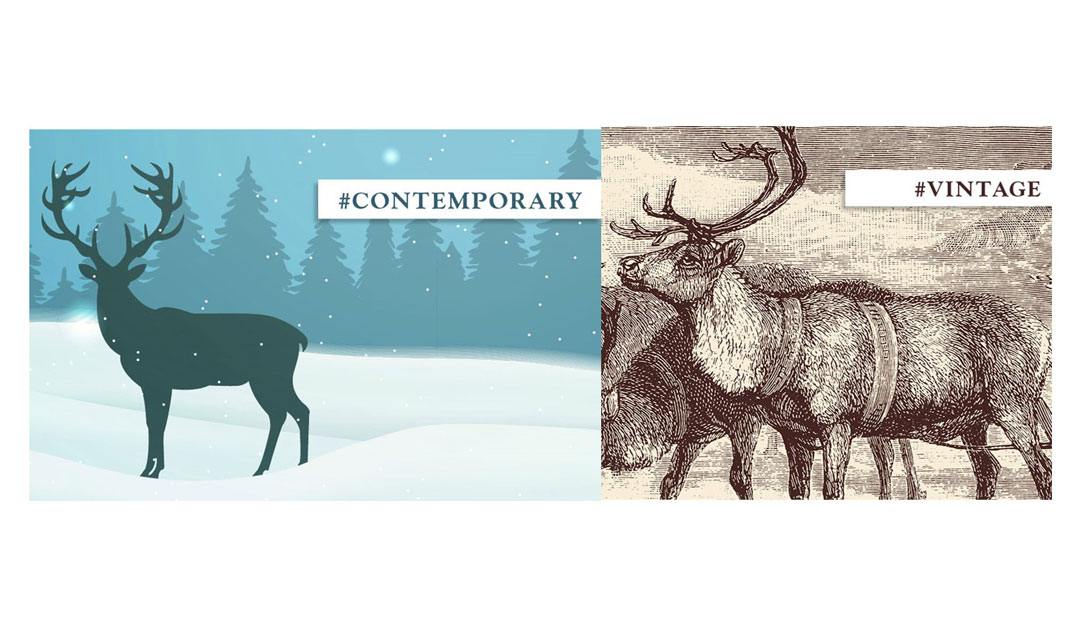
For the second phase of voting, Lisa Vogel, Art Director, pulled together two “tone” boards so voters could choose between themes representing a #Vintage look represented by an old-fashioned Christmas card and a #Modern look with a clean graphic feel.
Facebook fans liked both of the themes, but their final preference was for #Vintage.
Boards with #Contemporary and #Vintage themes
Crowd favorite
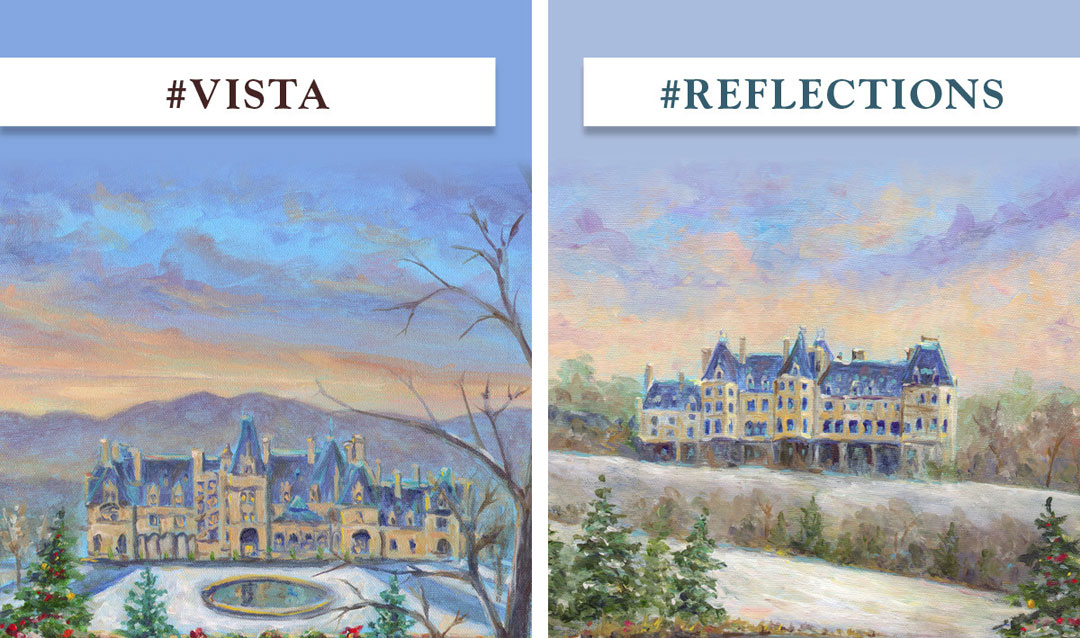
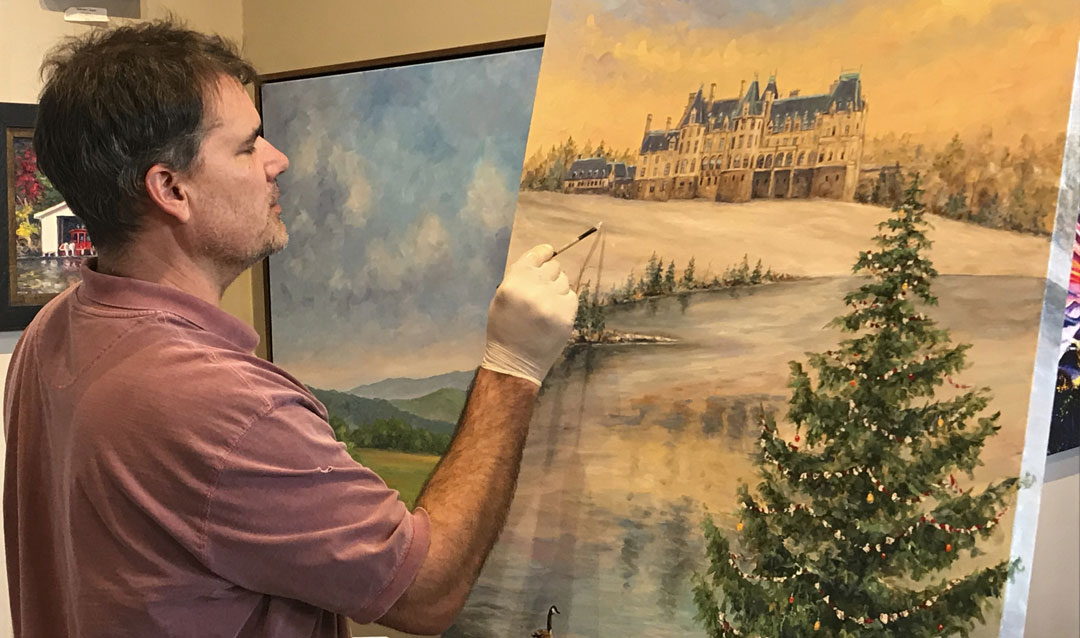
With the mood and theme decided, it was time to get Asheville artist Jeff Pittman involved in the project. He drew inspiration from the boards to create two representations of Biltmore on which Facebook followers would have the final vote.
Both #Vista and #Reflections were popular, but #Reflections—featuring the west façade of Biltmore House on the hill above the Lagoon—was the winner.
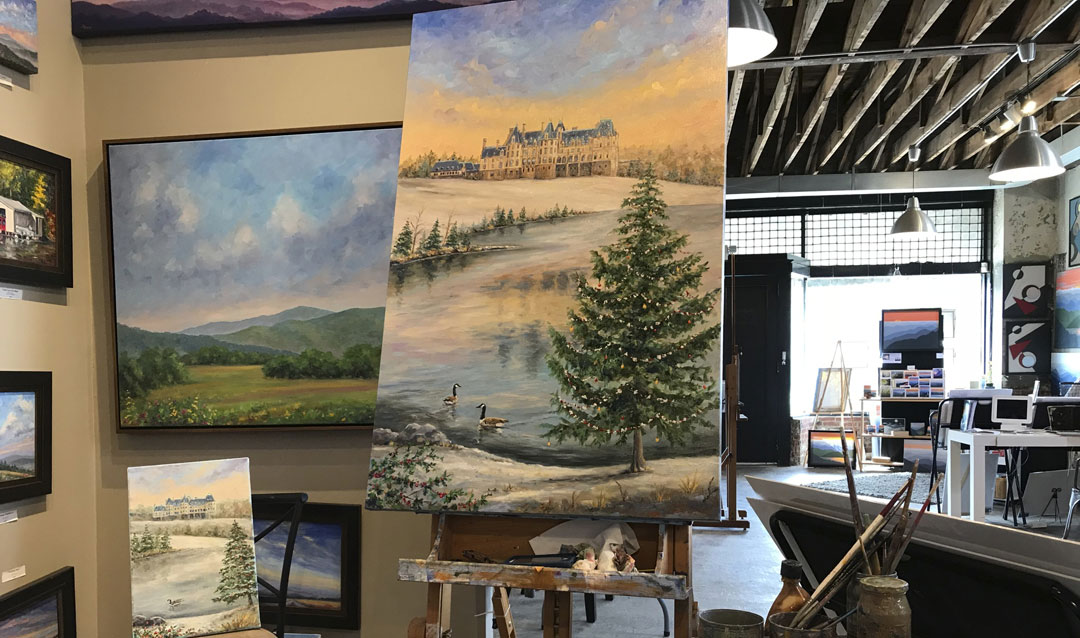
Jeff refined the initial #Reflections painting he created with more detail and a few more festive touches. “Everyone loved both of Jeff Pittman’s offerings” said Lisa, “but I think it may have been the peaceful pair of Canadian geese crossing the Lagoon that made #Reflections such a crowd favorite!”
Jeff Pittman’s two representations of a Biltmore Christmas scene
Creating original artwork
What happened next?
“Jeff went to work in his studio,” Lisa said, “and created the final artwork that would become the labels for our 2019 Christmas at Biltmore Red Wine and Christmas at Biltmore White Wine.”
Jeff Pittman at work on the 2019 Christmas at Biltmore Wine label
The finished label celebrates the natural splendor of this special season at Biltmore.
“The voters made it clear what they wanted,” said Jill, “and that’s why crowdsourcing is such a great way to engage your audience—it gives your most loyal followers a voice in what you’re creating for them.”
Finished artwork in Jeff’s studio.
Pour on the cheer with Biltmore wines
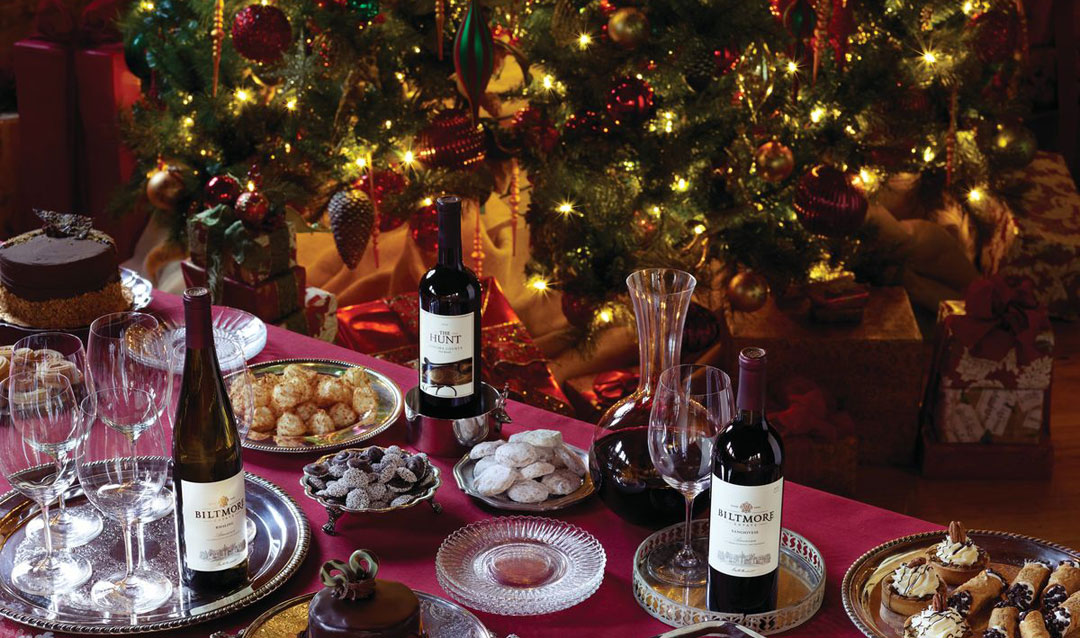
Choose any of our fine wines for holiday celebrations
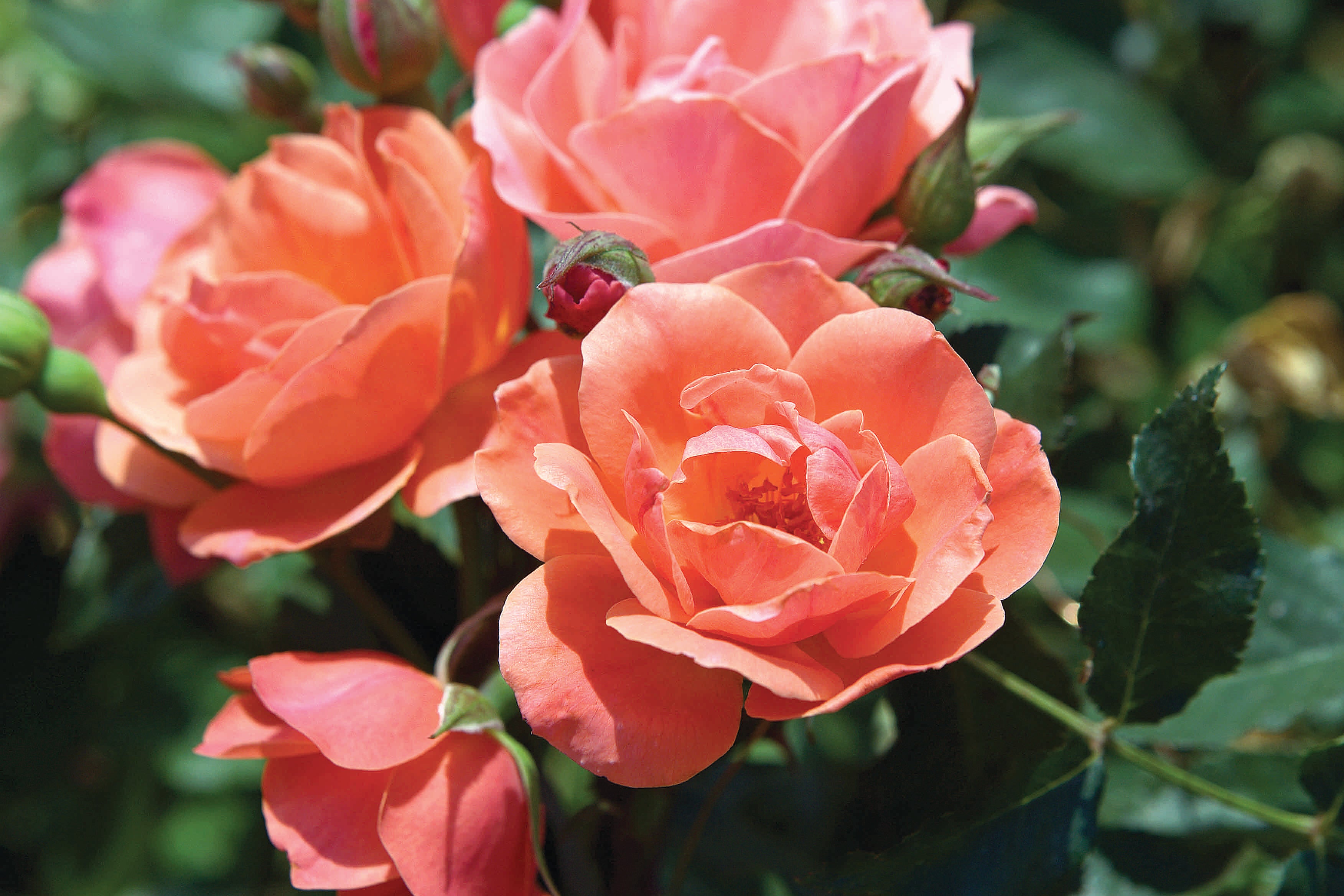
The Coral Knock Out Rose has captured the top prize at the recent finals of the 2019 Biltmore International Rose Trials. Bred by William Radler and distributed by Star Roses & Plants, Coral Knock Out Rose (RADral) took home the George and Edith Vanderbilt Award for Most Outstanding Rose of the trials.
Coral Knock Out Rose by Star Roses & Plants
The winning rose was among a collection of roses planted for trials in 2017 in Biltmore’s award-winning and historic Rose Garden. Since 2011, Biltmore’s Rose Garden has been home to the trials in which more than 200 varieties from growers and breeders worldwide have been planted and cared for by Biltmore’s expert horticulturalists. A permanent jury of rose experts judged the plantings four times a year during the trial’s two years.
In addition to winning the Best in Show Award, Coral Knock Out won the Chauncey Beadle Award for Most Outstanding Shrub Rose. Additional winners this year were:
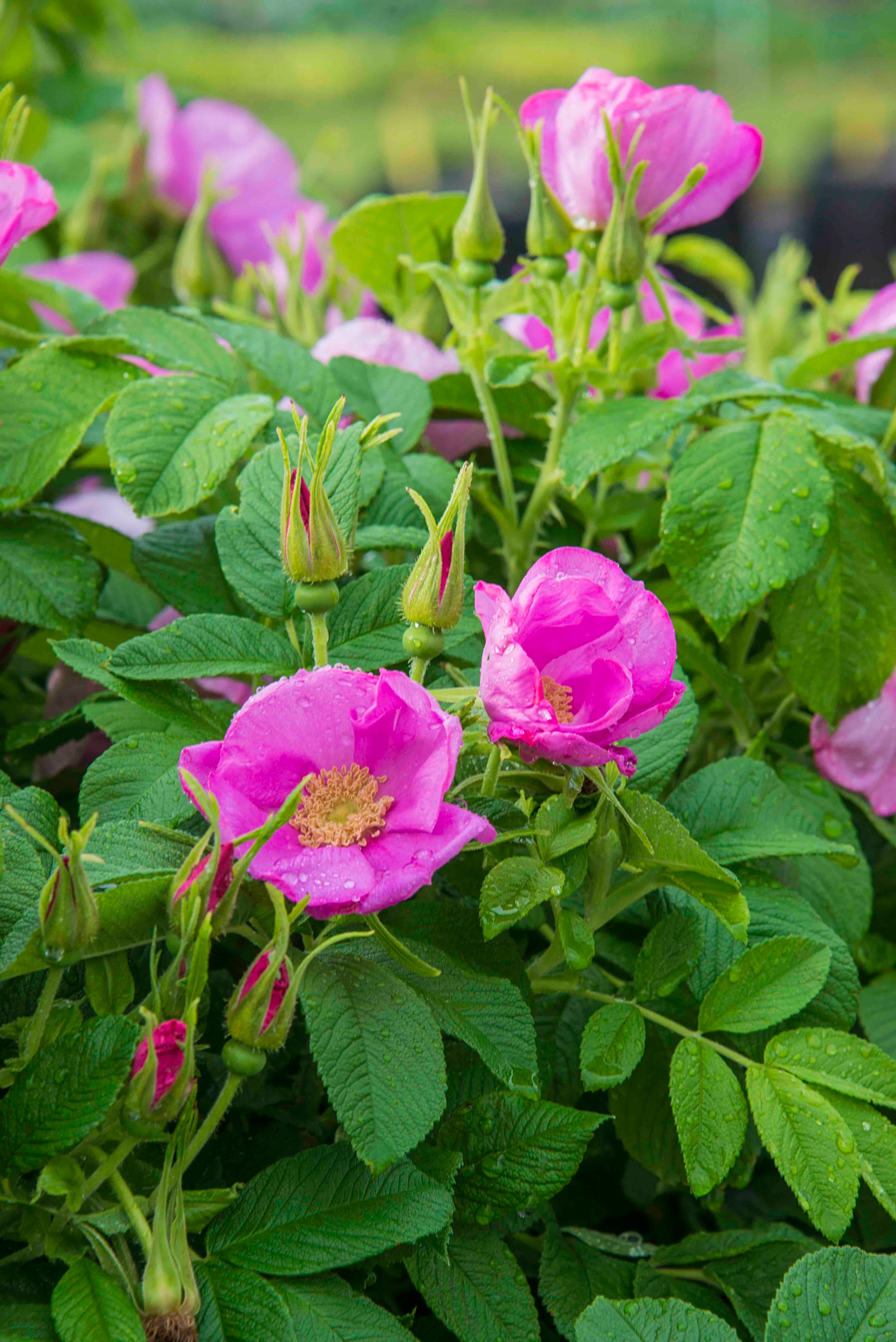
Sweet Hips (KAPswehp) – Winner of the William Cecil Award for Best General Impression, and the Lord Burleigh Award for Most Disease Resistant Rose, Sweet Hips is available from Weeks Roses.
Sweet Hips, available from Weeks Roses
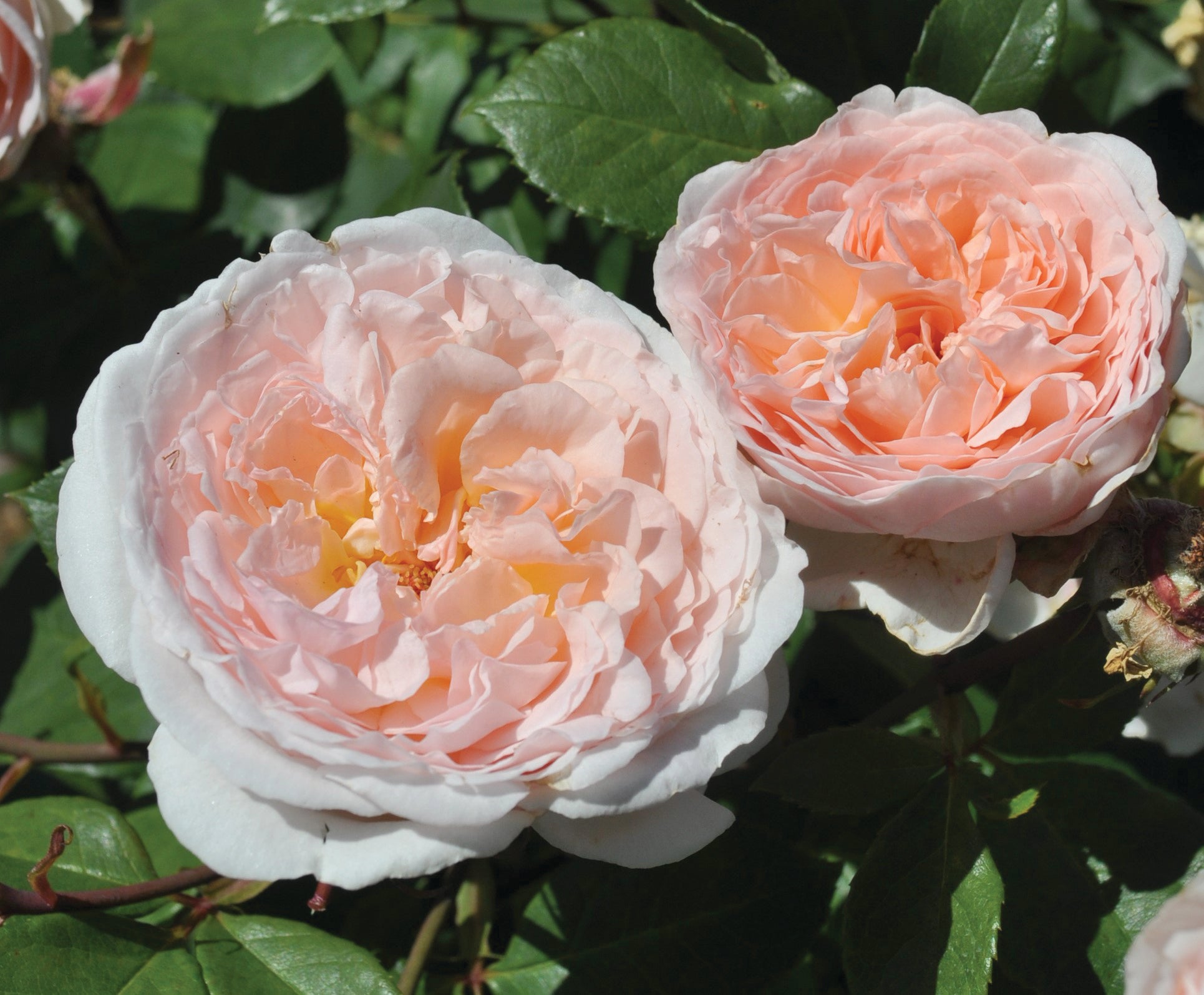
Cupid’s Kisses (WEKtriscala) – Winner of the Gilded Age Award for Best Climbing Rose. Bred by Christian Bedard, it is available from Weeks Roses.
Cupid’s Kisses
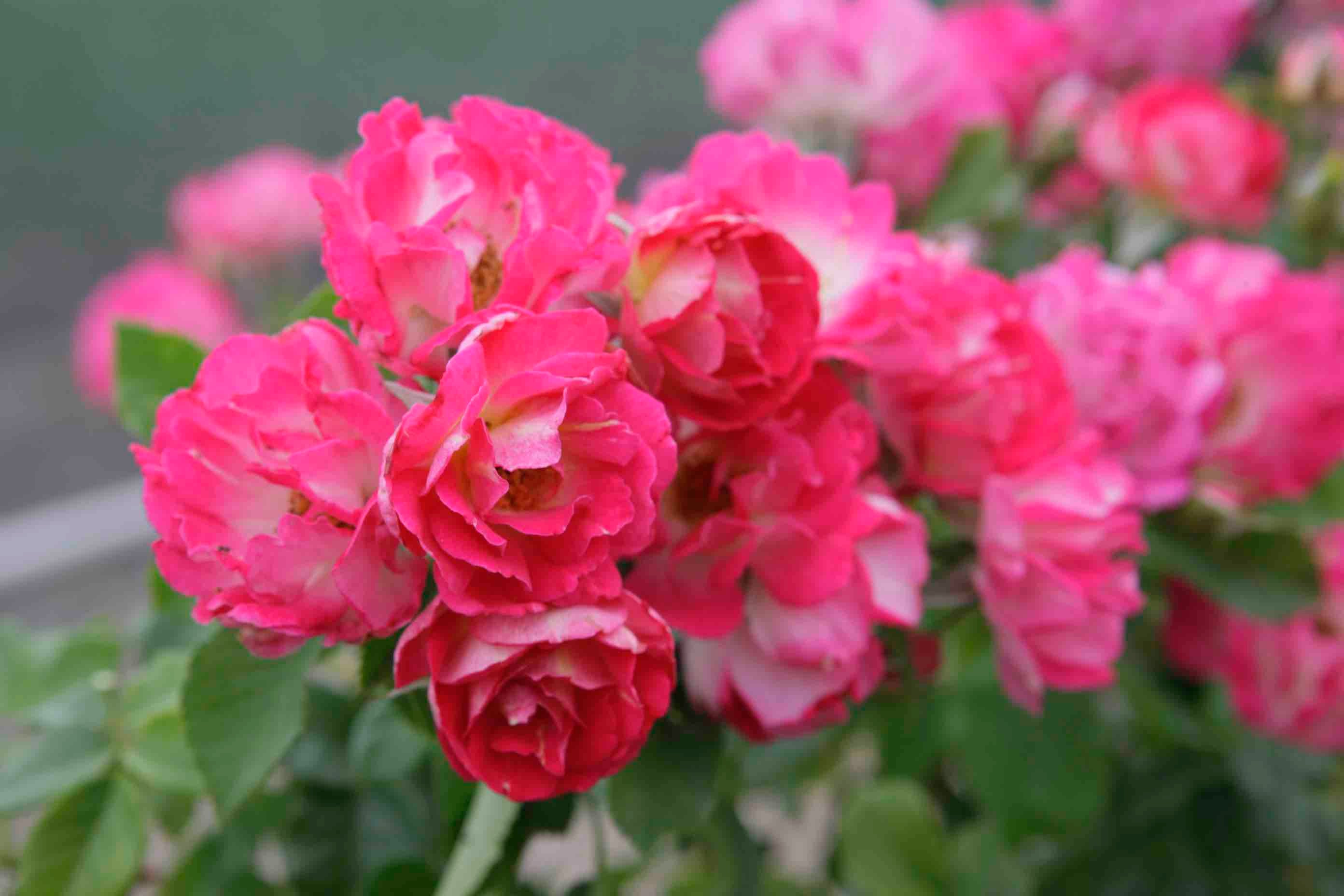
Bliss Parfuma (KORmarzau) – Bred by Kordes Roses in Germany, Bliss Parfuma won the Edith Wharton Award for Best Floribunda. It is available from Star Roses & Plants.
Bliss Parfuma
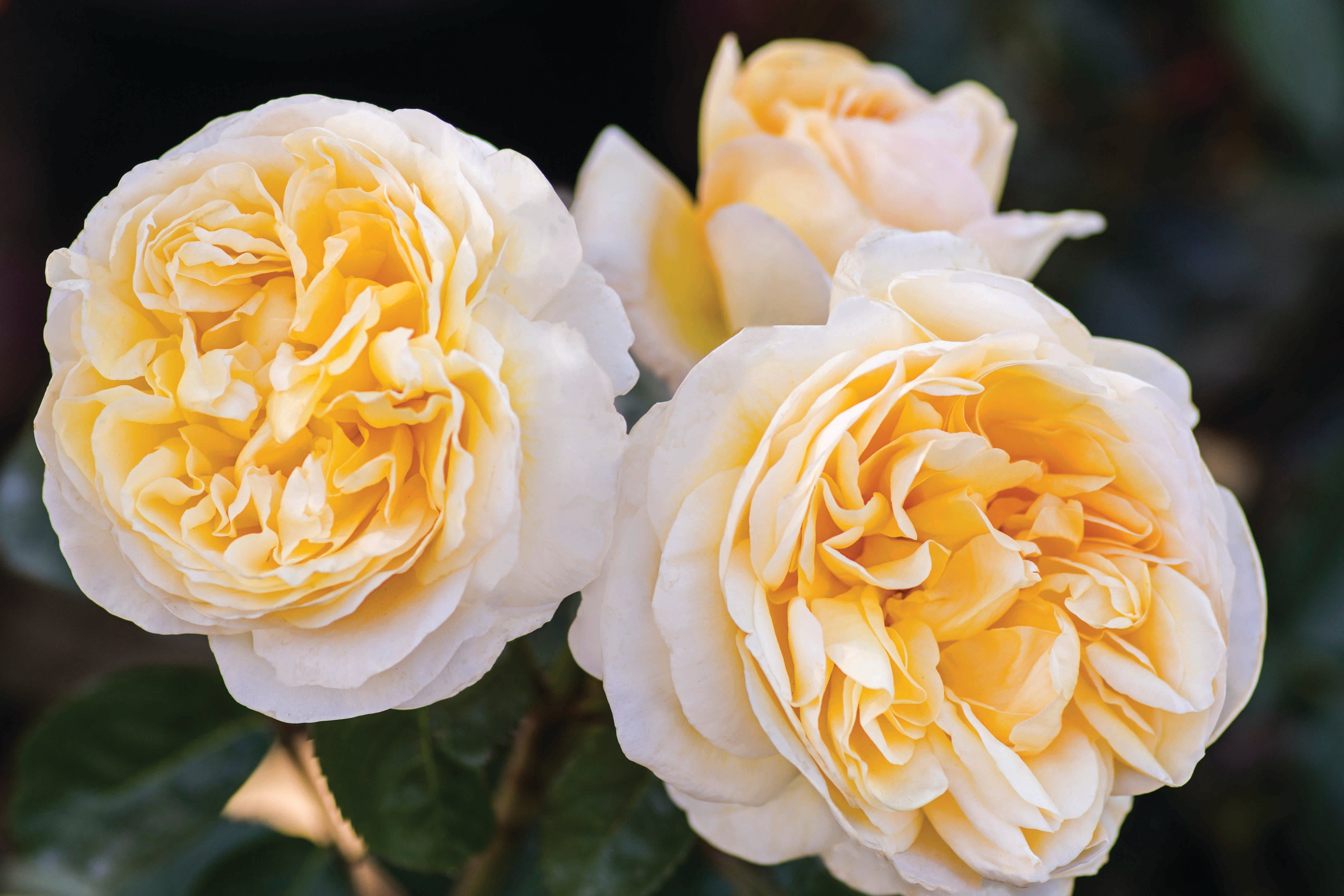
Moonlight Romantica (MEILkaquinz) – Winner of the Pauline Merrill Award for best Hybrid Tea went to Moonlight Romantica, bred by Meilland in France. It is available from Star Roses & Plants.
Moonlight Romantica
Trials of this type are open to rose breeders around the world – from professional to beginner. Competing roses are evaluated for overall health and rigor; fragrance; disease resistance; and ability to repeat bloom.
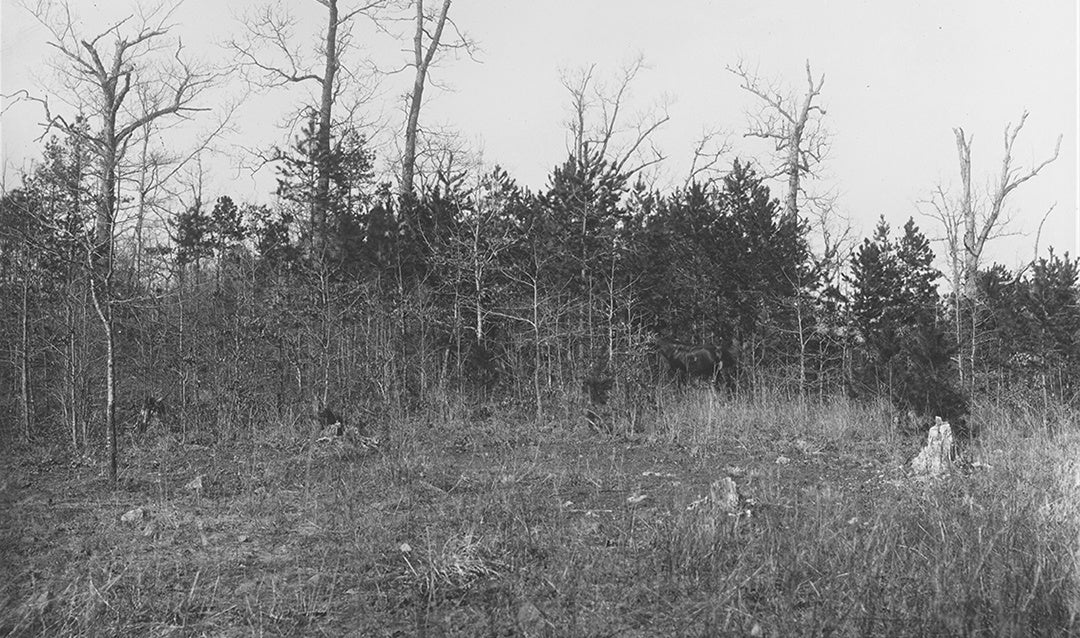
When George Vanderbilt began planning his grand estate in Asheville, North Carolina, more than a century ago, he envisioned a self-sustaining home and stewardship of the land and its resources for years to come. Though it is hard to imagine now, portions of the lush forest surrounding Biltmore House were once overworked farmland and overcut woodland.
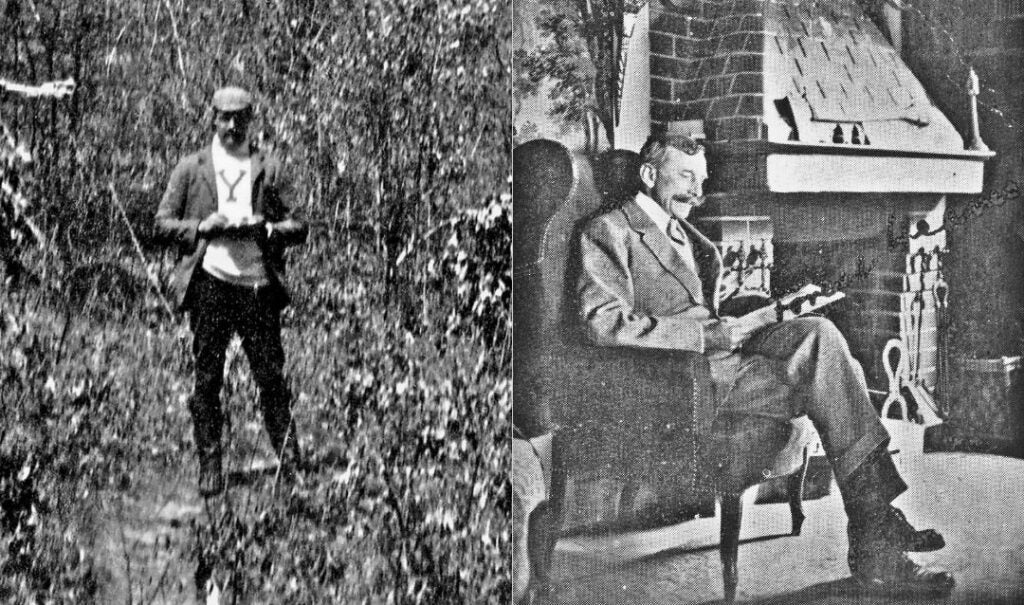
Following the recommendation of landscape architect Frederick Law Olmsted, Vanderbilt hired trained forester Gifford Pinchot—who later served as the first chief of the United States Forest Service and founder of the Society of American Foresters—to develop a forest management plan for his land holdings, which eventually totaled approximately 125,000 acres.
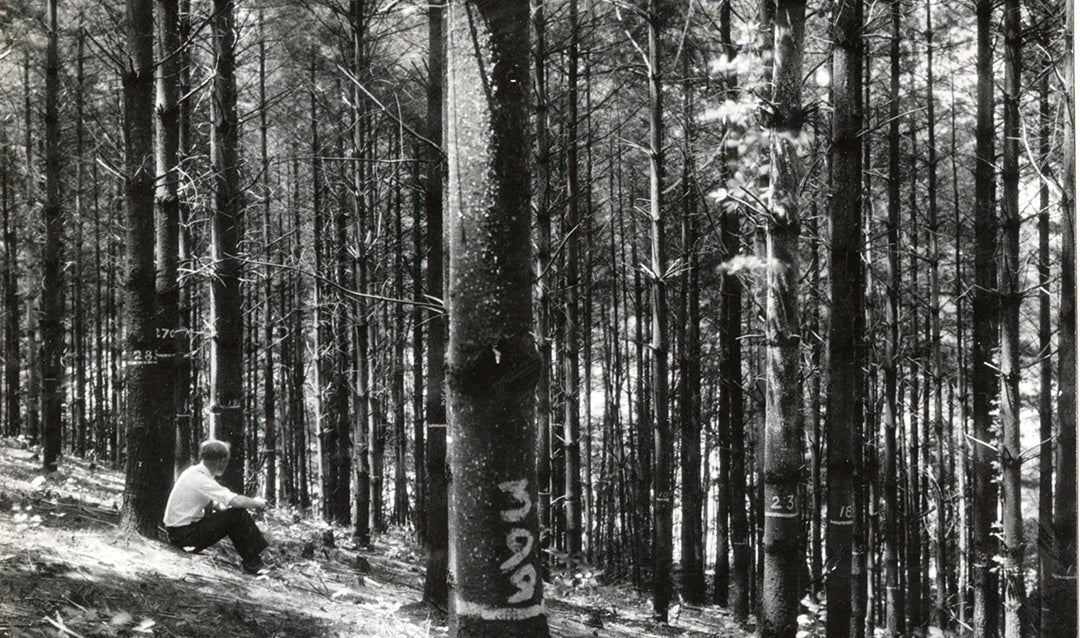
Pinchot’s scientific forestry plan (the management and conservation of forest lands) was the first of its kind in the United States and served as a national model. In turn, George Vanderbilt was the first American landowner to implement scientific forestry on a large scale.
In 1895, the same year as the opening of Biltmore House, German forester Dr. Carl A. Schenck succeeded Pinchot and expanded the forest management plan over the next 14 years, including the development of a comprehensive management plan for Vanderbilt’s vast Pisgah Forest holdings.
During his tenure at Biltmore, Dr. Schenck also founded the Biltmore Forest School—the first school of forestry in the United States—graduating more than 300 of the nation’s first professionally trained foresters.
The contributions of Frederick Law Olmsted, Gifford Pinchot, and Dr. Carl Schenck transformed what was once a landscape of overused terrain into America’s first managed forest on a large scale, improving the health of the land while producing sustainable wood and other resources, and establishing the birthplace of American Forestry.
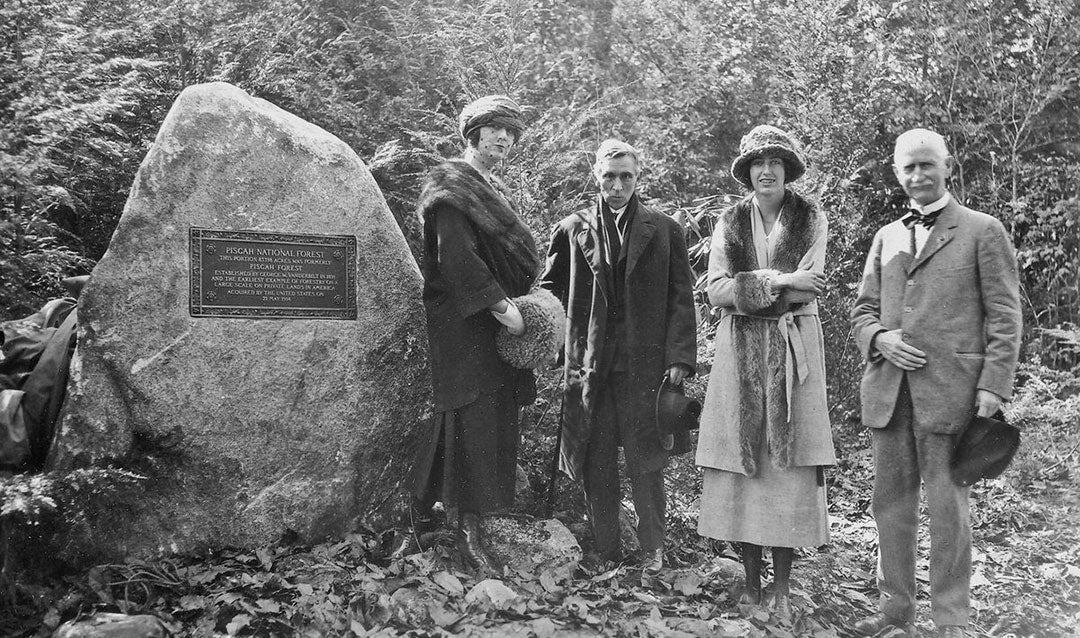
In May 1914, Edith Vanderbilt completed her late husband’s wishes of selling an 86,000-acre tract of Biltmore to be managed by the U.S. government as public lands, creating one of the first national forests east of the Mississippi River: Pisgah National Forest.
In an excerpt from a letter declaring her family’s interest in preserving the property, Edith stated:
“Mr. Vanderbilt was the first of the large forest owners in America to adopt the practice of forestry. He has conserved Pisgah Forest from the time he bought it up to his death, a period of nearly twenty five years, under the firm conviction that every forest owner owes it to those who follow him, to hand down his forest property to them unimpaired by wasteful use.”
“I make this contribution towards the public ownership of Pisgah Forest with the earnest hope that in this way I may help to perpetuate my husband’s pioneer work in forest conservation, and to ensure the protection and use and enjoyment of Pisgah Forest as a National Forest, by the American people for all time….”
Today, Biltmore Estate and its resources continue to be managed by those original guiding principles to ensure future vitality, honoring George Vanderbilt’s legacy of conservation and environmental stewardship.
Nearby, the Cradle of Forestry is a 6,500-acre Historic Site within Pisgah National Forest, set aside to commemorate the beginning of forest conservation in America and the lasting contributions of George Vanderbilt, Frederick Law Olmsted, Gifford Pinchot, and Dr. Carl Schenck.